Thorsten Holz is a Professor and Head of the Chair for System Security at Ruhr-University Bochum's Faculty of Computer Science. His research team focuses on critical areas of cybersecurity including binary analysis, automated vulnerability discovery (fuzzing), embedded systems security, and privacy compliance (GDPR). Research Focus: His work spans: Binary analysis & reverse engineering techniques Software security with emphasis on fuzzing and automated vulnerability assessment Security of embedded/IoT systems Privacy mechanisms and GDPR implementation Network and internet security protocols Publication Trends: Recent works (2024-2025) demonstrate strong emphasis on: Advanced fuzzing methodologies for software/hardware systems Security of satellite and aerospace systems Detection of AI-generated media (deepfakes) and LLM vulnerabilities Trusted execution environments (TEEs) and memory corruption defenses Social media/platform security abuses He leads a research group developing cutting-edge tools for vulnerability discovery and security validation, with significant real-world impact in both academic and industry domains.
Jakob Doppler is a full-time Professor at the St. Pölten University of Applied Sciences , where he leads the Center for Digital Health and Social Innovation and the Department of Media and Digital Technologies . He spearheads master's programs in Citizen-Centered Digital Health and Social Care and Digital Healthcare , integrating technology with social care solutions. His research focuses on context computing , human activity recognition , and music information retrieval , with applications in elderly care, rehabilitation technology, and digital innovation. Projects like Smart Companion , EyeQTrack , and SONIGait demonstrate his work in AI-assisted living, XR training, and wearable sonification devices for Parkinson's patients. Publications span digital health frameworks , gait rehabilitation systems , and user-centered design for aging populations. His work bridges computer science and health sciences , emphasizing interdisciplinary collaboration and real-time feedback mechanisms . He actively contributes to ambient assisted living through multi-device platforms and smart home environments .
Karsten D. Wolf is a Professor of Media Education and Didactic Design of Multimedia Learning Environments at the University of Bremen , where he has been since 2011. He leads the Media Education & Educational Media lab at the Centre for Media and Communication Research (ZeMKI). His work intersects digital media and pedagogy through formal and informal learning contexts. His research spans audiovisual educational spaces (YouTube, TikTok), cinematic analysis of explanatory videos, digital gaming in education, AI-driven feedback systems, and didactic design of digital learning environments. Recent publications focus on transformative gaming in mediatized societies, YouTube's role in adolescent learning, and digital diagnostics for adult education. 2025: Analyzed gaming's societal impact 2024: Explored YouTube's diversity and educational apps 2022: Developed diagnostic tools for informal learning
Maurice D. Mulvenna is a Researcher at the School of Computing and Mathematics, Ulster University , focusing on Artificial Intelligence, Digital Health, and Human-Computer Interaction . His work explores the application of AI in mental wellbeing, assistive technologies for dementia care, and usability testing methodologies. Research Themes : AI for Wellbeing, Ambient Assisted Living, Machine Learning in Healthcare, IoT for Elderly Care, Sentiment Analysis Recent Articles : 2025 study on AI's impact on mental health; 2024 work on employee wellbeing platforms; 2023 papers on chatbots and IoT lighting solutions for dementia His collaborations span Raymond R. Bond, Siobhan O'Neill, and Chris D. Nugent , with publications in journals like Behavior & Information Technology and conferences such as ICT4AWE and ECCE . While no explicit awards are listed, his contributions include co-editing conference proceedings and advancing ethical-by-design frameworks. Labs/Teams : Involved in projects like SenseCare (2016) for emotional wellbeing visualization and UX-Handle (2017) for usability analytics. His work bridges technical innovation with user-centered approaches in healthcare and digital platforms.
Dr. Layne Morsch is a Professor and the Associate Provost for Faculty Affairs at the University of Illinois Springfield. He leads initiatives in generative AI, online learning, digital accessibility, and workforce-aligned education, overseeing the Office of Online, Professional, and Engaged Learning (OPEL). Education: B.S. in Chemistry from Minnesota State University Mankato; Ph.D. in Organic Chemistry from the University of Illinois Chicago Dr. Morsch’s research focuses on online collaborative learning in organic chemistry, emphasizing student engagement , multimodal communication , and educational technology . He has pioneered projects in cheminformatics , multimedia OER , and international collaborations to enhance chemistry education. His work spans 15 publications and innovations like The Mechanisms App, with recent studies exploring interdisciplinary reading and active learning strategies. Key trends include generative AI applications , digital accessibility , and micro-credentialing for modern learners. Scientific Awards: College Excellence in Teaching Award Distinguished Online Teacher Award Faculty Award for Outstanding Teaching Apple Distinguished Educator Dr. Morsch has mentored initiatives in international online collaborative assignments , overcoming technological and disciplinary barriers to improve student communication and professional identity in chemistry. His leadership strengthens partnerships with regional employers and supports "Some College, No Degree" learners.
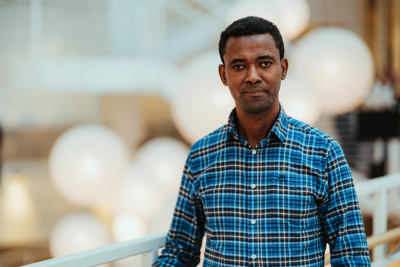
Gebremariam Assres is an Associate Professor at Kristiania University College's School of Economics, Innovation and Technology, specializing in software engineering, human-computer interaction, intelligent systems, and cybersecurity. His research spans IoT, machine learning, mulsemedia, and secure computing applications in healthcare and education. B.Sc. and M.Sc. in Computer Science from Addis Ababa University Ph.D. in Information Technology (Software Engineering) from Addis Ababa University 20+ years of teaching and research experience His work focuses on software development frameworks, telemedicine, and multisensory media. Recent publications address AI-enabled vulnerability detection, ML software engineering challenges, and telemedicine architecture reviews. Dr. Assres supervises bachelor's and master's students, teaches cybersecurity and software architecture courses, and contributes to open-source educational materials via public repositories. Labs/Teams: Mobile Technology Lab at Kristiania University College
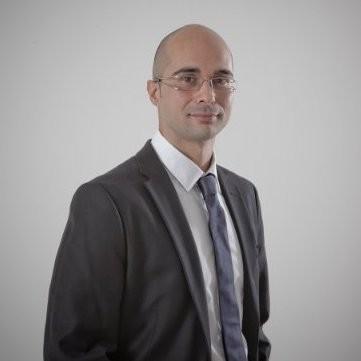
David Breitgand is a senior researcher at IBM Research specializing in cloud computing, networking, and virtualization technologies. With a publication record spanning from 1997 to 2025, he has established himself as a significant contributor to the fields of cloud infrastructure, network management, and distributed systems. His work shows a clear evolution from traditional network management protocols to modern cloud-native architectures, serverless computing, and edge-to-cloud integration. Dr. Breitgand's research interests focus on optimizing resource allocation in distributed systems, with particular emphasis on cloud-edge continuum architectures. His work addresses critical challenges in network function virtualization, service function chaining, and 5G media applications. He has made significant contributions to the understanding of how to efficiently deploy and manage services across heterogeneous cloud environments, from data centers to the network edge. His research combines theoretical foundations with practical implementations, often resulting in systems that have been evaluated in real-world settings. Analysis of his recent publications (2021-2025) reveals a strong focus on edge-to-cloud integration, with particular attention to 5G media applications, service function chaining in distributed environments, and serverless computing paradigms. His work demonstrates consistent innovation in developing algorithms and frameworks that optimize resource usage while meeting service level objectives. The research spans theoretical foundations, system design, and practical implementation, with publications appearing in top-tier venues like INFOCOM, SYSTOR, and IEEE journals. Dr. Breitgand has collaborated extensively with researchers including Danny Raz, Dean H. Lorenz, and Avi Weit, indicating long-term institutional relationships. His work has been instrumental in several European research initiatives, particularly those focused on 5G media applications and cloud networking. While specific awards aren't documented in the available information, his consistent publication record in high-impact venues and sustained research contributions over nearly three decades speak to his standing in the research community. His research has practical implications for the design and operation of modern cloud and edge infrastructure, with applications in media delivery, network function virtualization, and distributed service deployment. Dr. Breitgand continues to be an active contributor to the field, with ongoing research addressing emerging challenges in the convergence of networking and cloud technologies.
Massimo Callisto De Donato is an Assistant Professor specializing in Internet of Things, Digital Twin, and Machine Learning applications for real-world systems. His research addresses critical challenges in environmental management, workplace safety, and disaster response through advanced computing solutions. His primary research domains include: IoT infrastructure for real-time industrial and environmental monitoring Digital Twin development for process simulation and prediction Machine Learning frameworks for safety-critical applications Human behavior analysis using community detection algorithms ICT systems for earthquake rescue operations Analysis of his 2020-2025 publications reveals a consistent trajectory toward integrating Digital Twin and IoT technologies with machine learning for predictive capabilities. Key application areas include wastewater management (decanter centrifuge modeling), smart living environments, and earthquake disaster response systems, with increasing emphasis on real-time simulation and human activity recognition. No scientific awards are documented in the available information. Details regarding student supervision, research grants, and laboratory affiliations are not provided in the source materials.
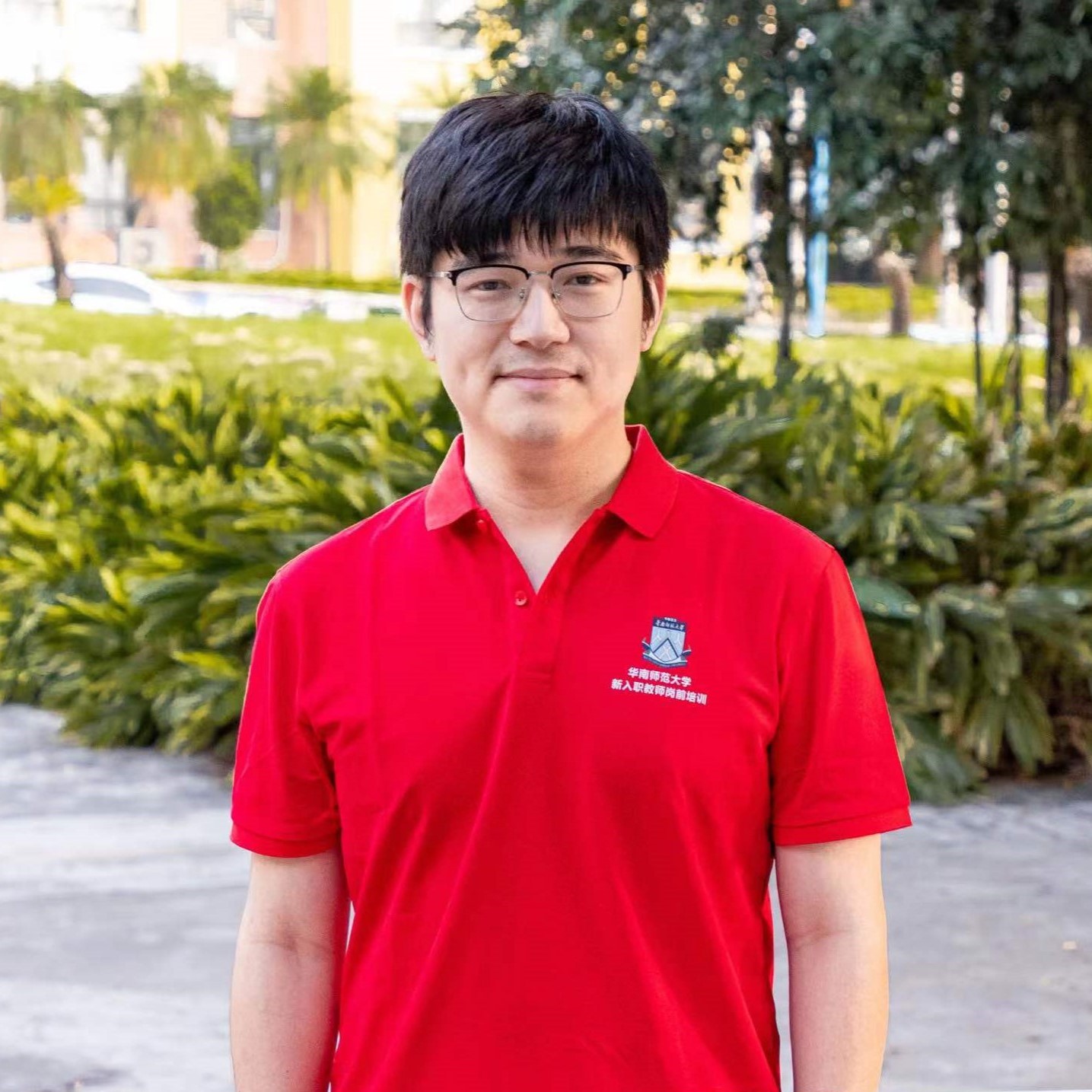
Chenyou Fan is an Associate Professor at the School of Artificial Intelligence , South China Normal University . He holds a Ph.D. in Computer Science from Indiana University and a B.S. in Computer Science from Nanjing University . His research focuses on: Computer Vision Machine Learning Natural Language Understanding Modeling unstructured data (images, texts) across distributed devices Agent-based AI systems Recent publications span conferences like IJCAI , ICASSP , and journals like TPAMI , emphasizing multimodal attention models and heterogeneous learning frameworks. Notably, he received the 2023 Guangdong Youth Science and Technology Award from the Computer Academy of Guangdong. He actively contributes to open-source projects and has a vibrant GitHub presence with 91 recent contributions across repositories like HME-VideoQA (implementing a heterogeneous memory-enhanced multimodal attention model) and SCNU_DL_Class_2024 .
Arapatzis Avgerinos is a Professor at the Department of Computer Science & Information Technology within the Polytechnic School of the University of Thessaloniki , where he has been a faculty member since November 2009. His work bridges theoretical and applied research in information retrieval and data science. Education: BSc in Computer Engineering & Informatics, University of Patras (1996) PhD, Radboud University, Netherlands (2001) Research Interests: A specialist in Information Retrieval , Data Mining , and Natural Language Processing , his work spans Databases , Search Engine Privacy , Sentiment Analysis , and Contextual Suggestion Systems . His research integrates machine learning with domain-specific challenges in environmental science, cybersecurity, and business intelligence. Scientific Contributions: His publications (over 85 as of 2020) focus on hybrid retrieval methods, social media analysis, and privacy-enhanced systems. Recent work includes advancements in federated learning, climate change discourse analysis, and keystroke dynamics applications. Projects: He has participated in EU Horizon 2020 projects like ODYSSEA and FP7 initiatives such as CARRE, contributing to interdisciplinary research in medical informatics and environmental monitoring.
Jackson Leween, also known as Two Bears (Tékeniyáhsen Ohkwá:ri), is an Associate Professor in the Department of Visual Arts and Indigenous Studies at Western University. He holds a Tier 1 Canada Research Chair in Indigenous Arts Research & Technology and directs the Onkwehonwe Research Environment (ORE). A Kanien’kehaka (Mohawk) multimedia installation/performance artist and cultural theorist from Six Nations and Tyendinaga, he integrates Haudenosaunee cosmologies with digital technologies to explore decolonization in the digital age. Ph.D., Interdisciplinary Studies, University of Victoria (2012) M.F.A., Digital Media, University of Victoria (2003) B.A. & Diploma in Fine Arts, University of Toronto at Mississauga and Sheridan College (1999) His research focuses on Haudenosaunee land-based histories and embodied knowledge, using digital tools like Virtual Reality Environments (VREs) and AI to revitalize Indigenous practices. Key themes include reconciling Indigenous epistemologies with modern technology, creating multimedia art installations in collaboration with communities, and theorizing Indigenous methodologies through digital/physical hybridity. Canada Research Chair (Tier 1) in Indigenous Arts Research & Technology Canada Council for the Arts Media Arts Grant
Edirlei Everson Soares de Lima is an Assistant Professor at Universidade Europeia – IADE, where he coordinates the Games Development course. His research intersects Artificial Intelligence , Interactive Storytelling , and Game Design , focusing on adaptive narratives and player modeling. Ph.D. in Computer Science, Pontifical Catholic University of Rio de Janeiro (PUC-Rio) M.Sc. in Computer Science, Federal University of Santa Maria (UFSM) B.Sc. in Computer Science, Contestado University (UnC) His research explores Interactive Narratives in digital entertainment, spanning from game AI to virtual reality horror mechanics. Recent work emphasizes Machine Learning for fear modeling and Procedural Content Generation in quests. Publications and teaching roles since 2011 reflect expertise in Game Programming , Player Experience , and Computer Graphics , with notable awards including multiple SBGames Best Paper accolades and ITU honors. Best paper awards at SBGames (2016–2020), ICEC (2015), WebMedia (2014) ITU Honorable Mentions: 'Innovation' (2011), 'Interactivity' (2012) SBGames 2010: Best game and honorable mentions for 'Krimson' He has supervised multiple Master’s students in projects related to Interactive Design , Game Technology , and Narrative Systems , with over a decade of teaching experience across institutions like PUC-Rio and UERJ/IPRJ.
Josep Rafel Pegueroles Valles is a Professor at the Department of Telematic Engineering , Universitat Politècnica de Catalunya . He leads the Information Security Group - Mathematics Applied to Cryptography (ISG-MAK) and has contributed to 174 academic activities, including research projects, conference papers, and technical documents. Education: Ingeniero de Telecomunicaciones (Telecommunications Engineering), Doctorat en Ingeniería Telemática (Telematics Engineering) Research Focus: Cybersecurity, Digital Forensics, Electronic Payments, Communication Networks, and Legal Tech His 15 most recent articles (2023-2025) emphasize cybersecurity in IoMT , MITRE Framework analysis , and digital forensic methodologies . Topics include intrusion detection systems, threat actor attribution, and XSS vulnerability mitigation. Scientific Awards: Premio Accenture al mejor PFC Grants and Projects: Cátedra CARISMATICA (2022) SSADE - Secure Multimedia Access System (2001) Digital Innovation Hub de Catalunya EU-funded projects (2008-2011)
Thomas Peter Plagemann is a Professor in the Department of Informatics at the University of Oslo , specializing in Data and Knowledge Systems . His research focuses on data stream processing , sensors and AI for health , Internet of Things , and mobile network applications . Current projects: Parrot (Privacy Engineering for IoT), Respire (Explainable ML for Sleep Disorders), and TRAMP (Real-Time Application Mobility) Editorial leadership: ACM Transactions on Multimedia Computing and past roles at Computer Communications and Multimedia Systems Recent publications analyze operator migration in stream processing , explainable AI for pediatric sleep apnea , and privacy-preserving healthcare systems . His work combines distributed computing , sensor networks , and machine learning applications in medical and mobile environments.
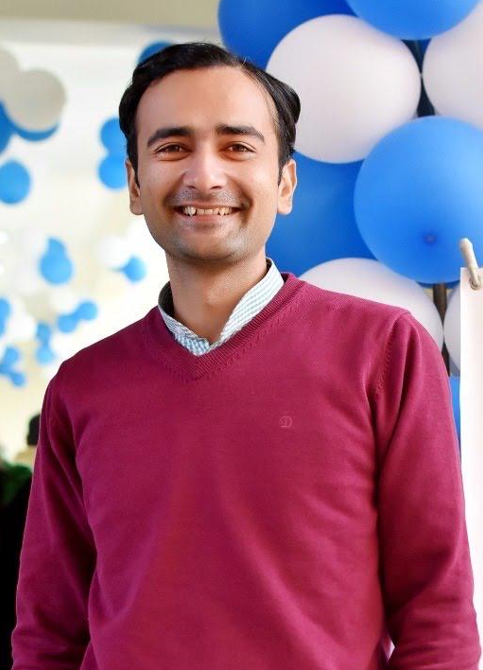
Raza Ul Mustafa is an Assistant Professor in the Department of Mathematics and Computer Science at Loyola University New Orleans . Prior to this, he was a Postdoctoral Fellow in Large Language Models (LLMs) at American University in Washington, DC. Education: Ph.D. in Computer Engineering (2018-2022), University of Campinas Research Interests span Natural Language Processing , Large Language Models , Machine Learning , and Quality of Experience (QoE) in multimedia systems. His work combines 5G networks and deep learning to optimize video streaming performance, while also exploring hate speech detection in online platforms using advanced NLP techniques. Publications focus on two primary areas: (1) 5G network optimization for video QoE, including ML-based stall prediction and QoS-to-QoE mapping, and (2) hate speech analysis using LLMs to detect coded terms in extremist social media. These studies demonstrate his dual expertise in telecommunications and social media NLP . Industry Experience includes six years as a full-stack developer, which enriches his teaching with practical insights. His research is reproducible and has been published in top-tier venues like IEEE WCNC , DSAA , and ACM QoSS conferences.