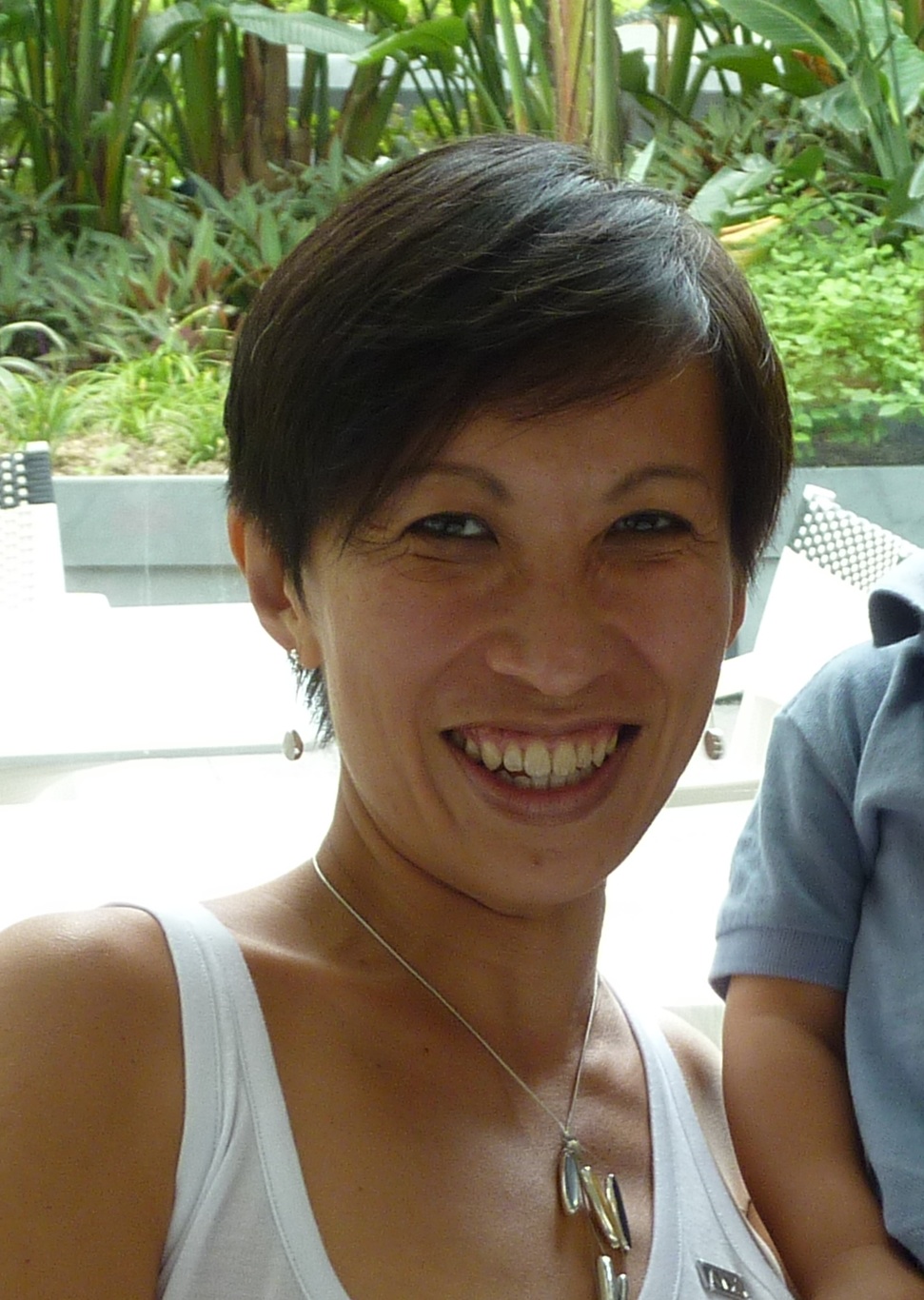
Dr. Lisa Lim is an Adjunct Associate Professor in the School of Education at Curtin University, serving as Dean, International for the Faculty of Humanities since 2022. Previously, she held professorial positions at the National University of Singapore, Universiteit van Amsterdam, University of Hong Kong (where she was Head of the School of English), and the University of Sydney (Chair of Department). Her research focuses on language contact, World Englishes, and sociolinguistics of globalization. She has authored/co-authored influential books such as Languages in Contact (2016) and The Multilingual Citizen (2018, shortlisted for the BAAL Book Prize 2019). Her work investigates linguistic minorities, including the Peranakans in Singapore and Sri Lanka Malay communities. Lim has been a consultant for the Oxford English Dictionary and runs the linguisticminorities.hk project documenting Hong Kong’s linguistic diversity. She teaches courses on language and communication, emphasizing fieldwork and public engagement. Lim’s advising includes students like Tan Ying Ying (NTU) and Giovanna Tang (CUHK), who pursue careers in linguistics and education. She balances academic rigor with family life, advocating for work-life harmony.
Bor Gregorcic serves as an Associate Professor (Docent) and University Lecturer in Physics Education at Uppsala University's Department of Physics and Astronomy. His academic work bridges theoretical frameworks in science education with practical applications of educational technology. Gregorcic's research program spans several interconnected domains: Physics education research focusing on conceptual understanding in mechanics and statistical mechanics Embodiment and multimodal approaches to science learning Educational technology applications including interactive whiteboards and digital learning environments Emerging applications of artificial intelligence in physics education contexts Teacher professional development and pedagogical content knowledge His recent publication trajectory (2023-2025) reveals a significant pivot toward AI applications in physics education, with multiple studies examining ChatGPT's performance in interpreting physics concepts, visual representations, and kinematics graphs. This represents an evolution from his earlier foundational work on embodiment in science education and multimodal learning, where he explored conceptual blending, gesture studies, and the use of digital tools like Algodoo. His research consistently addresses how students develop conceptual understanding through various representational forms. Gregorcic has been recognized with the 'Excellent Teacher' award at Uppsala University, highlighting his commitment to pedagogical excellence. He maintains active research collaborations with Giulia Polverini, Elias Euler, Trevor Volkwyn, Ebba Koerfer, and other international scholars. His work appears predominantly in leading physics education research journals including Physical Review Physics Education Research, European Journal of Physics, and Physics Education, demonstrating significant impact in the field.
Professor Cynthia White serves as Pro Vice-Chancellor of Massey University's College of Humanities and Social Sciences since 2019, previously holding roles as Research Director (2012-2019) and Head of Linguistics Department (2008-2012). Her academic leadership spans editorial boards of seven international journals and governance roles including Marsden Fund Panel Chair (2018-2024). Educational background: Bachelor of Arts, Victoria University (1977) Bachelor of Arts (Honours), Victoria University (1978) Diploma in Teaching English as a Second Language, Victoria University (1978) PhD in Applied Linguistics, Massey University (1993) Her research pioneers emotion, agency and identity in discourse with focus on online language contexts, immigrant/refugee settlement experiences in New Zealand, and narrative conflict analysis. This manifests in two books (Cambridge University Press, Multilingual Matters) and 60+ publications spanning distance language learning, migration linguistics, and identity studies. Her work bridges theoretical discourse analysis with real-world applications in multicultural integration. Scientific recognition: International TESOL Virginia French Allen Award (2004) Professor White drives international research collaboration through projects with Open University UK and Nottingham University, plenary speaking engagements across 10+ countries, and advisory roles including US National Middle East Language Resource Centre. Her governance extends to Massey University Council (2010-2016) and International Applied Linguistics Association Executive Board (2017-2019).
Roles & Affiliations: Dagmar Gromann is an Associate Professor for Terminology Science and Translation Technology at the University of Vienna's Centre for Translation Studies. Previously, she served as a Research Associate at TU Dresden's International Center for Computational Logic (ICCL) and held postdoctoral roles in Barcelona within the ESSENCE Marie Curie Training Network. She completed her PhD at the University of Vienna under Prof. Gerhard Budin, focusing on ontology-terminology integration. Education: PhD in Computer Science and Linguistics, University of Vienna (2015) Postdoctoral Research, Artificial Intelligence Research Institute (IIIA), Barcelona (2015–2017) Research Assistant, Vienna University of Economics and Business (until 2015) Research Interests: Her work bridges computational linguistics, cognitive science, and terminology science. Key areas include: Ontology learning and neurosymbolic AI Image schemas in natural language processing Machine translation ethics and genderfair language Multilingual knowledge extraction and linked data Terminology modeling and semantic web applications Publications & Awards: Over 60 peer-reviewed papers in journals such as Future Generation Computer Systems and Journal of Lexicography . Notable awards include the Best Paper Award at MuC 2021 (GenderFairMT team) and the ISWC 2019 Best PC Award. Her research has pioneered methods for extracting embodied cognition concepts like image schemas from text. Grants & Leadership: PI of the European Language Grid (ELG) pilot project Text2TCS, member of the COST Action NexusLinguarum, and organizer of conferences like LDK 2023. Editorial board roles include the Semantic Web Journal and Applied Ontology . Labs & Teams: Former member of TU Dresden's ICCL and currently part of the University of Vienna’s translation technology initiatives. Active in interdisciplinary collaborations spanning computational linguistics, AI ethics, and multilingual systems.
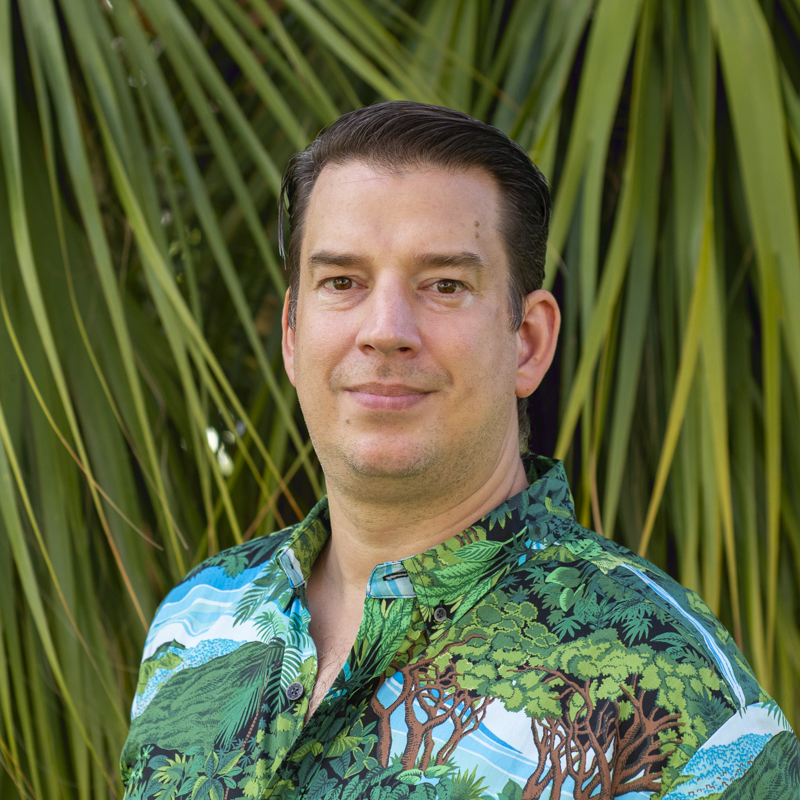
Dr. Dustin Crowther is an Associate Professor in the Department of Second Language Studies at the University of Hawaii at Manoa. He holds a PhD from Michigan State University and currently serves as Director of the Center for Academic Spoken English (CASE), an initiative supporting non-native English speakers in academic oral communication. His primary research focuses on second language speech comprehensibility, global Englishes pedagogy, and listener perception dynamics. Dr. Crowther has held editorial roles for TESOL Quarterly (2019-2024) and will become Editor of the Journal of Second Language Pronunciation in 2025. Dr. Crowther's expertise includes L2 pronunciation instruction, program development in SLA, and methodological practices in second language research. He co-authored Shaping Learners' Pronunciation: Teaching the Connected Speech of North American English (2022) and co-edited Investigating World Englishes: Research Methodology and Practical Applications (2019). His research appears in top-tier journals like Applied Linguistics , Language Learning , and TESOL Quarterly . Education: PhD, Michigan State University Professional Roles: Editor ( Journal of Second Language Pronunciation ), Director (CASE), Affiliate Faculty in Linguistics His work bridges SLA research with pedagogical applications, emphasizing global Englishes' role in multilingual academic contexts. Dr. Crowther collaborates with international scholars through the CASE initiative and has developed innovative assessment methodologies for L2 speaking tasks.
Hanne Leth Andersen is the Rector of Roskilde University and a Professor of University Pedagogy. She holds a PhD and has extensive experience in higher education leadership, including roles as director of the Centre for Teaching Development at Aarhus University and director of the Learning Lab at Copenhagen Business School. Her research focuses on foreign language didactics, university pedagogy, educational quality, and innovative teaching methods. Education: PhD in University Pedagogy. Previous academic positions include Professor of University Pedagogy at Aarhus University and Copenhagen Business School. Research interests emphasize exam form innovations, teaching development, language learning methodologies, and the role of foreign languages in education. She advocates for educational quality and pedagogical strategies to enhance student learning environments. Key awards include Chevalier de l'Ordre de la Légion d'Honneur (France), Commandant of the Ordre des Palmes Académiques (France), and Dannebrog Order (Denmark). Notable contributions include developing teacher training programs and advising on educational policies in Norway, Sweden, Finland, and France. Advising and grants: Pioneered collegial supervision methods for teacher competence development at Aarhus University, contributed to Norway’s university quality systems evaluations, and advised on French bachelor’s program reforms. Engaged in strategic board roles within research, education, and cultural institutions. Labs/teams: Active in Roskilde University’s Rectorate leadership, previously directed Learning Lab at CBS, and collaborates internationally on educational strategy initiatives.
Peter Backhaus is a Professor at Waseda University's School of Education, Tokyo. He is affiliated with the Graduate School of Education and Faculty of International Research and Education, contributing to both academic and societal contexts through interdisciplinary research. Doctor of Philosophy (PhD) from Germany ResearchGate profile verified via institutional email His research focuses on Sociolinguistics, Pragmatics, Stylistics, and Linguistic Landscapes , with a strong emphasis on multilingualism in Japanese public spaces and communication dynamics in eldercare facilities. Key themes include institutional interactions, language policy, and discourse analysis. Recent publications like “Magica Spellings” (2025) and “Care Communication” (2017) highlight his expertise in language contact, policy, and healthcare discourse. His work has been cited over 3,699 times (Google Scholar), with an h-index of 13. 2018 Waseda Research Award recipient for outstanding scholarly contributions He has led research projects funded by JSPS, including studies on Japanese spam language (2013-2016) and immigrant language policies (2008-2010). His teaching portfolio at Waseda University includes courses in English linguistics, sociolinguistics, and communication studies.
Simon Clematide is an Academic Associate at the Department of Computational Linguistics within the Faculty of Arts and Social Sciences at the University of Zurich, where he has been actively engaged in research and teaching since the early 2000s. His work spans computational linguistics, natural language processing, and text mining with a particular focus on historical document processing, multilingual applications, and practical implementations of machine learning techniques. Dr. Clematide's research interests encompass Natural Language Processing , Computational Linguistics , Text Mining , Machine Learning , Sentiment Analysis , Named Entity Recognition , and Historical Document Processing . His interdisciplinary approach bridges computer science with humanities applications, particularly in analyzing historical newspapers and multilingual corpora. His work demonstrates strong expertise in developing practical NLP systems that address real-world challenges in document analysis and language processing. Over the past five years, his publication record reveals a consistent focus on historical text processing, multilingual NLP applications, and shared task competitions. His research shows particular strength in named entity recognition for historical documents (CLEF HIPE shared tasks), grapheme-to-phoneme conversion (SIGMORPHON shared tasks), and OCR post-processing for historical newspapers. The interdisciplinary nature of his work is evident in collaborations spanning computer science, linguistics, history, and geography. Dr. Clematide has been instrumental in organizing and participating in numerous shared tasks including CLEF-HIPE (2020-2022), SIGMORPHON (2017-2021), and CoNLL-SIGMORPHON (2017-2020), where his team achieved multiple first and second places. His teaching portfolio includes courses on Text Mining, Machine Learning for NLP, Deep Learning in Language Technology, and Sentiment Analysis, demonstrating his commitment to educating the next generation of computational linguists. He has led or participated in diverse research projects including NFP 77, impresso, Citizen Linguistics Projects (tonaccent.ch, dindialaekt.ch), SPARCLING, KTI project with Eurospider, and biomedical text mining initiatives (MANTRA, SASEBio). His interdisciplinary work extends to collaborations with material scientists and social scientists on concept extraction and text zoning applications. Dr. Clematide has contributed to the development of several computational tools and resources, including finite-state morphology systems for Rumansh Grishun, Standard German, and Swiss German, as well as the CLab web-based virtual laboratory for computational linguistics. His work on crowdsourcing OCR ground truth for heritage corpora demonstrates practical solutions to real-world digitization challenges.
Dr. Richard David Williams is a Reader in Music and South Asian Studies at SOAS University of London , where he works in the School of Arts and Department of Music . His research bridges musicology, cultural history, and religious studies, focusing on South Asian music's evolution during colonialism and early modernity. BA and MPhil in Theology and Modern South Asian Studies from the University of Oxford PhD in Music from King’s College London Williams' research investigates how music and sound interact with literature, religion, and multilingual environments across South Asia. His first book, The Scattered Court: Hindustani Music in Colonial Bengal (2023), reconstructs interregional musical dialogues between north India and Bengal, centering on the exiled Nawab Wajid ‘Ali Shah's influence. His second book explores Ragamala, an early-modern fusion of musical imagery with poetry, while collaborating with Professor Makoto Kitada on translating the Gulshan-e-‘Ishq epic. His recent publications trace global music historiography, courtesan performance, and sonic dimensions in Shi'ah and Vaishnava traditions. Williams supervises PhD candidates on diasporic music, film song poetics, and Sri Lankan Tamil musical dislocations. He has held a Leverhulme Early Career Fellowship and is a Fellow of the Higher Education Academy (FHEA). Scientific Awards: Leverhulme Early Career Fellowship Fellow of the Higher Education Academy
Dr. Michael Chang is a Senior Lecturer and Program Director of Spatial Information Sciences at Macquarie University's School of Natural Sciences. He specializes in remote sensing and GIS applications for environmental monitoring, including vegetation dynamics, land use change, and disaster mitigation. His affiliations include the Data Horizons, Smart Green Cities, and Lifespan Health and Wellbeing Research Centres. Research Interests: Earth observation data integration 3D modeling and change detection Biodiversity conservation and wetland monitoring Spatial analysis of multilingualism and transport planning Awards: 2017 BHERT Award for Outstanding Collaboration 2019 Faculty Teaching Excellence Award 2017 Research Excellence Recognition Projects: Leads multi-sensor fusion initiatives for vegetation monitoring and collaborates on disaster resilience frameworks. Active in interdisciplinary work spanning ecology, geophysics, and urban planning. Labs/Teams: Core member of Macquarie's Planetary Research Centre and collaborates internationally on port city resilience projects in Africa.
Dr. Huamei Han is an Associate Professor in the Faculty of Education at Simon Fraser University. Her research focuses on language learning, multilingualism, and socioeconomic inclusion of marginalized groups, particularly in contexts of globalization. She investigates intersections between Applied Linguistics, Sociolinguistics, Anthropology, and Migration Studies, with a focus on immigrant communities in Canada and trade migration between China and Africa since 2009. Key research areas include: (1) Grassroots multilingualism in China-Africa trade hubs like Namibia and South Africa, (2) Intra-group dynamics among Chinese communities in Canada, and (3) Language practices in minority religious institutions. Her work often employs ethnographic methods to examine identity formation, settlement challenges, and the role of religion in immigrant integration. Dr. Han has conducted extensive fieldwork since 2007, producing studies that bridge linguistic analysis with sociocultural contexts. Her collaborative multi-year project on Chinese-Canadian community relations explores social inclusion/exclusion mechanisms through a linguistic lens. She maintains active service roles in academic and community settings.
Yulia Tsvetkov is an Assistant Professor at the Language Technologies Institute (LTI) within the School of Computer Science at Carnegie Mellon University. She completed her Ph.D. in Language and Information Technology in 2016 under the supervision of Christopher Dyer and holds a Master of Language Technologies from the same institution (2013). Her research focuses on advancing natural language processing and machine learning techniques, with applications in multilingual systems and computational linguistics. Following her doctoral studies, Tsvetkov assumed her role at CMU starting Fall 2017. Her academic journey reflects a strong commitment to computational language technologies. Despite no explicit awards listed, her academic trajectory indicates significant contributions to the field. Her work is affiliated with the LTI's broader mission in interdisciplinary research on human language systems.
Daniel Edler is a Researcher and Postdoctoral Fellow at the Department of Physics, Umeå University. His work focuses on network science, biodiversity analysis, and ecological modeling, with a particular emphasis on developing computational tools for community detection and biogeographical mapping. He contributes to interdisciplinary research, integrating methods from computer science, ecology, and information theory. Edler leads the development of Infomap Bioregions, a tool for mapping biogeographical regions using species distribution data, and CoordinateCleaner, which standardizes biological occurrence records. His research also explores threats to Madagascar’s biodiversity and the interplay between socio-political factors and biodiversity data availability through tools like Bio-Dem. He has co-developed raxmlGUI 2.0, a phylogenetic analysis interface, and contributes to the Infomap software package for network analysis. Edler’s publications highlight themes in higher-order network flows, multilayer community detection, and ecological network modules. His work appears in journals such as Science , American Journal of Botany , and Methods in Ecology and Evolution . He is an active member of the Complex Systems research group at Umeå University.
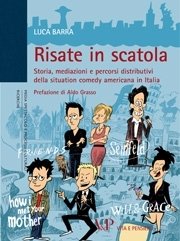
Luca Barra is Full Professor of Television and Digital Media at the Department of Arts, University of Bologna. His research focuses on media studies, particularly television history and contemporary evolution, transnational circulation of content, serialization, and comic/humorous genres. He has coordinated the Master's Degree in Information, Cultures and Media Organization since 2021 and serves as editor-in-chief of VIEW. Journal of European TV History and Culture. University of Bologna, Department of Arts Research areas: Television History, Transnational Media, Digital Transformation, Italian TV Production Barra's work examines the international mediation of ready-made TV formats, Italian streaming partnerships, and the cultural implications of digital television. His recent articles analyze dystopian narratives, sitcom reception in Italy, and the redefinition of celebrity during the pandemic. He contributes to academic discourse through editorial roles in journals like SERIES and Comunicazioni Sociali. His publications include monographs on Italian television programming, sitcoms, and co-edited volumes exploring European premium TV fiction and digital media frameworks. Barra has led research projects such as ATLas and F-ACTOR, and collaborates with international institutions including Brown University and NECS.
Kathleen Ellis is a Lecturer III in the Department of English at the University of Maine, where she teaches courses including College Composition, Creative Writing, American Women’s Literature, and Business Writing. She has been affiliated with the UMaine Honors College since 2002, teaching interdisciplinary seminars like 'Civilizations' and 'Feast or Famine: Food in Literature.' Her office is located in Neville Hall, and she maintains regular appointment hours. Ellis's research spans creative writing, poetry translation (Spanish/Portuguese), 20th-21st century American poetry, and Latin American literature. Secondary interests include environmental literature, exile narratives, and representations of women in war. Her recent work focuses on the Penobscot Watershed, bilingual poetry translation, and experimental collaborations with visual artists. Her publications demonstrate consistent engagement with environmental themes, feminist reinterpretations of history/mythology, and cross-cultural dialogues. Recent works (2007-2008) show intensified focus on ecological crises and Latin American translation, while earlier collections explore American regionalism and gender archetypes. Awards & Grants: Maine Arts Commission Good-Idea Grant (2007) National Endowment for the Arts Fellowship (1985) Pablo Neruda Poetry Prize (1986) Artist residencies at Yaddo and Djerassi Foundation Multiple Maine Humanities Council grants Ellis coordinates campus-community initiatives including the 'Works in Progress' faculty series at Fogler Library and the annual POETS/SPEAK! multilingual reading at Bangor Public Library. She leads poetry workshops at the Farnsworth Art Museum and is developing manuscripts like The Wide Disturbances of Water and a novel, Mina Bravo and the Mexican Cha-Cha .