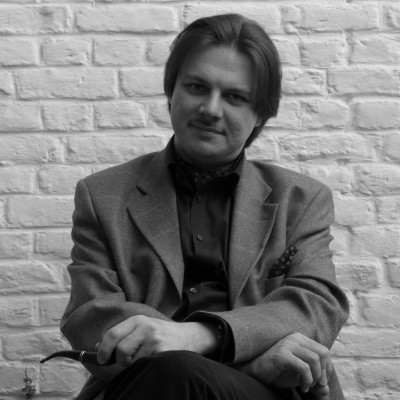
Victor Chestopal serves as Professor of Piano and Chairman of the Keyboard Section at the Royal Conservatory of Brussels since 2020, with concurrent professorship at Italy's Accademia Perosi. A globally recognized performer, he has collaborated with orchestras including the Moscow Philharmonic and Helsinki Philharmonic, and performed at venues like Brussels' Palais des Beaux-Arts and Moscow Conservatoire. His educational background includes: Early training at Moscow's Gnessin Music School and Central Music School of the Tchaikovsky Conservatoire Master's degree from Sibelius Academy (2001) Doctor of Music from Sibelius Academy (2010) with thesis "Temporal correlation in the Goldberg Variations" Studies at Imola's Accademia Pianistica (1992-1997) and Weimar's Hochschule für Musik (1995-1997) Chestopal's research integrates performance practice with musicological analysis, focusing on structural interpretation of Baroque and Romantic repertoire. His scholarly work examines temporal relationships in canonical piano works, while his artistic output spans Early Music, Contemporary Theatre, and Jazz Education. As a multilingual poet publishing in Russian, Italian, and French, he bridges musical and literary arts through collections like "Anno" (2014) and "Poeticheskie dnevniki" (2018). His honors include: First Prize at the “Carlo Soliva” International Competition (1990) As an educator since 2007, Chestopal conducts annual masterclasses in Liège and serves on international competition juries. He actively mentors students across European conservatories while leading charity initiatives for organizations including "Save the Children" and "Mary's Meals", often performing benefit concerts for humanitarian causes.
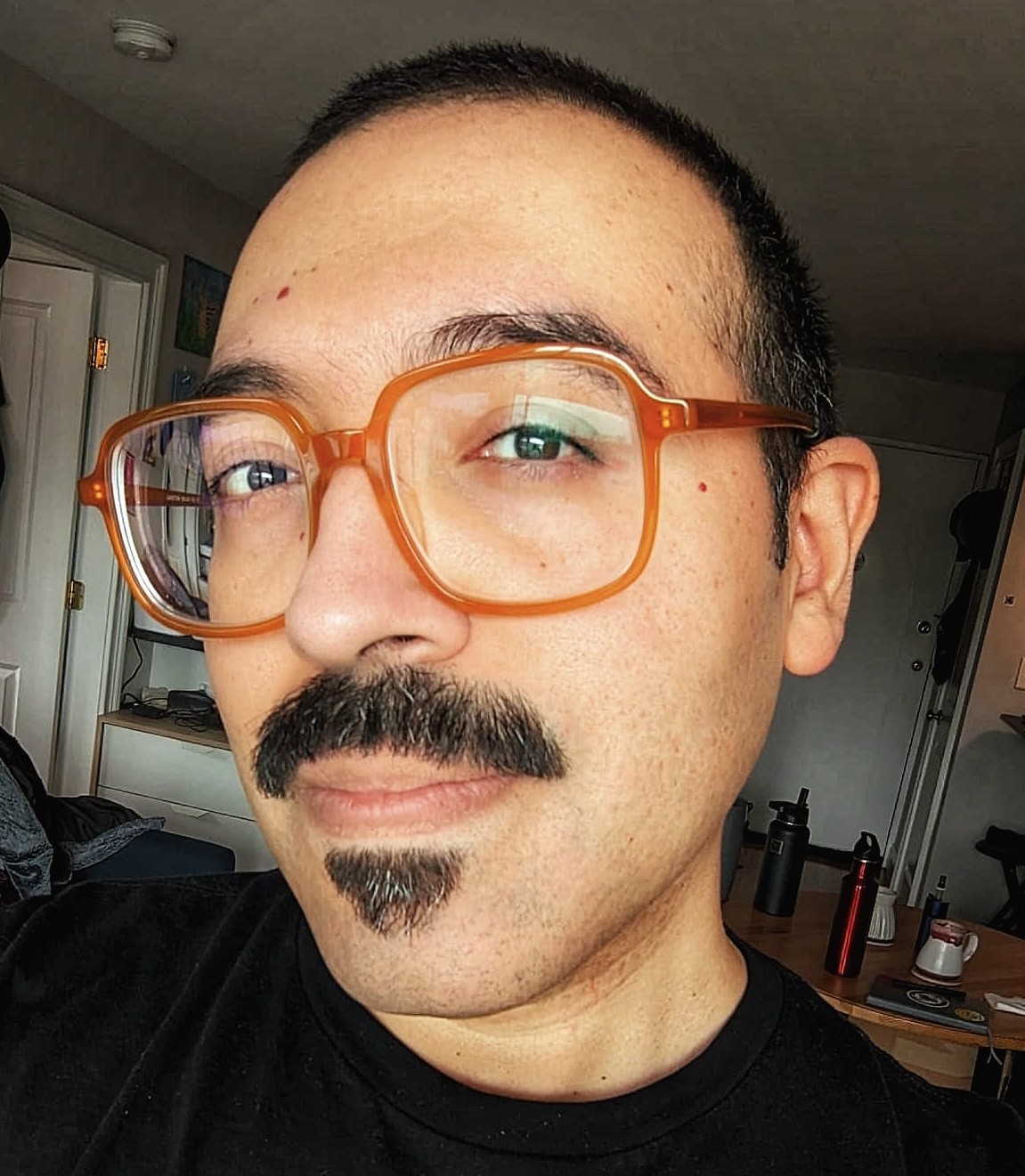
José Angel Araguz is an Assistant Professor of English at Suffolk University, specializing in creative writing and literary studies. His research focuses on Latinx poetics, poetic forms, and experimental literary genres. He holds a PhD from the University of Cincinnati, an MFA from New York University, and a BA from the College of Santa Fe. Dr. Araguz is deeply involved in literary publishing, serving as Editor-in-Chief of Salamander , a member of The Cincinnati Review’s Strategic Board, and an advisory board member for SWING literary journal. He also leads editorial roles at Airlie Press and Right Hand Pointing. His creative work spans poetry, nonfiction, and hybrid genres, with a focus on Latino/a identity, speculative elements, and formal innovation. Major publications include Ruin and Want (2023), La esperanza espera (2023), and Rotura (2022). His research explores blackout poetry, microcuentos, and the intersection of creative writing with cultural critique. He teaches courses like Latinx Literature, Creative Writing, and Poetry Workshops. Office hours are Fridays 10:30 a.m.–1:30 p.m. or by Zoom appointment.
Michaela Bürger-Koftis serves as Associate Professor in the Department of Modern Languages and Cultures at the University of Genoa's School of Humanities. Her teaching portfolio includes advanced courses such as German Literature and Culture III , German Linguistics (LM) , and Cultures of German-speaking Countries across undergraduate and master's programs focused on teaching, publishing, and intercultural communication. Her research investigates polyphonic structures in multilingual literature, with emphasis on German-Russian linguistic intersections and autobiographical narratives. Key projects explore lyrical diary forms and creative writing through the lens of polyphony, examining how multilingual expression shapes narrative identity and literary innovation in contemporary works. Recent publications demonstrate consistent focus on the Polyphony research initiative, revealing evolving methodologies in multilingual creativity and writing. This work establishes frameworks for analyzing cross-linguistic literary production while documenting the project's development from 2018-2023. No scientific awards are documented in available sources. While specific student advisees remain unlisted, Bürger-Koftis contributes to academic governance as a member of the School of Humanities Library Board. Her collaborative research with institutions like Catania University demonstrates institutional partnership development within multilingual literary studies. The Polyphony project functions as an interdisciplinary research hub with dedicated web infrastructure, facilitating scholarly exchange on multilingual writing practices and serving as a model for digital humanities collaboration in literary studies.
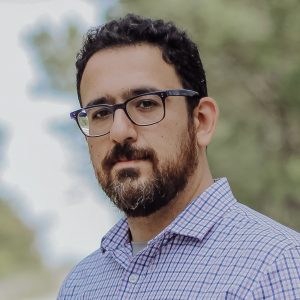
Ali Karjoo-Ravary is the Richard W. Bulliet Assistant Professor of Islamic History at Columbia University, specializing in the intellectual, social, and visual histories of premodern Islam through Arabic, Persian, and Turkic sources. His research intersects historical writing, cosmology, Sufism, and multilingual poetry in the Islamic East (Mashriq). Education: Ph.D., University of Pennsylvania (2018) M.A., University of Pennsylvania (2016) B.A., SUNY Stony Brook (2011) His current book project, Muhammad’s Song: Politics, Performance, and Cosmology in the Fourteenth Century , examines post-Mongol Islamic monarchy through Kadi Burhaneddin's life and rule. He also explores Sufi visual iconography, science fiction's relationship to religion, and architecture's role in evolving Islamic discourses. Scientific Awards and Fellowships: Bard Graduate Center Visiting Fellow (Fall 2020) Wolf Humanities Center Graduate Research Fellow (2016-2017)
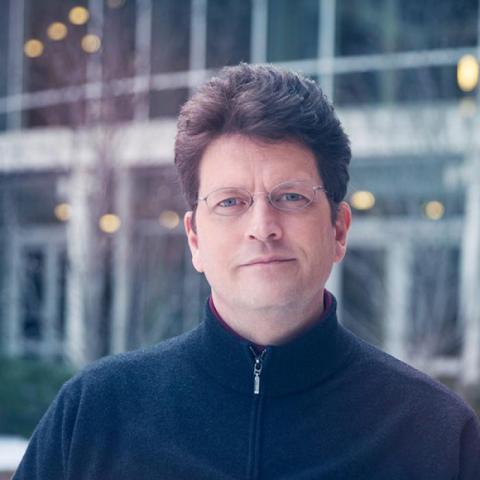
Roland Greene is the Mark Pigott KBE Professor and Anthony P. Meier Family Professor of the Humanities at Stanford University, holding dual appointments in the Department of English and the Department of Comparative Literature. He serves as Director of the Stanford Humanities Center and co-chair of the Renaissances and Poetics Workshop research groups. Educated at Brown University (A.B., 1979) and Princeton University (Ph.D., 1985), his academic career includes prior roles at Harvard and Oregon universities. His research focuses on Renaissance literatures of England, Latin Europe, and the transatlantic world, with expertise in poetry and poetics from the Renaissance to the present. Major works include Five Words: Critical Semantics in the Age of Shakespeare and Cervantes (2013) and editing the Princeton Encyclopedia of Poetry and Poetics (2012). Recent lectures address topics like Juan Caramuel’s Metametrica , Baroque aesthetics, and digital humanities challenges. Greene has advised over 50 Ph.D. students, many of whom hold academic positions globally. Awards include American Academy of Arts and Sciences membership and leadership roles like MLA President (2015–2016). His work engages with interdisciplinary themes such as colonial baroque, digital humanities, and global literary history.
Jeffrey Rossman is an Associate Professor at the University of Virginia , affiliated with the Department of History and serving as Director of the Center for Russian, East European, and Eurasian Studies . His work bridges historical analysis with cultural and literary studies, focusing on Russia/USSR, Modern Europe, Communism, Genocide, Espionage, and Jewish Cultural Studies. Education: Ph.D., University of California, Berkeley, 1997 A.B., Harvard University, 1989 His research explores worker resistance under Stalin, the intersection of Jewish identity and German literature, and the role of translation in cultural exchange. He has authored key works on Soviet labor movements and Holocaust memory, blending historical narratives with literary theory. Jeffrey’s recent publications and Google Scholar contributions highlight trends in 20th-century European history , Yiddish-German literary dynamics , and translation as a tool for identity formation . His work spans comparative literature, cultural memory, and diaspora studies, emphasizing interdisciplinary approaches. Scientific Awards: ACLS Collaborative Research Fellowship (2013-15) Harry Frank Guggenheim Foundation Research Grant (2013-15) Multiple grants from the University of Virginia’s College of Arts & Sciences and Faculty Summer Research Grant program Fulbright-Hays and IREX fellowships for international research As an educator, Rossman has taught courses such as Genocide: A Global History and Stalinism , mentoring students in historical and literary analysis. His lab, the Center for Russian, East European, and Eurasian Studies, fosters research on Soviet history, Jewish cultural studies, and transnational literary exchange.
Jocelyn Saidenberg is a Lecturer specializing in comparative literature, ancient poetry, and interdisciplinary studies. She holds a doctoral degree in Comparative Literature from the University of California, Berkeley. Her research integrates linguistics, social anthropology, and psychoanalysis to analyze didactic poetry’s transformative potential, as seen in her dissertation Echo Otherwise on Lucretius’s atomic poetics. Her creative work includes multiple poetry collections and essays exploring themes like displacement, existential inquiry, and interdisciplinary art. Key publications span academic interviews and poetry anthologies, with notable works such as kith & kin (2018), Dead Letter (2015), and Shipwreck (2013). Dr. Saidenberg has received prestigious awards including the Frances Jaffer Award and the American Academy of Poets Greenwald Prize (2001). Her creative and critical outputs reflect a sustained engagement with language’s capacity to interrogate human experience across historical and cultural contexts.
Manex Aguirrezabal Zabaleta is an Associate Professor in the Department of Nordic Studies and Linguistics at the University of Copenhagen. He previously held positions as a Postdoc (2017-2019) and Assistant Professor at the same institution. His educational background includes: PhD in Natural Language Processing from the University of the Basque Country (UPV/EHU), conducted at the IXA NLP group. Master's degree in Natural Language Processing from UPV/EHU. Bachelor's degree in Computer Science (5 years) from UPV/EHU. Dr. Aguirrezabal's research focuses on the computational analysis of poetry , particularly stress patterns in English. He explores whether computers can effectively analyze poetic structures, a field with roots in the 1980s but revitalized by modern techniques. Additionally, he investigates language generation , computational morphology and phonology , and finite-state methods . His work bridges traditional linguistic inquiry with cutting-edge natural language processing. Recent publications (2023-2024) demonstrate a diverse engagement with computational linguistics, including poetry generation, multimodal corpus development, clickbait analysis, and fact-checking. His research often employs zero-shot learning and language models, reflecting current trends in AI-driven linguistic analysis. He has contributed to international collaborations such as ParlaMint (multilingual parliamentary corpora) and the GEHM Zoom corpus. While specific grant details are not provided, his active publication record indicates ongoing research support. Dr. Aguirrezabal maintains a strong connection to his Basque heritage, having pursued his early education in the Basque language.
Alexander Key is an Associate Professor of Comparative Literature at Stanford University, specializing in Classical Arabic literature and the intellectual history of Arabic and Persian-speaking worlds from the 7th century onwards. His scholarship focuses on the philosophy of language, literary theory, and cross-cultural translation. Ph.D. in Arabic and Islamic Studies from Harvard University (2012) Current research: Arabo-Persian linguistic intersections, poetics in translation, and pre-modern theories of syntax and affect His articles span diverse eras and topics, including: Medieval Arabic language philosophy (5th–11th century) Modern Arabic political poetry analysis (20th–21st century) Comparative methodologies bridging Islamic and Western traditions A key editorial role includes: Board Member of Stanford University Press Advisory roles at Habib University and Stanford’s Markaz Resource Center His work bridges academic publication with public discourse through: Contributions to Arcade Colloquy Interviews on poetics, religion, and contemporary politics Podcasts and literary salon discussions
Daniel Medin serves as Professor at The American University of Paris within the Department of Comparative Literature and English History and Politics, joining the faculty in January 2010 after teaching positions at Stanford University, Washington University in St. Louis, and Free University Berlin. His academic credentials include: PhD, Washington University in St. Louis MA, Washington University in St. Louis BA, University of Connecticut Professor Medin's research centers on contemporary international fiction and the global reception of Franz Kafka , with significant contributions to Central European literary studies. His scholarly focus extends to autobiographical writing , editorial practices for translated fiction , and small prose forms , consistently examining cross-cultural literary exchange through interdisciplinary lenses that bridge literature, history, and translation theory. Analysis of his recent publications reveals a pronounced trajectory toward edited volumes spotlighting global literary voices across European, Asian, and Latin American traditions. His work demonstrates sustained engagement with translation as cultural mediation and Kafka's enduring legacy in contemporary writing, frequently connecting literary analysis with musical composition through collaborations with composers and musicians. His distinguished recognition includes: Alexander von Humboldt Foundation Fellowship As director of the Center for Writers and Translators and editor of the Cahiers Series, Professor Medin cultivates transnational literary networks through institutional leadership rather than traditional grant-funded research. His extensive involvement with literary prizes—including the International Booker Prize and European Union Prize for Literature—complements his editorial work at publications like Music & Literature and Schreibheft. He actively shapes contemporary discourse through the Center for Writers and Translators, organizing events that connect authors, translators, and scholars across linguistic boundaries. His recent festival appearances at Cheltenham, Bergen, and Dublin highlight ongoing commitment to examining Kafka's relevance and fostering dialogue about global literary trends.
Andrew Ollett is an Associate Professor and Director of Graduate Studies in the Department of South Asian Languages and Civilizations at the University of Chicago , where he has taught since 2019. His research focuses on the literary and intellectual traditions of South and Southeast Asia, particularly through works in Sanskrit, Prakrit, Apabhramsha, and Kannada from the first millennium CE. Co-founder and editor of NESAR (New Explorations in South Asia Research) Director of NEH-funded edition/translation of the Kavirājamārga (earliest Kannada literary manual) Expert in Prakrit and Kannada literary traditions His work explores the 'question of language'—examining how language choice shaped cultural production and change in premodern India. Current projects include a monograph on context-sensitivity in Indian language theories and a study of manuscript technology's impact on early South Asian knowledge communities. He has authored The Mirror of Ornaments (Naples: Unior Press, 2025) and Language of the Snakes (UC Press, 2017), and co-authored Lilavai (Harvard, 2021). Recent publications include interdisciplinary studies on: Sanskrit-Prakrit campū genre reevaluation Pragmatics in Mīmāṁsā interpretive concepts Manuscript literacy's influence on literary forms Historical linguistics of Middle Indic syllable reduction Philosophy of language in Śālikanātha and Kumārila Bhaṭṭa Awarded the NEH 'Scholarly Editions and Translations' grant , he teaches classical South Asian literature courses covering Sanskrit, Prakrit, and Tamil traditions. He maintains digital resources including a Prakrit Digital Texts Project and Mīmāṁsādigdarśinī digital text repository, and actively contributes to open-access scholarship.
Lucia Binotti is a Professor of Spanish and Digital Humanities at the University of North Carolina at Chapel Hill (UNC-CH), with dual affiliations in the Department of Romance Studies and interdisciplinary Digital Humanities initiatives. She serves as Graduate Advisor for Hispanic Linguistics and Director of the Honors Study Abroad Program in Rome. Her work bridges traditional philology with cutting-edge digital scholarship, emphasizing immersive learning experiences through virtual reality (VR) and augmented reality (AR) technologies. Binotti holds a Ph.D. from UC Santa Barbara (1990), an MA (1985), and a BA (1984) in Romance Philology from the Università degli Studi di Pisa. Her research focuses on linguistic identity, cultural heritage preservation, and innovative educational platforms like Amirabilia—the world’s first experiential learning platform. Notable projects include nXimena (healthcare training for Latinx abuse survivors) and Entiendelo (a linguistic/cultural navigation app for Latinx communities). Her scholarly interests span Early Modern Spanish literature, digital humanities applications, and the intersection of technology with social justice. She has directed grants totaling over $500K for projects involving AR/VR integration in education, including collaborations with the UNC Health Science Library and NCSU’s DELTA initiative. Recent awards include the John K. Walsh Award (2010) and Digital Innovation Fellow status (2014). Grants & Leadership: CFE-Lenovo Technology Grants (2018–2019) for AR/VR expansion iLRN 2020 International Co-Chair XR Faculty Learning Community Leader (UNC) Teaching: Courses span from introductory Hispanic literature to advanced topics like medieval intellectual history and digital humanities methodologies. Binotti’s work emphasizes ‘place, presence, and perspective’ in Cyber-Humanities education, particularly addressing marginalized communities through technology-driven solutions.
Rosa Andujar is a Senior Lecturer in Liberal Arts at King's College London, where she is affiliated with both the Department of Liberal Arts and the Department of Classics within the Faculty of Arts & Humanities. She serves as Editor of the American Journal of Philology and holds positions on the editorial boards of Brazilian journals Nuntius Antiquus and PhaoS - Revista de Estudos Clássicos. Dr. Andujar was elected to the Program Committee of the Society for Classical Studies for a three-year term (2022-2025), serving as Vice President for Program and Chair from 2023-2025. Her research focuses on two complementary areas: Ancient Greek tragedy, particularly the tragic chorus and its performance capabilities Global receptions of Greek drama, with special emphasis on Latin America and the Caribbean Dr. Andujar's work examines how engagements with Graeco-Roman antiquity intersect with questions of gender, race, class, and national identity. She has particular expertise in Cuban adaptations of Greek tragedy and Latinx receptions of classical drama, exploring how these cultural encounters create new narratives that challenge traditional understandings of classical reception. Her research has been recognized with prestigious awards including the 2020 London Hellenic Prize for 'The Greek Trilogy of Luis Alfaro' and the 2022 AJP Best Article Prize. She has secured significant research funding from the Loeb Classical Library Foundation, British Academy, A. G. Leventis Foundation, Harvard Center for Hellenic Studies, Andrew W. Mellon Foundation, and Fundación BBVA. Dr. Andujar's current research projects include 'The Cambridge Companion to Classics and Race' (edited volume), 'La Puerta Electra/The Electra Door' (critical bilingual anthology of Cuban rewritings), and 'Tragedy and Revolución' (monograph on Greek drama in Caribbean cultural history), supported by recent fellowships from the Loeb Classical Library Foundation and British Academy. She is actively involved in academic service as Editor of the American Journal of Philology, co-editor of the 'Classics and the Postcolonial' book series for Routledge, and Advisory Board member of 'Hesperides: Classics in the Luso-Hispanic World.' Her external examining work for the University of Birmingham (2018-2023) demonstrates her commitment to academic standards across institutions.
Dr. Hannah Zdansky is an Assistant Professor of English at Belmont Abbey College, specializing in medieval languages, literatures, and manuscript studies. Her research focuses on cross-cultural connections in medieval Britain and Ireland, particularly exploring multilingualism, religion in literature, and medieval reading practices. She holds a B.A. from Baylor University, an M.A. from the National University of Ireland, Galway, and a Ph.D. from the University of Notre Dame. Her expertise spans Old and Middle English, French, Irish, Welsh, and Latin, with a methodological focus on digital humanities and the history of the book. Dr. Zdansky’s work examines how medieval literary and material cultures were shaped by multicultural interactions, including studies on medieval manuscripts, the role of women in literary production, and the intersection of religion with secular narratives. Her recent scholarly engagements include presentations on topics like the transnational dimensions of medieval texts, the interplay between sacred and secular themes in works such as Gui o Bharbhuic , and comparative analyses of Welsh and English manuscript traditions. Her publications span peer-reviewed articles, encyclopedia entries, and book reviews, reflecting her commitment to interdisciplinary medieval studies. Dr. Zdansky teaches a wide range of courses, from Old English Language and Literature to Irish History, emphasizing close textual analysis and historical context. She has advised numerous students through independent studies and thesis work, fostering academic rigor and intellectual curiosity in her classroom.
Hakan Özkan is a Privatdozent and Research Associate at the Institute of Arabic and Islamic Studies, Department of Middle Eastern Studies, University of Münster, where he has been working since 2007 in various capacities. He was awarded his Venia Legendi (Habilitation) in November 2019 for Arabic and Islamic Studies with his thesis 'History of Eastern Zajal – Dialectal Arabic Verse Poetry from the East of the Arab World.' His academic background includes a Franco-German doctorate completed in 2006 from Université de Provence and University of Cologne, supervised by Claude Audebert and Monika Gronke, with external reviewers including Wolfhart P. Heinrichs from Harvard University. His educational background includes: 2019: Venia Legendi for Arabic and Islamic Studies, University of Münster 2002-2006: Franco-German Doctorate in Arabic Studies and Narratology (Université de Provence and University of Cologne) 1995-2000: Master of Arts in Islamic Studies, Oriental Languages and Literatures (University of Cologne) 2000-2001: Course program in Modern Standard Arabic and Syrian-Lebanese dialect at Institut Français d'Etudes Arabes de Damas Özkan's research focuses on premodern Arabic dialect poetry, particularly zajal and muwashshaḥ forms, narratology, prosimeter literature, socio-literary history, and diachronic dialectology. His interdisciplinary approach bridges linguistic analysis with literary criticism, examining how dialectal forms evolved within Arabic literary traditions across different historical periods and geographical regions. He has conducted extensive field research in Arab countries including Syria, Egypt, Lebanon, Tunisia, and Morocco, with particular emphasis on the historical development of poetic forms from the Mamluk through Ottoman periods. His publication history demonstrates consistent scholarly contributions to Arabic literary studies, with his 2020 monograph 'History of Eastern Zajal' representing a landmark study in the field. His recent work has expanded to include analyses of religious poetry praising the Prophet Muhammad in zajal form, wine poetry in Arabic literary traditions, and the integration of dialects into Arabic language teaching methodologies. His scholarly output spans monographs, critical editions, encyclopedia entries, journal articles, and book chapters across multiple languages including German, English, French, and Turkish. Among his academic recognitions: 2018: Second place on shortlist for W2 Professorship for Arabic Language and Translation Science, University of Leipzig 2008: Offered Junior Professorship at American University in Cairo (declined) 2007: Second place on shortlist for maître de conférence position at University of Nancy 2007: Official Qualification from National University Council (CNU) for positions as maître de conférence at French universities Özkan has served on numerous academic committees, including appointment committees for professorships in Sinology and Arabic and Islamic Studies at the University of Münster. He has been a juror for the Sheikh Hamad Award for Translation and International Understanding in Doha and has served on the steering committee for the 'Translation for Dialogue' program of the Anna Lindh Foundation. His editorial work includes reviewing for Mamluk Studies Review, Die Welt des Islams, and Middle Eastern Literatures since 2012. His scholarly activities extend to linguistic fieldwork on Pontic Greek dialects in Turkey and organizing significant academic conferences including 'The Race Course of Literature – An-Nawāǧī and His Contemporaries' in 2018 at the University of Münster. His multilingual capabilities (Arabic, Turkish, German, French, English, Persian, Ottoman Turkish, and knowledge of Modern Greek) enable his comparative work across multiple linguistic and cultural traditions in the Mediterranean region.