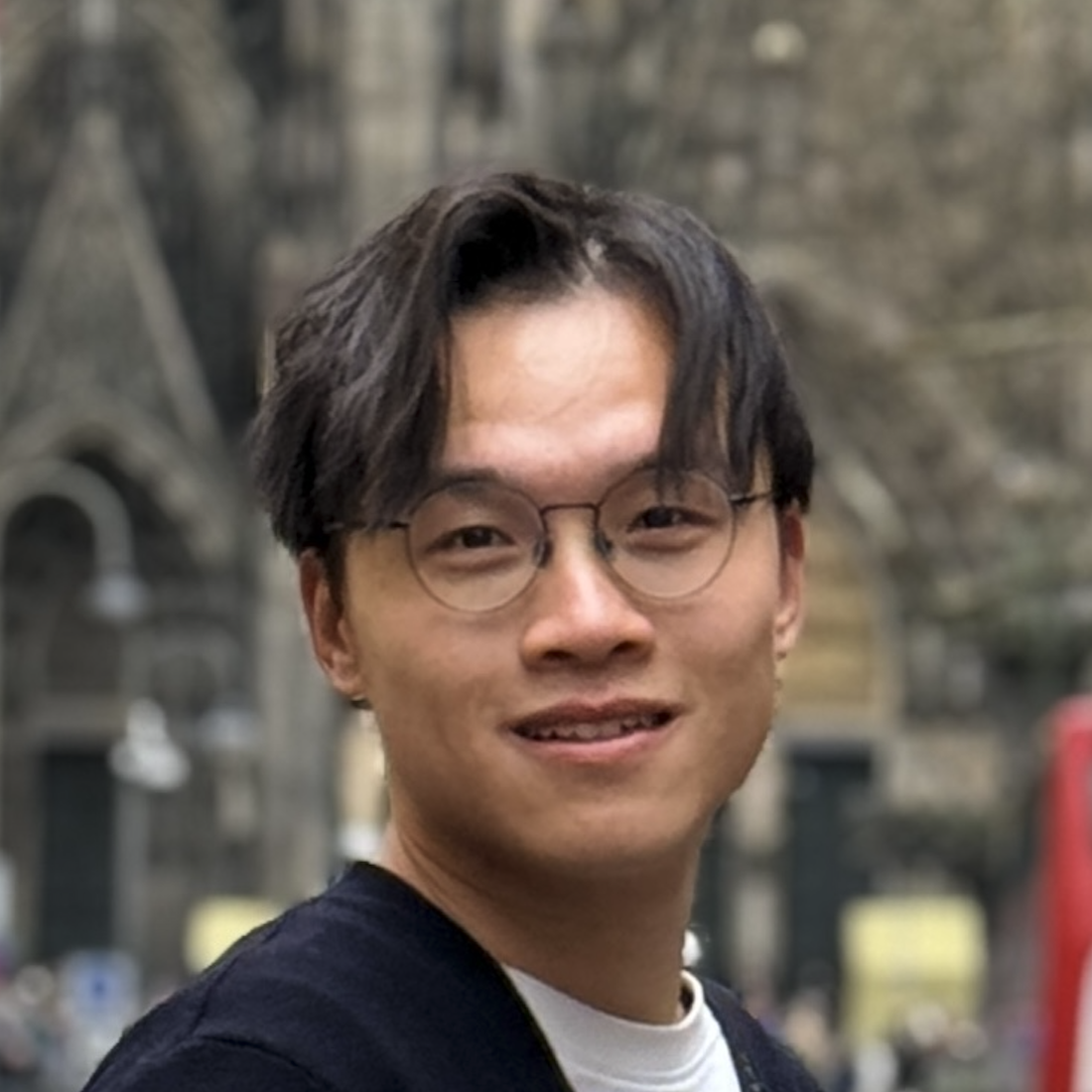
Dimitris Gkoumas is a Postdoctoral Research Assistant at Queen Mary University of London (QMUL), specifically within the School of Electronic Engineering and Computer Science. His role involves advancing interdisciplinary research at the intersection of computer science, artificial intelligence, and healthcare. His research interests focus on AI-driven healthcare solutions, quantum computing-inspired machine learning, natural language processing (NLP), and multimodal data fusion. Key areas include developing longitudinal datasets for dementia diagnosis, applying large language models (LLMs) to clinical tasks like suicidality risk detection, and exploring quantum theory for decision-making systems in information retrieval and sentiment analysis. His work bridges technical innovation with societal impact, such as analyzing parliamentary debates (ParlaMint) and investigating xenophobic attitudes via social media. He also contributes to collaborative platforms like the European Language Grid, promoting cross-lingual NLP advancements. While no formal awards are listed, his publications reflect a strong commitment to cutting-edge research. His advising and grants activities remain unspecified in the provided texts. Dimitris has contributed to educational technology through projects like HistoryLand, a game for primary education history learning.
Jenny Chim is a Visiting Professor at Queen Mary University of London's School of Electronic Engineering and Computer Science. Her research focuses on Natural Language Processing (NLP), Multilingual Language Models, and their applications in mental health analysis, biomedical informatics, and social media data. She contributes to large-scale projects like the BigScience initiative, developing open-access multilingual models and evaluating synthetic data generation techniques. Her work spans cross-cultural linguistic challenges, clinical insights from social media timelines, and benchmarking code generation systems. Key contributions include the BigScience ROOTS Corpus and the Bloom model, emphasizing ethical AI and global accessibility. She actively organizes shared tasks like clpsych to advance clinical NLP applications, particularly in identifying mental health risks through user-generated content. Research interests also include hierarchical VAE integration with LLMs for clinical timeline summarization, contamination detection in shared tasks, and frameworks for biomedical NLP like BigBio. Her work bridges technical innovation with real-world healthcare applications, advocating for culturally inclusive AI systems.
Mr. Dino Ratcliffe is a Visiting Professor at Queen Mary University of London's School of Electronic Engineering and Computer Science. His research interests span Artificial Intelligence, Machine Learning, and Deep Learning, with a focus on Reinforcement Learning, Natural Language Processing, and Game AI. He explores topics such as style transfer, domain adaptation, and algorithm optimization for complex environments like video games. His work includes advancements in cross-lingual style transfer using VAEs, policy optimization in reinforcement learning, and developing game-playing agents like 'Clyde' for DOOM. His research bridges theoretical AI concepts with practical applications in visual and textual domains. No scientific awards or grants are explicitly mentioned, but his contributions highlight innovative solutions in AI-driven systems. He is affiliated with the School's academic community and can be reached at d.ratcliffe@qmul.ac.uk.
Davide Pigoli is a Senior Lecturer in Statistics at King's College London, based in the Department of Mathematics within the Faculty of Natural, Mathematical & Engineering Sciences. He holds a Ph.D. in Mathematical Models and Methods in Engineering from Politecnico di Milano, Italy (2013). Before joining King's in 2017, he held research positions at the University of Warwick and the University of Cambridge. His research focuses on functional and high-dimensional data analysis, manifold-valued data, spatial statistics, and applications in linguistics, forensics, and biosciences. Key contributions include work on covariance operators, Kriging methods for Riemannian data, and statistical modeling of linguistic and acoustic phonetic data. Recent projects include analyzing vocal audio data for COVID-19 screening and developing optimal experimental designs. Pigoli has co-authored over 19 peer-reviewed publications, including studies on machine learning in public health and forensic entomology. He contributed to the EPSRC-funded project 'Multi-objective optimal design of experiments' (2020–2025). His work aligns with UN Sustainable Development Goals, particularly in health and innovation. Office: S2.10 Strand Building, Strand Campus, London WC2R 2LS. Office hours: Monday 15:30–16:30.
Chuan Meng is a researcher transitioning to a postdoctoral position at the University of Edinburgh's Natural Language Processing Group in September 2025. He obtained his PhD in Artificial Intelligence from the University of Amsterdam (UvA) in June 2025, supervised by Maarten de Rijke and Mohammad Aliannejadi. His research focuses on Information Retrieval and Natural Language Processing with Large Language Models , particularly in conversational agents, model/data-efficient neural ranking, and automatic evaluation techniques like query performance prediction. Education: PhD in Artificial Intelligence, University of Amsterdam (2025) MS in Computer Science and Technology, Shandong University (2021) BS in Electronic Commerce, Shandong Normal University (2018) His research interests span conversational search optimization, proactive agent development, knowledge-grounded dialogue systems, and query performance prediction using LLM-generated judgments. Recent work includes UniConv (unified retrieval/response generation), SOLID (intent-aware dialog generation), and QPP++ 2025 workshop organization. Key scientific contributions include 440+ Google Scholar citations (H-index: 13) and publications in premier venues like SIGIR , ACL , EMNLP , and TOIS . He has served as program committee member for SIGIR 2025/2024, ACL 2023, and other top conferences. As teaching assistant , he contributed to Information Retrieval and Natural Language Processing courses at UvA and Shandong University. His administrative roles include IRLab LinkedIn manager, webmaster for IRLab website, and seminar chair at UvA.
Zifeng Ding is a Research Fellow at the Department of Computer Science and Technology, University of Cambridge, affiliated with the School of Technology. His research focuses on artificial intelligence, machine learning, knowledge graphs, and their applications in natural language processing and computer vision. Key interests include temporal knowledge graph reasoning, multimodal learning, and the reliability of large language models (LLMs). He has contributed to benchmark development (e.g., TCP, FOReCAst), dataset creation (AVerImaTeC), and methods addressing LLM limitations (e.g., hallucination mitigation, bias analysis). His work bridges theoretical advancements in graph neural networks with practical applications in real-world systems like supply chain analysis and evidence-based fact verification. Current projects explore parameter-efficient model tuning (Perft) and cross-lingual knowledge editing via in-context learning. Publications span top venues, emphasizing temporal dynamics, causal reasoning, and trustworthiness in AI systems. He collaborates widely on topics ranging from dynamic graph modeling (DyGMamba) to future outcome prediction (FOReCAst benchmark).
Christopher Bryant is a Visiting Professor in the Natural Language and Information Processing group at the University of Cambridge's Department of Computer Science and Technology. He holds a PhD from the University of Cambridge (2019), supervised by Prof. Ted Briscoe, and previously worked as a Research Assistant at the National University of Singapore under Prof. Hwee Tou Ng. His research focuses on grammatical error correction (GEC), automatic annotation, and codeswitching analysis. He developed the ERRor ANnotation Toolkit (ERRANT), widely used in GEC research, and led the BEA-2019 Shared Task. Bryant also serves as an Applied AI Research Scientist at Writer, Inc., and maintains active collaborations in NLP. Education: PhD in Computer Science, University of Cambridge (2019) MSc in Speech and Language Processing, University of Edinburgh (Year not specified) MA(Hons) in Chinese and Linguistics, University of Edinburgh (Year not specified) Research Interests: Automatic grammatical error detection/correction (GEC) for non-native English Codeswitching analysis in multilingual contexts Robust evaluation methodologies and artificial data generation Discourse parsing and linguistic annotation frameworks Applications of large language models in educational technology Key Contributions: ERRANT: Open-source tool for GEC error annotation and evaluation BEA-2019 Shared Task on GEC for educational applications Industry collaboration with Writer, Inc. on AI-driven writing tools Grants & Collaborations: Supported by the Institute for Automated Language Teaching and Assessment (ALTA) during his PhD. Active in academic-industrial partnerships through his role at Writer.
Idan Blank is an Assistant Professor with dual appointments in the Psychology Department and the Linguistics Department at the University of California, Los Angeles, within the College of Letters and Science. His research bridges cognitive neuroscience, linguistics, and artificial intelligence to investigate how humans understand language—a universal phenomenon across human cultures yet unique to our species that enables thought transfer between minds. Dr. Blank earned his PhD in Cognitive Science from the Massachusetts Institute of Technology in 2016 and his MA in Psychobiology from Tel Aviv University in 2011. His academic journey reflects a strong foundation in both cognitive science and biological approaches to understanding the mind. Dr. Blank's research program focuses on the neural mechanisms underlying language comprehension, examining which aspects of comprehension have dedicated neural circuitry versus those that rely on more general cognitive systems. His work employs functional MRI, behavioral experiments, and computational modeling to investigate how language "happens" in our minds and brains. The BlankLangLab, which he leads, studies the component processes of comprehension, the mental structures that allow us to "know the meaning" of utterances, and the mental operations used to manipulate them. His research increasingly explores connections between artificial intelligence language models and human cognitive processing. Analysis of Dr. Blank's recent publications reveals a strong emphasis on precision mapping of language networks, investigations of language processing across diverse populations (including polyglots and older adults), and examinations of how language processing relates to other cognitive systems like theory of mind. His work demonstrates a clear trajectory toward integrating neuroimaging data with computational approaches to better understand the architecture of human language processing. While specific awards aren't detailed in the provided information, Dr. Blank's research has garnered significant scholarly attention, with numerous publications in high-impact journals including Proceedings of the National Academy of Sciences, Trends in Cognitive Sciences, and Journal of Neuroscience. Several of his papers have accumulated substantial citation counts, reflecting the importance of his contributions to cognitive neuroscience and language processing research. Dr. Blank leads the BlankLangLab at UCLA, which investigates language, understanding, and thought through neuroimaging, behavioral, and machine learning approaches. His lab maintains strong collaborative ties with other research groups, particularly in the area of language network mapping. The lab's research program integrates precision mapping techniques with naturalistic paradigms to characterize functional brain regions engaged during language processing, with recent work increasingly incorporating large language models to bridge AI and human cognition.
Michalis Paraskevas is a Professor at the Department of Electrical and Computer Engineering, University of Peloponnese. He specializes in Signal Processing Systems, Broadband Networks, and Telematics Services. He graduated from the University of Patras (1989) and earned his Ph.D. there (1995). His research focuses on digital signal processing, information theory, machine learning applications in image and NLP, and digital education transformation. He has authored 4 textbooks, published over 85 papers, and contributed to 50+ conference committees. He has led large-scale network projects recognized nationally/internationally. He served as Department Head (2019–2021) and directed the 'Data and Media' Lab. Currently, he is Vice President of the Institute of Computer Technology & Publications 'Diofantos', heads the National Support Organization for eTwinning, and coordinates the Greek School Network. Teaching includes undergraduate courses like 'Signals and Systems' and postgraduate programs in Advanced Educational Technologies and STEM education. He is affiliated with TEE, IEEE, and AES.
Arthur Spirling is the Class of 1987 Professor of Politics and Director of Graduate Studies. His career includes previous roles at Harvard University and New York University. He specializes in quantitative methods, political behavior analysis, and text-as-data techniques, with recent work exploring intersections between data science, AI, and social science. Education: Bachelor's and Master's from the London School of Economics Master's and PhD from the University of Rochester Research Interests: Spirling's research focuses on advancing computational and statistical methods in political science. He emphasizes machine learning, ethical AI adoption, and applying text analysis to historical and institutional studies. His work often bridges methodological innovation with substantive areas like comparative politics and British parliamentary systems. Articles Trends: His recent publications highlight ethical challenges in using proprietary language models, the benefits of open-source alternatives, and improving replication standards. He also explores model complexity and its implications for applied research, alongside topics like legal equality in historical political thought and measuring linguistic patterns in parliamentary discourse. Scientific Awards: Teaching and Mentoring Awards at Harvard and NYU Emerging Scholar Prize from the Society for Political Methodology Advising & Grants: As Director of Graduate Studies, Spirling supports PhD and Master’s students through structured research programs. His grants and funding align with his methodological work in text-as-data and AI ethics. He has advised on courses such as Applied Quantitative Analysis and Responsible Conduct of Research in Political Science .
Kai Kugler is a Researcher at the University of Trier's Department of Computational Linguistics and Digital Humanities. He specializes in computational linguistics, natural language processing (NLP), and digital humanities. His work integrates machine learning techniques with text analysis, focusing on transformer models, sentiment analysis, and corpus linguistics. He has contributed to collaborative projects such as the Research Center for Information Technology (FZI)'s SOSEC initiative (2022-2024) and the TCLC's Patterns project (2019-2023). He also led a funded project (€5,000) on command-line data processing learning modules (2023-2024). Kai has held administrative roles, including Member of the Council of Department II (2018-2024), Election Committee Chairman (2022), and Committee Member for a W2 Professorship appointment (2018). His teaching spans undergraduate and graduate programs, including courses on NLP fundamentals, machine learning for text and media, and computational linguistics programming. He has advised numerous Bachelor’s and Master’s theses on topics ranging from BERT-based models to sentiment analysis and corpus construction. Research interests include inverting BERT embeddings, multilingual language models, and applying NLP to sociolinguistic studies. His work bridges theoretical computational linguistics with practical applications in digital humanities and social media monitoring.
Chi-Chun Chou is a Professor of Accounting in the School of Business at California State University, Monterey Bay (CSUMB). He holds a Doctorate from National Cheng-Chi University in Taiwan and has a unique interdisciplinary background in computer science and accounting. His research focuses on advancing Accounting Information Systems (AIS), particularly in areas such as blockchain, machine learning, data analytics, and XBRL standards. He has published five top-tier peer-reviewed articles in the last five years, including in Journal of Information Systems and Computers & Industrial Engineering , with four ranked as A journals by the ABDC. Dr. Chou has served as an Editorial Board member of the Journal of Information Systems (2023–2025) and as Domain Editor of the Journal of Emerging Technologies in Accounting . He has guest-edited special issues on blockchain (2019–2020) and AI/ChatGPT in accounting (2023–2024). With over 60 manuscript reviews in five years, his contributions validate his leadership in AIS research. He teaches courses such as Auditing, Intermediate Accounting, and Business Analytics, integrating cutting-edge technologies like Python and large language models into his curriculum. Education: Doctorate in Accounting, National Cheng-Chi University, Taiwan. Research Focus: Blockchain applications, smart contracts, continuous auditing, XBRL, and AI-driven accounting processes. Editorial Roles: JIS Editorial Board (2023–2025), JETA Domain Editor, and Guest Editor for multiple special issues. His work bridges computer science and accounting, emphasizing transparency, automation, and innovation in financial reporting systems. Collaborations with professionals and international scholars further highlight his commitment to advancing AIS methodologies.
Dr. Michael Loizou is an Associate Professor in Digital Health at the University of Plymouth's School of Nursing and Midwifery (Faculty of Health). His work focuses on integrating digital technologies into healthcare education and patient care, particularly through virtual reality (VR), artificial intelligence (AI), and wearable devices. He is actively involved in PhD supervision within Healthcare Technology, emphasizing applications in AR/VR simulations, biosensor integration, and AI-driven interventions. Research interests span affective computing in mental health, surgical tool detection via computer vision, and co-designed digital solutions for older adults. Dr. Loizou has contributed to projects addressing rheumatoid arthritis physical activity promotion, multilingual VR language teaching, and disaster management systems for typhoon evacuation scenarios. His work aligns with UN Sustainable Development Goals, particularly improving health and well-being (SDG 3) and fostering innovation (SDG 9). Key research trends in his publications include leveraging VR for nursing education simulations, AI-driven interventions in chronic disease management, and participatory design of age-friendly technologies. He has explored emotional intelligence in healthcare training agents and developed frameworks to mitigate label leakage in surgical tool detection systems. No scientific awards are explicitly listed in the provided text. Dr. Loizou collaborates on interdisciplinary projects, including integrated care systems in England and digital skill gap mitigation in healthcare. He advocates for micro-learning through gamification to address cultural competency challenges in multicultural workplaces. His work extends to ‘Playable City’ initiatives, enhancing urban mobility for seniors via wearable tech, and designing digital games to engage older adults in health-promoting activities. These efforts highlight his commitment to bridging technological innovation with real-world healthcare and societal needs.
Marta Carretero Lapeyre is a Full Professor at the Complutense University of Madrid, specializing in the Department of English Studies, Linguistics and Literature. Her research focuses on modality, evidentiality, and evaluative language in English and contrastive studies, alongside syntactic, semantic, and pragmatic analysis of noun phrases. Supervised 3 PhD dissertations Co-supervised 2 PhD dissertations Currently supervising 1 PhD dissertation Her work spans corpus linguistics, pragmatics, and digital communication. Recent publications address topics like machine learning applications in modal analysis, cross-linguistic pragmatic markers, and epistemic stance in pandemic discourse. She welcomes proposals on pragmatics, corpus linguistics, and digital communication research. Email: mcarrete@filol.ucm.es
Ayla Rigouts Terryn is an Adjunct Professor at Université de Montréal's Faculty of Arts and Sciences, Department of Linguistics and Translation. She holds a Master's in Translation from the University of Antwerp and a PhD in Automatic Terminology Extraction from Ghent University. Her research focuses on improving language models through linguistically grounded approaches, emphasizing multilingual and specialized contexts. She leads the ACTER dataset project and co-leads research on lexical interactions between humans and machines. Research & Education PhD: Ghent University (D-Termine project) MSc: University of Antwerp (Translation) Mila (Quebec AI Institute) affiliation Research Interests : Automatic terminology extraction Computational linguistics Multilingual AI systems Bias analysis in large language models Specialized translation technologies Grants : FRQNT grant for translation bias research (2025-2028) FRQSC grant for lexical research team (2025-2030) Labs & Teams : LT3 Language and Translation Technology Team (Ghent University), Observatoire de linguistique Sens-Texte (OLST).