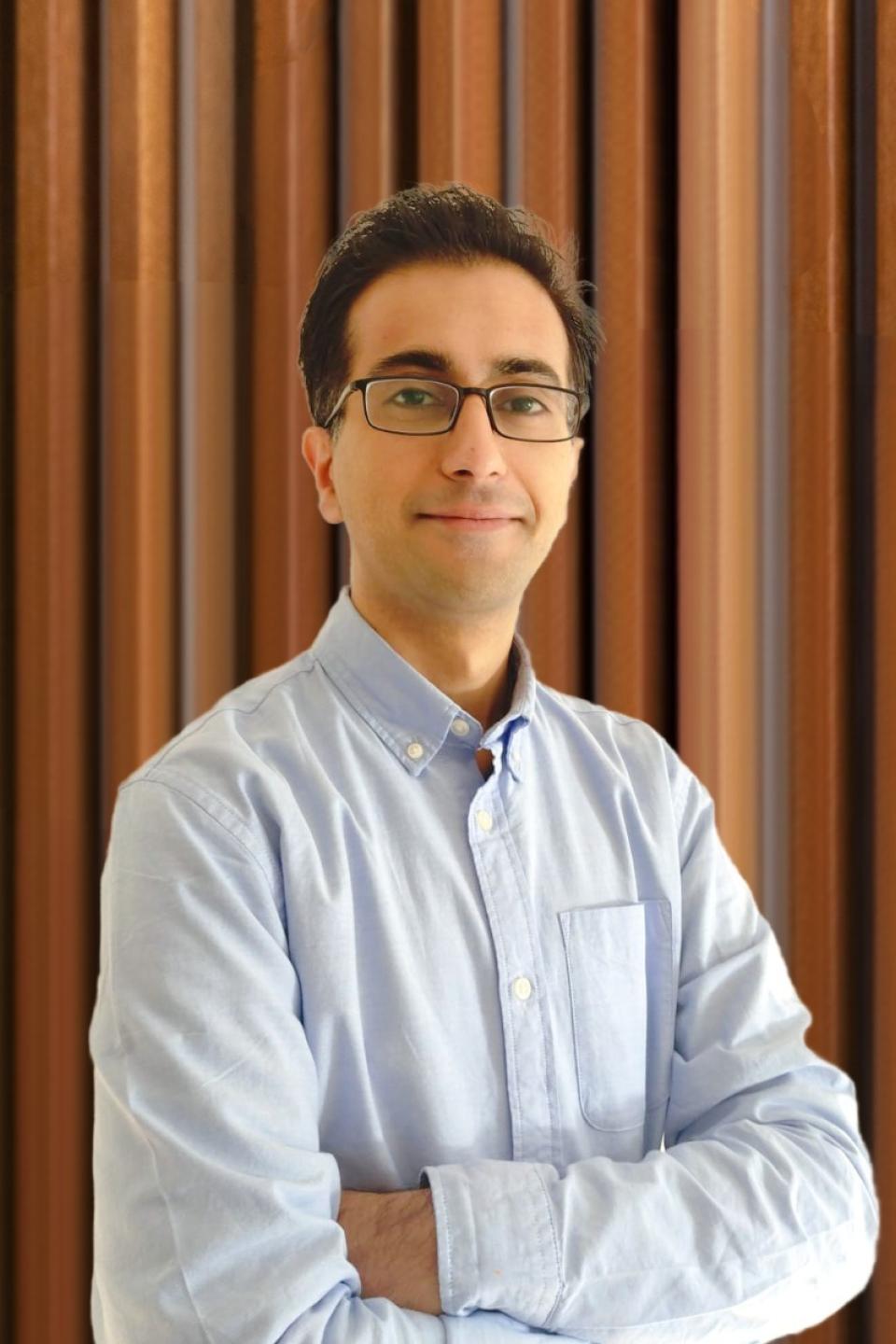
Gábor Kata is a Lecturer at INALCO (National Institute of Oriental Languages and Civilizations) in Paris, France. He works within the Computer Science Multilingualism department, contributing to the ERTIM research team . His expertise spans Computational Semantics , Syntax-Semantics Interface , and Natural Language Processing (NLP) . CNU Discipline: 27 - Computer Science Areas of Expertise: Europe Teaching Themes: Lexical Semantics, Computational Semantics, Linguistics for NLP, NLP His research focuses on Computational Semantics and Syntax-Semantics Interface , with particular attention to NLP applications. His scholarly output reveals trends in semantic relation extraction , anomaly detection in text data , and knowledge base population using both supervised and unsupervised learning approaches. This work often employs graph-based methods and vector space analysis across multilingual contexts.
Marc Tommasi is a Professor in Computer Science at the University of Lille, affiliated with the CRIStAL laboratory where he leads the Magnet research team. Previously, he was a founding member of the Mostrare project team at INRIA Lille. His academic career spans research in machine learning foundations and applications to structured data. His research focuses on: Machine learning theory and algorithms Structured prediction for trees and graphs Tree automata and set constraints Decentralized learning systems Sparse representations for structured data Natural language processing techniques Information extraction from semi-structured data His publication portfolio demonstrates consistent focus on spectral methods for graph learning, probabilistic tree modeling, and conditional random fields, with applications spanning network analysis, XML processing, and natural language tasks. Recent work emphasizes large-scale network modeling and spectral clustering techniques. He has supervised 13 PhD students including ongoing work in decentralized machine learning (Mahsa Asadi), privacy-preserving speech recognition (Brij Srivastava), and multilingual dependency parsing (Mathieu Dehouck), with completed theses covering graph construction, spectral clustering, and tree transducer learning. Significant research projects under his coordination include Pamela (decentralized ML), Lampada (structured data representations), Marmota (statistical ML for trees), Crotal (CRFs for NLP), ATASH (document transformations), and WebContent (information extraction). He maintains active involvement in the Magnet team at CRIStAL focusing on machine learning for graphs and NLP.
Professor Susan M. Fitzmaurice serves as Vice President and Head of the Faculty of Arts and Humanities at the University of Sheffield, where she holds the position of Professor and Chair of English Language within the School of English. Previously, she was Head of the School of English (2011-2015), Professor of English and Head of Department at Northern Arizona University, and University Lecturer in English at Cambridge University. Her research centers on the history of the English language through historical pragmatics, sociolinguistics, and computational linguistics. Key interests include semantic-pragmatic change, lexical patterns in large corpora, and conceptual modeling. She leads the Linguistic DNA project (AHRC-funded) that uses high-performance computing to analyze semantic change in Early Modern English (1500-1800), and collaborates on GCRF-funded community research in South Africa addressing rural capacity-building. Recent publications reveal a strong trajectory toward digital humanities methodologies, with 7 of the 15 most recent articles focusing on computational analysis of historical texts. Her work demonstrates interdisciplinary reach across linguistics, digital humanities, gender studies, and postcolonial research, particularly through projects examining Zimbabwean English and transnational discourse. As principal investigator for major grants including AHRC AH/M00614X/1 and GCRF initiatives, she directs collaborative research involving the Universities of Glasgow, Sussex, Pretoria, and South African NGO Pala Forerunners. Her supervision focuses on doctoral projects in historical sociolinguistics, corpus linguistics, and discourse analysis. She co-edits the Topics in English Linguistics series for Mouton de Gruyter and serves on the Philological Society Council. Her leadership extends to the UK-ZA Community Research partnership, which develops community-led methodologies for social violence research in sub-Saharan Africa.
Matthieu Labeau is a Senior Lecturer at Télécom Paris, affiliated with the Department of Image, Data, Signal (IDS). He joined the institution in 2019 after completing his PhD at the University of Paris-Saclay and a postdoctoral position at the University of Edinburgh. His research primarily centers on Natural Language Processing (NLP), with specialized interests in representation learning, language modeling, and conversational AI. His work spans: Core NLP : Contextual word representations, semantic alignment, and polysemy analysis. Machine Learning : Hierarchical classification, graph prediction, and few-shot learning techniques. Applications : Emotion recognition in dialogues, persuasiveness decoding, and educational NLP tools. Labeau leads research in the Signal, Statistics and Learning (S2A) team at the Information Processing and Communication Laboratory (LTCI). His recent publications demonstrate a strong focus on improving language model interpretability and efficiency, with innovations in tokenization effects and multimodal fusion. Though no awards or grants are mentioned, his consistent output in top-tier venues (e.g., NeurIPS, ACL, AAAI) highlights significant scholarly contributions. He actively collaborates on tools like EZCAT for conversation annotation and mentors researchers in NLP projects. Current work explores LLM capabilities in persuasion assessment and optimal transport methods for graph-based learning.
Arapatzis Avgerinos is a Professor at the Department of Computer Science & Information Technology within the Polytechnic School of the University of Thessaloniki , where he has been a faculty member since November 2009. His work bridges theoretical and applied research in information retrieval and data science. Education: BSc in Computer Engineering & Informatics, University of Patras (1996) PhD, Radboud University, Netherlands (2001) Research Interests: A specialist in Information Retrieval , Data Mining , and Natural Language Processing , his work spans Databases , Search Engine Privacy , Sentiment Analysis , and Contextual Suggestion Systems . His research integrates machine learning with domain-specific challenges in environmental science, cybersecurity, and business intelligence. Scientific Contributions: His publications (over 85 as of 2020) focus on hybrid retrieval methods, social media analysis, and privacy-enhanced systems. Recent work includes advancements in federated learning, climate change discourse analysis, and keystroke dynamics applications. Projects: He has participated in EU Horizon 2020 projects like ODYSSEA and FP7 initiatives such as CARRE, contributing to interdisciplinary research in medical informatics and environmental monitoring.
Giuseppe Samo is an Associate Professor in Linguistics at Beijing Language and Culture University and a Research Associate at the University of Geneva's Centre Universitaire d’Informatique. He is affiliated with the University of Geneva's Faculty of Letters and the IDIAP research center. His work bridges quantitative computational syntax with syntactic cartography , focusing on V2 phenomena and toponym analysis. His research interests include syntactic structure modeling , machine learning applications in linguistics , and game-based research methodologies . He specializes in language variation , computational analysis of linguistic data , and digital humanities , particularly examining urbanonym semantics and multilingual corpora . Recent publications demonstrate trends in computational syntax (7/15), toponymic studies (4/15), and language technology (4/15). Key methodologies involve quantitative analysis of syntactic locality, cross-linguistic comparisons , and synthetic dataset creation for testing large language models. He leads the research project 'Encoding syntactic structures as vectorial representations for deep learning' (funded by Beijing Language and Culture University, #20YBB06). His collaborative work spans institutions in Switzerland, Italy, and China , with notable contributions to diachronic syntax and epigraphic data encoding .
Professor Vaclav Brezina at Lancaster University's School of Social Sciences is a leading scholar in corpus linguistics, statistics, and their applications in second language acquisition research. His work spans sociolinguistic variation analysis, collocation networks, and corpus tool development. MA in English Linguistics & Philosophy (Charles University, Prague) PhD in Linguistics (University of Auckland) Research focuses on: Corpus design innovations for spoken/written L2 English Statistical methodologies for learner corpus analysis Vocabulary acquisition and phraseological patterns Sociolinguistic variation in the British National Corpus Current projects include the Written British National Corpus and Trinity Lancaster Corpus developments. His recent publications examine EMI academic writing challenges, collocational processing mechanisms, and epistemic stance markers in digital communication. Brezina supervises PhD students William Platt and Emil Tangham while directing multiple ESRC-funded initiatives.
Adam Pickens serves as an Instructional Associate Professor in the Department of Environmental and Occupational Health within the Texas A&M University School of Public Health. His research and teaching integrate industrial engineering principles with public health practice to address critical workplace safety challenges through evidence-based interventions. His academic foundation includes: PhD in Industrial Engineering from Texas Tech University MPH in Environmental and Occupational Health from Texas A&M University School of Public Health Bachelor of Science in Biomedical Science from Texas A&M University Dr. Pickens' research program focuses on: Developing mobile health applications for workplace safety monitoring Implementing and evaluating sit-stand workstation interventions Improving occupational safety training methodologies Assessing biomechanical risks in manual materials handling His work demonstrates exceptional translational impact, converting engineering solutions into practical workplace safety protocols. Recent publications reveal a strategic shift toward technology-driven interventions, with increasing emphasis on software-based prompting systems and mobile health applications that address sedentary behavior in office environments. The interdisciplinary nature of his research bridges occupational health, human factors engineering, and digital health innovation, consistently targeting measurable improvements in worker safety and productivity.
Zain Muhammad Mujahid is a PhD Fellow at the Department of Computer Science , University of Copenhagen (UCPH). His research focuses on Natural Language Processing with emphasis on Large Language Models (LLMs), bias detection, and fact-checking methodologies. Research Interests Factuality and bias prediction in news media LLM evaluation and error analysis Cross-lingual fact-checking systems Arabic-centric language modeling Evidence attribution in summarization AI safety in multilingual contexts Publications Zain's recent work addresses critical challenges in trustworthy AI, including automating error detection in NLG systems, developing cross-lingual bias detection frameworks (SAFARI), and creating benchmarks like Factcheck-Bench for evaluating automatic fact-checkers. His research also explores bilingual safety evaluation in Kazakh-Russian contexts and cultural adaptation of LLMs for Arabic language processing.
Alexandre Nikolaev is a University Lecturer in General Linguistics at the School of Humanities, University of Eastern Finland. His research focuses on morphological complexity, paradigmatic defectivity in inflectional systems, and cognitive approaches to language structure. Key methodologies include corpus analysis, behavioral experiments, and computational modeling. Affiliation: University of Eastern Finland Research Areas: Morphology, Corpus Linguistics, Psycholinguistics, Neurolinguistics Prominent Research Themes: Paradigmatic defectivity as dynamic systems rather than static gaps Cognitive load in inflectional choice production Interaction of corpus frequency and subjective acceptability ratings Comparative analysis of Finnish, Czech, and Russian inflectional patterns Methodological Expertise: Network analysis, mixed-effects modeling, optimal string alignment techniques, cross-linguistic corpus studies, multi-lab collaboration frameworks. No scientific awards or student advising details were explicitly mentioned in the provided text.
Prof. Natalia Gagarina is Head of the 'Language Development & Multilingualism' research area at Leibniz-ZAS and holds professorships at Humboldt-Universität zu Berlin and Uppsala University. Her work focuses on bilingual language acquisition, narrative structures, and assessment methods for multilingual children. She leads four ZAS projects and collaborates with institutions worldwide, including Goethe-Universität, Universität Eichstätt-Ingolstadt, and University of Saskatchewan. Education: Habilitation in Language Acquisition (Humboldt-Universität, 2011), PhD in Linguistics (Herzen State Pedagogical University, 1999). Extensive postdoctoral research at Vienna University and ZAS Berlin. Research Interests: Monolingual/bilingual language development, morphosyntax, discourse analysis, heritage language maintenance, and language assessment tools like MAIN and LITMUS. Current projects investigate pandemic impacts on immigrant communities and narrative competence in DLD. Publications: Over 50 peer-reviewed articles (2025 highlights include PREVIC vocabulary measure, Education's role in narrative comprehension, and heritage language syntax studies). Recent work emphasizes computational methods (BERT-based annotation) and cross-linguistic comparisons. Awards: Corresponding member of Austrian Academy (2020), AcademiaNet recognition (2020), and multiple teaching/materials awards. Active in policy advocacy for multilingual education. Grants & Leadership: Vice Director of ZAS (2020–), coordinator of Multilingual Language Development and Assessment Lab (MultiLADA). Supervises interdisciplinary teams analyzing narrative structures across 17+ languages. Labs/Teams: MultiLADA Lab focuses on narrative assessment tools. Collaborates with global networks including COST Action LITMUS and BIVEM initiative.
Hannah Waight is an Assistant Professor of Sociology at the University of Oregon, specializing in media politics and information control in authoritarian regimes. She holds a Ph.D. from Princeton University and completed postdoctoral research at NYU's Center for Social Media and Politics. Her research examines state propaganda mechanisms in Chinese media ecosystems using computational text analysis and machine learning. Current projects investigate generative AI's role in information amplification and cross-lingual search systems for sign language. She develops novel methodologies for measuring media manipulation and analyzing perception dynamics in controlled information environments.
Dr. Nagender Aneja is a Collegiate Associate Professor in the Bradley Department of Electrical and Computer Engineering at Virginia Tech. Previously, he held roles as a Research Scholar at Purdue University, Assistant Professor at Universiti Brunei Darussalam, and Associate IP Lead at CPA Global. He earned his Ph.D. in Computer Engineering from J.C. Bose University of Science and Technology (2019) and M.E. from Delhi College of Engineering (2004). His research focuses on deep learning, medical imaging, system resiliency, and language models. He has published over 42 papers and holds three US patents in cybersecurity and NLP. Awards include QS Reimagine Education judging roles and the Brunei ICT Award (2016). Current research collaborations include Purdue University and Sandia National Laboratories on space computing resiliency. He is an editorial board member for Symmetry and ASEAN Journal on Science and Technology for Development . Notable contributions include the NL-Augmenter framework and AI-enabled IoT security systems.
Zhe Yu is an Assistant Professor in the Department of Software Engineering at Rochester Institute of Technology (RIT), leading the hil-se (Human-in-the-Loop Software Engineering) lab. He holds a Ph.D. in Computer Science from North Carolina State University (NC State), where he worked in the RAISE lab under Dr. Tim Menzies. Prior to his Ph.D., he earned his M.S. and B.S. in Control Science and Engineering and Automation from Shanghai Jiao Tong University in China. His research focuses on enhancing human-AI collaboration to create systems where humans and AI act as complementary partners. Key areas include fairness in AI, ethical software engineering, and leveraging machine learning for code analysis and vulnerability detection. He emphasizes AI's role in augmenting human capabilities rather than replacing them. Teaching responsibilities include courses like Foundations of Data Science (DSCI-633), Research Methods for Artificial Intelligence (IDAI-720), and Software Testing (SWEN-352). He supervises capstone projects (SWEN-780/781), guiding students through research design and conference paper submission processes. Research projects explore topics such as bias mitigation in ML models (FairBalance, Fairway), code search optimization, and human-centered AI ethics. He actively publishes in top-tier software engineering and AI venues, with a focus on practical applications of AI in development workflows and fairness-aware systems.
Rohan Nanda is an Assistant Professor with a joint position at the Institute of Data Science (IDS) and the Law & Tech Lab at Maastricht University. His affiliations include the Faculty of Science and Engineering (Dept. of Advanced Computing Sciences) and the Faculty of Law (Privaatrecht). He specializes in legal informatics, natural language processing (NLP), and applied data science, focusing on interdisciplinary AI and law research, particularly HR analytics and computational law. Dr. Nanda holds a Joint International Ph.D. in Law, Science, and Technology and a Ph.D. in Informatics from the University of Luxembourg and University of Bologna (2019), supported by two Erasmus Mundus Fellowships from the European Commission. He also earned an Erasmus Mundus Master's in Pervasive Computing & Communications (PERCCOM) from the University of Lorraine. Prior to academia, he worked as an AI Specialist at Data Appeal Company in Florence, Italy. His research explores challenges in legal terminology harmonization, EU directive implementation analysis, and applying machine learning to detect bias in job advertisements and fraudulent job postings. He leads the FACILEX project as the local Principal Investigator, focusing on AI-driven legal frameworks. He has held visiting researcher positions at Politecnico di Milano, IIIA-CSIC Barcelona, University of Turin, and Luleå University of Technology. Key awards include the prestigious Erasmus Mundus Fellowships for both his Master's and Ph.D. His work spans legal knowledge management, cybersecurity in networks, and marine environmental policy analysis. He collaborates across disciplines, blending computer science with law to address societal challenges like regulatory compliance and digital traceability in criminal activities.