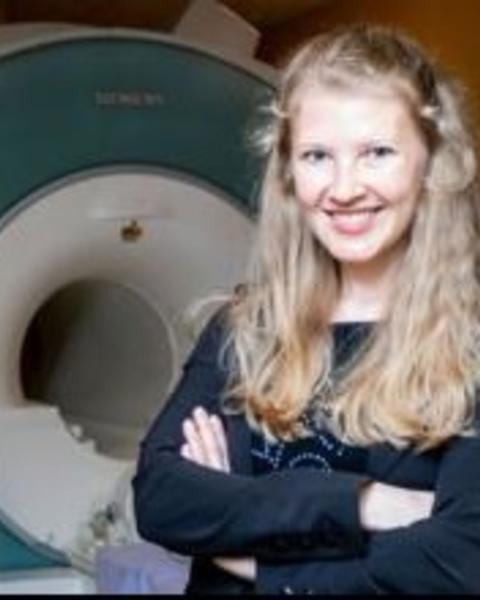
Evelina Fedorenko is an Associate Professor in the Department of Brain and Cognitive Sciences at the Massachusetts Institute of Technology (MIT) , with affiliations at Massachusetts General Hospital (MGH), Boston Campus . Her research focuses on the cognitive and neural mechanisms underlying language processing, including interactions with artificial systems like language models. Lab: Language Lab at MIT , exploring minds and brains creating language Key Research Areas: Cognitive Neuroscience of Language and Music, Neural Representations, Computational Models Her recent work examines how artificial language models map to human brain regions , investigates the universality of language networks across languages and individuals, and explores non-classical aspects like cerebellar involvement. She develops advanced methodologies for neuroimaging, including individualized brain mapping and standardized stimuli creation. Scientific contributions include debates on language localization, studies of language evolution, and frameworks for semantic analysis. Her team employs fMRI , MEG , and precision imaging to dissect the language-selective network and its interactions with other cognitive systems.
Eriko Sugimori is an Associate Professor at the School of Human Sciences, Faculty of Human Sciences. She holds a Ph.D. in Education and has established herself as a prominent researcher in experimental psychology with a focus on memory processes and cognitive phenomena. Her research interests span across several key areas of experimental psychology: Memory and source monitoring processes Action and implicit memory Individual differences in cognitive processing Nostalgia and autobiographical memory Schizotypal personality traits and cognitive functioning Dr. Sugimori's work demonstrates a consistent pattern of investigating how cognitive processes interact with emotional states, social contexts, and perceptual experiences. Her research spans from basic cognitive mechanisms to applied settings in clinical, educational, and social contexts. A significant portion of her work examines how memory processes are influenced by emotional states, social interactions, and individual differences in personality traits. Among her notable achievements is the Japanese Psychological Association Excellent Paper Award received in 2006. Her research has been published in numerous high-impact journals across psychology and cognitive science. Dr. Sugimori has mentored numerous students through research projects and has been involved in various research collaborations across different institutions. Her work has received significant attention in the field, as evidenced by her 504 citations and h-index of 12 across 43 publications. She is actively involved in several professional organizations including the Japanese Society of Sport Psychology, Japanese Society of Applied Psychology, Psychonomic Society, Japanese Psychological Association, and Japanese Society of Cognitive Psychology, demonstrating her commitment to advancing psychological science across multiple subdisciplines.
Dr. Krystian Barzykowski is a Professor at the Department of General Psychology within the Faculty of Philosophy at Jagiellonian University in Kraków, Poland. He currently serves as Head of the Applied Memory Research Laboratory and is a Member of the Research Ethics Committee. He also holds the position of Proxy of the Dean of the Faculty of Philosophy for quality assessment and is a Member of the Board of the Krakow Branch of the Polish Psychological Society. Barzykowski obtained his doctorate in 2014 from Jagiellonian University and has since established himself as a leading researcher in cognitive experimental psychology with a focus on memory processes. His research spans multiple areas of cognitive psychology, particularly examining the mechanisms of autobiographical and episodic memory, involuntary cognitive processes, and the intriguing phenomenon of déjà vu. His work uniquely integrates cross-cultural perspectives with experimental cognitive psychology, exploring how multiculturalism and multilingualism affect psychological assessment and memory processes. His research program demonstrates a sophisticated approach to understanding the cognitive mechanisms behind memory retrieval, particularly focusing on how working memory influences involuntary autobiographical memories. Barzykowski's work on mind-wandering and thoughts detached from tasks represents a significant contribution to understanding spontaneous cognition. His recent Marie Skłodowska-Curie Postdoctoral Fellowship project 'SpontaneousPAST' specifically investigates how déjà vu can illuminate spontaneous memory retrieval processes. Barzykowski's extensive publication record shows a consistent focus on memory mechanisms while increasingly incorporating cross-cultural dimensions. His recent work has expanded to address timely societal issues including the psychological impact of the pandemic, refugee integration in educational settings, and the development of cultural intelligence among healthcare professionals. The interdisciplinary nature of his research connects cognitive psychology with educational, clinical, and social applications. Marie Skłodowska-Curie Postdoctoral Fellowship (2023) Andrzej Malewski Award from the Polish Academy of Sciences (2020) Mieczysław Bekker Scholarship from the National Agency for Academic Exchange (2020) Ministry of Science and Higher Education Scholarship for Outstanding Young Researchers (2018-2020) Multiple French Government Scholarships (2019-2021) International European Roma Spirit Award Finalist (2016) Barzykowski has successfully led multiple significant research projects funded by prestigious organizations including the National Science Centre, the Ministry of Science and Higher Education, the Stefan Batory Foundation, and the European Commission. His project portfolio includes 'Analysis of the role of working memory in the formation of involuntary autobiographical memories' (2020-2025), 'Wandering-mind: Advances in involuntary past and future thinking research' (2020), and 'The Role of Cognitive Inhibition in Involuntary Thinking about the Past and Future' (2016-2019). He is particularly noted for originating and co-authoring the first Polish textbook on psychological assessment in multicultural and multilingual contexts, which received a recommendation from the Council of Europe. At Jagiellonian University, Barzykowski leads the Applied Memory Research Laboratory, which focuses on experimental investigations of memory processes, particularly examining involuntary and voluntary memory retrieval mechanisms. His laboratory work integrates sophisticated experimental designs with cross-cultural perspectives, creating a unique research environment that bridges cognitive psychology with multicultural considerations. The laboratory has become a significant center for memory research in Poland, attracting international collaborators and contributing to major multinational research initiatives.
Taiga Brahm is a Professor at the University of Tübingen , holding the Chair of Economic Education and Business Didactics since 2016. She serves as Dean of the Faculty of Business, Economics and Social Sciences (since September 2024) and has held prior administrative roles including Dean of Studies (2019-2024). Education: Business Education studies at Johannes Gutenberg University Mainz and Ghent University Doctorate (2006-2010) at the University of St. Gallen Research assistant at University of Kaiserslautern Research Focus: Learner competency development during school-to-university transitions Promoting interdisciplinary competencies in business education (financial literacy, entrepreneurial skills) Gender gap analysis in economic literacy Design of digital learning environments and instructional videos Teacher professionalism and bilingual education frameworks Technology integration in higher education Publication Trends: Her recent work examines gender disparities in economic literacy, digital media’s role in education, teacher development for instructional video creation, and factors supporting student engagement in higher education. She collaborates extensively on interdisciplinary projects analyzing learning environments. Current Affiliation: Leads the Economics Business Didactics team and contributes to faculty governance in both the Faculty of Business and Economics and broader Faculty of Economics and Social Sciences.
Orphée De Clercq is an Assistant Professor at Ghent University, specializing in language technology for educational applications. Her research focuses on leveraging Natural Language Processing (NLP) and Machine Learning (ML) to enhance computer-assisted language learning , readability prediction , and automated writing evaluation . She also explores sentiment analysis , emotion detection , and event coreference resolution in Dutch and multilingual contexts. Education : PhD in 2015 with groundbreaking work in readability prediction and fine-grained sentiment analysis for Dutch. Research Trends in her recent publications emphasize: Readability across domains and languages Emotion Detection using transformers and affect lexica Event Coreference in cross-document news Automated Writing Evaluation through NLP Implicit Sentiment Analysis in user-generated content Cross-Lingual Transfer with multilingual datasets She co-supervises four PhD students and contributes to interdisciplinary projects like Steunpunt Toetsen , SentEMO , and NewsDNA . Her teaching includes courses on digital communication and Computer-Assisted Language Learning .
Professor Tania Avgustinova is a Professor of Slavic and Computational Linguistics in the Department of Language Science and Technology at Saarland University. She serves as Principle Investigator for SFB 1102 - Project C4 (INCOMSLAV) and is Head of the Slavic Lab. Her academic career spans several decades with significant contributions to Slavic linguistics, computational approaches to language, and cross-linguistic studies. Her academic qualifications include: Habilitation venia legendi in General Linguistics (2003) PhD in Slavic and Computational Linguistics (1997) Diploma in Slavistics (1987) Professor Avgustinova's research focuses on the intersection of Slavic linguistics and computational methods. She specializes in microsyntax, intercomprehension among Slavic languages, language contact phenomena, and the processing of non-compositional expressions. Her work examines how speakers of one Slavic language can understand related languages without formal instruction, with particular attention to cognitive and linguistic factors. She has developed computational models to analyze linguistic distances and asymmetries between Slavic languages, contributing significantly to understanding receptive multilingualism. Her recent publications reveal a strong focus on experimental approaches to studying cross-linguistic comprehension using web-based platforms, eye-tracking, and speech processing techniques. There's a clear trend toward investigating microsyntactic units and non-compositional expressions across Slavic languages, with applications in language technology and education. Her work bridges theoretical linguistics with practical applications in natural language processing and language learning. Principle Investigator of SFB 1102 Project C4 (INCOMSLAV) Head of Slavic Lab at Saarland University Contributor to Russian National Corpus project Developer of INCOMSLAV platform for measuring linguistic distances As Principle Investigator of SFB 1102 Project C4 (INCOMSLAV), Professor Avgustinova leads research on mutual intelligibility and surprisal in Slavic intercomprehension. She has been instrumental in developing the INCOMSLAV platform for measuring linguistic distances and asymmetries in receptive multilingualism. Her leadership extends to international collaborations, including contributions to the Russian National Corpus project where she provides expertise on grammatical phenomena at the borderline between lexicon and syntax. Professor Avgustinova heads the Slavic Lab at Saarland University, which focuses on applied, experimental, and computational linguistics. The lab conducts research on Russian corpus grammar, word embedding models, sense frequencies, and microsyntax. Her work has established important connections between theoretical linguistics and practical language technology applications, particularly in the Slavic language context.
Maria Argyriou is an Associate Lecturer for Applied Music Preschool Education in the Department of Preschool Education & Educational Design at the School of Humanities, University of the Aegean (Rhodes, Greece). She holds a postdoctoral degree in Practical Aspects and Praxial Philosophy of Music Education from the same institution, a PhD in Music Studies from Ionian University specializing in cultural policy and music education, and two Master's degrees in Education from The Open University of Greece. PhD: Department of Music Studies, Ionian University (specializing in cultural policy and music education) Postdoctoral Degree: Practical Aspects and Praxial Philosophy of Music Education, University of the Aegean Master of Education: The Open University of Greece Second Master in Education: Specialization in education leadership and school unit assessment Argyriou's research focuses on the intersection of music education, cultural policy, and early childhood development. Her work explores praxial philosophy in music education, interdisciplinary connections between music and other subjects (particularly language and mathematics), and innovative approaches to music teaching in preschool settings. She has developed significant contributions to understanding how music can serve as a tool for cognitive development, emotional expression, and cultural citizenship in young children. Her recent publications demonstrate a clear trend toward multimodal and technology-enhanced music education approaches, with increasing focus on praxial philosophy applications in digital learning environments. Her work consistently bridges theoretical frameworks with practical classroom applications, particularly in early childhood settings. Scientific Awards: Kiveli-Y. Horn scholarships/Special Grants 2024 for archival research at The Music Library of Greece—Lilian Voudouri Argyriou actively participates in multiple professional organizations including the International Society of Music Education (member of SIG Practice and Research Group in Integrated Music Education, PRIME), European Music Council (EMC), European Association for Music in School (EAS), and serves as chairperson of the Greek Association of Primary Music Education Teachers (GAPMET). She has made significant contributions to educational materials as author of official Greek Music Education textbooks for School-Age 6-8 and as editor for multiple academic journals. She co-edits the open-access 'Hellenic Journal of Music, Education, and Culture' (HeJMEC) and serves as editor for the open-access journal 'Music in the First Grade' published by her department. Her current research focuses on archival work with children's songs from the Minos Dounias collection at The Music Library of Greece.
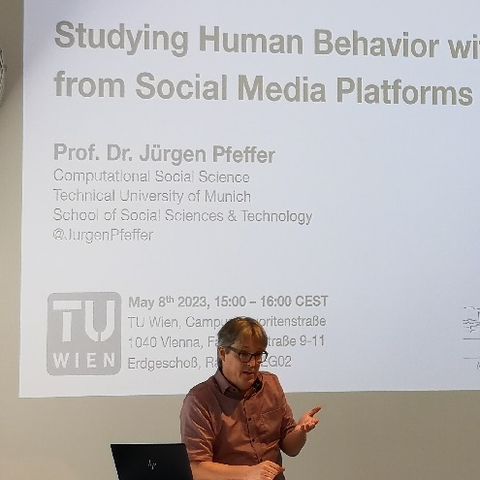
Jürgen Pfeffer is a Professor of Computational Social Science & Big Data at the Technical University of Munich's School of Social Sciences and Technology, with an additional appointment as Adjunct Professor at Carnegie Mellon University's Institute for Software Research. His interdisciplinary work bridges computer science and social science with a focus on analyzing large-scale socio-technical systems. His research expertise spans computational social science, network analysis, and big data methodologies. Pfeffer's work examines methodological, algorithmic, and theoretical challenges in analyzing dynamic social systems, with current projects focusing on modeling and detecting negative dynamics from social media, particularly online firestorms and hate speech against politically active women. His research combines network science approaches with computational methods to understand complex social phenomena. Pfeffer's publication record demonstrates significant contributions to the field since his 2010 doctorate, with high-impact papers in journals like Science and EPJ Data Science. His work on social media analysis, particularly the influential 2014 Science paper 'Social Media for Large Studies of Behavior' co-authored with Derek Ruths, has shaped methodological approaches in the field. His research shows consistent evolution from foundational network analysis to contemporary applications in political discourse, hate speech detection, and multi-layer network analysis. Hennig, M., Brandes, U., Pfeffer, J., & Mergel, I. (2012). Studying Social Networks. A Guide to Empirical Research Ruths, D., & Pfeffer, J. (2014). Social Media for Large Studies of Behavior Pfeffer, J., Morstatter, F., & Mayer, K. (2018). Tampering with Twitter's Sample API As an advisor and collaborator, Pfeffer has worked extensively with researchers including Raji Ghawi, Mirco Schönfeld, Momin Malik, and Kathleen Carley. His work demonstrates strong connections between theoretical network science and practical applications in social media analysis. His current research continues to address pressing issues in online discourse, with recent work focusing on hate speech classification, lexical change in negative word-of-mouth, and polarization dynamics in social media environments. Pfeffer leads the Pfeffer Lab, which focuses on developing methodological approaches for analyzing complex social systems through computational methods. His work has implications for understanding political legitimacy, social influence, and community dynamics in both online and offline contexts.
Eeva Anttila is a Professor in Dance Pedagogy at the Theatre Academy of University of the Arts Helsinki, Finland, where she leads the MA program for dance pedagogy. She earned her Doctor of Arts degree in Dance from the Theatre Academy in 2003. Her research focuses on dialogical and critical dance pedagogy, embodied learning, and practice-based artistic research methods. Her education includes: Doctor of Arts in Dance (2003), Theatre Academy, Finland Anttila's research examines embodied knowledge through interdisciplinary approaches. She investigates how movement-based pedagogies facilitate transformative learning experiences across educational contexts, with particular focus on: Critical dialogical frameworks in arts education Embodiment as epistemological foundation Cross-disciplinary applications in language acquisition and physical education Social justice dimensions of artistic practices Her publications demonstrate consistent focus on arts integration in education, with recent trends exploring: Post-pandemic pedagogical adaptations Multisensory language learning approaches Interdisciplinary curriculum development Social-emotional dimensions of embodied practices Anttila leads significant research initiatives including: ELLA project (Embodied Language Learning through Arts) funded by KONE Foundation ARTSEQUAL research project (2015-2021) as Arts@School team leader 'The entire school dances!' national development project (2009-2013) She maintains active leadership roles in: Dance and the Child International (Chair 2009-2012) Observatory of Arts and Cultural Education, Finland (Founding member) Board of Uniarts (2015-2021)
Stefano Ferilli is a Professor of Computer Science at the University of Bari, Italy, where he leads the ARA (Apprendimento e Ragionamento Automatico) research lab within the Department of Computer Science. His academic roles include former Director of the Interdepartmental Center for Logic and Applications (CILA) and current head of the Artificial Intelligence & Intelligent Systems node in the CINI national laboratory. He holds a PhD in Computer Science and has been a key figure in advancing machine learning, logic programming, and digital library technologies. Education: Laurea (MSc equivalent) in Information Sciences (1996), Specialist Laurea in Computer Science (2003), and PhD in Computer Science (2001). His research focuses on foundational aspects of machine learning, multi-strategy reasoning, process mining, and applications in cultural heritage, bioinformatics, and smart environments. Research Contributions: Developed frameworks like INTHELEX (incremental theory learner), WoMan (process mining), and DoMInUS (document management). Over 370 publications, including a Springer monograph and multiple award-winning papers. Active in organizing conferences like ECML-PKDD, ICDM, and IRCDL, and serves on editorial boards of journals like Information Sciences . Projects: Led or participated in over 30 national and European projects, including EU-funded initiatives on digital libraries (COLLATE, DELOS) and AI applications. Collaborates with industries like Samsung and institutions like the Italian Police for traffic analysis and cultural heritage preservation. Awards: Recognized for outstanding peer review (MDPI, ECMLPKDD), best paper awards, and contributions to AI education and cultural heritage. Member of prestigious associations like AI*IA (Italian AI Society) and AICA (Italian Computing Society).
Yasemin Bayyurt is a **Professor** in the **Department of Foreign Language Education** at **Boğaziçi University**, Istanbul. She holds a Ph.D. in English-Linguistics Research from Lancaster University (1997). Her academic leadership roles include serving as **Dean of the Faculty of Education (2020–2022)** and **Head of the Department of Foreign Language Education (2006–2012)**. She specializes in **Applied Linguistics**, with a focus on English as a Lingua Franca (ELF), English Medium Instruction (EMI), and sociolinguistics. **Education**: Ph.D., Lancaster University, 1997 (English-Linguistics) M.A., Lancaster University, 1992 (Language Studies) B.A., Boğaziçi University, 1989 (Foreign Language Education) **Research Interests**: Sociolinguistics (multilingualism, linguistic landscape, ELF) Second/Foreign Language Pedagogy (CLIL, disciplinary literacies) Technology in Education (blended learning, mobile-assisted language learning) Neurolinguistics (recent focus on neurotechnology in language teaching) Global Englishes (World Englishes, EIL) **Awards**: Multiple awards including Boğaziçi University Academic Support Award (2009–2014), TÜBİTAK Career Projects support (2005–2009), and international grants (e.g., Erasmus+ projects). **Grants/Projects**: Coordinated major projects including the ENRICH Erasmus+ initiative (ELF-aware teacher education) and M-LARG (mobile learning for at-risk youth). She leads research on EMI practices in Turkish higher education and ELF pedagogy. **Labs/Teams**: Active in the **Boğaziçi University English Language Education Policies Commission** and international networks like the **COST Action CA21114 (CLIL Network)**.
Freja Stær Hincheli serves as a Lecturer at the Department of Computer Science , University of Copenhagen. Her work intersects multiple domains within machine learning, with a particular emphasis on quantum-inspired algorithms, medical imaging, and sustainable AI development. Keywords : Machine Learning, Quantum Computing, Medical Imaging, Natural Language Processing, Computational Biology Key Collaborations : SCIENCE AI Centre Her research spans quantum-enhanced neural networks, explainable AI for medical diagnostics, and energy-aware model design. Recent publications highlight applications in cross-cultural recipe adaptation, emotion-aware dialogue systems, and climate-conscious AI strategies. The Machine Learning Section at DIKU focuses on theoretical foundations and applications including medical image analysis , biological data modeling , and quantum computing , aligning with her contributions.
Alberto Barrón-Cedeño is an Associate Professor at the Department of Interpreting and Translation, University of Bologna (Italy). He holds a PhD in Artificial Intelligence from Universitat Politècnica de València (Spain) and has served as a former Scientist at Qatar Computing Research Institute (Qatar) and an Alain Bensoussan fellow at Universitat Politècnica de Catalunya (Spain). His research focuses on computational propaganda detection, automated fact-checking systems, and natural language processing applications in combating misinformation. Education: PhD in Artificial Intelligence, Universitat Politècnica de València, Spain Research Interests: Dr. Barrón-Cedeño specializes in developing AI-driven solutions for detecting disinformation, particularly in social media and news content. His work emphasizes computational propaganda analysis, fake news detection during crises (e.g., the COVID-19 pandemic), and designing tools to assist human fact-checkers. He leads initiatives such as the CLEF CheckThat! Lab to advance interdisciplinary approaches in misinformation research. Awards: Alain Bensoussan fellowship (Universitat Politècnica de Catalunya) Advising & Grants: While no formal advisees are listed, he collaborates extensively with global teams on funded projects related to computational fact-checking and propaganda detection. Labs & Teams: Core contributor to the CLEF CheckThat! Lab, which coordinates international efforts to develop benchmarks and tools for detecting check-worthy claims and fake news.
Michalis Mountantonakis is a Postdoctoral Researcher at FORTH and Laboratory Teaching Staff in the Department of Computer Science at the University of Crete, Greece. He holds a PhD (2020), MSc (2016), and BSc (2014) in Computer Science from the University of Crete, all with top grades. His research focuses on Large-Scale Semantic Data Integration, Linked Open Data, and Semantic Web technologies, with over 45 publications in top venues like ACM VLDB, ISWC, and ECML. He has been awarded the prestigious SWSA Distinguished Dissertation Award (2020) and the Maria Michael Manasaki Fellowship (2020). His work includes tools like LODsyndesis and LODChain, addressing challenges in knowledge graph connectivity and validation of AI-generated content. Education: PhD in Computer Science (2016-2020), University of Crete (Excellent GPA 9.74/10) MSc in Computer Science (2014-2016), University of Crete (Excellent GPA 9.87/10) BSc in Computer Science (2010-2014), University of Crete (2nd in class with GPA 8.42/10) Research Interests: His work bridges semantic web technologies with modern AI challenges, emphasizing large-scale data integration, knowledge graph applications, and validation frameworks. He has contributed to cultural heritage informatics, machine learning-augmented semantic systems, and cross-lingual NLP solutions. Recent trends include leveraging LLMs for query generation and semantic enrichment while ensuring factual accuracy through knowledge graph-driven validation. Key Achievements: Developed LODsyndesis, a global-scale semantic integration service Pioneered real-time validation of ChatGPT responses using RDF knowledge graphs Won Best Paper Award (ISWC 2022) for entity enrichment techniques Recipient of Stelios Orphanoudakis Undergraduate Fellowship (2013-2014) Participated in Roche Continents 2019 (top 100 European science students) Grants & Labs: His research has been supported by GSRT/HFRI. He collaborates with FORTH-ICS and leads projects in EU-funded initiatives like iMarine and BlueBridge. Current work focuses on governance models for ontologies, interoperable thesaurus creation (e.g., FoodEx2), and semantic analytics for cultural heritage datasets.
Dr. Mo El-Haj is a Reader (Associate Professor) in Natural Language Processing (NLP) at the College of Engineering & Computer Science, VinUniversity, Hanoi, Vietnam, and holds a visiting role at Lancaster University. He specializes in NLP with a focus on Financial NLP, Arabic NLP, and multilingual systems for under-resourced languages. Education: PhD in Computer Science (University of Essex, 2012), MSc in Information Systems (University of Jordan, 2008), BSc in Computer Information Systems (University of Jordan, 2005). Awards include the FHEA Fellowship (2021) and the 2016 BBC NewsHack Best Tool award. Research interests include text summarization, financial narrative processing, biomedical NLP, and corpus linguistics. He leads the VinNLP research group and has supervised/co-supervised over 20 PhD students. Notable projects include the Welsh Automatic Text Summarisation tool (ACC) and the FreeTxt bilingual analysis toolkit, funded by the Welsh Government and AHRC. Publications span 92+ works in top journals/conferences like Computational Linguistics and LREC. Active in organizing workshops (e.g., WACL-4, FinNLP) and has served as external/internal PhD examiner at UK universities.