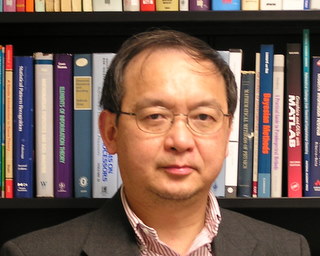
Chris Ding is a Professor in the Department of Computer Science and Engineering at the University of Texas at Arlington, with a PhD from Columbia University. His research bridges Machine Learning, Data Mining, and Bioinformatics. Affiliations: University of Texas at Arlington; Lawrence Berkeley National Laboratory (staff computer scientist). Research Focus: Clustering algorithms (K-means, spectral clustering), matrix/tensor decompositions (NMF, Tucker), and bioinformatics applications (protein structure prediction, gene expression analysis). Professional Engagement: Organized KDD and ICDM workshops; served on NSF, DOE, and international grant review panels. Key Contributions: Established theoretical links between PCA/NMF and K-means; pioneered SVM use for protein 3D structure prediction. His work emphasizes practical applications in biological networks, dimensionality reduction, and optimization-based machine learning frameworks.
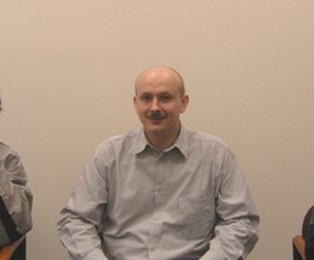
Steven Lippold is an Assistant Professor of Mathematics at Geneva College. He holds a B.S. in Mathematics and Physics from Clarion University of Pennsylvania (2017), an M.A. in Mathematics from Bowling Green State University (2018), and a Ph.D. in Mathematics from Bowling Green State University (2023). His research focuses on Multilinear Algebra, Generalizations of Linear Algebra Concepts, and Combinatorics. His work includes studies on matrix structures, determinant-like functions, and hypergraph partitions. Dr. Lippold has been recognized with the Graduate Excellence in Teaching Award (2023), the Judyta & Bronislaw Blass Memorial Fellowship (2022), and the James Robert and Gretchen Overman Scholarship (2018-2019). He is a member of the Mathematical Association of America, Association of Christians in the Mathematical Sciences, and the American Mathematical Society. His professional certifications include Python for Data Science and Machine Learning (Udemy, 2023), Teaching and Learning Certificate (Bowling Green State University, 2020), and Google IT Automation with Python (2021). His academic journey includes consistent academic excellence, reflected in his Dean’s List status at Clarion University (2014-2017) and membership in honor societies like Phi Kappa Phi and Pi Mu Epsilon. His research contributions span algebraic structures, linear algebra extensions, and combinatorial applications, with recent publications in Linear Algebra and Its Applications and Monatshefte fu¨r Mathematik .
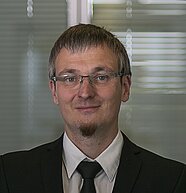
Per Austrin is a Lecturer at the Royal Institute of Technology (KTH) in the Department of Theoretical Computer Science. He has been actively involved in teaching courses such as Algorithms and Complexity (DD2352) , Advanced Algorithms (DD2440) , and Problem Solving and Programming Under Pressure (DD2458) , serving as examiner and course coordinator for several programs. His research focuses on the foundations of computational complexity, approximation algorithms, and cryptographic barriers. Key areas include hardness of approximation for constraint satisfaction problems (CSPs), combinatorial optimization, and theoretical limits in cryptography and coding theory. His work often intersects with probabilistic methods and quantum computing challenges. Recent publications highlight his contributions to understanding lower bounds in optimization problems, inapproximability thresholds, and complexity in structured combinatorial problems. Detailed information about his work can be found on his personal website: Per Austrin's Website .
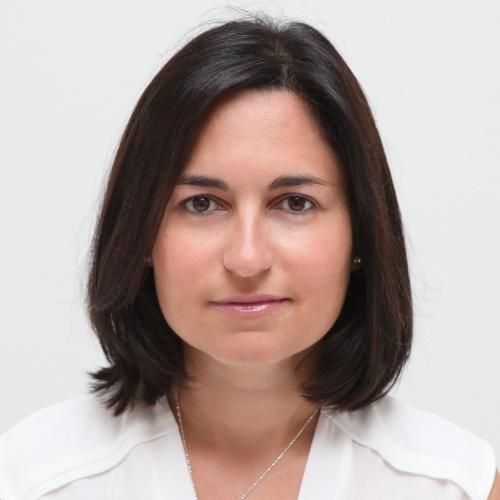
Alice Pellet-Mary is a CNRS Researcher (chargée de recherche) at the University of Bordeaux since February 2021, affiliated with the Institut de Mathématiques de Bordeaux (IMB) and Canari INRIA research team. Previously, she completed a postdoctoral fellowship at KU Leuven's COSIC team (2019-2021) under Frederik Vercauteren and earned her PhD from ENS de Lyon's LIP laboratory (2016-2019) supervised by Damien Stehlé. Her research centers on lattice-based cryptography, specializing in algorithmic hardness problems for algebraically structured lattices. During her doctoral studies, she investigated cryptanalysis of obfuscators and multilinear maps, with current work extending to integer factorization applications. She actively contributes to the field through community initiatives like the June 2025 CHARM workshop on algebraic lattices in cryptography, which she co-organized at IMB. Dr. Pellet-Mary supervises Master's students, as evidenced by her open thesis proposal for 2026 on lattice-based integer factorization. Her academic service includes workshop organization and participation in collaborative research within the IMB and Canari teams, reflecting her engagement in advancing cryptographic research through both technical contributions and community building.
Dr. Qingying Bu is a Professor of Mathematics at the University of Mississippi's Department of Mathematics, housed within the College of Liberal Arts. He holds a PhD from Kent State University (2002) and has been affiliated with the University of Mississippi since completing his studies. His research focuses on Functional Analysis, particularly exploring topics like Geometry of Banach spaces, Tensor products of Banach spaces, Positive tensor products of Banach lattices, and Regular multilinear operators. He has published over 84 papers cited in 312 mathematical works, with contributions to prestigious journals such as the Journal of Functional Analysis and Proceedings of the American Mathematical Society. Teaching responsibilities include courses ranging from calculus and differential equations to advanced topics in topology and algebra. His work bridges foundational mathematical theory with applications in operator theory and tensor product structures. Dr. Bu's academic journey began with a B.S. and M.S. in Mathematics from Harbin Institute of Technology (1983, 1989), followed by his doctoral studies at Kent State University. His research has consistently addressed structural properties of Banach spaces and their operators, contributing to the advancement of functional analysis methodologies.
Dr. Andrzej Okolewski is an Associate Professor in the Division of Insurance and Capital Markets at Lodz University of Technology's Faculty of Technical Physics, Information Technology and Applied Mathematics. His research bridges pure mathematics and financial applications. Mathematical investigations focus on: Fractal geometry and iterated function systems Topological properties of function spaces Fixed point theorems and metric space theory Lineability and spaceability in functional analysis Applied work addresses mathematical foundations of insurance, risk assessment, and capital market modeling. Recent publications examine attractor topologies in generalized iterated function systems and structural properties of Orlicz spaces.
Henri Martikainen serves as Associate Professor of Mathematics at Washington University in St. Louis, specializing in harmonic analysis and geometric measure theory with significant applications to partial differential equations. His research bridges abstract operator theory with concrete geometric problems through advanced singular integral techniques. Education: PhD in Mathematics, University of Helsinki, Finland His research program investigates the deep structural connections between harmonic analysis and geometric measure theory, with particular emphasis on singular integral operators, commutators, and multi-parameter analysis. Current work explores exotic Calderón-Zygmund operators, bilinear and multilinear phenomena, and the role of dyadic-probabilistic methods in resolving long-standing problems in operator boundedness. His approach frequently employs geometric measure theory to address questions in partial differential equations through singular integral representations. Analysis of his 15 most recent publications (2020-2025) reveals consistent focus on commutator theory across multiple frameworks—bi-parameter spaces, product domains, and Banach-valued settings—with recurring themes of kernel regularity, weighted inequalities, and the interplay between analytic and geometric structures. Key contributions include foundational work on Zygmund dilations, entangled commutators, and compactness properties in multi-linear operator theory. Scientific awards: Five-year Academy of Finland Research Fellowship Dr. Martikainen's research program has been substantially supported by competitive grants, most notably his Academy of Finland fellowship which enabled extended research periods at Washington University following his tenure at the University of Helsinki. His collaborative work frequently involves international research groups focused on advancing singular integral theory and its geometric applications, though specific grant details beyond the fellowship are not disclosed in available sources.
Prof. Dr. rer. nat. Patrick Kürschner is a faculty member at the Mathematisch-Naturwissensch. Zentrum of Leipzig University of Applied Sciences (HTWK Leipzig) . He teaches mathematics and programming for engineering programs including Civil Engineers, BIM, INB, INM, and BIK. His office hours are on Tuesdays from 2:00-3:00 p.m. and by appointment. Research Focus : His work centers on Numerical and applied multilinear algebra with applications to large-scale eigenvalue problems, systems of equations, matrix equations, and matrix functions. He specializes in preconditioning techniques and low-rank approaches for matrix/tensor methods, solution methods for polynomial equations, mathematical systems and control theory (particularly model order reduction and linear-quadratic control), numerical optimization, digital signal processing, data science, and machine learning. Publication Trends : Dr. Kürschner's research spans Numerical Linear Algebra , Control Theory , and Scientific Computing . His work addresses problems in Large-scale Matrix Equations , Model Order Reduction , Polynomial System Solutions , and Low-rank Approximation for applications in Engineering and Data Science . Recent publications focus on efficient numerical methods for Lyapunov and Sylvester equations, time-limited balanced truncation, and connectome regression techniques.
Veronica Ruiz Ortiz serves as Assistant Professor in the Department of Industrial Engineering and Civil Engineering at the University of Cádiz, specializing in hydraulic engineering with emphasis on Mediterranean water resource challenges. Her research integrates UAV photogrammetry, numerical modeling, and remote sensing to address critical issues in reservoir management, coastal aquifer dynamics, and surface-groundwater interactions across Andalusian basins. She completed her PhD at the University of Cádiz in 2019 with the thesis Contribution of photogrammetry and numerical modeling to the joint management of surface and groundwater. Application to basins in the province of Cádiz , supervised by Dr. Santiago García López. Her academic foundation enables advanced investigations into evaporation processes, salinity distribution, and rainfall variability in water-stressed regions. Ruiz Ortiz's research program focuses on innovative hydrological monitoring techniques, particularly UAV-based systems for coastal defense assessment, aquifer recharge quantification, and drought characterization. Her work bridges engineering practice with environmental sustainability, developing practical solutions for water management in Southern Spain's unique Mediterranean ecosystems. Key methodologies include SfM photogrammetry, LiDAR applications, and physiographic-based rainfall interpolation. Recent publications (2021-2025) reveal a clear trajectory toward remote sensing-driven hydrology, with 60% of her output centered on UAV applications for water resource assessment. Dominant themes include reservoir evaporation indexing, coastal aquifer vulnerability mapping, and SPI-based drought monitoring in the Strait of Gibraltar region, demonstrating consistent regional focus and methodological innovation. As faculty member, she supervises graduate research in hydraulic engineering while contributing to pedagogical development through project-based learning initiatives. Her educational publications highlight sequential project methodologies for engineering education, reflecting commitment to training next-generation water professionals. Ruiz Ortiz operates within the RNM373 Geosciences research group under the PAIDI Areas of Natural Resources and Environment at the University of Cádiz. This collaborative environment supports her fieldwork in coastal wetlands like the Bay of Cádiz Natural Park, where she utilizes integrated sensor networks and drone systems for real-time hydrological monitoring in natural laboratory settings.
Prof. Dr. Tülay Ekemen Keskin is a Turkish academic in the field of Civil Engineering, currently affiliated with Karabük University's Faculty of Engineering. She holds a Doctorate in Geological Engineering from Cumhuriyet University (2006) and has dedicated her career to Hydrogeology, Geothermal Resources, and Applied Geology. Education: PhD (Cumhuriyet University, 2006); MSc (Cumhuriyet University, 2001); BSc (Cumhuriyet University, 1999) Research Interests: Her work focuses on groundwater-surface water interaction, drought analysis, flood modeling, and pollution from mining/agricultural activities. She applies machine learning (ANN) and statistical methods (MLR) to hydrogeochemical problems. Article Trends: Recent publications emphasize climate change impacts on water resources, drought/flood analysis in Turkey and Libya, and innovative underground dam applications. Her work combines field studies with computational models (ANN, synthetic hydrographs) across the Black Sea and Mediterranean regions. Scientific Awards: 2016: Conferenceseries LLC Best Poster Award Professional Roles: She serves as Department Chair (2021-), Faculty Dean (2020-), and has led research projects on groundwater pollution, mine impacts, and climate adaptation. Her leadership includes chairing academic units and advising 13 master's theses.
Nathaniel Johnston is an Associate Professor in the Department of Mathematics and Computer Science at Mount Allison University. His research focuses on quantum information theory, linear algebra, matrix analysis, and cellular automata. He is known for contributions to quantum entanglement, operator theory, and the development of the QETLAB toolbox for quantum entanglement research. Education details are not explicitly listed in the provided information. Johnston's research interests span quantum entanglement, matrix analysis, and the mathematical foundations of quantum computing. He has published extensively on topics such as quantum state characterization, tensor analysis, and cellular automata dynamics. His work often bridges abstract mathematical concepts with computational applications, as seen in his development of algorithms for quantum information processing. In his recent publications, he explores advanced techniques in quantum entanglement certification, spectral graph theory, and the application of linear algebra to quantum systems. His contributions include studies on matrix factorizations, operator norms, and the theoretical underpinnings of quantum coherence. No scientific awards are listed in the provided materials. Johnston has advised no students listed here, and no grants are mentioned. His work is primarily theoretical, with a focus on advancing mathematical frameworks in quantum information science. He is associated with the Department of Mathematics and Computer Science at Mount Allison University, contributing to both research and teaching in these fields.
Enrique Macias Virgos is a Professor at the Department of Mathematics, Faculty of Mathematics, University of Santiago de Compostela. He is affiliated with the Galician Mathematical Research and Technology Center (CITMAga) and has been active in research since 1978. Research Areas: Geometry and Topology, with focus on Algebraic Topology (55-XX), Manifolds and Cell Complexes (57-XX), Differential Geometry (53-XX), Global Analysis (58-XX), and Linear/Multilinear Algebra (15-XX). Collaborations: Notable co-authors include María José Pereira-Sáez, David Mosquera-Lois, Jose Antonio Vilches, and Daniel Tanré. Research Trends: His work spans the Lusternik-Schnirelmann category in simplicial complexes and foliations Cayley transforms and symplectic matrices Homotopic distance theory and motion planning Topological invariants in diffeological spaces and posets Applications to quaternions and Lie groups
Dr. Filip Strobin is an Associate Professor in the Division of Applications of Contemporary Mathematical Analysis at Lodz University of Technology. His research centers on theoretical aspects of fractal geometry and functional analysis. Key research themes include: Topological and geometric properties of fractal attractors Generalizations of iterated function systems (IFS) Embedding theorems for metric spaces Fixed point theory applications to fractals Lineability and spaceability in function spaces Recent work characterizes conditions for connected attractors in IFS, establishes embedding capabilities of fractals in various spaces, and develops algorithms for fractal visualization. His publications frequently appear in analysis and topology journals.
Konrad Abramowicz is an Associate Professor and Head of the Department of Mathematics and Mathematical Statistics at Umeå University. His research focuses on functional data analysis, classification, and local inference procedures in the presence of misalignment, with applications in biomechanics, climate research, and forest growth analysis. He teaches stochastic simulations and parametric modeling methods, emphasizing student development and curiosity-driven learning. Education: University of Wrocław (Poland), with Erasmus exchange to Umeå University Research: Functional data analysis, interdisciplinary collaborations in biomechanics and climate science Awards: Teaching awards for dedication to student mentorship Internationalization: Postdoctoral work in Australia; collaborations with Italy and India; faculty-level international contact Konrad's research spans functional data analysis applied to knee kinematics after ACL injuries, climate reconstruction using sediment data, and statistical methods for forest growth analysis. He developed computational tools like the fiberLD R package for fiber length determination in forestry studies. His recent publications highlight interdisciplinary applications of statistical methods, with a focus on movement pattern analysis, climate modeling, and non-destructive forest assessment. Konrad advocates for international collaboration and adaptive academic practices to address global challenges. Konrad has received teaching awards and is recognized for his supportive approach to students. He actively participates in university initiatives for international student integration and served as international coordinator for academic exchange programs. As a key member of the IceLab interdisciplinary research hub, Konrad bridges statistical methods with applications in biomechanics and environmental science. His work emphasizes the importance of mathematical abstraction in solving real-world problems.
Konstantinos Tyros is Associate Professor in Mathematics at the University of Athens, specializing in combinatorial analysis and Ramsey theory. His research connects density theorems in combinatorics with problems in Banach space geometry and probabilistic methods. Key contributions include density versions of combinatorial theorems (Carlson-Simpson, Hales-Jewett), structure theorems for stochastic processes on discrete cubes, and concentration inequalities for high-dimensional random arrays. His work on spreading models in Banach spaces reveals new structures in functional analysis. He has developed novel approaches to nonlinear spectral gaps and dual Ramsey theory for trees, while advancing the Moser-Tardos algorithmic framework. Honors include technical excellence awards from Greek academic institutions.