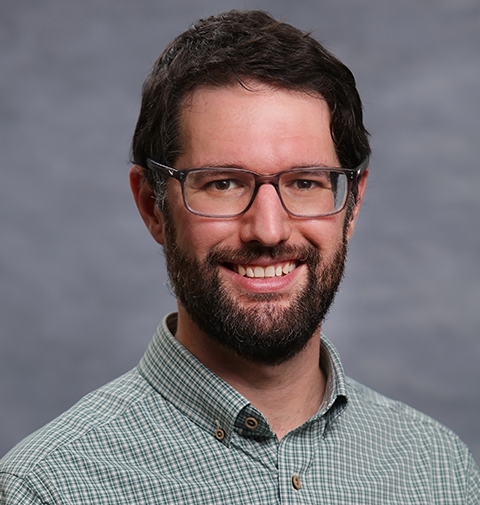
David Hofmann is the Hugh L. McColl, Jr. Distinguished Professor of Leadership and Organizational Behavior and Senior Associate Dean of UNC Executive Development at the University of North Carolina Kenan-Flagler Business School. His research focuses on organizational climate, leadership, safety in high-risk environments, and error management. He has held leadership roles including associate dean of the full-time MBA program and chairs in organizational behavior. Education: Ph.D. in Industrial and Organizational Psychology (Pennsylvania State University), M.S. in Industrial and Organizational Psychology (University of Central Florida), B.S. in Business Administration (Furman University). Research interests emphasize leadership’s impact on safety culture, error prevention in healthcare and industrial sectors, and middle management dynamics. His work bridges academic theory and practical applications, such as improving safety protocols in offshore industries and healthcare systems. Key contributions include editing Errors in Organizations and serving on National Academy of Engineering committees investigating major safety incidents like the BP Deepwater Horizon disaster. Awardees include the APA’s Decade of Behavior Research Award (2006), a Fulbright Senior Scholar Award (Germany), and a Robert Wood Johnson Foundation grant. His research has been applied globally, with executive development programs in over 15 countries. Advising and grants: Hofmann has advised on error management strategies for nursing units and offshore industries. Grants include RWJF funding for healthcare safety studies. His work integrates multilevel analytical techniques and psychological theories to address systemic organizational challenges. Labs/Teams: Collaborations with international institutions like the University of Giessen (Germany) and participation in interdisciplinary safety culture committees highlight his networked approach to advancing organizational science.
Andrew Gelman is the Higgins Professor of Statistics and Professor of Political Science at Columbia University, where he also serves as director of the Applied Statistics Center. His dual appointments reflect his interdisciplinary approach to research and teaching, bridging statistical methodology with political science applications. Gelman earned his Ph.D. from Harvard University in 1990. His educational background established the foundation for his influential career that combines rigorous statistical methodology with substantive social science inquiry. He has maintained a strong presence in both academic communities throughout his career, contributing to the development of statistical methods while applying them to pressing questions in political science and public policy. Gelman's research spans an exceptionally wide range of topics at the intersection of statistics and social science. His work addresses fundamental questions in voting behavior, electoral systems, and political representation, while simultaneously advancing methodological innovations in Bayesian statistics, multilevel modeling, and data visualization. He has made significant contributions to understanding why it is rational to vote, why campaign polls are variable despite predictable elections, and how redistricting affects democracy. His methodological work spans statistical inference challenges in diverse contexts from toxicology to medical imaging, from arsenic exposure in Bangladesh to radon levels in homes, and from police practices to social network analysis. His development of multilevel regression and poststratification (MRP) has become a standard technique in survey analysis and small-area estimation. Analysis of Gelman's recent publications reveals a continued focus on foundational statistical methodology with applications across multiple domains. His work demonstrates consistent attention to practical implementation challenges in Bayesian computation, causal inference, and survey methodology. A strong theme throughout his recent work is addressing the replication crisis through improved statistical practice, with particular emphasis on model checking, transparent reporting of uncertainty, and the integration of Bayesian methods with machine learning approaches. His research increasingly focuses on the practical implementation challenges of advanced statistical methods in real-world settings. Outstanding Statistical Application award from the American Statistical Association Best article published in the American Political Science Review Council of Presidents of Statistical Societies award for outstanding contributions by a person under the age of forty As director of Columbia's Applied Statistics Center, Gelman oversees a hub for interdisciplinary statistical research and collaboration. He has mentored numerous students and researchers through the Center's activities, fostering a community that applies advanced statistical methods to real-world problems across various domains. His teaching includes graduate courses in quantitative political research and applied regression methods, reflecting his commitment to training the next generation of researchers in robust statistical practice. Gelman has taught courses including Principles of Quantitative Political Research, Quantitative Political Research, and Quantitative Methods II: Applied Regression. Gelman leads research teams focused on developing and applying advanced statistical methods to social science questions. His work often involves collaboration across disciplines, bringing statistical expertise to address substantive questions in political science, public health, and social policy. The Applied Statistics Center under his direction serves as a nexus for methodological innovation and application, connecting statisticians with domain experts to tackle complex data challenges while promoting best practices in statistical analysis and communication.
Dr. Yang Shi is an Assistant Professor in the Department of Population Health Sciences at the Medical College of Georgia, Augusta University. He specializes in Biostatistics and Data Science, focusing on developing computational techniques for genomic data analysis. His research emphasizes improving resampling-based testing methods and applying multilevel models to study complex genomic data in neuroscience and cancer research. Education: PhD & M.S. in Biostatistics from University of Michigan; B.S. in Biological Sciences from Peking University. Research interests include Monte Carlo methods, bioinformatics tools, and statistical modeling for biomedical problems. He collaborates on studies involving genetic mechanisms of neurological diseases and cancers, as well as public health interventions. Publications span topics like genomic data analysis, melanoma survival, breast cancer metastasis, and statistical methodology for clinical trials. His work bridges statistical innovation with practical applications in biomedicine.
Dr. Linh Bui is a Research Fellow at the Research School of Management, Australian National University (ANU). She holds a PhD in Organisational Behaviour and Human Resource Management (2025), and prior experience with the Da Nang Department of Home Affairs in Vietnam. Her research focuses on teamwork, innovation, emotions, well-being, accountability, and temporal dynamics, employing field surveys, lab experiments, and meta-analysis. Education: PhD in Organisational Behaviour and Human Resource Management, ANU (2020–2025) Master’s in Public Management and Policy Analysis, International University of Japan (2015–2017) Bachelor’s in Culture Management, Hanoi University of Culture (2007–2011) Awards and Grants: Recipient of Group Dynamics Most Valuable Paper Award (2023) Recipient of Division 49 Group Psychology Grant from APA Full scholarships from Da Nang City Government, JDS (Japan), and AGRTP (Australia) Her work bridges theoretical perspectives with empirical methods, emphasizing process-oriented and multilevel analyses. Dr. Bui’s research on socially shared affect and team dynamics has been widely recognized, contributing to both academic and practical insights in organizational behavior.
Forrest Morgeson is an Associate Professor and Interim Chairperson in the Department of Marketing at the Broad College of Business, Michigan State University. His research focuses on customer experience, public policy implications of business practices, and international marketing strategies. He is widely cited for work on the American Customer Satisfaction Index (ACSI), analyzing consumer behavior in crises, and evaluating government service efficiency. His expertise bridges academic research and real-world applications, frequently informing media discussions on retail trends, federal service improvements, and crisis management. Dr. Morgeson’s research interests emphasize the intersection of customer satisfaction with broader economic and political systems. His work explores how consumer expectations shape market dynamics, particularly during economic downturns, and how businesses can mitigate service failures. He has contributed to understanding the role of customer-company relationships in sustaining brand loyalty during crises. His international studies address cross-cultural marketing challenges and sustainability innovations in global business models. Notable contributions include analyzing the causal link between customer satisfaction and stock market performance, which has influenced corporate strategies for leveraging customer assets. His applied research on government services has been featured in major outlets like AP News and U.S. News & World Report, advising policymakers on improving citizen satisfaction through data-driven approaches. Dr. Morgeson’s media engagements highlight his role as a thought leader in customer-centric strategies. He has addressed topics ranging from retailer satisfaction trends to the implications of federal shutdowns on public services. His interdisciplinary approach integrates marketing theory with real-world policy analysis, making his work impactful across academic and practical domains.
Michael Braun is an Assistant Professor in the Department of Management & Entrepreneurship at DePaul University's Driehaus College of Business. His research focuses on organizational behavior, computational modeling, and multilevel dynamics. Prior to joining DePaul in 2019, he served as an instructor at the University of South Florida. Education PhD, Organizational Psychology, Michigan State University (2012) MA, Organizational Psychology, Michigan State University (2009) BA, Psychology, Purdue University (2006) Research Areas Braun's work spans emergent leadership, team cohesion, and knowledge emergence in dynamic organizational contexts. He employs computational modeling, longitudinal data analysis, and sociometric methods to study multilevel dynamics in teams and decision-making processes. His publications address methodological challenges in organizational research, including spurious relationships in longitudinal data, dominance analysis accuracy, and construct validity in big data studies. Current projects integrate computational models with social theory and examine temporal patterns in team cognition and performance. Scientific Awards 2013 Organizational Research Method Best Paper Award 2015 Owens Scholarly Achievement Award 2017 Journal of Business and Psychology Reviewer of the Year Award Braun also works with Starling Trust Sciences since 2016, focusing on sociometric data analysis and psychometric assessments. His methodological expertise is reflected in contributions to journals like Journal of Applied Psychology , Organizational Research Methods , and Journal of Vocational Behavior .
Dr. Fuhe Jin is an Assistant Professor of Management at the School of Business , The College of New Jersey (TCNJ) , where she joined in July 2023 after earning her Ph.D. in Leadership & Organizational Science from Binghamton University (SUNY), 2023 . Her expertise spans leadership, team dynamics, and virtual work environments with a focus on multilevel intra-/inter-personal dynamics in digital teams. Education: Ph.D. in Leadership & Organizational Science, Binghamton University, 2023 M.B.A. in Strategic Management, Shandong University, 2013 B.Sc. in Information and Computational Science, Ocean University of China, 2008 Research Interests include: Green Human Resource Management and its impact on employee environmental behavior Machine learning applications in analyzing leadership emergence and communication patterns Temporal dynamics in virtual team efficacy and conflict resolution Cross-level moderating effects of cultural values and emotional regulation Network-based leadership theories and multilevel organizational frameworks Publications span high-impact journals like The Leadership Quarterly and Business Strategy and the Environment , with recent work focusing on green HRM moderation models and digital leadership analysis. She has presented at major conferences including AOM , SMA , and SIOP . Scientific Awards AOM 2025 Best Reviewer Award (Organizational Behavior Division) AOM 2024 Best Division Paper Award (CTO Division) Multimodal research grant (Binghamton University, $20,000) Multiple Teaching Honor Rolls at Binghamton University Professional Service includes committee work in Assessment and Faculty Search, and membership in prestigious organizations like the Academy of Management , SIOP , and Harvard Business Review Advisory Council . She teaches courses in leadership, organizational behavior, and organizational leadership.
Jeremy HENG is an Associate Professor at ESSEC Business School , specializing in Information Systems, Data Analytics and Operations . He is affiliated with both the France and Singapore campuses, with his current position at ESSEC France since 2024 and prior experience at Harvard University as a Postdoctoral Fellow (2017–2019). His research focuses on Bayesian computation , sequential Monte Carlo methods , diffusion processes , and Monte Carlo variance reduction techniques , particularly for high-dimensional and discretized models. PhD in Statistics (University of Oxford, United Kingdom, 2017) BSc in Statistics (University College London, United Kingdom, 2012) The majority of his publications address Bayesian inference , Monte Carlo methods , and stochastic differential equations , with applications in financial econometrics , generative modeling , and optimal control . He has received the 2022 Blackwell-Rosenbluth Award for his contributions to Bayesian analysis and has served as Co-Editor-in-Chief of Statistics and Computing (2022–2023).
Professor Adam Prugel-Bennett is a faculty member at the School of Electronics and Computer Science , University of Southampton. His research spans artificial intelligence, machine learning, and robotics, with a focus on 3D perception, explainable AI, and marine data analysis. He contributes to interdisciplinary projects including coastal morphological analysis and underwater robotics. Key research areas include: LiDAR-based 3D object detection Multilevel explainable artificial intelligence Georeferenced seafloor imaging Variational autoencoder applications Bathymetric mapping His recent work explores cross-domain adaptation, sensor fusion, and algorithmic stability. He supervises PhD students in computer science and engineering while collaborating with research groups like Vision, Learning and Control. Current projects involve EPSRC-funded initiatives on complex computational systems and AI-based knowledge exchange for coastal analysis.
Dr. Marcus Mund is a Professor at the Department of Psychology, Alpen-Adria-Universität Klagenfurt. His research focuses on psychological diagnostics, with particular emphasis on loneliness, personality-relationship transactions, and within-person variation analysis. He leads the Division of Psychological Diagnostics and has contributed extensively to understanding the dynamics of loneliness across life spans. Current faculty member Head of Division (Psychological Diagnostics) Active in research methodology and open science practices Research interests span loneliness measurement, personality development, social network analysis, and dyadic relationship dynamics. His work integrates longitudinal studies, multilevel modeling, and psychometric evaluation, particularly examining how personality traits interact with relationship quality and well-being over time. Recent publications highlight methodological advancements in loneliness assessment, cross-cultural neighborhood cohesion studies, and computational tools for dyadic analysis using R programming. These works emphasize the importance of within-person variation and temporal dynamics in social psychology. He utilizes advanced statistical methods like Actor-Partner Interdependence Models (APIM) and Item Response Theory (IRT) to analyze complex behavioral patterns. His studies cover topics such as solo-living adults' well-being, stress during pandemics, and the validity of loneliness measurement scales.
Matison McCool is a Research Assistant Professor at the University of New Mexico affiliated with the Center on Alcohol, Substance Use, and Addictions (CASAA) and BEACH Lab . Their work focuses on integrating wearable sensor technology with behavioral interventions for substance use disorders. PhD in Clinical Psychology, University of North Carolina Wilmington MA in Clinical Psychology, University of North Carolina Wilmington BS in Psychology, University of Texas at Dallas Research interests include: Real-time physiological monitoring for treatment optimization Mindfulness-based relapse prevention (MBRP) Advanced quantitative methods in behavioral research Self-regulation mechanisms during recovery Machine learning applications in psychophysiology Individualized harm reduction strategies Their publications demonstrate interdisciplinary approaches combining: Wearable sensor technology (ECG/PPG) for stress measurement Multilevel modeling of daily behavior patterns DBT skills in substance use reduction Contextual analysis of cannabis consumption Longitudinal adherence metrics in recovery programs Laboratory Affiliation : Active member of the BEACH Lab at UNM, developing adaptive interventions for substance use disorders.
Timothy Bagguley is a Research Fellow within the Epidemiology and Cancer Statistics Group at the University of York's Department of Health Sciences. He specializes in hematological malignancy research through the Haematological Malignancy Research Network (HMRN), a population-based registry tracking over 38,000 blood cancer patients across 14 UK hospitals. His research focuses on: Mapping patient pathways from diagnosis using linked clinical and administrative data Advanced statistical modeling including survival analysis and multilevel modeling of longitudinal datasets Quality-of-life assessments in hematological disorders Stata programming for epidemiological data analysis His publication record demonstrates consistent contributions to high-impact hematology journals, with recent work emphasizing: Myelodysplastic syndromes (MDS) treatment outcomes Iron metabolism biomarkers in blood cancers Population-based lymphoma and myeloma studies Registry methodology for cancer surveillance Bagguley's collaborative work spans European research networks including the European Myelodysplastic Syndromes Registry. His technical expertise in handling complex linked datasets from Hospital Episode Statistics and clinical registries enables robust real-world evidence generation for blood cancer treatment evaluation.
David Chernoff is a Professor in the Department of Astronomy at Cornell University's College of Arts and Sciences. He is also affiliated with the Carl Sagan Institute, CCAPS, and the Physics Department. His work bridges cosmology, quantum mechanics, and advanced statistical methods to explore fundamental physics through astrophysical observations. Research Interests: Chernoff's research spans a wide range of theoretical and computational topics. He focuses on cosmology, quantum mechanics, and the development of statistical and numerical methods for solving complex problems in physics. A key area of his work involves using astrophysical data to constrain fundamental theories of physics and cosmology, particularly over the past two decades. His publications reflect a deep engagement with both theoretical frameworks and observational data, including studies on cosmic strings, helium wave functions, and ultra-high energy cosmic rays. These works highlight his expertise in applying advanced computational techniques to astrophysical problems. Contact: dfc8@cornell.edu Office: 602 Space Science Building, Cornell University Phone: 607-255-4755
Matilde Bini is a Professor of Economic Statistics (SECS-S/03) and Director of the Department of Human Sciences at the University of European Rome (UER). She holds a PhD in Applied Statistics from the University of Florence (1995) and has taught Corporate Statistics and Statistical Methods for Business Decisions at UER since 2009. Visiting positions: University of Florida (USA), IMT Lucca, University of Cordova (Spain) Active in national research groups funded by the Italian Ministry of Research Editorial roles: Associate Editor for Statistical Methods and Applications and Italian Journal of Applied Statistics Her research focuses on generalized linear mixed models, structural equation models, multivariate methods, and longitudinal models. She specializes in robust diagnostic analysis for data quality and anomaly detection, with applications in labor markets, firm productivity, entrepreneurship, and higher education evaluation. Recent publications examine zero-inflated beta regression for university career prediction, multilevel modeling of educational effectiveness, and robust analysis of high-tech firm competitiveness. Her work frequently appears in peer-reviewed international statistics journals. Professional affiliations include the Italian Statistical Society, International Statistical Institute, American Statistical Association, Royal Statistical Society, and the International Society for Business and Industrial Statistics.
Joseph Ornstein is an Assistant Professor in the Department of Political Science at the University of Georgia . He holds a PhD from the University of Michigan (2018) and has previously worked at the Brookings Institution and Washington University in St. Louis. Current affiliation: School of Public and International Affairs, University of Georgia Research focus: Statistical methodology, computational social science, and urban politics Key contributions: Development of R packages ( fuzzylink , promptr ) for LLM integration in social science Research Trends in his publications include leveraging large language models for text analysis, advancing record linkage techniques, exploring urban governance dynamics, and applying agent-based simulations to public health and policy challenges. His work spans methodological innovation and empirical policy evaluation. Collaborations with scholars like Elise Blasingame and Jake Truscott highlight his work on LLM applications in political science. He actively contributes to open-access platforms and software development for social science research.