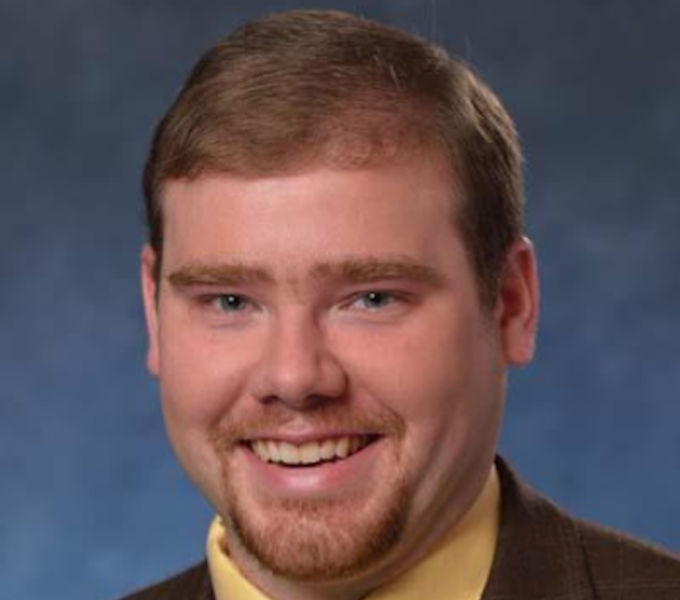
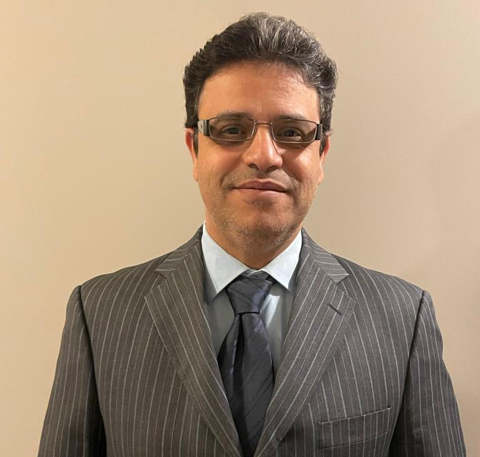
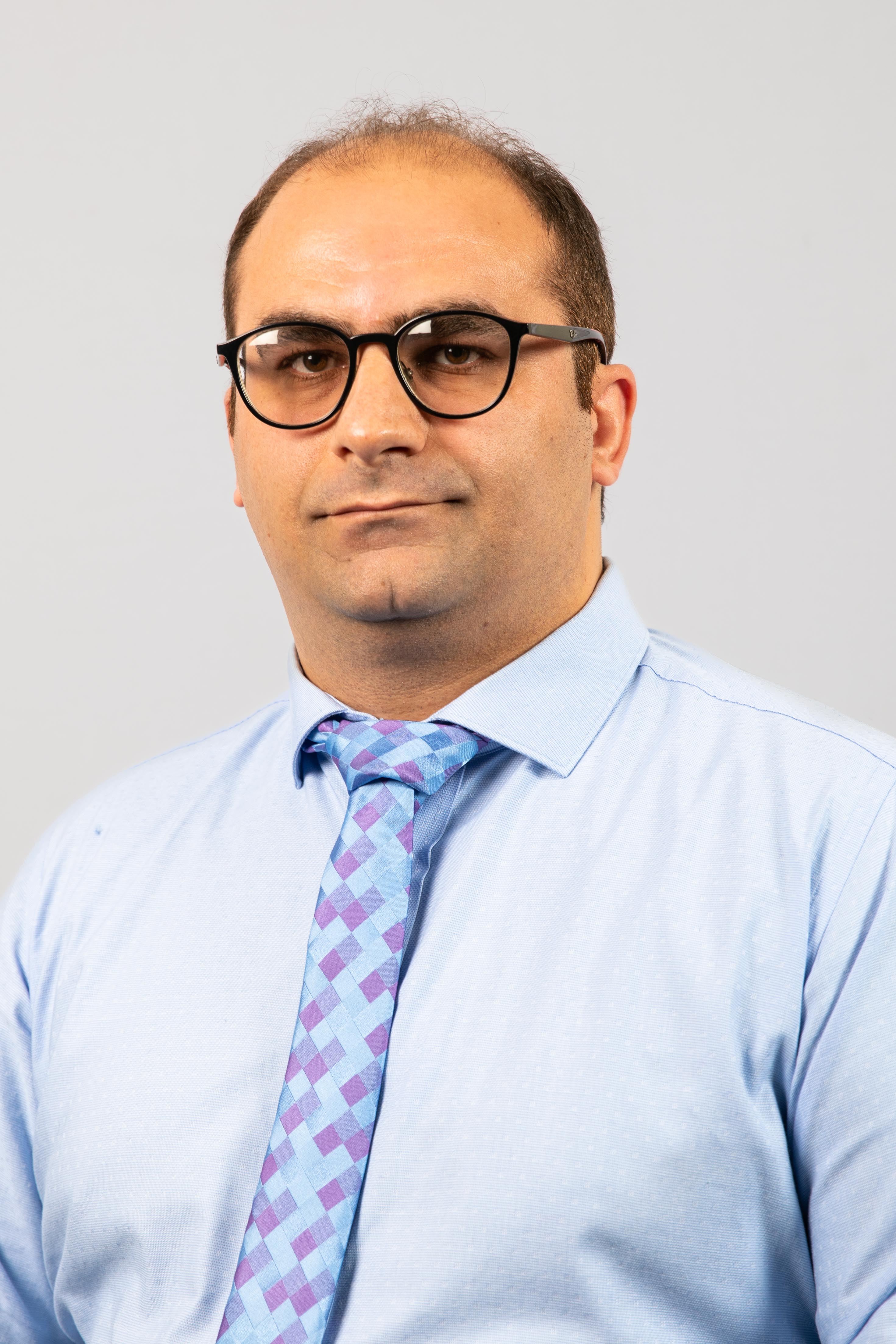
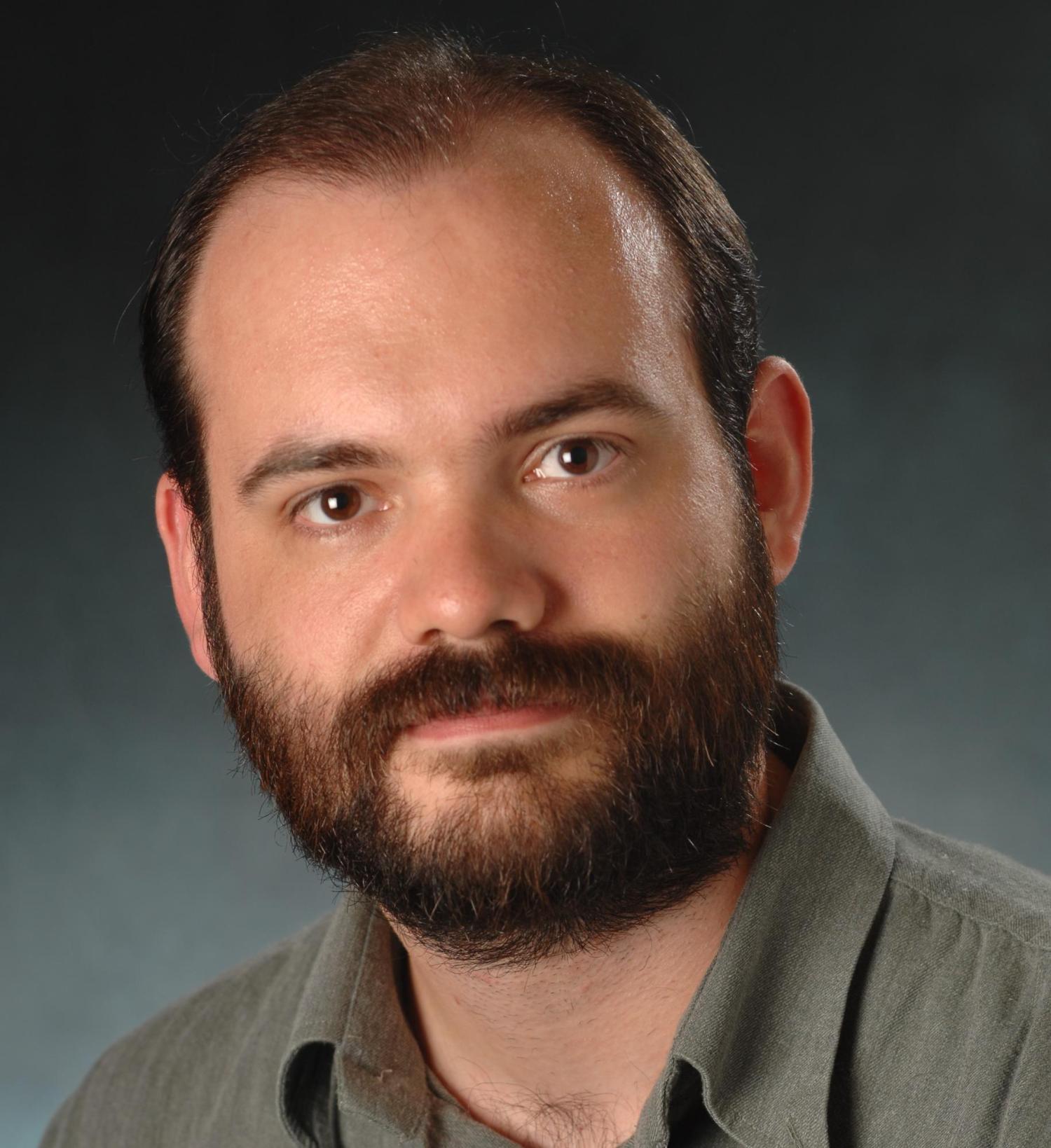
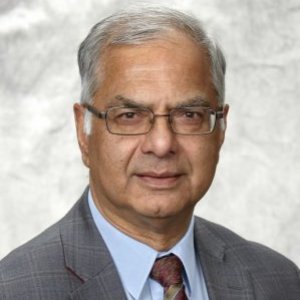
Frede Blaabjerg is a Professor at Aalborg University (AAU Energy) , affiliated with the Faculty of Engineering and Science . Since 1998, he has pioneered power electronics research in applications such as wind turbines , photovoltaic (PV) systems , reliability engineering , and Power-2-X technologies. Education : PhD in Electrical Engineering (1995, Aalborg University) Honorary Degrees : Honoris Causa at University Politehnica Timisoara (2017) and Tallinn Technical University (2018) His research focuses on power electronics control , system optimization , and reliability for renewable energy and electric mobility . Recent work includes grid-forming converters , virtual synchronous generators , and smart EV charging systems. Key publication trends span 15+ years , with over 3,733 peer-reviewed articles and 900+ journal papers in power electronics , renewables , and energy storage . Notable book series: Control of Power Electronic Converters and Systems (4 volumes, Elsevier). Scientific Awards : 46 IEEE Prize Paper Awards 2020 IEEE Edison Medal 2019 Global Energy Prize 2014 IEEE William E. Newell Power Electronics Award Leadership Roles : Editor-in-Chief, IEEE Transactions on Power Electronics (2006–2012) Chairman, Danish Council for Research and Innovation Policy (2020–) President, IEEE Power Electronics Society (2019–2020)
Professor Grahame Holmes is an Honorary Professor in the School of Engineering at RMIT University, Australia. His expertise spans electrical energy conversion, smart energy systems, renewable energy integration, power electronics, and grid infrastructure. He focuses on advancing technologies for sustainable energy storage, grid stability, and high-efficiency power conversion. Research Interests : Electrical and Electronic Engineering, Communications Technologies, Power Electronics, Renewable Energy Systems, and Grid Integration Solutions. His work emphasizes practical applications such as hydrogen energy storage systems, grid-interactive inverters, and modular multilevel converters. Recent Contributions : Prof. Holmes has published extensively on topics like advanced PWM techniques, resonant current controllers, and DC transformer designs. His research bridges theoretical advancements with real-world implementations, addressing challenges in smart grid stability and high-frequency power conversion. Advising & Grants : Supervised projects include 'Hydrogen Energy Storage System for Nanogrid' (2015) and 'Synchronised Control of Grid-Interactive Inverters' (2015). While specific grant details are not listed, his work aligns with major themes in sustainable energy research. Labs & Collaborations : Engages in collaborative research through RMIT's facilities, focusing on hardware-software co-simulation frameworks and FPGA-based real-time systems.
Dr Brandon M Grainger is an Eaton Faculty Fellow and Associate Professor of Electrical and Computer Engineering at the University of Pittsburgh’s Swanson School of Engineering, where he also directs the Electric Power Technologies Laboratory, serves as Associate Director of the Energy GRID Institute, and co-directs Pitt AMPED. A key architect of Pitt’s electric power program since 2008, he focuses on advanced power conversion, high-voltage electronics, wide-band-gap semiconductors, and aerospace power systems. Education PhD, Electrical Engineering (Power Conversion), University of Pittsburgh, 2014 MS, Electrical Engineering, University of Pittsburgh, 2011 BS, Mechanical Engineering & Minor in Electrical Engineering, University of Pittsburgh, 2007 Executive Education Certificate, Tepper School of Business, Carnegie Mellon University, 2019 Research Focus Dr Grainger’s work lies at the intersection of power electronics, high-voltage engineering, and sustainable energy systems. He specializes in medium- and high-voltage power electronics (HVDC, STATCOM), resonant converters, and ultra-high-power-density designs leveraging SiC and GaN semiconductors. His investigations extend to electric-vehicle traction drives, solid-state transformers, optimized magnetics for aerospace applications, and resilient microgrids. He and his students routinely collaborate with NASA JPL, Johns Hopkins APL, Honeywell Aerospace, and the Naval Research Laboratory, leveraging Pitt’s NSF SHREC center to push the boundaries of power conversion in space and defense systems. Selected Research Themes High-frequency, high-density DC/DC converters for satellite power systems Radiation-tolerant GaN converters and point-of-load power stages Medium-voltage testbed development (13.8 kV, 5 MVA) Rare-earth-free permanent-magnet machine topologies Model-predictive control of multi-phase drives and microgrids Honors & Awards 2024 IEEE Region 2 Outstanding Educator Award 2024 Pitt STRIVE Outstanding DEI Service Award 2019 ESWP Engineer of the Year 2019 ASEE 2nd Place Best Paper Award 2019 SRI Undergraduate Best Mentor Award Richard K. Mellon Endowed Graduate Fellowship National Academies of Science & Engineering Ambassador Senior Member, IEEE Grants & Industry Partnerships Dr Grainger’s research has been continuously funded by federal agencies and industry partners including NASA JPL, Johns Hopkins APL, Honeywell Aerospace, the Naval Research Laboratory, Eaton, and the National Science Foundation through the SHREC Center. These awards support graduate students and post-docs working on next-generation power systems for aerospace, naval, and terrestrial applications. Laboratories & Teams Director, Electric Power Technologies Laboratory (EPTL) Associate Director, Energy GRID Institute Co-Director, Pitt AMPED (Advanced Multimodal Power and Energy Development) Faculty Affiliate, NSF SHREC Center
Thiago Batista Soeiro serves as a Full Professor with exceptional scholarly impact, evidenced by over 200 research publications and an h-index of 27. His work fundamentally advances power electronics applications in transportation and energy systems, particularly through innovations in electric vehicle infrastructure and sustainable power conversion technologies. Despite the absence of explicit institutional affiliation in source materials, his research permeates critical IEEE journals and conferences. Professor Soeiro's research portfolio centers on: Power converter design for electric vehicle charging systems AI-driven battery health estimation using electrochemical impedance spectroscopy Wireless power transfer optimization for automotive applications High-efficiency topologies for more electric aircraft Hydrogen energy system integration Advanced semiconductor utilization in grid-connected systems Analysis of his 2023-2025 publications reveals accelerating innovation in wide-voltage-range converters, predictive battery management, and fault-tolerant power systems. His work increasingly bridges machine learning with power electronics, notably through computation-light AI models for battery diagnostics, while maintaining strong focus on practical implementation challenges in EV charging and aircraft electrification. No scientific awards or honors were documented in the available materials. Similarly, information regarding student supervision, research grants, laboratory facilities, or collaborative teams was not provided in the source texts.
Dushan Boroyevich is a University Distinguished Professor at Virginia Tech's Bradley Department of Electrical and Computer Engineering and serves as Deputy Director of the Center for Power Electronics Systems (CPES). He holds adjunct roles at Tsinghua, Xi'an Jiaotong, Zhejiang, and National Cheng-Kung Universities. His research focuses on power electronics systems, including multi-phase power conversion, electronic power distribution, and modular multilevel converters. He pioneered the geometric modeling approach for high-frequency converters and has led over 200 students in generating 1000+ publications and 20 patents. Education: Dipl. Ing. (University of Belgrade, 1976), M.S. (University of Novi Sad, 1982), Ph.D. (Virginia Tech, 1986). Awards include IEEE Fellow, IEEE William E. Newell Award, and election to the U.S. National Academy of Engineering (2014). His CPES leadership has driven global advancements in power electronics integration and modularization. Research emphasizes high-power density, EMI mitigation, and next-gen SiC-based converters. Recent work includes medium-voltage PEBB designs, common-mode noise reduction, and grid-interface systems. He collaborates closely with industry through CPES's 80+ member consortium. Awards: IEEE Fellowships, Owen Distinguished Service Award, European Power Electronics Association Awards Labs/Teams: CPES, Virginia Tech Power Electronics Research Group Grants/Projects: NSF National Engineering Research Center funding, Industry Consortium projects
Dr. Mohamed Youssef is an Associate Professor in the Department of Electrical, Computer and Software Engineering at Ontario Tech University. He holds a PhD (Electrical and Computer Engineering) from Queen’s University (2005). His primary affiliation is the Faculty of Engineering and Applied Science, with research focusing on propulsion systems, power electronics, railway systems, and renewable energy technologies. Education: PhD, Electrical and Computer Engineering, Queen’s University (2005) MSc, Power Electronics, Concordia University (2001) MSc, Electric Power and Machines, Ain Shams University (1999) BSc, Electric Power and Machines, Ain Shams University (1995) Research Interests: Dr. Youssef’s expertise spans propulsion systems for automotive and hyperloop technologies , power electronics for IoT and renewable energy , railway electromagnetic compatibility , and power system stability . His work emphasizes practical applications in electric vehicles, smart grid integration, and sustainable energy systems. He leads the PEDAL (Power Electronics and Drives Laboratory) at Ontario Tech. Awards and Recognition: Recipient of the NSERC Post-doctorate Scholarship (2006) Best Paper Award at IECON 2004 Award of Merit from Ontario Center of Excellence (2006) Nominated for the Howard Alper Prize (2007) Professional Activities: He serves as a reviewer for IEEE Transactions on Power Electronics , IEEE Transactions on Industrial Electronics , and others. He has held roles as Technical Chair at IEEE SEGE 2015 and Track Chair at IEEE SEGE 2016. Current affiliations include Senior Member of IEEE and Chair of the IEEE Power Electronics Chapter in Toronto. Labs and Teams: He directs the PEDAL Lab , focusing on advanced power electronics and electric vehicle technologies. Collaborations include Bombardier Transportation and Armstrong Pumps.
Kamal Al Haddad is a Lecturer in the Department of Electrical Engineering at École de technologie supérieure (ÉTS). He holds a Doctorate from INTP, Toulouse, and advanced degrees from UQTR. His research focuses on power electronics, renewable energy integration, and smart grid technologies. He leads the GREPCI research group, specializing in Power Electronics and Industrial Control. Education: B.Eng., M.Sc.A. (UQTR), Doctorate (INTP, Toulouse). Research interests span energy conversion, industrial electronics, power quality, and electromagnetic interference. He emphasizes sustainable energy solutions, electric traction systems, and high-efficiency power sources. His work includes developing advanced power electronic converters and grid stability solutions. Recent articles highlight advancements in modular converters for STATCOM, AI-driven fault detection in hydrogenerators, and renewable energy policy frameworks. He has received notable awards, including the 2014 IEEE Eugene Mittelmann Prize and Fellowships from IEEE and other institutions. Supervised over 60 students, including doctoral theses on topics like hydrogenerator diagnostics, EV charging systems, and renewable energy integration. His research also involves real-time simulation of power systems and FPGA-based implementations. Labs/Teams: GREPCI – Power Electronics and Industrial Control Research Group, leading projects on smart grids and energy efficiency.
Pooya Davari is a Professor and Head of the Section for Applied Power Electronic Systems at Aalborg University , Denmark. He leads the EMI/EMC in Power Electronics Research Group and serves as Vice Chair of the Energy Efficiency Mission. His research focuses on electromagnetic interference (EMI) and harmonic mitigation in power electronic systems, with over 200 publications and significant contributions to renewable energy integration. Education: B.Sc. and M.Sc. in Electronic Engineering (2004, 2008), Ph.D. in Power Electronics from Queensland University of Technology (2013) Prior Roles: Lecturer at QUT (2013–2014), Postdoc at AAU (2014) Research Interests: Harmonic and EMI analysis in grid-tied converters High power density converter design Signal processing for converter modeling Reliability of power electronic systems Article Trends: Recent work emphasizes EMI/EMC in renewable energy systems, wide bandgap semiconductors (SiC/GaN), and reliability modeling for EVs and hydrogen production via electrolysis. Sub-fields include converter topologies, grid integration challenges, and AI-driven diagnostics. Scientific Awards: Equinor 2022 Prize (Denmark’s oldest engineering award) IEEE EMC Society Young Professional Award (2020) World’s Top 2% Highly Cited Scientist (Stanford, 2021–2025) Multiple best paper awards (IEEE, Applied Sciences, etc.) Grants & Editorial Roles: Recipient of grants from Innovation Fund Denmark (Supra-EMC project), Horizon Europe (SOLARIS), and industry partnerships. Serves as Area Editor for IEEE Transactions on Transportation Electrification , Associate Editor for IEEE Transactions on Power Electronics , and Editor-in-Chief of Circuit World Journal (2020–2025). Labs & Standards: Coordinator of the EMC Laboratory at Aalborg University. Member of IEC standardization Working Groups 6 and 8 (TC77A), focusing on EMC strategies for power grids.
Dr. Ehsan Pashajavid is a Senior Lecturer at Curtin University's School of Electrical Engineering, Computing and Mathematical Sciences, within the Faculty of Science and Engineering. His research focuses on stochastic optimization, renewable energy integration, microgrid control, and electric vehicle systems. Research interests include: Microgrid and smart grid control algorithms Renewable energy resource management Power system stability and operation Energy storage optimization Electric vehicle-grid integration His publications demonstrate significant contributions to power system resilience, with recent work emphasizing battery storage economics, fault-tolerant converters, and model predictive control for grid stability. Article trends show strong focus on renewable integration challenges and optimization techniques for modern energy systems. Awards include Senior Member status in IEEE and its Power & Energy, Industrial Applications, and Power Electronics societies. Teaching responsibilities encompass graduate courses in Renewable Power Generation Systems, Smart Grid Control, and Renewable Energy Principles.
Luca Corradini is an Associate Professor in the Department of Electrical, Computer and Energy Engineering at the University of Colorado Boulder. Previously, he held positions as an Assistant Professor (2011–2017) and Associate Professor (2017–2024) at the University of Padova, Italy. His research focuses on power electronics, including digital control of switched-mode converters, bidirectional converter modulation, and energy harvesting systems. Education: Laurea (Electronic Engineering), University of Padova, 2004 PhD (Industrial Electronics), University of Padova, 2008 Research Interests: Digital control strategies for power converters, modeling of switched-mode systems, efficient energy management solutions, and applications in automotive and renewable energy. Publications: Recent work emphasizes advancements in DC fast charging systems, flying-capacitor balancing techniques, and GaN-based resonant converters. His research trends reflect a focus on high-frequency, high-efficiency power conversion and adaptive control methodologies. Awards: Second 2008 Prize Paper Award from IEEE Industry Applications Society Professional Activities: Associate Editor of IEEE Transactions on Power Electronics and Chair of IEEE PELS Technical Committee 1. Previously served as General Chair of IEEE COMPEL 2018. Labs & Teams: Affiliated with the Colorado Power Electronics Center (CoPEC) and collaborates on automotive and renewable energy projects.
Dr. Vijay K. Sood is a Professor in the Department of Electrical, Computer and Software Engineering at Ontario Tech University. He holds a PhD in Power Electronics from Bradford University (UK), and has extensive experience in power systems, power electronics, and renewable energy integration. His research focuses on High Voltage Direct Current (HVDC) systems, Flexible AC Transmission Systems (FACTS), power electronics converters, and grid protection. He has received numerous awards, including Life Fellow of IEEE, Emeritus Fellow of the Canadian Academy of Engineers, and the 2000 IEEE Third Millennium Medal. Dr. Sood has authored/co-authored over 100 publications, including peer-reviewed articles in top journals like IEEE Transactions on Power Electronics and International Journal of Electrical Power & Energy Systems. His work addresses challenges in grid stability, renewable energy integration, and advanced control strategies for power systems. Education: PhD (Power Electronics), Bradford University, UK (1977) MASc (Electrical Machines), Strathclyde University, Scotland (1969) BSc (Electrical Engineering), Nairobi University, Kenya (1967) Awards: IEEE Third Millennium Medal (2000) Canadian Pacific Railway Engineering Award (2002) IEEE Regional Activities Board Achievement Awards (2001, 2006) His research emphasizes practical solutions for modern power systems, including HVDC controller design, synthetic inertia control for renewable grids, and advanced fault detection techniques. He has collaborated internationally on projects like the Energy System Observatory of Honduras and grid architecture models for multi-terminal DC systems.
Dr. Qiteng Hong is a Reader in the Department of Electronic and Electrical Engineering at the University of Strathclyde, Faculty of Engineering. He holds a BEng (Hons) and PhD from the same institution and is a leading researcher in power system protection and control for renewable-dominated grids. He is Deputy Director of the MSc in Electrical Power and Energy Systems and a member of the Steering Committee for the Joint MSc with Hong Kong University of Science and Technology (HKUST). BEng (Hons), Electronic and Electrical Engineering, University of Strathclyde, 2011 (Top Graduate of the Year) PhD, Electrical Engineering, University of Strathclyde, 2015 (fully funded by National Grid) His research focuses on novel solutions for monitoring, protection, and control of future power systems, particularly those with high renewable penetration. Key areas include wide-area monitoring using synchronized measurements, protection of converter-dominated systems, fast frequency response in low-inertia networks, and digital twin-based real-time control. His work contributes to UN Sustainable Development Goals in clean energy and climate action. Dr. Hong has published over 110 research outputs, including 59 journal articles. His recent publications (2025) emphasize fault detection and arc suppression in active distribution networks using advanced converter topologies and signal processing techniques. Themes include traveling wave analysis, Hough transform, synthetic zero-sequence signals, and machine learning for frequency prediction, reflecting a strong trend toward intelligent, data-driven power system protection. Gold Medal, 49th International Exhibition of Inventions Geneva (2024) IET Best Paper Award (DPSP APAC 2025) Best Paper Award, IEEE APAP (2019) Principal’s Award Runner Up, University of Strathclyde (2024) Students' Choice Award (2021) British Renewable Energy Awards – 'Highly commended' (2018) IET Prize for Academic Excellence (2011) John Moyes Lessells Scholarship (2013) Shortlisted for Best Innovation Award, Scottish Renewables (2018) Dr. Hong has led or participated in over 50 research and KE projects, securing £11M in funding (PI on £2.26M). He leads a team of 10 researchers, including 5 PhD students, and has developed the LGMVP platform—the UK’s first online tool of its kind. He serves on the University Senate, is a guest editor for 5 journal special issues (Co-Guest Editor-in-Chief for a special issue on zero-carbon power systems), and has delivered teaching across 9 modules. He has been PI or Co-I on major projects such as SETTLE-INSIGHT (NIA), Shell-iCase, and NGET SIF ALPHA. He leads an active research group focused on smart grid protection and digital twin technologies. He is the main developer of four prototype software tools and mentors a team of PhD students and research associates. His lab collaborates with industry partners like SSE, National Grid, and Shell, and he is a key figure in international initiatives through IEEE and CIGRE.
John Fox serves as an Adjunct Professor in the Department of Applied Physics within Stanford University's School of Humanities and Sciences, specializing in accelerator physics and energy systems optimization. His research bridges theoretical control methods with practical engineering applications in particle accelerators and sustainable transportation. Ph.D. in Applied Physics with minor in Electrical Engineering from Stanford University (1986) A.B. in Physics from Harvard University (1977) Professor Fox's research focuses on two primary domains: (1) accelerator physics including RF systems, beam dynamics, and instability control for particle accelerators, where he leads LARP projects for LHC LLRF techniques and electron-cloud instability mitigation; and (2) optimal control methods for improving energy efficiency in plug-in hybrid vehicles. His work combines advanced digital signal processing with practical instrumentation challenges in both synchrotron facilities and automotive systems. The research demonstrates consistent innovation in control theory applications across disparate physical systems. His publication record shows strong interdisciplinary connections between accelerator physics and energy systems engineering, with recent work increasingly focusing on multilevel inverter technologies and battery health optimization. The publications reveal a consistent thread of applying advanced control theory to complex physical systems across both high-energy physics and sustainable energy domains. Scientific Recognition: Dean's Award for Distinguished Teaching (2001) Fellow of the American Physical Society (2008) IEEE Senior Member (2018) Professor Fox has successfully mentored 5 Ph.D. students to completion and supervised 13 M.S. students, with two students receiving American Physical Society Dissertation Prizes and another winning the Toohig Fellowship. His research has been supported by significant collaborations including the Ford-Stanford Alliance and Precourt Center for Energy, with projects focusing on battery health modeling and optimal control strategies for hybrid vehicles. Current research includes leadership roles in LHC accelerator projects and development of energy optimization algorithms for transportation systems. As Group Leader for LARP projects, he directs teams working on feedback control systems for the LHC and SPS accelerators, with expertise spanning electron/positron and hadron synchrotrons, storage rings, and LINAC systems. His laboratory work emphasizes practical implementation of theoretical control concepts in both accelerator and automotive contexts.
Taehyung Kim is an Associate Professor at the University of Michigan-Dearborn in the Department of Electrical and Computer Engineering , College of Engineering and Computer Science. His research focuses on power electronics , motor drives , and electric/hybrid power systems for vehicles and aircraft , with an emphasis on renewable energy integration and fault-tolerant control . Education Ph.D., Electrical & Computer Engineering, Texas A&M University M.S., Electrical Engineering, Korea University B.S., Electrical Engineering, Korea University His research interests include energy conversion systems, power electronics for electric vehicles, evaluation and diagnosis of AC motors, and position sensorless control of permanent magnet motors. He leads the KIM Laboratory , which explores unmanned aerial vehicles (UAVs) , battery systems , and powertrain reliability . The 15 most recent articles (2024-2021) highlight his work on hybrid UAVs , fault detection algorithms , cost-effective converters , and powertrain optimization . These publications span power electronics , renewable energy integration , and electric propulsion systems , with applications in transportation electrification and industrial power systems . Scientific Awards NSF Mid Career Advancement Award, 2023 IEEE-IAS Prize Paper Award (2nd Place), 2012 Best Paper Award, IEEE Transportation Electrification Conference, 2021 Listed in "World Top 2% Scientists" (Stanford University, 2020-2024) Listed in Marquis Who’s Who in America Technical Program Co-Chair, 2009 IEEE Vehicle Power and Propulsion Conference Prof. Kim has advised numerous PhD and Master’s students , including Feng Zhou , Sreekanthreddy Chalapala , and Sahithya Parvathareddy . He has secured significant grants from the NSF , Department of Energy , and industry partners like Ford, focusing on smart monitoring , fault identification , and energy management for electrified systems. His lab’s facilities include advanced power electronics labs and hybrid powertrain testing environments .
Zoltán Sütő is an Associate Professor at the Budapest University of Technology and Economics, affiliated with the Department of Automation and Applied Informatics. His research focuses on advanced power electronics and control systems, with expertise in real-time implementation using FPGA technology. He maintains an active presence through institutional contacts at Budapest 1117, Magyar tudósok krt. 2., Q.B114, and can be reached via phone (+36 1 463-2337) or email (Suto.Zoltan@aut.bme.hu). Dr. Sütő's research encompasses: Design and optimization of power converters (dual active bridge, multilevel inverters) Real-time control algorithms for grid-connected systems and microgrids FPGA-based hardware-in-the-loop simulation methodologies Nonlinear dynamics in power electronic systems Artificial intelligence applications for fault diagnosis in drive systems His work bridges theoretical control models with practical implementations in renewable energy integration and power quality management. Recent publications demonstrate a strong focus on predictive control techniques, adaptive compensation methods, and optimization of power converter topologies. Research trends emphasize real-time validation, FPGA implementation, and AI-enhanced diagnostics across applications ranging from energy storage systems to industrial drives. Articles consistently address efficiency improvements, stability challenges, and novel modulation strategies in power conversion.