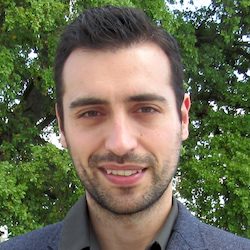
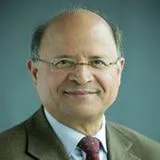
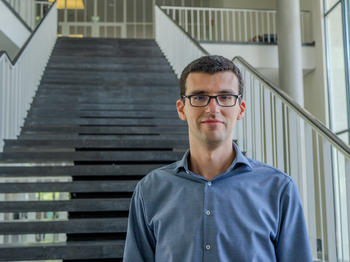
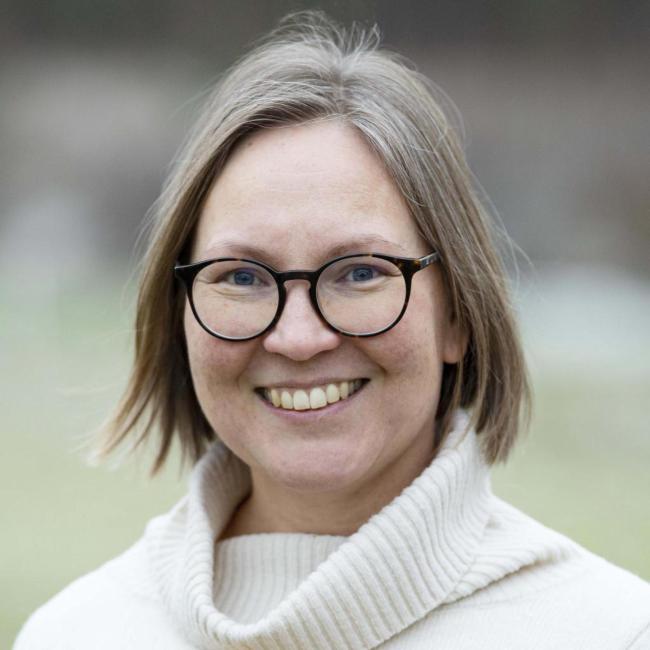
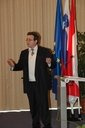
Prof. Dr. Marina Mitrevska is a Full Professor at the Institute for Security, Defence and Peace , affiliated with the Faculty of Philosophy at Ss. Cyril and Methodius University in Skopje . She holds a Doctor of Science degree (1998) and has taught courses such as Human Security, Crisis Management, and Peace Operations since 1988. She has also contributed to editorial boards of journals like Contemporary Macedonian Defense and European Journal of Human Security . Education: PhD (1998), MA (1993), BA (1987) from Ss. Cyril and Methodius University in Skopje Languages: English, Serbian, Croatian Her research focuses on security studies , crisis management , and conflict resolution , with a strong emphasis on Euro-Atlantic integrations and gender perspectives in security. Her recent publications highlight critical infrastructure protection, hybrid threats, and geopolitical dynamics. She has served on national accreditation and evaluation boards for higher education since 2018 and led doctoral and master’s programs at her institute. Marina Mitrevska actively collaborates with institutions such as the Faculty of Mechanical Engineering (2010–present) and the University of Sarajevo (2018–present, Faculty of Criminology). Her work bridges academic research, policy advising, and international partnerships.
André Saramago is an Assistant Professor of International Relations at the University of Coimbra (Portugal), specializing in international relations theory, historical sociology, and East Asia studies. He collaborates with DiploFoundation on online learning and research since 2017. His work emphasizes multilateral diplomacy in global challenges, as seen in his analyses of Arctic policy frameworks and ASEAN's response to the pandemic. Education: MA in International Relations (University of Lisbon), PhD in International Politics (University of Aberystwyth, UK) Research focuses on diplomatic practices in global governance, with recent engagement on Zoom's role in online education and ASEAN's multilateral strategies. His collaborations extend to the Geneva Internet Platform (GIP) for digital diplomacy initiatives. Publications include discussions on Arctic diplomacy (2019) and ASEAN’s pandemic response (2020), highlighting his expertise in regional security and crisis management. No awards or grants explicitly mentioned, though his DiploFoundation partnership indicates active research dissemination.
Andreas M.T. de Guttry is a Full Professor of International Law at the Scuola Superiore Sant'Anna in Pisa. He has held various leadership roles, including Director of the International Training Programme for Conflict Management (ITPCM), which focuses on peacekeeping, humanitarian assistance, human rights, and democratization. From 2000 to 2020, he directed the Advanced Training Division at Scuola Sant'Anna. Previously, he served as Head of the Legislative Office at the Ministry for Community Policies and the Ministry of Foreign Trade in Rome. He has directed training and technical assistance projects in over 20 countries, including Italy, the EU, UN, and regions in Africa and Central America. His work emphasizes international legal frameworks for conflict resolution, post-conflict development, and the role of regional organizations. He has also published extensively on migration policy, voting rights, and pandemic legal preparedness. Education details are not explicitly provided, but his academic and professional trajectory suggests advanced training in international law and related disciplines. His research interests are centered on international legal perspectives of conflicts, peacekeeping operations, humanitarian law, duty of care obligations of international organizations, and the interplay between global and regional governance structures. He has contributed to comparative analyses of legal systems and authored critical studies on topics such as the Iran-Iraq War, migration agreements between Italy and Libya, and the legal implications of the 2018 Ethiopia-Eritrea peace deal. His articles analyze themes such as UN mission effectiveness, pandemic response preparedness, voting rights of migrants, and international counterterrorism strategies. He has edited major works exploring multistakeholder partnerships, duty of care in international organizations, and regional integration in Central America. His work spans both theoretical and applied legal scholarship, with a focus on bridging policy and practice in global security contexts. Andreas de Guttry’s career includes advising governments and international bodies like the EU, OSCE, and UN. He has directed training programs for entities such as the Italian Ministry of Foreign Affairs, the Carabinieri, and regional bodies like the African Union. His contributions to academic and policy circles highlight a commitment to advancing international law’s role in addressing contemporary global challenges. He leads the ITPCM, a Sant’Anna initiative offering training, research, and consultancy in conflict zones. His projects often emphasize capacity-building for civilian and military personnel in high-risk environments, reflecting his expertise in legal mechanisms for international crisis management.
Jenniver Sehring is a Research Fellow and courtesy faculty member in the Water Resources Policy Management Program at Oregon State University (USA), with affiliations at the Kazakh-German University (Kazakhstan), University of Helsinki (Finland), and FernUniversität in Hagen (Germany). Her work focuses on transboundary water governance, environmental security, and gender dynamics in diplomacy. Previously, she served as an assistant professor in comparative politics at the University of Würzburg and held research roles at the University of Giessen's ZEU institute. Her education includes a PhD from FernUniversität in Hagen (2008) on water institutional reforms in Kyrgyzstan and Tajikistan, and degrees in Political Science and Social Anthropology from the University of Mainz. She has extensive professional experience with international organizations like the EU, OSCE, and GIZ, advising on water-related security issues in Central Asia. Research Interests: Hydropolitics and transboundary water management Gender dimensions in environmental diplomacy Climate change adaptation in mountain regions Institutional reforms in post-Soviet states Water-Energy-Food Nexus in fragile regions Publications (2022-2024) emphasize gendered practices in water negotiations, multi-track diplomacy strategies, and institutional frameworks for river basin management. Her work bridges political science, environmental policy, and feminist theory to address global water governance challenges. Awards: None explicitly mentioned, though her contributions to Central Asian water research have been recognized through editorial roles and institutional affiliations. Grants/Advising: Extensive involvement in OSCE water governance programs, EU-funded initiatives in the Aral Sea basin, and academic partnerships advancing water cooperation. Active in training programs and policy dialogues on gender equity in water sectors. Labs/Teams: Collaborates with the International Forest Policy Research Group (Helsinki) and the Kazakh-German University's Center for Natural Resources and Sustainability, focusing on cross-disciplinary approaches to environmental challenges.
Sophie Stalla-Bourdillon is a Visiting Professor at the University of Southampton Law School and holds the position of Professor in IT Law at Vrije Universiteit Brussel (VUB), where she also co-directs the Brussels Privacy Hub. She is a Principal Legal Engineer at Immuta Research and serves as Editor-in-Chief of the Computer Law and Security Review . Her primary affiliation at Southampton is with the Law and Technology Research Centre, contributing to the Data Protection module. She previously held the Chair in IT Law and Data Governance until 2022. Her research focuses on Data Protection, Data Governance, Platform Regulation, and AI Regulation, with a particular emphasis on EU legal frameworks, cross-border data flows, and privacy-enhancing technologies. She has led major interdisciplinary projects funded by the EU (including FP7, Horizon 2020) and the UK, addressing topics like digital identity systems, anonymisation practices, and trustworthy system design. Her recent work explores pseudonymisation standards, explainability-by-design principles, and cross-border data governance. Publications span academic journals, book chapters, and policy reports, reflecting her expertise in translating technical challenges into legal solutions. External Roles: Legal expert for EU institutions, OECD, and OSCE; frequent invited speaker on topics like GDPR compliance, platform regulation, and content moderation. Grants/Projects: Led projects such as PLEAD (EU), FUTURETRUST (EU), and NOBIAS (EU), totaling millions in funding. Current projects address AI ethics and data transfer mechanisms. Awards: Two Best Paper Prizes at the ACM Web Science Conference (2016). Labs/Teams: Brussels Privacy Hub (co-director), Immuta Research (principal legal engineer).
Adam Kamradt-Scott, Ph.D., M.A., is a Center Affiliate specializing in global health security and international relations. His research examines governmental and multilateral responses to epidemics, pandemics, and emerging health-security challenges, including civil-military cooperation in crises and intersections of gender, sexuality, and health security. He holds a doctorate and master’s degree in relevant fields, though specific institutions are not detailed in the text. Dr. Kamradt-Scott’s work bridges academia and practice, informed by prior experience as a health professional, political adviser, and public servant in national health security and pandemic planning. He contributes to interdisciplinary initiatives such as the Health Governance and Diplomacy Lab and the One Health Lab, focusing on global health governance and diplomatic strategies for health crises.
Anabela Rodrigues Santiago is a doctoral researcher in Public Policies at the University of Aveiro (Portugal), affiliated with the Governance, Competitiveness and Public Policies (GOVCOPP) research group within the Department of Social, Political and Territorial Studies. She holds an MSc in Chinese Studies (specializing in Economics and Negotiation) and a Bachelor's in Languages and Business Skills, both from the University of Aveiro. As a member of the CHERN Cost Action (China-Europe Relations Network), her work focuses on health governance, health diplomacy, and China's global health strategy. Her research explores topics such as the Health Silk Road initiative, China-EU-Africa trilateral cooperation, and the role of soft power in Sino-Brazilian relations. She has been awarded the FCT-CCCM grant to support her PhD studies. Anabela’s work bridges political science, international relations, and public health, with a focus on understanding how China’s health policies interact with global governance frameworks and regional partnerships. Key contributions include analyzing China’s strategic health diplomacy, evaluating EU-China educational collaborations, and investigating the impact of China’s Belt and Road Initiative on governance models in Global South countries. Her recent publications highlight the evolving role of China in global health governance and the geopolitical implications of its health-related investments. Scientific awards include her FCT-CCCM grant, recognizing her research excellence in contemporary Chinese studies. Her work often involves interdisciplinary methodologies, combining policy analysis, case studies, and comparative approaches to assess health governance dynamics in diverse international contexts.
Youssef Mahmoud is a Visiting Professor at the African Leadership Centre (ALC), King’s College London, appointed since 2015. He specializes in leadership for peacebuilding and mediation, contributing to the ALC’s 'Practice of Leadership' programme. Previously, he served as a UN Under-Secretary-General, leading peace operations in Burundi, the Central African Republic, and Chad. His career includes roles as UN Resident Coordinator in Guyana and Director in the UN Department of Political Affairs. Currently, he advises the International Peace Institute (IPI) on sustainable development and peace operations, focusing on mediation and prevention strategies. Research interests center on conflict resolution, African security policy, and the intersection of global governance with peacebuilding. He co-authored the UN HIPPO Panel report (2015) and led a strategic review of the UN mission in the Democratic Republic of Congo (2019). His 2021 book, *Whose Peace Are We Building?*, explores leadership challenges in African peace efforts. Key recent engagements include keynote addresses at King’s Global Institutes on Africa’s global agency (March 2024) and book launches highlighting peace leadership in African contexts. His work emphasizes multilateral collaboration and African-led solutions to security challenges.
Pawel Tverskoi is a Research Associate in the Department of International Relations at the Otto Suhr Institute for Political Science, Freie Universität Berlin. He has been actively involved in the DFG-funded research project 'The Withdrawal of States from Regional Organizations: A Comparative Analysis' under the supervision of Prof. Dr. Diana Panke since February 2023 and officially joined as a research associate in May 2024. His work is centered on international and regional organizations, with a strong focus on institutional dynamics, state exits, and norm contestation. International Relations, University of Malta Political and Administrative Sciences (focus: International Administration and Conflict Management), University of Konstanz His research interests include international and regional organizations, international relations, security and conflict research, foreign policy analysis, the foreign and security policies of small states, and external interventions in civil wars. His work explores the resilience and transformation of international institutions under pressure, particularly through mechanisms such as exit threats, observer participation, and norm contestation. He investigates how states navigate regional integration, respond to ideological shifts, and manage crises within multilateral frameworks. The recent publications and conference presentations by Pawel Tverskoi reveal a strong thematic focus on institutional resilience, state withdrawal, observer roles, and norm contestation in regional and international organizations. His work spans comparative analyses across regions and engages with theoretical debates in international relations, governance, and institutional design. Key trends include the impact of political change on regional bodies, the strategic use of exit threats, and the evolving roles of non-member actors like observers in shaping inter-organizational cooperation. There are no scientific awards currently listed in the available information. Pawel Tverskoi has not advised any students explicitly mentioned in the text. He has been involved in significant research projects, particularly the DFG-funded project on state withdrawals from regional organizations. His scholarly output includes co-authored monographs, peer-reviewed journal articles, book chapters, and numerous high-profile conference presentations, indicating active grant-supported research and academic engagement. He is part of the research team at the Otto Suhr Institute for Political Science, working within the Department of International Relations. His collaborative work with Prof. Dr. Diana Panke and other researchers such as Lukas Grundsfeld and Tainá Siman highlights his integration into an active research group focused on international organizations, regionalism, and global governance.
Jenni Koivisto is a Senior Lecturer at Karlstad University, Sweden, specializing in climate change governance and disaster risk management. Her research focuses on the societal dimensions of vulnerability to climate risks, policy implementation challenges, and stakeholder collaboration in environmental decision-making. She holds a doctoral degree from Karlstad University (2018) with a thesis on disaster risk governance in Mozambique. Her work bridges academic research and practical policy, collaborating with institutions like the Swedish Civil Contingencies Agency (MSB). Key research areas include social vulnerability indices, climate adaptation strategies, and participatory disaster risk reduction frameworks. Dr. Koivisto has contributed to both peer-reviewed journals and government reports, emphasizing transdisciplinary approaches to environmental challenges. Recent studies include analyzing Nordic climate vulnerability literature and evaluating social vulnerability indices in Sweden. She also explores how educational tools like the 'Riskville' game can enhance understanding of climate challenges. Her research often intersects with development studies, particularly in Sub-Saharan Africa contexts, focusing on governance structures and policy effectiveness in disaster-prone regions.
Dr. Clemens Hoffmann is a Senior Lecturer in the Division of History, Heritage and Politics at the University of Stirling. His academic focus lies at the intersection of political ecology, international relations, and global political economy. He holds a DPhil in International Relations from the University of Sussex and previously taught at Bilkent University in Turkey. Research Interests: Dr. Hoffmann explores the socio-political dimensions of environmental issues, particularly in the Middle East and Mediterranean regions. He critiques environmental determinism and advocates for interdisciplinary approaches to understanding nature-society relations. Key themes include decarbonization geopolitics, water security, energy policy, and the political economy of conflict. His work emphasizes how developmental states and capital flows shape ecological and social dynamics. Current Projects: He leads research on the 'Geo-Political Ecology of the Middle East' and the role of water in decarbonization strategies. Collaborative projects include analyzing divided environments in conflict zones (e.g., Israel-Palestine, Cyprus) and the political implications of green hydrogen economies. He also investigates Scottish innovations in water-based energy solutions. Academic Roles: As Programme Director for the MSc in International Conflict and Cooperation, Deputy Director of the Centre for Environment, Heritage and Policy (CEHP), and Research Director for Politics, he actively shapes interdisciplinary research agendas. He co-convenes the Historical Sociology and International Relations working group at the British International Studies Association (BISA). Engagement & Mentorship: Dr. Hoffmann mentors early-career researchers through initiatives like the APSA MENA Mentorship Program. He has organized major conferences, including the 2017 European Workshop in International Studies (EWIS) focused on recentering the Middle East in IR theory. Publications: His recent work critiques energy dependency and climate adaptation strategies, with a focus on geopolitical implications of decarbonization and water resource management. Key outputs include edited volumes on divided environments and status dynamics in global politics.
Lee James is a Research Fellow at the Institute of European and American Studies, Academia Sinica, Taiwan. He is also a Senior Non-Resident Associate Fellow at the NATO Defense College and affiliated with the University of California Institute on Global Conflict and Cooperation. His work centers on U.S. foreign policy and Taiwan’s security in the Indo-Pacific region. His research interests include: U.S. Foreign Policy Taiwan Security International Relations Strategic Studies East Asian Politics Global Conflict and Cooperation Lee James’s recent publications span top journals such as International Studies Quarterly , Journal of Strategic Studies , and Journal of East Asian Studies , reflecting a strong focus on security dynamics, alliance politics, and political economy in the Asia-Pacific. His work increasingly engages with transatlantic coordination on China and technology-related security challenges. His scientific affiliations and visiting scholar status highlight his international recognition: Senior Non-Resident Associate Fellow, NATO Defense College Affiliated Researcher, University of California Institute on Global Conflict and Cooperation Visiting Scholar at a European Research Center on Contemporary Taiwan While no formal advising or grant information is available, his extensive publication record and institutional affiliations suggest active involvement in collaborative research projects and policy-relevant scholarship. He contributes to shaping discourse on democratic resilience and security in the face of authoritarian challenges.
Dr hab. Irma Słomczyńska, holding a habilitation in social sciences (international relations) from Jagiellonian University (2018), serves as a professor at the Faculty of Political Science and Journalism, Maria Curie-Skłodowska University. She earned her PhD in political science from the same university in 2006. Education 19.06.2018 - Habilitation in Social Sciences (Political Science), Jagiellonian University 03.11.2006 - PhD in Humanistic Sciences (Political Science), Maria Curie-Skłodowska University Her research focuses on European space policy , space security , and EU border management , with particular emphasis on satellite observation systems and their implications for regional order. She has contributed to understanding strategic space autonomy for EU political goals and published extensively on EU-Africa cooperation frameworks. Notable publication trends show her expertise in EU institutional structures (2007-2020), space security integration (2015-2018), and border management technologies (2016-2020). Her work connects international relations theory with practical security implementations. Current affiliations include: Institute of International Relations Faculty of Political Science and Journalism Researcher ID: ORCID 0000-0001-7805-8139
Fernando Rui De Sousa Campos is an Associate Professor at Lusófona University of Humanities and Technologies, where he coordinates the Master's program in Political Science - Citizenship and Governance. His academic foundation includes a PhD in Political Science (2010) and Bachelor's degree in Political Science (1996) from Lusófona University, complemented by a Master's in African Studies focusing on Social and Economic Development in Africa (2001) from ISCTE-University Institute of Lisbon. His research explores critical themes in: Political systems and democratization processes Human rights frameworks and humanitarian law Migration patterns and diaspora communities Lusophone studies with focus on African and Latin American contexts International development cooperation Religion's role in sociopolitical structures Publication analysis reveals concentrated expertise in political transformations in Portuguese-speaking regions, humanitarian law applications during conflicts, and migration sociology, particularly regarding Latin America and Muslim communities in Portugal. Recent works address Ukraine conflict implications and EU-US geopolitical relations. He has supervised 1 doctoral thesis and 12 master's dissertations while participating in 3 research projects. Academic contributions include organizing 13 conferences and participating in 67 academic events. Collaboration networks span 15 co-authors.
Philippe Goujon is a researcher at the University of Burgundy, specializing in governance theory, responsible innovation, and ethical-political dimensions of technology. His career spans over two decades, with significant contributions to EU-funded projects like SAVOIR and TRUST-T. Education: Doctor of Philosophy (1993), Université de Bourgogne Research interests focus on: Responsible Research and Innovation (RRI) Reflexive governance models in science and technology Ethical, political, and social parameters in innovation Trust and social capital in democratic institutions Research trends show interdisciplinary work bridging philosophy, communication studies, and policy analysis, with emphasis on EU frameworks and border control optimization. Scientific awards : 1993 award for pioneering work in information pathways and communication complexity Projects include: SAVOIR (2014–): Social acceptability of innovation through responsible practices. BODEGA (2015–2018): Enhancing human performance in border control. TRUST-T (2004–): Trust theory and democratic governance in institutional contexts.