

Dr. Brigitte Kürsteiner serves as the Head of Global Engagement Office and local coordinator of the PIONEER University Alliance at Bern University of Applied Sciences (BFH). She is affiliated with the Hugo P. Cecchini Institut and the Vice Rectorate for Research. Her roles include strategic global engagement leadership, monitoring international educational policies, and managing BFH's participation in multilateral programs like Interreg. Previously, she held academic positions at the Pädagogische Hochschule Luzern (2007–2023) as a lecturer and head of International Relations, and was a secondary school teacher in Bern (1994–1999). Education: PhD in Social Policy (University of Freiburg, 2022), Master of Advanced Studies in Intercultural Communication (Università della Svizzera italiana, 2014), and M.Sc. in Geography (University of Bern, 2001). Research focuses on mobility learning, institutional transformation in higher education, and European policy frameworks. Current projects include the African-European School Dialogue and UAS4Europe initiatives. She contributes to strategic topics like humane digital transformation and sustainable development at BFH. Professional memberships span the European Association for International Education (EAIE), Swiss Universities' Africa Cooperation Cluster, and academic networks in geography education. Fluent in German, French, and English, she has expertise in Switzerland, France, Cameroon, Ghana, and Tanzania.
جستوجوی استاد و پژوهشگر
استاد راهنما، استاد دانشگاه یا پژوهشگر مناسب برای مسیر پژوهشیتان را پیدا کنید و با او ارتباط بگیرید.
نمایش ۱۶-۳۰ از ۳۴ استاد راهنما
اطلاعات این پروفایلها از صفحات عمومی دانشگاهها جمعآوری شده و ممکن است بهروز نباشد.
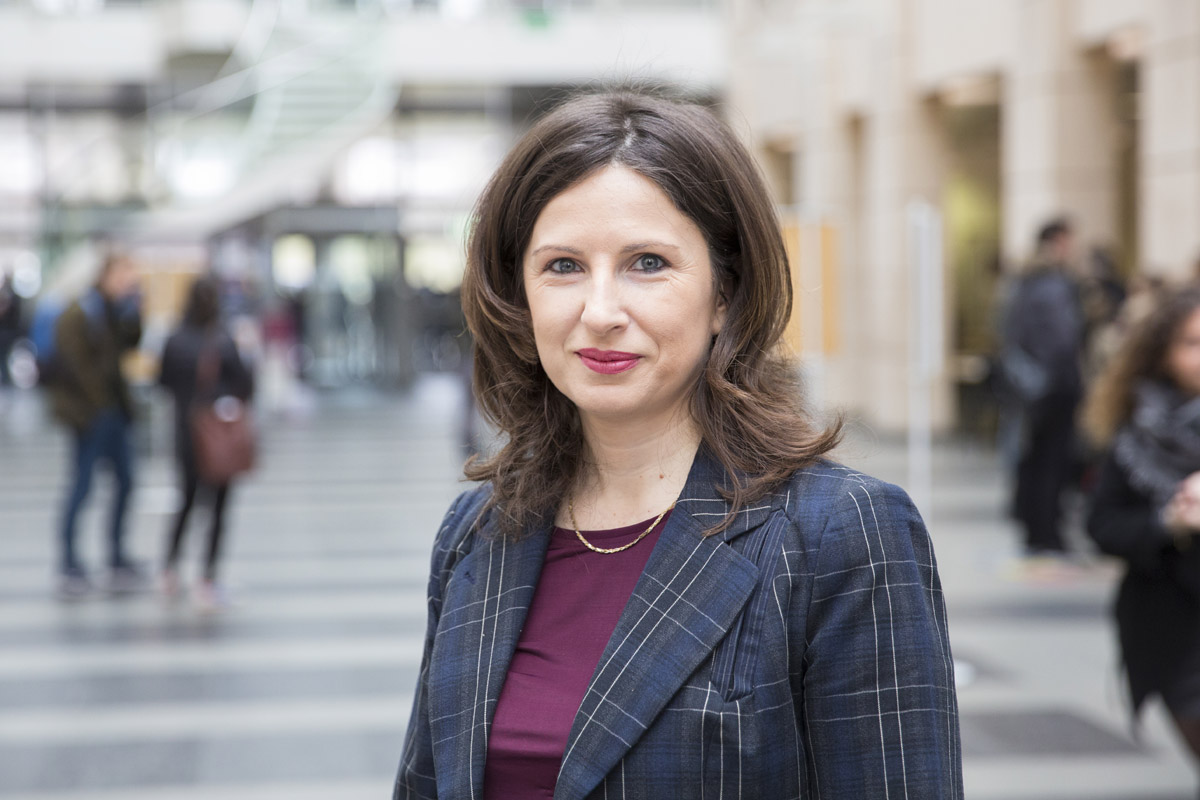
Mara Tigninoمشاهده پروفایل
مدرس ارشد
Mara Tignino is a Senior Lecturer and Researcher at the Faculty of Law of the University of Geneva and Senior Legal Specialist at the Platform for International Freshwater Law at the Geneva Water Hub. She teaches courses in international environmental law and international water law, and leads research projects funded by Swiss research funds (SNSF, Boninchi Foundation) focusing on rights and obligations of private actors in environmental protection and human rights. She has conducted research in Switzerland and abroad (Germany, France, Italy, and the United States). Dr. Tignino holds a Doctorate in International Law from the Graduate Institute of International and Development Studies in Geneva, a Habilitation to Direct Research (HDR) from the Faculty of Law at Jean Moulin Lyon 3 University, a Political Science degree from LUISS in Rome, and a Certificate in European Political Studies from Sciences Po Strasbourg. She has been a visiting professor at Renmin University of China (2017), University of Barcelona (2014-2016), LUISS (2013), and Catholic University of Lille (2010-2012), and was a Visiting Scholar at George Washington University School of Law. Her research focuses on the role of international law in managing and protecting natural resources, particularly water, and defining rights and obligations of non-state actors such as individuals, local communities, companies, and armed groups. She examines interactions between normative and institutional regimes in international environmental law and human rights law, mechanisms for holding international organizations accountable (especially financial institutions), and the practice of international judicial and quasi-judicial bodies. Her research program also includes international humanitarian law and migration law. Dr. Tignino's recent publications demonstrate a consistent focus on water law in conflict situations, transboundary water management, and the intersection of human rights with environmental protection. Her work increasingly addresses climate change impacts on water resources and the evolving legal frameworks for protecting water infrastructure during armed conflicts. She has made significant contributions to understanding how international law can better protect freshwater resources in both peacetime and conflict scenarios, with particular attention to the rights of vulnerable populations. Women Peacebuilders for Water prize by Fondazione Milano per Expo (2017) for research in international water law and dedication to training new generations of international lawyers Dr. Tignino acts as an expert and legal advisor to states and international organizations (Inter-American Development Bank, UNITAR, UNEP, UNDP, UNFCCC, and OSCE). She has directed multiple research projects including 'Water, Private Companies and the Public Good,' 'Corporations' Responsibilities in Water Management,' 'Water during and after Armed Conflicts,' 'Transboundary Water Cooperation,' and 'Water and Migration.' She has mentored students, with ALANGUE, Togbé Agbessi completing a Master's thesis under her direction in 2023. She was also a mentor in the 'Women in International Law' program of the American Society of International Law (2015-2017). As part of the Geneva Water Hub's activities, she directs online courses including 'International Water Law and the Law of Transboundary Aquifers' with DiploFoundation, 'International Freshwater Law,' and the MOOC 'International Freshwater Law.' She is actively involved with professional organizations including the Coordinating Committee of the Reflection Group on 'International Business and Human Rights' of the European Society of International Law, the Water Interest Group of the Environmental Peacebuilding Association, and the World Commission on Environmental Law of the IUCN.
Dr. Martin Loeser is a Professor and Program Director of Electrical and Computer Engineering at the ZHAW Zurich University of Applied Sciences, School of Engineering, Department of Information Technology, Electrical Engineering and Mechatronics. He holds a Ph.D. in Computational Physics from ETH Zurich (2008) and a Master's degree in Electrical and Computer Engineering from the Technical University of Munich (2003). His educational background includes: Ph.D. in Computational Physics, ETH Zurich (2004-2008) Master of Science in Economics and Management, University of Hagen (2010-2012) Master of Science in Electrical and Computer Engineering, Technical University of Munich (1997-2003) Study Abroad Degree in Applied Physics, University of Sydney (2001-2002) Dr. Loeser's research spans multiple interdisciplinary fields with a strong focus on Machine Learning, AI-Based Signal Processing, and Digital Image Processing . His work bridges theoretical computational methods with practical applications in healthcare, education, and optoelectronics. Recent research has focused on using machine learning and virtual reality for early detection of cognitive impairments, developing AI-based educational tools, and creating medical diagnostic devices. His earlier work centered on computational physics and optoelectronic device modeling, particularly for LEDs and solar cells. His publication record shows a clear evolution from fundamental computational physics and optoelectronics (2006-2010) toward AI applications in healthcare and education (2015-present). This transition reflects his ability to adapt core computational expertise to emerging technological challenges. His recent work demonstrates strong interdisciplinary collaboration, particularly with medical researchers for cognitive impairment detection and with educational specialists for AI-enhanced teaching tools. Among his recognitions is being named "Best graduate of the year in the Master's degree program in Management" from the University of Hagen in June 2012. Dr. Loeser maintains active research collaborations across disciplines and institutions, as evidenced by his diverse publication record spanning computer science, healthcare technology, education, and traditional engineering fields. His current research program focuses on edge AI applications, particularly in healthcare diagnostics and educational technology.
Chanwoong BAEKمشاهده پروفایل
استادیار
Chanwoong BAEK is an Assistant Professor in the International Relations/Political Science Department, with a courtesy appointment in the Anthropology and Sociology Department. He also serves as Director of NORRAG and UNESCO Co-Chair in Comparative Education Policy. His research critically examines evidence-based policymaking, focusing on legitimacy, power dynamics, and social dynamics across local, national, and global levels using mixed methods. Education: PhD in International Relations/PoliSci from Columbia University. Research interests include the politics of knowledge, education and aid policies, epistemic communities, development cooperation, multilateral governance, and UN-related institutions. His work bridges comparative education policy with global governance frameworks. Recent publications highlight knowledge brokerage in global education governance, policy translation mechanisms, and cross-national comparisons of education reforms. His scholarship emphasizes understanding how international knowledge influences domestic policymaking. He leads NORRAG, a global network addressing education policy challenges, and has contributed to UNESCO initiatives on comparative education policy. His work underscores the importance of institutional and cultural contexts in policy adoption.

Michel Anliker is a legal expert and lecturer specializing in customs law, international trade compliance, and VAT regulations. He serves as Head of Customs, Import and Export Compliance at the Schindler Group and teaches in the CAS FH in Customs Law program. His expertise bridges corporate compliance and academic instruction, focusing on Swiss, EU, and Asia-Pacific trade frameworks. Research Interests: Customs and international trade law Free trade agreements (FTAs) and economic integration Tariff classification and customs valuation VAT and tax compliance in cross-border transactions Trade facilitation and regulatory challenges Pharmaceutical and art trade compliance His recent publications reflect a strong focus on trade policy developments, particularly between Switzerland and Asian nations, including China, the Philippines, and ASEAN countries. He frequently analyzes legal procedures, compliance risks, and legislative reforms in customs and foreign trade. Scientific Contributions: Author and co-author of numerous articles in professional journals such as ZOLL REVUE, China Compass, and EXPERT FOCUS Contributor to the book Singapore and Switzerland: Secrets to Small State Success (2016) Regular commentator on EU and Swiss customs law developments Michel Anliker advises on corporate trade compliance and contributes to postgraduate legal education. While not affiliated with a traditional university faculty, he plays a significant role in professional legal training and industry guidance. He has collaborated extensively with experts such as Simeon Probst and Corinne Scagnet on compliance topics. He is active in professional networks and continues to publish on current trade law issues.

- Revolutionary movements
- Soviet historiography
- Historical Memory and Politics of History (Russia-Ukraine)
- +۵ مورد دیگر
Korine Amacher is a Full Professor of Russian and Soviet History at the Faculty of Arts and Global Studies Institute of the University of Geneva. She leads the Russian Language Unit (MESLO), directs the Master's degree in Central and Eastern Europe, Central Asia and the Caucasus (MAEAC), and co-directs the multidisciplinary laboratory LABEAC. She also co-directs the History and City festival and heads the doctoral program in Slavic studies across Swiss universities. Research Axes: Revolutionary movements, Soviet historiography, Historical Memory and Politics of History (Russia-Ukraine), Individual biographies (19th-20th centuries), Women's emancipation and feminism in Russia/USSR Recent Publications: Focus on cross-border historiography (Ukraine/Russia/Poland), Soviet educational materials, and critical analyses of Russian revolutionary figures. Her work emphasizes interdisciplinary approaches to postcommunist spaces. Theses Supervised: 4 defended (2020-2024), 6 in progress, covering topics from Soviet migration to Russian gender festivals and historical memory in Ukraine. Awards & Grants: Directed Swiss National Science Foundation project (2016-2019). Her co-edited volume Histoire partagée, mémoires divisées (2021) won the Latsis Prize 2020 for a student thesis she co-directed. Labs & Collaborations: Co-founder of LABEAC; Editor-in-chief of the journal Connexe ; collaborates with institutions in Paris, Lausanne, Basel, Moscow.
Simon Andres Montfort is a Lecturer in the SSIE program and Scientific Assistant at the HERUS Laboratory at EPFL. He is affiliated with the ENAC School (School of Architecture, Civil and Environmental Engineering) and the IIE (Institute of Environmental Engineering). His work focuses on human-environment interactions in urban contexts, particularly addressing climate policy challenges, distributional barriers in sustainability initiatives, and the political dimensions of climate action. Montfort’s research bridges urban systems analysis with environmental governance, emphasizing equitable policy design and public engagement strategies. His academic background includes contributions to climate adaptation finance, policy sequencing for public support, and urban resilience frameworks. Notable projects include analyzing gaps in global city-level climate research and investigating misconceptions around climate policy impacts on employment. Montfort’s interdisciplinary approach integrates political science, environmental sociology, and urban planning to inform actionable climate solutions. Montfort teaches courses related to environmental sciences and engineering at EPFL, emphasizing practical applications of sustainability principles. His work is anchored in fostering collaboration between academic, governmental, and civil society actors to advance climate resilience strategies in rapidly urbanizing regions.

Christoph Bader is a researcher at the University of Bern's Centre for Development and Environment (CDE) , where he leads the Transformative Education and Science Impact Area and serves as Director of Studies. His work focuses on sustainable economies, poverty/inequality analysis, and fostering sustainable consumption patterns. He is also involved in teaching within CDE's academic programs. Key Research Areas: Sustainable consumption, multidimensional poverty, post-growth economics, part-time work impacts, social innovation Projects: 'Time is wealth' examining part-time work and sustainability, 'From niche to society' analyzing social innovation diffusion, and multidimensional poverty studies in Laos Publications: Recent works explore sustainability skills in higher education, civil society initiatives for ecological transition, and worktime reduction policies in the Global North Networks: Affiliated with Rethinking Economics, WWF Netzwerk Nachhaltige Wirtschaftswissenschaften, World Economics Association, and Netzwerk Nachhaltige Ökonomie Contact: christoph.bader@unibe.ch | Office 262, Mittelstrasse 43, Bern

Professor Matthieu Leimgruber holds the Chair of Modern History and Swiss History at the University of Zurich's Faculty of Arts and Social Sciences. His research focuses on 20th-century social and economic history, particularly the history of capitalism, wealth inequality, and Swiss economic institutions. He coordinates the Master's program in Economic History and collaborates with the Swiss Society for Economic and Social History on Historical Statistics of Switzerland Online (HSSO). His primary research interests include: Social and economic history of 20th-century Switzerland Global history of capitalism and international economic organizations Wealth concentration and inequality studies History of social security systems and welfare state development Analysis of economic elites and business associations Recent publications reveal a strong focus on top wealth dynamics in Zurich, OECD historical transformations, and the intersection of business interests with welfare state development. His work demonstrates sophisticated methodological approaches combining quantitative historical analysis with institutional and political economy perspectives. Leimgruber leads multiple research projects funded by the Swiss National Science Foundation, including investigations into: The Economics of Residential Care in Switzerland since 1940 Local power structures and transnational connections of Swiss elites (1890-2020) Contextualization of the Emil Bührle art collection History of the International Chamber of Commerce He directs the 'Social Security in the Classroom' project, creating multilingual teaching resources for secondary education that explore Swiss social security history through primary sources and student research projects.
Jörg Balsigerمشاهده پروفایل
دانشیار
- Environmental Governance
- Transboundary Cooperation in Mountain Regions
- Sustainable Development
- +۷ مورد دیگر
Jörg Balsiger is Associate Professor at the Department of Geography and Environment and Institute for Environmental Sciences, Geneva School of Social Sciences, University of Geneva. As an internationally recognized expert in environmental governance and sustainable development, he focuses on regional environmental cooperation, transboundary mountain governance, and transdisciplinary education for sustainability. His research spans comparative regional environmental governance in East Asia and Europe, science-policy interfaces in mountain regions, and knowledge co-creation processes. Articles show strong emphasis on climate change adaptation, environmental defender protection, and global-local educational frameworks. Currently teaching courses on sustainable development, environmental challenges, and interdisciplinary workshops, he has secured major grants from Swiss National Science Foundation, European Commission, and UN Environment. His leadership in the Mountain Research Initiative Coordination Office highlights his commitment to global mountain sustainability.
Prof. Florian Keller is the Head of the Center for Global Competitiveness and Deputy Head of the International Management Institute at ZHAW School of Management and Law. His academic roles include Program Director for the MBA and various continuing education programs in Applied Diplomacy and Foreign Affairs. His research focuses on international business strategies, geopolitical risks, and Swiss foreign policy. Notable projects include analyzing asset managers' proxy voting behavior and evaluating cross-border cooperation in additive manufacturing. Key research areas include EU-Swiss trade relations, pandemic-driven e-government reforms, and the economic impact of nearshoring. He has authored books on Swiss diplomatic history and contributed to peer-reviewed journals in political economy and innovation management. His work bridges academic research with practical implications for Swiss businesses and public policy. Education: PhD in History/Political Science (implied by publications) Professional Development: MBA Program Director, Diplomacy Course Coordinator Labs/Teams: Center for Global Competitiveness, International Management Institute
- Knowledge Management
- Innovation
- Global Strategy
- +۴ مورد دیگر
Tina Ambos is a Full Professor of International Management and Director of the Institute of Management at the University of Geneva, a role she has held since 2015. Previously, she served as a professor at the University of Sussex (Director of Research & Knowledge Exchange) and held the chair of International Management at Johannes Kepler University Linz (Austria). She earned her Ph.D. and Venia Docendi (Habilitation) in Business Administration from WU Vienna, alongside a Magister degree in Philosophy from the University of Vienna. Her research focuses on global strategy, innovation, and multinational corporations, with an emphasis on subsidiary initiatives, knowledge management, and strategic decision-making. She has collaborated with multinational firms and startups, publishing in top journals like Organization Science and Journal of International Business Studies . Ambos is also the Academic Director of the International Organizations MBA (IO-MBA) program. Her editorial roles include Associate Editor for Long Range Planning (2015–present) and membership on editorial boards of Journal of International Business Studies , Management International Review , and others. Recent research explores innovation in international organizations, agile scaling, and addressing global challenges like sustainability. Key contributions include studies on subsidiary autonomy, headquarters-subsidiary dynamics, and the role of attention in multinational management. Her work bridges academic rigor with practical insights for executives navigating complex global environments.
Gian Luca Burciمشاهده پروفایل
استاد مهمان
Gian Luca Burci is a Senior Visiting Professor of International Law at the Graduate Institute of International and Development Studies in Geneva, Switzerland. He concurrently serves as Director of the joint LLM in Global Health Law and Governance program with Georgetown University Law School and Academic Adviser to the Global Health Centre at the Graduate Institute. Additionally, he holds a Visiting Professor and Senior Scholar role at Georgetown University's O’Neill Institute for National and Global Health Law. His professional background includes 18 years (1998–2016) at the World Health Organization (WHO), where he served as Legal Counsel and contributed to landmark initiatives such as the Framework Convention on Tobacco Control and revisions to the International Health Regulations. Earlier roles included work at the UN Legal Office (1989–1998) and the International Atomic Energy Agency (1998–1999). Prof. Burci’s expertise spans public international law, international organizational law, and global health governance. His courses focus on international legal frameworks, advocacy strategies, and global health law. He has authored/co-authored seminal works including The World Health Organization (2004) and edited major collections on global health law. He sits on the editorial board of the International Organization Law Review and co-founded the Interest Group on International Health Law within the European Society of International Law. His academic contributions emphasize legal dimensions of global health crises, WHO institutional reform, and multilateral health governance. His research highlights intersections between international law, health emergencies, and human rights, particularly in contexts like pandemic responses (e.g., Ebola, H1N1) and public health partnerships. Prof. Burci has advised on WHO’s pandemic preparedness, legal aspects of health emergencies, and WHO reform initiatives. His interdisciplinary work bridges legal scholarship with practical policy-making in global health, reflecting over three decades of engagement in international organizations and academic research.
Dawid BASTIAT-JAROSZمشاهده پروفایل
پژوهشگر ارشد
Dawid BASTIAT-JAROSZ is a Research Fellow at the Geneva Graduate Institute and Co-Director of its Master of Advanced Studies (MAS) in Sustainable Finance and Development. He serves on the European Commission's Platform on Sustainable Finance and has extensive experience in development finance and regional development for public and non-governmental organizations. Education: Ph.D. in International Relations and Political Science, Geneva Graduate Institute of International and Development Studies Research Interests intersect sustainable finance, political economy, and geopolitical strategy. His work examines the alignment of financial systems with sustainability goals, the role of political narratives in financial markets, and the economic implications of international sanctions. The European Platform on Sustainable Finance underscores his influence in shaping EU-wide sustainable finance policies. Key Article Trends include analyses of sustainable investing efficacy, political narrative impacts on markets, and economic sanctions frameworks targeting Russia and Iran. These works bridge finance, development, and geopolitical dynamics. Professional Engagement spans roles at the Centre for Finance and Development , where he contributes to research on financial systems and development, and his ongoing advisory role to energy companies on sustainable transition strategies.
Greg Raymondمشاهده پروفایل
مدرس ارشد
Greg Raymond is a Senior Lecturer at the Strategic and Defence Studies Centre, Coral Bell School of Asia Pacific Affairs, Australian National University (ANU). His research focuses on Southeast Asian politics, defense, and transnational authoritarianism in the Mekong sub-region. He holds a PhD, MA, BSc, and Dip Ed. PhD MA BSc Diploma in Education Research interests include Thai politics, Mekong-China integration, and strategic culture in Southeast Asian defense planning. He convenes the ASEAN Australia Defence Postgraduate Scholarship Program and serves as President of the Association of Mainland Southeast Asia Scholars (AMSEAS). Recent work examines transnational crime networks and authoritarian security dynamics. He has supervised multiple research students but specific names are not listed here. International Relations Editor for Asian Studies Review Visiting Research Scholar at Kyoto University (July 2024-Jan 2025) His grants include projects on Mekong-China integration and Southeast Asian authoritarianism, collaborating with institutions like the Thai National Broadcasting and Telecommunications Commission.