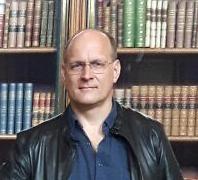
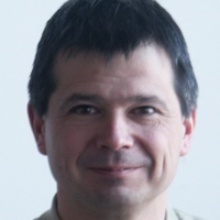
Ying Cai is a prolific researcher with significant contributions across diverse domains of computer science, mathematics, and biomedical applications. Their work spans artificial intelligence, medical imaging, cybersecurity, and computational methods, as evidenced by recent publications in journals like Engineering Applications of Artificial Intelligence and IEEE Transactions on Medical Imaging . Key research areas include lung cancer detection algorithms, distributed filtering under cyber-attacks, and cryptographic protocols. 2025: 9 publications 2024: 18 publications 2023: 8 publications Notable collaborations include work with Yang Zhao, Zeyu Zhang, and Daji Ergu on medical AI applications and computational techniques. Their recent articles demonstrate expertise in: Medical imaging and diagnostic automation Deep learning optimization Secure communication protocols Computational mathematical models Ying Cai's research bridges theoretical rigor with practical implementation across domains like health informatics, network security, and educational technology.
Wei Xue is an active academic researcher affiliated with Tsinghua University's Department of Computer Science and Technology. Their work spans multiple disciplines, including Machine Learning , Signal Processing , Medical Imaging , and Natural Language Processing . Key research areas include adversarial robustness in DNNs for remote sensing, hierarchical speaker representation learning for speech extraction, and multi-view fuzzy classification for brain network analysis. Recent publications focus on imbalanced data classification, spectrum sensing in cognitive radio, and innovative applications in soft robotics and medical diagnostics. Collaborations include institutions like Tsinghua University, Jiangnan University, and Hong Kong Baptist University, with frequent contributions to journals such as IEEE Transactions on Geoscience and Remote Sensing and Neural Networks .
Prof. Christoph Pflaum holds the position of Professor of Computational Engineering at the University of Erlangen-Nürnberg's Department of Computer Science. His academic journey includes a PhD (1996) and Habilitation (1999) from Technical University Munich and University of Würzburg, respectively. His research focuses on computational optics, high-performance computing, numerical analysis, and multigrid methods, with applications in laser simulation and energy-efficient systems. Education : 1992: Diploma in Mathematics, Technical University Munich 1996: Dr. rer. nat., Technical University Munich 1999: Habilitation, University of Würzburg Research Interests : PDE solvers on sparse grids, laser dynamics (thermal lensing, solid-state amplifiers), computational fluid dynamics for airships, and optical system optimization. His work bridges theoretical numerical methods with industrial applications in photonics and renewable energy. Key Contributions : Developed simulation tools for high-power lasers and solar cells, including LASCAD and FDFD methods. Advances in multigrid algorithms and finite element analysis for complex optical systems. Teaching : Courses in theoretical computer science, scientific computing, and computational optics, emphasizing practical implementation using advanced numerical libraries and HPC. Grants & Projects : Led research on laser systems optimization (Innonet SOL), solar cell simulations (Photonics Europe), and high-performance computing initiatives (Par-EXPDE project).
Stefan Zimmer is a Senior Lecturer and Academic Councillor at the University of Stuttgart, affiliated with the Simulation of Large Systems department under the IPVS institute. His work focuses on numerical simulation, computational science, and algorithm development with applications in sparse grids, multigrid methods, and high-performance computing. Research interests include adaptive algorithms for large-scale systems, model reduction techniques, and interdisciplinary challenges in technical education. He has contributed to foundational works in sparse grid techniques and parallel computing architectures. Publications span from 1993 to 2015, emphasizing advancements in numerical methods, data mining, and computational fluid dynamics. Notable works include the 2015 multigrid method for adaptive sparse grids and a 2009 textbook on modeling and simulation methodologies. No awards or student advisees are explicitly listed in the provided text.
Professor Dr. Guido Kanschat is affiliated with Ruprecht-Karls-Universität Heidelberg at the Interdisciplinary Center for Scientific Computing (IWR), where he holds the Chair for Mathematical Methods of Simulation. His research focuses on numerics, scientific computing, and finite element methods with applications in radiation transfer, coupled flows, and multigrid solvers. His recent publications emphasize hybrid discretizations, GPU-accelerated multigrid methods, and discontinuous Galerkin techniques for Stokes equations and biharmonic problems. He is a co-founder of the open-source deal.II library and received the Wilkinson Prize for Numerical Software in 2007. Scientific Awards: Wilkinson Prize for Numerical Software (2007)
Karsten Kahl is a Lecturer at the Department of Mathematics, Bergische Universität Wuppertal. His contact information includes Room G.14.14, phone +49 202 439-2765, and email kkahl@uni-wuppertal.de . Research Interests: Numerical linear algebra, Algebraic multigrid methods, Machine Learning, Parallel programming Projects: Principal Investigator (PI) or Co-PI for Collaborative Research Centre SFB/TR55 "Hadron Physics from Lattice QCD," Bergische Innovationsplattform für Künstliche Intelligenz (BI T KI), and Delta Learning. Affiliated Institutes: Board member of the interdisciplinary institutes IMACM and IZMD at Bergische Universität Wuppertal. Administrative Roles: Participating in the administration of the bachelor's Computer Science program and the Computer Science component of the combinatorial Bachelor of Arts program.
Steffen Börm is a Professor and Chair of Scientific Computing at the Institute of Computer Science, Christian-Albrechts-University, Kiel. His research focuses on developing efficient algorithms for non-local operators, multigrid methods, and numerical analysis of eigenvalue problems, which are critical for simulating complex scientific phenomena. Research Areas Numerical Methods for Non-Local Operators Multigrid Methods and Iterative Solvers Numerical Analysis of Eigenvalue Problems Scientific Computing Applied Mathematics In teaching, he offers courses on Algorithms and Data Structures , Numerical Mathematics for Engineers , and Numerical Analysis of Eigenvalue Problems , emphasizing computational efficiency and mathematical foundations. His work bridges theoretical algorithm design with practical applications in simulations across physics, engineering, and computer science.
Prof. Dr. Christian Wieners is a faculty member at the Institute for Applied and Numerical Mathematics , part of the Faculty of Mathematics at Karlsruhe Institute of Technology (KIT) . He has held leadership roles, including Head of the KIT Department of Mathematics (2012-2015) and Speaker of the GAMM activity group on numerical methods for PDEs (2010-2017). Academic Rank: Professor Research Focus: Scientific Computing, Discontinuous Galerkin Methods, Multigrid Algorithms, and Applications in Solid Mechanics and Cardiac Modeling His research spans Numerical Analysis , Computational Mechanics , and Biomedical Engineering , with a focus on parallel finite element methods for wave equations, phase-field fracture, and multi-physics cardiac simulations. Recent work includes adaptive space-time DG methods, visco-acoustic inversion, and digital twins for heart modeling. He has served as an Associated Editor for SIAM Journal of Scientific Computing (2008-2013) and a Section Editor for Numerical Analysis in ZAMM. His publications highlight collaborations in Parallel Computing , Visco-Elastic Models , and Nonlocal Plasticity . Prof. Wieners teaches courses like Numerische Mathematik and Grundlagen der Kontinuumsmechanik , with a history of lectures on Scientific Computing , Machine Learning in Mathematics , and Multigrid Methods . His work integrates Mathematical Rigor with Engineering Applications .
Peter Münch is a postdoctoral researcher at the Chair of Numerical Methods for Partial Differential Equations within the Institute of Mathematics at Technical University of Berlin (TU Berlin), Faculty II - Mathematics and Natural Sciences. He has held research positions at Uppsala University, University of Augsburg, Helmholtz-Zentrum Hereon, and Technical University of Munich. Dr. Münch's research focuses on high-performance scientific computing with expertise in matrix-free computations, dynamic sparse communication patterns, node-level optimization, iterative solvers including multigrid and block preconditioners, and efficient algorithms for high-dimensional partial differential equations. His work spans discontinuous Galerkin methods, computational fluid dynamics, and simulation of additive manufacturing processes including solid-state sintering and melt-pool modeling. He is one of the principal developers of the deal.II finite-element library, which won the SIAM/ACM Prize in Computational Science and Engineering in 2025. His recent publications demonstrate significant contributions to matrix-free finite element methods, multigrid solvers, and applications in computational fluid dynamics and materials science. The research shows a strong trend toward high-performance implementations of numerical methods for extreme-scale computing, with particular emphasis on matrix-free approaches that avoid explicit storage of large sparse matrices. SIAM/ACM Prize in Computational Science and Engineering 2025 (for deal.II) Dr. Münch has supervised numerous student projects including Master's theses, Bachelor's theses, and term papers on topics ranging from immersed boundary methods to high-order discontinuous Galerkin methods. His teaching activities include courses on Numerical Methods for ODEs, PDEs, and High-Performance Parallel Computing. He has contributed to multiple deal.II tutorial programs (steps 19, 68, 75, 76, 87) demonstrating advanced finite element techniques. As a principal developer of the deal.II finite element library, Dr. Münch is actively involved in the open-source scientific computing community, contributing to one of the most widely used finite element frameworks in computational science and engineering. His GitHub profile shows consistent contributions to deal.II and related projects, with significant activity in 2025.
Prof. Dr. Ralf Kornhuber is a faculty member at the Freie Universität Berlin , affiliated with the Department of Mathematics and Computer Science and the Numerical Analysis of Partial Differential Equations institute. His research focuses on advanced numerical methods for multiscale problems and applications in geosciences, biomechanics, and materials science. Education: Dr. rer. nat. in Mathematics (1986) and Diploma in Mathematics (1979), both from TU Berlin. Academic Career: Senior Professor at Freie Universität Berlin (since 2023), Full Professor (C4) at the same institution (1998-2022), and prior roles at University of Stuttgart, WIAS Berlin, and TU Berlin. Research Interests: He specializes in adaptive finite element methods, subspace correction techniques, and multiscale modeling of partial differential equations (PDEs). His work addresses nonsmooth elliptic/parabolic problems, geometric PDEs, and domain decomposition strategies, with applications spanning geoscience simulations, biomechanics, and material science. Scientific Boards & Committees: Chair of CRC 1114 Scaling Cascades in Complex Systems (2021-2022), leadership roles in MATH+, Berlin Mathematical School, and Helmholtz Research School GeoSim, alongside editorial positions at journals like SIAM Journal on Multiscale Modeling and Simulation . Recognition: Awarded the International Multigrid Prize in 2022 for collaborative contributions to multigrid methods.