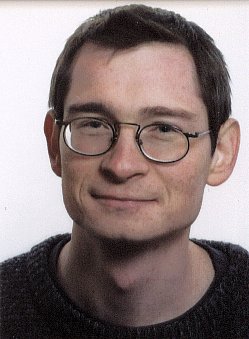
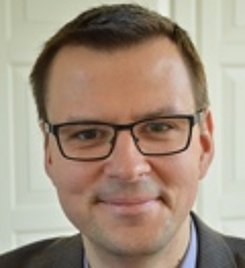
Prof. Dr. Christoph Pflaum holds the Professorship for Numerical Simulation and High-Performance Computing at the Department of Computer Science, Friedrich-Alexander University Erlangen-Nürnberg. His research spans computational optics, solid-state laser simulation, and sustainable energy systems. Key Research Areas: Numerical methods for PDEs, thermal lensing in lasers, polarization effects, and solar energy harvesting technologies. Recent Work: Focus on adaptive sparse grids for high-dimensional PDEs, 3D laser pulse amplification models, and optimization of solar-integrated airships. Scientific Trends: His publications emphasize computational modeling of optical phenomena (thermal lensing, Kerr effects) and renewable energy innovations (thin-film solar cells, flexible solar arrays). Collaborative projects include SiSoFlex and LightWave, integrating simulations with industrial applications. Collaborations: Works with institutions in Germany and internationally, including teams in Erlangen, Strasbourg, and Lisbon. Current projects align with sustainable aviation and laser engineering.
Malte von Scheven is a Senior Researcher and Deputy Director at the Institute of Structural Analysis and Dynamics at the University of Stuttgart. He holds a Dr.-Ing. degree (2009) and specializes in adaptive structures, fluid-structure interaction, and computational mechanics. Research Focus: Redundancy matrices for structural assessment, high-performance computing, actuator placement optimization Teaching: Finite element methods, computational mechanics, nonlinear structural analysis Leadership: Deputy Director since 2006, conference organizer for ECCOMAS and SMART symposia His work bridges structural mechanics with bio-inspired design, including studies on sea urchin skeletons as models for segmented shells. He has supervised numerous theses on SFRP composites, topology optimization, and adaptive systems. Scientific Engagement: Published 15+ papers on redundancy matrices and FSI Organized mini-symposia at international conferences (ECCOMAS 2024, SMART 2023) Active in university governance through Faculty Council and TIK committee Recent research investigates mechanical modeling of adaptive structures, with applications in civil engineering and architectural geometry. His redundancy matrix framework provides novel performance indicators for robust design and assemblability assessment.
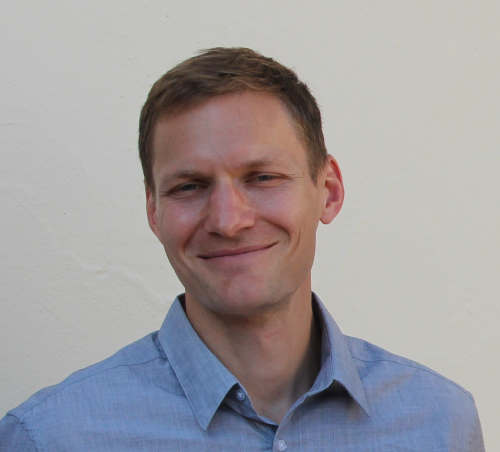
Jan Modersitzki is a Full Professor of Applied Mathematics at the University of Lübeck, where he leads research at the Institute of Mathematics and Image Computing. He holds a secondary affiliation with Fraunhofer MEVIS, focusing on image registration projects. His academic journey includes a Diploma (1990) and PhD (1995) from the University of Hamburg, followed by a Habilitation (2003) from the University of Lübeck. Career milestones include positions at Emory University, McMaster University, and CAU Kiel. Modersitzki's research centers on computational methods for medical imaging , with emphasis on variational techniques, optimization, and deformable registration. He developed the widely used FAIR toolbox (Flexible Algorithms for Image Registration) and has contributed to foundational theories in image alignment. His work bridges mathematical rigor with clinical applications in oncology, ophthalmology, and pulmonology. Analysis of his 15 most recent publications (2017–2025) reveals dominant themes: multiscale registration , discontinuous deformation modeling , and high-performance computing solutions for medical images. Trends include GPU acceleration, inverse problem optimization, and integration of machine learning with traditional variational frameworks. He actively contributes to academic societies including GAMM, MICCAI, and SIAM. No awards, grants, or supervised students are detailed in available materials.
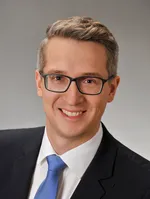
Prof. Dr. Carsten Gräser is a Professor in the Department of Applied Mathematics at Friedrich-Alexander University Erlangen-Nürnberg (FAU). His research focuses on numerical analysis, computational mechanics, and phase-field modeling, with an emphasis on nonsmooth optimization and multigrid methods for complex systems. 2025: Well-posedness of evaporation models for droplets. 2023: Multiscale fault systems and phase-field brittle fracture simulations. 2021: Membrane mechanics and DUNE framework developments. His work spans partial differential equations, computational geosciences, and biological membrane modeling, often involving finite element methods and nonlinear systems. Recent publications highlight applications in fluid dynamics, fracture mechanics, and geophysical fault simulation. His articles demonstrate a strong focus on numerical methods for phase-field models and nonsmooth systems, with recurring sub-fields like multigrid algorithms, membrane-mediated interactions, and finite element discretization. He collaborates widely on topics such as marine ice sheets and solder alloy coarsening. At FAU, Gräser teaches courses including Numerics of Incompressible Flows and Modeling, Simulation, and Optimization . His research integrates software development (e.g., the DUNE framework) with applications in physics, materials science, and geosciences.
Claudia Frohn-Schauf is a Professor of Engineering Mathematics and Numerics at the Department of Mechatronics and Mechanical Engineering at Bochum University of Applied Sciences. Since March 2022, she has served as Vice President for Studies, Teaching, and Continuing Education. Previously, she was Dean of Studies (2016–2022) for the same department. Her educational background includes a PhD in Mathematics from Heinrich Heine University Düsseldorf (1992) and a Diploma in Mathematics with a minor in Computer Science (1988). Her research spans: Core Numerical Methods : Multigrid techniques, PDE-based image processing, and total variation applications Engineering Education : Curriculum design, digital tool integration (MATLAB), and learning analytics Applied Mathematics : Image registration/denoising and fluid dynamics modeling She contributes to international academic partnerships in India and Mexico, focusing on student exchange programs and joint research initiatives. Her administrative leadership involves optimizing digital learning strategies through the DigiTeach Institute and improving academic success via the Institute for Academic Success and Didactics (ISD).
Wilhelm Heinrichs is a Professor at the Institute of Engineering Mathematics, University of Duisburg-Essen. He specializes in spectral methods for solving partial differential equations, particularly for fluid dynamics and elliptic problems. Research Focus: Develops stabilized spectral techniques for singular perturbation problems, least-squares collocation methods for incompressible flows, and high-order splitting schemes for Navier-Stokes equations. Methodological Contributions: Pioneered triangular spectral collocation and unit disc formulations, with emphasis on conservation properties in fluid simulations.
Marc Alexander Schweitzer is a Professor of Mathematics at the University of Bonn and affiliated with Fraunhofer SCAI. His work focuses on numerical methods and computational mechanics, particularly meshfree methods, peridynamics, and algebraic multigrid techniques. He contributes to advancing computational tools for engineering and materials science applications. Research interests include partition of unity methods, multiscale modeling, fracture mechanics, and efficient linear solvers. His work integrates mathematical theory with practical computational challenges, such as adaptive algorithms and parallel computing. Publications highlight contributions to peridynamic fracture models, scalable solvers for material design, and visualization of fracture progression in particle-based systems. Collaborative efforts with Fraunhofer SCAI emphasize industrial applications and algorithmic innovation.
Dr. Sven Groß is a researcher at the Institute for Geometry and Practical Mathematics at RWTH Aachen University, Germany, with an office in Hauptgebäude 237. His work focuses on advanced numerical methods for fluid dynamics, particularly incompressible two-phase flows, and he is a core developer of the DROPS software package for parallel flow simulations. He maintains active research collaborations across computational mathematics and chemical engineering disciplines. His educational background includes a diploma thesis (2002) and doctoral thesis (2008), both completed at RWTH Aachen University. The doctoral work, titled "Numerical methods for three-dimensional incompressible two-phase flow problems," earned him the prestigious Borchers-Plakette award. Groß's research centers on Computational Fluid Dynamics with emphasis on Finite Element Methods for interface problems. His expertise spans adaptive 3D FE techniques, level set methods, XFEM implementations, and parallelization strategies for two-phase flow systems. Current investigations address preconditioning for unfitted finite element methods, mass transfer in falling films, and high-performance computing approaches for gas absorption processes. His methodologies bridge theoretical numerical analysis with industrial applications in chemical process engineering. Analysis of his recent publications reveals a strong trajectory toward robust preconditioning techniques for interface problems and high-fidelity simulations of reactive multiphase systems. The work increasingly integrates high-throughput computing with traditional numerical methods, demonstrating growing emphasis on computational efficiency for complex industrial-scale problems while maintaining mathematical rigor in error analysis. His scientific recognition includes: Borchers-Plakette (RWTH Aachen, 2009) for doctoral studies Friedrich-Wilhelm-Preis (RWTH Aachen, 2003) for diploma thesis Springorum-Denkmünze (RWTH Aachen, 2003) for diploma Groß has secured significant research funding through Collaborative Research Center SFB 540, leading Project C7 on numerical methods for wavy falling film simulations and contributing to former Project C6 on parameter estimation. He actively mentors students through research collaborations and has supervised numerous diploma/PhD projects, with co-authors including Kirchhart, Ludescher, and Jankuhn appearing consistently in his publication record. As a principal investigator for the DROPS project, he leads a cross-disciplinary team developing parallel adaptive multigrid techniques for incompressible flow simulations. The project maintains strong industry connections with chemical engineering groups focused on falling film reactors and mass transfer optimization, with recent extensions into high-performance computing architectures for industrial-scale simulations.
Prof. Thomas Huckle is a Professor of Scientific Computing at the Technical University of Munich (TUM), affiliated with the TUM School of Computation, Information and Technology and the Department of Computer Science. His research focuses on numerical linear algebra, parallel computing, and their applications in physics and computer science. Key interests include solving linear problems on parallel architectures, image processing, multigrid methods, preconditioning, and tensor-based high-dimensional problem approximation. Education: Studied mathematics and physics at the University of Würzburg (diploma in mathematics, 1985 PhD, 1991 habilitation). Professional History: DFG-funded research at Stanford University (1993–1994), appointed to TUM in 1995, and member of the Mathematics Department since 1997. Research Interests: Prof. Huckle’s work spans numerical methods for large-scale systems, including structured matrices, regularization techniques, and quantum computing applications. He develops algorithms for parallel computing environments and contributes to software tools like ELPA for eigenvalue problems. Grants and Labs: Engaged in projects such as the ELPA-AEO eigensolver and ESSEX-II initiatives. Active in the SCCS (Scientific Computing and Computational Science) group at TUM, focusing on high-performance computing and numerical methods.
Prof. Dr. Uwe Meyer is a faculty member at Technische Hochschule Mittelhessen (THM), where he serves as the Head of the Computer Science BSc program and Deputy Managing Director of the Institute for Programming Languages and their Application. He has held leadership roles in international conferences such as Program Chair of the 15th International Conference on Reversible Computation (RC 2023) and member of program committees for RC2024 and RC2025. Research Focus: Reversible programming, compiler construction, and automata theory. Key Contributions: Development of the RC3 compiler and reversible syntax analysis methods. Recent Publications center on deterministic automata, hybrid computing models, and language design. His work spans conferences like RC, DLT, and IFL, as well as journals including Acta Informatica and Theoretical Computer Science. Notable projects include the Janus programming language and RSSA virtual machine . Scientific Awards : Program Chair for RC2023 Program Committee Member for RC2024 and RC2025 Advising topics include compiler development, functional programming, and reversible computing projects. His teaching includes courses like Compiler Construction and Functional Programming .
Martin Siebenborn is a Junior Professor (W1) for Optimization and Approximation at the Department of Mathematics, University of Hamburg. His research focuses on shape optimization with applications in fluid dynamics, structural mechanics, and partial differential equations (PDEs), emphasizing scalable high-performance algorithms and multigrid methods. Education: PhD in Mathematics (2014, Universität Trier), Diploma in Mathematics (2010, Universität Trier). His research integrates algorithmic scalability for PDE-constrained optimization, leveraging multigrid preconditioners and nonlinear extension operators. Recent projects include simulation-based design optimization under uncertainties and scalable shape optimization for fluid dynamics. Onyshkevych, Pinzon Escobar, and Wyschka are part of his research team. He has developed open-source software tools like MinFEM, MGSS, and MultigridShapeOpt for teaching and high-dimensional data analysis.
Prof. Dr. Michael Griebel is a leading academic at the Institute for Numerical Simulation (INS) at the University of Bonn , Germany. His work focuses on numerical methods for partial differential equations (PDEs), sparse grid techniques, and applications in computational science, machine learning, and materials modeling. Research Interests : Numerical analysis, sparse grids, high-dimensional approximation, tensor product methods, stochastic processes, and multiscale simulations. Collaborations : Co-author of over 50 publications with researchers in computational mathematics, fluid dynamics, and quantum chemistry. Prominent research trends include advancements in sparse grid methods for uncertainty quantification, kernel-based regression, and efficient solvers for ill-posed problems. His work on space-filling curves and domain decomposition enables scalable parallel algorithms for complex simulations. Scientific Contributions : Editor of 10+ volumes in Lecture Notes in Computational Science and Engineering . Co-developer of the EXAHD exascale sparse grid framework for plasma physics simulations. Foundational work on tensor product spaces and their applications to electronic structure theory. Innovations in adaptive wavelet solvers and parallel multigrid methods. Software and Projects : Key developer of sparse grid solvers and adaptive algorithms. His INS Preprint Series archives over 200 technical reports, reflecting his group’s impact on computational methods.
Dr. Matthias Mayr is a Senior Researcher & Lecturer at the University of the Bundeswehr Munich, where he heads the Data Science & Computing Lab. He holds a permanent position at the Institute for Mathematics & Computer-Based Simulation and maintains affiliations with the RISK Research Center. Previously, he was a Postdoctoral Researcher at Sandia National Laboratories and TU München. His research focuses on coupled multiphysics problems including fluid-structure interaction, computational contact mechanics, and high-performance numerical methods. He develops monolithic coupling schemes, parallel solvers, and adaptive algorithms for large-scale simulations. Key application areas include biomedical engineering, cardiovascular mechanics, and materials science. His publications demonstrate consistent focus on computational mechanics innovations, particularly in developing efficient algorithms for multiphysics problems. Recent work emphasizes mortar methods, multigrid preconditioners, and HPC implementations for complex coupled systems. Scientific Awards: Robert J. Melosh Medal (Duke University, 2017) Multiple scholarships including Max-Weber-Programm (Bavaria, 2008-2010) Rudolf Diesel Award (TU München, 2009) He advises students in computational mechanics and HPC topics, supervising projects on multigrid methods, contact algorithms, and parallel FSI solvers. He contributes to major scientific software including Trilinos and 4C Multiphysics. He leads the Data Science & Computing Lab and participates in international research collaborations. He maintains memberships in GAMM, SIAM, IACM, and EUROMECH.
Professor Matthias Bolten is a faculty member at the University of Wuppertal, leading the Scientific Computing and High Performance Computing group. His research focuses on numerical methods, including multigrid techniques, structured matrices, and PDE/ODE solvers, with applications in computational science and engineering. Current projects: DFG Collaborative Research Center 1701 (B04, C01), ExaStencils (SPP 1648), DAAD-funded collaboration on PDE-constrained optimal control, and contributions to the Human Brain Project. Professional memberships: Deutsche Mathematiker-Vereinigung (DMV), Gesellschaft für Angewandte Mathematik und Mechanik (GAMM), Society for Industrial and Applied Mathematics (SIAM). Contact: G.15.23, +49 202 439-3060, bolten@uni-wuppertal.de
Mario Botsch is a Professor in the Department of Computer Science at the Faculty of Technology, University of Bielefeld. His research focuses on computer graphics and geometry processing, with major contributions to polygonal mesh modeling, virtual reality, and GPU-accelerated rendering techniques. Research Interests: Immersive data visualization in 3D knowledge spaces Virtual reality for historical relationship discovery Point-based rendering and surface splatting GPU-accelerated geometric modeling Mesh processing and multiresolution modeling Surface reconstruction and anti-aliasing Scientific Contributions: Developed Phong splatting techniques for high-quality rendering Created multiresolution frameworks using displacement volumes Innovated feature-sensitive sampling for mesh optimization Pioneered GPU-based tolerance volume analysis for error control Established OpenMesh data structure for polygonal mesh handling