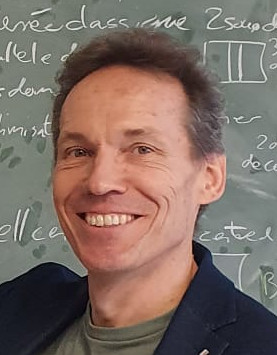
Martin J. Gander is Full Professor of Mathematics at the University of Geneva (Faculty of Sciences, Department of Mathematics) and heads the Digital Analysis research group. His career has included positions at ETH Zürich, Stanford, École Polytechnique and McGill University before he moved to Geneva in 2004. Education ETH Zürich Stanford University École Polytechnique, Paris Research Interests Prof. Gander’s work lies at the intersection of numerical analysis and scientific computing , with particular emphasis on: Iterative solvers and preconditioning for large linear systems Domain-decomposition and parallel-in-time methods Absorbing boundary conditions and perfectly matched layers Waveform relaxation and multigrid techniques Geometric integration and mathematical biology Industrial Collaboration He has consulted for companies and institutions such as Venyo , Meteo Suisse , Meteorological Service of Canada , Alcan , Pratt & Whitney and Volvo . Advising & Team Prof. Gander has supervised more than twenty-five doctoral students and post-doctoral fellows, currently including Teilo Wahl , Ausra Pogozelskyte , Si-Wei Liao , Yafei Sun and Liudi Lu .
Prof. Panayot Vassilevski is a faculty member at the Faculty of Informatics of the Università della Svizzera italiana (USI) in Switzerland. He is engaged in collaborative research involving high-performance computing (HPC) and computational methods for partial differential equations (PDEs), with a focus on scalable discretization and solver development. His work intersects applied mathematics and computer science, particularly in the context of discrete networks and GPU-accelerated algorithms. Fields of Interest: Applied Mathematics, High Performance Computing, Machine Learning, Computational Science, Partial Differential Equations Recent work includes the GPU Accelerated Shifted Penalty Multigrid for Contact Elasticity (2024), which highlights his expertise in computational methods and HPC. This project builds on prior successful collaborations, such as the LLNL sabbatical of Prof. Rolf Krause and the internship of his student Patrick Zulian, which resulted in a publication. The collaboration also involves Dr. Zulian and the Swiss Supercomputing Center (CSCS) in Lugano. During the visit, Prof. Vassilevski and his PhD student Austen Nelson will work with Prof. Krause's team on reciprocal knowledge exchange. Advising: Austen Nelson, a PhD student under Prof. Vassilevski, is participating in the project. The visit project (Grant #229884, funded by the Swiss National Science Foundation with 10,500 CHF) emphasizes in-depth methodological collaboration and personnel exchange between USI and Portland University, as well as LLNL and CSCS. Labs and Teams: The project involves the Euler Institute at USI and the Swiss Supercomputing Center (CSCS) in Lugano. These institutions are pivotal for advancing the HPC-software project, which combines theoretical and algorithmic tasks in scalable discretization methods and PDE solvers.
Ralf Hiptmair is a Full Professor at ETH Zürich, serving as Head of the Seminar for Applied Mathematics and Deputy Head of the Department of Mathematics. He also holds the position of Director of Studies for ETH BSc and MSc in Computational Sciences and Engineering (CSE). His research spans computational mathematics, numerical analysis, finite element methods, boundary element methods, computational electromagnetism, multigrid methods, discrete differential forms, shape optimization, wave propagation, and kinetic equations. Hiptmair's work on auxiliary space methods was recognized as a breakthrough in computational science in the 2008 DOE Report on recent significant advancements in computational science. His research focuses on developing and analyzing numerical methods for partial differential equations, with particular emphasis on structure-preserving discretizations, computational electromagnetism, and boundary integral equations. His work has significant applications in engineering, physics, and computational science. Hiptmair's publications demonstrate a strong focus on advancing numerical techniques for electromagnetic problems, wave propagation, and shape optimization. His recent work shows increasing interest in computational topology, geometric numerical integration, and interdisciplinary applications of numerical methods. Featured as breakthrough in computational science in the 2008 DOE Report on recent significant advancements in computational science (for Auxiliary space methods) Hiptmair has supervised numerous doctoral, master's, and bachelor's students across mathematics, computational science and engineering, and related fields. His research group has received funding for developing advanced numerical methods with applications in electromagnetism, fluid dynamics, and computational physics. He is actively involved in teaching numerical methods courses at both undergraduate and graduate levels. Hiptmair leads research efforts in the Seminar for Applied Mathematics, collaborating with industry partners like ABB Corporate Research and Siemens on practical applications of computational methods. His work bridges theoretical numerical analysis with real-world engineering challenges.
Fabio Nobile is a Full Professor at the École Polytechnique Fédérale de Lausanne (EPFL) in the School of Basic Sciences (SB), Department of Mathematics (MATH), holding the CADMOS Chair in Scientific Computing and Uncertainty Quantification. He leads the CSQI (Chair of Scientific Computing and Uncertainty Quantification) group. His work focuses on numerical methods for partial differential equations (PDEs), uncertainty quantification, stochastic modeling, and computational fluid dynamics. He is involved in collaborative projects involving fluid-structure interaction, cardiac electro-mechanics, and energy systems. Professor Nobile has extensive teaching experience, including courses on advanced analysis, stochastic simulation, and numerical integration of stochastic differential equations. He supervises numerous PhD students and has contributed to over 200 peer-reviewed publications, covering topics such as low-rank approximation methods, multilevel Monte Carlo techniques, and optimal control under uncertainty. His research emphasizes interdisciplinary applications, including biomedical engineering (e.g., personalized cardiac simulations) and renewable energy (e.g., probabilistic load forecasting). He collaborates with industries and academic institutions globally, advancing computational methodologies for engineering and scientific challenges.
Prof. Daniel Kressner is a Professor at the École Polytechnique Fédérale de Lausanne (EPFL), holding positions in the School of Basic Sciences (SB), Mathematics Institute (MATH), and the Numerical Algorithms and High-Performance Computing (ANCHP) group. He also leads the SMA-ENS unit within the SB-SMA division. His research focuses on numerical linear algebra, high-performance computing, and tensor approximation methods, with applications in scientific computing and data science. Education details are not explicitly listed, but his career at EPFL includes leadership in key research groups and doctoral programs. He supervises multiple doctoral students, including Alice Cortinovis, Peter Effenberger, and others. Research interests emphasize low-rank methods, matrix equations, and efficient algorithms for large-scale problems. Recent work includes advancements in randomized algorithms, tensor networks, and preconditioning techniques for eigenvalue problems. His publications span high-impact journals like Siam Journal on Matrix Analysis and Applications and Numerical Linear Algebra with Applications, addressing topics such as compressed sensing, multigrid methods, and distributed signal processing. Prof. Kressner advises doctoral candidates and contributes to the Program doctoral Mathématiques (EDMA-GE) committee. His lab, ANCHP, develops software tools for hierarchical matrices and tensor computations, such as the hm-toolbox for HODLR and HSS matrices.
Olaf Schenk is a Professor at the Institute of Computing within the Faculty of Informatics at Università della Svizzera italiana (USI), Switzerland. He serves as Director of the Institute of Computing and Co-Director of the Master in Computational Science. He is also an adjunct member of the Computer Systems Institute at USI. PhD in Information Technology and Electrical Engineering, ETH Zurich (2001) Venia Legendi in Mathematics and Computer Science, University of Basel (2009) Applied Mathematics, Karlsruhe Institute of Technology (KIT), Germany His research focuses on high-performance computing , computational science and engineering , and applied algorithms for extreme-scale simulations. He bridges computer science with scientific computing needs, particularly in parallel algorithms , sparse solvers , graph analytics , and manycore architectures . His work emphasizes scalable software tools and programming models for emerging HPC systems. The 15 most recent publications reflect a consistent focus on sparse matrix computations , parallel and task-based algorithms , graph partitioning , and performance optimization for heterogeneous and manycore systems. Keywords span high-performance computing, numerical linear algebra, and large-scale data analysis, showing strong integration of theoretical algorithm design with practical implementation. Olaf Schenk has received several prestigious honors: Elected Fellow, Society for Industrial and Applied Mathematics (SIAM) Senior Member, IEEE and ACM SIAM Supercomputing Prize 2023 IBM Faculty Award Two Leadership Computing Awards from the U.S. Department of Energy He has held leadership roles as Chair, Vice Chair, and Program Director of the SIAM Activity Group on Supercomputing. He serves as Associate Editor for ACM Transactions on Mathematical Software and on the editorial board of SIAM Journal on Scientific Computing . He has participated in over 60 international program committees, including top-tier conferences such as SC, IPDPS, and IEEE CSE. He advises PhD and Master’s students in computational science and leads research projects funded by national and international agencies. He is also the Founder & Director of Panua Technologies Sagl, focusing on high-end software for simulation and optimization. His research group at USI works on next-generation computing tools for extreme-scale scientific simulations, with ongoing work in adaptive algorithms, resilience, and hybrid CPU-GPU computing. He leads collaborative projects with institutions in Europe and the U.S., aiming to develop scalable, robust, and efficient software for future exascale systems.
Maria Giuseppina Chiara Nestola is a Researcher at the Faculty of Informatics, Università della Svizzera italiana (USI), and partially affiliated with the Department of Earth Sciences at ETH Zurich. Her work focuses on developing advanced numerical methods for fluid-structure interaction (FSI), immersed boundary techniques, and fracture network modeling in biomedical and geophysical contexts. She contributes to projects like FASTER (geothermal reservoir simulations) and HPC-PREDICT (cardiovascular prognosis), and leads software development for tools like AV-FLOW (FSI library), Parrot (fracture network modeling), and Utopia (linear algebra). Her research integrates high-performance computing with applications in geophysics (e.g., seismic hazard assessment, geothermal systems) and biomechanics (e.g., aortic valve dynamics, turbulent blood flow). Key collaborations include the Center for Computational Medicine in Cardiology and the Swiss Competence Center for Energy Research (SCCER-SoE). She holds roles as FOMICS administrator and project co-PI/co-investigator in PASC initiatives. Her technical expertise spans parallel algorithms, embedded finite-element methods, and multi-physics simulations. Current efforts emphasize real-time geothermal reservoir modeling using Multilevel Monte Carlo methods and benchmarking fracture flow simulations.
Hardik Kothari is a Lecturer at the Faculty of Informatics of the Università della Svizzera italiana (USI). His research focuses on developing efficient numerical methods for optimization problems in partial differential equations, computational mechanics, constrained optimization, and machine learning. He works at the East Campus in Lugano, specifically in Office D5.16 (Level P5). His research interests emphasize advanced numerical techniques such as multigrid methods, preconditioning strategies, and their integration with machine learning approaches. Key areas include nonlinear optimization, phase-field modeling of fracture mechanics, and unfitted finite element methods for complex geometries. Recent publications highlight contributions to physics-informed neural networks, domain decomposition preconditioning, and scalable solvers for large-scale systems. His work bridges computational mathematics with engineering applications, addressing challenges in computational mechanics and high-performance computing. Kothari holds no explicitly mentioned scientific awards or grants but maintains active involvement in academic collaborations. His advising activities are not detailed here.
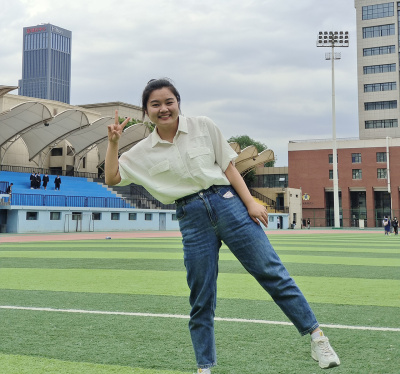
Siwei Liao is a Researcher at the University of Geneva , joining in December 2023 under the supervision of Martin Jakob Gander. She previously earned a Master of Science in Computational Mathematics from Lanzhou University between 2019 and 2022. Research Focus: Her work investigates complementarity problems , including horizontal linear complementarity problems, vertical complementarity problems, and tensor complementarity problems. She specializes in numerical methods like modulus-based methods, Levenberg-Marquardt methods, and multigrid methods, analyzing their convergence behavior and numerical performance.