Dr. Ruzan Sokhoyan is a Nanophotonics Research Scientist specializing in plasmonics and active metasurfaces. Her work focuses on advancing optical imaging, communication, and computation through tunable photonic structures. Core research in metasurface design for beam steering and polarization control Collaborative contributions with Harry A. Atwater and other leading researchers Publications in high-impact journals like ACS Nano and Advanced Optical Materials Her research explores electro-optic modulation , high-power laser beam manipulation , and dynamic photonic devices , with applications in optical communication and imaging. Recent work emphasizes inverse design approaches and liquid crystal-based tunable metasurfaces , reflecting trends toward reconfigurable and multifunctional photonic systems.
Xiaolei Fan is an Associate Professor in the Department of Chemical Engineering at The University of Manchester. He holds a BEng in Environmental Engineering from Jilin Institute of Chemical Technology (2003), an MRes in Chemical Engineering from East China University of Science and Technology (2006), and a PhD in Continuous Flow Heterogeneous Catalysis from the University of Bath (2010). His research focuses on nonthermal plasma catalysis, CO2 conversion, catalytic biorefinery, and zeolite-based catalysts. He has contributed to over 180 publications, supervised 20+ students, and led projects like the EU-funded SPACING initiative for biofuel production. Research interests include porous materials, reaction engineering, and process intensification through structured reactors/catalysts. He chairs the RSC Heterogeneous Catalysis committee and has organized conferences like the International Conference on Environmental Catalysis. His work aligns with UN Sustainable Development Goals, particularly in clean energy and sustainable chemistry. Education: BEng (Environmental Engineering), Jilin Institute of Chemical Technology, 2003 MRes (Chemical Engineering), East China University of Science and Technology, 2006 PhD (Chemical Engineering), University of Bath, 2010 Awards: Lee Hsun Lecture Award (2018) Zhenxing Scholar Professor Award (2018) Outstanding Achievement Recognition (2018) Grants/Projects: SPACING: Sustainable Production of ACrylic Acid from Renewable Waste Glycerol (2021–2024) Labs/Teams: Catalysis and Porous Materials Group at The University of Manchester
Sharon C. Glotzer is the Anthony C. Lembke Department Chair of Chemical Engineering and the John Werner Cahn Distinguished University Professor of Engineering at the University of Michigan. She holds dual professorships in Materials Science & Engineering and Macromolecular Science & Engineering, alongside Physics and Applied Physics. Her research focuses on computational assembly science, predictive materials design of colloids, and soft matter, leveraging entropy-driven self-assembly principles. Glotzer leads a large interdisciplinary group of ~30 researchers, producing over 300 peer-reviewed papers and contributing to federal agency roadmaps in materials research. Education: B.S. and Ph.D. in Physics from UCLA and Boston University. Leadership: Directed the NIST Center for Theoretical and Computational Materials Science (1993–2001). Her work introduced 'patchy particles' and the 'shape space diagram,' revolutionizing nanoparticle design and colloidal self-assembly. Notable contributions include entropy-mediated assembly, quasicrystal engineering, and computational tools like HOOMD-blue and freud. Awards include National Academy memberships, APS Fellowships, and the Aneesur Rahman Prize. Her lab integrates simulation, theory, and AI to design programmable materials, with applications in nanotechnology, photonics, and biomaterials.
Dr. Qingbo Sun is a researcher at the Department of Materials Physics, Australian National University, specializing in advanced materials for energy and electronic applications. His work focuses on defect engineering, dielectric materials, and photovoltaic effects in nanocrystalline systems. Research interests include: Defect-driven local symmetry breaking Colossal dielectric permittivity Photocatalytic heterojunctions High-pressure material transformations Doping strategies in semiconductors Nonlinear electric polarization Research trends from his publications highlight innovations in TiO2-based photocatalysts, SnO2 dielectrics, and ferroelectric heterostructures. Collaborations span materials synthesis, computational modeling, and international experimental studies. His work is cited extensively in Scopus with 294 citations.
Denizhan Yavas is an Assistant Teaching Professor in the Department of Mechanical Engineering at Rice University, joining in 2024. He holds a Ph.D. in Engineering Mechanics from Iowa State University (2018), an M.Sc. in Aerospace Engineering from Middle East Technical University (METU Ankara, 2013), and a B.S. in Mechanical and Aerospace Engineering (METU Ankara, 2010). Prior to Rice, he served as teaching faculty at the University of Central Florida. His research focuses on experimental and computational solid and fracture mechanics , with emphases on deformation/failure mechanisms in advanced composites and additively manufactured materials, architected materials, interfacial fracture, and ice adhesion. Key areas include bioinspired interfaces, interfacial fracture toughness, and material characterization under dynamic and static loading conditions. Notable recent work explores fracture behavior of 3D-printed thermoplastics, bioinspired soft-hard interfaces, and additive manufacturing techniques for enhancing interlaminar shear strength. These studies highlight cross-cutting themes in materials science, mechanical engineering, and aerospace applications. Awards: Preeminent Postdoctoral Award (University of Central Florida) Research Excellence Award (Iowa State University) Teaching Excellence Award (Iowa State University) Teaching & Advising: No current advisees listed, but actively involved in undergraduate/graduate mechanical engineering education. His work bridges fundamental mechanics research with practical applications in advanced manufacturing, materials design, and aerospace engineering.
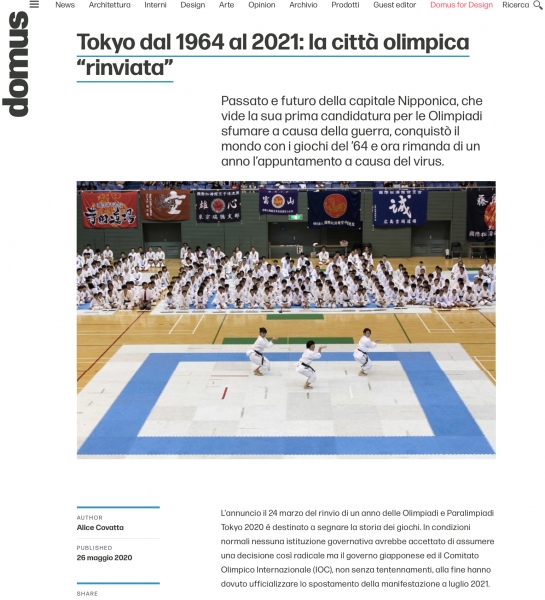
Alice Covatta is an Adjunct Professor at Université de Montréal's Faculty of Planning and School of Architecture, with affiliations to the Centre for Urban Design and Mental Health, co+labo at Keio University, and the Japan Studies Association of Canada. Her work bridges architecture, urban design, and mental health across Europe and Japan. PhD in Architecture and Urban Design (University of Udine, 2015) Postdoctoral Fellow at Keio University (2016-2019) Research interests focus on: Integrating health into urban planning Temporal urbanism in hyper-dense environments Foodscapes as catalysts for community engagement Playable architectural interventions Recent publications analyze Tokyo's liminal spaces, Montreal's ephemeral ecosystems, and cross-cultural comparisons of public space design in Copenhagen and Japan. Her work emphasizes hybrid formal/informal systems and socio-spatial strategies for mental wellness. 2017 Europan 14 Winner 2016 Japan Foundation Fellowship 2015 Honorable Mention for Passages Competition Grants include CRSH and FRQSC funding for projects on urban habitability, public space, and participatory research. She co-founded CoPE Architects, which won multiple international awards for innovative urban design.
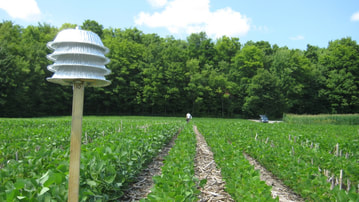
Matthew Mitchell is an Assistant Professor jointly appointed in the Department of Forest Resources Management at the Faculty of Land and Food Systems and the Faculty of Forestry, University of British Columbia (UBC). His research focuses on multifunctional landscapes, integrating ecological and socio-economic dimensions to balance biodiversity conservation with human well-being. He co-leads the M2L2 Lab, which emphasizes equitable and sustainable management of urban and agricultural systems. Mitchell’s work bridges landscape ecology, ecosystem service science, and conservation policy, leveraging interdisciplinary methods like socio-ecological modeling and participatory research. His research areas include community ecology, ecosystem services and conservation policy, and environmental change. He collaborates with stakeholders to co-design solutions for urban greenspace planning, agricultural sustainability, and mineral exploration that respect biodiversity. Mitchell’s lab actively engages in reconciliation efforts, acknowledging Indigenous land stewardship and UBC’s location on Musqueam territory. Notable contributions include studies on forest restoration trade-offs, flood mitigation via ecosystems, and biodiversity-ecosystem service linkages. Mitchell advises students like Dan Forrest (UBC Public Scholar) and MSc candidate Aaron Aguirre, exploring urban bat ecology and mutualistic city design. His work informs national conservation strategies and urban planning, emphasizing equity and ecological resilience. Lab activities focus on developing tools for multifunctional landscape planning, such as indices for restorative nature and frameworks balancing mineral prospectivity with conservation. Mitchell’s research underscores the urgency of addressing global biodiversity loss through inclusive, science-driven policies.
Prof. Alan Kin-tak Lau is an Adjunct Professor in the Department of Mechanical Engineering & Product Design at Swinburne University of Technology. He previously served as Pro Vice-Chancellor (International and Digital Research), overseeing global research collaborations and digital innovation. His expertise spans advanced materials, manufacturing, and product design, with a focus on aerospace applications, energy storage, and sustainable technologies. Lau holds adjunct roles at Chonbuk National University and is a Fellow of multiple prestigious institutions, including the European Academy of Sciences and the Royal Aeronautical Society. Affiliations: Swinburne University of Technology Roles: Adjunct Professor, Former Pro Vice-Chancellor Research interests include nanomaterials for energy storage (e.g., supercapacitors, hydrogen systems), composite materials for aerospace, and eco-friendly manufacturing. He leads interdisciplinary projects like the Aerostructures Innovation Research Hub and the Research Centre for New Energy Transition. Lau has secured over AUD 100M in grants and supervised numerous PhD projects on topics like graphene composites and additive manufacturing. Notable awards include the VEBLEO Best Scientist Award (2020), UGC Teaching Excellence Award (2013), and the Young Engineer of the Year Award (2004). He chairs international conferences and serves on boards of companies like King’s Flair International. His work bridges academia and industry, with patents and commercial applications in sustainable materials and EV technologies.
Xin Ning is an Assistant Professor in the Department of Aerospace Engineering at the University of Illinois at Urbana-Champaign (UIUC), where he also holds appointments in the Materials Research Laboratory. Previously, he served as an Assistant Professor at Pennsylvania State University from 2018 to 2023. His academic journey includes postdoctoral research at UIUC and California Institute of Technology (Caltech). Educated at Caltech, he earned a Ph.D. in Aeronautics in 2015 and an M.S. in Aeronautics in 2010. His research focuses on soft electronics for aerospace engineering , bio-inspired aerospace structures , in-space manufacturing and assembly , and multifunctional space structures . These interests drive innovations in lightweight, adaptive, and multifunctional materials and systems for aerospace applications. For instance, his work explores bio-inspired cellular materials for aircraft wings and bistable composite booms for deployable structures. He has been recognized with several honors, including the 2022 Young Investigator Award from the Office of Naval Research, 2019 Haythornthwaite Foundation Research Initiation Award, 2015 William F. Ballhaus Prize from Caltech, and the 2012 Dow-Resnick Fellowship. In addition to research, Professor Ning teaches courses such as AE 323: Applied Aerospace Structures and AE 498: Space Structures . While specific grants are not detailed here, his work has been supported through awards like the ONR Young Investigator grant. He collaborates with the Materials Research Laboratory at UIUC and engages in interdisciplinary projects involving soft electronics and bio-inspired engineering.
Zia Javanbakht is a Senior Lecturer at the School of Engineering and Built Environment , Griffith University , specializing in Mechanical Engineering and Industrial Design . As a chartered engineer with a PhD in Mechanical Engineering, he contributes to research in Continuum Mechanics , Material Modelling (composites and metamaterials), and Computational Modelling . He is affiliated with the Australian Centre for Precision Health and Technology (PRECISE) and has been involved in projects related to additive manufacturing, auxetic materials, and composite structures. Research Interests include the development of advanced computational models for material behavior, with a focus on auxetic structures , triply periodic minimal surfaces (TPMS) , and additively manufactured composites . His work addresses challenges in residual stress analysis , multiscale modelling , and machine learning applications in material deformation mechanisms. Scientific Awards Fellow (FHEA) of Higher Education Authority, Dublin, Ireland (since 2021) Key Funded Projects span collaborations with Gilmour Space Technologies (CRC-P grant for rocket fuel tanks), Bond University (concrete sensor testing), and internal Griffith University grants for equipment like the Transient Plane Source Thermal Conductivity Analyser . He actively supervises PhD and Master’s students in topics such as polymer-matrix composites , auxetic timber structures , and additive manufacturing failure models . Collaboration Networks include the AuxeticsLab and partnerships with industry leaders like Stoddart Group Pty Ltd and ATL Composites . His teaching portfolio covers Constitutive Material Modelling (7015ENG) and Computational Statics and Dynamics (7252ENG), reflecting his expertise in computational techniques and structural analysis.
Dr. Andrew Hamilton is an Associate Professor at the University of Southampton specializing in materials science and engineering with a focus on additive manufacturing and advanced materials characterization. His research spans multiple disciplines including mechanical engineering, biomedical applications, and advanced manufacturing techniques. His primary research interests include: Development and mechanical characterization of novel materials for structural and multifunctional applications Additive manufacturing (AM) of metamaterials with controlled porous architectures Characterization of porous materials including effects of anisotropy and heterogeneity Failure analysis of AM metals and bimaterial metal joints Layer-by-layer (LbL) assembly of multilayer coatings for biocompatibility and antimicrobial activity Dr. Hamilton's recent publications demonstrate a strong focus on applying additive manufacturing techniques to solve complex engineering challenges across multiple domains. His work spans from fundamental materials characterization to applied biomedical and aerospace applications, with particular emphasis on advanced composite materials, structural health monitoring, biomedical applications of 3D printing, failure mechanisms in power generation components, novel coating technologies, and optimization of AM processes. As an active PhD supervisor, he currently mentors nine doctoral students and has previously supervised successful candidates. His collaborative approach is evident through his membership in multiple research groups including the Engineering Materials and Surface Engineering Group, Bioengineering Group, Institute for Life Sciences, and Interdisciplinary Musculoskeletal Health. Dr. Hamilton has led significant research projects including those funded by EPSRC and the European Union, with current work focused on high-temperature failure processes in Ni base superalloys. His interdisciplinary research bridges traditional disciplinary boundaries to address complex materials challenges with innovative solutions across aerospace, biomedical engineering, and advanced manufacturing sectors.
Dr. Xiong Yi is an Assistant Professor at the School of System Design and Intelligent Manufacturing (SDIM) at Southern University of Science and Technology (SUSTech) in Shenzhen, China. He leads the Computational Design and Fabrication (CoDeFab) research group, focusing on the integration of computational design methods with advanced manufacturing technologies, particularly in the field of additive manufacturing. Dr. Xiong has established himself as a leading researcher in computational design for additive manufacturing, with a strong international research background spanning Europe and Asia. Dr. Xiong's educational journey includes: Doctor of Science (DSc) in Engineering Design and Production from Aalto University, Finland (2012-2016) Master of Science (MSc) in Machine Automation from Tampere University of Technology, Finland (2010-2012) Bachelor of Engineering (BEng) in Mechanical Engineering from Hubei University of Technology, China (2006-2010) Dr. Xiong's research primarily focuses on computational design and fabrication methodologies, with particular emphasis on design for additive manufacturing (DfAM), intelligent manufacturing systems, and smart materials. His work bridges the gap between theoretical design principles and practical manufacturing constraints, developing novel approaches for the production of complex engineered products. He has pioneered research in continuous fiber-reinforced composite additive manufacturing, developing innovative process planning and optimization techniques that enable the production of high-performance structural components. His research in electrothermally controlled origami and 4D printing of smart materials represents cutting-edge work at the intersection of materials science, mechanical engineering, and computational design. Dr. Xiong's recent publications reveal a strong focus on continuous fiber-reinforced composites, with significant contributions to 4D printing, metamaterials, and intelligent process planning. His work integrates computational design with manufacturing constraints, creating novel approaches for topology optimization, toolpath planning, and structural design that consider both performance requirements and manufacturability limitations. The research demonstrates increasing sophistication in materials science applications, particularly in programmable materials and multi-functional structures. Dr. Xiong has received multiple prestigious awards for his research contributions, including: Best Presentation Award at the 24th Chinese Conference on Mechanisms and Machine Science (IFToMM CCMMS2024) Best Presentation Award at the International Conference on Frontiers of Additive Manufacturing Research (RAAM 2024) Best Paper Award at the International Conference on Design for 3D Printing (ICD3DP 2023) PhD Scholarship from Aalto University (2016) Research Travel Grant from the International Association for Vehicle System Dynamics (IAVSD) (2013) National Scholarship from the Ministry of Education (2008) As a dedicated educator and mentor, Dr. Xiong serves as a PhD supervisor at SUSTech and has successfully guided students who have gone on to pursue advanced studies and careers at prestigious institutions including Hong Kong Polytechnic University, Beihang University, DJI Innovations, and Singapore's A*STAR research institute. His research is supported by multiple competitive grants, including key projects from the National Key R&D Program of China, the National Natural Science Foundation of China, and provincial and municipal funding agencies. Dr. Xiong also serves on the editorial board of the Journal of Engineering Design and as a guest editor for Composites Communications, contributing to the advancement of his field through scholarly service. Dr. Xiong leads the CoDeFab research group, which maintains a strong collaborative culture focused on 'design leading manufacturing, manufacturing driving design, and digital-intelligent integration.' The group has developed several advanced manufacturing platforms, including multi-axis continuous fiber-reinforced composite additive manufacturing systems, smart composite additive manufacturing platforms, and multifunctional soft matter open manufacturing platforms. With a focus on practical applications and innovation, the CoDeFab group actively collaborates with industry partners and has established a joint laboratory to bridge academic research with industrial implementation.
Dr. Matthieu Gresil is a Senior Lecturer in both the Department of Materials Science and Engineering and the Department of Mechanical and Aerospace Engineering at Monash University. He joined Monash in 2020 and leads the Circular Plastic Research Node within the Faculty of Engineering, focusing on advancing sustainable materials and recycling technologies. His expertise spans multifunctional composites, vitrimers, bio-based materials, and structural health monitoring. Gresil holds a PhD from École Normale Supérieure of Cachan (2009), with postdoctoral experience at the University of South Carolina and the University of Manchester. Education: BSc in Physics, University of Nantes (2004) MSc in Physics (Matter and Materials), University of Nantes (2006) PhD in Physics/Materials, École Normale Supérieure of Cachan (2009) Research Interests: Multifunctional composites (health monitoring, self-healing) Vitrimers and bio-based polymers Nanocomposites and recycling technologies Bio-inspired morphing materials via 3D printing and nanotechnology Grants and Projects: "Vitrimer composites - a new material for Defence applications" (2025–2026) "Developing vitrimers: next generation reusable plastics" (2024–2027) "Recycled Materials for Tram Stop Platforms" (2021–2024) Labs and Roles: Leads the Circular Plastic Research Node, fostering collaboration on sustainable materials and circular economy initiatives.
Mohammadmahdi Asgari is a Doctoral Researcher at Aalto University's Department of Electronics and Nanoengineering. His research focuses on advanced electromagnetic and photonic materials, particularly metasurfaces , metamaterials , and photonic time crystals . His work explores applications in wireless communication enhancement, inverse topology design for multifunctional surfaces, and non-reciprocal optical phenomena. Key research themes include: Wave propagation control Spontaneous magnetization effects Space-time modulated materials Passive metacrystal systems Publications reveal a concentration on both theoretical frameworks and practical implementations in electromagnetic and optical engineering. Asgari collaborates with prominent researchers including Shanhui Fan and Viktar Asadchy.
Peter Behrensdorff Poulsen serves as Solar Photovoltaic Systems Group Leader at the Department of Electrical and Photonics Engineering, Technical University of Denmark (DTU). His work spans photovoltaic research, solar-powered lighting systems, and drone-based inspection technologies within DTU's College of Engineering. His research focuses on Solar Cell Engineering , Photovoltaic Modules , and Drone Applications for renewable energy systems. Key areas include bifacial photovoltaics, electroluminescence imaging diagnostics, building-integrated photovoltaics, and ultra-efficient solar-powered lighting solutions. His work significantly contributes to UN Sustainable Development Goals related to affordable clean energy and sustainable cities. Recent publications reveal strong trends in AI-driven PV diagnostics , bifacial module performance in northern climates, and dark-sky compatible lighting systems . His research bridges fundamental photovoltaic science with practical applications in urban infrastructure and environmental sustainability. Best Poster Award at 44th IEEE Photovoltaic Specialists Conference Best Poster Award at 48th IEEE Photovoltaic Specialists Conference Characterizing the Performance of Daylight Filters for Electroluminescence Imaging Poster Award at 35th European Photovoltaic Solar Energy Conference Poster Prize at Sustain 2017 Poulsen leads multiple research grants including the Ultra-efficient Dark Sky-compatible Solar-powered Outdoor Lighting project (2024-2026) and previously managed the DronEL project (2017-2019) for drone-based PV inspection. His work connects photovoltaic engineering with practical lighting applications through the Lighting Color and Radiation Laboratory. He actively collaborates with industry partners on building-integrated photovoltaics and solar-powered infrastructure solutions, with notable projects including the Plateau Sun Hub public charging stations and Black Si BIPV panel development.