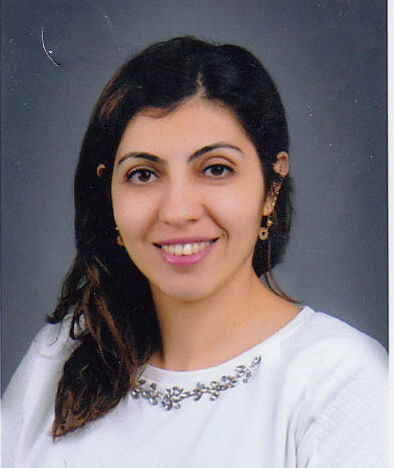
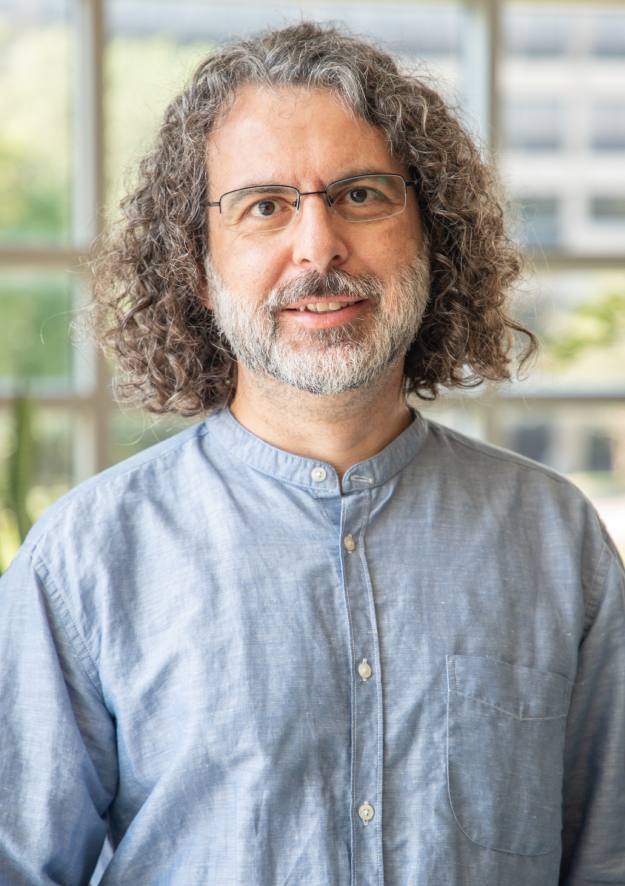
Pavol Hvizdoš serves as a leading scientist at the Institute of Materials Research, Slovak Academy of Sciences (SAS), located at Watsonova 47, 040 01 Košice, Slovak Republic. Holding the academic rank of Associate Professor (denoted by "doc." in Slovak systems), he specializes in advanced ceramic materials and composites within SAS's Physical, Space, Earth, and Engineering Sciences division. His research centers on the development and characterization of high-performance ceramic composites, addressing critical challenges in materials engineering for industrial applications. This work spans structural ceramics, thermal barrier coatings, and multifunctional composite systems under the broader discipline of materials science. Contact details confirm active engagement: telephone (+421-55-7922 402), fax (+421-55-7922 408), and email (phvizdos@saske.sk) are currently operational. No advisory roles, grants, or laboratory teams are specified in the source documentation.
Associate Professor Tuğba Han Şimşekler Dizman is affiliated with Gaziantep University as a faculty member in the Faculty of Education , specifically the Department of Mathematics and Science Education . She holds a PhD in Mathematics from Selçuk University (2014) and has authored 23 articles, primarily focusing on Mathematics Education , Topology , and Fuzzy Soft Topological Spaces . Her research bridges mathematical theory with applications in Medical Diagnosis and STEM Education . Doctorate: Mathematics, Selçuk University (2010-2014) Master’s: Mathematics, Selçuk University (2007-2009) Bachelor’s: Mathematics, Selçuk University (2003-2007) Her recent work includes 2025 articles on Optimal Parameter Identification and Algebraic Thinking Levels , alongside 2023 research comparing Turkish and Singaporean preschool mathematics curricula. She has supervised 10 master’s theses on topics like geometric reasoning, algebraic thinking, and curriculum analysis. Notable projects include TÜBİTAK-funded research (2023-2024) on AI-supported fuzzy logic for real-world problems and international collaborations like STREAM It Up (2021-2022). Her teaching portfolio spans courses in Analysis , Abstract Mathematics , and Introduction to Metric Spaces , reflecting her expertise in foundational and advanced mathematics.
Prof. Ing. Josef Chybík, CSc. is a Professor at the Faculty of Architecture, Brno University of Technology, where he works in the Department of Engineering. With an extensive publication record spanning over three decades, his work focuses on sustainable architecture, energy-efficient building design, and the use of natural materials in construction. He has contributed significantly to architectural research and practice in the Czech Republic, particularly in the fields of passive houses and climate-responsive design. Professor Chybík's research interests center around sustainable building practices, with particular emphasis on energy efficiency in architectural design. His work explores how natural building materials like wood, straw, and clay can be effectively utilized in modern construction while maintaining high environmental performance. He has extensively studied the relationship between building design and indoor environmental quality, investigating how architectural decisions impact thermal comfort, air quality, and overall user satisfaction in energy-efficient buildings. His publications demonstrate a deep engagement with both theoretical aspects of sustainable architecture and practical implementation challenges. His recent publications (2020-2024) reveal a clear trend toward addressing climate change through architectural solutions, with increasing focus on regional architectural traditions, particularly in Moravian winery architecture. Professor Chybík has also maintained a strong interest in the practical application of architectural theory, often collaborating on real-world building projects that implement sustainable principles. His work bridges academic research and practical architectural application, contributing significantly to both theoretical understanding and built examples of sustainable architecture in the Czech context. Throughout his career, Professor Chybík has secured numerous research grants, including projects on sustainable community buildings from unfired clay, the impact of building structures on climate change processes, and innovations in technical subjects for architectural education. He has served on various boards including the Board of BSP and MSP Architecture and Urban Design and the Scientific Board of the Faculty of Architecture. His involvement in architectural competitions, such as the Horácka multifunctional arena in Jihlava and the development proposal for Prague's Štvanice Island, demonstrates his commitment to practical architectural solutions.
Ioannis Konstantinidis is a Lecturer at the University of Houston's Honors College and a Senior Researcher in the Department of Computer Science. He holds a PhD in Mathematics from the University of Maryland and integrates his academic background into his work on data science, focusing on the practical impact of research within policy decision-making frameworks. As part of the Honors College Faculty and the Hewlett Packard Enterprise Data Science Institute, he emphasizes data-centric approaches and mentors students in engaged citizenship. Doctorate in Mathematics, University of Maryland His research spans diverse domains, including signal processing , public health , and STEM education . He has contributed to waveform design for radar systems, data visualization tools for humanities, and educational strategies for planetary science. His work in the Data & Society minor promotes structured methodologies for student researchers. Recent publications highlight his interdisciplinary focus, from 2024 research on multimorbidity in intellectual disability to earlier contributions in digital content management and confocal microscopy denoising . His technical work on CAZAC sequences and phase-coded waveforms has advanced signal processing theory.
Beatrice-Gabriela Jöger is a full Professor in the Department of Interior Design and Design at Ion Mincu University of Architecture and Urbanism (UAUIM), where she previously served as Dean of the Faculty of Interior Architecture (2016-2020). She holds a PhD in Architecture (2006) and MArch (1993) from UAUIM, with additional research at Universidad Politécnica de Madrid and National Autonomous University of Mexico. Her research examines textile integration in architectural spaces, vernacular design adaptation, and architectural pedagogy. Recent work focuses on material innovation, spatial versatility, and cultural heritage reinterpretation, particularly in Mexican architectural contexts. Publications demonstrate consistent exploration of materiality, cultural identity, and design education evolution. Education: PhD Architecture (UAUIM, 2006), MArch (UAUIM, 1993) Honors: Mexican Government Research Grant (2011), AECI Doctoral Fellowship (2001-2002), CNCSIS Research Grant (2000-2001) Leadership: Directed EURAU2016 conference, coordinated Romanian-Spanish Architecture Workshops, served on RIBA accreditation committees
Professor Neil Currie is a chartered structural engineer (FIStructE) and chartered civil engineer (MICE) at the University of Salford's School of Science, Engineering & Environment. With over 25 years of industry experience in structural engineering design, he brings extensive practical knowledge to his academic role. His affiliations include the Centre for Future Engineering at the University of Salford, where he conducts research on innovative structural solutions. Professor Currie's educational background includes: Bachelor's Degree in Civil Engineering (1994-1997) Doctor of Philosophy in "Kinky Structures" (2011-2020, completed part-time) Postgraduate Certificate in Academic Practice (2010-2012, completed part-time) His research interests focus on creating sustainable and innovative structural solutions, with particular emphasis on Low Carbon Design of Structures , Retrofitting Existing Structures , Reduction of Embedded Carbon in Structures , Deployable Structures , Adaptable Structures , Timber Design , and Lightweight Structures . Much of his work incorporates biomimetic principles, drawing inspiration from natural phenomena to develop novel engineering approaches. Professor Currie has published extensively on topics related to deployable structures, disproportionate collapse analysis of timber buildings, and innovative teaching methods in structural engineering. Professor Currie has led significant research projects including a KTP with Technocover (2017-2019). His industry experience spans a wide range of projects from £200m mixed-use developments and 50-storey buildings to innovative tensile fabric structures, deployable structures, and sustainable timber buildings. He has also contributed to advancing engineering education through the implementation of the inverted classroom approach for structures modules.
Professor Valery Ivanov is a Part-time Lecturer at the Department of Urban Planning within the Faculty of Architecture at the University of Architecture, Civil Engineering and Geodesy (UACEG) in Sofia, Bulgaria. Having joined UACEG in 1981, he has established himself as a prominent figure in Bulgarian urban planning education and practice. His teaching portfolio includes courses such as 'Learning and Communication Skills,' 'Social Infrastructure,' 'Professional Ethics,' and 'Practice of the profession of Architect' across various degree programs. Dr. Ivanov's research interests focus on urban planning, social infrastructure, and structural planning, with particular emphasis on sustainable urban development, energy-efficient residential areas, and municipal planning strategies. His work bridges theoretical knowledge with practical application, as evidenced by his extensive involvement in urban development projects across Bulgarian municipalities. His scholarly contributions reveal a clear trajectory toward sustainable urban development, with increasing focus on energy efficiency in residential planning and innovative approaches to urban renewal, particularly regarding panel building complexes. The publications demonstrate both theoretical depth and practical relevance to contemporary urban challenges in Bulgaria. I prize - Residential Complex 'Vladaya' (2014) I prize - Multifunctional Sports Complex 'Diana', Yambol (2013) III prize - Urban concept for 'St. Nedelya' Square (2013) I prize - Master Plan concept for Haskovo Municipality (2007) 1st prize - National competition 'Sofia and European Integration' (2000) As an active academic and practitioner, Ivanov has served on the Faculty Council of the Faculty of Architecture and the Academic Council at UACEG, while also chairing the General Assembly of the Faculty of Architecture. His professional practice spans decades of involvement in urban development projects across Bulgaria, from Sofia to numerous municipalities, demonstrating consistent engagement with real-world urban planning challenges. His architectural office has contributed to numerous residential, commercial, and public infrastructure projects throughout Bulgaria, with particular expertise in general development plans for municipalities and residential area planning. This practical experience directly informs his academic work and teaching methodology.
Ricardo Ferreira serves as Research Scientist Group Leader of the Spintronics research group at the International Iberian Nanotechnology Laboratory (INL). With a PhD in Physics Engineering from Instituto Superior Técnico (IST) completed in 2008, his career has focused on advancing spintronics technology through Magnetic Tunnel Junctions (MTJs). His research group develops high-yield fabrication processes for both micro-scale (down to 1μm²) and nano-scale (down to Dr. Ferreira's research interests span multiple cutting-edge areas in spintronics, with primary focus on nano-oscillators, neuromorphic computing architectures, and advanced magnetic field sensors. His work bridges fundamental physics with practical applications, particularly in developing devices that exploit spin transfer and spin Hall effects for next-generation computing paradigms. The group has made significant contributions to RF signal processing, true random number generation, and physical unclonable functions using spintronic devices. His recent publications reveal a strong trend toward neuromorphic computing applications, with multiple papers on spin-torque nano-oscillators for reservoir computing, weighted neural networks, and RF signal classification. The research demonstrates increasing sophistication in controlling vortex states and coupled oscillator dynamics for computational applications, while maintaining strong contributions to fundamental spintronics phenomena and sensor development. Co-author of 150+ peer-reviewed publications Co-inventor in 4 patent applications submitted at INL Participant in 6 European projects in the last decade Leader of multiple high-TRL industrial application projects Ferreira actively mentors PhD students and postdoctoral researchers, with several alumni having completed their doctoral work under his supervision. His group engages in both fundamental research and applied projects targeting Industry 5.0 ready production systems and space applications. The laboratory maintains advanced fabrication capabilities including UHV sputtering systems, ion milling equipment, and comprehensive characterization tools for spintronic device development.