Jolanta Olko is a faculty member at the AGH University of Science and Technology in Kraków, affiliated with the Faculty of Applied Mathematics and the Department of Mathematical Analysis and Applications. She holds an academic rank of Assistant Professor. Her research focuses on functional equations, stability theory, and non-Archimedean mathematical structures. Notably, she has explored Hyers-Ulam stability, hyperstability, and multifunctions in ultrametric and Banach algebras. Key topics include polynomial-type multifunctions, Wright functions, and semigroups of set-valued functions. Her work spans mathematical analysis, fixed point theory, and applied functional equations. Contact: olko@agh.edu.pl .
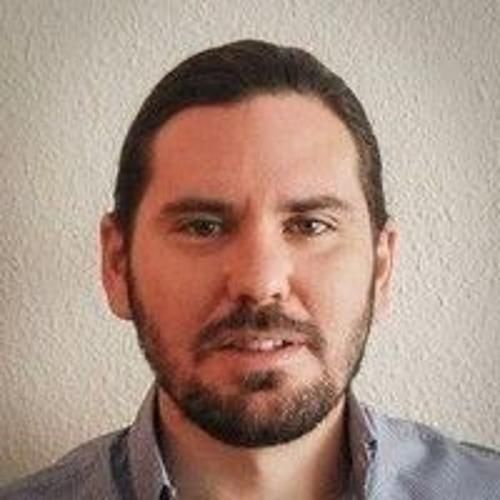
Jesús Santiago Ramos is an Assistant Professor in the Department of Geography, History and Philosophy at Universidad Pablo de Olavide, specializing in human geography with emphases on urban planning, environmental systems, and metropolitan spatial analysis across Spanish contexts. His academic credentials include: PhD in Geography from Universidad Pablo de Olavide (2010), thesis: Ciudad, espacio libre y funcionalidad ecológica. Una aproximación territorial al estudio del medio ambiente en el área metropolitana de Sevilla , supervised by Dr. José Feria Toribio. Ramos' research integrates spatial analysis methodologies with environmental sustainability frameworks , focusing on green infrastructure planning, ecosystem services assessment, and metropolitan territorial dynamics. His work demonstrates particular expertise in Mediterranean urban contexts, employing GIS and landscape ecology to address habitat fragmentation, urban mobility, and multifunctional land use. Recent projects emphasize practical applications for metropolitan governance and climate resilience. Analysis of his 2020-2024 publications reveals consistent thematic focus on Spanish metropolitan areas (especially Seville and Barcelona), with methodological innovations in GPS-based mobility tracking and multi-scalar ecosystem service valuation. His bilingual output (Spanish/English) bridges local case studies with international urban geography discourse. As an active member of the T.I.T.A. (Taller de Investigaciones Territoriales y Ambientales) research group, Ramos contributes to collaborative projects investigating territorial and environmental challenges. His academic service includes thesis supervision within the Gestión del Territorio y Medio Ambiente doctoral program, though specific student names aren't publicly documented. The T.I.T.A. group serves as his primary research vehicle, facilitating fieldwork on metropolitan green infrastructure and habitat connectivity through spatial analysis frameworks developed for Andalusian contexts.
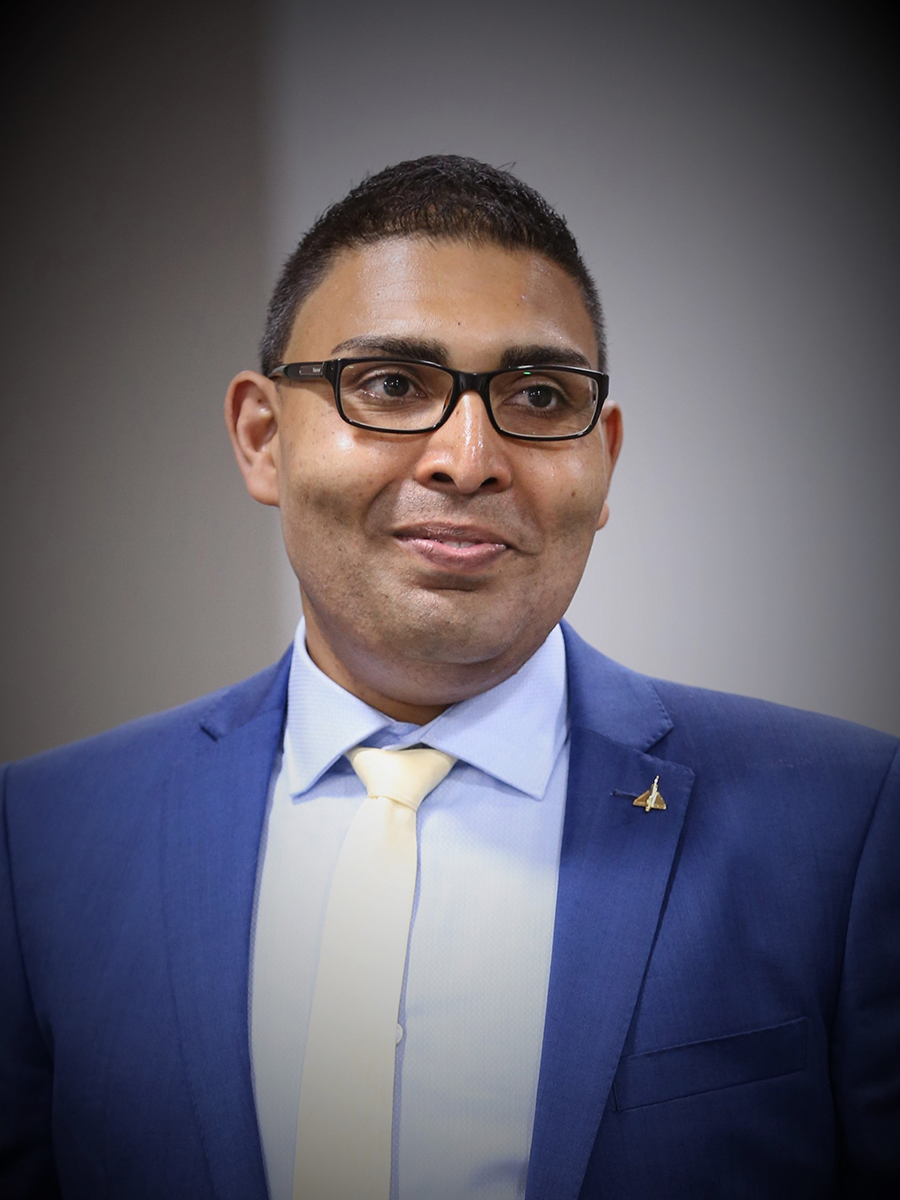
Dr. Ajit Panesar is an Associate Professor (Reader) in Computational Design for Advanced Manufacturing at Imperial College London's Department of Aeronautics, leading the IDEA Lab. His work focuses on leveraging machine learning, optimization, and additive manufacturing (AM) to address challenges in aerospace, automotive, biomedical, and energy sectors. He has authored over 40 publications, including a book chapter in the ASM Handbook Vol 24B, with an h-index of 17. He holds a key role in the EPSRC-funded DfAM network as leader of the 'Computational Tools' research theme. His research includes collaborations with industry and academic partners, securing funding from both sectors. His group explores topics such as topology optimization for battery electrodes, ML-driven design frameworks, and multifunctional composites. Research interests span computational design of metamaterials, ML integration in AM processes, structural power composites, and topology optimization for biomedical implants. His team has pioneered methods like physics-informed neural networks for thermal simulation in AM and latent-space arithmetic for transitioning lattice structures. Collaborations include TWI Ltd, Shell, and institutions like the University of Birmingham and Hamburg University of Applied Sciences. Dr. Panesar’s work emphasizes practical impact, with applications in sustainable energy storage, lightweight aerospace components, and additive manufacturing advancements. Scientific contributions include advancements in structural supercapacitors, functionally graded materials (FGMs), and cold spray systems for in-space manufacturing. His group’s experimental and computational work bridges gaps between design and manufacturing, aiming to enhance material performance and reduce environmental impact. Recent efforts focus on multi-objective optimization frameworks and scaling structural power composites for real-world applications. Advising and grants: Dr. Panesar has mentored numerous PhD students and postdoctoral researchers in projects ranging from battery electrode design to AM process optimization. His grants include EPSRC funding and industry partnerships. The IDEA Lab collaborates with Imperial’s Composite Centre and Space Engineering Lab, fostering interdisciplinary innovation. Labs/Teams: The IDEA Lab is a hub for cutting-edge research in design and advanced manufacturing, emphasizing collaborations and industry-relevant outcomes. Current initiatives include structural power composites, topology-optimized biomedical implants, and ML-driven AM design tools.
Dr. Jorik van de Groep is a Researcher affiliated with the Faculty of Science at the University of Amsterdam, based at the Institute of Physics (IoP WZI). His work focuses on advanced photonics, metamaterials, and nanotechnology, with a strong emphasis on 2D materials and optoelectronic devices. He explores dynamic light manipulation, plasmonic effects, and energy-efficient optical systems through innovative metasurface and nanoresonator designs. Research interests include excitonic beam steering, tunable optical modulation, and environmental stability of nanomaterials. His publications highlight breakthroughs in high-performance photodetectors, robotic metamaterials, and temperature-dependent optical properties of layered materials. Recent work addresses challenges in light trapping for solar cells and ultrafast wavefront shaping for next-generation optical systems. Key trends in his publications involve integrating mechanical, electrical, and optical functionalities into nanostructured materials. He has contributed to foundational studies on plasmoelectric effects and light-matter interactions in hybrid 2D systems. No scientific awards or grants are explicitly listed in the provided data. His research group at IoP WZI focuses on translating nanophotonics innovations into practical applications, though specific lab details are not detailed here.
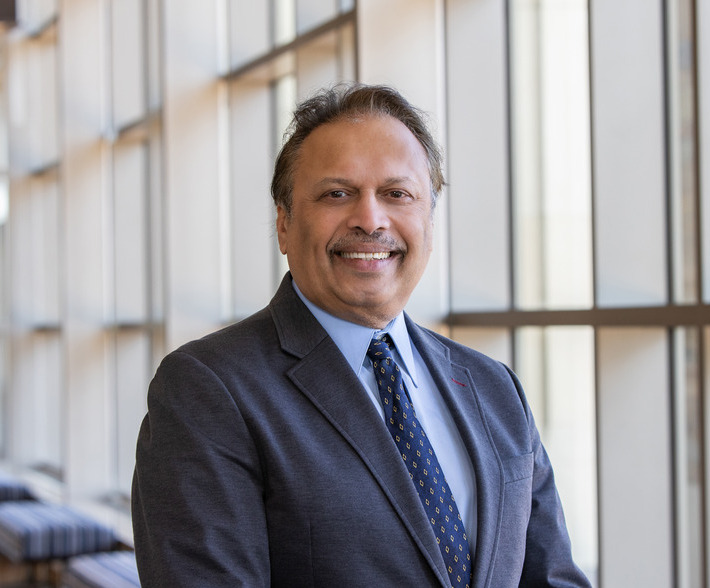
Parameswar Hari, Ph.D., is a Professor of Physics and Engineering Physics at The University of Tulsa. He serves as Director of the Oklahoma Photovoltaic Research Institute (OKPVRI), an interdisciplinary center involving researchers from TU, OU, and OSU. His work focuses on advancing solar cell efficiency through nanomaterials research, including thin films and novel photonic devices. He has secured over $750,000 in NASA funding (2023) and led projects funded by NSF, DoD, and DOE STTR. Hari oversees four research labs at TU and has mentored 38 undergraduate students, three Ph.D., and nine master’s students since 2004. He teaches courses ranging from introductory physics to advanced quantum mechanics. Education Ph.D., University of Utah (2000) M.S., Physics, Ohio University (Year unspecified) Research Interests Solar cell fabrication and characterization Nanomaterials synthesis (e.g., ZnO, Ag-doped materials) Thin film technology for photovoltaic applications Nanostructured devices for energy conversion Key Achievements Received Energy Faculty Fellow (2024-25) Recipient of Zelimir Schmidt Award (2019) and Cottrell Science Award (2000-02) Developed innovative solar cell designs for space exploration Labs & Teams Photovoltaic Research Group (10+ years) Oklahoma Photovoltaic Research Institute (OKPVRI) Four TU labs specializing in thin film solar cell fabrication
Anna Soós is an Associate Professor at the Hungarian Mathematics and Informatics Institute, Faculty of Mathematics and Informatics, Babes-Bolyai University (Cluj-Napoca, Romania). She holds a PhD in Mathematics (2002) and has been active in stochastic analysis, fractal theory, and approximation methods. Her academic career includes leadership roles such as Vice-Rector for Curriculum and Hungarian Studies (2012–present) and Vice-Dean of the Faculty of Mathematics and Informatics (2008–2012). Education: MSc in Mathematics (Babes-Bolyai, 1982), MSc in Computer Science (Eötvös Loránd University, 1996), PhD in Mathematics (Babes-Bolyai, 2002) Her research focuses on deterministic and random fractals, stochastic differential equations, and homogenization on fractal structures. She has contributed to stochastic analysis through: Developing contraction methods in probabilistic metric spaces Wavelet approximations for SDE solutions Fractal interpolation techniques Scientific awards include: Bolyai János Research Fellowship Erasmus and CEEPUS Fellowships Domus Hungarica Scientiarum et Artium Grants World Bank Project Participation Anna Soós has coordinated international research projects like ERASMUS IP DSL2013 and FP7/MASCIL, while organizing conferences including the International Symposium on Numerical Analysis and Approximation Theory and Central European Functional Programming Summer Schools.
Professor Guglielmo Aglietti is a leading academic at the University of Surrey , holding the position of Professor and Royal Academy of Engineering / SSTL Research Chair in Space Engineering . He serves as the Director of the Surrey Space Centre and Programme Leader for the MSc in Space Engineering . His affiliations include the Spacecraft Structures and Mechanisms Group within the Surrey Space Centre. University: University of Surrey School: Faculty of Engineering and Physical Sciences Department: Surrey Space Centre Research Group: Spacecraft Structures and Mechanisms Group Email: g.aglietti@surrey.ac.uk His research spans spacecraft structures and mechanisms , microvibrations , deployable systems , and active space debris removal . He has led major international projects such as the RemoveDebris and AlSat-1N missions, contributing significantly to space sustainability and technology transfer. His work integrates theoretical modeling, experimental validation, and industrial application, particularly in vibration control and finite element analysis. The recent publications reflect a strong focus on microvibration mitigation , space debris removal technologies , deployable structures for nanosatellites , and advanced stochastic finite element methods for spacecraft modeling. These works demonstrate a consistent trend toward improving spacecraft reliability, precision, and mission success through innovative mechanical design and rigorous testing methodologies. His scientific honors include: Fellow of the Royal Academy of Engineering (FREng) Chartered Engineer (CEng) Fellow of the Royal Aeronautical Society (FRAeS) Royal Academy of Engineering Research Chair Prof. Aglietti has secured research funding from ESA , UK Space Agency , EPSRC , TSB , and Royal Academy of Engineering . He has led experimental space missions including RemoveDebris (demonstrating net and harpoon capture of debris) and InflateSail (drag sail de-orbiting). He also conducts extensive consultancy for major aerospace firms such as SSTL , Airbus Defence and Space , and Lockheed Martin . He leads a multidisciplinary research group of approximately 90 members at the Surrey Space Centre and oversees educational initiatives in space engineering. His leadership in mission development and technology demonstration underscores his role in bridging academic research with real-world space applications.
Mikko Mönkkönen is a Professor and currently serves as Dean of the Faculty of Mathematics and Science at the University of Jyväskylä. His research focuses on reconciling sustainable forest use with biodiversity conservation, emphasizing boreal forest ecosystems' multifunctionality. He chairs the Expert Panel for Sustainable Development, an independent Finnish body advising on sustainable development integration into decision-making processes. His academic background includes expertise in applied ecology, particularly regarding forest bird populations and flying squirrels. Research interests center on balancing timber production efficiency with ecological and societal sustainability, addressing climate change impacts, and policy-driven forest management conflicts. He leads projects like ResForest (enhancing socio-ecological resilience) and ForTran (systemic sustainability transitions in forest systems). Mönkkönen's recent publications emphasize global wood demand's sustainability risks, EU biodiversity policy impacts, and cost-effective conservation strategies. His work frequently intersects policy analysis, multi-objective optimization tools (e.g., MultiOptForest), and biodiversity protection frameworks. Notable contributions include defining safe operating spaces for timber harvesting and analyzing trade-offs between climate targets and ecosystem services. He directs the Boreal Ecosystems Research Group (BERG), a multidisciplinary team addressing boreal ecosystem challenges. His advocacy for systemic sustainability transformations is evident in collaborative projects integrating economic, environmental, and social dimensions of forest use.
Marja Skotheim Folde serves as a University Lecturer in the Department of Urbanism and Landscape Architecture at the Oslo School of Architecture and Design (AHO), where she actively contributes to academic instruction and research. Her institutional role focuses on integrating ecological principles into urban development frameworks, particularly through nature-based solutions and climate-resilient design. Her research centers on transforming degraded landscapes—including landfills, river corridors, and contaminated sites—into functional green spaces through interdisciplinary approaches. Key interests include blue-green infrastructure, strategic urban planning, water-sensitive design, and participatory processes in municipal development. She emphasizes practical implementation of theoretical concepts, often bridging Norwegian urban contexts with international case studies from Spain. Recent publications reveal a strong trajectory toward regenerative urban development, with emphasis on municipal-scale blue-green strategies for climate adaptation. Her work consistently connects water management systems with landscape urbanism, addressing legacy contamination while creating multifunctional public spaces. The research demonstrates growing focus on Norwegian municipalities like Lørenskog and Bærum, building on earlier work in Granada's metropolitan region.
Masoud Mahjouri-Samani is the Godbold Associate Professor in the Department of Electrical and Computer Engineering at Auburn University, College of Engineering. He leads the Laser-Assisted Science and Engineering (LASE) Lab and is actively involved in interdisciplinary research on laser-based nanomanufacturing, space-based electronics fabrication, and 2D materials. Education: Ph.D. in Electrical Engineering, University of Nebraska-Lincoln B.S. in Electrical Engineering, University of Nebraska-Lincoln Research Interests: His work spans laser-assisted synthesis and processing of nanomaterials, with focus on 0D, 1D, and 2D materials, hybrid structures, and their applications in nanoelectronics, optoelectronics, and photonics. He pioneers additive nanomanufacturing techniques, especially dry printing for space and terrestrial applications. His research enables on-demand fabrication of multifunctional devices using lasers with precise spatial, temporal, and spectral control. Scientific Contributions and Recognition: Senior Editor, Journal of Laser Applications (JLA) Associate Editor, International Journal of Extreme Manufacturing (IJEM) Associate Editor, Journal of Laser Micro/Nanoengineering (JLMN) Principal Investigator on over $10 million in grants from NASA, NSF, FAA, and U.S. Army Lead of Auburn Space Manufacturing Initiative Successful testing of nanoparticle 3D printer in zero-gravity parabolic flights Founder and President of NanoPrintek, Inc. Advising and Grants: He mentors graduate students, including doctoral candidate Parvin Fathi-Hafshejani. His funded projects include NSF grants for quantum materials and biodegradable papertronics, NASA grants for in-space electronics manufacturing, and federal grants for advancing additive manufacturing in aerospace and defense. He collaborates across disciplines with researchers in materials science and mechanical engineering. Labs and Teams: He founded and leads the LASE Lab at Auburn University, establishing a state-of-the-art laser facility for synthesis, processing, and in-situ diagnostics of nanomaterials. The lab supports a vision of Auburn as a regional and national hub for laser-enabled research and innovation.
Zahit Mecitoğlu serves as a Professor in the Department of Astronautical Engineering at Istanbul Technical University's Faculty of Aeronautics and Astronautics. His academic career spans over three decades with continuous research activity from 1989 to present, including 36 research outputs and 10 funded projects through 2027. His research focuses on advanced structural mechanics with specialization in composite materials, blast load analysis, and additive manufacturing. Key areas include dynamic behavior of laminated composites, fracture mechanics of reinforced structures, and optimization of auxetic metamaterials. His work bridges theoretical methods like Galerkin approach with experimental validation of novel materials. Recent publication trends show concentrated activity in nitrogen-doped graphene oxide reinforced composites (2023-2025) and advanced lattice structures (2022-2024), demonstrating consistent focus on next-generation aerospace materials. His fingerprint analysis reveals strong expertise in blast loads (100%), laminated composite plates (99%), and geometric nonlinearity (36%). Zahit Mecitoğlu has supervised 66 research projects and students throughout his career. Current research funding includes TUBITAK and SRP projects focusing on refractory high-entropy alloys (2025-2027), aerospace lattice structures (2023-2026), and composite delamination behavior (2021-2022). His laboratory work centers on structural testing of advanced materials under extreme conditions, with recent projects investigating electron beam powder bed fusion processes, interlaminar fracture mechanisms, and crashworthiness optimization of novel geometries. Current research directions include development of numerical analysis methodologies for space environment structures and multifunctional aerospace materials.
Professor Volker Kleinekort is an architect and urban planner at the RheinMain University of Applied Sciences , specializing in urban planning since 2009. He leads the Building with Existing Structures master's program and teaches courses on urban and housing design in the bachelor's program. His work emphasizes contemporary urban challenges, focusing on public space, infrastructure, and sustainable development. Academic Rank: Professor Department: Urban Planning His research explores the intersection of urban identity , spatial models , and infrastructural innovation . Key themes include the revitalization of inner cities, the role of settlements in modern urbanism, and the use of design as a research tool. Recent publications (2025-2016) reflect trends in urban contingency , public space theory , and reflexive design practices . Topics range from Lisbon's urban topography to the epistemological foundations of architectural knowledge. Articles often integrate interdisciplinary perspectives bridging theory with practical implementation.
Kazi Md Masum Billah is an Assistant Professor of Mechanical Engineering at the University of Houston-Clear Lake 's College of Science and Engineering. He holds a Ph.D. in Mechanical Engineering from the University of Texas at El Paso (2021) and has expertise in additive manufacturing , composite materials , and applied solid mechanics . B.Sc. Mechanical Engineering, Khulna University of Engineering & Technology (Bangladesh), 2013 M.Sc. Mechanical Engineering, University of Texas at El Paso, 2017 Ph.D. Mechanical Engineering, University of Texas at El Paso, 2021 His research focuses on advanced manufacturing technologies , particularly additive manufacturing for thermoplastic composites, multi-material printing, and embedded electronics. Recent work explores hybrid manufacturing systems, self-heating molds, and 3D printing applications in structural health monitoring. Google Scholar publications (2017-2025) highlight contributions to hybrid composite fabrication , 3D printing in aerospace , thermoplastic material characterization , and engineering education initiatives. Key trends include multi-scale analysis, functional integration, and sustainable manufacturing practices. Co-PI: 3-D MINDSET-ID UHCL IHAPS Grant (2021-22) Allien and Paul C. Davidson Scholarship (2019-20) TPEG-I Scholarship (2018-20) Dean’s Scholarship, UTEP (Fall 2019) Distinguished Engineering Project Award, Engineer’s Council (2018) Recognized at Texas House for CubeSat Research (2017) Dr. Billah teaches courses such as Engineering Graphics , Computing for Engineers , Solid Mechanics , and Intro to Manufacturing Processes . His projects emphasize 3D printing for special education training and structural health monitoring.
George Priniotakis is a Professor in the Department of Industrial Production Systems at the University of West Attica. He specializes in innovative textile technologies for multifunctional clothing, with a focus on medical and military applications, wearable sensors, and sustainable materials. His work bridges engineering, ergonomics, and environmental stewardship. University of Leeds – M.Sc. in Fiber Science and Technology (1992) University of Ghent – PhD in Conductive Textile Materials His research interests include: Smart systems using conductive textiles Risk management via wearable sensors Recyclable yarn development Innovative educational tools for engineering Professor Priniotakis has led numerous research projects as a scientific director and coordinator, participated in over 100 international conferences, and maintains an H-index of 12. He serves as President of the Organizing Committee for the biennial AITAE conference.
Selvum Pillay serves as Associate Professor and Chair of the Materials Science and Engineering Department within the College of Engineering at the University of Alabama at Birmingham (UAB). His academic leadership role indicates significant influence in shaping the department's research direction and educational programs. Dr. Pillay's research interests span multiple critical areas in advanced materials, with primary focus on composite materials, additive manufacturing techniques, mechanical properties characterization, fiber-reinforced polymers, thermoplastic composites, and sustainable materials development. His work bridges fundamental materials science with practical engineering applications across various industries. Analysis of his most recent publications reveals a strong emphasis on developing and characterizing advanced composite materials, particularly those involving continuous fiber reinforcement and additive manufacturing processes. His research demonstrates expertise in mechanical testing methodologies, finite element analysis, and the development of novel composite processing techniques that address both performance requirements and sustainability concerns. Dr. Pillay has maintained an active research program with publications extending through 2025, indicating ongoing scholarly contributions to the field of materials science and engineering. His work shows particular strength in translating materials research into practical applications across aerospace, automotive, and infrastructure sectors. As department chair, Dr. Pillay likely oversees curriculum development, faculty recruitment, research initiatives, and industry partnerships within the Materials Science and Engineering program at UAB, contributing significantly to the educational experience of undergraduate and graduate students in the field.