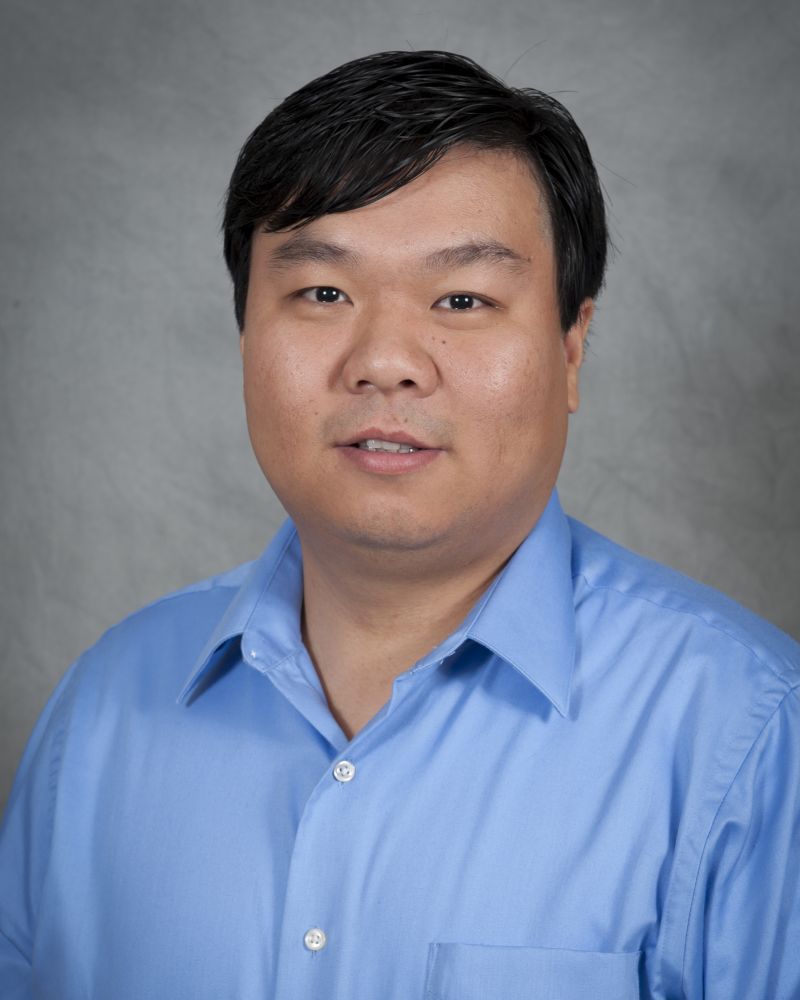
Professor Liyong Tong is a Professor in the School of Aerospace, Mechanical and Mechatronic Engineering at the University of Sydney. He holds BSc and MEngSc degrees from Dalian University of Technology and a PhD from Beihang University. A Fellow of Engineers Australia (FIEAust) and Member of AIAA, his research focuses on advanced composite materials and computational optimization methods. Research Focus: Multiscale topology optimization of composite structures and metamaterials Additive manufacturing of functional composites and smart structures Machine learning applications in structural optimization Analysis and design of advanced composite materials and structures His recent publications demonstrate integration of machine learning with structural optimization, novel approaches for metamaterial design, and experimental validation of 3D-printed structures. Research trends show emphasis on computational efficiency in optimization algorithms and multifunctional material systems. Current Projects: Microcrack suppression in thermoplastic composites for cryogenic hydrogen storage (NSW Space Research Network) Mitigating micro-vibration in satellite devices using multiscale shear damping Development of novel algorithms for topology optimization of laminated composites
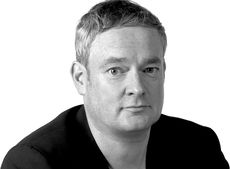
Carlo Giovanni Ferro is a Fixed-term Assistant Professor at the Department of Mechanical and Aerospace Engineering (DIMEAS), Politecnico di Torino. He is also a member of the Interdepartmental Center Photonext, focusing on applied photonics. His research spans aerospace engineering, additive manufacturing, and multidisciplinary design optimization. University: Politecnico di Torino Department: DIMEAS Role: Assistant Professor Research Interests: Additive manufacturing for aerospace structures Multifunctional smart structures Innovative anti-icing systems Lunar construction materials Thermal and mechanical performance of lattice trusses Teaching: Main teacher for PhD course on Additive Manufacturing for Multifunctional Aerospace Components Collaborator for Master's courses on Aerospace Systems Modeling and Simulation Instructor for Bachelor's courses on Aerospace On-Board Systems Projects: SmartCore (2024-2025) - Scientific Responsible Anti-icing wing panel impact tests (2025-2026) - Scientific Responsible Commercial research projects in structural analysis and thermal management Patents: Gasdynamic Nozzle for Endoreactors (with Aimasso, Bertone, Maggiore) Anti-Icing System for Aircraft (with Maggiore) Collaborations: Collaborator in multidisciplinary aerospace projects with international teams Advisor to PhD student Matteo Bertone
Dr. Nisa Salim is a Senior Lecturer in the School of Engineering at Swinburne University of Technology, where she conducts cutting-edge research in multifunctional materials and composites. Her work focuses on advanced engineered materials with applications in energy storage, structural health monitoring, and EMI shielding. She is actively involved in national and international research collaborations and contributes to major research themes such as Space and Aerospace Technology and The Innovative Planet. Her research interests span multifunctional composites , graphene-based materials , smart coatings , hydrogen storage , and soft robotics . She pioneers the development of materials that enable digitalization and IoT integration, including structural batteries and self-sensing composites. Her recent publications highlight innovations in MXenes, magnetic alignment of graphene, biomass-derived porous carbons, and liquid crystalline elastomers for artificial muscles. Dr. Salim has authored over 90 peer-reviewed publications, including high-impact journal articles in Q1 journals, and has secured numerous competitive grants from ARC, CSIRO, and industry partners. Her work frequently integrates machine learning and digital twin technologies for process optimization in composite manufacturing. Scientific Awards and Recognitions: Royal Society of Victoria – Philip Law Award AINSE Gold Medal for outstanding Ph.D. Victoria Fellowship Endeavour Fellowship Alfred Deakin Fellowship Theo Murphy Award Australia–India Early- and Mid-Career Fellowships Vice-Chancellor’s Award for Early Career Researcher (Highly Commended) University Ambassador, Royal Australian Chemical Institute Fame Lab State Semi-finalist She supervises multiple PhD students working on topics such as hydrogen storage, lunar dust mitigation, and structural batteries. She is also leading significant research grants on smart lightweight composites, circular economy design, and scalable graphene-enabled composites. Her professional roles include serving on the editorial boards of Chemical Engineering Journal , Polymers , and Journal of Composites Science , and as a committee member of the National Committee for Materials Science and Engineering at the Australian Academy of Science. Dr. Salim is committed to sustainable innovation, translating laboratory discoveries into real-world applications in aerospace, marine, construction, and energy sectors.
Dr. Gülşah KARYAĞDI is an Assistant Professor in the Department of Interior Architecture at Beykent University's Faculty of Engineering and Architecture. She has held academic positions at Yeditepe University, Istanbul Sabahattin Zaim University, Istanbul Arel University, Fatih Sultan Mehmet Foundation University, and Gedik University, demonstrating a strong commitment to architectural education across multiple institutions. Education Associate Degree, Atatürk University, Faculty of Open and Distance Education (2021-2023) Ph.D., Mimar Sinan Fine Arts University, Institute of Science (2016-2020), Thesis: Analysis of design criteria and examples of shared dining areas in shopping malls Master's Degree, Mimar Sinan Fine Arts University, Institute of Science (2009-2015), Thesis: Scandinavian wooden furniture 'Chair' Bachelor's Degree, Beykent University, Faculty of Engineering and Architecture (2002-2008) Research Focus Her research explores sustainable design methodologies, cultural design principles (including Wabi Sabi and Feng Shui), and the integration of digital innovations like AI and the metaverse into interior architecture. She critically examines how technology reshapes spatial experiences and advocates for environmentally conscious material choices. Publication Trends Recent works emphasize sustainability, digital transformation in design, cultural applications in architecture, and futuristic concepts like virtual interiors. Her research bridges traditional design wisdom with contemporary technological advancements, often presented at international conferences. Additional Activities No awards, student advisements, grants, or lab affiliations are documented in the provided materials.
Dr. Gary D. Seidel is a Full Professor and Assistant Department Head for Academic Affairs at the Virginia Polytechnic Institute and State University's College of Engineering. He earned his Ph.D., M.S., and B.S. in Aerospace Engineering from Texas A&M University (2007, 2002, 1999) and has held academic positions at Virginia Tech since 2008. His research focuses on multiscale modeling of damage evolution in multifunctional composites, particularly those incorporating carbon nanotubes. Ph.D., Aerospace Engineering, Texas A&M University, 2007 M.S., Aerospace Engineering, Texas A&M University, 2002 B.S., Aerospace Engineering, Texas A&M University, 1999 Dr. Seidel's research bridges atomistic and continuum scales to analyze piezoresistivity, fracture mechanics, and multifunctional properties in nanocomposites. He develops computational tools for modeling damage in materials used for hypersonic vehicles, lunar structures, and energetic materials. His work integrates micromechanics with advanced sensor systems and topology optimization for structural health monitoring. His recent publications focus on multiscale modeling of CNT-polymer composites, thermomechanical properties of ultra-high temperature ceramics, and piezoresistive damage sensing networks. These align with keywords like computational mechanics, nanotechnology, and materials science, covering subfields such as peridynamics, interfacial modeling, and stochastic microstructure analysis. Scientific Awards: ASME Fellow (2020) AIAA Associate Fellow (2013) AFRL Summer Faculty Fellow (2017-2021) Oak Ridge Ralph E. Powe Award (2010) ASME/Boeing Best Paper Award (2016) Dr. Seidel serves as Associate Editor for Applied Mechanics Reviews and Smart Materials and Structures , and actively participates in AIAA and ASME technical committees. He co-directs the Aerospace Structures and Materials Lab (ASML) and mentors NASA MUST undergraduate researchers, demonstrating commitment to both academic leadership and student development.
Shridhar Yarlagadda is an Associate Professor at the University of Delaware with a secondary appointment at the Center for Composite Materials. His research focuses on multifunctional composite structures, including their design, processing, and integration. Key areas include cost-effective manufacturing of polymer and ceramic matrix composites, composites repair, magnetic materials, nanocomposites, and smart structures. His work addresses challenges in composite forming limits, thermoplastic composites recycling via TuFF technology, and advanced manufacturing processes like automated tape placement. He has developed solutions for aerospace applications such as the Exploration Extra-Vehicular Mobility Unit (xEMU) Composite Hard Upper Torso (CHUT). Yarlagadda’s research also explores electromagnetic signature management, composite micromechanics, and integration of multifunctional materials. His recent publications highlight advancements in composite durability, impact resistance, and energy storage applications using composite electrodes. He has contributed to over 50 peer-reviewed articles since 2003, spanning materials science, manufacturing, and aerospace engineering. His work bridges fundamental research with industrial applications, emphasizing sustainability through closed-loop recycling and advanced composite fabrication techniques.
Prof. Stefano PANUNZI is an Associate Professor at the University of Molise, affiliated with the Division of Engineering (DiBT) and the Biosciences and Territory Department. His research focuses on urban architecture, sustainable regeneration of buildings, telecontiguity systems, and architectural narratives. He explores innovative solutions such as building exoskeletons for urban sustainability and urban cableways. His work integrates technology, cultural heritage, and environmental strategies. Key projects include PalindRoma (urban narratives), Maple Leaf City (biomechanical urban models), and Telecontiguity Systems (online collaboration infrastructure). He has contributed to urban planning studies in Rome and historical metropolitan mapping using remote sensing. His research bridges architecture with multimedia education and sustainable design, addressing both practical and theoretical challenges in urban development. Prof. PANUNZI's publications span over three decades, highlighting his enduring contributions to architectural innovation and urban studies. While no awards are explicitly mentioned, his prolific output reflects significant academic engagement. His advising and grants are not detailed in the provided texts, but his projects imply collaborative research initiatives and academic partnerships. Lab involvement includes the development of telecontiguity systems for distributed education and urban reverse engineering frameworks. His work often emphasizes transforming underutilized urban spaces into dynamic, sustainable environments through interdisciplinary approaches.
Luis Oncina Deltell is an Associate Professor in the Department of Mathematics at the Universidad de Murcia, affiliated with the Faculty of Mathematics. His research focuses on Functional Analysis and General Topology, particularly in areas such as Banach spaces, descriptive set theory, renorming, and compact spaces. He obtained his Ph.D. in 1999 from the Universidad de Murcia with a thesis titled Descriptive Banach spaces and Eberlein compacta , supervised by José Orihuela Calatayud. Key research interests include the study of compact spaces, renorming properties of Banach spaces, and topological structures. His work often involves collaborations with researchers like José Orihuela, Matias Raja, and others. Notable contributions include studies on descriptive compact spaces, network characterizations of Gul’ko compact spaces, and Kuratowski’s index of non-compactness. Publications highlight interdisciplinary approaches to functional analysis and topology, emphasizing foundational aspects of Banach space geometry and topological properties. His email is luis@um.es .
Christopher J. Hansen is a Professor at the University of Massachusetts Lowell, serving as Chair and Site Director for the SHAP3D Center. He is affiliated with the Francis College of Engineering, Department of Mechanical and Industrial Engineering, and collaborates with programs like SWIMMER, ADVANCE, and WindSTAR. His research spans additive manufacturing, multifunctional composites, and sustainable materials. Ph.D. in Materials Science and Engineering (2011), University of Illinois at Urbana-Champaign B.S. in Materials Engineering (2005), Iowa State University Research focuses on Additive Manufacturing (3D/4D printing, multi-material systems), Composite Processing (automated fiber placement, wind turbine blades), Safer Materials (toxic solvent reduction), and Engineering Education (student motivation in hands-on courses). Recent articles highlight innovations in vat photopolymerization, multi-material FDM, and metamaterial optimization, emphasizing thermal management, predictive modeling, and sustainable design. Grants include NSF support for SHAP3D, NASA-funded space structures research, and DOE contributions to wind energy. Teaching includes undergraduate courses in Materials Science and graduate-level Composite Processing.
Gabriella D'Angelo is an Associate Professor of Art and Architecture at Hobart and William Smith Colleges, where she has been a faculty member since 2010. She is based in Geneva, NY, and teaches courses in architectural design, digital studio, and three-dimensional design. Her academic and creative work is deeply rooted in interdisciplinary practice, public engagement, and socially responsive design. Education: M.Arch II, The Cooper Union; M.Arch and B.S.Arch, University at Buffalo, SUNY Her research and practice span architecture, art, and activism, with a strong emphasis on community collaboration and spatial justice. Projects such as Sound Gardens , Winter Funscapes , and Ambos Gardens reflect her commitment to transforming public spaces into platforms for dialogue, play, and political reflection. She explores themes of borders, migration, environmental crisis, and education through kinetic installations, wearable architecture, and temporary interventions. The 15 most recent projects, including The Line North , Garmitecture , and Photic Zone , reveal a consistent focus on interactivity, material experimentation, and social responsibility. These works blend art and architecture to address contemporary issues such as human rights, ecological sustainability, and civic participation. Her installations often incorporate sound, light, and movement, creating immersive environments that invite public engagement. While no formal scientific awards are listed, her work has been supported by public funding such as NYSCA’s Decentralization Program. She collaborates frequently with artists, students, and community organizations, underscoring her role as an educator and facilitator. Email: dangelo@hws.edu Personal Homepage: Available (link not specified) She advises student research and leads design-build initiatives with local youth and organizations. Her studio practice includes leadership in projects like Geneva Gardens Playscape and Pop-Up 14456 , which empower communities through participatory design. She is involved in multiple collaborative labs and teams, including partnerships with sculptors, biologists, and urban planners.
Dr. Weihua Su is an Associate Professor of Aerospace Engineering and Mechanics at The University of Alabama , where he also serves as Associate Department Head and Director of Undergraduate Programs. He directs the Aeroelasticity and Structural Dynamics Research Laboratory . Education: Ph.D. in Aerospace Engineering, University of Michigan, 2008 M.S. in Aerospace Engineering, Beijing University of Aeronautics and Astronautics, 2002 B.S. in Aerospace Engineering, Beijing University of Aeronautics and Astronautics, 2000 Research Focus: Dr. Su’s expertise lies at the intersection of aeroelasticity, structural dynamics, and advanced control theory . His work spans nonlinear aeroelastic modeling , robust control of flexible aircraft , and Urban Air Mobility (UAM) vehicle design. Recently, he has integrated machine learning and deep learning techniques—including generative AI & LLMs —to enhance flight control and diagnostics. Core topics include gust alleviation , vibration suppression , energy harvesting multifunctional structures , and real-time hybrid simulations . Recent Publication Trends: Over 2023-2025, Dr. Su’s publications emphasize nonlinear model predictive control (NMPC) for Urban Air Mobility aircraft , addressing gust disturbances , control effector failures , and trajectory tracking under uncertainty . Concurrently, he has leveraged deep learning to advance ultrasound computed tomography for material characterization, reflecting a cross-disciplinary thrust into AI-driven diagnostics. Scientific Awards & Honors: ASME/Boeing Structures and Materials Award (2011) NASA Group Achievement Award (2018) Elevated to AIAA Associate Fellow (2023/2024) Funding & Collaborations: His research has been continuously supported by NASA Aeronautics Research Mission Directorate , NASA Ames Research Center , NASA Kennedy Space Center , and industry partners in aerospace and automotive sectors. He holds leadership roles on the AIAA Structural Dynamics Technical Committee and the ASME Aerospace Division Executive Committee . Laboratory & Teams: As director of the Aeroelasticity and Structural Dynamics Research Laboratory , Dr. Su mentors graduate researchers and oversees experimental facilities dedicated to nonlinear aeroelastic testing, multifunctional structures, and advanced control prototyping for next-generation flexible aircraft and UAM platforms.
Jae-Hyun Shim is a Professor in the Department of Architecture at Sejong University, where he leads the MXD: Complex Design Lab. His research specializes in high-rise buildings, urban design, and sustainable architectural planning. With professional experience at firms like Samoo Architects and RTKL Associates, he bridges industry practice with academic rigor. Education M.Arch, Yale University (1991) B.S. in Architecture, University of Maryland (1985) Research Focus Professor Shim investigates spatial efficiency in super-tall structures, mixed-use complexes, and urban infrastructure. His work includes developing evaluation metrics for architectural forms, analyzing historical urban transformations, and optimizing BIM workflows. Current projects explore green vertical cities and high-density residential design. Awards Gangnam Beautiful Architecture Award (2009) Seoul Architecture Award Bronze (2003) Honorable Mention, Gwangbok-ro Revival Competition (2005) 3rd Place, Shanghai International Center Design (1993) Leadership He directs national research initiatives like 'Green Vertical City' and serves on committees for the Architectural Institute of Korea and Seoul Metropolitan Government. His lab focuses on competitions, with students winning accolades in spatial design exhibitions.
Markus Holzbach is a Professor of Visualization and Materialization at the Offenbach University of Art and Design (HfG Offenbach), where he has been a faculty member since 2009. He leads the Institute for Materials Design (IMD) and has held significant leadership roles, including Dean and Vice Dean of the Design Department. His academic affiliations extend internationally through visiting professorships at Politecnico di Milano, MIT, RWTH Aachen, and the Berlage Institute. His research centers on material innovation , parametric design , and bio-materialization , exploring the dialogue between materials and their environments. Holzbach’s work emphasizes interdisciplinary experimentation, digital fabrication, and sustainable design practices. Projects like the Angel’s Trumpet and ECHOLOT Pavilion exemplify his integration of nature-inspired forms with interactive technologies. The 15 most recent projects reflect a consistent focus on computational design , material transfer , and sustainable architecture . Themes include responsive environments, modular systems, and the reinterpretation of natural forms through digital tools. His work spans product design, pavilions, housing, and industrial structures, often involving CNC fabrication and algorithmic modeling. Notable scientific awards include the Red Dot Design Award , BEST of SHOW ’16 at ISE 2016 , and the Music Super NAMM Award 2016 for the CURV 500® speaker. He has served on design juries such as the materialPREIS 2018 and Werk.Klasse. Markus Holzbach advises students and leads research teams at the IMD, fostering innovation in material design. His projects often receive institutional or corporate sponsorship, such as Palmengarten Frankfurt and Sonosfera. He has not received mention of formal grants, but his work is supported through collaborative and applied research funding. He directs the Institute for Materials Design (IMD) , a hub for experimental material research, student projects, and public exhibitions. The IMD has showcased work at events like the Triennale di Milano and Passagen Köln, emphasizing hands-on, interdisciplinary exploration of materiality.
Guillaume ROGEZ is a Senior Researcher at the Institute of Physics and Chemistry of Materials of Strasbourg (IPCMS), part of the University of Strasbourg, where he has been conducting research since December 2003. His work focuses on multifunctional hybrid materials, with particular emphasis on layered simple hydroxides and oxides, and their optical and magnetic properties. He holds a PhD in Inorganic Chemistry (2002) from the Laboratoire de Chimie Inorganique, Institut de Chimie Moléculaire et des Matériaux d'Orsay, and completed his Habilitation in 2014 with the thesis 'From molecular bricks to multifunctional hybrid materials.' Current Position: CNRS Researcher, Inorganic Materials Chemistry (DCMI) Education: PhD (2002), Habilitation (2014) Research Focus: Multifunctional Hybrid Materials, Magnetic Properties, Layered Materials Projects: ITI QMat (2021-2025), IDEX Attractivité (2019-2022), ANR CALHYCO2 (2019-2023) Dr. ROGEZ's research spans Inorganic Chemistry, Materials Science, and Magnetism, with specific expertise in layered materials, coordination chemistry, and molecular magnetism. His work involves developing new methods to functionalize layered materials through pre-functionalization, microwave-assisted chemistry, in situ reactions confined in interlayer spacing, and exfoliation with directed reassembly. His research has significant implications for magnetic materials, energy applications, and advanced functional materials. Analysis of his recent publications (2021-2025) reveals a strong focus on magnetic properties of hybrid materials, layered hydroxides, molecular magnetism, and electrocatalysis. His work demonstrates consistent innovation in developing functional materials with tailored magnetic, optical, and catalytic properties, with particular attention to applications in magnetic refrigeration, CO2 electroreduction, and advanced magnetic materials. Current Projects: ITI QMat: 'Confined synthetic approaches to layered multifunctional heterostructures and 2D magnets' IDEX Attractivité: 'Functionalized oxide nanosheets for directed assembly of multifunctional materials' ANR CALHYCO2: 'Structured Catalysts in Layered Hydroxide materials for CO2 electroreduction' Dr. ROGEZ maintains extensive collaborations with researchers across France and internationally, including François Schosseler at Institut Charles Sadron, Sylvie Choua and Sylvie Ferlay at Institut de Chimie de Strasbourg, Thomas Ebbesen at Institut de Science et d'Ingénierie Supramoléculaires, and numerous researchers at institutions in Grenoble, Clermont-Ferrand, Paris, Caen, Brest, Toulouse, and Hyderabad, India. His interdisciplinary work bridges chemistry, physics, and materials science, contributing significantly to the development of advanced functional materials.
Kawai Kwok is an Associate Professor in the School of Aeronautics and Astronautics at Purdue University. His research focuses on deployable spacecraft concepts, multifunctional composite materials, in-space manufacturing, and structural stability. He holds a Ph.D. in Aerospace Engineering from the California Institute of Technology (Caltech), an M.S. from Caltech, and a B.S. in Mechanical Engineering from Lehigh University. His research interests include deployable spacecraft and aircraft design, viscoelastic material behavior, and high-throughput characterization techniques. Recent work explores instability-driven structural concepts for deployable systems and advanced composites for aerospace applications. Dr. Kwok has published extensively on topics such as shape accuracy of starshade petals, viscoelastic materials, and piezoresistive nanocomposites. His articles highlight innovations in deployable structures, material characterization, and structural stability. He has received prestigious awards including the NSF CAREER Award (2022) and the NASA Robert H. Goddard Exceptional Achievement Award (2016). His work is supported by grants such as the NSF CAREER initiative and focuses on advancing aerospace structural systems. Dr. Kwok’s team develops cutting-edge solutions for deployable spacecraft systems and multifunctional materials. His lab integrates computational modeling, experimental testing, and advanced manufacturing techniques to address challenges in aerospace engineering.