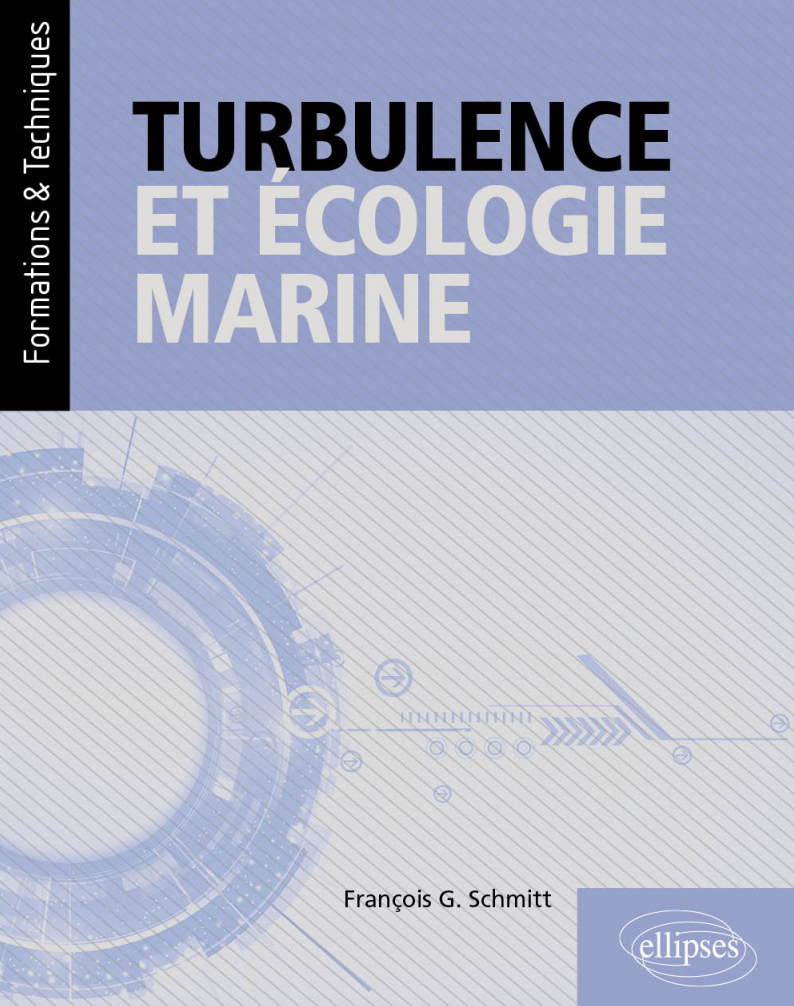
François G Schmitt is a Researcher at CNRS , focusing on turbulence and its applications in oceanography, astrophysics, and interdisciplinary science. His work spans: Turbulence modeling and multifractal analysis Physics-biology couplings in marine ecosystems Scaling processes in environmental systems Renewable energy applications Key research highlights include: 2024 study revealing Van Gogh's Starry Night contains scientifically accurate turbulence patterns 2022 papers on reactive scalars in turbulence and copepod behavior 2020 textbook Turbulence et Ecologie Marine His recent publications (2021-2024) demonstrate expertise in fluid dynamics, ecological modeling, and astrophysical turbulence. He advised PhD candidate Wenwei Wu (2021) and co-organized special issues on air-sea interactions. No scientific awards or part-time positions are documented.
Kinan Abbas is a researcher at the University of Strasbourg's College of Science and Engineering, Department of Computer Science, specializing in hyperspectral imaging and machine learning. His work focuses on spectral image processing techniques including unmixing, demosaicing, and low-rank matrix approximation. His research interests center on hyperspectral imaging and machine learning applications, particularly developing novel methods for snapshot spectral image processing. Key contributions include locally-rank-one-based joint unmixing frameworks, diffusion models for texture synthesis, and entropy-weighted spectral deconvolution techniques. His work bridges theoretical signal processing with practical applications in remote sensing and computational photography. Analysis of his publication trend (2021-2025) shows evolution from foundational spectral unmixing techniques toward advanced generative models, with increasing focus on diffusion-based synthesis and multifractal analysis. His research consistently addresses computational challenges in spectral image reconstruction. Abbas actively collaborates with researchers from ICube laboratory (Strasbourg), including Matthieu Puigt, Gilles Delmaire, and Gilles Roussel, evidenced by consistent co-authorship across 14 publications. His work appears in IEEE Transactions, ICASSP, and French GRETSI conferences, indicating strong institutional support for his research program.
Jay Rosen is a Professor in the Mathematics Department at The College of Staten Island, part of The City University of New York (CUNY). His research focuses on Probability Theory , particularly on Stochastic Processes including Markov Processes and Gaussian Processes , with a specialized interest in Local Times and Intersection Local Times . He also investigates Large Deviations and Multifractal Analysis of exceptional points in random processes. Current research explores connections between local times of Markov processes and Gaussian chaoses. Active work includes large deviations of intersection local times and analysis of exceptional points for random walks. Email: jrosen30@optimum.net
Vahid Rezania is a Professor and Chair of the Department of Physical Sciences at MacEwan University since 2004. He holds a PhD in Theoretical Physics (Institute for Advanced Studies, Iran) and has previously served as a Postdoctoral Fellow and Research Associate at the University of Alberta (2000-2005). Education: PhD in Theoretical Physics (Institute for Advanced Studies, Iran, 2000) MSc in Physics (Shiraz University, Iran, 1995) BSc in Physics (Shiraz University, Iran, 1994) His research integrates biophysics , theoretical physics , and computational modeling to study complex biological systems. Current projects include simulating drug metabolism in the liver and analyzing electrostatic properties of microtubules for cancer therapy applications. Recent publications highlight his interdisciplinary approach: 2024 work on fibrotic liver modeling , 2021 studies of microtubule conductivity , and 2020-2019 collaborations on TTField therapy for glioblastoma. These span computational biology , nonlinear dynamics , and nanobiophysics . Scientific Awards: Strategic Research Grant (2015, 2020) Research Project Grants (2010, 2014, 2018) Dissemination Grants (2008, 2010, 2018) PhD Scholarship (Iranian Ministry of Culture, 1995-2000) First rank graduate (Shiraz University, 1994) Collaborations: University of Alberta University of Calgary University of California, Santa Barbara University of Wisconsin, Milwaukee He has supervised senior student research projects and developed physics courses from first-year to advanced levels. His work bridges mathematical modeling with experimental validation across biological and quantum systems.
Donald M. Cannon, MD, is an Assistant Professor in the Department of Radiation Oncology at the University of Utah . He specializes in treating central nervous system tumors (brain, spinal cord, skull base) and provides care for skin, breast, and genitourinary cancers. Dr. Cannon is a board-certified medical oncologist (American Board of Radiology) and a member of the multidisciplinary team at the Huntsman Cancer Institute. Education : M.D. in Medicine from Weill Cornell Medical College Residency in Radiation Oncology at University of Wisconsin Hospital & Clinics , with Chief Resident role (2012-2013) Internship in Internal Medicine at University of Utah School of Medicine B.S. in Physics (Minor in Mathematics) from Brigham Young University Research Interests : Dr. Cannon focuses on optimizing radiation therapy for central nervous system tumors, particularly through stereotactic radiosurgery and proton therapy. His work also explores adjuvant radiation strategies in head and neck cancers, treatment planning for craniospinal irradiation, and combined immunotherapy-radiation approaches in melanoma and prostate cancer. Scientific Contributions : His recent articles address advancements in breast cancer radiotherapy, meningioma target volume delineation, and immunotherapy combinations for melanoma. Key trends include leveraging imaging (MRI, CT) for precision radiation, improving outcomes in glioblastoma, and refining adjuvant treatments for head and neck carcinomas. Professional Affiliations : Dr. Cannon is a member of the American Society for Therapeutic Radiology and Oncology and the American Brachytherapy Society . He actively participates in multidisciplinary cancer care and clinical target volume research.
Carla Nardelli is an Associate Professor in the Department of Economic Sciences at the University of Bergamo. Her research focuses on mathematical methods of economics, actuarial sciences, and financial risk management, particularly in portfolio optimization and stochastic modeling. Academic Rank: Associate Professor Department: Economic Sciences Email: carla.nardelli@unibg.it Her research spans portfolio theory, risk analysis, and mathematical economics, with a specialization in quantitative finance. She has explored topics like possibilistic mean-variance models, simulated copulas for risk management, and fractional calculus applications in financial laws. Recent publications address comparative studies of portfolio selection methods, risk modeling, and advanced mathematical approaches to economic and financial stability. Her work integrates theoretical and applied frameworks to analyze financial systems and optimize investment strategies.
Rolando de Santiago is an Assistant Professor in the Department of Mathematics and Statistics at California State University Long Beach. Previously, he was an Assistant Professor at Purdue University (2020-2024) and a Postdoctoral Fellow at UCLA (2017-2020). His educational background includes a Ph.D. in Mathematics from the University of Iowa (2017) under Professor Ionut Chifan, an MS in Mathematics from the University of Iowa (2014), and both BS and MS degrees in Mathematics from Cal Poly Pomona (2012). Rolando's research focuses on Operator Algebras, von Neumann Algebras, Functional Analysis, Ergodic Theory, Group Theory, and Quantum Graphs. His work primarily investigates the classification of type II 1 factors arising from groups through Popa's deformation/rigidity theory. He has made significant contributions to understanding graph product von Neumann algebras, Thompson-like groups, and quantum chromatic numbers. His recent publications demonstrate a strong trend in applying operator algebra techniques to problems in quantum information theory, particularly in the area of quantum graphs and non-local games. His research connects operator algebras with geometric group theory through the study of group von Neumann algebras and their structural properties, with applications to quantum computation and information theory. UC Presidential Postdoctoral Fellowship (2018-2020) NSF Award: East Coast Operator Algebras Symposium DMS-2321632 (2024) NSF Award: Groundwork in Operator Algebras Lecture Series DMS-2247796 (2022) NSF Award: Groundwork in Operator Algebras Lecture Series DMS-2154574 (2022) NSF Award: Groundwork in Operator Algebras Lecture Series DMS-200131 (2020) MAA Project NExT Member (2020) Rolando actively mentors students including Patrick DeBonis (PhD candidate at Purdue), A. Meenakshi McNamara (undergraduate researcher), and Krishnendu Khan (Visiting Scholar). He has been deeply involved in outreach programs to increase representation of underrepresented groups in mathematics, serving as a mentor for the Math Alliance Field of Dreams Conference and the Pacific Math Alliance PUMP Research Symposium. He co-organizes the Operator Algebras Seminar at CSULB and is a co-creator and editor of Sorin Popa's W*-News Blog, which provides educational insights into notable problems in von Neumann algebras for the broader mathematical community.
Nicolas Babault is a Professor at the University of Burgundy, Faculty of Sports Science, where he serves as Head of the first year of the Master's program in Sports Training and Optimization of Performance (EOPS). He co-directs the Performance Expertise Center (CEP) technological platform and serves as associate editor for Frontiers in Physiology, Brazilian Journal of Physical Therapy, and Sports MDPI. His research is conducted within the Cognition, Action, and Sensorimotor Plasticity (CAPS) laboratory. Dr. Babault earned his Doctorate from the University of Burgundy in 2002 and completed his Habilitation to Direct Research in 2014. His educational background has positioned him as a leading researcher in sports physiology and biomechanics. His primary research interests focus on neuromuscular physiology related to exercise, with specific emphasis on the acute effects of stretching on the neuromuscular system, electrostimulation applications for training and rehabilitation, and performance criteria determination across various sports including rugby, football, and cycling. His work explores different stretching modalities (static, dynamic, neurodynamic), electrostimulation protocols, and combined training methods (strength/endurance). Through the CEP platform, he also conducts industry collaborations on topics including nutritional supplements, footwear, exoskeletons, smart textiles, and augmented reality. Analysis of his recent publications reveals a strong focus on soccer performance analytics, stretching protocols, and neuromuscular adaptations. His work increasingly incorporates complexity theory and multifractal analysis for understanding sports performance, while maintaining strong connections between laboratory research and practical applications in elite sports settings. Dr. Babault actively collaborates internationally with researchers from the University of Brasilia (Brazil), Edith Cowan University (Australia), and St Mary's University (UK), demonstrating the global recognition of his research contributions. He serves on the National University Council (74th section) and the Ethics Committee for Sports Science Research (CERSTAPS), reflecting his leadership role in shaping academic and ethical standards in his field.
Bianca Viggiano is an Assistant Professor in the Department of Mechanical Engineering at Polytechnique Montréal. She holds a Ph.D. in Mechanical Engineering from Portland State University, where her thesis on turbulent jet dynamics earned the Outstanding Dissertation Award. Her research focuses on fluid mechanics, turbulence, multiphase flows, and modeling/simulation, with affiliations to the Fluid Dynamics Laboratory (LADYF). She has published over 20 peer-reviewed articles and received prestigious awards, including the Young Scientist Prize from the European Fluid Mechanics Conference. Education: B.Sc. Applied Mathematics (University of Oregon, 2011) B.Sc. Mechanical Engineering (Portland State University, n.d.) M.Sc. Mechanical Engineering (Portland State University, n.d.) Ph.D. Mechanical Engineering (Portland State University, 2022) Research Interests: Fluid mechanics, turbulence, multiphase flows, and modeling. Applications in renewable energy (wind turbines) and thermal management (solar panel cooling). Experimental and computational techniques for flow analysis. Publications: Recent work includes studies on inertial particle clustering in jets, Lagrangian modeling of turbulent flows, and wind turbine wake dynamics. Articles span journals like Physical Review Fluids and International Journal of Multiphase Flow . Awards: Highlights include the 2022 Outstanding Dissertation and Young Scientist Prize for contributions to fluid dynamics research. Advising & Grants: Actively recruiting students for projects on turbulence and multiphase systems. Collaborates on funded initiatives, including the New Frontiers in Research Fund. Labs/Teams: Member of the Fluid Dynamics Laboratory (LADYF), focusing on advanced fluid mechanics research.
David Logan is the Coulson Professor of Theoretical Chemistry at the University of Oxford, a position he has held since 2005 after joining the faculty in 1986. He co-founded and directed the EPSRC Centre for Doctoral Training in Theory and Modelling in Chemical Sciences (TMCS) and maintains strong collaborative ties with Oxford's Condensed Matter Theory Group. Internationally, he holds an Infosys Visiting Chair at the Indian Institute of Science, Bengaluru, and is a Foreign Fellow of the National Academy of Sciences, India. Logan's research centers on quantum many-body theory and statistical mechanics, specifically addressing strongly correlated electron systems and disordered interacting systems. His work explores metal-insulator transitions, quantum magnetism, high-temperature superconductivity, and many-body localization—where disorder and interactions drive quantum systems into non-ergodic phases. He develops minimal theoretical models to uncover fundamental mechanisms in condensed matter, spanning crystalline/amorphous solids and nanoscale devices like quantum dots and molecular electronics. This inherently interdisciplinary approach bridges chemistry and physics to explain emergent phenomena in complex quantum systems. His recent publications reveal a dominant focus on many-body localization using Fock-space methodologies, analyzing quantum transport, multifractality, and phase transitions in disordered chains and graphs. This work connects condensed matter physics with quantum information science, emphasizing non-equilibrium dynamics and the breakdown of statistical mechanics in isolated quantum systems. Logan's scientific contributions have earned significant recognition: Marlow Medal from the Royal Society of Chemistry Corday-Morgan Medal from the Royal Society of Chemistry Tilden Medal from the Royal Society of Chemistry Foreign Fellowship in the National Academy of Sciences, India As an educator, Logan actively recruits graduate students from chemistry and physics backgrounds into the Oxford Theoretical Chemistry Group, fostering cross-disciplinary training in quantum many-body methods. His leadership in the TMCS Centre for Doctoral Training demonstrates commitment to large-scale research education, while his Infosys Visiting Chair reflects deep engagement with Indian scientific institutions. Collaborative projects with Oxford's Physics Department and international partners drive innovation in theoretical frameworks for condensed matter. The Oxford Theoretical Chemistry Group operates as a dynamic hub for quantum theory, closely integrated with the Condensed Matter Theory group in Physics. This synergy enables comprehensive studies of electronic and magnetic phenomena across scales—from bulk materials to nanodevices—using advanced computational and analytical techniques developed within Logan's team.
Professor Dr. Stephan Schlüter leads the Research Group for Applied Mathematics for Energy Markets at THU (Technische Hochschule Ulm). His expertise spans multivariate time series analysis, statistical modelling of energy commodities, and forecasting renewable energy systems. Co-Editor, Spatial Information Research Teaching: Advanced Mathematics, Operations Research, Stochastics, Applied Time Series Analysis Research focuses on: Electricity and gas price forecasting using neural networks and Bayesian models Climate anomaly detection via satellite data and AI Energy market optimization with battery storage and hydrogen integration Environmental statistics linking CO2 fluxes with economic indicators Recent publications emphasize regime-aware forecasting, uncertainty quantification, and interdisciplinary climate-energy policy analysis. Supervising PhD candidates Abhinav Das and Erick Michel Lara Pinal, plus Master's students Martin Neumann and Andreas Lebedev.
Małgorzata Andrzejewska-Ozimek serves as an Assistant Professor at Warsaw University of Technology within the Faculty of Physics, specifically in the Physics of Complex Systems Division. Her academic profile demonstrates active research contributions in the physical sciences domain with particular focus on biomedical applications. Her research interests center around complex physiological systems analysis, with emphasis on cardiovascular dynamics. Dr. Andrzejewska-Ozimek's work explores multifractal properties, time irreversibility metrics, and information-theoretic approaches to understanding heart rate variability and arterial valve function. Her methodology frequently employs mutual information and sample entropy techniques to analyze biological signals. With four documented publications and a cumulative ministry score of 185, her scholarly impact is reflected in Scopus and Web of Science metrics showing an h-index of 2 in both databases, a Total SNIP of 1.871, and a Total CiteScore of 8.2. Though specific article titles aren't provided in the source material, her research output demonstrates consistent contribution to her specialized field. Dr. Andrzejewska-Ozimek has successfully supervised one doctoral thesis, indicating her role in academic mentorship and advanced research training within the Physics of Complex Systems Division. Her ORCID identifier (0000-0002-2322-6833) provides a persistent digital identifier for her scholarly work.
Jonathan D. Tward is a tenured Professor in the Department of Radiation Oncology at the University of Utah and directs the Huntsman Cancer Institute (HCI) Genitourinary Cancers Center (GUCC). With expertise in prostate, bladder, and penile cancers , he pioneers AI-driven digital-molecular oncology through innovations in precision radiation therapy , multimodal imaging , and prognostic biomarker development . Education: BS in Biology (UCLA), PhD in Biochemistry, MD (Tufts University), Residency in Radiation Oncology (University of Utah) Leadership: Director of GUCC, Utah ASTRO State Captain, NCCN Guideline Panel Member His research integrates machine learning with genomic/transcriptomic profiling to optimize radiation workflows and validate molecular signatures in clinical trials. He is a globally recognized authority in AI-enabled cancer discovery and digital pathology , holding the Vincent P. and Janet Mancini Endowed Chair. Dr. Tward’s work emphasizes resource-stratified oncology solutions for low/middle-income settings. Scientific awards include the Vincent P. and Janet Mancini Presidential Endowed Chair and Fellowship in the American Society for Radiation Oncology (FASTRO) . His 100+ peer-reviewed publications focus on AI-guided treatment adaptation , cell-cycle risk modeling , and multimodal prognostication in GU malignancies. Patient testimonials highlight his empathetic care , technical precision , and global leadership in radiation oncology.
Kartik Iyer is an Assistant Professor jointly appointed in the Department of Physics and Department of Mechanical and Aerospace Engineering at Michigan Tech. He earned his PhD in Aeronautics from the Georgia Institute of Technology, followed by postdoctoral appointments at the University of Rome and New York University. Research focuses on Atmospheric Physics, Turbulence, Thermal Convection, and Numerical Simulations. Director of the Iyer Research Lab , specializing in supercomputing and turbulent flow analysis. His scientific work spans turbulence theory, scalar transport, and computational methods, with over 15 recent publications in top-tier journals. Key areas include the Zeroth Law of Turbulence, circulation statistics, bifractal scaling, and subgrid-scale modeling. Despite his focus on high-performance computing, no specific awards or honors are mentioned in the provided data. Dr. Iyer teaches courses related to atmospheric physics and heat transfer, emphasizing interdisciplinary approaches between physics and engineering disciplines.
Dimitrios Kantzos is Professor at University of West Attica's Department of Industrial Design and Production Engineering. His research centers on signal processing applications for environmental monitoring, biomedical systems, and seismic forecasting. Holds a PhD from University of Southern California with prior research funded by NASA and US Army. Key research domains include pattern recognition algorithms for earthquake precursor detection, machine learning approaches to air pollution analysis, and fractal characterization of environmental time-series data. Recent work focuses on multifractal techniques for seismic risk assessment. Publications demonstrate strong methodological focus on Detrended Fluctuation Analysis (DFA) and Multifractal DFA (MFDFA) applied to geophysical and environmental datasets. Article themes cluster around signal processing innovations for natural hazard prediction. No awards, supervised students, or laboratory affiliations are documented.