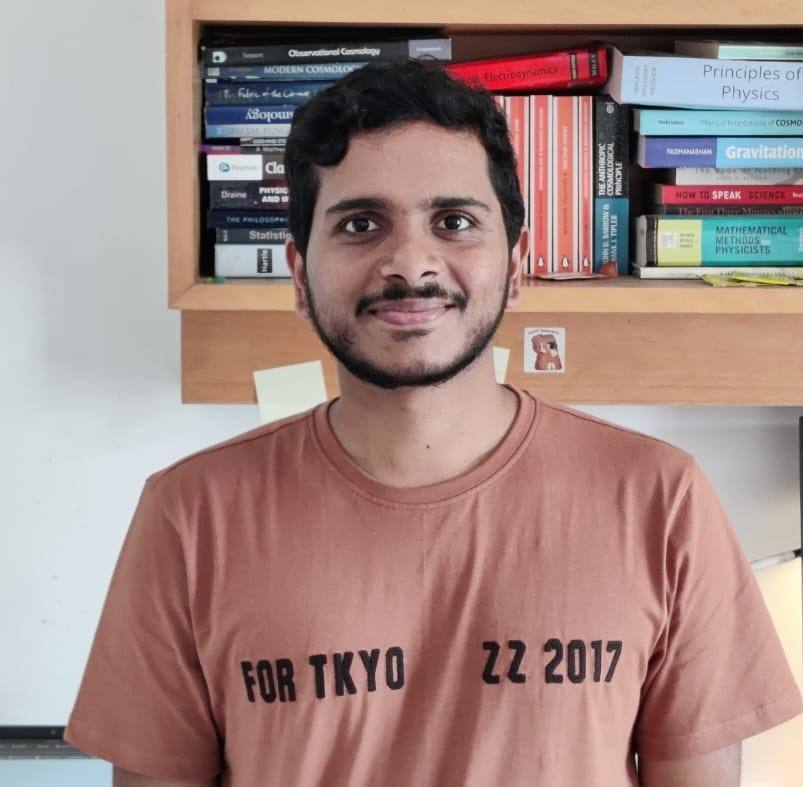
Fazlu Rahman is a Postdoctoral Research Associate at the Mitchell Institute for Fundamental Physics and Astronomy, Texas A&M University , working under Prof. Kevin Huffenberger. His research focuses on observational cosmology, particularly Cosmic Microwave Background (CMB) analysis , Galactic emission modelling , and random field statistics in astrophysics . He develops advanced component separation pipelines for CMB experiments and explores novel statistical tools for cosmological data. His work includes multifractal analysis of astrophysical structures like the Crab Nebula and statistical characterization of galactic synchrotron emissions. He contributes to large-scale collaborations like COSMOGLOBE and BEYONDPLANCK , aiming to refine CMB data processing and cosmological parameter estimation. His research bridges theoretical astrophysics with cutting-edge data analysis techniques, addressing fundamental questions about the early universe and galactic dynamics. Key projects include Bayesian end-to-end CMB analysis frameworks, isotropic cosmic birefringence constraints, and multi-frequency comparisons of galactic foregrounds. Rahman's interdisciplinary approach integrates cosmology, mathematical physics, and computational methods to solve complex observational challenges.
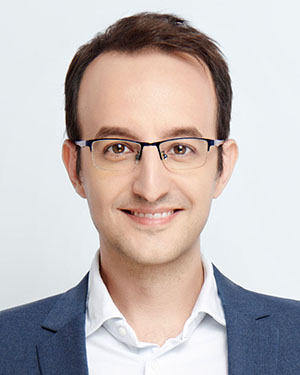
Luca Dal Negro is Professor in the Department of Electrical and Computer Engineering at Boston University, with joint appointments in Materials Science & Engineering and Physics. He directs research in nano-optics, metamaterials, and quantum photonics. His group develops advanced nanophotonic structures for light manipulation, focusing on multifractal materials, aperiodic photonics, and epsilon-near-zero media. Current research explores nonlinear quantum electrodynamics, optical field localization, and physics-informed machine learning for photonic design. Publications demonstrate expertise in computational photonics, inverse design methodologies, and quantum light-matter interactions in nanostructured environments. Recent advances include hyperuniform material engineering and multifractal light localization techniques. Honors include: Fellow of Optical Society of America (2018) NSF CAREER Award (2009) Early Career Research Excellence Award (2009) Dean's Catalyst Award (2007) Dr. Dal Negro teaches courses including Fourier Optics, Nano-Optics, Guided-wave Optoelectronics, and Quantum Engineering and Technology. His lab collaborates with international institutions on projects involving nanoscale field emitters, silicon-compatible plasmonics, and optical metamaterials.
Professor Klaus Regenauer-Lieb is a leading academic in the School of Minerals, Energy and Chemical Engineering at Curtin University. His research focuses on multiscale, multiphysics processes in subsurface systems, including geothermal energy, fluid-rock interactions, and porous media dynamics. He holds a professorial position and contributes to the Office of the Provost. His work integrates computational modeling, experimental techniques, and theoretical frameworks to address challenges in energy, environmental, and geological systems. Key research areas include the thermodynamics of geological processes, compaction band formation, and the mechanics of deformation in porous media. He has pioneered studies on reaction-diffusion waves as precursors to earthquakes and developed innovative models for geothermal energy storage. His publications span interdisciplinary topics such as shale pore structure analysis, carbon sequestration, and nanoscale sorption mechanisms. Collaborations include projects on geothermal batteries for renewable energy storage, subsurface fluid dynamics, and advanced materials characterization. He actively contributes to international initiatives in geophysics and energy systems, emphasizing the application of multiscale modeling to real-world engineering and environmental problems.
Sergio Bianchi is Professor of Quantitative Finance at Sapienza University of Rome and International Associate Professor in the Department of Finance and Risk Engineering at the Tandon School of Engineering, New York University. He previously held professorial positions at the University of Sassari, the University of Cassino, and the Pontifical Gregorian University, and has served as a visiting professor at New York University and Szent István University in Hungary. His research focuses on the stochastic modeling of financial markets, particularly through fractional and multifractional models, risk assessment, liquidity, and stochastic volatility. These areas are central to understanding market inefficiencies, volatility clustering, and long-memory behavior in financial time series. His work bridges econophysics, mathematical finance, and statistical modeling, contributing to both theoretical and applied finance. The 15 most recent publications reflect a consistent trajectory in modeling financial dynamics using advanced mathematical tools, especially fractional calculus and multifractal analysis. They span topics such as VIX option pricing, liquidity risk, Hurst exponent estimation, and market inefficiency, demonstrating a deep engagement with both empirical data and theoretical frameworks. The keywords highlight intersections with machine learning, risk management, and econophysics, showing interdisciplinary reach. Editorial and Professional Contributions: Guest Editor for journals on fractal models in economics and finance Associate Editor, Frontiers in Applied Mathematics and Statistics Associate Editor, Risk and Decision Analysis Associate Editor, Mathematical Methods in Economics and Finance Permanent member, Scientific Board, Mathematical and Statistical Methods for Actuarial Sciences and Finance (biennial conference) Sergio Bianchi has advised numerous graduate students and researchers in quantitative finance, though specific names are not listed. His editorial roles and extensive publication record suggest active mentorship and collaboration. He has been involved in research projects related to econophysics and complexity science, including participation in the Econophysics Colloquium 2024 hosted by the Complexity Science Hub. While specific grants are not mentioned, his sustained output and international collaborations indicate significant research support. He is associated with research groups working on complexity in financial systems, particularly through his involvement in events like the CSH Workshop on Complexity Science. His work continues to influence the application of fractal and stochastic models in finance, with future research likely to explore machine learning integration, high-frequency data analysis, and systemic risk modeling.
Daniel SCHERTZER is a Professor and Director of the Chair 'Hydrology for a Resilient City' (supported by Veolia). He holds titles of Honorary IGPEF and HdR (UP & M. Curie). His research focuses on geophysics, environmental sciences, and the development of multifractals. He has been actively involved in professional organizations, including the American Geophysical Union (AGU), European Geosciences Union (EGU), and the International Association for Hydrological Sciences (IAHS). He has held leadership roles such as vice-president of the French National Committee of Geophysics and Geodesy. Awards: AGU Lorenz Lecturer (2008), Silver Medal of Paris (2009), EGU Lewis Fry Richardson Medal (2015) Publications: Over 150 indexed papers and three books (6,000+ citations) His work emphasizes resilience in urban hydrology and interdisciplinary environmental modeling.
Eric Rosenberg is an Assistant Professor of Computing and Decision Sciences at Seton Hall University's Stillman School of Business. Previously, he held roles at Bell Labs, AT&T Labs, Rutgers University (visiting professor), and Georgian Court University. He specializes in optimization, fractals, and network design, with a focus on mathematical modeling of real-world systems. Education: B.A. in Mathematics, Oberlin College (1975) Ph.D. in Operations Research, Stanford University (1979) Research Interests: Dr. Rosenberg’s work spans optimization algorithms, fractal network analysis, and hierarchical routing systems. His recent studies explore applications in biological networks (e.g., leaf venation) and supply chain risk modeling. He has authored influential books on multicast routing and fractal dimensions in networks. Publications Trends: His articles often blend theoretical frameworks with practical network challenges, addressing topics like fractal geometry in complex systems, hierarchical network efficiency, and Bayesian risk analysis in supply chains. Awards: AT&T Labs President’s Excellence Award (2012) Distinguished Member of Technical Staff Award, AT&T Bell Labs (1987) Teaching & Intellectual Property: Teaches courses in data analytics and business statistics. Holds multiple patents on virtual network resource management and hierarchical routing optimizations.
Pedro José Montoya Jiménez is a Full Professor of Biological Psychology at the University of the Balearic Islands (UIB) since 2009, with visiting professorships at institutions including Northwestern University , University of Tübingen , and Federal University of ABC . Holding a Psychology degree from Complutense University (1986) and a PhD in Psychology from Ludwig-Maximilians-University Munich (1993), he combines experimental psychology and neuroimaging (fMRI/EEG) to study chronic pain's neural mechanisms. His research focuses on brain plasticity in chronic pain conditions like fibromyalgia and complex regional pain syndrome , examining cognitive-affective influences on neural networks and developing neuromodulatory interventions (neurofeedback, brain stimulation). Collaborations with Dante Chialvo (Argentina) and Abrahão Baptista (Brazil) highlight his international impact. Recent publications analyze age-related pain processing , autonomic regulation , and AI-based pain assessment tools . Funded by Spanish Ministry of Science , Balearic Government , and La Marato TV3 , he has co-founded the biotech company BIPSIN SL (2011) and supervised over 40 theses in neuroscience and psychology. Scientific Awards : National XVII Young Entrepreneurs Bancaja Prize (2011) Key Research Areas : Chronic Pain Neurophysiology Brain Network Dynamics Neuromodulation Techniques Cognitive-Affective Pain Modulation Autonomic Nervous System Regulation Developmental Neuroscience Neurorehabilitation Machine Learning in Pain Diagnosis
Steffen Winter is a Lecturer (PD Dr.) at the Institute of Stochastics, Karlsruhe Institute of Technology (KIT). His research specializes in Fractal Geometry, Geometric Measure Theory, Stochastic Geometry, and Dynamical Systems. He leads the DFG-funded project Scaling of curvature measures and the modified Weyl-Berry conjecture and serves as Principal Investigator for project 12 ( Morphometric Roughness of Nanostructured Surfaces ) within the DFG Priority Programme 2265 (Random Geometric Systems). Winter's work explores the mathematical foundations of fractals, stochastic processes, and geometric measurements. Key themes include Minkowski content, curvature measures, self-similar sets, percolation models, and applications to materials science and geoscience. Recent publications emphasize fractal dimensionality, surface roughness quantification, and stochastic convergence in complex systems. He teaches advanced courses including Stochastic Geometry , Fractal Geometry , and Markov Chains , and mentors students through seminars and proseminars. No awards or research grants besides DFG projects are documented.
Qidi Peng is a Research Associate Professor at Claremont Graduate University (CGU) and Academic Director of the Master of Science in Financial Engineering (MSFE) program within the Institute of Mathematical Sciences. His academic career includes roles as Research Assistant Professor (2012–2021) and Senior Technical Expert at AIG (2018–2022). He holds a Ph.D. in Applied Mathematics from Lille 1 University (France), focusing on statistical inference for multifractional processes in stochastic volatility models, under Prof. Antoine Ayache. His research spans stochastic processes, statistical inference, machine learning, and financial modeling. Notable contributions include work on fractional Brownian motion, multifractional processes, and algorithmic regularization techniques. Peng is fluent in multiple programming languages (C++, MATLAB, R, Python) and has contributed to editorial boards, including the Operation Research and Applications: An International Journal since 2014. Prior to his current roles, he served as a teaching fellow in France and a consultant for SOFT SOLUTIONS Company. His work bridges theoretical mathematics with applied domains like finance, insurance, and wireless networks.
Professor Owen Jones is a Chair in Operational Research at the School of Mathematics, Cardiff University. His work focuses on applying mathematical modeling and optimization techniques to address challenges in environment, energy, and sustainability, including renewable energy systems, water management, and disaster risk quantification. Operational Research Stochastic Modeling Environmental Data Analysis Renewable Energy Optimization His research spans environmental science, hydrology, and computational methods, with recent work leveraging approximate Bayesian computation (ABC) and generative adversarial networks (GANs) to model climate impacts, water systems, and biological dynamics. Articles highlight innovations in wastewater surveillance, bat roost detection, and tidal energy optimization. Professor Jones supervises advanced students in areas like spatio-temporal modeling, emergency response simulation, and multifractal processes. He has secured grants for interdisciplinary projects, including UKRO-funded freshwater solutions, GCRF wastewater monitoring, and EU Horizon2020 climate adaptation initiatives. He is part of the Operational Research group at Cardiff University and has collaborated with institutions such as the Australian Department of Agriculture, Fisheries and Forestry, and the EU Horizon2020 program.
Luca Roberto Augusto Moriconi is an Associate Professor at the Institute of Physics , Universidade Federal do Rio de Janeiro (UFRJ), with a PhD in Physics from PUC-RJ. His research focuses on Field Theory, Statistical Mechanics , and their applications to Condensed Matter and Turbulence . Education: PhD in Physics, Pontifícia Universidade Católica do Rio de Janeiro (PUC-RJ) Research Interests span the statistical physics of turbulence, vortex dynamics, multifractality, and magnetohydrodynamics. His recent work explores coherent structures in pipe flows, circulation statistics, and numerical methods like lattice Boltzmann simulations. Publications highlight interdisciplinary applications of turbulence in fluid dynamics, magnetohydrodynamics, and condensed matter systems, with a focus on extreme events, stochastic models, and geometric approaches to turbulent flows. Scientific Awards: CNPq Research Productivity Scholarship – Level 2 Teaching and Outreach include graduate courses on statistical field theory, thermodynamics, and turbulence. He co-leads the UFRJ Turbulence Research Group , fostering collaboration across physics, engineering, and mathematics. Outside academia, he plays the transverse flute .
Ayşegül İşcanoğlu ÇEKİÇ is an Associate Professor in the Department of Econometrics at Trakya University's Faculty of Administrative Sciences. She holds dual doctoral degrees from Middle East Technical University (2011) and Technische Universität Kaiserslautern (2010), both in Financial Mathematics. Her academic career spans roles as a Research Assistant at Middle East Technical University (2004-2011), Assistant Professor at Selçuk University (2011-2014), and Associate Professor at Trakya University since 2014. Education: B.Sc. in Statistics, Middle East Technical University (2003) M.Sc. in Financial Mathematics, Middle East Technical University (2005) Ph.D. in Financial Mathematics, Middle East Technical University (2011) Second Ph.D. in Financial Mathematics, Technische Universität Kaiserslautern (2010) Her research focuses on financial mathematics, econometrics, and risk management. Key areas include portfolio insurance strategies, credit scoring, debt obligations, and stochastic modeling in financial markets. She has extensively studied Constant Proportion Portfolio Insurance (CPPI), risk-return dynamics in emerging markets, and generalized additive models in finance. Her work frequently addresses Turkey's financial sector through empirical analyses of BIST indices, pension funds, and environmental disclosures. Her publications demonstrate methodological rigor in computational finance, with applications to Turkish and international markets. She explores cross-correlations, multifractal analysis, and heavy-tailed distributions for risk assessment, alongside shrinkage estimators and Bayesian approaches for portfolio optimization. Scientific Awards: ULAKBIM UBYT (International Scientific Publications Incentive) - TÜBITAK (2014) ÇEKİÇ has served on editorial boards for the Social Sciences Research Journal and International Journal of Mathematics and Statistics . She has refereed for prestigious journals including Annals of Operations Research and Mathematical Problems in Engineering . Active in international conferences, she organized the 16th International Symposium on Econometrics (2015) and held leadership roles in sessions at European Conference on Operational Research.
Rubem Mondaini is an Assistant Professor at the University of Houston's Department of Physics since March 2024. Holding a PhD from the Federal University of Rio de Janeiro, he specializes in theoretical investigations of quantum many-body systems using large-scale numerical simulations. His research spans in- and out-of-equilibrium phenomena, including quantum phase transitions, many-body localization, superconductivity, and topological materials. He actively collaborates with experimentalists on quantum emulators for quantum communication protocols and energy storage applications. Key research areas: Quantum Many-Body Systems, Superconductivity, Topological Phases, Disorder Effects, Quantum Computing Recent publications focus on superconducting qubits, sign problem universality, and non-Hermitian quantum systems Notable awards include the NSFC Outstanding Youth Scientist (2022) and Scialog Fellowship (2025). He has supervised numerous postdoctoral scholars and graduate students across institutions in the US, China, and Brazil, while securing significant research grants from NSFC and the Simons Foundation.
Andreja Stojic is a researcher at Singidunum University , with a PhD in Theoretical Physics from the University of Belgrade. Her career spans environmental science, atmospheric physics, and artificial intelligence applications in pollution modeling. Education: Doctoral studies (2007-2015) and basic studies (1998-2007) at the Faculty of Physics, University of Belgrade. Research interests include: Environmental fate of air pollutants AI-driven modeling of VOCs and PAHs Receptor modeling for source apportionment Health risk assessment from urban pollution Atmospheric dynamics and multifractal analysis Her recent publications focus on explainable AI (XGBoost, SHAP) to model benzene, toluene, and PM2.5 behavior, with applications to urban air quality and health risks. She has no scientific awards mentioned in the text and no students explicitly listed.
J Dixon serves as Professor and Director within the Psychology Department at the University of Connecticut, focusing on complex systems research across multiple domains of human and non-human behavior. His research program investigates: Self-organization principles in perception, action, and cognition Thermodynamic foundations of behavioral emergence Complex dynamics in non-living dissipative systems Advanced fractal and multifractal analytical techniques He directs the Center for the Ecological Study of Perception and Action (CESPA) laboratory, with research infrastructure accessible through the official lab portal. Professional recognition includes sustained funding for complex systems research and leadership in interdisciplinary behavioral science initiatives. Academic mentorship spans doctoral supervision and collaborative projects with postdoctoral researchers in systems psychology and nonlinear dynamics. Laboratory operations integrate computational modeling with empirical behavioral studies across diverse experimental paradigms.