Bethany Luschمشاهده پروفایل
استادیار
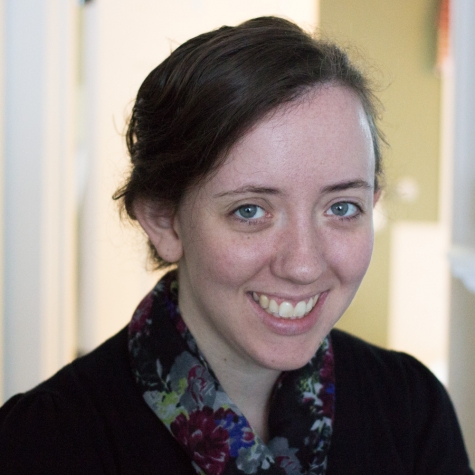
Bethany Lusch is an Assistant Computer Scientist in the Data Science Group at the Argonne Leadership Computing Facility, Argonne National Laboratory. She holds advanced degrees in applied mathematics and focuses on integrating artificial intelligence with scientific computing, particularly for dynamical systems and PDE-based simulations. Education: PhD in Applied Mathematics, University of Washington, 2016 MS in Applied Mathematics, University of Washington, 2011 BS in Mathematics (Honors), University of Notre Dame, 2010 Her research centers on scientific machine learning, with emphasis on developing machine-learning emulators for expensive simulations such as climate models and computational fluid dynamics. She pioneers methods that embed domain knowledge into deep learning frameworks, particularly through Koopman operator theory to linearize nonlinear dynamics. Her work spans representation learning, reduced-order modeling, and analysis of supercomputing system logs. The 15 most recent publications reflect a strong trend toward using deep learning—especially recurrent and autoencoder architectures—to model complex physical systems. Key themes include surrogate modeling, latent-space dynamics, closure in reduced-order models, and interpretable AI in scientific contexts. Her work bridges theoretical rigor with practical applications in engineering and geophysics. Scientific Awards: NPSC Fellow, National Physical Science Consortium (now GFSD), Aug 2010 – May 2016 Six-Year Graduate Fellowship, NSF-SUMR Scholarship University of Notre Dame Mathematics Department Scholarship, Aug 2007 – Jun 2010 Bethany Lusch has collaborated extensively with researchers at Argonne and the University of Washington. Her projects often involve interdisciplinary teams working on high-performance computing applications. She has contributed to the development of tools like MELA for visual analytics of HPC logs and has secured competitive fellowships and funding. Her prior role as a Research Associate at the University of Washington (2016–2018) preceded her current position at Argonne (2018–present), indicating a continuous research trajectory. She is actively involved in advancing AI-driven scientific discovery, with ongoing work in universal embeddings for PDEs and multifidelity modeling. Her lab affiliations include the Argonne Leadership Computing Facility, where she leverages world-class supercomputing resources to develop and test her models.