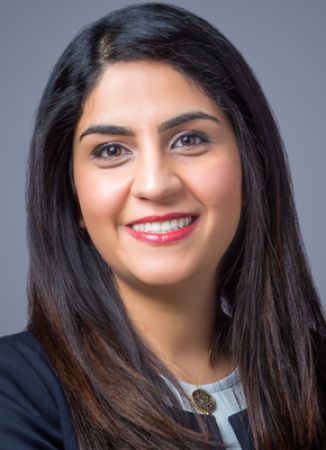
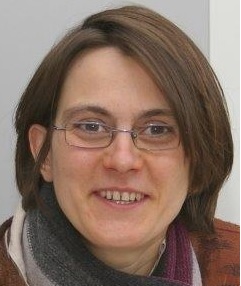
Alistair Revell is a Professor of Computational Engineering & Flow Physics at The University of Manchester, within the School of Engineering's Department of Mechanical and Aerospace Engineering. He holds leadership roles as Head of the Fluids and Environment Department and Deputy Head of the School of Engineering, contributing to the Future of Engineering project. His research focuses on turbulence modelling, computational fluid dynamics (CFD), and biomedical engineering applications, with expertise in high-performance computing and fluid-structure interaction. Revell has pioneered work in hybrid RANS-LES methods, machine learning for turbulence simulation, and interactive engineering tools using virtual reality. He has led projects in automotive/aerospace industries and nuclear energy sectors, emphasizing sustainable engineering solutions. Revell earned a MEng from UMIST (2002) and a PhD in Turbulence Modelling and CFD from The University of Manchester (2006). His academic journey includes research placements at ENSMA (France), IMFT (Toulouse), and Stanford University. He has held roles such as Temporary Lecturer, Director of Social Responsibility, and Deputy Head of Department. His work integrates computational methods with real-world applications, including cardiovascular flow analysis and energy harvesting systems. Research interests span turbulence simulation, biomedical CFD, and bioinspired engineering innovations. Recent articles highlight advancements in uncertainty quantification for wave-structure interactions, cardiovascular hemodynamics analysis, and machine learning-driven turbulence models. Revell's interdisciplinary projects address global challenges in energy efficiency, healthcare diagnostics, and sustainable engineering practices. He supervises PhD students in topics like physics-informed machine learning for turbulence models and bioinspired energy harvesting. Revell collaborates with institutions like the University of Melbourne, CIEMAT (Spain), and the Modelling & Simulation Centre (MaSC). His contributions align with UN Sustainable Development Goals for clean energy, health, and innovation.