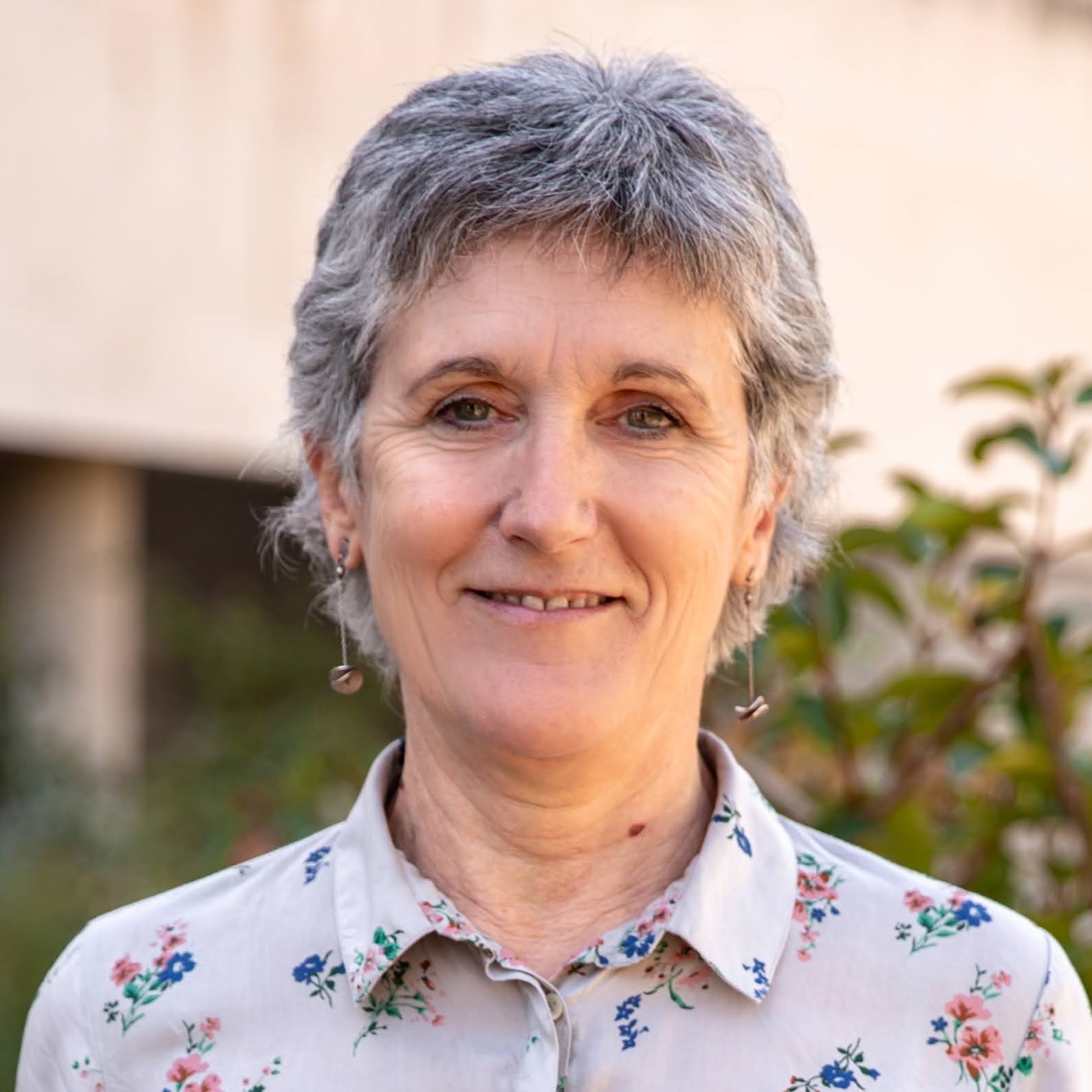
Ekaterina Tambulatova is an Associate Professor at the Faculty of Ecotechnologies at ITMO University. She also serves as a Senior Teacher at the Faculty of Physics and has held administrative roles, including Deputy Head of the School of Biotechnology and Cryogenic Systems. PhD in Thermophysics and Theoretical Heat Engineering (2010) BSc in Canned Food and Concentrate Technologies (2008) from St. Petersburg State University of Refrigeration and Food Processing Technologies (now ITMO University) Her research focuses on thermophysical measurements and instrumentation, particularly studying the thermophysical properties of materials across extreme temperature ranges. Projects include analyzing frozen/thawed soil, salt rocks, and multiferroic materials for energy conversion applications. Notable scientific awards include the 2009 St. Petersburg grant for young scientists and the 2020 Russian Ministry of Science accolade for educational contributions. She has led over 20 R&D initiatives, including the development of innovative thermophysical measurement devices. 2009: St. Petersburg grant competition winner 2011: ITMO university-wide project proposal competition winner 2020: Russian Ministry of Science and Higher Education accolade As an active academic leader, she founded the Life Science School for school students and co-organizes the international conference 'Modern Methods and Tools for Research on Thermophysical Properties of Materials.' She is also a corresponding member and academic of the International Academy of Refrigeration.
Yousra Nahas serves as an Assistant Professor in the Department of Physics at the University of Arkansas, College of Arts and Sciences, where she has been a core member of Professor Laurent Bellaiche's research group since 2014. Education: Master of Fundamental Physics, University of Paris-Sud (France) PhD in Physics, Ecole Centrale Paris University (Supervisor: Prof. Igor Kornev; research on gauge theory for relaxor ferroelectrics) Research Expertise: Dr. Nahas specializes in topological phenomena within condensed matter systems, employing differential geometry and computational methods to investigate ferroelectric and multiferroic materials. Her work focuses on disorder-induced critical phenomena, phase transitions, and nanoscale domain structures, with current emphasis on leveraging topological excitations for next-generation nanotechnologies through large-scale ab-initio simulations. Publication Trends: Her high-impact publications (2015-2020) in journals like Nature and Physical Review Letters demonstrate a cohesive research trajectory centered on topological domain engineering—including skyrmions, bubble nanodomains, and labyrinthine patterns—in low-dimensional ferroelectrics. This work bridges fundamental topology with applications in nanoelectronics and memory devices. Research Environment: She operates within the computational physics group of Prof. Laurent Bellaiche, utilizing advanced simulation frameworks to decode microscopic mechanisms in complex ferroic systems while exploring pathways for technological implementation of topological states.
Sergei Prokhorenko is a Research Assistant Professor in the Physics Department at the University of Arkansas, affiliated with the College of Arts & Sciences. He holds a Master's degree in Theoretical Physics from Saint-Petersbourg Academic University (2011) and a Ph.D. in Materials Science from Ecole Centrale Paris University (2014). After postdoctoral work at the University of Arkansas, he pursued research at the University of Liege as a Marie Curie BeIPD COFUND fellow (2016). Education: M.Sc. Theoretical Physics, Saint-Petersbourg Academic University (2011) Ph.D. Materials Science, Ecole Centrale Paris University (2014) Research Interests: Sergei's work focuses on the statistical physics of ferroic materials, advanced ab initio methods, and the application of topology and differential geometry in condensed matter systems. His research explores topological phases, domain wall dynamics, and quantum fluctuations in nanoscale structures. Scientific Awards: Marie Curie BeIPD COFUND fellowship (2016) Article Trends: His publications emphasize topological defects in ferroelectric materials, including skyrmions, polar bubbles, and spin cycloids. Key themes include light-driven control of topology, magnon confinement, and machine learning applications for nanoscale modeling. Keywords like Condensed Matter Physics and Computational Physics recur across his work.
Alexander McLeod is an Assistant Professor at the School of Physics and Astronomy, University of Minnesota. He specializes in experimental condensed matter physics with research focusing on quantum phase transitions and optoelectronic properties of novel 2D materials. His laboratory develops advanced nano-optical imaging techniques for studying quantum phenomena at low temperatures. McLeod's research explores: Phase transitions in quantum materials Opto-electronic properties of graphene and transition metal dichalcogenides Van der Waals heterostructure engineering Nano-optical spectroscopy and imaging Development of cryogenic measurement systems His recent publications demonstrate strong focus on: Optical properties of delafossite crystals (2025) Contact engineering for 2D semiconductors (2025) Oxide membrane fabrication techniques (2024) Emergent multiferroicity in deformed perovskites (2024) Graphene plasmonics and charge transfer phenomena (2023) Current research projects include: 'Near-Field Analysis of Extended Electronic Wavefunctions in 2D Nanostructures' (AFOSR funded, 2022-2025)
Martí Gich García is a Tenured Scientist at the Spanish National Research Council (CSIC) affiliated with the Institute of Materials Science of Barcelona (ICMAB), where he leads the Nanoparticles and Nanocomposites Group. His academic trajectory includes a PhD in Physics from Universitat Autònoma de Barcelona (UAB), industrial experience at Saint-Gobain Recherche, and a Ramón y Cajal Fellowship prior to his current position. He directs research on functional materials with ERC-funded projects. Education PhD in Physics, Universitat Autònoma de Barcelona (2001-2006) MSc in Physics, Universitat Autònoma de Barcelona (1999-2001) BSc in Physics, Universitat Autònoma de Barcelona (1993-1998) Research Focus Dr. Gich García investigates structure-property relationships in functional materials, emphasizing oxide systems for advanced technologies. Key areas include: magnetic phase transitions in iron oxides, sol-gel synthesis of nanocomposites, thin-film integration methods, and stabilization of novel material phases. His work bridges fundamental science with applications in sensing and information technology. Publication Trends His recent articles (2013-2017) demonstrate expertise in multiferroic materials, nanostructured oxides, and electrochemical sensors. Publications in Science , Advanced Materials , and Chemistry of Materials highlight innovations in epitaxial film growth, room-temperature multiferroics, and nanomaterial-based detection systems. Awards ERC Consolidator Grant (2019) Ramón y Cajal Fellowship (2010) Outstanding PhD Thesis Award, UAB (2006) Laboratory & Resources He directs the Nanoparticles and Nanocomposites Group at ICMAB, specializing in oxide nanomaterials synthesis and characterization, supported by major grants including ERC funding.
Anna Roig Serra is a Research Professor at the Institut de Ciència de Materials de Barcelona (ICMAB), where she leads the Nanoparticles and Nanocomposites Group. Her academic journey includes a BSc in Physics from Universitat Autònoma de Barcelona (1985), an MSc from Northeastern University (1988), and a PhD in Materials Science from UAB (1998). She has held significant administrative roles including Deputy Director at ICMAB (2008-2015) and served as a Seconded National Expert at the European Commission (2005-2008). Her research specializes in functional nanomaterials with applications in nanomedicine, focusing on: Rational design of inorganic/hybrid nanoparticles Bio-based nanocomposites development Nano/bio interface characterization Therapeutic validation of nanomaterials Her publications (2016-2009) demonstrate consistent focus on nanomedicine innovations, featuring magnetic nanoparticles for biomedical targeting, novel nanocomposite synthesis, and advanced characterization of multifunctional materials. Research consistently integrates materials chemistry with biomedical applications. Awards and recognitions: 2020 Feature in Científiques Catalanes 2.0 exhibit 2017 ALBUS Albumin Award (Grifols Scientific Awards) Supervisor of six UAB Best PhD Thesis Award recipients 2014 E-MRS Reach.Out! Award for science outreach 2013 Innovation Prize Finalist (Universal Medial Group) 2000 Carburos Metálicos Centennial Prize She has supervised six doctoral students to award-winning completion and teaches nanoscience at UAB and Northeastern University. She leads the Nanoparticles and Nanocomposites Group, focusing on translational nanomaterial research.
Mohamed Zbiri is a neutron spectroscopy scientist at the Institut Laue-Langevin (ILL) , specializing in condensed matter physics, quantum chemistry, and high-performance computing. His research combines neutron scattering measurements and atomistic simulations to study functional materials with societal impact, particularly in energy applications. Currently, he is a member of the IN5 direct-geometry cold-neutron disk chopper TOF spectrometer team and serves as Elected Secretary of College 7 (2025-present) at ILL, previously holding roles as Nominated Specialist (2015-2019) and Elected Secretary (2011-2015). Habilitation (HDR), Physics - University of Grenoble I (Joseph Fourier University) PhD, Chemistry - University of Freiburg, Switzerland Master, Astrophysics - University of Nice Sophia Antipolis and Côte d'Azur Observatory Bachelor, Physics - University Cadi Ayyad, Morocco His research interests span vibrational and structural dynamics of organic semiconductors , phonon-structure-magnetism interplay in correlated systems , and lattice dynamics in transition metal frameworks . He has contributed to neutron scattering studies on materials for greener hydrogen fuel production , plastic solar cells , and water-splitting photocatalysts . Zbiri also supervises PhD student Stella d'Ambrumenil and collaborates with institutions like Imperial College London , Delft University of Technology , and University of Oxford . He actively organizes scientific seminars and events at ILL and the UK Neutron and Muon Science and User Meeting (NMSUM).
Cardinal Stefan Wyszyński University in WarsawPoland
Paweł Pęczkowski is an assistant professor at the School of Exact Sciences within the Faculty of Mathematics and Natural Sciences at Cardinal Stefan Wyszyński University in Warsaw. His email contact is p.peczkowski@uksw.edu.pl and he holds consultations on Thursdays from 15:00-16:30 in room 019 of building 24 (CLNP), requiring email confirmation one day in advance. His primary research focuses on: Low- and high-temperature superconductors: research and applications Superconducting foam Composites based on superconductor-multiferroic Superconductor-multiferroic heterostructures Dr. hab. Pęczkowski's work falls entirely within physical sciences (100%), with particular emphasis on materials characterization techniques including X-ray diffraction, magnetic properties analysis, and microstructure studies. His research spans from fundamental physics of superconducting materials to potential applications. With 18 total publications, he has achieved an h-index of 8 (Scopus) and 9 (Web of Science), with a total SNIP of 18.959 and ministerial score of 1,755. His research utilizes keywords including materials physics, XRD, high Tc, REBCO, flux pinning, rare earth elements, and magnetism. His ORCID identifier is 0000-0003-1824-8680 with additional profiles on Scopus, Web of Science, Crossref, and EuropePMC.
Dr. Valentyn Volobuiev serves as an Adjunct Assistant Professor and Senior Researcher at the MagTop Centre, Institute of Physics, Polish Academy of Sciences (IF PAS) since 2017. With nearly 25 years of research experience, he holds a Ph.D. in Physics from National Technical University 'KhPI' and maintains active roles in both research and instruction. His research focuses on advanced materials development using molecular beam epitaxy (MBE), specializing in: Topological materials with Dirac-like dispersion Rashba ferroelectric and multiferroic semiconductors Antiferromagnetic semiconductors with multiple stable states Perovskite heterostructures for quantum computing and spintronics applications His expertise spans structural characterization, magnetism studies, and band structure analysis via ARPES. Dr. Volobuiev has received significant recognition including: Ukrainian Ministry of Education and Science grant (2012) Ukrainian President grant for young scientists (2006) He actively contributes to the scientific community through invited talks, including his 2022 presentation at the Jaszowiec International School & Conference on Semiconductor Physics.
University of Colorado Colorado SpringsUnited States
Dario Bueno-Baques, Ph.D., is an Associate Teaching Professor in the Department of Physics and Energy Science at the University of Colorado Colorado Springs. He is affiliated with the College of Letters, Arts and Sciences and maintains office OCSE A416. Contact him at (719) 255-3556 or dbuenoba@uccs.edu. He earned his doctoral degree from the Research Center for Advanced Materials in Chihuahua, Mexico, in 2004. His research spans interdisciplinary areas of materials physics and nanotechnology, with focus on: Hybrid/functional nanostructures and multiferroic systems Thin-film technologies and flexible materials Soft matter physics including liquid crystal behavior Computational modeling of magnetic and electronic phenomena Advanced measurement techniques for magnetoelectric and X-ray imaging applications
Mark Lumsden is a prominent Researcher at Oak Ridge National Laboratory specializing in quantum magnetism and neutron scattering techniques. His work focuses on unraveling exotic quantum phenomena in magnetic materials through advanced neutron scattering experiments at the High Flux Isotope Reactor (HFIR) and Spallation Neutron Source (SNS). His research interests span: Magnetism in iron-based superconductors Quantum spin liquids and fractional excitations Topological magnons and Dirac points Frustrated magnetic systems Field-induced quantum phase transitions Spin dynamics in low-dimensional materials Analysis of his 15 most recent publications (2020-2024) reveals a consistent focus on quantum magnetic phenomena using neutron scattering. His work shows increasing emphasis on topological aspects of magnon spectra, field-tuned quantum effects in honeycomb lattices, and instrumentation development for next-generation neutron spectrometers. Key material systems include YbCl 3 , CrSiTe 3 , and frustrated quantum magnets. Scientific recognition: Elected Fellow of the Neutron Scattering Society of America (2022) for outstanding contributions to understanding magnetism in quantum materials Lumsden maintains an active research program with continuous funding evidenced by his publication record. He collaborates extensively through ORNL's user facilities, providing critical neutron scattering expertise to the global condensed matter physics community. His instrumentation work on spectrometers like CHESS enables new scientific capabilities for studying quantum materials. While not leading a named laboratory, Lumsden operates at the forefront of neutron scattering research within ORNL's Neutron Sciences Directorate, contributing to both fundamental discoveries and advanced instrumentation development for probing quantum magnetic phenomena.
Dr. Benjamin J Lawrie is a Senior Research Scientist and Director for the Heterogeneous Quantum Systems Initiative at Oak Ridge National Laboratory. He holds a primary appointment in the Quantum Heterostructures Group within the Physical Sciences Directorate and maintains an Affiliate Scientist position at the Center for Nanophase Materials Sciences. Additionally, he serves as a joint Assistant Professor in the Bredesen Center for Interdisciplinary Research and Graduate Education at the University of Tennessee, bridging national laboratory research with academic training. Dr. Lawrie received his PhD in Interdisciplinary Materials Science in 2011 from Vanderbilt University. Following his doctoral studies, he worked for two years as an Intelligence Community Postdoctoral Research Fellow at Oak Ridge National Laboratory before joining the Quantum Information Science group full-time in 2013. His research centers on the development of quantum optical sensors and quantum nanophotonic systems, with particular focus on characterization of quantum devices at cryogenic temperatures. His work spans quantum information science, materials characterization, and nanophotonics, with recent publications demonstrating significant contributions to quantum sensing technologies, quantum materials, and novel photonic systems. Analysis of his 15 most recent publications reveals a strong emphasis on quantum spin liquids, perovskite materials for optoelectronics, single-photon emitters, and diamond defect centers for quantum applications, with notable work appearing in high-impact journals including Nature Nanotechnology, Journal of the American Chemical Society, and Physical Review journals. Dr. Lawrie's scientific achievements include his early recognition as an Intelligence Community Postdoctoral Research Fellow and numerous publications in top-tier journals across physics, materials science, and quantum information. His work on quantum plasmonic sensors was featured in Chemical Reviews, and he has made significant contributions to quantum-enhanced sensing techniques. As Director of the Heterogeneous Quantum Systems Initiative, Dr. Lawrie leads a research team focused on advancing quantum technologies through materials innovation and novel sensing approaches. His position at the Center for Nanophase Materials Sciences provides access to state-of-the-art characterization facilities, while his joint appointment with the University of Tennessee enables him to mentor graduate students through the Bredesen Center's interdisciplinary program. His research program appears well-funded through ORNL's quantum initiatives and likely includes DOE and other federal research grants supporting quantum information science. Dr. Lawrie's laboratory, the Heterogeneous Quantum Systems Initiative, focuses on developing and characterizing quantum optical sensors and quantum nanophotonic systems. The lab leverages ORNL's extensive facilities including the Center for Nanophase Materials Sciences for materials synthesis and characterization, with particular emphasis on cryogenic measurement techniques for quantum device evaluation.
Patrick Fournier is a Professor in the Department of Physics at the University of Sherbrooke, specializing in condensed matter physics with emphasis on unconventional superconductivity, magnetism, and multiferroic materials in oxide systems. Education: PhD in Physics, Université de Sherbrooke Postdoctoral Research, Stanford University Postdoctoral Research, University of Maryland, College Park Research Interests: His work explores physical properties of artificial structures and materials, particularly oxides exhibiting high-temperature superconductivity, colossal magnetoresistance, charge order, and ferroelectricity. The research focuses on generating new states of matter at interfaces through thin-film heterostructures combining these quantum phases. Research Infrastructure: Operates two specialized laboratories: an advanced laser ablation epitaxy facility for atomic-level thin-film growth, and a low-temperature/high-magnetic-field lab capable of measurements from $$340$$ mK to $$400$$ K and $$0.1$$ mG to $$14$$ T. Students access cleanroom nanofabrication facilities across Physics and Electrical Engineering departments. Current Projects: Includes Josephson junctions in electron-doped cuprates for pseudogap symmetry studies, terahertz ($$10^{12}$$ Hz) bolometers using high-Tc superconductors, room-temperature multiferroics development, and manganite heterostructures for amplified magnetic-field sensitivity.
Dr. Zbigniew Surowiec is a Professor at the Faculty of Mathematics, Physics and Computer Science, Department of Material Physics at Maria Curie-Skłodowska University in Lublin, Poland. He serves as Vice-Dean of the faculty and conducts research in materials science, particularly focusing on nanotechnology, magnetic materials, and corrosion science. His research interests include: Materials Science and Engineering Nanotechnology and Nanomaterials Magnetic Materials and Magnetism Corrosion Science and Protection Positron Annihilation Spectroscopy Biomedical Applications of Magnetic Nanoparticles Mesoporous Materials and MCM-41 Silica Professor Surowiec's recent publications demonstrate a strong focus on the development and characterization of advanced materials, with particular emphasis on magnetic nanoparticles for medical applications like hyperthermia cancer treatment, corrosion-resistant alloys, and mesoporous materials. His work combines experimental synthesis with advanced characterization techniques to understand material properties at the nanoscale. His research output shows consistent productivity from 2013-2019, with publications in journals such as Corrosion, Ceramics, Nukleonika, and Acta Physica Polonica A. The interdisciplinary nature of his work bridges physics, chemistry, and biomedical engineering, particularly in the application of magnetic materials for therapeutic purposes. As Vice-Dean of the Faculty of Mathematics, Physics and Computer Science, Professor Surowiec is involved in academic leadership and administration while maintaining an active research program. His consultation hours for students are on Tuesdays from 14:00 to 16:00, reflecting his commitment to academic mentorship alongside his administrative responsibilities.
Dr. Lucian Pintilie serves as the Scientific Director at the National Institute of Materials Physics (NIMP), where he leads the Laboratory of Complex Heterostructures and Multifunctional Materials. He has held the position of Senior Researcher rank 1 since 2001, establishing himself as a prominent figure in materials science research in Romania. His work bridges fundamental physics with practical applications in electronic devices and energy technologies. Dr. Pintilie earned his License and Master at the Faculty of Physics, University of Bucharest, graduating in 1984. He later completed his PhD in Physics at the Institute of Atomic Physics in 1995. His academic foundation in physics has served as the bedrock for his extensive research career focusing on advanced materials. Dr. Pintilie's research centers on ferroelectric materials, thin films and heterostructures , with special emphasis on infrared detectors (particularly pyroelectric detectors) and non-volatile ferroelectric memories . His work explores the fundamental properties of materials at the nanoscale while developing practical applications. He has made significant contributions to understanding how grain size affects dielectric and ferroelectric behavior in ceramic materials, and has pioneered research on CZTSe thin films for solar cell applications. His recent work shows increasing focus on novel ferroelectric devices for neuromorphic computing and energy-efficient electronics. Analysis of Dr. Pintilie's publication record reveals a strong trajectory in materials science with emphasis on ferroelectric phenomena. His work spans fundamental investigations of material properties to applied device development. Recent publications show growing interest in hafnium-zirconium oxide systems, novel memristive devices, and advanced characterization techniques like soft-X-ray ARPES. The research demonstrates consistent innovation in understanding interface effects, polarization dynamics, and grain size influences on functional properties. Dr. Pintilie's scientific achievements have been recognized with prestigious awards including the Romanian Academy award in 2009 and the ANCS Award in 2010 . These honors reflect the national significance of his contributions to materials science and physics research in Romania. As Scientific Director, Dr. Pintilie has secured substantial research funding through multiple competitive projects including TEXMAV (2018-2022), CONTROL (2018-2022), MATI2IT (2016-2021), and an H2020 project on Energy Efficient Embedded Non-Volatile Memory (2018-2021). His leadership has fostered collaborative research across institutions and disciplines, advancing Romania's position in advanced materials research. His work has resulted in numerous patents related to ferroelectric devices and infrared detection technologies. Dr. Pintilie directs the Laboratory of Complex Heterostructures and Multifunctional Materials, which serves as a hub for cutting-edge research in functional materials. The laboratory focuses on epitaxial growth of oxide materials, advanced characterization techniques, and development of novel electronic and energy harvesting devices. Under his leadership, the lab has established strong collaborations with international research institutions and has become a center of excellence for ferroelectric and multiferroic materials research in Eastern Europe.