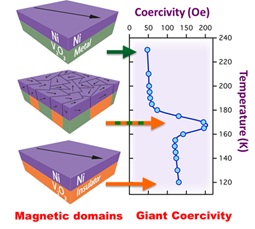
Dr. Venkatraman Gopalan is a Professor in the Department of Materials Science and Engineering at Pennsylvania State University, within the College of Earth and Mineral Sciences. His research spans the interdisciplinary domains of materials science, physics, and optical engineering, with a primary focus on nonlinear optical materials. He is actively involved in pioneering work on complex oxides, semiconductor fibers, metalattices, and symmetry-driven material phenomena. His research interests include ferroelectric materials, domain wall physics, second harmonic generation, electro-optics, and van der Waals semiconductors. These areas are central to advancements in multiferroics, optical communications, infrared applications, and all-fiber optoelectronics. The recurring themes in his recent publications highlight a strong emphasis on polarization engineering, symmetry analysis, and the discovery of novel functional materials with tailored optical and magnetic properties. The trend across his recent articles (2025) shows a consistent focus on probing fundamental material behaviors—such as proximity ferroelectricity, non-equilibrium phase formation, and magnetoelectric coupling—using both experimental and theoretical approaches. These works appear in premier journals like Nature , Science Advances , Physical Review X , and Journal of the American Chemical Society , reflecting high impact and interdisciplinary collaboration. His scientific contributions are recognized through active research output and affiliations with major research initiatives, including the Integrated Energy Systems theme at Penn State. Though specific awards are not listed, the caliber of his publications suggests significant recognition within the scientific community. Dr. Gopalan is engaged in collaborative research, frequently co-authoring with leading experts in materials theory, thin film growth, and characterization. While student advising is not explicitly mentioned, his leadership in large, multi-investigator projects implies mentorship roles. His work is supported by institutional and likely federal funding, given the scale and scope of the research. He is associated with advanced materials laboratories at the Millennium Science Complex, where synthesis, characterization, and theoretical modeling converge to explore next-generation functional materials.