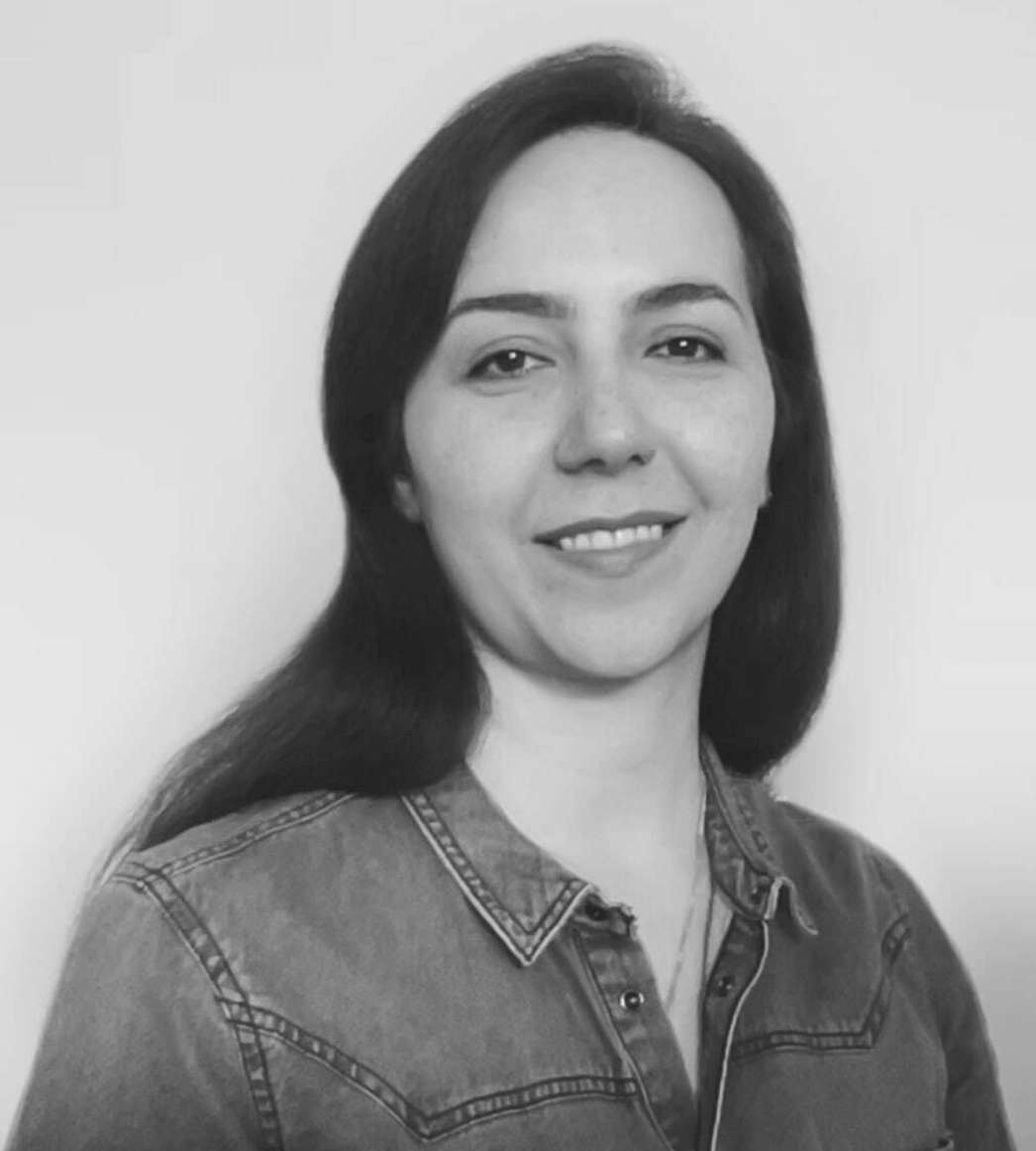
Dr. Andrius Džiaugys is a Senior Research Fellow at the Institute of Applied Electrodynamics and Telecommunications (IAET) , Vilnius University. His work focuses on solid state physics , particularly structural phase transformations , electrical conductivity , and properties of semiconductors and dielectrics . Scientific Interests: His research explores layered ferroelectric and antiferroelectric materials like CuInP2S6 and CuBiP2Se6, examining domain walls, defect mechanisms, and dielectric behavior under varying conditions. He investigates material synthesis, crystal growth, and applications in ultrasonic transducers. Publications: His 15 most recent works span topics in ferroelectrics , condensed matter physics , and nanotechnology , with a focus on piezoelectricity , antiferroelectricity , and structural defects in van der Waals materials. Education & Supervision: He supervised PhD student Ilona Zamaraitė and contributed to studies on crystallography and material science. His work aligns with collaborations across Europe and institutions like CERN.
Dr. Šarūnas Svirskas is a Senior Research Fellow at the Institute of Applied Electrodynamics and Telecommunications, Vilnius University, specializing in dielectric, IR, Raman, and NMR spectroscopy. His work focuses on ferroelectric materials, structural disorder in perovskite oxides, and microwave characterization techniques. Position: Senior Research Fellow Institution: Vilnius University Department: Institute of Applied Electrodynamics and Telecommunications Key research areas include: Ferroelectric phase transitions Relaxor-dipolar glass dynamics Perovskite oxide characterization Microwave material analysis Recent publications highlight his contributions to understanding dielectric relaxation in BaTiO 3 systems and CsPbBr 3 perovskites. His work connects structural disorder with functional properties in advanced materials. Scientific Recognition : Young Scientist Award (Vilnius University, 2020) Young Scientist Award (Lithuanian Academy of Sciences, 2022) He has supervised 9 bachelor and 3 master students (2018-2022) and contributes to international collaborative projects like the Lithuanian-Latvian-Taiwanese initiative on lead-free PMUT platforms.
Nicola Menga is an Associate Professor at the Department of Mechanics, Mathematics & Management of Polytechnic University of Bari, Italy. His research focuses on contact mechanics, tribology, and viscoelastic material behavior, with applications to adhesion, friction, and surface interactions. Research Areas Contact mechanics of rough surfaces Viscoelastic adhesion and friction Dynamic contact hysteresis Thin film and tape peeling Frictional stability in layered materials Multi-scale interface modelling His recent work explores frictional behavior in viscoelastic systems, adhesion enhancement mechanisms, and advanced computational methods for contact analysis. Publications span topics from battery electrolyte interfaces to seismic isolation technologies. Current projects emphasize geometric and material nonlinearities in contact mechanics, with applications to energy storage systems and vibration control. Theoretical frameworks include hybrid element methods and nonlinear dynamic models.
Neda Rahmani is a Postdoctoral Fellow at the Niels Bohr Institute , University of Copenhagen, affiliated with the Niels Bohr International Academy . Her research lies at the intersection of biophysics, computational materials science, and nanotechnology. Previous Position: Postdoctoral Fellow in the Computational Material Group at Southern Denmark University. Current Focus: Multiscale computer simulations to study biomaterials, particularly designing nanoscale force sensors for membrane protein interactions. Her work combines density functional theory (DFT) with multiscale modeling to explore functional materials for photovoltaics, spintronics, and biological systems. Recent publications highlight applications in neurotransmitter sensing , amyloid proteolysis , and membrane dynamics .
Damir Pajić is a full Professor at the Department of Experimental Physics within the Faculty of Science at the University of Zagreb. Appointed in 2000 after completing his PhD in 2008 (graduating with his undergraduate degree in 1998), he maintains active research and teaching roles in condensed matter physics. His research spans magnetism in condensed matter , low-dimensional magnetic systems , nanomagnetism , and magnetoelectric multiferroics , with particular focus on metal-organic hybrid magnets and molecular magnetic systems. Current work includes the HRZZ-funded project 'Evolucija složenih magnetskih i polarnih uređenja iz jednostavnih 2D podstruktura u slojevitim hibridnim organsko-anorganskim halogenometalatima (HOI2DEM)' running from 2023-2027. Analysis of his extensive publication record reveals dominant themes in hybrid organic-inorganic magnetic materials , multiferroic perovskites , and polaronic transport mechanisms in complex oxide systems. His work consistently bridges fundamental magnetic phenomena with potential applications in spintronics and energy materials. Teaching responsibilities include undergraduate Physics Practicum and advanced courses in Physics of Nanomaterials, Physics of Disordered Systems, and Magnetism and Magnetic Materials across both undergraduate and graduate programs. Laboratory work focuses on synthesis and characterization of novel magnetic materials, particularly layered hybrid halocuprates and metal-organic frameworks, utilizing SQUID magnetometry and structural analysis techniques under varied experimental conditions.
Manuel Pereiro is a Researcher at the Department of Physics and Astronomy; Materials Theory , Uppsala University , Sweden. His work bridges condensed matter physics , magnetic materials , and computational modeling , with a focus on atomistic spin dynamics and ab-initio methods. He is a key member of the Atomistic Spin Dynamics (ASD) team , contributing to the development of the UppASD simulation code used globally. PhD in Physics, University of Santiago de Compostela (Spain), with over 55 high-impact publications Recipient of the Best PhD Thesis 2010 in the Faculty of Physics, Santiago de Compostela Awarded a European Thesis during postdoctoral work Secured Knut and Alice Wallenberg Foundation Grant (2018) for research on time crystals and topological magnetic materials Research Focus : Manuel specializes in magnetic topological systems , including skyrmions in kagome magnets and B20 compounds . His work explores ultrafast demagnetization driven by spin-polarized currents , quantum spin dynamics (e.g., magnon-magnon entanglement ), and non-collinear magnetism in van der Waals magnets and chiral materials . He combines Landau-Lifshitz-Gilbert equations with density functional theory to model spin-lattice interactions and predict novel magnetic phenomena. Collaborations and Impact : He collaborates internationally with groups at IFW Dresden (Germany), Federal University of Pará (Brazil), and University of South Florida (USA). His research targets energy-efficient electronics via magnonic logic devices and quantum vacuum energy extraction . His 15 most recent publications highlight advancements in spin-lattice coupling , skyrmion dynamics , and quantum entanglement in antiferromagnets . Scientific Awards : Best PhD Thesis Award, 2010 (University of Santiago de Compostela) European Thesis Award (postdoctoral period) Knut and Alice Wallenberg Foundation Grant (2018) Technological Contributions : Developed the UppASD code , enabling global research on atomistic spin dynamics. His methods integrate first-principles calculations with spin models to study magnetic materials without prior assumptions. This includes modeling non-collinear systems , strongly correlated materials , and time-crystal analogs .
Avik Ghosh is a Professor of Electrical and Computer Engineering at the University of Virginia's School of Engineering and Applied Science. He received his Ph.D. from Ohio State University in 1999 and leads the Virginia Nano-Computing Research Group (ViNo) at UVA. His research spans theoretical condensed matter physics with applications in nanoelectronics, quantum transport, and beyond-CMOS computing paradigms. Professor Ghosh's research interests focus on understanding non-equilibrium properties of nano-scale material structures. His group applies a combined understanding of fundamental physics, chemistry, material science, and device engineering to explore novel device concepts. Key research areas include quantum transport in strongly correlated systems, tunnel-transistors and Klein tunnel switches, Dirac Cone systems (Graphene, Bilayer Graphene, Topological Insulators), nanomagnetic memory and logic, and nanoscale thermal flow. His work connects emerging materials with novel devices toward innovative circuit and architecture design using tools from 'first principles' models to quantum transport to compact models. His recent publications reveal a strong focus on quantum transport phenomena, thermal management at nanoscale interfaces, and spin-based computing. The research demonstrates expertise in combining theoretical modeling with practical device applications, particularly in topological materials, Heusler alloys, and 2D materials systems. His work often involves sophisticated computational approaches including density functional theory and non-equilibrium Green's function methods. IOP Fellow (since 2011) Top-10 breakthrough research of 2016, Physics World Physical Review B paper in Editor's Suggestion (2016) All University Teaching Award (2013) IBM Faculty Award (2011) NSF CAREER award (2008) Professor Ghosh has secured significant research funding including a $3.4 million DARPA grant for shrinking computing memory. His Virginia Nano-Computing Research Group maintains strong collaborations across disciplines, connecting fundamental physics with practical engineering challenges in next-generation electronics. The group actively utilizes high-performance computational resources and develops numerical algorithms to advance understanding of nanoscale science and engineering.
Ekaterina Tambulatova is an Associate Professor at the Faculty of Ecotechnologies at ITMO University. She also serves as a Senior Teacher at the Faculty of Physics and has held administrative roles, including Deputy Head of the School of Biotechnology and Cryogenic Systems. PhD in Thermophysics and Theoretical Heat Engineering (2010) BSc in Canned Food and Concentrate Technologies (2008) from St. Petersburg State University of Refrigeration and Food Processing Technologies (now ITMO University) Her research focuses on thermophysical measurements and instrumentation, particularly studying the thermophysical properties of materials across extreme temperature ranges. Projects include analyzing frozen/thawed soil, salt rocks, and multiferroic materials for energy conversion applications. Notable scientific awards include the 2009 St. Petersburg grant for young scientists and the 2020 Russian Ministry of Science accolade for educational contributions. She has led over 20 R&D initiatives, including the development of innovative thermophysical measurement devices. 2009: St. Petersburg grant competition winner 2011: ITMO university-wide project proposal competition winner 2020: Russian Ministry of Science and Higher Education accolade As an active academic leader, she founded the Life Science School for school students and co-organizes the international conference 'Modern Methods and Tools for Research on Thermophysical Properties of Materials.' She is also a corresponding member and academic of the International Academy of Refrigeration.
Yousra Nahas serves as an Assistant Professor in the Department of Physics at the University of Arkansas, College of Arts and Sciences, where she has been a core member of Professor Laurent Bellaiche's research group since 2014. Education: Master of Fundamental Physics, University of Paris-Sud (France) PhD in Physics, Ecole Centrale Paris University (Supervisor: Prof. Igor Kornev; research on gauge theory for relaxor ferroelectrics) Research Expertise: Dr. Nahas specializes in topological phenomena within condensed matter systems, employing differential geometry and computational methods to investigate ferroelectric and multiferroic materials. Her work focuses on disorder-induced critical phenomena, phase transitions, and nanoscale domain structures, with current emphasis on leveraging topological excitations for next-generation nanotechnologies through large-scale ab-initio simulations. Publication Trends: Her high-impact publications (2015-2020) in journals like Nature and Physical Review Letters demonstrate a cohesive research trajectory centered on topological domain engineering—including skyrmions, bubble nanodomains, and labyrinthine patterns—in low-dimensional ferroelectrics. This work bridges fundamental topology with applications in nanoelectronics and memory devices. Research Environment: She operates within the computational physics group of Prof. Laurent Bellaiche, utilizing advanced simulation frameworks to decode microscopic mechanisms in complex ferroic systems while exploring pathways for technological implementation of topological states.
Sergei Prokhorenko is a Research Assistant Professor in the Physics Department at the University of Arkansas, affiliated with the College of Arts & Sciences. He holds a Master's degree in Theoretical Physics from Saint-Petersbourg Academic University (2011) and a Ph.D. in Materials Science from Ecole Centrale Paris University (2014). After postdoctoral work at the University of Arkansas, he pursued research at the University of Liege as a Marie Curie BeIPD COFUND fellow (2016). Education: M.Sc. Theoretical Physics, Saint-Petersbourg Academic University (2011) Ph.D. Materials Science, Ecole Centrale Paris University (2014) Research Interests: Sergei's work focuses on the statistical physics of ferroic materials, advanced ab initio methods, and the application of topology and differential geometry in condensed matter systems. His research explores topological phases, domain wall dynamics, and quantum fluctuations in nanoscale structures. Scientific Awards: Marie Curie BeIPD COFUND fellowship (2016) Article Trends: His publications emphasize topological defects in ferroelectric materials, including skyrmions, polar bubbles, and spin cycloids. Key themes include light-driven control of topology, magnon confinement, and machine learning applications for nanoscale modeling. Keywords like Condensed Matter Physics and Computational Physics recur across his work.
Alexander McLeod is an Assistant Professor at the School of Physics and Astronomy, University of Minnesota. He specializes in experimental condensed matter physics with research focusing on quantum phase transitions and optoelectronic properties of novel 2D materials. His laboratory develops advanced nano-optical imaging techniques for studying quantum phenomena at low temperatures. McLeod's research explores: Phase transitions in quantum materials Opto-electronic properties of graphene and transition metal dichalcogenides Van der Waals heterostructure engineering Nano-optical spectroscopy and imaging Development of cryogenic measurement systems His recent publications demonstrate strong focus on: Optical properties of delafossite crystals (2025) Contact engineering for 2D semiconductors (2025) Oxide membrane fabrication techniques (2024) Emergent multiferroicity in deformed perovskites (2024) Graphene plasmonics and charge transfer phenomena (2023) Current research projects include: 'Near-Field Analysis of Extended Electronic Wavefunctions in 2D Nanostructures' (AFOSR funded, 2022-2025)
Martí Gich García is a Tenured Scientist at the Spanish National Research Council (CSIC) affiliated with the Institute of Materials Science of Barcelona (ICMAB), where he leads the Nanoparticles and Nanocomposites Group. His academic trajectory includes a PhD in Physics from Universitat Autònoma de Barcelona (UAB), industrial experience at Saint-Gobain Recherche, and a Ramón y Cajal Fellowship prior to his current position. He directs research on functional materials with ERC-funded projects. Education PhD in Physics, Universitat Autònoma de Barcelona (2001-2006) MSc in Physics, Universitat Autònoma de Barcelona (1999-2001) BSc in Physics, Universitat Autònoma de Barcelona (1993-1998) Research Focus Dr. Gich García investigates structure-property relationships in functional materials, emphasizing oxide systems for advanced technologies. Key areas include: magnetic phase transitions in iron oxides, sol-gel synthesis of nanocomposites, thin-film integration methods, and stabilization of novel material phases. His work bridges fundamental science with applications in sensing and information technology. Publication Trends His recent articles (2013-2017) demonstrate expertise in multiferroic materials, nanostructured oxides, and electrochemical sensors. Publications in Science , Advanced Materials , and Chemistry of Materials highlight innovations in epitaxial film growth, room-temperature multiferroics, and nanomaterial-based detection systems. Awards ERC Consolidator Grant (2019) Ramón y Cajal Fellowship (2010) Outstanding PhD Thesis Award, UAB (2006) Laboratory & Resources He directs the Nanoparticles and Nanocomposites Group at ICMAB, specializing in oxide nanomaterials synthesis and characterization, supported by major grants including ERC funding.
Mohamed Zbiri is a neutron spectroscopy scientist at the Institut Laue-Langevin (ILL) , specializing in condensed matter physics, quantum chemistry, and high-performance computing. His research combines neutron scattering measurements and atomistic simulations to study functional materials with societal impact, particularly in energy applications. Currently, he is a member of the IN5 direct-geometry cold-neutron disk chopper TOF spectrometer team and serves as Elected Secretary of College 7 (2025-present) at ILL, previously holding roles as Nominated Specialist (2015-2019) and Elected Secretary (2011-2015). Habilitation (HDR), Physics - University of Grenoble I (Joseph Fourier University) PhD, Chemistry - University of Freiburg, Switzerland Master, Astrophysics - University of Nice Sophia Antipolis and Côte d'Azur Observatory Bachelor, Physics - University Cadi Ayyad, Morocco His research interests span vibrational and structural dynamics of organic semiconductors , phonon-structure-magnetism interplay in correlated systems , and lattice dynamics in transition metal frameworks . He has contributed to neutron scattering studies on materials for greener hydrogen fuel production , plastic solar cells , and water-splitting photocatalysts . Zbiri also supervises PhD student Stella d'Ambrumenil and collaborates with institutions like Imperial College London , Delft University of Technology , and University of Oxford . He actively organizes scientific seminars and events at ILL and the UK Neutron and Muon Science and User Meeting (NMSUM).
Dario Bueno-Baques, Ph.D., is an Associate Teaching Professor in the Department of Physics and Energy Science at the University of Colorado Colorado Springs. He is affiliated with the College of Letters, Arts and Sciences and maintains office OCSE A416. Contact him at (719) 255-3556 or dbuenoba@uccs.edu. He earned his doctoral degree from the Research Center for Advanced Materials in Chihuahua, Mexico, in 2004. His research spans interdisciplinary areas of materials physics and nanotechnology, with focus on: Hybrid/functional nanostructures and multiferroic systems Thin-film technologies and flexible materials Soft matter physics including liquid crystal behavior Computational modeling of magnetic and electronic phenomena Advanced measurement techniques for magnetoelectric and X-ray imaging applications
Mark Lumsden is a prominent Researcher at Oak Ridge National Laboratory specializing in quantum magnetism and neutron scattering techniques. His work focuses on unraveling exotic quantum phenomena in magnetic materials through advanced neutron scattering experiments at the High Flux Isotope Reactor (HFIR) and Spallation Neutron Source (SNS). His research interests span: Magnetism in iron-based superconductors Quantum spin liquids and fractional excitations Topological magnons and Dirac points Frustrated magnetic systems Field-induced quantum phase transitions Spin dynamics in low-dimensional materials Analysis of his 15 most recent publications (2020-2024) reveals a consistent focus on quantum magnetic phenomena using neutron scattering. His work shows increasing emphasis on topological aspects of magnon spectra, field-tuned quantum effects in honeycomb lattices, and instrumentation development for next-generation neutron spectrometers. Key material systems include YbCl 3 , CrSiTe 3 , and frustrated quantum magnets. Scientific recognition: Elected Fellow of the Neutron Scattering Society of America (2022) for outstanding contributions to understanding magnetism in quantum materials Lumsden maintains an active research program with continuous funding evidenced by his publication record. He collaborates extensively through ORNL's user facilities, providing critical neutron scattering expertise to the global condensed matter physics community. His instrumentation work on spectrometers like CHESS enables new scientific capabilities for studying quantum materials. While not leading a named laboratory, Lumsden operates at the forefront of neutron scattering research within ORNL's Neutron Sciences Directorate, contributing to both fundamental discoveries and advanced instrumentation development for probing quantum magnetic phenomena.