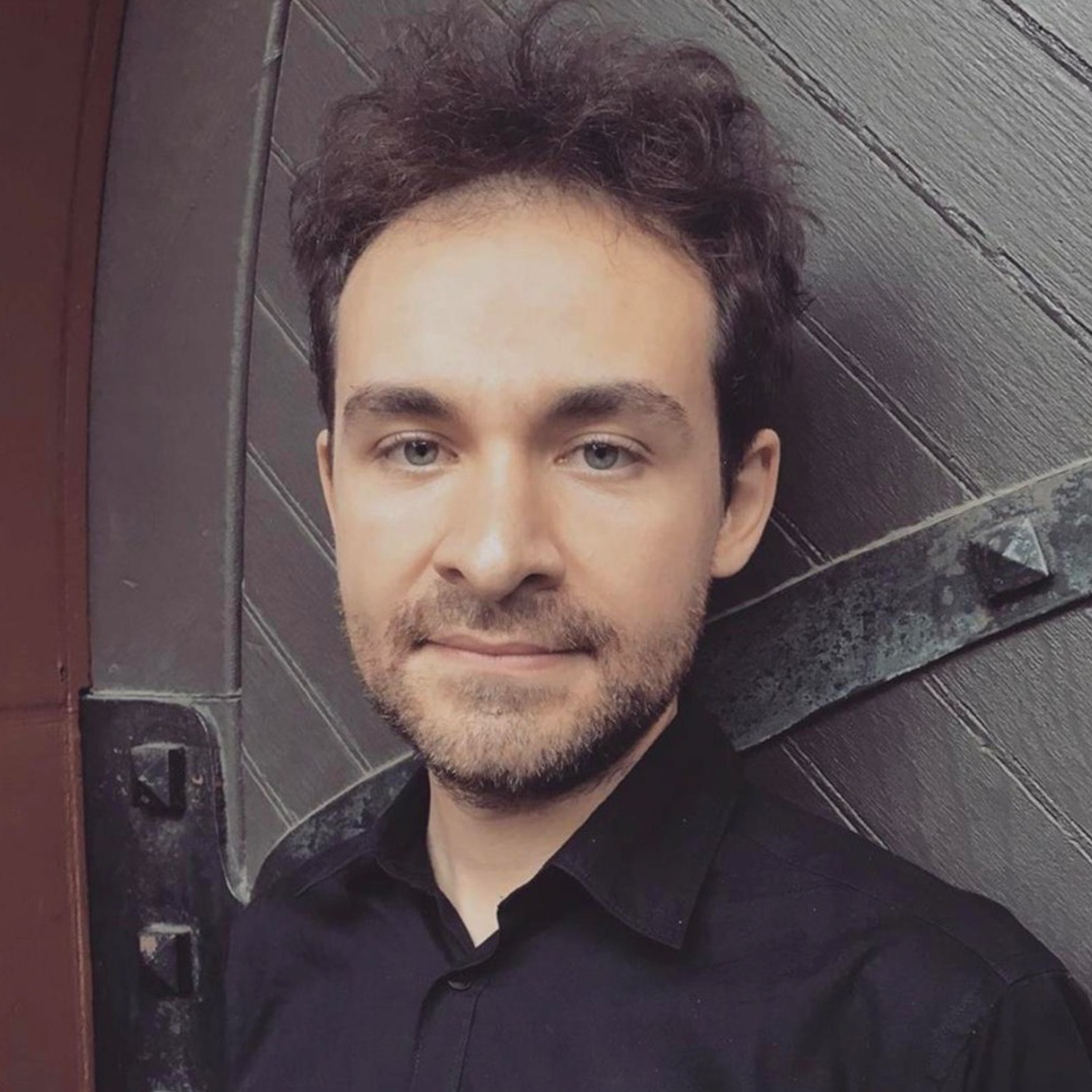
Edoardo Baldini is an Assistant Professor of Physics at the University of Texas at Austin, affiliated with the College of Natural Sciences. His research focuses on discovering and controlling emergent quantum phases in materials using ultrafast laser spectroscopy and advanced experimental techniques. Key affiliations include the Center for Complex Quantum Systems, Texas Quantum Institute, and Texas Materials Institute. Education: PhD from École Polytechnique Fédérale de Lausanne (2017), Postdoc at MIT (2017-2021). Research interests include quantum materials, ultrafast laser science, light-matter interaction, and multiferroics. His group develops techniques to study collective modes (phonons, magnons, excitons) and engineer novel functionalities via terahertz fields. Recent breakthroughs include manipulating spin waves in antiferromagnets and revealing hidden polar orders in quantum materials. Publications highlight discoveries in multiferroic oscillations, terahertz-driven magnon dynamics, and structural symmetry-breaking mechanisms in Ta₂NiSe₅. Awards include the 2025 Sloan Fellowship and NSF CAREER Award. Grants and recognitions include funding from the U.S. Department of Energy, Army Research Office, and Keck Foundation. His lab actively recruits students and postdocs in experimental condensed matter physics.
Oleg Shpyrko is a Professor and Department Chair in the Department of Physics at the University of California, San Diego (UCSD). He leads a research group focused on nanoscale structural dynamics using advanced x-ray scattering techniques. His work bridges hard and soft condensed matter systems, including magnetic materials, energy storage materials, and biophotonic nanostructures. Shpyrko earned his Ph.D. in Physics from Harvard University in 2004. His research leverages national facilities like the Advanced Photon Source (APS) and Linac Coherent Light Source (LCLS). Key areas include coherent x-ray imaging, domain dynamics in magnetic systems, and operando studies of battery materials. His research interests span: Coherent X-ray Scattering and Imaging Magnetic Domain Dynamics Nanostructured Materials Energy Storage (battery cathodes) Biophotonic Structures Phase Transitions Notable achievements include pioneering X-ray Photon Correlation Spectroscopy (XPCS) for antiferromagnetic domain studies and revealing dislocation dynamics in battery materials. His work has been featured in Nature , Science , and Physical Review Letters . Shpyrko has mentored over 15 graduate students and postdocs, many of whom have become faculty at top institutions. Awards include the NSF CAREER Award (2010), Hellman Fellowship (2009), and the Rosalind Franklin Young Investigator Award (2008). His group operates facilities including Dynamic Light Scattering labs, AFM/EFM microscopes, and collaborates with synchrotron and neutron sources globally.
Paul Stevenson is an Assistant Professor of Physics at Northeastern University's College of Science, leading the Stevenson Group. His research focuses on quantum sensing and biophysical dynamics using solid-state spins, particularly nitrogen vacancy centers in diamond. He develops nanoscale sensors for probing molecular motion and quantum communication technologies. Notably, his work bridges physics, chemistry, and biology, addressing challenges such as magnetism in complex systems and single-molecule imaging. He is a 2023 TIER1 Awardee and collaborates with institutions like Brown University and UC Berkeley. Stevenson's lab explores quantum materials and spintronics, leveraging interdisciplinary approaches to advance quantum hardware and biophysical understanding. His group's innovations include ultrasensitive magnetometers and tools for studying antiferromagnetic ordering. Contact: p.stevenson@northeastern.edu .
Cheong Sang-Wook is a Distinguished Professor at Rutgers University , holding the Henry Rutgers Professor and Board of Governors Professor titles. He serves as Director of the Center for Quantum Materials Synthesis (cQMS) , focusing on advanced materials synthesis and characterization. Key research themes: Quantum Materials , Multiferroics , Topological Defects , and Ferroelectricity . His work spans condensed matter physics , with breakthroughs in magnetoelectric coupling , chiral materials , and quantum spin liquids . Recent publications highlight innovations in polar domain imaging , altermagnetic synthesis , and topological photon emergence , reflecting his leadership in quantum materials and multiferroic oxides . Collaborations include institutions like NJIT and Ho-Am Foundation . Notable awards: James C. McGroddy Prize , KBS Overseas Compatriots Award , and Ho-Am Prize . Recognized as Highly Cited Researcher (2014, 2016, 2018, 2024), with former students like Namjung Hur and Yew San Hor advancing in academia.
Beate Paulus is a Professor for Theoretical Chemistry at the Freie Universität Berlin , affiliated with the Chemistry and Biochemistry college and the Chemistry department. Her research focuses on advanced quantum chemical methodologies and applications to 2D materials, spintronics, and catalysis. Current affiliation: Freie Universität Berlin Key research areas: Quantum Chemistry, Density Functional Theory, 2D Materials, Spintronics, Electrocatalysis Her work spans computational modeling of electronic structures, magnetic properties, and chemical reactions using Density Functional Theory (DFT) with specialized corrections. She investigates systems like MoS2 , graphene heterostructures , and transition metal complexes , aiming to understand and optimize properties for energy applications, biosensors, and nanoelectronics. Recent publications highlight her contributions to quantum mechanical fluorine tunnelling , spin-selective transport in doped nanoribbons , and surface functionalization strategies for 2D materials. Her group also explores mechanically interlocked molecules and redox-responsive polymers with potential biomedical applications. Beate Paulus leads the Paulus Group , which actively publishes in high-impact journals and collaborates on interdisciplinary projects involving experimental and theoretical approaches.
Kezilebieke Shawulienu is an Academy Research Fellow at the Faculty of Mathematics and Science, Department of Physics. His contact information includes email (kezilebieke.a.shawulienu@jyu.fi) and mobile phone (+358504101544). He leads the Synthetic Quantum Materials Group, which utilizes state-of-the-art scanning probe microscopy to investigate quantum phenomena in low-dimensional systems. His research focuses on: Quantum materials engineering and 2D heterostructures Superconductivity and exotic quantum phases Atomic-scale manipulation of magnetic and electronic properties Moiré patterns and topological states in nanoscale systems Recent publications (2022-2024) demonstrate expertise in experimental condensed matter physics, with recurring themes of moiré engineering, topological superconductivity, quantum magnetism, and atomic-scale characterization using advanced microscopy techniques. The work consistently explores quantum phenomena in 2D materials and engineered atomic structures. He contributes to the Finnish Quantum Flagship project, which consolidates Finland's quantum research ecosystem and promotes cutting-edge scientific advancements for quantum technology development.
Professor Chuanzeng Zhang is a renowned academic currently serving as Professor (C4) and Chair of Structural Mechanics at the Department of Civil Engineering, University of Siegen, Germany. He has held leadership roles including Head of the Department of Civil Engineering (2015–present) and Director of the Institute of Structural Engineering (2007–2010). With a habilitation from Technical University Darmstadt and a PhD from Northwestern University, his research spans acoustic wave propagation, computational mechanics, and multifunctional materials. Education : PhD (Dr.-Ing.) from Northwestern University (USA), Habilitation from Technical University Darmstadt (Germany), Diploma (Dipl.-Ing.) from Technical University Darmstadt. Key Roles : Guest Professor at multiple Chinese institutions (Harbin Institute of Technology, Tongji University), Vice-President of the International Chinese Association for Computational Mechanics. Research interests include: Mechanics of smart materials and structures Wave propagation in phononic crystals Fracture mechanics in composite materials Computational methods for anisotropic solids Surface and interface effects in nanomaterials Multifunctional and functionally graded materials Recent Publications : His work focuses on advanced computational methods for wave propagation, fracture analysis, and smart materials, with applications in phononic crystals, piezoelectric composites, and functionally graded structures. Honors & Awards : 2015: Du Qinghua Medal for Computational Methods 2015: Member of European Academy of Sciences and Arts 2015: Honorary Doctorate from Slovak University of Technology 2014: Member of European Academy of Sciences Leadership & Collaborations : Led Senate Commissions, Research Advisory Committees, and DVM Working Groups. Maintains strong academic ties with institutions in China and Germany.
Eric Riviere is a Researcher at Université Paris-Saclay , affiliated with the Institut de Chimie Moléculaire et des Matériaux d'Orsay (ICMMO) (UMR 8182), specifically within the LCI department. He is responsible for the Magnetic and Vibrational Studies Pole and the Magnetometry Service of the Instrumental Platform . Research Focus : His work centers on magnetic materials, spin-crossover systems, and nanomaterials. Key areas include: 1) Synthesis and characterization of magnetic nanoparticles for applications in hyperthermia and catalysis, 2) Investigating phenomena like spin-state switching and phase transitions in coordination compounds, 3) Designing materials with tailored magnetic properties through structural and compositional control. Publications Trends : Recent work emphasizes Optimization of Fe 3 O 4 nanoparticle fabrication for hyperthermia Understanding ferromagnetism in doped BiFeO 3 ceramics Photo(magnetic) properties of Prussian Blue analogs and cobalt ferrite nanoparticles Labs/Teams : Collaborates within ICMMO teams like SP2M (Surface Physics and Materials), CP3A (Peptide Mimetics Chemistry), and the Molecular Magnetism group.
Stephen Wu is an Assistant Professor of Electrical and Computer Engineering and Physics at the University of Rochester. His research focuses on merging quantum materials science with nanoscale electronic devices to advance electronics beyond Moore's Law. He holds a B.S. and B.A. from UC Berkeley (2006), and M.A. and Ph.D. in Physics from UC Berkeley (2009, 2012). Before joining Rochester in 2017, he was a postdoctoral scholar at Argonne National Laboratory's Materials Science Division. Key research interests include spintronic devices for nanoscale spin current manipulation, complex oxide thin films for quantum materials exploration, and 2D systems for topological electronic devices. His work integrates experimental condensed matter physics with materials science and electrical engineering. Recent studies emphasize strain engineering in 2D materials such as MoTe2 and graphene, exploring strain-induced phase changes, moiré patterns, and superconductivity. He has pioneered scalable fabrication techniques for van der Waals heterostructures and investigated strain effects on electronic properties. His publications span topics like memristor performance, moiré engineering, and nanoscale strain control. Collaborative efforts focus on interdisciplinary challenges in quantum materials and device miniaturization.
Souvik Paul is an Assistant Professor in the School of Physics at Indian Institute of Science Education and Research Thiruvananthapuram, where he leads the Computational Materials Science (CMS) Laboratory established in 2023. His research employs advanced computational techniques to investigate fundamental properties of magnetic materials and topological phenomena. Education: Ph.D. (2015), Indian Institute of Technology Guwahati, India M.Sc. (2008), Presidency College, Kolkata, India B.Sc. (2006), University of Calcutta, India Dr. Paul's research focuses on computational materials science with particular emphasis on magnetism in two and three dimensions, topological magnetic quasiparticles like skyrmions, surface physics, strongly correlated systems, and multifunctional materials including Heusler alloys. His work primarily utilizes Density Functional Theory (DFT) to predict and explain material properties at the atomic scale, bridging computational predictions with experimental observations through international collaborations. His publication record reveals a consistent trajectory in magnetic skyrmions research, transition metal systems, and Heusler alloys, with significant contributions to understanding spin interactions, stability mechanisms, and electronic properties. His work frequently appears in high-impact journals including Physical Review Letters, Nature Communications, and npj Computational Materials, demonstrating both theoretical depth and practical relevance to materials design. Scientific Awards: Prime Minister Early Career Research Grant (2025) from Anusandhan National Research Foundation Departmental Postdoctoral Fellowship (2015), Uppsala University Doctoral fellowship (2009), IIT Guwahati Graduate Aptitude Test in Engineering (GATE) (2009), MHRD, India Dr. Paul actively mentors graduate students including Moinak Ghosh and Bipin Babu. Through the International PhD Program, he has established formal collaborations with Prof. Stefan Heinze at CAU Kiel, Germany, providing students with international research opportunities, access to high-performance computing facilities, and extended research stays at partner institutions. His recently awarded Prime Minister Early Career Research Grant supports innovative work on antiferromagnetic skyrmions. The Computational Materials Science Laboratory employs Density Functional Theory to investigate structural, electronic, magnetic, and optical properties of materials at the atomic level. The lab maintains strong international collaborations with research groups at CAU Kiel and Forschungszentrum Jülich in Germany, focusing on discovering novel materials, explaining fundamental material behaviors, and developing predictive materials theory with applications in electronics and energy technologies.
Nicole A. Benedek is an Associate Professor in the Department of Materials Science and Engineering at Cornell University, part of the College of Engineering. Her research group focuses on theoretical and computational approaches to understanding and designing functional materials, particularly complex oxides and perovskites. She integrates principles of crystal chemistry, symmetry, and density functional theory to uncover mechanisms underlying material properties and to guide the discovery of new materials with targeted functionalities. Her research interests include nonlinear phononics, ultrafast optical control of lattice dynamics, ferroelectricity, magnetism, and thermal transport in materials. She is particularly interested in how materials behave out of equilibrium and how external stimuli such as light can induce dramatic changes in their properties. This work has implications for low-power electronics, data storage, and dynamic optical devices. The recent publications from her group reflect a strong trend in controlling material symmetries and properties using light, especially through infrared and Raman resonant excitation. Her work bridges theory and experiment, often in collaboration with synthetic chemists, to validate predictions and discover new polar and multiferroic materials. She has made key contributions to understanding negative thermal expansion, light-induced phase transitions, and hybrid improper ferroelectricity. Scientific Awards: NSF CAREER Award, National Science Foundation (2015) Ralph E. Powe Junior Faculty Enhancement Award (2014) Journal of Materials Chemistry Emerging Investigator (2016) Australian Postgraduate Award (2003) Dr. Benedek advises graduate students in materials science and engineering and has mentored PhD candidates such as Ethan T. Ritz and Tucker Swenson. Her research is supported by the National Science Foundation (including the MRSEC program), the Department of Energy, and the Cornell Center for Materials Research. She leads the Benedek Group, which develops theoretical frameworks to explain and predict material behavior, emphasizing design rules for next-generation functional materials. The Benedek Group collaborates extensively with experimentalists, notably with Michael A. Hayward at Oxford University, to synthesize and characterize predicted materials. Their joint work has led to the discovery of new ferroelectric Dion-Jacobson phases and a deeper understanding of polar distortions in layered perovskites. The group combines computational modeling with physical insight to push the boundaries of materials design.
Laurent Bellaiche is a Distinguished Professor in the Department of Physics within the College of Arts and Sciences at the University of Arkansas. His research focuses on computational condensed matter physics with emphasis on ferroelectrics, multiferroics, and semiconductor materials. He leads the Computational Condensed Matter Physics (CCMP) Group and serves as a founding member of the Smart Ferroic Materials Center. His primary research interests include: Developing first-principles methods for predicting properties of ferroelectrics and multiferroics Investigating topological defects, spin liquids, and magnetic skyrmions Studying non-equilibrium effects for neuromorphic computing applications Optimizing electro-optic, electrocaloric, and piezoelectric effects Designing antiferroelectrics for high-energy-density applications Professor Bellaiche's recent publications (2024-2025) demonstrate significant activity in topological polar structures, skyrmion engineering, strain-induced phenomena, and computational design of functional materials. His work shows strong interdisciplinary connections between condensed matter theory, materials science, and device physics with particular emphasis on emergent topological phenomena in low-dimensional systems. Scientific awards include: Twenty-First Century Professorship in Nanotechnology and Science Education NSF CAREER Awardee Bellaiche maintains active collaborations with experimental groups internationally, particularly with CentraleSupélec in France. He is involved in innovative educational initiatives including a course titled "Thinking Outside the Box: Physics, Soccer and much more" and contributes to the Soccernostalgia podcast. His research group emphasizes both fundamental theoretical advances and practical applications in next-generation electronic and energy materials.
Xianglin Ke is a Professor in the Department of Physics & Astronomy at Michigan State University. His research focuses on quantum materials with emphasis on topological materials , strongly correlated systems , and geometrically frustrated magnets . Education: Ph.D. in Physics, University of Wisconsin-Madison (2006) Postdoctoral Scholar at Pennsylvania State University (2006-2009) Clifford G. Shull Fellow at Oak Ridge National Laboratory (2009-2012) His work explores emergent phenomena in quantum materials through neutron scattering techniques and bulk transport measurements . Key areas include topological magnon bands , spinon-magnon interactions , and interfacial phenomena in oxide heterostructures . Recent studies investigate anomalous thermal Hall effects in 2D magnets and pressure-induced phase transitions in Mott insulators. Scientific Awards: Clifford G. Shull Fellow He employs solid-state chemistry methods to synthesize novel materials and combines neutron scattering with electronic/thermal transport measurements to characterize their properties. Collaborations with institutions like Oak Ridge National Laboratory highlight his research network.
Inna Ponomareva is Professor and Director of Graduate Admissions in Physics at the University of South Florida. She leads the Computational Nanoscience Lab, specializing in ferroic materials using atomistic simulations and machine learning. Research explores phase transitions, nanoscale phenomena, and caloric effects in functional materials. Current group includes 4 researchers focusing on: Halide perovskite spin physics Ultra-thin ferroelectric behavior Multicaloric effects Recent publications demonstrate advances in controlling spin textures via strain and intercalation in 2D materials. Teaches quantum mechanics and computational physics courses. Recognized with SIGMOD Distinguished Reviewer Award and ELIDEK grants.
Richard Averitt is a Professor in the Department of Physics at UC San Diego. He received his Ph.D. from Rice University in 1998. His research group focuses on optical spectroscopy of correlated electron materials and terahertz metamaterials, investigating light-induced phenomena in quantum materials and developing functional electromagnetic materials. Averitt's research spans terahertz spectroscopy of phase transitions, metamaterial design, and ultrafast dynamics in correlated electron systems. His recent publications demonstrate consistent focus on active terahertz metamaterials, light-induced phase transitions, and nonlinear optical phenomena. The research showcases strong emphasis on real-world applications for communications, sensing, and quantum control. He leads the Averitt Research Group at UCSD and maintains active collaborations with multiple institutions. No specific awards or advising relationships are detailed in the source materials.