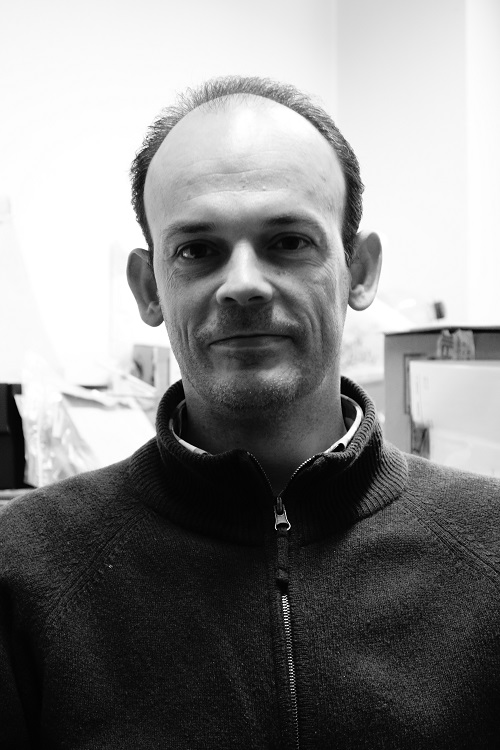
Maciej Chrunik, PhD, is an assistant professor at the Faculty of Advanced Technologies and Chemistry, Military University of Technology. His research focuses on materials engineering, particularly the synthesis and characterization of rare earth-doped materials, borates, and composites for optical and dielectric applications. Current affiliation: Military University of Technology Research focus: Rare earth ions, photoluminescence, X-ray diffraction, and magnetoelectric effects His recent work explores energy transfer mechanisms in phosphors, pressure-modified luminescence, and dielectric properties of doped ceramics. With an h-index of 12 (Scopus/WoS) and over 45 publications, he contributes to nonlinear optics, optoelectronics, and advanced material synthesis. He has supervised one promoted thesis and secured funding for two research projects. His laboratory investigates photoinduced phenomena, crystal lattice dynamics, and multifunctional composites for laser devices and smart materials.
Ekaterina Tambulatova is an Associate Professor at the Faculty of Ecotechnologies at ITMO University. She also serves as a Senior Teacher at the Faculty of Physics and has held administrative roles, including Deputy Head of the School of Biotechnology and Cryogenic Systems. PhD in Thermophysics and Theoretical Heat Engineering (2010) BSc in Canned Food and Concentrate Technologies (2008) from St. Petersburg State University of Refrigeration and Food Processing Technologies (now ITMO University) Her research focuses on thermophysical measurements and instrumentation, particularly studying the thermophysical properties of materials across extreme temperature ranges. Projects include analyzing frozen/thawed soil, salt rocks, and multiferroic materials for energy conversion applications. Notable scientific awards include the 2009 St. Petersburg grant for young scientists and the 2020 Russian Ministry of Science accolade for educational contributions. She has led over 20 R&D initiatives, including the development of innovative thermophysical measurement devices. 2009: St. Petersburg grant competition winner 2011: ITMO university-wide project proposal competition winner 2020: Russian Ministry of Science and Higher Education accolade As an active academic leader, she founded the Life Science School for school students and co-organizes the international conference 'Modern Methods and Tools for Research on Thermophysical Properties of Materials.' She is also a corresponding member and academic of the International Academy of Refrigeration.
Yousra Nahas serves as an Assistant Professor in the Department of Physics at the University of Arkansas, College of Arts and Sciences, where she has been a core member of Professor Laurent Bellaiche's research group since 2014. Education: Master of Fundamental Physics, University of Paris-Sud (France) PhD in Physics, Ecole Centrale Paris University (Supervisor: Prof. Igor Kornev; research on gauge theory for relaxor ferroelectrics) Research Expertise: Dr. Nahas specializes in topological phenomena within condensed matter systems, employing differential geometry and computational methods to investigate ferroelectric and multiferroic materials. Her work focuses on disorder-induced critical phenomena, phase transitions, and nanoscale domain structures, with current emphasis on leveraging topological excitations for next-generation nanotechnologies through large-scale ab-initio simulations. Publication Trends: Her high-impact publications (2015-2020) in journals like Nature and Physical Review Letters demonstrate a cohesive research trajectory centered on topological domain engineering—including skyrmions, bubble nanodomains, and labyrinthine patterns—in low-dimensional ferroelectrics. This work bridges fundamental topology with applications in nanoelectronics and memory devices. Research Environment: She operates within the computational physics group of Prof. Laurent Bellaiche, utilizing advanced simulation frameworks to decode microscopic mechanisms in complex ferroic systems while exploring pathways for technological implementation of topological states.
Mohamed Zbiri is a neutron spectroscopy scientist at the Institut Laue-Langevin (ILL) , specializing in condensed matter physics, quantum chemistry, and high-performance computing. His research combines neutron scattering measurements and atomistic simulations to study functional materials with societal impact, particularly in energy applications. Currently, he is a member of the IN5 direct-geometry cold-neutron disk chopper TOF spectrometer team and serves as Elected Secretary of College 7 (2025-present) at ILL, previously holding roles as Nominated Specialist (2015-2019) and Elected Secretary (2011-2015). Habilitation (HDR), Physics - University of Grenoble I (Joseph Fourier University) PhD, Chemistry - University of Freiburg, Switzerland Master, Astrophysics - University of Nice Sophia Antipolis and Côte d'Azur Observatory Bachelor, Physics - University Cadi Ayyad, Morocco His research interests span vibrational and structural dynamics of organic semiconductors , phonon-structure-magnetism interplay in correlated systems , and lattice dynamics in transition metal frameworks . He has contributed to neutron scattering studies on materials for greener hydrogen fuel production , plastic solar cells , and water-splitting photocatalysts . Zbiri also supervises PhD student Stella d'Ambrumenil and collaborates with institutions like Imperial College London , Delft University of Technology , and University of Oxford . He actively organizes scientific seminars and events at ILL and the UK Neutron and Muon Science and User Meeting (NMSUM).
Dr. Benjamin J Lawrie is a Senior Research Scientist and Director for the Heterogeneous Quantum Systems Initiative at Oak Ridge National Laboratory. He holds a primary appointment in the Quantum Heterostructures Group within the Physical Sciences Directorate and maintains an Affiliate Scientist position at the Center for Nanophase Materials Sciences. Additionally, he serves as a joint Assistant Professor in the Bredesen Center for Interdisciplinary Research and Graduate Education at the University of Tennessee, bridging national laboratory research with academic training. Dr. Lawrie received his PhD in Interdisciplinary Materials Science in 2011 from Vanderbilt University. Following his doctoral studies, he worked for two years as an Intelligence Community Postdoctoral Research Fellow at Oak Ridge National Laboratory before joining the Quantum Information Science group full-time in 2013. His research centers on the development of quantum optical sensors and quantum nanophotonic systems, with particular focus on characterization of quantum devices at cryogenic temperatures. His work spans quantum information science, materials characterization, and nanophotonics, with recent publications demonstrating significant contributions to quantum sensing technologies, quantum materials, and novel photonic systems. Analysis of his 15 most recent publications reveals a strong emphasis on quantum spin liquids, perovskite materials for optoelectronics, single-photon emitters, and diamond defect centers for quantum applications, with notable work appearing in high-impact journals including Nature Nanotechnology, Journal of the American Chemical Society, and Physical Review journals. Dr. Lawrie's scientific achievements include his early recognition as an Intelligence Community Postdoctoral Research Fellow and numerous publications in top-tier journals across physics, materials science, and quantum information. His work on quantum plasmonic sensors was featured in Chemical Reviews, and he has made significant contributions to quantum-enhanced sensing techniques. As Director of the Heterogeneous Quantum Systems Initiative, Dr. Lawrie leads a research team focused on advancing quantum technologies through materials innovation and novel sensing approaches. His position at the Center for Nanophase Materials Sciences provides access to state-of-the-art characterization facilities, while his joint appointment with the University of Tennessee enables him to mentor graduate students through the Bredesen Center's interdisciplinary program. His research program appears well-funded through ORNL's quantum initiatives and likely includes DOE and other federal research grants supporting quantum information science. Dr. Lawrie's laboratory, the Heterogeneous Quantum Systems Initiative, focuses on developing and characterizing quantum optical sensors and quantum nanophotonic systems. The lab leverages ORNL's extensive facilities including the Center for Nanophase Materials Sciences for materials synthesis and characterization, with particular emphasis on cryogenic measurement techniques for quantum device evaluation.
Dr. Lucian Pintilie serves as the Scientific Director at the National Institute of Materials Physics (NIMP), where he leads the Laboratory of Complex Heterostructures and Multifunctional Materials. He has held the position of Senior Researcher rank 1 since 2001, establishing himself as a prominent figure in materials science research in Romania. His work bridges fundamental physics with practical applications in electronic devices and energy technologies. Dr. Pintilie earned his License and Master at the Faculty of Physics, University of Bucharest, graduating in 1984. He later completed his PhD in Physics at the Institute of Atomic Physics in 1995. His academic foundation in physics has served as the bedrock for his extensive research career focusing on advanced materials. Dr. Pintilie's research centers on ferroelectric materials, thin films and heterostructures , with special emphasis on infrared detectors (particularly pyroelectric detectors) and non-volatile ferroelectric memories . His work explores the fundamental properties of materials at the nanoscale while developing practical applications. He has made significant contributions to understanding how grain size affects dielectric and ferroelectric behavior in ceramic materials, and has pioneered research on CZTSe thin films for solar cell applications. His recent work shows increasing focus on novel ferroelectric devices for neuromorphic computing and energy-efficient electronics. Analysis of Dr. Pintilie's publication record reveals a strong trajectory in materials science with emphasis on ferroelectric phenomena. His work spans fundamental investigations of material properties to applied device development. Recent publications show growing interest in hafnium-zirconium oxide systems, novel memristive devices, and advanced characterization techniques like soft-X-ray ARPES. The research demonstrates consistent innovation in understanding interface effects, polarization dynamics, and grain size influences on functional properties. Dr. Pintilie's scientific achievements have been recognized with prestigious awards including the Romanian Academy award in 2009 and the ANCS Award in 2010 . These honors reflect the national significance of his contributions to materials science and physics research in Romania. As Scientific Director, Dr. Pintilie has secured substantial research funding through multiple competitive projects including TEXMAV (2018-2022), CONTROL (2018-2022), MATI2IT (2016-2021), and an H2020 project on Energy Efficient Embedded Non-Volatile Memory (2018-2021). His leadership has fostered collaborative research across institutions and disciplines, advancing Romania's position in advanced materials research. His work has resulted in numerous patents related to ferroelectric devices and infrared detection technologies. Dr. Pintilie directs the Laboratory of Complex Heterostructures and Multifunctional Materials, which serves as a hub for cutting-edge research in functional materials. The laboratory focuses on epitaxial growth of oxide materials, advanced characterization techniques, and development of novel electronic and energy harvesting devices. Under his leadership, the lab has established strong collaborations with international research institutions and has become a center of excellence for ferroelectric and multiferroic materials research in Eastern Europe.
Dr. Marian SIMA serves as a Scientific Researcher II at the Laboratory of Optical Processes in Nanostructured Materials within the National Institute of Laser, Plasma and Radiation Physics (INFLPR) in Romania. His research focuses on semiconductor electrochemistry, photoelectrochemistry, and nanostructured materials for energy applications. His primary research interests include water splitting , perovskite solar cells , thermoelectric materials , and heterojunction photoanodes . His experimental work emphasizes electrodeposition techniques, nanomaterial synthesis, and photoelectrochemical characterization of semiconductor interfaces. His publication record demonstrates consistent output in high-impact journals like International Journal of Hydrogen Energy and Journal of Physics and Chemistry of Solids, with a clear trend toward photoelectrochemical water oxidation and perovskite stability research. Recent work (2021-2025) shows increased focus on ferroelectric polarization effects and cocatalyst integration for enhanced photoconversion efficiency. Romanian Academy prize Stefan Procopiu/2004 Dr. SIMA maintains active research collaborations across multiple Romanian institutions and international partners, evidenced by co-authorship patterns. His patent portfolio includes innovations in thermoelectric materials and electrodeposition methods. Current research directions involve advanced heterojunction design for solar fuel generation and stability enhancement of perovskite photovoltaic devices.
Mihai Burdusel is a Scientific Researcher III at the National Institute of Materials Physics (INFIM) in Romania, working in the Laboratory of Magnetism and Superconductivity. His research focuses on superconducting and magnetic materials, particularly MgB2-based compounds, with applications ranging from electromagnetic shielding to biomedical devices. His primary research interests include: Superconductivity, especially MgB2 and related compounds Magnetism and magnetic nanocomposites Spark plasma sintering techniques for material processing Biomedical applications of superconducting materials Terahertz spectroscopy for material characterization Dr. Burdusel's recent publications demonstrate a strong focus on enhancing the superconducting properties of MgB2 through various doping strategies and processing techniques. His work spans fundamental materials science to applied research, with significant contributions to understanding flux pinning mechanisms, critical current density enhancement, and the development of practical superconducting devices. Notably, his research has expanded into biomedical applications, investigating the antimicrobial properties of MgB2 materials for potential use in medical devices and treatments. Dr. Burdusel has been involved in multiple research projects, including "MgB2 based superconducting composite materials: processing and shaping aspects for different magnetic applications" (2020-2022). His collaborative work spans numerous institutions and researchers across Romania and internationally. He maintains an active research laboratory focused on magnetism and superconductivity, with ongoing projects exploring both fundamental properties of materials and their practical applications in various fields.
Raluca NEGREA is a Scientific Researcher III at the National Institute of Materials Physics, working in the Laboratory of Atomic Structures and Defects in Advanced Materials (LASDAM). Her research focuses on advanced materials for electronic, energy, and sensing applications. Dr. NEGREA's primary research interests span across multiple areas of materials science: Ferroelectric materials, particularly hafnia and zirconia-based thin films Nanomaterials synthesis and characterization Photocatalysis and water splitting using modified TiO 2 systems Gas sensing applications of metal oxide nanostructures Energy storage in ferroelectric capacitor systems Interface engineering in multiferroic heterostructures Her publication record demonstrates a strong focus on the development and characterization of functional oxide materials, with particular emphasis on ferroelectric hafnium and zirconium oxides. Dr. NEGREA has made significant contributions to understanding the phase control, wake-up phenomena, and polarization mechanisms in these materials. Her work bridges fundamental materials science with practical applications in memory devices, energy storage, and sensors. She frequently employs advanced characterization techniques including X-ray diffraction, transmission electron microscopy, and various spectroscopic methods to elucidate structure-property relationships. Dr. NEGREA collaborates extensively with researchers across Europe, contributing to multi-institutional projects focused on advanced electronic materials. Her laboratory work in LASDAM supports the development of next-generation functional materials for various technological applications.
Bernardo Gonçalves Almeida is an Associate Professor with Habilitation in the Department of Physics at the University of Minho's School of Sciences, actively conducting research at the Center of Physics of the Universities of Minho and Porto (CF-UM-UP). Education: PhD in Condensed Matter Physics, Faculty of Sciences, University of Porto Research Focus: His work centers on the magnetism-ferroelectricity interface in multiferroic materials. He specializes in synthesizing micro/nanostructured materials (thin films, nanofibers, nanoparticles) via laser ablation and electrospinning, with emphasis on structural, dielectric, and magnetic characterization for applications in: Spintronics Sensor development Biomedical devices Nonlinear optics Energy harvesting systems Leadership Roles: He has served as Director of the Physics Degree Program, member of the School of Sciences Scientific Council, Executive Council member of the Physics Center, and Scientific Council member for the Doctoral Program in Physics (MAP-Fis). Professional service includes Chairmanship of the Portuguese Physical Society's North Section General Assembly and Co-Chairmanship of its Condensed Matter Division. Editorial Work: Current Editor of Gazeta de Física (official journal of the Portuguese Physical Society) and member of Europhysics News' Editorial Advisory Board. Previously coordinated the Group of Cooperative Phenomena in Dielectrics research group.