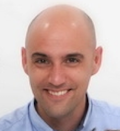
Thorben Cordes is a Professor at the Faculty of Biology, Ludwig-Maximilians University of Munich, leading the working group on Physical and Synthetic Biology . His research integrates advanced optical techniques like single-molecule fluorescence spectroscopy and super-resolution imaging with nanoscale sensors to study biomolecular structure-function relationships in space and time. Research Area 1 : Molecular mechanisms of membrane transport and molecular motors, aiming to validate structural dynamics models for combating pathogens and drug-resistant cancer cells. Research Area 2 : Development of self-healing fluorescent probes with enhanced stability and photophysical properties for super-resolution microscopy (STED/STORM) and live-cell applications. Research Area 3 : Novel biophysical assays combining FRET, protein-induced fluorescence enhancement, and caged fluorophores to enable multidimensional analysis of biomolecular interactions. The group also focuses on interdisciplinary collaborations, bridging microbiology, physics, and chemistry to advance life sciences methodologies.
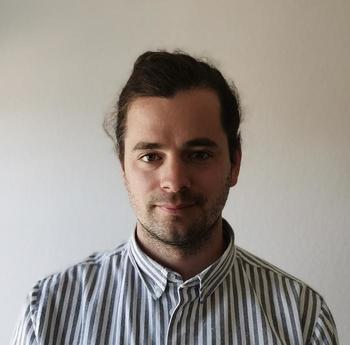
Anton Dignös is a professor at the Free University of Bozen-Bolzano , specializing in temporal databases , time series analysis , and database systems . His research focuses on efficient query processing for interval data, temporal joins, and schema design, with significant contributions to in-memory and time series databases. Key research areas include: Temporal Data Management : Advanced techniques for interval and duration queries. Time Series Analytics : Machine learning integration and pattern detection. Schema Optimization : Automated design and tuning of database schemas. Visual Analytics : Tools for period data comparison and correlation analysis. His work spans collaborations with researchers like Johann Gamper and Michael H. Böhlen , addressing challenges in healthcare systems, industrial applications, and financial data analytics. Notable contributions include algorithms for temporal anti-joins , range-duration queries , and machine learning-based anomaly detection .
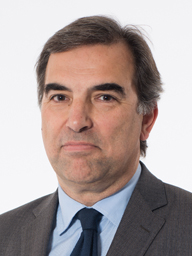
Adrien Doerig is a Visiting Professor in the Department of Education and Psychology at Freie Universität Berlin, where he leads research in the Cognitive Computational Neuroscience Lab. He is also affiliated with the Bernstein Center for Computational Neuroscience. His work bridges cognitive science, computational modeling, and neural mechanisms of perception. Doerig's research focuses on the intersection of computational neuroscience and artificial intelligence, with particular emphasis on visual perception, consciousness, and the development of biologically plausible neural network models. His work explores how the brain processes visual information, with special attention to phenomena like crowding, feature integration, and the temporal dynamics of perception. He has made significant contributions to understanding the limitations of convolutional neural networks for modeling human vision and has pioneered work on topographic neural networks that better capture cortical organization. A key trend in Doerig's recent publications is the exploration of connections between language models and visual processing in the brain. His groundbreaking 2025 Nature Machine Intelligence paper demonstrated that large language model representations align closely with visual representations in the human brain, opening new avenues for using language-based AI in modeling biological visual processing. His work consistently challenges existing paradigms while developing more biologically plausible computational frameworks. Doerig teaches a wide range of courses including Master's in Cognitive Neuroscience, Probability and statistical modeling (both theoretical and practical with focus on ANNs and neuroimaging), Introduction to programming, Applied computational cognitive neuroscience, and specialized courses on vision, language, affective & social neuroscience, and consciousness. He also supervises graduate students through the Cognitive Computational Neuroscience Lab, which includes postdocs, predocs, master's students, and interns working on cutting-edge research questions at the intersection of cognitive science and machine learning.
Manel Peiró Posadas serves as Full Professor in the Department of People Management and Organization at ESADE Business School, Ramon Llull University, where he directs the Institute for Healthcare Management. His institutional affiliations span academic, clinical, and policy domains including GLIGP Research Group (AGAUR SGR 1556), Sant Andreu Health Foundation (President since 2007), Puigvert Foundation (Vice-president since 2013), and Cemcat Foundation (Vice-president since 2015). His academic credentials include a Doctorate in Business Administration and Management from ESADE and a Medical Degree from Autonomous University of Barcelona. This dual foundation informs his research on healthcare system innovation, strategic leadership, and organizational change in public health settings. Peiró Posadas' research examines critical intersections of healthcare management and clinical operations, with emphasis on strategic planning frameworks, innovation implementation in resource-constrained environments, and leadership models for professional engagement. His work addresses Catalonia's unique healthcare governance challenges through the GLIGP research group, generating practical tools for health system administrators while advancing public management theory. Analysis of his 2005-2024 publications reveals consistent focus on healthcare system transformation, with recent work (2020-2024) prioritizing oncology care pathways, agile innovation methodologies, and shared decision-making frameworks. His scholarship demonstrates strong alignment between theoretical contributions in public management journals and practical applications in Spain's National Health System. Through ESADE's Executive Master in Management of Health Organizations, he trains healthcare leaders while directing research projects funded through GLIGP's AGAUR grant. His foundation leadership roles provide direct access to operational health system challenges, creating feedback loops between academic research and real-world management practice. The Institute for Healthcare Management functions as his primary research hub, focusing on health system functionality analysis and management support for public/private health institutions. His foundation affiliations extend this work into specialized clinical domains including urology (Puigvert), neuroimmunology (Cemcat), and cancer survivorship care.