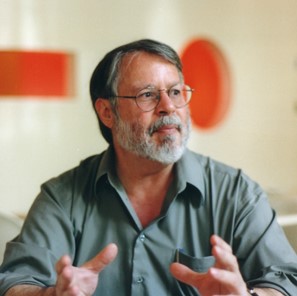
Mark Liberman is a Trustee Professor at the University of Pennsylvania , holding appointments in the Department of Linguistics and Department of Computer and Information Science . He serves as Director of the Linguistic Data Consortium and Faculty Director of Ware College House . His career spans linguistics, speech technology, and computational methods. Education: Harvard University (1965-1969), MIT (M.S. 1972, Ph.D. 1975) Professional Experience: AT&T Bell Laboratories (1975-1990), University of Pennsylvania (1990-present) His research interests include: Corpus-based Phonetics : Analyzing speech patterns via large-scale datasets. Clinical Applications : Developing speech biomarkers for neurodegenerative diseases. Tonal Phonology : Studying lexical tone and intonation in languages like Yoruba and Mandarin. Formal Annotation Models : Creating frameworks for linguistic data standardization. Recent publications highlight automated speech analysis, cross-linguistic prosody, and digital biomarkers for conditions like ALS-FTD and Alzheimer’s. His collaborations span computational linguistics , neurology , and cognitive science . Scientific awards include the IEEE James L. Flanagan Award (2017), Antonio Zampolli Prize (2010), and fellowships from the AAAS and Linguistic Society of America . He advises PhD students May Chan and Jonathan Him Nok Lee and contributes to editorial boards for journals like Cognition and Annual Review of Linguistics . His work bridges speech science , language technology , and neurocognitive research .
Huamin Qu is a Chair Professor in the Department of Computer Science and Engineering at the Hong Kong University of Science and Technology (HKUST). He serves as the Founding Dean of the Academy of Interdisciplinary Studies (AIS), Founding Head of the Division of Emerging Interdisciplinary Areas (EMIA), and was the Founding Acting Head of Computational Media and Arts (CMA) at HKUST(GZ). Qu directs the VisLab and coordinates the Human-Computer Interaction (HCI) group. He obtained his BS in Mathematics from Xi'an Jiaotong University and MS/PhD in Computer Science from Stony Brook University. Qu's research integrates Data Visualization , Human-Computer Interaction , and Human-Centered AI , with applications in urban informatics, social networks, and explainable AI. His work focuses on developing interactive systems for big data analytics, visual storytelling, and AI-driven decision support. Research extends to multimodal communication, fintech, and augmented reality applications. His publications emphasize visual analytics for complex datasets (mobility, social media, financial), interaction techniques for immersive environments, and AI-enhanced visualization tools. Recent works explore explainable AI interfaces and large-scale data communication frameworks. IEEE Visualization Academy (2020) IEEE VGTC Technical Achievement Award AI 2000 Most Influential Scholar (2019, 2023, 2024) 21 Best Paper/Honorable Mention awards IBM Faculty Award (2009) APICTA Merit Award (2015) Yelp Dataset Grand Prize (2018) Qu has advised 48 PhD graduates (21 now faculty at institutions like UC Davis, University of Minnesota, Texas A&M) and 30 MPhil students. He secured major grants including RGC theme-based projects (digital citizenship, air pollution), UGC AoE (slope safety), and China's 973 Program. As VisLab director, he leads 20+ researchers in visualization/HCI projects adopted by Microsoft, IBM, Huawei, and Tencent.
Daniel M. Kane is a Professor at the University of California, San Diego (UCSD), holding a joint appointment in the Department of Mathematics and the Department of Computer Science and Engineering (CSE). His research spans mathematics and theoretical computer science, with a focus on number theory, combinatorics, complexity theory, and computational statistics. He earned a Ph.D. in Mathematics from Harvard University (2011) and dual BS degrees in Mathematics with Computer Science and Physics from MIT (2007). Prior to UCSD, he was a postdoctoral researcher at Stanford University (2011–2014) on an NSF fellowship. His research interests include robust statistics, machine learning, polynomial threshold functions, and algorithmic methods for high-dimensional data. Notable achievements include co-authoring the book Algorithmic High-Dimensional Robust Statistics (Cambridge University Press, 2023) and receiving the Best Paper Award at the Conference on Computational Complexity (2013), as well as gold medals at the International Mathematical Olympiad (2002 and 2003). Current teaching includes courses such as Math 96 (Putnam Seminar), Math 154 (Graph Theory), CSE 101 (Algorithms), and CSE 203A (Randomized Algorithms). He has consulted for companies like CASPER Labs and AIble, and his work extends to cryptographic protocols, including quantum money schemes based on quaternion algebras. Key contributions include breakthroughs in robust mean estimation, list-decodable learning, and the development of efficient algorithms for statistical problems. His research often bridges foundational theory with practical applications in machine learning and data analysis.
Kevin C. Zhou is an Assistant Professor in the Department of Biomedical Engineering at the University of Michigan. His research focuses on developing high-performance computational optical imaging systems with unprecedented spatiotemporal throughput, integrating advanced optical instrumentation with machine learning-driven algorithms to analyze big data in biology and medicine. His lab specializes in creating imaging systems capable of capturing high-resolution, high-speed, and high-dimensional datasets. Dr. Zhou holds a Ph.D. in Biomedical Engineering from Duke University (NSF GRFP Fellow) and a B.S. in Biomedical Engineering from Yale University (Barry Goldwater Scholar). Prior to joining U-M, he was a Schmidt Science Fellow and postdoctoral researcher at UC Berkeley. Key research areas include: High-throughput microscopy (gigapixel-scale systems) 3D tomographic imaging Light field and Fourier-based imaging modalities Machine learning for image reconstruction and analysis Biomedical applications in cellular/molecular imaging His recent work has advanced technologies like multi-camera array microscopes (MCAM/MCAS) and Fourier light field mesoscopes, achieving video-rate 3D imaging of freely moving organisms. These innovations enable applications in digital cytopathology, behavioral tracking, and high-content biological studies. Notable awards include the NSF Graduate Research Fellowship and Barry Goldwater Scholarship. His research has been featured in top journals and conferences with a focus on advancing optical imaging hardware and computational pipelines.
Vladimir Spokoiny is a Professor at the Departments of Mathematics and Economics of the Humboldt University of Berlin and Head of the Research Group "Stochastic Algorithms and Nonparametric Statistics" at the Weierstrass Institute for Applied Analysis and Stochastics (WIAS) in Berlin, Germany. His research spans multiple areas of statistics, machine learning, and financial mathematics, with significant contributions to nonparametric statistics, high-dimensional data analysis, and statistical methods in finance. Spokoiny received his M.Sc. in applied mathematics from the Moscow Institute of Railway Engineering in 1981 and his Ph.D. in mathematics from Lomonosov Moscow State University in 1988. He completed his Habilitation at Humboldt University in 1996. His academic career includes positions at the All-Union Institute of Railway Transport in Moscow, the Institute for Information Transmission Problems in Moscow, and the Institute for Applied Analysis and Statistics in Berlin before joining the Weierstrass Institute and Humboldt University where he has been a professor since 2002. Spokoiny's research focuses on adaptive nonparametric smoothing and hypothesis testing, high dimensional data analysis, statistical methods in finance, image analysis with applications to medicine, classification, and nonlinear time series. His work often addresses the challenges of nonstationarity in time series data and develops innovative methods for volatility estimation and risk management. He has made significant contributions to the development of adaptive weights smoothing procedures, which have applications in image processing, community detection, and manifold learning. His recent work has expanded into high-dimensional statistics, Bayesian inference, and optimization methods for machine learning, with publications demonstrating novel approaches to Gaussian approximation, Laplace methods, and statistical inference in non-Euclidean spaces. Spokoiny has supervised numerous PhD students including Oliver Reiss, Danilo Mercurio, Ying Chen, Elmar Diederichs, and Mstislav Elagin, whose research has focused on mathematical finance, time series analysis, and statistical methods. He serves as an Associate Editor for The Annals of Statistics (since 2004) and Statistics and Decisions (since 2002), and has previously served on the editorial board of the Journal of Statistical Planning and Inference. His professional activities include reviewing for major statistical journals including Annals of Statistics, Bernoulli, Econometrica, and Journal of American Statistical Association, as well as reviewing grant proposals for the National Science Foundation (USA), German Research Foundation, and Netherlands Organisation for Scientific Research. Spokoiny is a member of several professional societies including the International Statistical Institute, American Statistical Association, Institute of Mathematical Statistics, and Bernoulli Society. He is fluent in Russian (mother tongue), English, and German, and has good knowledge of French. His research group at WIAS focuses on developing novel statistical methodologies with applications across various scientific domains, particularly emphasizing adaptivity and robustness in complex data environments. The group's work has significant implications for financial risk management, medical imaging, and machine learning applications, with recent publications addressing fundamental questions in high-dimensional statistics and nonparametric inference.
Univ.-Prof. Torsten Möller, PhD is a Professor at the University of Vienna and serves as Head of the Research Group Visualization and Data Analysis and Head of the Research Network Data Science. His work spans data visualization, visual analytics, and human-computer interaction, with a focus on biomedical, environmental, and societal data applications. Academic rank: Professor Research group: Visualization and Data Analysis Network: Data Science Email: torsten.moeller@univie.ac.at Research interests include: Visual data analysis for complex systems Interdisciplinary applications in climate science and medicine Human-computer interaction in data exploration Image processing and computer graphics Recent publication trends show expertise in: Visualizing climate change and pandemic data Multi-volumetric and network analysis Algorithmic transparency and user-centered design Interdisciplinary collaborations (e.g., astrophysics, medical imaging) Statistical and uncertainty visualization Design frameworks for visualization recommendation Teaching includes courses in: Computer graphics and visualization Image processing and analysis Human-computer interaction Data analysis projects Doctoral research seminars
Marcus Herrmann is a Professor of Aerospace and Mechanical Engineering at Arizona State University's School for Engineering of Matter, Transport and Energy. He is also affiliated with the Center for Negative Carbon Emissions. His research focuses on fluid mechanics, multiphase flows, atomization processes, and numerical methods for discontinuous interfaces. Herrmann holds a PhD in Mechanical Engineering from RWTH Aachen University (2001) and a Diplom (1995). His career includes a postdoctoral fellowship at Stanford University's Center for Turbulence Research (CTR) and a visiting scientist position at the University of Technology Eindhoven, Netherlands. He has secured major grants from NASA, NSF, and industry partners like Honeywell, focusing on atomization modeling, supersonic crossflows, and turbulence simulations. Research interests span computational fluid dynamics, multiphase flow simulation, and LES/DNS methodologies. His recent work emphasizes high-fidelity numerical techniques for particle-resolved simulations and phase interface dynamics. Teaching includes courses like MAE 561 (Computational Fluid Dynamics) and MAE 384 (Advanced Math Methods for Engineers). He actively advises students through research and dissertation roles. Notable projects include modeling wax deposition in pipelines and developing novel approaches for interface dynamics in turbulent flows. His work bridges fundamental fluid mechanics with industrial applications like combustion systems and porous media modeling.
Joseph Tao-yi Wang is a Distinguished Professor in the Department of Economics at National Taiwan University (NTU). He holds a PhD from UCLA and previously served as a Postdoctoral Scholar and Visiting Associate at Caltech. His research spans experimental economics, neuroeconomics, game theory, and behavioral economics, with a focus on strategic decision-making, market design, and learning in games. Wang directs the Taiwan Social Sciences Experimental Laboratory (TASSEL), which hosts large-scale experimental research and conferences like the 2017 APESA. His work integrates eye-tracking, pupillometry, and machine learning to study cognitive processes in economic decisions. Wang is also active in educational innovation, developing flipped classroom models with experiments for economics courses. His publications consistently explore behavioral deviations from game-theoretic predictions, such as overcommunication in sender-receiver games and learning patterns in auctions. Recent work emphasizes reproducibility in management science and AI applications in education. Wang’s research uses diverse methodologies—from neuroimaging to field experiments—to test economic theories in real-world contexts. Wang mentors through NTU’s Berkeley Economics Student Assistant Program (BESAP) and organizes mini-courses for high school students. He has not received scientific awards per the available data.
Aaron Smith is an Associate Professor in the Department of Mathematics and Statistics at the University of Ottawa, affiliated with the Faculty of Science. He holds a PhD from Stanford University. His research focuses on applied probability, computational statistics, Monte Carlo methods, and Markov chains, with an emphasis on advancing theoretical understanding and practical applications of these methodologies. Dr. Smith's work includes contributions to community detection algorithms, Markov chain mixing times, and synthetic health data generation. His recent publications explore topics such as nonstandard Dirichlet form representations, perturbation analysis of MCMC algorithms, and sparse Bayesian multidimensional scaling. He advises students in applied probability and has supervised postdoctoral researchers in related fields. His research interests span a wide range of topics, including stochastic processes, statistical inference, and algorithm design. He is particularly known for his analysis of convergence rates in Markov chains and the development of efficient sampling techniques for complex models. His interdisciplinary work bridges theoretical mathematics and practical computational challenges in data science and healthcare. Dr. Smith collaborates on projects involving synthetic data frameworks for privacy-preserving applications and has contributed to foundational work on mixing times and perturbation effects in stochastic systems.
Dr. Srinivas Peeta is the Frederick R. Dickerson Chair and Professor in Transportation Systems Engineering at the Georgia Institute of Technology’s School of Civil and Environmental Engineering. He previously held the Jack and Kay Hockema Professorship at Purdue University, where he served for 24 years. He is also the Associate Director of the USDOT Center for Connected and Automated Transportation. Education: B. Tech. from IIT Madras, M.S. from Caltech, and Ph.D. from UT Austin, all in Civil Engineering. His research focuses on large-scale transportation systems, infrastructure interdependencies, and connected/automated vehicles. He has authored over 345 publications and secured over $48M in research funding. Research Interests: Dynamic traffic networks and driver behavior modeling Information-based navigation in vehicular systems Systems perspectives for complex adaptive infrastructure Autonomous vehicle integration and human-vehicle interactions Key Achievements: Developed DYNASMART software for traffic operations Recipient of NSF CAREER Award (1997) and ASCE Walter Huber Prize (2009) Directed NEXTRANS UTC and pioneered USDOT’s real-time route guidance systems Grants & Outreach: Secured funding from USDOT, NSF, FHWA, and international agencies Initiated NEXTRANS internship programs and K-12 outreach Labs/Teams: Active in Georgia Tech’s ACT Lab, focusing on autonomous transportation systems and human-vehicle-environment interactions.
Prof. Claudio J. Tessone is a Professor of Blockchain and Distributed Ledger Technologies at the Department of Informatics, University of Zurich. He serves as Head of the Blockchain and Distributed Ledger Technologies group, Chairman of the UZH Blockchain Center, and is incharge of the NetSci Society. His academic background includes a PhD in Physics (Complex Systems) and an Habilitation in Complex Socio-Economic Systems from ETH Zurich. Education: PhD in Physics (2006): Thesis on synchronization in stochastic systems, Universitat de les Illes Balears, Spain Habilitation (2015): Thesis on agent-based modeling of socio-economic systems, ETH Zurich Master in Physics (1999): Thesis on stochastic resonance, Instituto Balseiro, Argentina Research Interests: Prof. Tessone specializes in modeling complex socio-economic and socio-technical systems, with a focus on blockchain-based systems. His work explores crypto-economics, blockchain scalability, decentralized finance (DeFi), and the interplay between micro-level agent behavior and macro-level emergent properties. Notable areas include transaction network analysis in Bitcoin/Ethereum, consensus mechanisms (Proof-of-Stake/Work), and blockchain governance models. Publications Trends: Recent articles emphasize empirical blockchain analysis (e.g., Ethereum microvelocity, Bitcoin mesoscopic structure), DeFi arbitrage strategies, and privacy-preserving blockchain applications in healthcare. His work bridges theoretical agent-based models with real-world blockchain datasets, addressing both technical and socio-economic dimensions of distributed ledger technologies. Grants & Labs: Director of the UZH Summer School on Blockchain and Certificate of Advanced Studies program. Active in interdisciplinary collaborations through the URPP Social Networks (2015–2021) and ETH Zurich’s Systems Design group (2007–2014). Labs/Initiatives: Leads the UZH Blockchain Center, a hub for academic-industry research on blockchain applications in finance, governance, and digital transformation.
Cheuk Wai Tai is a Senior Staff Researcher at Stockholm University's Department of Environmental and Materials Chemistry since 2009. He manages the transmission electron microscopes and sample preparation equipment at the Electron Microscopy Center and serves as Section Editor for the Journal of Electronic Materials. His work focuses on quantitative structure characterization in functional materials research, particularly within nanoscience and nanotechnology contexts. Education: Ph.D. in Applied Physics, The Hong Kong Polytechnic University, 2004 M.Phil. in Applied Physics, The Hong Kong Polytechnic University, 2001 M.Sc. in Physics, The Chinese University of Hong Kong, 1998 B.Sc. (Hons) in Engineering Physics, The Hong Kong Polytechnic University, 1997 Dip. in Mechanical Engineering (Computer Aided Engineering), Institute of Vocational Education (formerly Haking Wong Technical Institute), Hong Kong, 1992 His research centers on structure-property relationships in functional materials through advanced electron microscopy techniques. Current specializations include Pair Distribution Function (ePDF) & Diffuse Scattering, Energy Materials characterization, and EM sample preparation methodology development. The group maintains strong focus on translating structural data into functional performance metrics for nanomaterials. Recent publications (2013-2019) demonstrate consistent emphasis on electron microscopy applications for energy storage materials (batteries, photocatalysts) and functional ceramics. Key trends include structural disorder analysis in piezoelectrics, development of quantitative TEM methods like SUePDF, and nanoscale characterization of electrocatalyst surface phases. His work bridges materials chemistry with advanced imaging techniques. Scientific recognition includes: Fellow of The Royal Microscopical Society (U.K.) Senior Member of IEEE Marie Curie Fellowship (2007-2009) from European Commission Sir Edward Youde Memorial Fellowship (2003/2004) from Hong Kong S.A.R. Government He teaches Solid State Chemistry (KZ7003) and leads Introduction to Analytical Electron Microscopy (KZ8009), having previously taught Advanced Transmission Electron Microscopy (KZ8010) before 2011. Major grants supporting his work include: "Quantitative structural characterisation using 3D electron-based pair distribution function" (Swedish Research Council) "A Multidimensional Toolkit for Modern Electron Microscopy" (Swedish Foundation for Strategic Research) "Mitigating Ni-rich Li-ion cathode side-reactions" (Swedish Energy Agency, Co-applicant) He leads the Cheuk-Wai Tai group within Stockholm University's chemistry department and oversees operations at the Electron Microscopy Center, where his team develops and applies advanced characterization techniques for functional materials research.
Dr. Steven A. Miller is a Professor of Psychology in the Department of Psychology at Rosalind Franklin University of Medicine and Science, within the College of Health Professions. He joined RFUMS in 2013 and serves as a statistics consultant for the university. His academic background includes a PhD in Social Psychology from Loyola University Chicago, an M.S. in Psychology from Illinois State University with specialization in Clinical Psychology, and an M.S. in Mathematics from Loyola University Chicago with specialization in Probability and Statistics. PhD in Social Psychology, Loyola University Chicago M.S. in Psychology, Illinois State University (Clinical Psychology specialization) M.S. in Mathematics, Loyola University Chicago (Probability and Statistics specialization) Dr. Miller's research focuses on the intricate relationship between personality characteristics/individual differences and emotional experiences. He investigates anxiety and emotional disorders, social cognitive models of personality, and applies quantitative methodology to psychological questions. His work examines intra-individual variability in emotional responses and how situational factors interact with personality to shape emotional experiences. He employs diverse methodologies including experience sampling studies and laboratory experiments to explore these complex dynamics. His recent publications demonstrate a strong focus on psychopathy, emotion regulation, network analysis of personality, and the tripartite model of anxiety and depression. His work spans clinical, forensic, and general populations, often employing sophisticated statistical techniques. There's a clear trajectory toward more complex modeling approaches including network analysis, longitudinal modeling, and advanced psychometric techniques across his publication history. Accredited Professional Statistician (PStat®) with the American Statistical Association Chartered Statistician (CStat) with the Royal Statistical Society Dr. Miller actively mentors graduate students, with numerous student co-authors appearing in his publications. He teaches advanced statistical courses including multivariate statistics, longitudinal models, and categorical data analysis. He is currently accepting doctoral students for the 2026/2027 academic year. His collaborative research spans multiple institutions including DePaul University and Texas A&M, focusing on emerging adults, romantic relationships, and chronic illness. His research laboratory examines the fundamental relationship between personality and emotion, exploring how situational contingencies and individual expectancies shape emotional responses. Current collaborative projects investigate daily experiences of emerging adults, psychopathy in romantic relationships, and social media use among individuals with chronic illness using diverse methodological approaches.
Professor Maia Angelova is a leading academic in data science and mathematical physics at Aston University's Aston Digital Futures Institute (ADFI) and College of Engineering and Physical Sciences. Her research focuses on interdisciplinary AI applications in healthcare, including precision medicine, chronic disease modeling, and athlete performance analytics. She previously held roles as Professor of Data Analytics at Deakin University (2017–2023) and Professor of Mathematical Physics at Northumbria University (1997–2016), with early experience as a College Lecturer at Oxford University (1991–1996). Education: PhD, MSc, and BSc in Physics from Sofia University 'St. Kliment Ohridski'. Research interests span AI-driven healthcare solutions, dynamical systems modeling, and sports performance analysis. Her work addresses sleep disorders, diabetes management, chronic pain, and athlete performance using advanced machine learning and data analytics. She has secured over £5M in research funding and supervised over 30 PhD students and postdoctoral researchers. Awards include Fellowship of The Institute of Physics. Professional memberships include The London Mathematical Society, Australian Mathematical Society, and Complex Systems Society. Key achievements include founding the Data to Intelligence research centre (2018–2020) and leading large-scale interdisciplinary projects. Current initiatives focus on precision healthcare through AI integration in clinical decision-making systems.
Daniel Bolt is the Nancy C. Hoefs Bascom Professor of Educational Psychology at the University of Wisconsin-Madison’s School of Education. His research focuses on psychometric methodologies in educational, social, and health sciences, including latent variable models, computational methods, and assessment of individual differences. He also collaborates on biostatistics projects at the Waisman Center. Education: PhD in Educational Psychology, University of Illinois at Urbana-Champaign (1999) MS in Statistics, University of Illinois at Urbana-Champaign (1995) BA in Psychology/Mathematics, Calvin College (1992) Research Interests: Bolt’s work bridges psychometrics and educational data science, addressing topics like response style modeling, computer-based testing, and measurement validation. His recent projects explore the intersection of IRT models with modern assessment challenges, including rating scale confusion and item complexity effects. Awards: Kellett Mid-Career Award (2019) Vilas Associates Award (2015, 2017) Chancellor’s Distinguished Teaching Award (2009) Outstanding Reviewer Awards (Journal of Educational and Behavioral Statistics, 2011/2020) Teaching & Leadership: Bolt teaches advanced courses in test theory and hierarchical linear modeling. He served as President of the Psychometric Society (2019–2021) and is a Teaching Academy Fellow at UW-Madison.