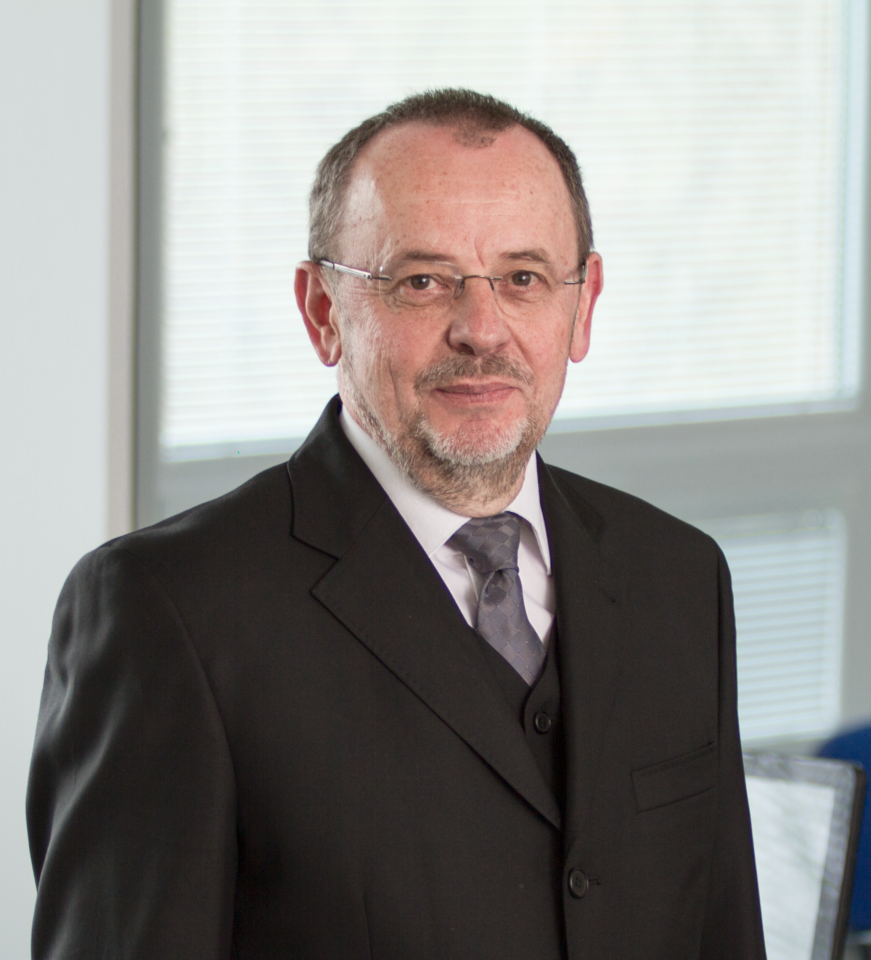
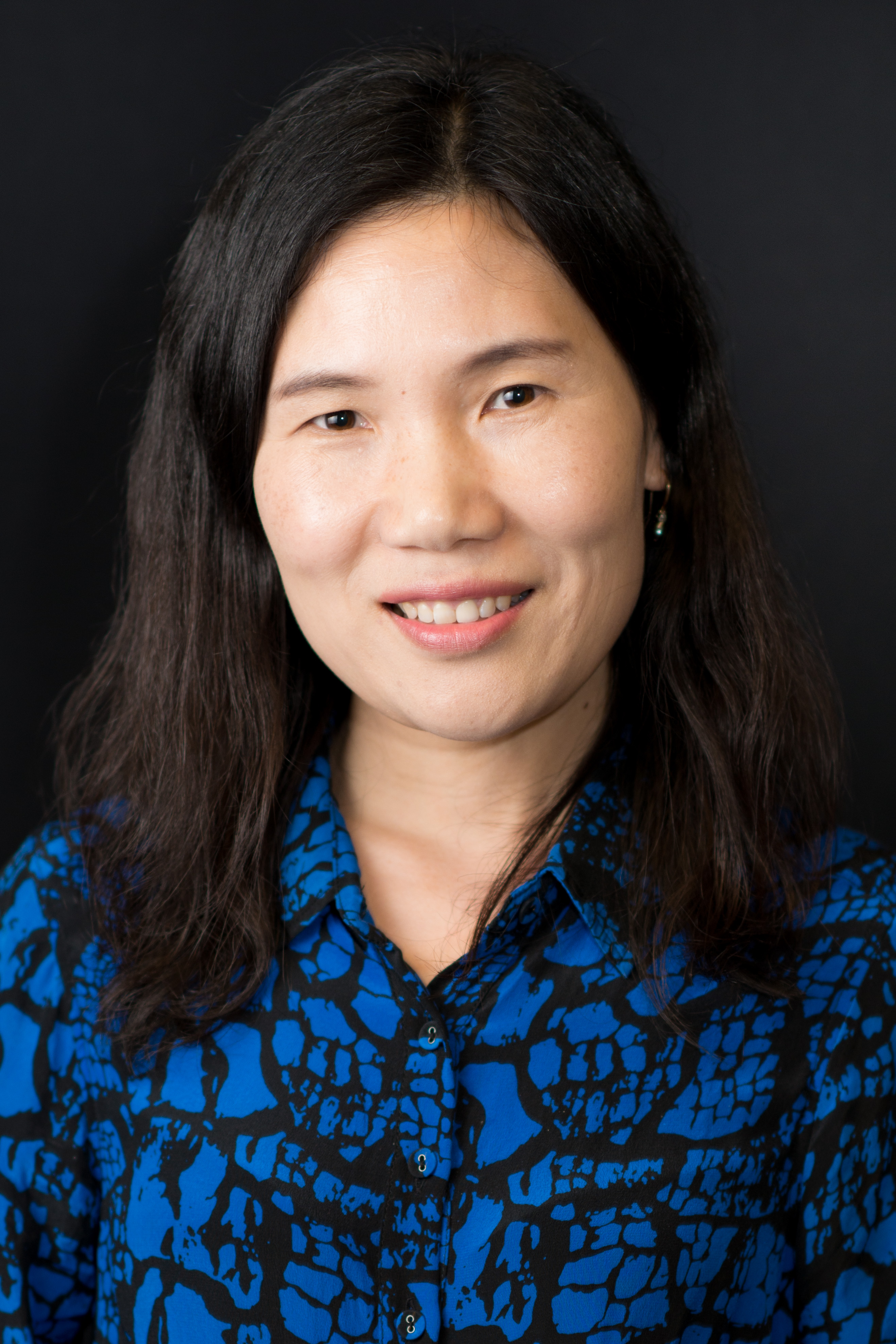
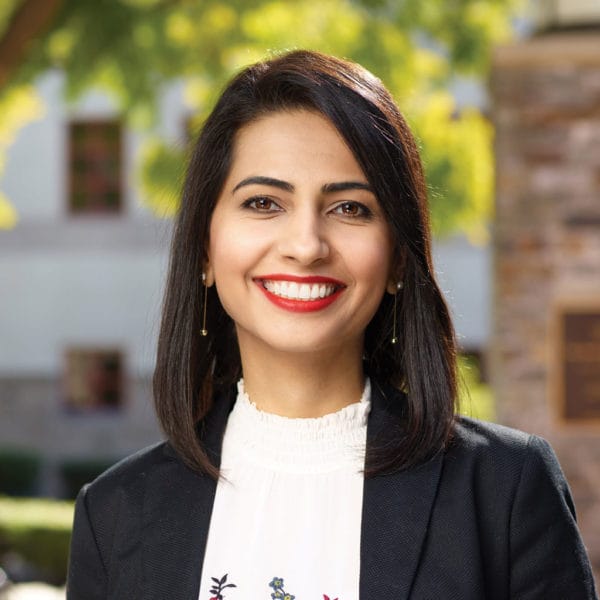
Prof. Ing. Peter Farkaš, DrSc is a distinguished academic at the Institute of Applied Informatics within the Faculty of Informatics at Pan-European University . He also teaches at the Faculty of Electrical Engineering and Information Technology (FEI STU) and has held visiting positions at the Faculty of Computer and Information Systems and Mathematics at Kingston University, UK. His career spans academia and industry, including roles at Tesla VRÚSE, Australian Telecommunications Research Centre, Siemens, and Sandbridge Technologies. Research Focus : Communication Theory, Coding Theory, and applications in information transfer, storage, and wireless systems. Key Contributions : Development of novel error-correcting codes (e.g., 5G LDPC codes, Reed-Solomon extensions), CRC polynomial design for E-DCH protocol, and multidimensional complementary codes. Publication Trends : Recent works emphasize coding theory advancements for 5G/LTE networks, multidimensional orthogonal codes for interference mitigation, and interdisciplinary applications of AI in democracy. His research bridges theoretical innovation with practical implementation in telecommunications. Scientific Awards : 2003: SIEMENS VIP recognition 2004: Werner von Siemens Excellence Award (with PhD student Matúš Turcsány) Advising & Grants : Supervised PhD students including Matúš Turcsány and collaborated with industry experts. Led EC-funded projects (NEXWAY, CRUISE, WINNER Phase II) and managed grants from VEGA, APVV, British Council, Royal Society, and DAAD. Labs & Collaborations : Active in the Institute of Applied Informatics at Pan-European University and contributed to projects with international institutions like Kingston University and SIEMENS PSE Slovakia.
Dr. Nataša Goјgić is a Professor of Applied Studies at the Department of Information Technologies, Faculty of Technical Sciences Čačak, University of Kragujevac. Her academic career spans decades of teaching and research in information systems, databases, and technology-enhanced education. Military Technical Faculty in Zagreb (Mechanical Engineering) Master's in Information Systems at Technical Faculty Čačak PhD in Information Systems Integration and Quality Management Dr. Goјgić's research focuses on information systems , data warehousing , and educational technology . Her publications reveal strong interests in: Business Intelligence and OLAP systems Regression algorithms in healthcare E-learning platforms and teaching methodologies Quality Management Systems (QMS) integration Database monitoring and financial technology She has pioneered the use of information systems in academic quality assurance and developed teaching materials for database systems. Her work bridges industrial engineering and modern information technologies.
Bartosz Jabłoński is affiliated with the Faculty of Information and Communication Technology at Wrocław University of Science and Technology, specifically the Department of Control Systems and Mechatronics . His research focuses on image processing, signal filtering, motion capture, and partial differential equations. Key research trends across his publications include: Development of quaternion-based algorithms for motion processing and clustering Application of multiscale analysis to improve motion capture systems Implementation of anisotropic filtering techniques for rotational trajectory smoothing Integration of agile methodologies in technical education Use of collaborative tools for Parkinson disease diagnosis His work spans both theoretical algorithm development and practical applications in biomedical engineering and educational reform.
Maria Do Carmo Ferreira Dos Santos is a Clinical Associate Professor in the Department of Nursing at the Faculty of Nursing, University of Girona. She has been serving in this academic role since 2021 while maintaining active clinical practice in anesthesia and pain management at the University Hospital of Girona (Trueta). Her dual expertise bridges clinical nursing and academic education, with a focus on surgical, anesthetic, and pain-related care. Education: PhD in Nursing, University of Girona (2020, Cum Laude) Postgraduate in Surgical Nursing, Anesthesia, and Resuscitation (2020) Master in Nursing Management, CEU-Cardenal Herrera University (2017) Master in Health Promotion, University of Girona (2014) Licensed in Nursing, Portugal (2008) Her research interests center on pain management , particularly breakthrough oncologic pain, surgical nursing, stroke care, and health promotion. She integrates clinical experience with academic inquiry, emphasizing patient-centered approaches and quality of life in chronic and acute pain conditions. Her work reflects a strong commitment to evidence-based nursing practice and professional development. The analysis of her publications reveals a focused trajectory in pain-related clinical nursing research , especially in oncology and anesthesia contexts. Her contributions include both empirical reviews and narrative reflections, indicating a multidimensional approach to understanding pain in clinical settings. Scientific Awards: 1st Prize in Short Stories 'Dad palabra al dolor' by Sociedad Española del Dolor, Fundación Grünenthal, and Plataforma Editorial Special 1st Prize for 'Revisions on Breakthrough Oncologic Pain' by Grupo OncoSur (2017) Maria Do Carmo has actively participated in scientific committees and national/international conferences. She has contributed to patient data management in stroke units and clinical research at the Girona Biomedical Research Institute. While no formal advising or grant funding is mentioned, her leadership as a reference nurse in the Pain Treatment Unit highlights her role in clinical mentorship and innovation. Her ORCID identifier (0000-0003-2169-5879) supports her scholarly visibility. She is affiliated with the Pain Treatment Unit at Hospital Universitari Trueta, where she serves as an accredited anesthesia nurse and pain care reference, integrating clinical practice with academic teaching and research.
Dr. Bartłomiej Jefmański is a Professor at the Department of Econometrics and Informatics at the Wrocław University of Economics – Jelenia Góra Branch. His work focuses on applying fuzzy logic and multi-criteria decision-making (MCDM) methodologies to address challenges in business sustainability, digital transformation, and organizational diversity management. He has pioneered the development of the IFMCDM R package, an open-source tool for intuitionistic fuzzy decision analysis. His research spans diverse areas including Industry 4.0 technologies' impact on sustainability, regional smart specialization, and employee satisfaction benchmarking. Notable contributions include frameworks for measuring subjective quality of life using fuzzy synthetic measures and analysis of renewable energy investment attitudes. Publications (2021-2025) highlight trends in digital transformation's role in Industry 4.0, diversity management benefits in V4 countries, and applications of intuitionistic fuzzy TOPSIS in service quality evaluation. His work bridges theoretical advancements in fuzzy set theory with practical business and policy applications. Jefmański collaborates with local governments and enterprises on sustainability strategies, contributing to regional development initiatives. His research emphasizes methodological innovations in data analytics and decision support systems for SMEs.
Scientia Professor Xiaojing Hao is a full Professor (tenured) and ARC Future Fellow at the School of Photovoltaic and Renewable Energy Engineering, University of New South Wales (UNSW). She is a Fellow of the Australian Academy of Technological Sciences and Engineering (FTSE), Fellow of the Australian Institute of Physics (FAIP), and Fellow of the Royal Society of Chemistry (FRSC), reflecting her significant contributions to renewable energy research. Professor Hao received her Bachelor of Engineering (1996-2001) and Master of Engineering (2001-2003) from the School of Materials and Metallurgy Science and Engineering at Northeastern University in Shenyang, China. She completed her PhD in 2010 from the School of Photovoltaics and Renewable Energy Engineering at UNSW, where she has remained as faculty. Bachelor of Engineering (1996-2001), School of Materials and Metallurgy Science and Engineering, Northeastern University, Shenyang, China Master of Engineering (2001-2003), School of Materials and Metallurgy Science and Engineering, Northeastern University, Shenyang, China PhD (2006-2010), School of Photovoltaics and Renewable Energy Engineering, University of New South Wales, Sydney, Australia Professor Hao's research focuses on low-cost, high-efficiency thin film solar cells and tandem solar cells, with over fifteen years of experience in the field. Her work initially centered on silicon-based solar cells before expanding to earth-abundant compound semiconductor materials such as chalcogenides for both solar photovoltaic and solar fuel applications. She leads a strong research group that has achieved numerous efficiency records on emerging thin film solar cells. Her research spans photovoltaic devices, functional materials, theory and design of materials, compound semiconductors, and nanomaterials, with particular emphasis on kesterite and perovskite solar cell technologies. Professor Hao has published over 250 peer-reviewed journal articles, including publications in high-impact journals such as Nature Energy and Energy and Environmental Science. Her recent research has focused on perovskite solar cells, kesterite solar cells, chalcohalide solar cells, and tandem solar cell configurations. She has made significant contributions to understanding defect engineering in solar cell materials, interface engineering, and developing scalable fabrication methods for next-generation photovoltaic technologies, with particular focus on cadmium-free alternatives and stability enhancement. Professor Hao has received numerous prestigious awards for her research excellence: Prime Minister's Prizes for Science: Malcolm McIntosh Prize for Physical Scientist of the Year (2020) Australian Academy of Science Pawsey Medal (2021) Fellow of the Royal Society of Chemistry (2024) Fellow of the Australian Academy of Technological Sciences and Engineering (2022) ARC Future Fellow (2019) Australian's Most Innovative Engineers 2019 NSW Premier's Prizes for Science & Engineering (Energy Innovation in NSW) (2018) Best Poster Award, the 7th World Conference on Photovoltaic Energy Conversion (2018) UNSW Scientia Fellowship (Inaugural) (2017) ARC DECRA (2015) Australian Renewable Energy Agency Postdoctoral Fellowship (2011) Professor Hao has secured substantial research funding as lead or chief investigator on numerous projects totaling millions of dollars. Her current grants include an ARC Industrial Transformation Research Hub ($5M, 2024-2029), UK-Australia Renewable Hydrogen Innovation Partnerships Funding ($1,396,414), multiple ARC Linkage and Discovery Projects, and several ARENA grants for research on efficient and stable chalcogenide-Si tandem cells, Si/perovskite tandem modules, and industrial high-throughput inspection methods. She supervises students in solar cell materials and devices and solar fuel devices, and teaches Engineering Postgraduate Coursework Research Skills, Vertically Integrated Projects, and Advanced Photovoltaics. Professor Hao leads a dynamic research group focused on advancing thin film solar cell technologies, with particular expertise in kesterite and perovskite materials. Her team works on both fundamental materials science and applied device engineering to develop next-generation photovoltaic technologies that are efficient, stable, and cost-effective, with strong industry partnerships for technology transfer and commercialization.
Johan Oldekop is a Professor in Environment and Development at the Global Development Institute, University of Manchester. His research focuses on policies and interventions that balance environmental conservation with human development outcomes, employing interdisciplinary methods from environmental sciences, GIS, political science, and economics. He leads the Sustainable Forest Transitions project and collaborates with global networks like FLARE and IFRI. Education: PhD in Environment from the University of Manchester. Previous positions include roles at UK universities (Sheffield, Newcastle) and US institutions (University of Michigan, Washington State University). Research Interests: Sustainable development, conservation strategies, forest management, and the use of large datasets for causal inference between conservation and development. Key topics include reforestation, community forestry, and policy impacts on poverty and ecosystems. Recent Articles: Focused on forest transitions, dietary quality in Malawi linked to agroforestry, and challenges in conservation impact assessments. His 2025 work introduces frameworks for analyzing reforestation outcomes and explores human-centered restoration approaches. Awards: None explicitly stated. Collaborations include USAID and UN FAO. Active in media engagements discussing forest governance and Amazon deforestation. Lab/Networks: Part of the FLARE and IFRI networks, contributing to global conservation and livelihood assessments.
Bernardo Pereira Nunes is a Senior Lecturer and Sub Dean of Educational Programs at the Australian National University (ANU) within the College of Engineering, Computing and Cybernetics. He holds a PhD in Informatics from the Pontifical Catholic University of Rio de Janeiro (PUC-Rio) and has held adjunct roles at PUC-Rio and visiting professorships at institutions such as the University of Pennsylvania. His professional affiliations include the IEEE Technical Committee on Learning Technology and the International Journal of Educational Technology in Higher Education. Education: Bachelor's in Computer Engineering (PUC-Rio, 2006) Master's in Informatics (PUC-Rio, 2009) PhD in Informatics (PUC-Rio, 2014) with a research period at Leibniz Universität Hannover Research focuses on Web Science , Technology-Enhanced Learning , and Semantic Technologies , with emphasis on educational search behavior, bias in information systems, and AI-driven learning tools. Notable projects include the FireMe app (widely reported globally) and the BiasChecker . He has published over 100 papers and serves as an editor/reviewer for top journals like IEEE Transactions on Learning Technologies and conferences such as ACM Hypertext. Key awards include the Senior Fellow of the Higher Education Academy (SFHEA). His work spans educational game design (e.g., Treasure Explorers), social media analysis (e.g., mourning behavior studies), and collaborative tools like TagTheWeb and VocRec. He has collaborated internationally with institutions like L3S Research Center (Germany) and Consiglio Nazionale delle Ricerche (Italy). Grants and labs: Active in securing funding for projects on learning analytics and digital humanities. Leads research teams focused on educational technology innovation and open data applications.
Dr. Jef Ausloos is an Assistant Professor of Information Law at the Amsterdam Law School, University of Amsterdam. His work focuses on data protection law, digital privacy, and platform governance. He specializes in GDPR compliance, algorithmic transparency, and the intersection of media law with emerging technologies. Current research explores challenges in data access rights, collective data harms, and ethical frameworks for digital trace data collection. Key areas include the operationalization of data subject rights under the GDPR, regulatory gaps in platform governance, and the role of collective action in addressing data-driven harms. He has contributed to interdisciplinary projects like the ATAP initiative on algorithmic transparency in news recommenders and the OSD2F open-source data donation framework. His publications analyze legal-ethical dimensions of digital platforms, including critiques of transparency practices, the right to be forgotten, and the evolving role of media concentration law in the digital era. Notable works address data donation frameworks, GDPR implementation challenges, and the limitations of current privacy regulations in addressing collective societal impacts. Ausloos advises on policy issues related to digital privacy and participates in EU regulatory consultations. His research often bridges legal scholarship with technical and social science perspectives, aiming to inform both academic and policy debates on digital rights in the information society.
Prof. Erhan İnce is a faculty member in the Department of Electrical and Electronic Engineering at Eastern Mediterranean University (EMU), where he has served since 1998. He holds a PhD in Communications from the University of Bradford (1997) and MS/BS degrees in Electrical and Electronic Engineering from the University of Bucknell (1992, 1990). His research focuses on mobile communications, channel coding, OFDM/OFDMA, statistical signal processing, and facial recognition. He has supervised numerous PhD and MS students, including Ramin Bakhshi, Syed Amjad Ali, and Waseem Qassab Bash. Key projects include 'Monitoring KKTCELL's Base Stations' (2018-2019) and 'Background Subtraction and Lane Occupancy Analysis' (2011). He received an award at the 1998 Symposium on Communication Systems & Digital Signal Processing. His work spans peer-reviewed journals (IEEE Access, Digital Signal Processing) and books on video surveillance. He actively contributes to IEEE and other academic communities.
Heikki Rantala is a researcher at the Department of Computer Science, Aalto University, specializing in semantic web technologies and digital humanities. He is actively involved in developing knowledge graph-based systems for cultural heritage research, including projects like FindSampo, CoinSampo, and OperaSampo. His work focuses on integrating historical datasets, creating semantic portals, and enabling faceted search in cultural heritage domains. Rantala holds an MSc in Computer Science from the University of Helsinki (2019) and has contributed to over 50 peer-reviewed publications since 2018. Key Projects: FindSampo: Analyzes archaeological finds using linked open data CoinSampo: Numismatic data portal for historical currency analysis BiographySampo: Biographical knowledge graph for historical人物研究 ParliamentSampo: Parliamentary data system for legislative analysis Research Interests: His work spans semantic web frameworks, digital humanities infrastructure, and historical data modeling. He emphasizes interoperability through ontology development and user-centric semantic portals. Technical Expertise: SPARQL endpoint integration, faceted search systems, knowledge graph construction, and cross-domain data harmonization. His tools like Sampo-UI provide reusable frameworks for semantic portal development. Grants & Collaborations: Active in EU-funded initiatives like FIN-CLARIAH and international projects with organizations such as the National Library of Finland and cultural heritage institutions.
Alan Gamlen is a Professor at the School of Regulation and Global Governance, ANU College of Asia & the Pacific, specializing in human migration, diaspora institutions, and migration policy. He previously held positions at Oxford University, Stanford University, and others. His work bridges academia and policy, advising UN agencies, governments, and NGOs. He directs ANU's migration research center and edited the journal Migration Studies . His 2019 book Human Geopolitics won the ISA's Distinguished Book Award. Doctorate from University of Oxford (New Zealand Top Achiever Scholar) Member of Tainui Māori federation Advisory roles: UN Migration Agency, UN Platform on Disaster Displacement Research interests include migration temporalities, diaspora governance, refugee mobility, and superdiversity visualization. His recent work examines post-pandemic migration trends and urban socio-economic complexity. He leads projects funded by ARC, Royal Society of NZ, and others. Over 50 peer-reviewed publications span migration policy analysis, diaspora institutions, and transnational networks.
Sami Safadi is an Associate Professor at the University of Minnesota School of Medicine with dual appointments in the Department of Medicine and Division of Nephrology and Hypertension. His clinical and academic work bridges nephrology and critical care medicine through innovative research and education initiatives. His primary research domains include: Mechanical ventilation education and assessment methodologies Acute kidney injury biomarkers and prevention strategies Ultrasound applications in critical care hemodynamics Precision medicine frameworks for nephrology Artificial intelligence integration in ventilator management Medical education technology and simulation-based training Analysis of his 2020-2025 publications reveals a dominant focus on optimizing critical care education through comparative studies of teaching modalities (web-based vs. traditional simulators), knowledge retention research, and AI-driven ventilator monitoring. Concurrently, his nephrology work emphasizes early AKI detection systems and precision medicine approaches using multidimensional data integration. No information was provided regarding scientific awards, student advising relationships, research grants, or laboratory affiliations.
Augustin Kelava is a Professor at the Department of Quantitative Methods, Eberhard Karls University of Tübingen. He has held this position since 2018 and leads the Methods Center as Managing Director. Previously, he was Professor at the Hector Institute for Empirical Educational Research (2013-2018) and Junior Professor at Technical University of Darmstadt (2011-2013). PhD in Psychology (Goethe University Frankfurt, 2009) Diploma in Psychology (Goethe University Frankfurt, 2004) Kelava specializes in latent variable modeling, machine learning in social sciences, and educational research. His work spans dynamic latent class models, Bayesian regularization techniques, and prediction of human behavior using intensive longitudinal data. He contributes to psychometric theory (e.g., item response theory extensions) and applies these methods to diverse fields including sports science and emotion regulation. Editor of "Testtheorie und Fragebogenkonstruktion" (3rd ed., Springer, 2020) Key researcher in the Cluster of Excellence "Machine Learning in Science" Active in methodological conferences (FGME 2017, SEM 2019) Review activities for 20+ journals and foundations including Psychometrika, DFG, and SNSF His recent publications focus on integrating machine learning with psychometrics, addressing identifiability in complex models, and evaluating personality assessment validity for large language models. He collaborates with researchers across psychology, education, and computational fields.
Saida Heshmati is an Assistant Professor of Psychology in the Division of Behavioral & Organizational Sciences at Claremont Graduate University, specializing in positive developmental psychology. Her research examines how optimal development unfolds across the lifespan, particularly in at-risk populations, using cutting-edge methodologies including ecological momentary assessment, network analysis, and cultural consensus theory. Her research focuses on human flourishing across the lifespan , positive relationships and love , and longitudinal analysis of well-being. Heshmati employs innovative approaches such as experience sampling methods, observational analysis, and wearable physiology monitors to understand moment-to-moment well-being dynamics. Her work bridges developmental psychology, cross-cultural studies, and positive psychology to explore how cultural contexts shape love experiences and well-being outcomes. Recent publications reveal strong emphasis on love perception across cultures , daily well-being tracking , and methodological innovations in psychological assessment. Her 2025-2024 work shows growing focus on cross-cultural love studies, immigrant well-being, and dynamical systems approaches to psychological processes. International Positive Psychology Association (IPPA) 2023 Early Career Researcher Award John Templeton Foundation Grant #63364 (2024-2028): "Embracing Love Across Cultures: Decoding Cultural Beliefs on Love and Their Impact on Wellbeing" Heshmati directs the Well-Being & Developmental Methods Research Lab and leads a major 5-year cross-cultural study across six countries (India, Japan, Brazil, Saudi Arabia, Spain, Kenya) examining everyday love experiences. Her Templeton-funded project represents significant grant acquisition focused on transdisciplinary love research. She teaches courses including "Positive Relationships Across the Lifespan" and "Positive Education, The Science of Human Flourishing" while mentoring graduate researchers through her lab. The Well-Being & Developmental Methods Research Lab operates two major initiatives: the Cross-Cultural Love Project and the main lab focused on developmental methods. The lab employs experience sampling methods, day reconstruction techniques, and dynamical systems modeling to study well-being indicators across diverse populations. Current team includes graduate students, faculty collaborators, and undergraduate research assistants working on multi-country data collection and analysis.