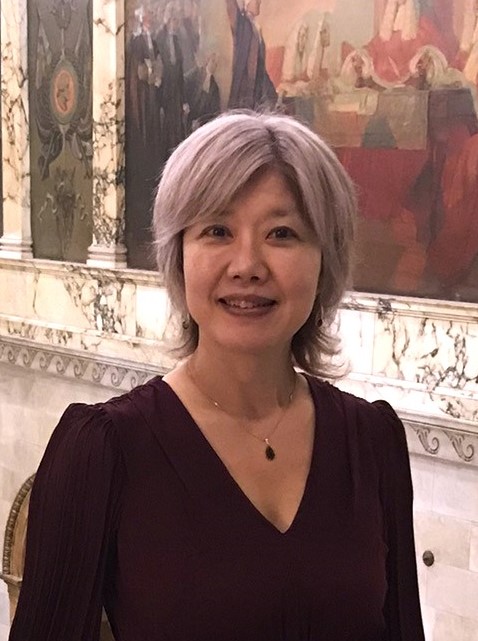
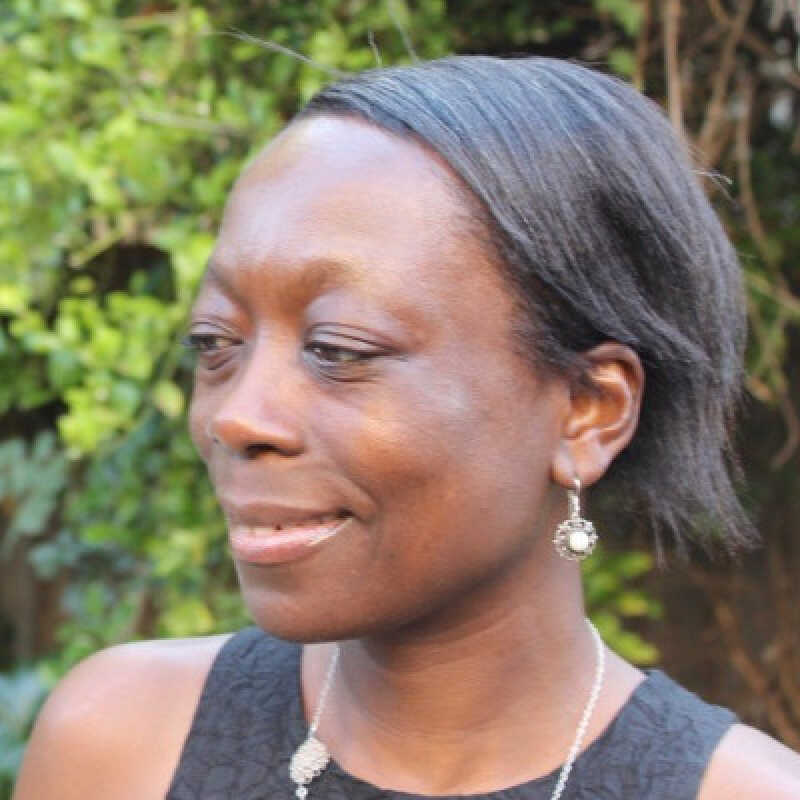
Ranjoo Herr is a Professor in the Department of Philosophy at Bentley University. She holds a PhD from SUNY Buffalo and BL/BA degrees from Seoul National University. Her research intersects feminist philosophy (decolonial, third world, transnational, women of color, and Confucian feminism), political philosophy, and comparative philosophy. Dr. Herr's work examines critical issues including collective self-determination, human rights, colonialism, global injustice, nationalism, racial justice, and multiculturalism. Her teaching covers global justice/globalization, philosophy of race, political philosophy, feminist theory, East Asian philosophy, environmental ethics, and applied ethics.
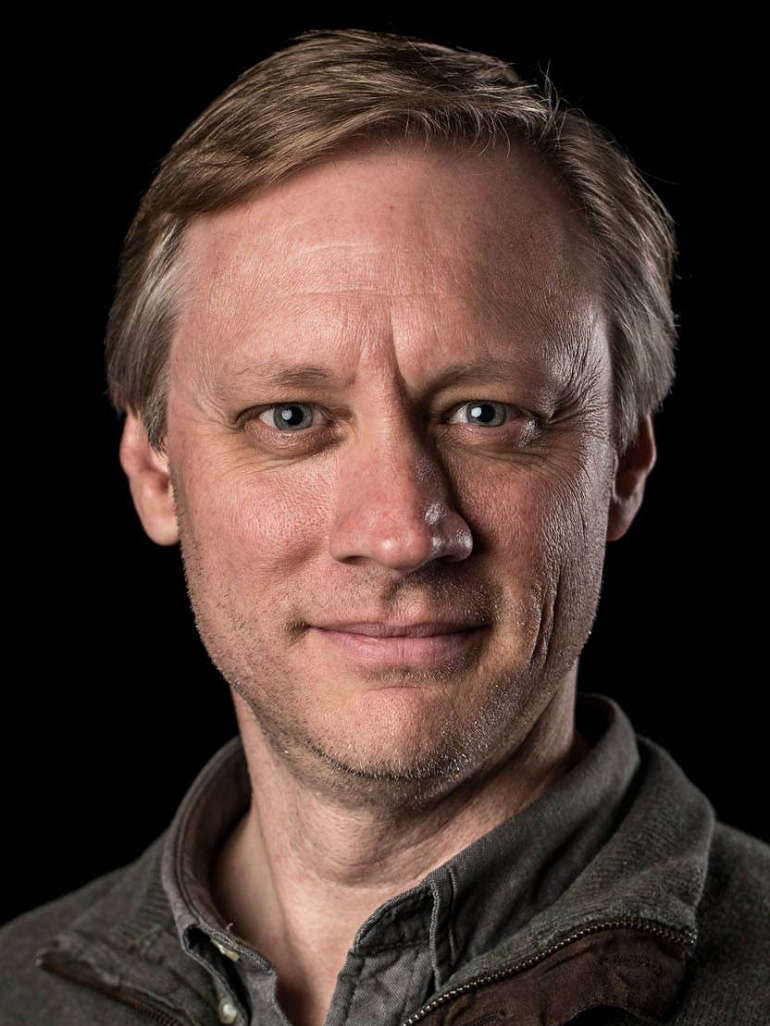
Mike Klein is an Associate Professor and Department Chair in the Department of Justice and Peace Studies at the University of St. Thomas. He also serves as Program Director and holds roles in American Culture and Difference and Diversity Leadership. His expertise spans leadership for social justice, critical pedagogy, art and social justice, and peacebuilding. Klein has authored/co-authored over 15 books and numerous peer-reviewed articles, focusing on democratizing leadership, counter-hegemonic democracy, and peace education. He received the 2007 Bush Foundation Leadership Fellowship and the 2017 Aquinas Scholars Professor of the Year award. Education: Ed.D., with undergraduate degrees in studio arts and theology, and a master’s in education emphasizing service-learning. His research integrates community-based projects, including murals with diverse groups like youth farms and HIV/AIDS support networks. Klein teaches courses on qualitative methods, leadership for social justice, and pedagogy rooted in Paulo Freire’s critical theory. Research emphasizes intersectionality, institutional ethnography, and collaborative work with Indigenous communities. Recent publications explore unsettling whiteness in academia, folk schools for peacebuilding, and preventive peacebuilding strategies. He consults with the Amherst H. Wilder Foundation’s Neighborhood Leadership Program and has led international immersion programs through Campus Ministry. Key Awards: Bush Foundation Leadership Fellowship (2007), Aquinas Professor of the Year (2017) Grants: Lilly Foundation grant for Social Justice Vocation work (2002-2007) Labs/Initiatives: Sustainable Communities Partnership Projects (e.g., PLACE, Metro Transit collaborations)
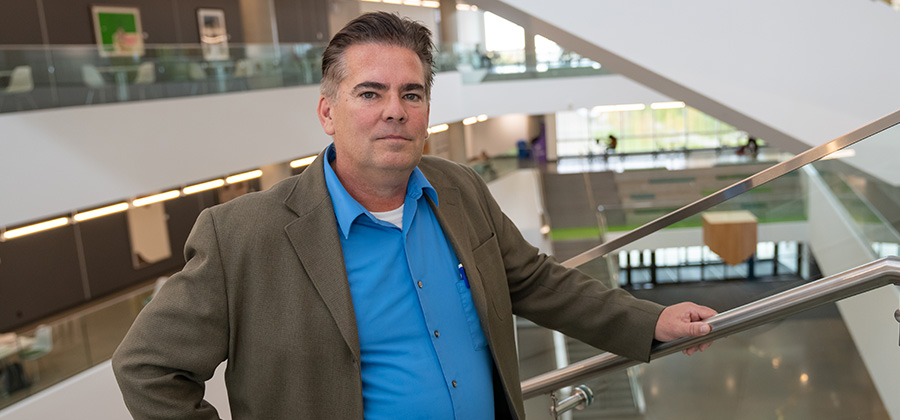
Dr. John Soroski is an Associate Professor in the Department of Anthropology, Economics and Political Science at MacEwan University. He holds a PhD from the University of British Columbia, and MA/BA degrees from the University of Calgary. Previously, he served as Assistant Professor at the University of Northern British Columbia and taught at UBC/Simon Fraser University. His research focuses on Canadian politics, constitutional law, and contemporary political theory. Key themes include Charter of Rights interpretations, religion-politics intersections, and liberal philosophical debates on freedom of expression/affirmative action. He teaches courses on Canadian federalism, constitutional law, and cultural identity politics. Research interests include fiscal management politics, indigenous research ethics norms, and property-form dynamics. Soroski has published in Politics and Religion and contributed to edited volumes on Canadian religious pluralism. He currently oversees senior student independent studies and maintains expertise in multiculturalism policies, public ethics frameworks, and liberal democratic theory.
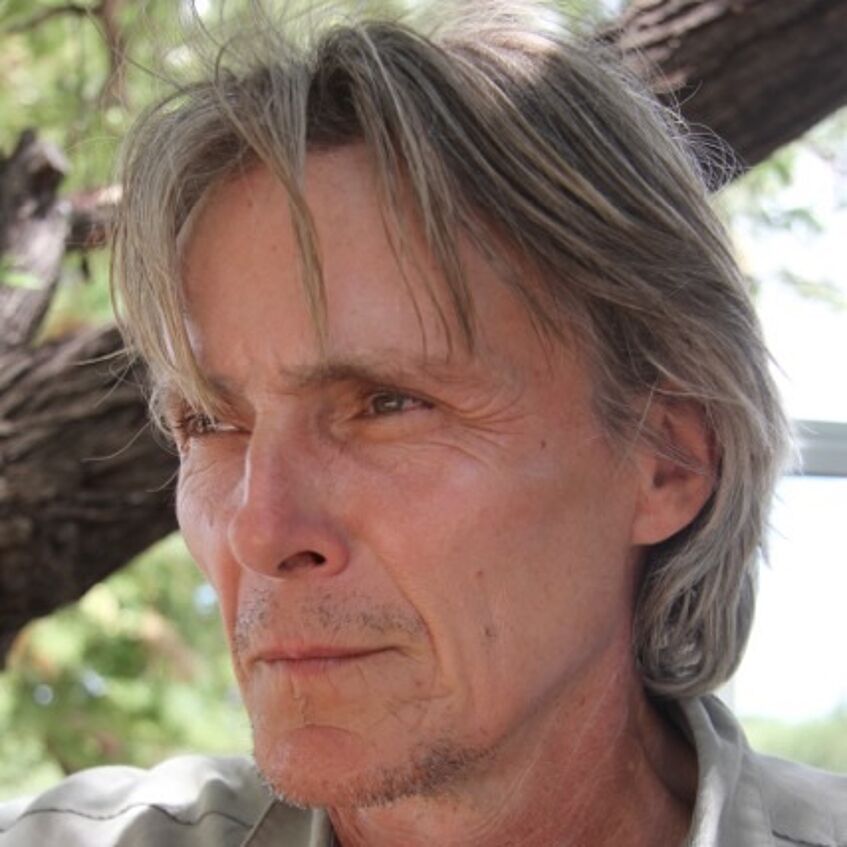
Bridget Byrne is a Professor of Sociology at The University of Manchester, leading the ESRC-funded CoDE (Centre on the Dynamics of Ethnicity and Inequality). Her research focuses on race, class, gender, citizenship, and the cultural industries. She directs major projects like the Covid19 Racialised Groups Impact Study . Byrne’s work includes books such as White Lives (BSA Philip Abrams Award winner), Making Citizens , and All in the Mix , examining racial identities, citizenship rituals, and school choice. Her expertise spans qualitative methods and interdisciplinary collaborations. Current roles include editorial work for Sociology and examining race in cultural sectors. Byrne has advised numerous PhD students, with research topics ranging from migrant activism to mixed-race identities. She contributes to public discourse via media engagements and policy-oriented reports. Research Interests: Racialization and urban spaces Citizenship ceremonies and national identity School choice dynamics and class/race intersections Cultural sector equity and diversity Awards: BSA Philip Abrams Award (2006) for White Lives Grants/Projects: ESRC CoDE Centre (2013–ongoing) Leverhulme Fellowship-funded citizenship rituals study ESRC school catchment area analysis Labs/Teams: Director of CoDE, collaborating with interdisciplinary networks on ethnicity-related studies.
Dr. Amir Kalan is an Assistant Professor in the Department of Integrated Studies in Education (DISE) at McGill University, located in Montréal. His research focuses on the sociological dimensions of literacy, particularly for minoritized and racialized students in multicultural contexts. He holds a Ph.D. in Language and Literacies Education from the Ontario Institute for Studies in Education (OISE), University of Toronto, and a Master of Teaching from the same institution. His work integrates discourse analysis, ethnography, and arts-based inquiry to examine literacy practices beyond institutional norms. Key research areas include narrative sovereignty in Indigenous contexts, decolonizing literacy theories, and writing practices during crises such as pandemics or displacement. He leads projects funded by SSHRC, including studies on narrative sovereignty with Wapikoni Mobile and de-Westernizing literacy concepts like translanguaging. Education: Ph.D., Language and Literacies Education (2018), University of Toronto Master of Teaching (2013), University of Toronto Dr. Kalan’s research emphasizes interdisciplinary approaches, drawing on philosophy, sociology, and literary theory. He advocates for equity in writing education through creative academic genres like poetic scholarship. His recent publications explore crisis writing, multilingual pedagogies, and the intersection of literacy with social justice. He supervises doctoral and master’s students in areas such as translingual practices, urban immigrant experiences, and language policy. Awards & Grants: SSHRC Doctoral Fellowship (The Writingworld Project) SSHRC Partnership Engage Grant (Narrative Sovereignty) SSHRC Insight Development Grant (Decolonial Literacy Research) Labs & Collaborations: Active partnerships with Indigenous organizations like Wapikoni Mobile and global education networks. His work often involves community-based research to center marginalized voices in knowledge production.
Dr. Johanna Amaya-Panche is a PeaceRep Postdoctoral Research Fellow at the University of Edinburgh's School of Law, specializing in Political Science and International Relations. She previously served as a Lecturer in Latin American Politics at the Institute of the Americas and Director of the Master's Program in Latin American Studies at University College London (UCL). Her research focuses on international actors' influence on civil society strategies for peacebuilding, with emphasis on Colombia and the Global South. Key interests include transitional justice, multiculturalism, gender, and ethnic inclusion. She holds a PhD in Government from the University of Essex and has extensive experience with organizations like the EU, USAID, and UNDP. Her work has been featured on France 24, The Dialogue, and TVP World. She currently chairs the Conflict & Change Cluster at UCL's Political Science Department and serves on the Board of Advisors for The Independent Diplomat. Education: PhD in Government, University of Essex (2023) MRes in Latin American Studies, Pontificia Universidad Javeriana (2012) Bachelor’s in Political Science and International Relations, Pontificia Universidad Javeriana (2004) Research Interests: Peace processes and reconciliation mechanisms Ethnic and gender dynamics in conflict zones Foreign aid impact on post-conflict societies Policy analysis for inclusive development Media Contributions: Over 8 expert commentaries on Latin American politics and peace processes for France 24, TVP World, and other platforms, addressing topics like Venezuela’s elections, Colombia’s peace agreement, and regional conflicts. Grants & Funding: Secured funding from USAID, Global Challenges Research Fund (GCRF), and the European Union for projects analyzing peacebuilding and reconciliation in Colombia. Active in network initiatives like Global South Academic Network and CAPAZ Colombia-Germany Institute for Peace. Labs/Teams: Leads the Conflict & Change Cluster at UCL and collaborates with the Peace Agreement Consortium (PA-X) and the Independent Diplomat, focusing on inclusive peace processes and policy advocacy.
Dr. Jill Hanley is a Professor at McGill University's School of Social Work and Scientific Director of the SHERPA Institute, focusing on migrant populations' social rights. Her work bridges policy, practice, and community advocacy to improve access to health, housing, and labour rights for precarious-status migrants. She has held roles since 2006, with prior experience at institutions like Tufts University and Université de Montréal. Education includes a PhD in Social Work (Université de Montréal, 2004), postdoctoral studies at Université Libre de Bruxelles (2004–2006), and degrees from McGill University in Social Work and Anthropology/Geography. Her research emphasizes documenting migrant challenges to inform policy and strengthen community groups. Dr. Hanley co-founded Montreal’s Immigrant Workers’ Centre (2000) and collaborates with organizations like RASMi and CATHII. She teaches migration, social policy, and anti-racism courses. Her work highlights strategies for marginalized migrant communities, including policy dialogue and grassroots organizing. Key contributions include analyzing systemic barriers faced by temporary foreign workers, refugee claimants, and undocumented migrants. She advocates for equitable healthcare access and critiques institutional exclusion frameworks. Dr. Hanley’s research spans transnational family support, pandemic impacts on migrant families, and anti-trafficking initiatives.
Timothy Y. Loh is a sociocultural anthropologist and Cotsen Postdoctoral Fellow in Princeton University's Society of Fellows. He serves as a Lecturer in Anthropology and the Council of the Humanities, and Faculty Fellow at Yeh College. His research integrates medical anthropology, linguistic anthropology, and science and technology studies, focusing on deaf and signing communities in Jordan, Singapore, and the U.S. His current book project explores assistive technologies' impact on deafness and modernity in Jordan. Loh holds a Ph.D. from MIT's HASTS program and prior degrees from Georgetown University. He has conducted fieldwork in Jordan, Lebanon, and Singapore, addressing deaf education, sign language rights, and disability policy. His work has garnered awards from the Society for Linguistic Anthropology, Middle East Studies Association, and others. Loh's teaching covers disability studies, language politics, and Middle Eastern anthropology. He speaks Arabic and Jordanian Sign Language, emphasizing reflexivity in his methodologies. Education: Ph.D. and S.M. (MIT), B.S. and M.A. (Georgetown) Affiliations: Society of Fellows, Council of Humanities, Yeh College Research Interests: Deaf studies, disability modernity, assistive technologies, Middle Eastern social dynamics His research highlights how technologies like cochlear implants and mobile apps reshape deaf identities in Jordan, interrogating intersections of language, religion, and disability. Loh also examines Singapore's multicultural policies and their exclusion of sign languages. His articles address topics from deaf migration to refugee education, published in Medical Anthropology , Journal of Linguistic Anthropology , and SAPIENS . He has organized conferences and workshops on disability and technology in the Middle East.
Werner Zips is a Professor at the Department of Social and Cultural Anthropology, University of Vienna. His research spans Caribbean and African studies with focus areas in legal anthropology, indigenous rights, and postcolonial governance frameworks. He has produced extensive ethnographic works including documentary films about cultural practices in Gabon, Senegal, and Southeast Asia. As former President of the Society for Caribbean Research (2003-2009) and Steering Committee Member of the African Borderlands Research Network (2008-2014), he has organized numerous international symposia on cultural anthropology topics. His publications include studies on Rastafari culture, Sufi traditions, and indigenous governance systems.
Dr. Sandra Leonie Field is a Lecturer in Philosophy at Monash University, specializing in political philosophy with a focus on justice, equality, and dignity. Her research explores the intersection of these ideals with gender, multiculturalism, and disability. She currently leads an Australian Research Council project examining dignity in residential care settings. Her research interests include: Foundations of justice and equality in political systems Dignity-based approaches to disability and aged care Gender equity in social and economic contexts Multicultural perspectives on social inclusion Field's recent publications focus on disability ethics, gender justice frameworks, and the philosophical distinctions between respect and dignity. Her work consistently engages with practical applications of political theory in healthcare and social policy contexts. While no specific awards are listed, Field's research has been presented to medical organizations, international dementia groups, and media outlets. Her academic contributions include extensive work on normative frameworks for disability rights and social inclusion, with research disseminated through books, journal articles, and conference presentations.
Dr. Liudmila Klimanova is an Associate Professor in the Department of Russian and Slavic Studies at the University of Arizona's College of Humanities. She holds affiliations with the Human Rights Practice Program and the National Center for Interpretation. Her research focuses on the intersection of language studies, multilingualism, multiculturalism, and technology, with a particular emphasis on Computer-Assisted Language Learning (CALL) and digital pedagogy. She serves as Core Faculty and Social-Cultural Dimensions Area Chair in the Second Language Acquisition and Teaching (SLAT) doctoral program, and co-directs the LLC Commons curricular resource project for Russian language instruction. Dr. Klimanova also leads the Footprints initiative, which trains language teachers in place-based learning and critical pedagogies. She is Editor-in-Chief of the Russian Language Journal and an Associate Editor for the Issues in the Teaching of East European and Eurasian Languages and Cultures series, while serving as Secretary for the Computer-Assisted Language Instruction Consortium (CALICO). Her teaching spans courses in Russian Studies, human rights in Eurasia, and language and digital media. Recent research explores virtual exchange dynamics, identity construction in digital spaces, and equitable technology integration in language education. She advocates for multilingualism and critical digital literacies through projects like hashtag-based identity performance studies and telecollaborative learning initiatives. Dr. Klimanova’s work bridges theoretical and applied aspects of language education, emphasizing technology’s role in fostering intercultural competence and social justice. Her publications address challenges such as marginalized learners’ representation in virtual exchanges and the semiotics of digital communication. She actively mentors students exploring technology’s impact on language identity and global communication.
Professor Diamond Ashiagbor is Professor of Law at the University of Kent's Kent Law School, having previously held positions at SOAS, UCL, and Oxford. She earned her PhD from the European University Institute and is qualified as a Solicitor (non-practising). Her research focuses on labour law, social rights in market integration, and economic sociology of law. Her monograph The European Employment Strategy received the Peter Birks/Society of Legal Scholars Prize in 2006. Current projects examine social dimensions of regional economic integration in Africa and labour law re-imagination for informal economies. She directs research on embedding markets through social policy and developing economic sociology frameworks. Publications analyze EU social law, regional governance, and intersections of trade liberalization with labour rights. Recent work explores decolonisation in legal education and racial dimensions of labour precarity. Teaching covers Labour Law and Public Law, while research supervision spans labour/equality law, EU integration, socio-legal approaches, and law-development intersections.
Dr. Yıldız Atasoy is a Professor of Sociology and Director of the Centre for Sustainable Development at Simon Fraser University's Faculty of Environment. She holds associate memberships in the Department of Geography and the School for International Studies. Her research focuses on global political economy, agrifood systems, neoliberalism, and Islamic politics, with a regional emphasis on Turkey and Latin America. Education: PhD in Sociology (University of Toronto, 1998), MSc in Sociology (Middle East Technical University), and BSc in Social Work (Academy of Social Services, Ankara). Research explores long-term economic changes, transnational social movements, and the political economy of food. Current work examines Turkey’s agrifood systems under climate change and neoliberal urbanism. She has published widely in journals like Journal of Agrarian Change and authored books such as Commodification of Global Agrifood Systems and Agro-Ecology (2017). Dr. Atasoy has organized international conferences on global economic crises and state transformations. She teaches courses on food systems and racial capitalism. Her work integrates political science, economics, and cultural studies, analyzing how global capital and local dynamics interact. Recent publications critique industrial agriculture’s exploitation of migrant workers and digitalization’s role in food production.
Dr. Kaye Quek is a Senior Lecturer in Global Studies at RMIT University's School of Global, Urban and Social Studies, where she has served since 2016. She also serves as Program Manager for the Bachelor of International Studies. Her academic background includes a PhD in Political Science and a BA (Hons) from the University of Melbourne's School of Social and Political Sciences. Dr. Quek's research focuses on gendered human rights abuses, particularly in contexts of harmful marriage practices, domestic violence, and human trafficking. She has published widely, including her 2018 monograph Marriage Trafficking (Routledge), and contributes to public discourse through outlets like ABC Religion and Ethics and The Conversation . Her teaching spans gender studies, political theory, sociology, and international relations. She actively engages with industry and government, serving as an executive member of the Coalition Against Trafficking in Women Australia (CATWA) and advising bodies such as UN Women and the Salvation Army. Dr. Quek supervises research projects addressing topics like disaster governance, corporate social responsibility, and intersectional feminism. Her work emphasizes interdisciplinary approaches to global challenges and the intersection of policy, culture, and human rights.
Dr. Peter Phipps is a Senior Lecturer at RMIT University's School of Global, Urban and Social Studies (GUSS), specializing in global cultural studies, postcolonialism, and Indigenous relations. He serves as Director of the Honours program and is a founding member of the Centre for Global Research. Phipps holds a PhD from the University of Melbourne, focusing on postcolonial theory, and conducted postgraduate training at UC Berkeley. His research spans Indigenous festivals, cultural globalization, and urban multiculturalism, with projects in Australia, PNG, and the Balkans. Education: Postgraduate studies at the University of California, Berkeley; PhD in Anthropology from the University of Melbourne. Research interests include cultural politics, national identities, and transnational Indigenous networks. He has advised on projects such as 'US-China arms race implications on South Asia' and 'China's Caribbean foreign policy.' Publications highlight themes like Indigenous sovereignty, multicultural urban policies, and ethical research practices. His work with organizations such as the UNDP and Warlayirti Art Centre underscores engagement with global-local intersections. Phipps' research emphasizes cultural diplomacy, festival politics, and the impact of globalization on identity formation. Supervision focuses on topics ranging from nuclear policy history to diasporic belonging, reflecting his interdisciplinary approach. No specific awards are mentioned, but his contributions to policy recommendations and international consultancies highlight his applied academic impact.