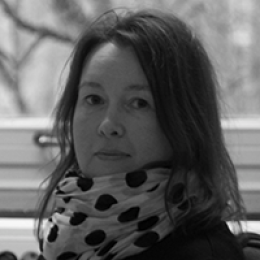
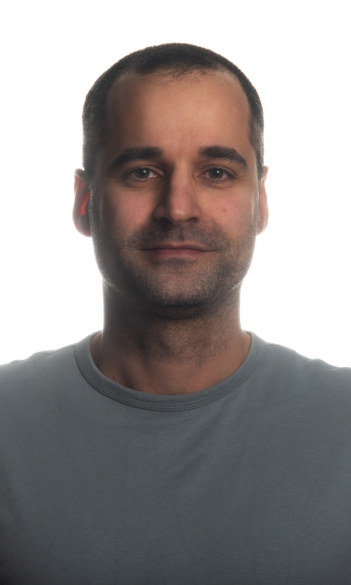
Aaron Richmond serves as Associate Director of the Center for Advanced STEM Education and Professor of Psychological Sciences at Metropolitan State University of Denver. He holds editorial roles at journals like Teaching of Psychology and Journal of Educational Psychology . With a Ph.D. in Educational Psychology from the University of Nevada-Reno (2006), he focuses on pedagogical strategies in STEM and higher education, including cognitive processes, instructional effectiveness, and multicultural teaching. His research explores teaching competencies, metacognition, and online learning dynamics. Notable awards include the Jane S. Halonen Award for Excellence in Teaching and leadership roles in professional organizations like the Society for Teaching of Psychology. Richmond has authored over 70 peer-reviewed publications and actively promotes evidence-based teaching methods through frameworks like the 'model teacher' criteria. Key areas of impact include: Development of learner-centered syllabi Evaluation of feedback modalities in online education Global alignment of psychology education standards Advocacy for STEM teacher preparation His work bridges cognitive science and practical pedagogy, emphasizing student engagement and workforce readiness in 21st-century education.
Janet Fuller is a Professor of Language and Society at the University of Groningen’s Faculty of Arts, holding roles such as Chair of the Department of European Languages and Cultures and Interim Chief Diversity and Inclusion Officer. She specializes in sociolinguistics, discourse analysis, and multilingualism, with research focusing on language ideologies, migration discourses, and national belonging. Fuller earned her Ph.D. in Linguistics from the University of South Carolina (1997), an M.A. in American Studies from Freie Universität Berlin (1992), and a B.A. in Anthropology from Macalester College (1984). Her research explores language’s role in shaping identity and power dynamics, particularly in transnational and multicultural contexts. Recent work analyzes media discourses on migration in Europe, emphasizing how language constructs narratives around national belonging and exclusion. She has published extensively, including co-authoring Introduction to Sociolinguistics (8th ed., 2021) and Speaking Spanish in the US (2021). Her studies on linguistic landscapes investigate how public signage reflects societal multilingualism and transnational identities. Fuller’s articles frequently address migration, language policy, and education, such as examining multilingual psychotherapy practices and biodiversity communication at UN summits. She received awards for research contributions, including the Dean’s Appreciation Award and multiple grants supporting bilingualism studies. Her teaching spans sociolinguistics, discourse analysis, and gender studies, with a focus on critical methodologies. Her work bridges academia and public engagement, contributing to debates on diversity and inclusion. Ongoing projects include analyzing discourses of populism and language’s role in sustainability frameworks. She advises on language policies and has organized conferences on multilingualism and migration studies.
Barbara Herzog-Punzenberger is the current Rector of the Vienna University of Education (since 2022). Previously, she held the position of Professor of General Didactics and School Pedagogy at the University of Innsbruck (2018–2022) and served as Head of the Department of Education and Migration at Johannes Kepler University Linz (2014–2018). She has extensive academic expertise in migration studies, intercultural education, and educational policy, with a focus on social inequality, multilingualism, and teacher education for diversity. Her educational background includes a Habilitation in Educational Sciences (2021, Johannes Kepler University Linz), a Doctorate in Sociology (2011, Freiburg University of Education), and a Diploma in Cultural and Social Anthropology (1995, University of Vienna). She has authored numerous publications on migration, education, and integration, including works on second-generation youth, multicultural policies, and equity in education systems. Her research has been supported by prestigious organizations like the European Commission, the Austrian Science Fund, and the OECD. She has received awards such as the Dr.-Maria-Schaumayr-Preis für Frauen in der Wissenschaft and held visiting professorships at institutions like the University of Vienna and University of Calgary. She is an active member of international academic networks, including the American Educational Research Association (AERA) and the Comparative and International Education Society (CIES). Her recent work emphasizes the role of teacher education in addressing cultural diversity, the impact of migration on education systems, and policy frameworks for inclusive education. She contributes to national and international initiatives, such as the Austrian UNESCO Commission and the EU’s NESET expert network.
Grace H. Chung is a full-time Professor of Child and Family Studies at the College of Human Ecology, Seoul National University, where she has been teaching since March 2018. She serves as Director of the Family Environment Research Lab, focusing on multicultural and immigrant families, family counseling, and adolescent development. Her leadership roles include Director of the Seoul National University Human Ecology Research Institute (March 2023-July 2023), Vice Dean of Student Affairs for the College of Human Ecology (August 2021-July 2023), and Director of the Seoul National University Multicultural Life Education Center (September 2018-December 2022). Dr. Chung earned her Ph.D. in Human Development and Family Studies from the University of Illinois, Urbana Champaign in 2006, following an MA from the same institution in 2003. She completed her undergraduate studies in Biology at the University of California, Irvine in 1999. Her academic journey includes positions as Assistant Professor at Montclair State University in New Jersey (2008-2009) and Postdoctoral Fellow at UCLA (2006-2008). Her research focuses on multicultural and immigrant families and adolescents, couples and family counseling, parent-child relationships during adolescence, and family stress and adaptation. Through the Family Environment Research Lab, she investigates the adaptation and development of multicultural families and adolescents, as well as stress and resilience processes within family contexts. Her work examines how sociocultural environments, parenting, and family relationships impact adolescent well-being and overall family functioning, with future research expanding to relationship dynamics of couples and families from immigrant backgrounds. Dr. Chung's publications demonstrate strong focus on bi-ethnic identity, cultural adaptation, and family dynamics in multicultural contexts. Her recent work examines daily dynamics in family relationships, the impact of cultural adaptation stress on youth, and the effects of bilingual mentorship in early childhood settings. Her research bridges theoretical frameworks with practical applications for family counseling and multicultural education. Korean Home Economics Association Outstanding Dissertation Award (2023) Korean Family Relations Association Outstanding Dissertation Award (2023) Family and Quality of Life Society Outstanding Dissertation Award Dr. Chung has advised numerous graduate students, including PhD candidates Jang Yu-min, Hong Seong-hee, and Kim Hye-seong, as well as Master's students like Bae Han-jin and Park Jeong-min. Her students' research spans topics from multicultural family dynamics to adolescent development and family policy. She has secured multiple research grants, including projects funded by the National Research Foundation of Korea, Seoul National University Research Center, and Korea Youth Policy Institute, focusing on family adaptation, cultural integration, and adolescent development in multicultural contexts. As Director of the Family Environment Research Lab, Dr. Chung leads a team investigating family dynamics in multicultural contexts. She collaborates with various institutions including the Gwanak-gu Family Center, where she serves as a commissioned counselor and expert committee member. Her lab works closely with international organizations and participates in cross-cultural research projects examining family adaptation across different cultural contexts.
Dr. Christopher Kline is an Associate Professor in the Department of Health and Human Development at the University of Pittsburgh's School of Education. His research focuses on the interplay between physical activity, sleep, and cardiometabolic health, with a particular emphasis on sleep disturbances like insomnia and sleep apnea. He holds a BA in Sports Science from Malone College and an MS/PhD in Exercise Science from the University of South Carolina. Prior to joining the School of Education in 2015, he served as an Assistant Professor in the Department of Psychiatry at the University of Pittsburgh. Dr. Kline’s research group, ExerSleep, explores how physical activity can mitigate sleep disorders and their health impacts, while also studying how poor sleep affects physical activity patterns. His work spans topics such as athletic performance optimization through sleep science, circadian rhythms, and the combined effects of sleep and exercise on cardiovascular health. He has contributed to large-scale studies like the Pregnancy 24/7 cohort and the Sleep and Dementia Consortium. Key research interests include sleep architecture’s role in dementia risk, the effects of sedentary behavior on cardiovascular health, and interventions like yoga to improve sleep and mood in insomnia patients. His publications span clinical trials, observational studies, and meta-analyses addressing sleep’s broader implications for public health. Dr. Kline actively mentors students seeking research experience in sleep and exercise science, requiring a minimum 5-10 hour weekly commitment for 2 semesters. He emphasizes hands-on training in sleep assessment techniques like actigraphy and polysomnography. His work has been recognized through collaborations with organizations like the American Heart Association and the American College of Sports Medicine. Current projects include investigating the impact of circadian timing on energy balance and the relationship between sleep reactivity and health outcomes in adults with insomnia.
Irene Bloemraad is the Class of 1951 Professor of Sociology and Thomas Garden Barnes Chair of Canadian Studies at the University of California, Berkeley. She serves as Director of Graduate Studies in Sociology, founding Director of the Berkeley Interdisciplinary Migration Initiative (BIMI), and co-director of the Boundaries, Membership and Belonging program at the Canadian Institute for Advanced Research (CIFAR). Her work bridges sociology, political science, and migration studies through comparative U.S.-Canada research on immigrant political incorporation. Education: Ph.D. in Sociology, Harvard University M.A. in Sociology, McGill University Bloemraad's research examines how immigrants gain political membership, the role of community organizations in civic visibility, and diversity's impact on democracy. She investigates citizenship as claims-making, spatial mismatch in immigrant service access, and political socialization in mixed-status families. Her interdisciplinary approach combines political sociology, migration studies, and methodological innovation to address membership boundaries in multicultural societies. Analysis of her recent publications reveals interdisciplinary collaboration and methodological innovation, particularly machine learning applications for identifying immigrant organizations and spatial analysis of service accessibility. Her work consistently explores citizenship claims-making, legal status effects on political socialization, and how diversity policies can enhance democratic engagement rather than erode social trust. Scientific Awards: American Cultures Innovation in Teaching prize (2013) Distinguished Teaching Award in Social Sciences (2012) Sarlo Distinguished Mentoring Award (2008) Best Article Award, Migration and Citizenship Section, American Political Science Association (2012) Bloemraad mentors graduate students through formal advising and the interdisciplinary immigration workshop, receiving the Sarlo Mentoring Award for her dedication. She secured Russell Sage Foundation funding for mixed-status family research and co-directs the Summer Institute in Migration Research Methods, providing advanced methodological training. Her community-engaged teaching partners with organizations like East Oakland Youth Development Center. She founded and directs BIMI, fostering cross-disciplinary migration research, and co-directs CIFAR's Boundaries, Membership and Belonging program. Her leadership extends to the Summer Institute in Migration Research Methods and an informal interdisciplinary immigration workshop, creating collaborative spaces for scholars examining migration's societal impacts.
Dr. Anna Kimberley serves as a Senior Lecturer at Haaga-Helia University of Applied Sciences in Helsinki, Finland, teaching Business Communication, Human Resource Management, Diversity Management, Organizational Behaviour, Academic Writing, and Research Methods at both Bachelor's and Master's levels. She actively mentors students through thesis development, assesses academic work, and designs curriculum components using innovative pedagogical approaches that foster critical thinking and deep conceptual understanding in business education. Her research specializes in Interpretative Phenomenological Analysis (IPA) and Narrative Analysis applied to organizational contexts, with core interests spanning multicultural teamwork dynamics, reflexivity in learning processes, mentoring relationships, AI integration in education, and cultural identity formation. She investigates how individuals construct meaning in cross-cultural workplaces through identity work and sensemaking, particularly examining expatriate experiences and narrative-based identity transformation in globalized business environments. Analysis of her 2017-2020 publications reveals consistent exploration of narrative identity in multicultural organizational life, connecting expatriate adjustment, team communication across cultural boundaries, and reflective educational practices. Her methodological approach combines IPA with narrative techniques to uncover subjective experiences, positioning her work at the intersection of organizational behavior, cross-cultural psychology, and educational innovation with strong emphasis on qualitative depth over quantitative measurement. Scientific Awards and Honors: No awards, fellowships, or medals were documented in the provided materials Dr. Kimberley provides comprehensive thesis supervision for business students from topic selection through final assessment, integrating research methods with practical business applications while emphasizing critical reflection and self-efficacy development. Her curriculum design work focuses on creating student-centered learning experiences that bridge theoretical knowledge and real-world business challenges, though specific grant funding details remain unmentioned in available sources.
Professor Symeon Dagkas serves as Head of the School of Psychology & Life Sciences at the University of East London, specializing in the intersection of physical education, social inclusion, and superdiverse communities. His research critically examines barriers to sport participation among marginalized groups, particularly focusing on Muslim women, ethnic minorities, and youth from diverse socioeconomic backgrounds in East London contexts. His primary research interests center on physical education inclusion , superdiverse health equity , and critical pedagogies for diverse classrooms . Through Bourdieusian frameworks, he investigates how race, religion, and social class intersect to shape physical culture experiences. Key projects include the Newham Every Child a Sport Person (NECaSP) initiative and Schools on the Move intervention, examining family structures, pedagogical practices, and institutional barriers affecting youth physical activity. Analysis of his recent publications reveals a consistent focus on intersectional exclusion mechanisms in sport settings, with increasing emphasis on superdiversity theory and decolonizing physical culture . His work bridges academic research and practical interventions, documenting discrimination patterns among Asian European footballers while developing inclusive pedagogical models for culturally diverse classrooms. Professor Dagkas has led significant funded projects including: Youth Sport Trust's 'Schools on the Move' evaluation Newham Borough's Every Child a Sport Person program BASS Project on Muslim girls' participation His scholarly contributions include edited volumes like 'Families, Young People, Physical Activity and Health: Critical Perspectives' (Routledge, 2016), establishing him as a key voice in critical sport pedagogy. His research teams frequently collaborate with East London community organizations, focusing on: Racialization in physical culture Family health pedagogies Religious inclusion frameworks Urban youth engagement models Current work examines superdiverse adolescents' activity patterns through mixed-methods approaches, developing context-specific inclusion strategies for London's multicultural schools.
Dr. Andre A. Pekerti is an Associate Professor in International Management at The University of Queensland Business School (UQBS), specializing in multiculturalism, cultural intelligence (CQ), and servant leadership. A naturalised New Zealander and Australian of Indonesian-Chinese heritage, his research bridges personal multicultural identity with organizational effectiveness. He teaches in MBA programs and consults for institutions like BiasSync, focusing on unconscious bias solutions. Education: Bachelor of Science, University of Canterbury Masters (Research), University of Canterbury Doctor of Philosophy, The University of Auckland His research explores n-Culturals —individuals synthesizing multiple cultural identities—and their impact on trustworthiness, acculturation, and cognitive complexity. He develops multi-method CQ assessment tools and investigates servant leadership’s role in ethical workplace dynamics. Andre’s recent publications analyze gender disparities in global business, emotional memory effects in mergers, and sociocultural adaptation mechanisms. His work has informed training programs for organizations like the Royal Canadian Mounted Police (RCMP) and Human Factors AS Norway. Grants and Supervision: He has secured funding for projects on servant leadership (2012-2016), cultural intelligence (2004-2005), and Indonesian SME digital transformation (2020-2021). Currently supervising four PhD students on topics like post-merger cognition and digital change. Initiatives: Founder of UQBS’s Rapid Acculturation Mateship Program (RAMP), now expanded into Global Mates and BEL Buddies, which supports international student adjustment through peer mentoring.
Hilde Anette Aamodt is a Professor of Social Work at Oslo Metropolitan University's Faculty of Social Sciences, specializing in child welfare systems and family-centered interventions. Her institutional affiliation includes the Department of Social Work within the Service Organization and Innovation in Social Work and Child Welfare research group. Her research focuses on qualitative analysis of child welfare investigations, care orders, parent-child contact under public care, and family centers. Key interests include: Systems theory applications (particularly Niklas Luhmann) Parental perspectives on care orders Cultural dimensions in contact arrangements Emotional care in social work practice Discursive constructions of risk in child welfare Recent publications reveal a strong emphasis on Norwegian child welfare practices, with 15+ articles (2024-2025) analyzing parent-child contact dynamics, cultural biases in foster care, and systemic flaws in zero-tolerance policies. Her work consistently employs Luhmannian systems theory to deconstruct professional decision-making processes. Award highlights: OsloMet Work Environment Prize (2018) Aamodt leads three active research projects: Care Orders from Parental Perspectives, Parent-Child Contact Under Public Care, and Family Centers for Assessment. She served as editor for Fokus på familien (2019-2022) and teaches at bachelor, master, and PhD levels. Her outreach includes 61 public engagements, including policy briefings and stakeholder workshops on family-centered interventions. She operates within the Knowledge for Practice research group, focusing on developing practice-oriented solutions for child welfare systems through collaborative projects with municipal services and national agencies.
Michael Karcher is a Professor of Educational Psychology at the University of Texas at San Antonio (UTSA) College of Education and Human Development (COEHD). As a leading expert in youth mentoring, his research focuses on school-based and cross-age peer mentoring, adolescent connectedness, and pair counseling interventions. He developed the Cross-age Mentoring Program (CAMP), a nationally recognized initiative listed on CrimeSolutions.gov, and served as Principal Investigator for the longitudinal SMILE study, evaluating school-based mentoring impacts on delinquency and educational outcomes. His work spans multicultural counseling, delinquency prevention, and developmental program design, with over 20 years of publications in fields like Educational Psychology, Criminology, and Counseling. He co-edited the Handbook of Youth Mentoring (2005, 2014) and Play, Talk, Learn (2010), introducing the TEAM framework. Karcher contributes to editorial boards for mentoring journals and advises organizations like Big Brothers Big Sisters of America (BBBSA) and MENTOR, ensuring his research informs policy and practice for at-risk youth. Recent publications highlight systemic mentoring models, connectedness assessment tools, and cross-cultural program adaptations. His work emphasizes measurable outcomes, including academic persistence, social competency development, and mental health improvements through structured mentoring interactions.
Dr. Rochelle Côté is an Associate Professor of Sociology at Memorial University of Newfoundland in the Faculty of Humanities and Social Sciences. She also holds affiliations as an Honorary Fellow at the Institute for Social Science Research at the University of Queensland, Australia, and as an Honorary Fellow at the School for Social and Political Sciences at the University of Melbourne, Australia. Additionally, she is a Global Member of the Dilin Duwa Centre for Indigenous Business Leadership at the University of Melbourne. Dr. Côté earned her Ph.D. in Sociology from the University of Toronto in 2011, with a dissertation titled "Making Their Way in the Mainstream: Indigenous Entrepreneurs, Social Capital and Performance in Toronto's Marketplace." She completed her M.A. in Sociology at the University of Saskatchewan in 2004, with a thesis on "The Role of Social Capital in the Implementation of New Human Capital in Russian Companies," and received her Honours Diploma in Sociology and B.A. in Psychology from the same institution in 2001 and 1999 respectively. Dr. Côté's research program broadly examines the experiences of Indigenous people, ethnic minorities, and immigrants as they engage with mainstream society. Her work focuses on Indigenous entrepreneurship and participation in mainstream markets, situated within research on social boundaries and social networks. She explores "walking in two worlds," the movement across the Indigenous/non-Indigenous boundary. Her research interests include social support, networks, social capital, reciprocity, ethnic tolerance, and Indigenous entrepreneurship. She investigates the link between social cohesion and social networks, and the use of social networks and cultural knowledge in Indigenous entrepreneurship. Her recent publications reveal a strong focus on Indigenous social mobility, entrepreneurship, and reconciliation in academic institutions. She examines how Indigenous entrepreneurs navigate cultural identity and economic success, challenging the notion that social mobility negatively impacts Indigenous cultural identity. Her work also explores genetic ancestry testing's effects on racial perceptions, immigrant network diversity in Australia, and sociological perspectives on reconciliation in universities. Elected Fellow (FRSA), Royal Society of Arts, United Kingdom (2023) Visiting Scholar, Business and Economics, University of Melbourne, Australia (2022-2023) Honorary Research Fellow, University of Queensland (ISSR), Australia (2016-2022) Nominated, Dean's Award Graduate Supervision, Memorial University, Canada (2019) Faculty of Humanities and Social Sciences Scholarship (CAN $3,000), Memorial University, Canada (2016) Elected Senior Scholar, Massey College, Canada (2009) Fondation Ricard Doctoral Scholarship (CDN $85,000) (2007-2010) Dr. Côté has supervised numerous graduate students, as evidenced by her nomination for the Dean's Award for Graduate Supervision. Her research has been supported by grants including SSHRC-IDG (2021-2023) for her project "Wealthing out of Identity? Indigenous Peoples, Entrepreneurship and Social Mobility" with Co-Investigator Dr. Michelle Evans. She has also provided consulting expertise to organizations including Nokia, The Social Research and Demonstration Corporation (SRDC), the Policy Research Initiative, Aboriginal Policing Directorate, the Office of the Federal Interlocutor on Métis and Non-Status Indians, and the South East Queensland Indigenous Chamber of Commerce. Dr. Côté is actively involved in collaborative research networks across Canada, Australia, and internationally, particularly through her affiliations with the University of Queensland and the University of Melbourne. Her work with the Canadian Sociological Association's Decolonization sub-committee demonstrates her commitment to advancing Indigenous perspectives within academic institutions.
Sara K. Yeo is a Professor and Associate Chair in the Department of Communication at the University of Utah, where she also serves as Director of the STEM Ambassador Program (STEMAP). With formal training as both a bench and field scientist, she brings unique interdisciplinary expertise to her work at the intersection of science, media, and politics. Her academic journey spans multiple disciplines, reflecting her commitment to bridging scientific and communication domains. Dr. Yeo's research focuses on strategic science and risk communication, public opinion of STEM issues, and information seeking and processing. She has pioneered work on humor in science communication, examining how different types of humor (satire, anthropomorphism) affect public engagement with scientific topics. Her research also explores inequities in science knowledge across racial and ethnic groups, the role of emotion in science communication, and public perceptions of emerging technologies. She approaches science communication as both a theoretical and practical endeavor, seeking to bridge the gap between research and practice. Analysis of Dr. Yeo's recent publications reveals a strong focus on innovative communication strategies for complex scientific topics, particularly examining how humor can facilitate engagement with controversial science issues like climate change, renewable energy, and geothermal systems. Her work consistently addresses questions of credibility, knowledge gaps across demographic groups, and the psychological mechanisms through which science messages influence public attitudes and behaviors. She has made significant contributions to understanding how different media formats and emotional appeals affect science communication outcomes. Outstanding Article Award (2019, Association for Education in Journalism and Mass Communication) Rising Star in the Humanities Award (2016, College of Humanities, University of Utah) Dr. Yeo has secured substantial research funding for projects examining science communication strategies, including the CREATE-AQI project on community resilience through air quality information, research on humor as a strategy for communicating about enhanced geothermal systems, and initiatives focused on engaging multicultural audiences with STEM content on YouTube. Her grant portfolio demonstrates a commitment to translating science communication research into practical applications that address societal challenges. As Director of the STEM Ambassador Program at the University of Utah, Dr. Yeo leads initiatives that connect STEM professionals with broader audiences. Her leadership extends to national organizations, where she serves on committees for the Society for Risk Analysis, National Academies of Sciences, Engineering, and Medicine, and the American Association for the Advancement of Science.
Petra Lindfors is a Professor of Psychology, specializing in work and organizational psychology, at the Department of Psychology, Stockholm University. She has held this position since December 2013 and is actively involved in multiple research projects focusing on stress, health, and well-being across various contexts including workplaces, educational settings, and home environments. Her academic journey began with her thesis defense in 2002, which focused on stress, health, and well-being among teleworking women and men as part of the Boundless Work project. She was accepted as an associate professor in psychology at the Faculty of Social Sciences, Stockholm University, in September 2006, and was hired as a lecturer at the Department of Psychology in July 2007. Throughout her career, she has maintained active research collaborations at both the Department of Psychology and the Centre for Health Equity Studies (CHESS) at Stockholm University/Karolinska Institutet. Lindfors' research interests span multiple dimensions of work and organizational psychology. Her primary focus is on self-reported and objective aspects of stress, health, and well-being among adults and young people across various contexts. She has developed significant expertise in workplace interventions related to harmful substance use, work-life balance, gender differences in work environments, and mental health promotion. Her work often examines how organizational structures and policies affect individual health outcomes, with particular attention to vulnerable populations and gender differences. Analysis of her recent publications reveals strong thematic consistency centered on occupational health psychology. Her research employs both variable-oriented and person-oriented approaches to examine job insecurity, work-home interference, stress responses, and health outcomes. A notable trend is her increasing focus on methodological innovation, particularly in studying workplace interventions and mental health among young adults. Her work bridges theoretical organizational psychology with practical workplace applications, often resulting in concrete recommendations for employers and policymakers. Two-year post-doc scholarship from the Anna Ahlström and Ellen Terserus Foundation (2005) Associate editor for the Nordic Journal of Working Life Studies (since 2021) Member of the Quality Council for the Swedish Work Environment Authority (2019-2022) As an academic supervisor, Lindfors has mentored an impressive number of doctoral students, with completions spanning from 2008 to the projected 2025 graduation of Anna S Tanimoto. She has served as main supervisor for numerous successful academics who have gone on to professorial positions, including Ulrica von Thiele Schwarz at Mälardalen University College. Her supervisory approach appears comprehensive, extending beyond thesis completion to postdoctoral mentorship and career development. Regarding research funding, she has secured significant grants from AFA Försäkring for projects examining organizational interventions for health-promoting work, and has been involved with Stockholm Stress Center, a FORTE-financed interdisciplinary research center. Her work demonstrates sustained success in attracting competitive research funding across multiple domains of occupational health. Lindfors leads the research group 'Harmful use in the workplace – prevention and intervention,' which addresses critical issues related to alcohol, drug, and gambling problems in professional settings. She has also been instrumental in shaping the Department of Psychology's strategic direction, serving as chairman of the board of the Stockholm University Department of Psychology (SUPK) from 2016-2024 and currently as a regular member of the Department's board for 2024-2026. Her collaborative approach is evident in her involvement with multiple interdisciplinary projects, including those examining natural environments, cognitive abilities in military contexts, and school environments' impact on youth mental health.
Krisztián Széll is a Habil. Associate Professor at Eötvös Loránd University’s College of Education, specializing in educational inequality and school resilience. His research explores student achievement, school climate, Roma student integration, adaptive testing, and school dropout risk. He leads the Research Group on Innovation and Equality in Education and serves on the university’s Research Ethics Committee. Key Research Areas: Educational equity, resilience development, language policy, psychometric testing, and pandemic-era learning patterns. Publications: Focus on Hungary, cross-national comparisons, and methodological advancements in educational assessment. Affiliations: Eötvös Loránd University, Research Ethics Committee, Research Group on Innovation and Equality in Education. His recent work analyzes contextual factors in student belonging, adaptive testing formulas, and pandemic impacts on learning. He contributes to debates on reliability metrics like Cronbach’s alpha and institutional factors shaping educational outcomes.