
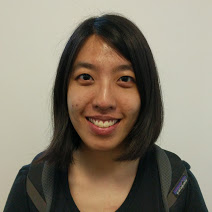
Eunhee Kim is a Professor in the Department of Defense Systems Engineering at Sejong University. She holds a Ph.D. in Mechanical Engineering from KAIST and has extensive industry experience in radar systems development. 1995 B.S. in Precision Engineering, KAIST 1997 M.S. in Mechanical Engineering, KAIST 2004 Ph.D. in Mechanical Engineering, KAIST Her research focuses on Radar Systems , Waveform Design , and MIMO Radar signal processing. She has contributed to projects involving space object tracking, airborne radar systems, and automotive radar optimization. Recent publications highlight her work on Machine Learning integration for Energy Forecasting and advanced MIMO Array Designs for improved radar resolution. She leads the Defense Radar Technology Laboratory, specializing in Phased Array Radar and Broadband Noise Radar systems. Patents include vehicle camouflage netting and RF-based positioning systems. Collaborations with agencies like Agency for Defense Development and companies such as LIG Nex1 and Hanwha Systems are prominent in her career.
جستوجوی استاد و پژوهشگر
استاد راهنما، استاد دانشگاه یا پژوهشگر مناسب برای مسیر پژوهشیتان را پیدا کنید و با او ارتباط بگیرید.
نمایش ۳۱-۴۵ از ۲۴۴ استاد راهنما
اطلاعات این پروفایلها از صفحات عمومی دانشگاهها جمعآوری شده و ممکن است بهروز نباشد.
Shoji Makino is a Professor at Waseda University's Graduate School of Information, Production and Systems. He has held academic and research positions at institutions such as the University of Tsukuba and NTT Communication Science Laboratories. His work spans acoustic signal processing, blind source separation, and adaptive filtering. Education: Ph.D., Tohoku University (1993.03) Mechanical Engineering, Tohoku University Graduate School of Engineering (1979.04–1981.03) Engineering, Tohoku University Faculty of Engineering (1975.04–1979.03) Research Interests: His research focuses on acoustic signal processing for speech and audio, including blind source separation (BSS) , beamforming , and adaptive filtering . He pioneered methods for solving permutation alignment in frequency-domain BSS and developed geometrically constrained ICA techniques. Scientific Awards: Hoko Award (2018.10, Hattori Hokokai Foundation) Outstanding Contribution Award of the Institute of Electronics, Information, and Communication Engineers (2018.06) IEEE Signal Processing Society Best Paper Award (2014.01) IEEE Fellow (2004.01) IEICE Achievement Award (1997.05) Committee Memberships: He has served as Chair of the IEEE CAS Society's Blind Signal Processing TC, General Chair of IEEE WASPAA2007, and Associate Editor of IEEE Trans. SAP. He is actively involved in EURASIP, APSIPA, and the Acoustical Society of Japan.
Cheng Zhi Huangمشاهده پروفایل
استادیار
Cheng Zhi Huang is the Robert N. Noyce Career Development Professor and Assistant Professor at MIT, holding a shared appointment between the departments of Music and Theater Arts and Electrical Engineering and Computer Science (EECS). His work bridges artificial intelligence, music technology, and computer science to advance human-AI collaboration in musical creativity. Huang leads research in generative models for music composition, real-time interactive systems, and expressive performance synthesis. His contributions include tools like ReaLJam for AI-assisted jamming and the MAESTRO dataset for piano performance modeling. His research interests span AI-driven music generation, human-AI interaction frameworks, and culturally-aware music technologies. Notable projects include The Bach Doodle—an accessible web-based composition tool—and MIDI-DDSP for detailed performance control. Huang’s work emphasizes ethical and creative applications of AI in arts, fostering collaborations between musicians, engineers, and computer scientists. His publications highlight advancements in hierarchical generative modeling, source separation techniques, and co-creation interfaces for novices. Huang’s research has been showcased in venues like TISMIR and IEEE conferences, reflecting his interdisciplinary impact on music technology and machine learning.

Andrew McPherson is a Professor of Musical Interaction at Queen Mary University of London, affiliated with the School of Electronic Engineering and Computer Science and the Centre for Multimodal AI. He leads the Augmented Instruments Laboratory, a research team focused on music technology and interdisciplinary collaboration. His work bridges electrical engineering, composition, and human-computer interaction, emphasizing the creation of new tools for musicians through hardware/software interfaces and expressive performance modeling. McPherson's research interests include augmented instruments, digital signal processing, and the design of intuitive musical interfaces. He has pioneered projects like the Bela embedded platform and the Magnetic Resonator Piano, emphasizing practical applications in traditional and experimental music venues. Collaborations with artists and industry inform his approach, ensuring research outputs are artistically relevant and accessible. Education & Expertise: Trained in electrical engineering and composition, McPherson combines technical proficiency with artistic sensibility. His lab’s projects, such as the TouchKeys and hackable instruments, highlight his focus on democratizing music technology. Grants & Awards: He holds a Royal Academy of Engineering Senior Research Fellowship (2021–2026) and an ERC Consolidator Grant (2023–2027). He co-leads the UKRI Centre for Doctoral Training in Artificial Intelligence and Music, fostering future researchers in AI-driven music innovation. Labs/Teams: The Augmented Instruments Lab collaborates across disciplines, with dual affiliation at Queen Mary and Imperial College London’s Dyson School of Design Engineering. The lab’s work spans from foundational research to industry partnerships, including spinout company Augmented Instruments Ltd, which supports maker communities and industry consultancy.

Josh Reiss is a Professor of Audio Engineering at Queen Mary University of London (QMUL), part of the School of Electronic Engineering and Computer Science . He holds additional roles including President-Elect and Fellow of the Audio Engineering Society (AES), and Visiting Professor at Birmingham City University. His research focuses on audio signal processing, procedural audio, and intelligent music production. He earned degrees including BSc in Physics, BSc in Mathematics, and a PhD. Research & Awards : Reiss has published over 200 papers, authored books like Intelligent Music Production , and received awards such as the AES Board of Governors Award (2009, 2010) and Best JAES Paper 2016. His work spans sound synthesis, dynamic range compression, and live audio systems. Teaching & Industry : Teaches modules like Artificial Intelligence and Sound Design. Co-founded startups LandR (AI mixing), Tonz, and Nemisindo. Leads the Centre for Digital Music at QMUL, advancing research in audio technology. Labs & Teams : Active in the Centre for Digital Music, collaborating on projects like the Open Multitrack Testbed and semantic audio evaluation tools.
Øyvind Brandtsegg is a Professor in the Department of Music at the Norwegian University of Science and Technology (NTNU), Faculty of Humanities. His work integrates music technology, sound art, and performance through innovative digital systems and artistic research. Research Interests: His primary research areas include digital signal processing , feedback systems , granular synthesis , convolution , artificial intelligence in music , and improvisation . He explores how technology enables new forms of musical expression, especially in live performance and sound installations. His projects often simulate natural processes or use AI to generate dynamic sonic environments. Recent Publications & Artistic Output Trends: Over the past few years, his work has focused on crossadaptive audio processing, real-time interaction systems, and immersive installations. Themes include environmental sound, mechanical music, and the limits of human-machine collaboration. His output spans scientific articles, software, compositions, performances, and exhibitions, reflecting a strong integration of research and artistic practice. Scientific Awards: No specific awards listed in the provided text. Advising and Grants: Brandtsegg supervises multiple doctoral and artistic research students, often in collaborative, interdisciplinary projects. He has led research initiatives such as the Crossadaptive Processing project and organized the Live Interfaces conference. He has received project funding for artistic research and technology development, though specific grants are not detailed. Labs and Teams: He is affiliated with the Trondheim EMP (Electroacoustic Music Performance) group and contributes to the GDSP (Global Digital Sound Processing) platform. His work is often collaborative, involving researchers and artists across institutions in Norway and internationally.
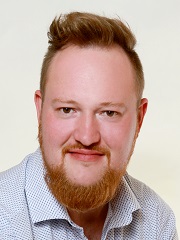
Dr. Johannes Twiefel is a Researcher at the Knowledge Technology Research Group within the Department of Informatics at the University of Hamburg. His work focuses on speech recognition, language understanding, and brain-inspired models using echo state networks. He leads the LemonSpeech project, funded by the German Federal Ministry for Economic Affairs and Energy, which aims to develop German automatic speech recognition (ASR) systems for local hardware deployment. His research spans noise robustness in ASR, robotic interaction, and multimodal learning. Education: Doctor rerum naturalium (Dr. rer. nat.) in Computer Science, University of Hamburg (2020) Master's degree in Computer Science, University of Hamburg (2014) Research Interests: Reservoir Computing and Echo State Networks Machine Learning and Neural Networks Speech Recognition and Language Understanding Human-Robot Interaction Robotics and Multimodal Systems Grants and Projects: EXIST Scholarship (2021–present) for LemonSpeech DOCKS Project (post-processing ASR hypotheses) Labs/Teams: Active in the Knowledge Technology Research Group, collaborating on neuro-inspired architectures and ASR systems.
Simon Emmerson is a Professor in Music, Technology & Innovation at De Montfort University 's Leicester Media School. A composer and scholar with over 50 years of experience in electroacoustic music, he has worked extensively in live electronics, music analysis, and gender studies in sonic arts. His contributions include founding EMAS and serving on advisory boards for Sonic Arts Network, Sound and Music, and journals like Organised Sound and Journal of Sonic Studies. Education : BA in Natural Sciences and Education (Cambridge, 1972), PhD in Electronic Music (City University, 1982) External Roles : DAAD Edgard Varese Visiting Professor (Berlin, 2009-10), Silver Jubilee Visiting Professor (Perth, 2016) His research focuses on electroacoustic music composition, live performance with electronics, and the relationship between technology and human perception. Recent projects examine crossadaptive processing, spatial sound design, and the evolution of electronic music terminology. Key publications include The Language of Electroacoustic Music (1986), Living Electronic Music (2007), and The Routledge Research Companion to Electronic Music (2018). Awards span the Bourges Electroacoustic Prize (1985) and Arts Council Bursary (1987). He has served on editorial boards for Organised Sound , Radical Musicology , and Journal of Sonic Studies .
Shunqiao Sunمشاهده پروفایل
استادیار
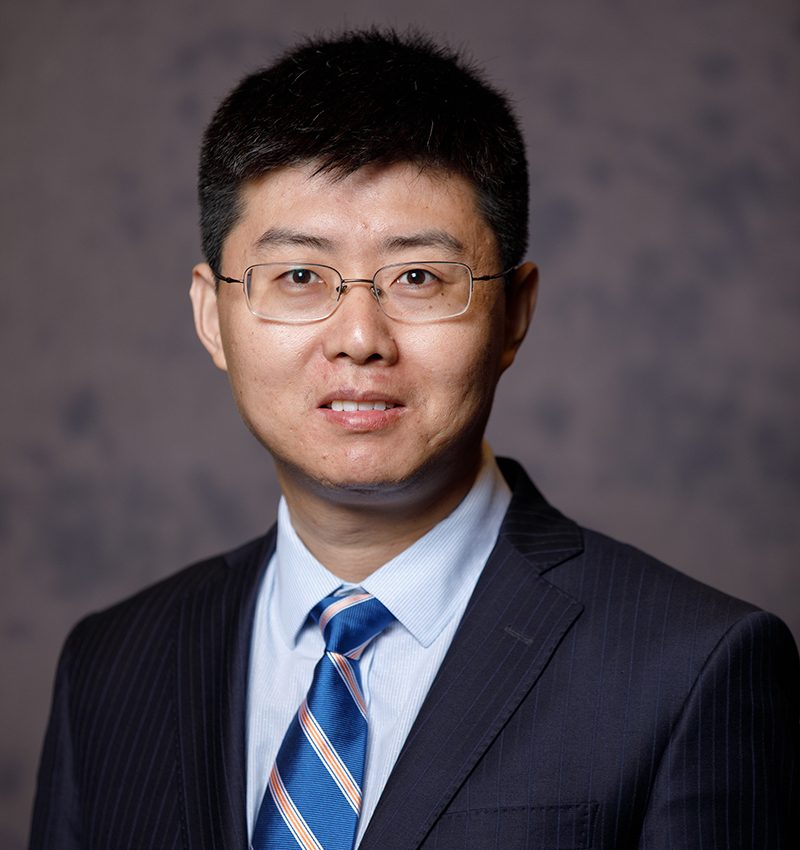
Dr. Shunqiao Sun is an Assistant Professor in the Department of Electrical and Computer Engineering at The University of Alabama, College of Engineering. He joined the faculty in August 2019 as a tenure-track professor after working at Aptiv’s radar core team in Malibu, California. His research focuses on advanced signal processing, machine learning, and optimization for automotive and MIMO radar systems in autonomous vehicles. Ph.D. : Electrical and Computer Engineering, Rutgers University, 2016 M.S. : Electrical Engineering, Fudan University, 2011 B.S. : Electrical Engineering, Southern Yangtze University, 2004 Dr. Sun's research lies at the intersection of statistical and sparse signal processing , mathematical optimization , and machine learning , with applications in automotive radar , MIMO radar , and autonomous driving . His work emphasizes sparsity-oriented frameworks, AI-powered radar perception, and high-resolution 4D sensing. He leads a dynamic research group focused on next-generation radar technologies for intelligent transportation systems. His recent publications demonstrate a strong trend in deep learning for radar signal recovery , collaborative radar imaging , direction-of-arrival estimation with sparse arrays , and integrated sensing and communication . Several of his papers are among the most downloaded and cited in IEEE journals, including top articles in IEEE Signal Processing Magazine and IEEE Journal of Selected Topics in Signal Processing. Scientific Awards and Honors: NSF CAREER Award (2024) NSF CRII Award (2022) IEEE AESS Robert T. Hill Best Dissertation Award (2016) Best Student Paper Award at IEEE SAM Workshop (2020) Rutgers ECE Academic Achievement Award (2015–2016) University of Alabama Hewson Engineering Faculty Fellow (2025) Dr. Sun is actively involved in academic service and leadership. He is an Associate Editor for IEEE Signal Processing Letters and IEEE Open Journal of Signal Processing . He serves as Vice Chair of the IEEE Signal Processing Society’s Autonomous Systems Initiative and is an elected member of the IEEE Sensor Array and Multichannel (SAM) Technical Committee and the Integrated Sensing and Communication (ISAC) Technical Working Group. He has co-organized numerous workshops and special sessions at ICASSP, EUSIPCO, and IEEE Radar Conference. His lab has secured significant research funding from the National Science Foundation , NXP Semiconductors , MathWorks , and NOAA . He mentors multiple Ph.D. students, several of whom have interned at leading industry labs such as NXP and GM Cruise. He has co-organized the Workshop on Signal Processing for Autonomous Systems (SPAS) at ICASSP and EUSIPCO and delivered invited seminars at institutions including TU Delft, UC Davis, and Lehigh University.
- Wave Physics
- Medical Imaging
- Telecommunications
- +۶ مورد دیگر
Mathias FINK is a Professor at ESPCI Paris on the Georges Charpak chair. His research focuses on fundamental wave physics in complex media with major applications in medical imaging, telecommunications, and geophysics. He pioneered time-reversal mirrors for wave focusing and co-founded 6 technology companies. Key Institutions: ESPCI Paris, Collège de France Research Themes: Wave physics, time-reversal techniques, matrix imaging, metasurface design His work spans multi-echo wave systems , ultrasonic therapeutic devices , and adaptive electromagnetic communication systems . Recent publications emphasize 3D matrix imaging in biological tissues and space-time interface dynamics . Scientific recognition includes: First academic elected at Collège de France (2008) Over 400 peer-reviewed publications 70+ patents and 6 start-ups Collaborations extend to Institut des Hautes Études Scientifiques , Langevin Institute , and Hong Kong University of Science and Technology . His team's volcanic imaging work with seismic noise has revolutionized subterranean mapping.

Anna Huangمشاهده پروفایل
استادیار
Anna Huang is an Assistant Professor at the Massachusetts Institute of Technology (MIT), affiliated with the PI Core/Dual program. Her research focuses on AI-driven music technologies, including human-AI collaboration, generative music models, and interactive creative tools. She specializes in developing frameworks for real-time music jamming, adaptive accompaniment systems, and novice-friendly AI co-creation platforms. Huang has contributed to projects like the Bach Doodle and the AI Song Contest , demonstrating scalable applications of machine learning in music composition. Her work bridges computer science and musicology, with a particular emphasis on cross-cultural music generation (e.g., Hindustani classical music modeling) and expressive control mechanisms for generative systems. Key areas include MIDI signal processing, source separation algorithms, and the design of user interfaces that empower both professionals and novices to co-create with AI. Huang’s publications emphasize interdisciplinary innovation, with trends spanning reinforcement learning for music performance, hierarchical generative modeling, and ethical considerations in AI-assisted creativity. Though no awards are explicitly listed, her impactful projects suggest recognition in computational music research. Her research also involves dataset development (e.g., MAESTRO dataset) and open-source tools like Coconet, fostering reproducibility and community engagement in music technology.

Marina Bosiمشاهده پروفایل
استاد مدعو
Marina Bosi is an Adjunct Professor at Stanford University's Department of Music and a prominent figure in audio engineering and standardization. Currently serving as Chief Technology Officer at MPEG LA, LLC, she has previously held leadership roles including Past-President of the Audio Engineering Society (AES). Education: Laurea (Doctorate) in Physics, University of Florence, Italy Diploma in Flute, National Conservatory of Florence, Italy Honor Diploma in Flute, Accademia Chigiana, Siena, Italy Thesis work with Giuseppe di Giugno at IRCAM, Paris, France Dr. Bosi's research focuses on perceptual audio coding, multichannel audio processing, and signal processing for audio applications. She has been instrumental in developing AI-based media coding standards and audio preservation technologies (ARP), with recent work exploring networked music performance over satellite networks and cross-continental remote collaboration systems. Her publications span foundational audio coding topics including: Psychoacoustic modeling and quantization techniques MDCT/PQMF filter bank design Dolby AC-3 and DAB/DVB multichannel audio coding Bit allocation strategies and quality measurement methods Scientific Awards: AES Board of Governors Award AES Fellowship Award ISO/IEC Special Contribution Award for MPEG-2 AAC development Accademia Nazionale dei Lincei recognition Bourse du Gouvernement Français As a patent holder and author of the seminal textbook Introduction to Digital Audio Coding and Standards , she has significantly shaped modern audio compression technologies. Her professional leadership extends to participation in standards organizations like ANSI, ASA, ATSC, DVB, DVD, ISO, IEC, IEEE, ITU, and SMPTE.
Hassan Karimi is a Professor at the University of Pittsburgh's School of Computing and Information, Department of Informatics and Networked Systems. His research focuses on Geoinformatics, Machine Learning, Location-Based Services, and Navigation Applications, with expertise in Mobile Computing and Distributed/Parallel Computing. He holds a Ph.D. in Geomatics Engineering from the University of Calgary, along with an MS in Computer Science from the University of Calgary and a BS in Computer Science from the University of New Brunswick. His research interests encompass computational geometry, geospatial data science, and smart city technologies. Notable contributions include methodologies for obstacle detection for visually impaired navigation, collaborative wayfinding systems, and spatiotemporal activity prediction. He leads the Geoinformatics Laboratory, which explores geospatial data science, mobile computing, and navigation systems. Key publications include works on geospatial data science techniques, navigation systems, and machine learning applications. His lab develops technologies for autonomous vehicles, environmental monitoring, and precision agriculture. He is the author of several books, including *Geospatial Data Science Techniques and Applications* (Taylor & Francis, 2018) and *Big Data: Techniques and Technologies in Geoinformatics* (Taylor & Francis, 2014). His work bridges theoretical research and practical applications, addressing challenges in smart cities, environmental sustainability, and health informatics. The Geoinformatics Lab collaborates on projects such as sensor networks, spatial data mining, and geovisualization.

Stephan Preihsمشاهده پروفایل
پژوهشگر
- Acoustics
- Digital Signal Processing
- Audio Coding
- +۶ مورد دیگر
Stephan Preihs is a postdoctoral researcher and group leader at the Institute of Communications Technology of the Leibniz University Hannover , with a focus on acoustics, digital signal processing, and immersive audio systems. He received his Dipl.-Ing. in electrical engineering (communications engineering) from the same university in 2010 and his Dr.-Ing. in 2016. Education: Dipl.-Ing., Electrical Engineering (Communications Engineering), Leibniz University Hannover (2010) Dr.-Ing., Leibniz University Hannover (2016) Research Interests: Acoustics for immersive audio reproduction Digital signal processing and audio coding Signal detection/classification Psychoacoustic models Audio transmission for PMSE Recent Article Trends: Deep learning in sound source localization Wind turbine noise analysis via immersive audio Advancements in headphone technology Immersion prediction in spatial audio Low-latency communication protocols Scientific Awards: Best Paper Award at IEEE International Workshop on Networked Immersive Audio (2024) AES Show 2024 Best Technical Paper Award AES Spring 2021 Student Paper Award AES Poster Award 2019 AES Convention Student Paper Award 2019 Teaching: Lecturer for '3D Audio - Fundamentals of Spatial Reproduction Systems' Lecturer for 'Applications of Digital Audio Signal Processing' Coordinator of student laboratories in 'Audio Communication and Acoustics' and 'Transmission Technology'

Ralph Etienne-Cummings is the Julian S. Smith Professor of Electrical and Computer Engineering at Johns Hopkins University (JHU), where he also serves as Vice Provost for Faculty Affairs. He holds secondary appointments in Computer Science and is affiliated with JHU's Applied Physics Lab. His work spans three decades, pioneering advancements in neuromorphic engineering, neural prosthetics, and biomorphic robotics. Etienne-Cummings leads the Computational Sensory Motor Systems Laboratory and has developed systems for closed-loop neural interfaces, prosthetics, and biomedical sensors. Education: BSc in Physics (1988), Lincoln University MSEE (1990) and PhD (1994) in Electrical Engineering, University of Pennsylvania Research Interests: His work focuses on neuromorphic systems, bio-inspired algorithms, and neural prosthetics. Key areas include spinal cord stimulation for mobility restoration, wearable health monitoring, and ultrasonic imaging for infertility treatment. He has contributed to silicon Central Pattern Generators (CPGs) for bipedal robotics and developed the first large-scale neural computer using VLSI chips. His lab explores organoid intelligence and biohybrid systems, blending neuroscience with engineering. Impact & Recognition: Named Fellow of AIMBE (2021) and IEEE (2012) Recipient of JHU Discovery Awards (2018–2019) and NSF CAREER Award (1996) Developed the 'Microbead'—a 0.009mm³ wireless neural stimulator Industry & Outreach: Served as founding director of JHU's Institute of Neuromorphic Engineering and advised firms like Panasonic and Avago. Testified in federal court on intellectual property disputes. Recognized as a 'ScienceMaker' in the HistoryMakers Archive for contributions to African American STEM leadership. Labs & Collaborations: Directs the Computational Sensory Motor Systems Lab. Collaborates with DARPA on prosthetics and the NIH on bioelectronic medicine. His work bridges academia and industry, emphasizing practical applications of neural engineering.