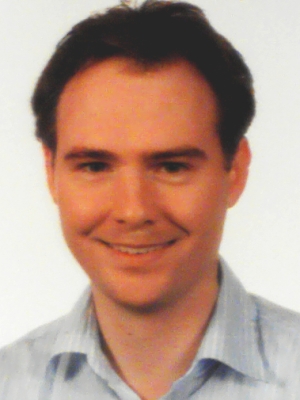
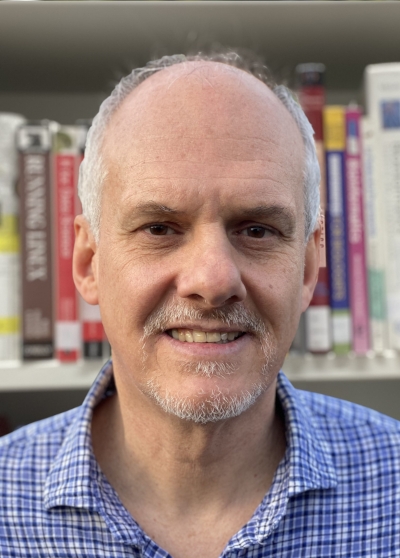
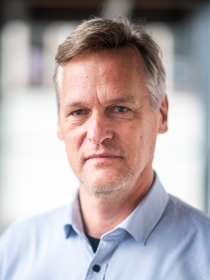
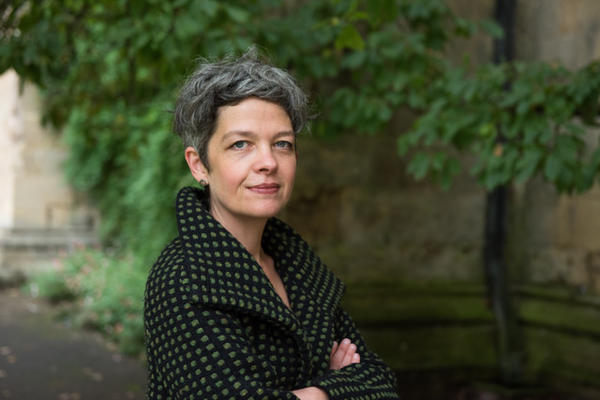
Wu Shengbo is an Associate Professor at the Zhejiang Institute of Tianjin University in Shaoxing, leading the Analysis and synthesis of microbial ecosystems team. He holds a B.S. (2015), M.S. (2018), and Ph.D. (2022) from Tianjin University, followed by a postdoctoral stint at the School of Chemical Engineering there (2022–2024). His work pioneered the quorum sensing-based communication network (QSCN) , published in Trends in Microbiology (2021). Affiliations: Department of Engineering Science (Oxford address noted), Gut Microbes journal reviewer Key Roles: Team leader, academic backbone researcher, and grant awardee Research focuses on quorum sensing mechanisms in microbial communities, combining AI, synthetic biology, and systems biology to: Decode QS networks in gut microbiota Engineer stable microbial consortia for disease treatment Analyze QS-driven interactions between microbes and human cells Notable achievements include: Developed QSIdb database for QS interference molecules Published in Nature Communications , Metabolic Engineering , and Chemical Engineering Journal Recipient of National Doctoral Scholarship and Tianjin University's Excellence awards Current projects emphasize QS-based modulation of microbial ecosystems for applications in biotechnology and medicine.
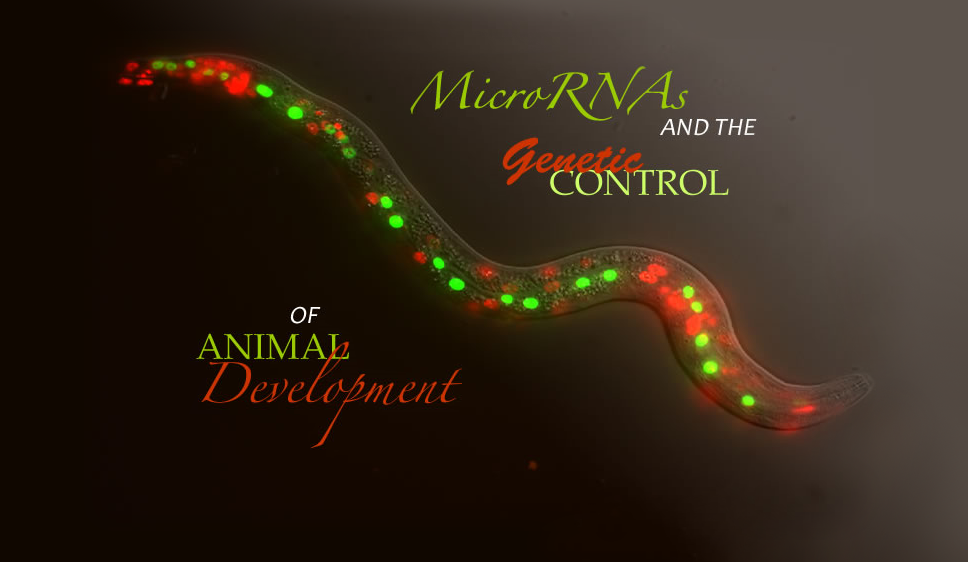
Victor R Ambros is a Professor and holds the Silverman Chair in Natural Sciences at UMass Chan Medical School. He maintains multiple affiliations across the institution, including the T.H. Chan School of Medicine (Program in Molecular Medicine), Morningside Graduate School of Biomedical Sciences (Interdisciplinary Graduate Program, MD/PhD Program, and Postbaccalaureate Research Education Program), and UMass Chan Programs, Centers and Institutes (Bioinformatics and Integrative Biology). Dr. Ambros earned his BS and PhD in Biology from the Massachusetts Institute of Technology. His graduate research (1976-1979) was conducted with David Baltimore at MIT, studying poliovirus genome structure and replication. He began researching developmental timing in C. elegans as a postdoc in H. Robert Horvitz's lab at MIT, and continued these studies during faculty positions at Harvard (1984-1992), Dartmouth (1992-2007), and UMass Chan Medical School (2008-present). Dr. Ambros is a pioneering researcher in microRNA biology, having led the 1993 discovery of the first microRNA (the product of lin-4 in C. elegans). His lab investigates the molecular and genetic control of animal development, with particular focus on microRNA regulatory mechanisms. Using C. elegans as a model system, his research examines heterochronic genes that control developmental timing, including both protein regulators and microRNAs that regulate target gene expression. Current research explores how microRNAs integrate into broader regulatory networks related to animal development and human disease, and investigates the molecular mechanisms of microRNA function. Analysis of Dr. Ambros's recent publications (2019-2024) reveals continued innovation in microRNA research, with expanding investigations into connections between microRNA pathways and human diseases including neurodevelopmental disorders. His work spans molecular biology, genetics, and developmental biology, with particular attention to the let-7 family, Argonaute proteins, and host-pathogen interactions affecting developmental timing. Dr. Ambros has mentored numerous successful scientists who now hold prominent positions across academia and research institutions. His former trainees include Alison Abbott (Associate Professor at Marquette University), Christopher Hammell (Professor at Cold Spring Harbor Laboratory), and Hirosha Geekiyanage (Assistant Professor at UC Merced), among others who have established independent research careers. The Ambros lab maintains an active research program investigating fundamental microRNA mechanisms using genetic, molecular, and computational approaches. Current projects include genetic screens for proteins that modify microRNA activity in C. elegans, studies of microRNA conservation across species, and investigations of how microRNA pathways interface with human disease mechanisms.
Prof. Dr. Dario Anselmetti is a Professor of Physics at the University of Bielefeld, Germany, holding multiple leadership roles including Vice Rector for Studies and Teaching. He is affiliated with the Faculty of Physics, where he leads the Biophysics and Applied Nanosciences Group and serves as Speaker of SFB 613. Anselmetti is also involved with the Center for Uncertainty Studies (CeUS), the Bielefeld School of Education (BiSEd), and the Specialized Language Center. His research focuses on single-molecule and single-cell biophysics , with particular emphasis on molecular binding mechanisms in cardiac biology. Anselmetti's work spans from fundamental nanomechanical studies to potential medical applications in cardiology, oncology, and infectious disease medicine. His laboratory employs advanced techniques including scanning probe microscopy, optical and magnetic tweezers, and micro/nanofluidics to investigate phenomena such as molecular self-assembly, biological recognition, and transport through nanopores. Anselmetti's recent publications (2023-2025) demonstrate a strong focus on cardiac desmosomes and molecular binding kinetics , particularly related to arrhythmogenic cardiomyopathies. His team has made significant contributions to understanding how different bond types (slip, catch, and ideal bonds) function in cardiac cell adhesion. The research also extends to nanomembrane technologies and their applications in filtration and sensing. Jungbunzlauer scholarship (2023) As an educator, Anselmetti founded and directs teutolabPHYSIK , an experimental laboratory for students and prospective teachers. He serves on multiple university committees related to teaching and student affairs, including as Chairman of the Commission for Studies and Teaching and the BiSEd Board. His educational leadership extends to developing digital laboratory concepts for teacher training. His research group actively collaborates on projects including the German Research Foundation-funded study on 'Molecular mechanisms of the development of arrhythmogenic cardiomyopathies' and the Innovation Campus for Sustainable Solutions project. Anselmetti has also edited significant works including 'Single Cell Analysis: Technologies and Applications' (Wiley-VCH, 2009) and co-edited 'Forces in Scanning Probe Methods' (Kluwer Academic Publishers, 1995).
Dr. Nazia Mojib is a Lecturer in the Department of Biology at Spelman College, where she has served as faculty since 2018. Her teaching portfolio includes foundational courses such as BIO110 Population Biology, BIO125 Molecular Biology and Genomics, and BIO320 Molecular Genomics and Proteomics, emphasizing data-driven approaches in modern biology. Her educational background includes a Ph.D. from the University of Alabama at Birmingham and both M.Sc. and B.Sc. degrees from the University of Calcutta. Dr. Mojib's research centers on leveraging next-generation sequencing data and bioinformatics tools to investigate the evolution of biomolecules—particularly receptors—in signaling pathways across biological systems spanning prokaryotes to multicellular eukaryotes. Her work integrates molecular evolution, genomics, and marine ecology to decode communication networks in diverse organisms. Analysis of her publications reveals a consistent focus on comparative 'omics' approaches in marine environments, with recurring themes in receptor evolution, plankton population dynamics, and sensory biology. Her methodology bridges computational biology with experimental validation to address fundamental questions in molecular adaptation. Dr. Mojib maintains active research collaboration with institutions including Georgia Institute of Technology and King Abdullah University of Science and Technology, though no formal advisees or grants are documented in the provided materials.
Tera Levin is an Assistant Professor at the University of Pittsburgh , affiliated with the Department of Biological Sciences . Her research explores the evolutionary arms races between hosts and pathogens, focusing on Legionella pneumophila and its natural hosts, environmental amoebae. Ph.D. in Molecular and Cell Biology (2014), University of California, Berkeley Postdoctoral Research, Fred Hutchinson Cancer Research Center The Levin Lab investigates how host-pathogen interactions drive the evolution of immunity and pathogenesis. Their work combines high-throughput genetics, microbiology, and evolutionary genomics to address questions about pathogen emergence, host-microbe interactions, and molecular mechanisms of coevolution. Recent publications highlight her contributions to understanding genetic innovation, host defense evolution, and bacterial survival strategies. Collaborative projects span topics like STING protein evolution , antimicrobial resistance , and insect-microbiome interactions . Her lab is part of the University of Pittsburgh's Department of Biological Sciences, with opportunities for joining their research team.
Dan Wagner, PhD is an Assistant Professor in the Department of Obstetrics, Gynecology and Reproductive Sciences at the University of California San Francisco (UCSF) School of Medicine. He leads the Wagner Lab which focuses on understanding the fundamental mechanisms of embryonic development, particularly the feedback mechanisms that ensure tissue pattern robustness during development. His research combines advanced genomic techniques with zebrafish model systems to investigate how cells make fate decisions during embryogenesis. Dr. Wagner received his BS in Systems Biology from Haverford College in 2003, followed by a PhD in Biology from MIT in 2012. He completed his postdoctoral training in Systems Biology at Harvard Medical School in 2019. His educational background has provided him with a strong foundation in both biological systems and quantitative approaches to studying development. Wagner's research focuses on the remarkable capacity of multicellular organisms to develop, maintain, and regenerate robust tissue patterns despite environmental and genetic challenges. His lab employs zebrafish (Danio rerio) as a model system due to their genetic and anatomical similarity to humans, combined with experimental tractability. The Wagner Lab has developed innovative single-cell genomic methods including TRACERSEQ and STITCH to map quantitative relationships between cell lineage and cell state. Their work aims to understand how feedback regulation of cell fate decisions buffers perturbations during embryonic development, with implications for understanding developmental defects and miscarriages of unknown cause. Analysis of Wagner's recent publications reveals a strong focus on single-cell technologies applied to developmental biology. His work spans multiple model systems including zebrafish, planarians, and mammalian systems, with particular emphasis on cell fate determination, tissue patterning, and the integration of lineage and transcriptomic information. The research demonstrates an evolving trajectory from method development to application in specific developmental contexts, with increasing computational sophistication in recent years. Chan Zuckerberg Biohub Investigator (2022-2027) NIH Director's New Innovator Award (2021-2026) Searle Scholar (2021-2024) Science Magazine Breakthrough of the Year - 'Development Cell by Cell' (2018) K99/R00 Pathway to Independence Award (2017-2023) HHMI Postdoctoral Fellowship (2015-2017) Dr. Wagner's research program is supported by significant grant funding, including the prestigious NIH Director's New Innovator Award and Chan Zuckerberg Biohub Investigator funding. His lab has made substantial contributions to the field of developmental biology through the development and application of single-cell genomic technologies. The Wagner Lab's collaborative nature is evident through numerous interdisciplinary publications spanning developmental biology, computational biology, and systems biology. The Wagner Lab at UCSF is at the forefront of applying cutting-edge single-cell genomic technologies to fundamental questions in developmental biology. The lab maintains strong connections with other research groups at UCSF and beyond, particularly in the areas of systems biology and computational analysis of developmental processes. Their work sits at the intersection of multiple disciplines, leveraging expertise in molecular biology, imaging, and computational analysis to address complex questions about embryonic development.
Christina King Smith is Professor and Chair of the Department of Biology at Saint Joseph's University, Philadelphia. She earned her BS in Biology from Bucknell University (1982), MS in Marine Studies from the University of Delaware (1985), and PhD in Biological Sciences from the University of Maryland, Baltimore County (1992), followed by postdoctoral training at UC Berkeley. Education: BS, Biology, Bucknell University, 1982 MS, Marine Studies, University of Delaware, 1985 PhD, Biological Sciences, University of Maryland, Baltimore County, 1992 Her research centers on intracellular transport mechanisms in eukaryotic cells using fish retinal pigment epithelial (RPE) cells. She investigates pigment granule migration dynamics, emphasizing actin cytoskeleton regulation, myosin motors, and cAMP/PKA signaling pathways. Her work also extends to microbial genomics through the SEA-PHAGES program, studying mycobacteriophages and choanoflagellate phagocytosis to explore evolutionary biology. Recent publications reveal a dual research trajectory: 1) Deepening mechanistic understanding of retinomotor movements and melanosome transport in RPE cells, and 2) Expanding into microbial genomics and evolutionary cell biology. This interdisciplinary approach bridges cell neuroscience with microbiology, yielding insights applicable to vision science and microbial evolution. Scientific awards: Tenglemann Award for Research and Teaching (2014) SJU Faculty Merit Award for Teaching (2009) NIH National Research Service Award Senior Fellowship (2004-2005) SJU Faculty Merit Award for Research (2003) Dr. King-Smith actively mentors undergraduate and master's students, with over 20 advisees appearing as co-authors on her publications. Her grant portfolio demonstrates sustained funding success including NSF MRI awards (2019, 2008-2010), NIH R15 (2002-2005), and HHMI Undergraduate Science Education leadership (2008-2014), significantly enhancing research infrastructure for undergraduate training. Her laboratory maintains active research programs in RPE cell biology and participates in the SEA-PHAGES initiative, providing undergraduates with hands-on genomic research experiences while advancing understanding of intracellular transport mechanisms and microbial evolution.
Dr. Alex Bowles is a Glasstone Research Fellow and Junior Research Fellow at The Queen's College, University of Oxford. His work explores the evolutionary biology of plants, focusing on their transformational relationship with water over 500 million years. He has conducted field research in Switzerland on glacier algae and investigates ancient plant adaptations during global climatic shifts like 'Snowball Earth' events. Research areas: Plant evolution, water transport mechanisms, and adaptation to extreme environments Current focus: Linking plant genetic diversity to food security and ecosystem resilience Collaborative approach: Interdisciplinary work spanning geology, biology, and climate science His research has implications for understanding biodiversity conservation, crop improvement, and climate change mitigation. Alex emphasizes the importance of integrating wild plant genetic diversity into breeding programs to address future environmental pressures. Highlights Discovered multicellular plant evolution timing during the Cryogenian period Studied drought-tolerant and cold-resistant species Active science communication and education advocate
Sam Kriegman is an Assistant Professor of Computer Science , Chemical and Biological Engineering , and Mechanical Engineering at Northwestern University . His research focuses on evolutionary robotics , machine learning , and synthetic biology , particularly through the development of the world's first AI-designed organisms ("xenobots"). Schmidt Futures AI2050 Early Career Fellow NSF CAREER Award recipient ISAL Distinguished Early-Career Investigator Cozzarelli Prize awardee Sam's research interests span evolutionary robotics, synthetic biology, and embodied artificial intelligence, emphasizing how biological principles can inform robot design. His work explores kinematic self-replication, reconfigurable organisms, and the intersection of machine learning with cellular engineering. His most recent publications highlight advancements in AI-designed biological systems, modular robotics, and morphological co-design. These works intersect robotics , synthetic biology , and machine learning , with notable emphasis on self-replicating organisms , modular legged robots , and morphological pretraining . Scientific awards and honors include: Schmidt Futures AI2050 Early Career Fellowship NSF CAREER Award ISAL Distinguished Early-Career Investigator Award Cozzarelli Prize Sam leads the xenobot.group lab, which investigates bio-inspired robotics and evolutionary computation . He also teaches the graduate course Artificial Life , focusing on embodied AI through simulations and synthetic biological constructs.
Dan McShea is a Professor at Duke University with primary appointments in the Department of Biology and a secondary appointment in the Department of Philosophy. He is a member of Duke’s Center for the Philosophy of Biology and serves on the editorial board of Biology and Philosophy . His work bridges evolutionary theory, complexity, and teleology. McShea’s research focuses on two major areas: (1) the evolution of complexity , where he co-authored Biology’s First Law (2010) and The Missing Two Thirds of Evolutionary Theory (2020) with Robert Brandon. These works argue that complexity increases spontaneously without selection due to the Zero-Force Evolutionary Law (ZFEL). (2) teleology , where he proposes that goal-directed systems (from acorns to human behavior) share a common physical structure—entities nested within larger directing fields—and that passions, not reason, drive purposeful behavior, aligning with David Hume’s philosophy. His publications span journals like Evolution , Paleobiology , and Biology and Philosophy , with a focus on hierarchical causation and the balance between upper-direction and free movement in teleological systems. Recent works include empirical tests of ZFEL, theoretical frameworks for goal-directedness, and analyses of evolutionary trends. While no specific scientific awards or students are mentioned, McShea’s contributions to evolutionary theory and his interdisciplinary approach between biology and philosophy highlight his academic impact.
Dr. Sebastien Wielgoss is a Lecturer at the Department of Environmental Systems Science within ETH Zürich , Switzerland. His research focuses on the evolutionary and population genomics of social bacteria, particularly Myxococcus xanthus , and mutation rate dynamics in microbial systems. Education : PhD in Biology (Universität Konstanz, 2004-2009), Master's in Agrobiology (Universität Hohenheim, 2000-2004), Undergraduate in Agricultural Sciences (TU München, 1999-2000) Research Interests Phylogenomics with social myxobacteria : Investigating genetic diversity and phylogenetic relationships in Myxococcus xanthus across spatial scales, linking genomics to social phenotypic diversity. Mutation rate dynamics : Using experimental evolution to study spontaneous mutation rates and their evolutionary trajectories in bacteria like Escherichia coli and Myxococcus xanthus . Publication Trends His work spans phylogenomics, social evolution, phage-host interactions, and mutation rate analysis, with recent publications in high-impact journals like Science , Nature Communications , and PLoS Biology . Scientific Awards Marie Curie Postdoctoral Fellowship (EU-FP7, 2013-2015) PhD Fellowship (Universität Konstanz, 2009) PhD Fellowship (Landesgraduiertenförderung Baden-Württemberg, 2007-2008) Master Student Fellowship (DAAD, 2003) Grants & Institutional Roles He has received multiple fellowships and grants, including the Marie Curie Postdoctoral Fellowship. He serves as a study advisor for Environmental Biology (Bachelor) and study coordinator for Ecology & Evolution (Master) at ETH Zürich. Additionally, he is a member of the Teaching Commission and the Institute's Council.
Enrique M. Muro is a tenured Principal Investigator and Professor at the Institute of Organismic and Molecular Evolution (iomE) within the Faculty of Biology at Johannes Gutenberg University of Mainz , Germany. His interdisciplinary work bridges computational biology, bioinformatics, and evolutionary theory with applications in genomics and systems biology. Fields of Interest: Computational Biology, Genome and Proteome Evolution, Genomics, Non-coding Genes, Pseudogenes, Transcriptional Regulation, Mobile DNA, Systems Biology, Three-dimensional Chromatin Structure, Artificial Intelligence, Neural Networks, and Models for Central Visual System Development. Key Research: Quantitative analysis of eukaryogenesis as a phase transition, evolutionary implications of protein coding gene length distributions, and functional studies of pseudogenes and retrotransposons. Teaching: Offers courses in Python programming for biologists, biostatistics, and bioinformatics at undergraduate and graduate levels since 2014. Authored an open-access online book Fundamentals of programming in biomedicine with Python . Supervision: Mentors Master’s students Anna Christina du Plessis (DAAD scholarship, 2024) and Emilia Körner (2025), and supervised Sweta Talyan (PhD, 2018). Outreach: Authored the book Bioinformatics: Entre la carne y la máquina , translated into Italian and Romanian, and actively disseminates computational biology education.
James Clark is a Research Fellow at the Department of Life Sciences, University of Bath, affiliated with the Milner Centre for Evolution. His research focuses on evolutionary biology, plant evolution, genome evolution, and molecular genetics. He investigates topics such as bacterial evolution, stomatal development, and the timing of flowering plant diversification. Clark has contributed to over 25 peer-reviewed publications and collaborates internationally on evolutionary studies. His work explores how genetic and environmental factors influence adaptation, including studies on genetic variance in novel environments and the role of developmental genes in plant morphology. Key research themes include molecular clocks, fossil record interpretation, and the evolutionary implications of whole-genome duplications. Clark’s findings have been widely cited and featured in outlets like Science and New Phytologist . Notable contributions include reconstructing bacterial evolutionary timelines linked to oxygen adaptation and resolving uncertainties in angiosperm diversification dates. His interdisciplinary approach bridges genetics, ecology, and paleontology to address fundamental questions in evolutionary biology.
Dr. Fred Keijzer is an Associate Professor at the Faculty of Philosophy, University of Groningen, specializing in Theoretical Philosophy. He holds a PhD in cognitive science and philosophy from Leiden University. His research focuses on embodied cognition, biological interpretations of agency, and the philosophical implications of science fiction. He received a Vidi grant (2002) for 'Recasting Cognition as Layered Agency' and has authored influential works like Representation and Behavior (MIT Press, 2001) and Filosofie van de toekomst (2010). His interdisciplinary work bridges philosophy, neuroscience, and biology, emphasizing evolutionary and dynamical systems approaches to cognition. Education: PhD in Cognitive Science and Philosophy (Leiden University). Key research areas include neurobiology, cognitive systematics, and ecological embodiment. He has supervised 3 academic works and contributed to special journal issues on basal cognition, early neural evolution, and nervous system functions. Awards: Vidi Grant (2002) Publications: Over 60 peer-reviewed articles in journals like Philosophical Psychology , Adaptive Behavior , and Philosophical Transactions of the Royal Society B . Activities: Invited speaker at international conferences on perception, action, and cognitive evolution.
Professor Ashleigh Griffin holds the position of Professor of Evolutionary Biology at the University of Oxford. Her research examines fundamental questions about cooperative behavior evolution across biological systems, from microbial communities to vertebrate societies. Research integrates theoretical frameworks with experimental approaches to understand how cooperation evolves despite inherent conflicts. Current projects investigate: 1) Bacterial social evolution applied to antibiotic resistance and infection dynamics 2) Cooperative breeding systems in birds under environmental variability 3) Conflict resolution mechanisms enabling evolutionary transitions to multicellularity. Laboratory work utilizes Pseudomonas aeruginosa models while field studies analyze cooperative bird species. Publications demonstrate consistent innovation in social evolution theory, spanning microbial cooperation, vertebrate behavioral ecology, and clinical applications. Recent articles reflect expanded focus on environmental variability's role in cooperation, evolutionary medicine approaches to infection treatment, and developmental innovations reducing cellular conflicts. Honors include the 2008 UNESCO/L'Oréal Fellowship for Women in Science, recognizing exceptional contributions to evolutionary biology research.