Kunihiko Kaneko is a Professor at the Niels Bohr Institute, University of Copenhagen, with a distinguished career in theoretical biophysics and complex systems. He received his PhD and MSc in Physics from the University of Tokyo, and has held leadership roles at the Universal Biology Institute and Center for Complex Systems Biology. PhD Physics, 1984 - University of Tokyo MSc Physics, 1981 - University of Tokyo His research spans five primary areas: Universal Biology, Evolutionary Constraints, Ecosystem Dynamics, Neural Cognition, and Universal Anthropology. He has published extensively on multi-level consistency principles, dimensional reduction in biological systems, and reciprocity between robustness and plasticity across scales. Recent publications show strong focus on microbial ecosystems (2025), evolutionary game theory (2025), neural modular architectures (2024), and dimensional reduction in cellular systems (2024). His work bridges physics and biology through dynamical systems theory applied to diverse phenomena from protocells to human societies.
João F. Mano is a Full Professor at the Department of Chemistry, University of Aveiro, and Director of the Doctoral Program on Biotechnology. He leads the COMPASS Research Group and serves as Vice-Director at CICECO - Aveiro Institute of Materials. His academic appointments include Invited Professor at University of Lorraine (France), Visiting Professor at KAIST (South Korea), and Adjunct Professor at Ajou University (South Korea). Education: PhD in Chemistry (1996, Technical University of Lisbon); D.Sc. in Tissue Engineering, Regenerative Medicine and Stem Cells (2012, University of Minho) Research Interests focus on Biomaterials for Regenerative Medicine , integrating Nanotechnology , Microtechnology , and Biofabrication . His group develops Bioinspired Materials using polymer chemistry, Decellularized Extracellular Matrix , and 3D Bioprinting to engineer Cell Microenvironments for therapeutic applications. Recent Publications highlight advancements in Human-Derived Hydrogels , Photopolymerizable Scaffolds , Magneto-Responsive Biomaterials , and Programmable Bioinks . Trends show emphasis on Organ-on-a-Chip integration, Smart Living Materials , and Green Bioprinting methodologies. Scientific Awards include: European Research Council Advanced Grants (2015, 2020) Fellow at IUPAC, European Academy of Sciences, and American Institute of Medical and Biological Engineering ERC Proof of Concept Grants Doctor Honoris Causa from University of Lorraine and Utrecht UNESCO Chair on Biomaterials George Winter Award (European Society for Biomaterials) Supervisions & Collaborations encompass 74+ MSc, 26+ PhD students, and 40+ postdocs. He co-founded METATISSUE and CELLULARIS Biomodels , and serves as Editor-in-Chief of Materials Today Bio .
Professor Matthew Simpson is a leading figure in applied mathematics at the School of Mathematical Sciences, Faculty of Science, Queensland University of Technology (QUT). He holds the position of Professor of Applied Mathematics and is an Australian Research Council (ARC) Future Fellow, reflecting his sustained research excellence. His work bridges mathematical theory and biological applications, particularly in cell migration, tissue invasion, and multiscale modeling. BE (Environmental) Honours 1, University of Newcastle (1995–1998) PhD (with Distinction), Environmental Engineering, University of Western Australia (2000–2003) Research Fellow, Department of Mathematics and Statistics, University of Melbourne (2003–2006) ARC Postdoctoral Fellow, University of Melbourne (2006–2009) Lecturer (2010–2011) and Senior Lecturer (2011–2013), QUT Associate Professor (2013–2014), QUT Professor and ARC Future Fellow (2014–present), QUT Matthew Simpson’s research focuses on mathematical and computational modeling of biological systems , particularly collective cell motion, diffusion processes, and reaction-diffusion dynamics. His interests span multiscale modeling , random walk processes , cell biology , and numerical and computational mathematics . He develops and analyzes models to understand phenomena such as wound healing, cancer progression, and tissue engineering. His recent publications (2023–2025) demonstrate a strong trend toward integrating data-driven modeling , likelihood-based inference , and equation learning with traditional mechanistic models. These works emphasize parameter identifiability , uncertainty quantification , and prediction robustness in biological contexts. Themes include sharp-fronted wave propagation, mechanical cell interactions, tumor spheroid formation, and generalized diffusivity in food drying, showcasing the breadth and depth of his modeling expertise. Among his key accolades are: J.H. Michell Medal (2012) – Awarded by ANZIAM for distinguished research by an early-career applied mathematician in Australia and New Zealand. ARC Future Fellowship (2013–2017) – For the project 'New data-driven mathematical models of collective cell motion' (FT130100148). Professor Simpson has also played significant editorial and leadership roles, including: Executive Associate Editor, Journal of Engineering Mathematics Academic Editor, PLoS ONE Editorial Board Member, ANZIAM Journal Co-chair of the 2015 ANZIAM meeting He has supervised PhD students on topics such as moving boundary problems, first-passage times, stochastic simulations, and curvature-dependent growth in biological systems. His research projects have been funded by competitive Australian grants (ARC DP and FT schemes), including studies on 3D cell migration, ghrelin’s role in cell invasion, and epithelial-to-mesenchymal transition in cancer and wound healing. He is actively involved in developing computational tools for biological modeling and promoting best practices in scientific publishing.
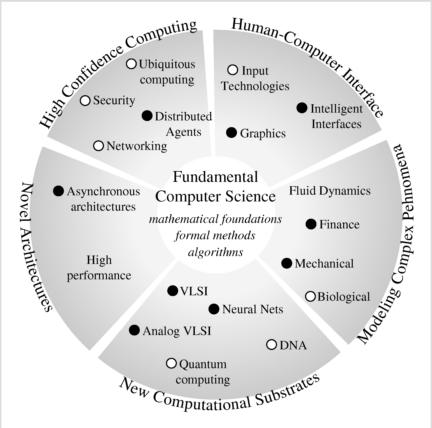
Alan H. Barr is a Professor of Computer Science at the California Institute of Technology (Caltech), affiliated with the Division of Engineering and Applied Science and the Computation & Neural Systems (CNS) department. He is a founding member of the Caltech Computer Graphics Group and a leader in developing mathematically rigorous methods for computer graphics and predictive modeling. His research focuses on enhancing computational modeling accuracy through approaches like interval analysis and constraint-based systems. Notable contributions include deformable models, quaternion interpolation, and cellular simulation frameworks. He has advised over 20 graduate students, many of whom became industry leaders at Pixar, Microsoft Research, and academic institutions like NYU and Brown University. Awards include the ACM SIGGRAPH Achievement Award (1988) and ACM Fellow (1995). Research Interests: Predictive modeling with error bounds Scientific visualization and MRI data analysis Biophysical systems simulation (e.g., cellular organelles) Self-assembling robotic structures for space colonization Mathematically robust computer graphics techniques Key Collaborations: Caltech Biological Imaging Center (Beckman Institute) JPL (Jet Propulsion Laboratory) New computational substrates research (quantum/DNA computing) Recent Work: Expanding into computational biology, medical imaging optimization, and high-confidence systems for managing complex computational interactions. Active in interdisciplinary projects across Caltech divisions.
Vahid Shahrezaei is a Professor of Biomathematics at Imperial College London's Department of Mathematics (Faculty of Natural Sciences). He holds affiliations with the Biomathematics Group, Centre for Synthetic Biology, and Mathematics in Medicine. His research focuses on Computational Molecular Systems Biology, studying cellular robustness under stochasticity and environmental noise using computational and analytical methods. Notable contributions include methods for single-cell RNA-sequencing analysis and simulation-based inference of biochemical networks. Education: PhD in Physics from Simon Fraser University (Canada), BSc/MSc in Physics from Sharif University (Iran). Career highlights include a sabbatical at the Crick Institute (2023-2024) and roles such as Diversity Champion for the Faculty of Natural Sciences. Awards include the Imperial College President Medal for Research Supervision (2017). He has led interdisciplinary grants, including a Leverhulme-funded study on noise in gene expression with Samuel Marguerat. Research Interests: Stochastic modeling, gene expression dynamics, systems biology applications Key Projects: Development of bayNorm for single-cell data normalization, studies on mycobacterial cell size control Professional Roles: BBSRC expert panel member, co-organizer of systems biology conferences His lab integrates mathematical modeling with experimental data, addressing questions in developmental biology, cancer metabolism, and microbial systems. Recent work includes agent-based modeling of environmental policy adoption and novel visualization techniques for multi-omics data.
Dr. Michaelle Ntala Mayalu is an Assistant Professor of Mechanical Engineering at Stanford University, with a courtesy appointment in the Department of Bioengineering. Her research focuses on synthetic biology circuits, systems biology modeling, and biomolecular control systems. She specializes in designing modular genetic circuits for cell population control and studying emergent behaviors in nonlinear biological systems. Her work integrates mechanistic and empirical models to predict cellular behaviors, particularly in contexts like the microbiome-gut-brain axis and T-cell responses. She employs advanced mathematical techniques such as latent space linearization and reduced-order modeling to analyze complex biological systems. Dr. Mayalu’s research has implications for biomedical engineering applications, including diagnostic systems and synthetic biology-based therapies. She is affiliated with the Stanford School of Engineering and holds a position at the Shriram Center in Stanford, CA.
Christopher P. Kempes is a Professor at the Santa Fe Institute and an External Professor at the Complexity Science Hub Vienna, where he conducts interdisciplinary research at the intersection of biology, physics, and complex systems. His work is focused on uncovering universal principles governing life across scales—from cells to cities. Research Interests: Dr. Kempes explores the fundamental laws underlying biological organization, the origins of life, ecological dynamics, and the complexity of human systems. His approach integrates physical constraints, mathematical modeling, and data-driven analysis to predict large-scale patterns in nature and society. Key themes include scaling laws, metabolic theory, astrobiology, urban systems, and evolutionary transitions. Publication Trends: Over the past 15 years, his research has consistently advanced theoretical frameworks in complexity science. His publications reveal a strong focus on universal patterns in biology and society, with recurring themes in scaling, thermodynamics, and system-level organization. He applies these principles to diverse domains including climate change, inequality, biosignatures, and organizational growth. Scientific Recognition: Work featured in BBC, Wired, and other major media outlets. Contributions to foundational theories in complexity and biological organization. Advising and Grants: While specific students and grants are not listed, his senior faculty role at leading complexity research institutes suggests active mentorship and leadership in funded interdisciplinary projects. He likely advises postdoctoral researchers and collaborates on large-scale initiatives in complexity science, astrobiology, and urban sustainability. Labs and Research Groups: Dr. Kempes is affiliated with the Santa Fe Institute’s core faculty, participating in its collaborative, theory-driven research environment. He also contributes to the Complexity Science Hub Vienna, engaging in cross-institutional projects on complex systems in natural and social domains.
Steven A. Frank is the Donald Bren Professor and UCI Distinguished Professor at the University of California, Irvine. His research integrates evolutionary theory with cancer biology, genetics, and systems biology. Frank's work focuses on understanding how evolutionary principles shape biological systems, particularly in cancer development, regulatory networks, and microbial ecology. He has authored influential books including Dynamics of Cancer and Foundations of Social Evolution . Research Interests: Evolutionary mechanisms in cancer and aging Regulatory networks and robustness Genomic conflict and cooperation Evolutionary dynamics of microbial communities Publications highlight innovative approaches such as applying control theory to biological systems and bridging evolutionary theory with machine learning. Frank's work emphasizes interdisciplinary methods to address questions in oncology, genetics, and ecology.
Eric Duviella is a Professor at IMT Nord Europe, specifically within the Department of Automatic Control and Computer Sciences. He has been a permanent faculty member since 2007 and was promoted to full Professor in 2015. His academic affiliations include strong ties with the University of Lille, Universitat Politècnica de Catalunya, and the University of Seville through collaborative research and joint Ph.D. supervision. Education: Diplôme d'Ingénieur, Ecole Nationale d'Ingénieurs de Tarbes (ENIT), 2001 M.S., Institut National Polytechnique de Toulouse (INPT), 2001 Ph.D. in Industrial Systems, Institut National Polytechnique de Toulouse, 2005 HDR (Habilitation à Diriger des Recherches), University of Lille 1, 2014 His research interests center on Reactive Control Strategies , Supervision and Prognosis , and the Modeling of Large-Scale and Environmental Systems , particularly Hydrographical and Water Systems . His work aims at predictive maintenance, adaptive management under climate change, and improving navigation and water quality through advanced control techniques. The 15 most recent publications reflect a strong trend toward Model Predictive Control (MPC) , distributed and decentralized control architectures , leak detection in water networks , and resilience of inland waterways under climate stress . Keywords across these works include control engineering, water systems, fault diagnosis, and data-driven modeling, indicating a multidisciplinary approach combining automation, environmental science, and computational intelligence. Scientific Awards: Best paper award at CODIT 2017 Eric Duviella has actively supervised numerous Ph.D. and Master’s students from institutions including IMT Lille Douai, Universitat Politècnica de Catalunya, and the University of Seville. He has led significant research grants such as GEPET-Eau, CHEEF2, and CASTR-Eau, focusing on sustainable water management, hydropower optimization, and robotic monitoring. His work often involves partnerships with agencies like VNF, EDF, and local water authorities. He is involved in key research labs and teams including the Laboratoire d'Automatique, Génie Informatique et Signal (LAGIS), and collaborates internationally through mobility programs with UPC and the University of Seville. His leadership in organizing special sessions at major conferences (e.g., IFAC, HIC) underscores his role in shaping discourse in water system control and supervision.
Professor Pearson Miller is a faculty member in the Department of Physics at the University of California San Diego (UCSD). He holds a PhD in Physics from MIT (2020) and previously served as a Flatiron Research Fellow at the Center for Computational Biology at the Flatiron Institute (2020–2024). His research focuses on nonlinear dynamics applied to biological systems, including cell polarization, tissue morphogenesis, and pattern formation in developmental biology. Teaching responsibilities include advanced courses on numerical methods. His work bridges physics and biology, with a particular emphasis on mathematical modeling of biological systems. Key research areas include: Cellular mechanics and actomyosin networks Biophysical mechanisms of morphogenesis Evolution of stripe patterns in rodents Topological phenomena in cell membranes His interdisciplinary approach integrates computational modeling with experimental insights to study complex biological processes. While no awards are explicitly listed, his research has been published in top journals across physics and biology. He currently holds no listed lab affiliations or collaborative teams, though his prior fellowship at the Flatiron Institute indicates strong ties to computational biology research networks.
Andres Kriete serves as Teaching Professor and Associate Dean for Academic Affairs at Drexel University, leading graduate program innovation while advancing research in complex systems biology. His work bridges theoretical frameworks of self-organization and robustness with experimental aging models, notably the ERiQ (Energy Restriction in Quiescence) system for post-mitotic cells. His educational foundation includes: Habilitation (Venia legendi) in Medical Informatics, University of Giessen Medical School (1997) PhD in Physics, University of Bremen, Germany (1985) Diploma in Physics, University of Bremen, Germany (1981) Kriete's research integrates thermodynamics, control theory, and semantic information processing to decode aging mechanisms, developmental scaling, and mind-body connections. He posits aging as a robustness tradeoff where acute stress survival pathways conflict with longevity assurance, validated through computational models simulating Akt/mTOR/NF-kappaB/p53 signaling deregulation. His experimental ERiQ model replicates age-related metabolic stress in quiescent human fibroblasts. Recent publications (2022-2025) reveal expanding focus on cognitive control in biological systems and dissipative scaling laws governing multicellular aging. His work consistently applies multiscale modeling—from molecular pathways to organismal phenotypes—with increasing integration of consciousness studies and top-down causation principles. Administratively, Kriete chairs accreditation committees and professional development conferences while securing significant funding like the Bristol Myers Squibb Grant for the Drexel Biomed STEM Pathways Fellowship Program. He co-founded the 'Focus on Microscopy' conference series and initiated the Santa Fe Institute's Systems Biology of Aging workshop series in 2007. His research group develops executable computational models using control theory motifs and rule-based aging descriptors, maintaining longstanding collaborations in biomedical imaging and pharmaceutical R&D training initiatives.
Stephanie R. Taylor is a Professor in the Department of Computer Science at Colby College. Her research bridges computational methods and biological systems, focusing on circadian clocks and oscillator network analysis. She has published extensively in journals like Cell Cycle , Biophysical Journal , and PLoS Computational Biology , often involving interdisciplinary collaborations with biology and neuroscience fields. Her teaching portfolio includes courses such as Systems Biology I & II, Data Analysis, and Computer Organization. She has taken sabbaticals in 2011 and 2020, indicating sustained academic engagement. Taylor mentors students in computational biology projects, with former advisees exploring topics like network inference, tumor progression models, and SCN dynamics. She leads a research group analyzing circadian oscillator synchronization, using mathematical modeling and simulation to study biological complexity. Her lab investigates how multicellular clocks achieve period agreement and how network structures influence entrainment. No scientific awards are explicitly mentioned in the provided texts.
Dan Wagner, PhD is an Assistant Professor in the Department of Obstetrics, Gynecology and Reproductive Sciences at the University of California San Francisco (UCSF) School of Medicine. He leads the Wagner Lab which focuses on understanding the fundamental mechanisms of embryonic development, particularly the feedback mechanisms that ensure tissue pattern robustness during development. His research combines advanced genomic techniques with zebrafish model systems to investigate how cells make fate decisions during embryogenesis. Dr. Wagner received his BS in Systems Biology from Haverford College in 2003, followed by a PhD in Biology from MIT in 2012. He completed his postdoctoral training in Systems Biology at Harvard Medical School in 2019. His educational background has provided him with a strong foundation in both biological systems and quantitative approaches to studying development. Wagner's research focuses on the remarkable capacity of multicellular organisms to develop, maintain, and regenerate robust tissue patterns despite environmental and genetic challenges. His lab employs zebrafish (Danio rerio) as a model system due to their genetic and anatomical similarity to humans, combined with experimental tractability. The Wagner Lab has developed innovative single-cell genomic methods including TRACERSEQ and STITCH to map quantitative relationships between cell lineage and cell state. Their work aims to understand how feedback regulation of cell fate decisions buffers perturbations during embryonic development, with implications for understanding developmental defects and miscarriages of unknown cause. Analysis of Wagner's recent publications reveals a strong focus on single-cell technologies applied to developmental biology. His work spans multiple model systems including zebrafish, planarians, and mammalian systems, with particular emphasis on cell fate determination, tissue patterning, and the integration of lineage and transcriptomic information. The research demonstrates an evolving trajectory from method development to application in specific developmental contexts, with increasing computational sophistication in recent years. Chan Zuckerberg Biohub Investigator (2022-2027) NIH Director's New Innovator Award (2021-2026) Searle Scholar (2021-2024) Science Magazine Breakthrough of the Year - 'Development Cell by Cell' (2018) K99/R00 Pathway to Independence Award (2017-2023) HHMI Postdoctoral Fellowship (2015-2017) Dr. Wagner's research program is supported by significant grant funding, including the prestigious NIH Director's New Innovator Award and Chan Zuckerberg Biohub Investigator funding. His lab has made substantial contributions to the field of developmental biology through the development and application of single-cell genomic technologies. The Wagner Lab's collaborative nature is evident through numerous interdisciplinary publications spanning developmental biology, computational biology, and systems biology. The Wagner Lab at UCSF is at the forefront of applying cutting-edge single-cell genomic technologies to fundamental questions in developmental biology. The lab maintains strong connections with other research groups at UCSF and beyond, particularly in the areas of systems biology and computational analysis of developmental processes. Their work sits at the intersection of multiple disciplines, leveraging expertise in molecular biology, imaging, and computational analysis to address complex questions about embryonic development.
Penelope Higgs is an Associate Professor in the Department of Biological Sciences at Wayne State University, within the College of Liberal Arts and Sciences. Her research focuses on understanding the molecular mechanisms governing developmental processes in the bacterium Myxococcus xanthus, including cell fate segregation, spore morphogenesis, and signal transduction networks. She holds a Ph.D. (2001) and B.Sc. (1994) in Biological Sciences from Washington State University. Research Interests: Dr. Higgs investigates how Myxococcus xanthus coordinates multicellular behaviors during development, including the regulatory pathways that control cell fate decisions, spore formation, and signaling integration. Her work combines genetic, biochemical, and transcriptomic approaches to dissect complex developmental processes. Funding: Ongoing support includes an NSF CAREER grant (2017–2025) and prior DFG funding (2012–2016) for studies on bacterial sporulation. Mentoring: The Higgs lab emphasizes training in experimental rigor, communication, and leadership. Students present at conferences like the International Conference on Myxobacteria and participate in outreach activities. Mentees are encouraged to develop independent research projects and contribute to departmental committees. Labs & Courses: Courses include BIO3250 (Molecular Mechanisms of Microbiology) and BIO4370 (Microbial Communities). The lab actively explores spore morphogenesis, signaling networks, and developmental robustness in Myxococcus xanthus.
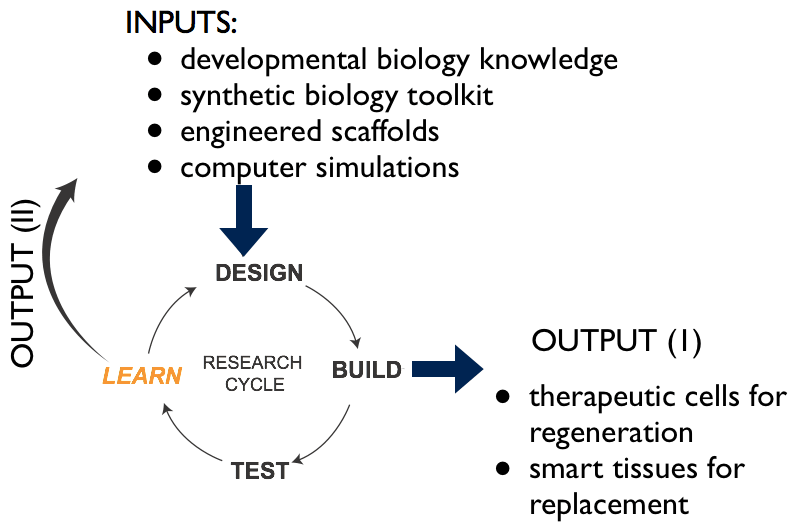
Leonardo Morsut is an Assistant Professor in the Department of Stem Cell Biology and Regenerative Medicine at the Keck School of Medicine, University of Southern California. His research focuses on synthetic biology and tissue engineering, aiming to program mammalian cells for controlled tissue morphogenesis and regeneration. He leads the Morsut Lab, which integrates computational modeling, protein engineering, and stem cell biology in an iterative framework to understand and manipulate tissue self-organization. University: University of Southern California School: Keck School of Medicine Department: Stem Cell Biology and Regenerative Medicine Academic Rank: Assistant Professor Research Interests: Dr. Morsut's work combines synthetic biology with developmental systems to engineer multicellular constructs. His lab specializes in synthetic Notch receptors, genetic circuit design, and controlling spatio-temporal patterning during tissue formation. Key areas include programmable material-to-cell pathways, juxtacrine signaling networks, and computational frameworks for morphogenesis modeling. Recent Publications Trends: His 2024-2025 studies emphasize precise spatial control of differentiation in organoids using synthetic Wnt organizers, programmable material interfaces, and dynamic cell growth feedback. Earlier works focus on transgene silencing mechanisms, mucin-driven morphogenesis, and density-dependent signaling in multicellular systems. Laboratory Mission: The Morsut Lab aims to build functional tissues through synthetic biology tools while training future regenerative medicine leaders. They utilize interdisciplinary approaches from engineering, computational biology, and developmental systems to create programmable multicellular structures.