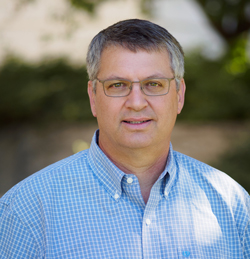
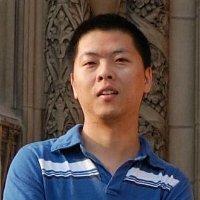
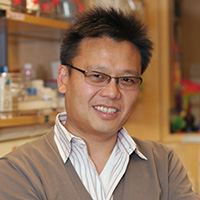
David G. Drubin is the Ernette Comby Chair in Microbiology and a Professor of Cell Biology, Development and Physiology at the University of California, Berkeley. He is also an affiliate of the Division of Genetics, Genomics and Development, with his lab focusing on molecular mechanisms of actin assembly and membrane trafficking in human stem cells, organoids, zebrafish, and budding yeast. Affiliation: Department of Molecular and Cell Biology, UC Berkeley Research Focus: Actin-mediated membrane trafficking, clathrin-mediated endocytosis, cytoskeletal dynamics, genome editing, stem cell differentiation, and yeast genetics His lab employs real-time imaging, genome editing, mathematical modeling, and biochemical reconstitution to study endocytic mechanisms. Key findings include the role of membrane curvature in endocytosis and the translation of yeast discoveries to mammalian systems. Google Scholar publications up to 2025 highlight his work on myosin-I, actin networks, and membrane biophysics. Lab members include students and researchers like Sun Hae Hong, Yansong Miao, and Nate Krefman. The lab has produced educational videos (e.g., DNA gel training) and maintains active research directions in actin force generation and organelle inheritance pathways.
Paul Rainey is a Professor and Director of the Department of Microbial Population Biology at the Max Planck Institute for Evolutionary Biology in Plön, Germany. He also serves as Professor at ESPCI Paris and holds an adjunct position at the New Zealand Institute for Advanced Study (NZIAS). His research spans microbial evolution, ecological scaffolding, and biophysics, supported by the Max Planck Society and collaborations across institutions. University of Canterbury – BSc, MSc, PhD Paul's research focuses on experimental evolution, ecological complexity, and the emergence of individuality in microbial systems. Recent work explores evolutionary rescue, biophysical mechanisms of surface colonization, and the interplay between ecological and genetic factors in adaptation. His publications highlight interdisciplinary approaches, merging microbial ecology with theoretical frameworks for evolutionary transitions. Key themes include stochastic phenotype switching, genome streamlining, and the role of environmental structure in shaping evolutionary trajectories. Fellow of the Royal Society of New Zealand Member of EMBO Paul leads the Laboratory for Evolutionary Genetics at ESPCI Paris and collaborates with institutions like Kiel University and the CRC 1182. His work addresses microbial community dynamics, evolutionary medicine, and the broader implications of eco-evolutionary feedback in biological systems.
Dr. Luiz E. Bertassoni is Professor at the Division of Oncological Sciences at Oregon Health & Science University's Knight Cancer Institute, where he serves as founding director of the Knight Cancer Precision Biofabrication Hub and co-section head for Discovery and Translational Oncology. He holds joint appointments in the Department of Biomedical Engineering, Cancer Early Detection Advanced Research (CEDAR) center, and OHSU School of Dentistry. Education D.D.S. (2007) Ph.D. in Biomaterials, University of Sydney (2012) Postdoctoral training: Harvard Medical School (2012-2013) Brigham and Women's Hospital (2012-2013) University of California, San Francisco (2007-2009) Research Focus Dr. Bertassoni leads multidisciplinary research in biofabrication technologies including 3D bioprinting, organs-on-chips, and regenerative medicine. His laboratory develops innovative approaches for creating vascularized tissue constructs, cancer models, and biomimetic materials with applications in precision oncology and tissue regeneration. Publication Trends Recent work demonstrates strong focus on vascularization techniques, advanced bioprinting methodologies, and microphysiological systems for bone and vascular tissue engineering. Publications consistently integrate nanotechnology, biomimetic design principles, and translational applications in cancer research. Honors Medical Research Foundation New Investigator Award Silver Family Faculty Innovation Award Recipient of over 30 national/international research awards Leadership Founded the Knight Cancer Precision Biofabrication Hub and co-founded two biotechnology companies. Leads multidisciplinary team developing biofabrication platforms for cancer research and regenerative applications. Editorial board member for 10 journals and reviewer for 60+ peer-reviewed publications.
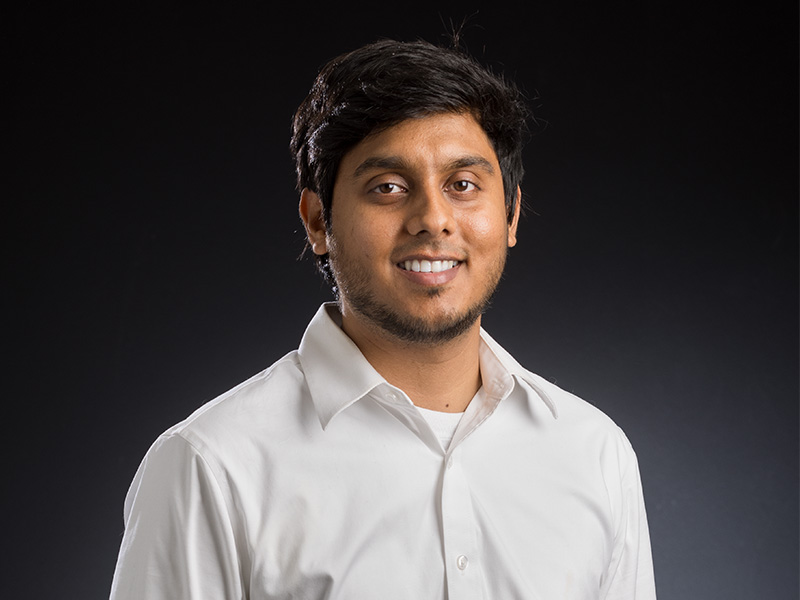
Dr. Srikanthan Ramesh serves as an Assistant Professor in the School of Industrial Engineering and Management within Oklahoma State University's College of Engineering, Architecture and Technology. Since establishing the Advanced Materials and Additive Manufacturing Laboratory in August 2022, he has led interdisciplinary research at the intersection of materials science, physical phenomena, and advanced manufacturing technologies, with applications spanning healthcare, aerospace, and electronics sectors. His educational foundation includes a Ph.D. in Mechanical and Industrial Engineering from Rochester Institute of Technology (2022) and an M.S. in Industrial and Manufacturing Systems Engineering from Iowa State University (2017). This academic background enables his innovative approach to manufacturing science. Dr. Ramesh's research program focuses on biological and micro-scale additive manufacturing (bio-AM), specializing in biomaterial development for tissue engineering and regenerative medicine. His work integrates computational fluid dynamics, machine learning, and real-time process monitoring to achieve precise control over mechanical, biological, and electrical properties of manufactured structures. He develops experimental tools and process frameworks for droplet-based and extrusion-based AM systems, with particular emphasis on wound healing applications and space-compatible microelectronics. Analysis of his 14 publications from 2020-2025 reveals a strong trajectory toward AI-driven manufacturing solutions, with increasing emphasis on multi-objective Bayesian optimization for bioink design, aerosol jet printing process refinement, and bioprinted tissue construct development. His recent work demonstrates sophisticated integration of machine learning with physical manufacturing processes to solve complex biomedical challenges. His scientific recognition includes: Doctoral Dissertation Pitch Competition (Runner-up), IISE, 2021 Best Oral Presentation, Graduate Showcase, Rochester Institute of Technology, 2019 Gilbreth Memorial Fellowship, IISE, 2018-2019 Wakonse College Teaching Fellowship, Iowa State University, 2018-2019 Graduate Research Excellence Award, Iowa State University, 2017 Best Overall Oral Presentation, Nano@IAstate, Iowa State University, 2017 Dr. Ramesh currently leads significant research initiatives including as Principal Investigator for an NSF REU Site on Additive Manufacturing and Cybersecurity ($464,606, 2025-2028) and a NASA EPSCoR Travel Grant for aerosol jet printing in space missions (2024-2025). As Co-PI on an NSF grant for Privacy-aware Collaborative Design in additive biofabrication ($599,981, 2025-2028), he develops frameworks for mass personalization in medical applications while addressing data security challenges. These projects support his lab's mission to advance manufacturing science through rigorous experimentation and computational innovation. The Advanced Materials and Additive Manufacturing Laboratory operates as a collaborative hub where Dr. Ramesh directs research teams in developing novel biomaterials, optimizing printing processes, and creating functional prototypes for wound dressings, liver tissue models, and space-rated microelectronics. The lab's interdisciplinary approach combines expertise in materials characterization, computational modeling, and machine learning to push the boundaries of what's possible in additive manufacturing for critical applications.
Pavol Federl is an Assistant Professor (Teaching) in the Department of Computer Science at the University of Calgary, Faculty of Science. His research focuses on computational modeling in biological systems, particularly plant growth, fracture mechanics, and interdisciplinary applications of L-systems. He holds a PhD (2002), MSc (1997), and BSc (1995) in Computer Science from the University of Calgary. Research Interests Biological modeling using L-systems Fracture formation in growing materials Computer graphics and interactive simulation environments Plant growth dynamics and pattern formation His work integrates mathematical modeling with computational techniques to study natural phenomena, such as leaf venation patterns and tree bark fracture. Recent research highlights include: Developmental models of multicellular structures Finite element analysis of fracture dynamics Interactive design tools for bonsai tree modeling Grants and Advising No specific grants or advisees are listed in the provided text. His teaching includes courses such as CPSC 457: Principles of Operating Systems. Professional Contributions He has contributed to software development in virtual laboratories and license plate recognition systems, demonstrating expertise in both theoretical and applied computing.
Prof. Dr. Susann Müller is Senior Scientist and Group Leader of the Flow Cytometry Working Group at the Department of Applied Microbial Ecology, Helmholtz Center for Environmental Research (UFZ) in Leipzig, Germany. Since 2011, she has held an Associate Professor position for Microbiology at Leipzig University’s Faculty of Life Sciences, bridging fundamental microbial ecology with environmental biotechnology applications through single-cell analytics. Education: 1985: Diploma in Biochemistry, Martin Luther University Halle-Wittenberg 1992: PhD, University of Halle-Wittenberg (Population dynamics of S. cerevisiae) 2003: Habilitation, Technical University Dresden (Multiparametric Cytometry) Her research pioneers microbial community flow cytometry to extract single-cell high-dimensional data, applying macroecological concepts to quantify stability metrics (resistance, resilience, displacement speed, elasticity) in engineered systems. Current focus includes bio-based circular economy initiatives: developing the carboxylate platform for sustainable chemical production and biological phosphate recovery from wastewater streams for resource valorization. Recent publications (2021-2025) reveal consistent innovation in flow cytometry applications, with emphasis on stability assessment in bioreactors, predator-prey dynamics in complex communities, and real-time monitoring of wastewater systems. She integrates ecological theory with multi-omics and data science to decode microbial assembly principles across environmental, agricultural, and industrial contexts. Professional roles: President, German Society of Cytometry (DGfZ, 2008-2010) Associate Editor, Microbiology for Cytometry Part A ISAC Educational Committee (2011-2012) and Scholars Program Committee (2013-2015) Current grants: PHOM project (SMWK InfraProNet 2024-2027): €449,160 for wastewater phosphorus recovery Z-PROJECT (DFG 2022-2025): €556,550 for bacterial biofilm analysis PROMICON (EU H2020 2021-2025): €200,000 for industrial microbiome consortia Moore Foundation (2020-2024): $23,000 for archaeal evolutionary tools Chinese Scholarship Council (2022-2026): Artificial community construction The Flow Cytometry Working Group under her leadership at UFZ develops standardized mock communities (Nature Protocols 2020), automated analysis tools (flowEMMi), and cytometric barcoding methods. It collaborates with Leipzig University, Technical University Dresden, and international partners including UC Santa Barbara, driving innovations in real-time environmental monitoring and wastewater treatment optimization.
Cole A. DeForest is a Weyerhaeuser Endowed Professor and Associate Professor in the Department of Chemical Engineering at the University of Washington, where he also serves as Associate Chair for Graduate Studies. Additionally, he holds appointments as Associate Professor in Bioengineering and Adjunct Associate Professor in Chemistry, and is the Director of Education at the Molecular Engineering & Sciences Institute and a Core Faculty member at the Institute for Stem Cell & Regenerative Medicine. Dr. DeForest earned his Ph.D. in Chemical and Biological Engineering from the University of Colorado, Boulder in 2011 and completed postdoctoral training at Caltech before joining the UW faculty in 2014. His research focuses on developing user-programmable hydrogels with tunable biochemical and biophysical properties, utilizing cytocompatible bioorthogonal chemistries, particularly those initiated with light. His work spans several key areas including User-Programmable Biomaterials for Directing Dynamic Stem Cell Fate, Biomolecular and Tissue Engineering, Controlled Delivery of Therapeutics to Treat Disease, and Tool Development for Enhanced Proteomic Studies. His publication record demonstrates consistent high-impact contributions to biomaterials science, with numerous papers in Nature family journals, JACS, and Advanced Materials. His research approach integrates principles of rational design with fundamental concepts from material science, synthetic chemistry, and stem cell biology to create next-generation materials addressing health-related problems. UW College of Engineering Junior Faculty Award (2020) Society for Biomaterials Young Investigator Award (2020) Society for Biomaterials Mid-Career Award (2025) NSF CAREER Award (2017) UW Presidential Distinguished Teaching Award (2016) 35 Under 35 Award, AIChE Bioengineering Category (2017) Dr. DeForest has mentored numerous graduate students, postdocs, and undergraduates, many of whom have received prestigious fellowships including NSF GRFP, NIH F30, and HHMI Gilliam Fellowships. His lab has secured significant funding including collaborative grants from the Institute for Translational Health Sciences, the Institute for Stem Cells & Regenerative Medicine, and the Allen Institute for Brain Science. His educational leadership extends to directing the MolES Education program and teaching courses including Biological Frameworks for Engineers and Biomaterials Seminar.
Silvia De Monte is a Researcher at the Max Planck Institute for Evolutionary Biology in Plön, Germany, and holds affiliations with the Institute of Biology at École Normale Supérieure in Paris, France. She leads the 'Dynamics of Microbial Collectives' group, focusing on the ecological and evolutionary processes underlying collective behaviors in microbial systems. Her work integrates mathematical modeling with empirical observations to explore how selection pressures shape collective functions in heterogeneous cellular assemblies. De Monte's research spans multiple areas, including the eco-evolutionary dynamics of aggregative multicellularity, the role of phenotypic heterogeneity in bacterial populations, and the mathematical modeling of species abundance distributions in planktonic communities. She has collaborated with institutions such as the CNRS, ENS Paris, and the University of Vienna, contributing to interdisciplinary projects at the interface of biology, physics, and economics. Her educational background includes a PhD from the Technical University of Denmark (2004) and postdoctoral training at the University of Vienna and the Max Planck Institute. She has held roles as a Researcher at CNRS (since 2007) and an Attached Lecturer at École Normale Supérieure (2014–2018). Key research projects include investigating the emergence of Darwinian properties in collective systems, the evolutionary stability of microbial symbioses, and the application of game theory to microbial social dynamics. Her work emphasizes the interplay between microscale cellular interactions and macroscale ecological patterns.
Dr. Richard F. Loeser, Jr. is the Joseph P. Archie, Jr. Eminent Professor of Medicine and Director of the UNC Thurston Arthritis Research Center at the University of North Carolina School of Medicine. His research focuses on osteoarthritis (OA) mechanisms, particularly the role of oxidative stress, aging, and cellular signaling in joint degeneration. He has pioneered studies on redox regulation of chondrocyte signaling and integrin function, using both in vitro and rodent models. Education: Undergraduate: Virginia Tech Medical School: West Virginia University Residency/Fellowship: Wake Forest Baptist Medical Center Research interests include OA biomarkers, exercise interventions, and gut microbiota's role in joint health. His clinical work emphasizes translating basic science discoveries into therapeutic strategies, including weight loss and exercise programs for knee OA patients. He leads multidisciplinary teams studying OA phenotypes and metabolomics. Publications reflect a blend of clinical trials (e.g., START trial on strength training) and mechanistic studies on cellular senescence and Sirt6 pathways. He holds leadership roles in arthritis research and has contributed to major reviews defining OA as a systemic joint disease.
James Schiffbauer holds the Marie M. & Harry L. Smith Endowed Professorship in Geological Sciences at the University of Missouri, where he directs the X-Ray Microanalysis Laboratory. His research investigates early animal evolution during the Ediacaran-Cambrian transition using paleobiological, geochemical, and advanced microscopy approaches. Education: PhD (Virginia Tech), MS (University of Kansas), BS (University of Nebraska-Lincoln) Research examines taphonomic processes governing soft-tissue fossil preservation, with emphasis on early complex multicellular fossils. Analytical techniques include scanning electron microscopy and synchrotron-based X-ray tomography to resolve biological signals from preservational artifacts. Recent publications explore Ediacaran 'death mask' preservation mechanisms, bilaterian gut evolution in cloudinomorphs, and Cambrian SPICE event biogeochemistry. Earlier work established micro-CT approaches for coprolite analysis and volcanological applications. Awards: Marie M. & Harry L. Smith Endowed Professorship GSA Geobiology Division Pre-Tenure Award MU System President's Award for Early Career Excellence NSF CAREER Award Teaches Environmental Geology, Geochemistry, and specialized courses on taphonomy and the Ediacaran-Cambrian transition. Directs the X-Ray Microanalysis Lab supporting interdisciplinary materials characterization.
Dr. Zhao Yanxiang is an Associate Professor in the Department of Mathematics at The George Washington University. His research focuses on computational mathematics, numerical analysis, and mathematical modeling with applications in biological chemistry and physics. He specializes in numerical methods for differential equations and phase-field modeling, particularly in areas such as cell motility and material science. Education: B.A., 2002, Dalian University of Technology M.S., 2005, Dalian University of Technology Ph.D., 2011, The Pennsylvania State University Research Interests: Dr. Zhao’s work bridges computational methods and real-world biological and physical systems. His key areas include optimal transport theory, phase-field modeling of biological processes (e.g., cell chemotaxis), and numerical schemes for nonlocal and multiscale systems. He has developed algorithms for applications in polymer physics, material phase transitions, and systems biology. His methodologies often integrate machine learning with traditional numerical analysis to solve complex PDEs and model dynamics across multiple spatial and temporal scales. Publications: His recent work emphasizes interdisciplinary applications of optimal transport, such as screening cell-cell communication via collective transport methods and analyzing phase-field models for biological systems. He has also contributed to the development of energy stable numerical schemes and physics-informed neural networks for solving challenging equations in materials science. Labs/Teams: While specific lab names are not mentioned, his research likely involves collaborations with computational biology and materials science groups, integrating mathematical modeling with experimental data.
Wendell Lim is a Professor in the Department of Cellular and Molecular Pharmacology at the University of California, San Francisco (UCSF), School of Medicine. He is a leading figure in synthetic biology and cellular engineering, directing the Lim Lab, which focuses on reprogramming immune cells for precision cancer immunotherapies. His research integrates synthetic biology, immunology, and systems biology to design novel cell-based therapeutics. University: University of California San Francisco School: School of Medicine Department: Department of Cellular and Molecular Pharmacology Academic Rank: Professor Email: wendell.lim@ucsf.edu Dr. Lim's research interests center on synthetic biology, T cell engineering, cell signaling, and programmable cell therapies. His lab pioneers technologies such as synNotch and CAR-T systems that enable precise control over immune cell behavior, allowing for spatial and temporal regulation of therapeutic activity. His work aims to overcome challenges in cancer heterogeneity, specificity, and persistence. The recent publications of Dr. Lim reflect a strong trend toward engineering smart cell therapeutics, particularly through modular receptor systems, synthetic cytokine circuits, and logic-gated T cells. These works span disciplines including immunology, cancer biology, protein engineering, and regenerative medicine, emphasizing the development of next-generation, conditionally activated immunotherapies with enhanced safety and efficacy. Dr. Lim has received widespread recognition for his contributions to synthetic biology and immunoengineering. His work is frequently published in top-tier journals such as Science , Nature , and Cell , and he is a sought-after speaker and collaborator in the field. He mentors a large group of students, postdoctoral researchers, and collaborators, many of whom are co-authors on his publications. His lab has secured significant funding to support research in engineered cell therapies, synthetic signaling circuits, and translational applications in oncology and autoimmunity. The Lim Lab also develops educational tools and frameworks for teaching synthetic biology concepts. Dr. Lim leads interdisciplinary teams working on synthetic morphogen systems, degron-based control mechanisms, and multicellular patterning, aiming to build foundational platforms for programmable tissues and intelligent cell-based medicines.
Dr. Ahmad S. Khalil is an Associate Professor in the Department of Biomedical Engineering at Boston University, serving as Associate Director of the Biological Design Center (BDC) and Co-Director of the SB2 NIH/NIGMS T32 Training Program. He holds affiliations with the Wyss Institute at Harvard University and the Molecular Biology, Cell Biology & Biochemistry (MCBB) departments. His research focuses on synthetic biology, systems biology, and genetic regulation, with a strong emphasis on engineering programmable cellular therapies and automated evolution technologies like the eVOLVER platform. Education: B.S. in Mechanical Engineering from Stanford University; M.S. and PhD in Mechanical Engineering from MIT. Key honors include the 2022 Schmidt Science Polymath Award, 2020 DoD Vannevar Bush Fellowship, and 2017 PECASE Award. Research interests include synthetic circuit design for eukaryotic gene regulation, lab-scale evolutionary biology, and democratizing biotechnology tools. His work bridges engineering and biology to address challenges in medicine, climate, and biomanufacturing. Publications emphasize synthetic biology applications, epigenetic control, and automated evolution. He leads a multidisciplinary team with expertise in genetics, computation, and automation, ensuring technologies are accessible to the global scientific community.
Prof. Dr. Susanne Gebhard is a Full Professor of Molecular Biotechnology at the Institute for Molecular Physiology , Johannes Gutenberg University (JGU) Mainz, Germany, since 2023. Her career spans international institutions, including postdoctoral work in New Zealand and the UK, and a permanent research and teaching position at the University of Bath. She focuses on bacterial physiology, particularly antibiotic resistance mechanisms and microbially induced calcite precipitation for sustainable biotechnology applications. Education: Abitur (1996), University Degree (2003), PhD in Microbiology (2006, University of Otago, New Zealand), Habilitation (2014) Research Interests: Her work bridges two major themes: Antibiotic Resistance : Investigating how bacteria detect antibiotics and regulate resistance pathways, with implications for novel therapeutic strategies. Microbial Biomineralization : Exploring bacterial mineralization processes to reduce cement usage in construction, addressing CO 2 emissions through Solibacillus silvestris and related species. Publications & Collaborations highlight her expertise in Bacillus subtilis , Pseudomonas , and Neisseria systems, alongside contributions to journals like Nature Communications , Cell Reports , and Environmental Microbiology . She frequently collaborates with labs in Oxford, Cologne, and Australia. Scientific Engagement includes: Senior Editor for the Microbiology journal Deputy Spokesperson for the 'Regulation' specialist group of the Association for General and Applied Microbiology Active participation in international conferences and EMBO workshops Lab & Leadership : She leads the Gebhard Lab at JGU Mainz, mentoring students and postdocs while emphasizing interdisciplinary collaboration. Her hobbies include horseback riding, gardening, and exploring the intersection of science and sustainability.
Luciano Marcon is a Researcher at the Andalusian Center for Developmental Biology (CABD) under Pablo de Olavide University. He earned his PhD in Developmental Biology from Pompeu Fabra University, focusing on Turing mechanisms in digit patterning under Dr. James Sharpe. Education: PhD in Developmental Biology (2013), Pompeu Fabra University His research spans Developmental Biology , Systems Biology , and Computational Modeling , with a focus on Turing networks, somitogenesis, and embryoid self-organization. Recent work includes studies on scale-invariant patterning, Nodal signaling feedbacks, and 4D stem cell dynamics. Analysis of his 15 most recent publications reveals trends in Turing pattern formation , embryonic self-organization , and gene regulatory networks , often integrating mathematical modeling with experimental data from embryoids and stem cell systems.