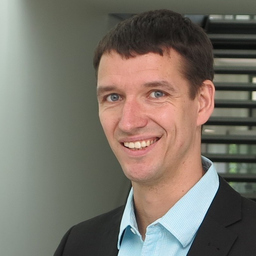
Nikolaos Batis is a Professor at the Department of Spatial Planning, Urban Planning and Regional Development Engineering at the University of Thessaly, where he has been serving since January 2020. He is also a member of the Integration Council of the University of Thessaly, which coordinates the procedures for completing the merger of the University with the Technical Institute of Thessaly. Prior to this, he served as a Professor at the General Department of the University of Thessaly (2019-2020) and as a Professor at the Department of Informatics Engineering at the TEI (Technical Educational Institute) of Thessaly from 2000 to 2019. His administrative experience includes serving as Rector of TEI of Thessaly (2017-2018), Vice President of the Management Council (2013-2016), and Dean of the School of Technological Applications (2003-2010). Batis earned his PhD in Operations Research from New York University Tandon School of Engineering in 1983, following Master's degrees in Economic Systems (1981) and Operations Research (1978) from the same institution, and a Mathematics degree from the National University of Athens in 1976. His academic career began as an Assistant Professor at the University of Massachusetts/Boston (1982-1984), followed by significant research work at Bell Laboratories (1984-1989) where he made foundational contributions to Frame Relay technology. Batis's research primarily focuses on high-speed communication protocols, network architecture, and operations research. His work at Bell Laboratories formed the basis for Frame Relay as an ANSI Standard, of which he was the Editor. He has published extensively in telecommunications, biomedical engineering (particularly in ocular microcirculation), and operations research. His research spans theoretical computer science, network design, and practical applications in telecommunications infrastructure. His publications reflect a diverse research trajectory from early work on network protocols and optimization algorithms to more recent interdisciplinary work combining telecommunications with biomedical applications. The most recent publications (2010-2013) show a focus on biomedical engineering applications, particularly in ocular microcirculation analysis, while maintaining connections to his foundational work in measurement systems and data analysis. EXCECTIONAL CONTRIBUTION AWARD from Bell Labs (March 1989) for contributions to network architecture design EXCECTIONAL CONTRIBUTION AWARD from Bell Labs (March 1988) for standardization of Frame Relay networking EXCECTIONAL CONTRIBUTION AWARD from Bell Labs (July 1987) for packet mode networking in ISDN EXCECTIONAL CONTRIBUTION AWARD from Bell Labs (July 1985) for methodology development in telecommunications network design CERTIFICATE OF APPRECIATION from American Institute of Decision Sciences (March 1985) for fostering academic-industry collaboration Batis has supervised numerous research projects and has been instrumental in developing academic programs, including the creation of the Department of Information Technology and Telecommunications at TEI of Larissa. His research committee activities include leadership roles in major projects such as the 'Employment and Career Structure (DASTA) TEI' proposal and the 'Access Network and Core Services for Education' project. He has also contributed to European collaborative projects including 'INTELLECT - Intelligent Learning Environment for Course Telematics' and the development of the European Postgraduate Master in Information Systems program. His laboratory work has focused on computer applications in spatial design, with contributions to research centers including the Information Systems Research Center (KePS) and the Center for Applied Geoinformatics. His current research continues to bridge telecommunications engineering with biomedical applications, particularly in the measurement and analysis of microcirculatory systems.