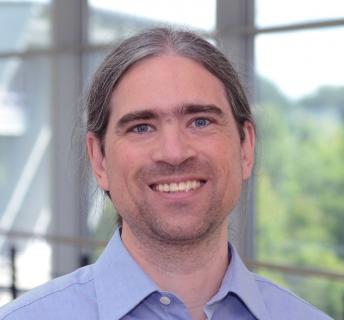
Heiko Alxneit serves as an External Lecturer at the Institute of Construction Technology and Technical Design, University of Stuttgart, specializing in dynamic simulation methodologies for product development. His role bridges theoretical engineering principles with industrial applications. Research focuses on Mechanical Engineering and Product Development , emphasizing simulation-driven design through Dynamic Simulation , Finite Element Analysis , and Multibody Dynamics . His work integrates Computer-Aided Engineering tools to optimize structural integrity and performance in complex systems. Holding a Dr.-Ing. (Doctor of Engineering), Alxneit contributes to academic instruction without documented scientific awards, grants, or student supervision in the provided materials. His expertise targets practical implementation of simulation techniques within engineering workflows.
Mariel Alfaro-Ponce serves as an Assistant Professor in the Biomedical Engineering Program at Tecnológico de Monterrey's Campus Ciudad de México, where she leads the Manufacturing Processes for Advanced Materials research unit since 2022. Her academic journey spans biomedical engineering, microelectronics, and computer science, creating a unique interdisciplinary profile that bridges engineering disciplines with practical healthcare applications. Dr. Alfaro-Ponce earned her Bio-medical Engineering degree, Master of Science in Microelectronics Engineering, and PhD in Computer Science from Instituto Politécnico Nacional in Coyoacán, Mexico. This educational foundation has enabled her to develop innovative approaches at the intersection of multiple engineering disciplines. Her research program demonstrates remarkable breadth across several interconnected domains. She applies artificial intelligence techniques to develop rehabilitation devices and intelligent bioinstrumentation systems, with particular focus on neural network applications for medical diagnostics and prosthetics. Her work extends into sustainable manufacturing processes, including advanced 3D printing applications for both medical devices and food systems. The integration of machine learning with traditional engineering problems represents a consistent thread throughout her research portfolio, demonstrating how computational approaches can solve practical engineering challenges in healthcare and manufacturing. Analysis of her recent publications reveals a clear trajectory toward increasingly sophisticated applications of AI in biomedical contexts, with growing emphasis on sustainable manufacturing solutions. Her work spans from fundamental neural network research to practical implementations in medical devices, food engineering, and environmental applications. The interdisciplinary nature of her research connects computer science, electrical engineering, mechanical engineering, and biomedical applications through the unifying framework of machine learning and intelligent systems. National System of Researchers of Mexico (SNI-Level I) Mexican Researcher Certification - Level 1 Dr. Alfaro-Ponce's academic leadership extends beyond her research publications to include significant educational contributions. She teaches advanced courses including Design of Digital Bioinstrumentation Systems and supervises doctoral research across multiple disciplines. Her expertise aligns with multiple UN Sustainable Development Goals, particularly in areas of good health and well-being, industry innovation, responsible consumption, and clean energy. The practical orientation of her research suggests strong potential for technology transfer and real-world implementation of her innovations in medical devices and sustainable manufacturing systems. As leader of the Manufacturing Processes for Advanced Materials research unit in Mexico City, Dr. Alfaro-Ponce oversees a multidisciplinary team working at the cutting edge of sustainable manufacturing technologies. Her research group focuses on integrating artificial intelligence with advanced materials processing, particularly in medical device development and sustainable food production systems. The team's work demonstrates strong connections between theoretical machine learning approaches and practical engineering implementations across multiple application domains.
Jorge Isaac Chairez-Oria is an Associate Professor in the Department of Biomedical Engineering at Tecnológico de Monterrey's School of Engineering, Campus Guadalajara. He maintains an active research program bridging biomedical engineering, neural networks, and robotic control systems with significant contributions to rehabilitation technology and sustainable manufacturing. His research focuses on neural network applications for system identification and control , particularly in constrained dynamical systems. His work spans medical rehabilitation robotics (including exoskeletons and orthotic devices), bioprinting and tissue engineering , and sustainable environmental technologies utilizing neural network approaches. Recent publications demonstrate strong interdisciplinary work connecting engineering principles with biological and medical applications. Analysis of his 2024-2025 publications reveals consistent focus on barrier Lyapunov functions, constrained state systems, and neural network identification methods applied across diverse domains from wastewater treatment to surgical robotics. His work shows particular strength in translating theoretical control concepts into practical biomedical applications. Scientific Recognition: Mexican Researcher Certification - Level 2 Dr. Chairez-Oria teaches courses in Biofluid Mechanics, Clinical Engineering, and Bioinstrumentation Systems design, integrating his research expertise into the classroom. His work aligns with multiple UN Sustainable Development Goals including Good Health and Well-being, Industry Innovation, and Clean Water and Sanitation.
Prof. Dr. Jens Geisler serves as Professor of Control Engineering, Modelling and Simulation at Flensburg University of Applied Sciences' Department of Energy and Biotechnology since March 2020. His career bridges academic research and industrial wind energy applications with expertise in multivariable control systems and dynamic modeling. His educational background includes: Dipl.-Ing. (FH) in Mechanical Engineering and Computer Science from Osnabrück University of Applied Sciences M.Sc. in Mechatronic Systems Engineering from Osnabrück University of Applied Sciences Geisler's research spans advanced control methodologies for renewable energy systems, specializing in wind turbine grid integration and elastic multibody dynamics . Core competencies include optimal control algorithms, real-time numerical simulation, and microcontroller implementation for industrial applications, with significant contributions to self-optimizing mechanical systems and rail vehicle guidance technologies. His 2022-2025 publications reveal a strategic research trajectory toward AI-enhanced state estimation and automated observer design, emphasizing practical validation with real-world measurements while simplifying complex aerodynamic models for control engineering applications in wind energy systems. No scientific awards were documented in the provided sources. Teaching responsibilities encompass Energy Sciences, Mechanical Engineering, and System Technology programs, with industry-focused curriculum development. No student advisement or grant information was disclosed in available materials. Geisler maintains active research collaborations through projects including the SFB614 'Self-optimising systems in mechanical engineering' and the RailCab initiative, alongside extensive industry experience developing grid-support control systems for wind turbines at Senvion GmbH and DEIF Wind Power.