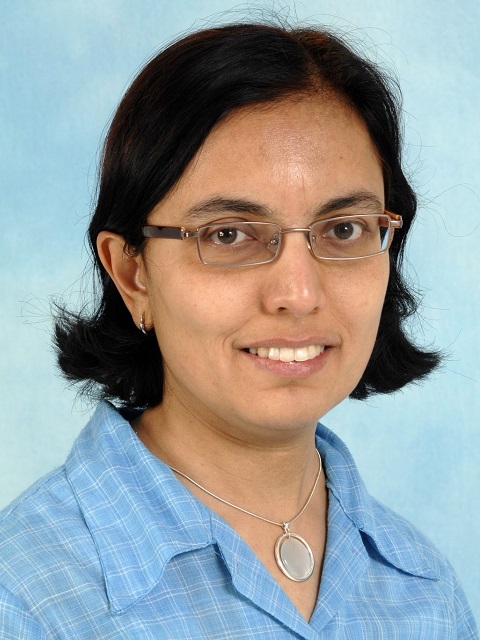
Lina Li is the Winokur Family Professor of Electrical Engineering and Applied Mathematics at Harvard University's School of Engineering and Applied Sciences (SEAS), where she serves as Area Chair for Electrical Engineering. She is an active researcher and advisor in control systems, learning algorithms, and their applications to cyber-physical systems. Research Focus: Integrates control theory, reinforcement learning, and optimization with applications in robotics, neuroscience, energy systems, and physical AI. Key Themes: Model-based and model-free learning, diffusion models, scalable multiagent-learning, and interdisciplinary methodologies bridging mathematics, engineering, and economics. Recent Awards: IFAC Manfred Thoma Medal (2022) Antonio Ruberti Young Researcher Prize (2024) NSF CAREER Award ONR YIP Award ASHRAE Best Paper Award (2024) Advising & Impact: Mentored former PhD students Xin Chen (Texas A&M) and Yingying Li (UIUC), both now in academic positions. Organized workshops at NeurIPS (2025) and NSF (2025) to advance AI applications in smart cities and reinforcement learning.
Yannick Rudolph, M.Sc., is a Research Associate at the Institute for Business Information Systems (IIS) within Leuphana University of Lüneburg. His work focuses on Machine Learning , Artificial Intelligence , and Data Science , with particular emphasis on multiagent systems, explainability, and network modeling. His research interests span Temporal and spatiotemporal modeling of complex systems Deep learning architectures (CNNs, VAEs, GNNs) Information propagation analysis in neural networks AI applications in sports analytics and digital transformation Recent publications highlight trends in masked autoencoders , event classification in soccer , and conditional dependency modeling , reflecting his expertise in integrating theoretical machine learning with real-world application domains. Contact: yannick.rudolph@leuphana.de | Office: C 4.318b, Universitätsallee 1, Lüneburg, Germany
Özgür Kafalı is a Lecturer at the School of Computing, University of Kent, and serves as the Ethics Officer. His research spans cybersecurity, artificial intelligence, and requirements engineering, with a focus on socio-technical systems and formal logic-based approaches. Key Research Areas: Cybersecurity-Privacy Intersections, Multiagent Systems, Normative Specifications, and Human-Centric AI. Teaching: Cyber Law, Software Development, Object-Oriented Programming, and Web Programming. His recent publications emphasize socio-technical system specification (e.g., DESEN, 2019), crowdsourcing security requirements (Çorba, 2020), and agent-based privacy violation detection (Protoss, 2012). He explores tradeoffs in normative systems (Kont, 2017) and applies AI to healthcare privacy (Activity Recognition, 2016). Özgür leads the Institute of Cyber Security for Society (iCSS) , collaborating with institutions like North Carolina State University and researchers such as Munindar P. Singh. His work integrates formal verification, machine learning, and empirical studies to address privacy in online social networks, e-commerce, and healthcare systems. Current projects include age-appropriate design assessments for digital platforms (2022) and value-based negotiation frameworks (2021).
Britton D. Wolfe is a Professor of Computer Science at Grove City College's College of Engineering and Business. His career spans academic research, industry collaboration, and teaching across multiple CS domains. Ph.D. in Computer Science and Engineering, University of Michigan (2009) M.S. in Computer Science and Engineering, University of Michigan (2005) B.S. in Computer Science, Carnegie Mellon University (2003) Research focuses on applying machine learning to diverse challenges: Android malware detection using Google Play data, 3D vision for robotics, and collaborative tracking systems for biological research. He develops deep learning techniques for ant-tracking robots in natural habitats, working with students to refine computer vision algorithms. His publications (2005-2017) demonstrate sustained expertise in malware analysis , tracking algorithms , and predictive state modeling . Current work combines AI with biology studies through interdisciplinary robotics projects. Contact: bdwolfe@gcc.edu
Dr. Jamshed Iqbal is a Senior Lecturer at the University of Hull , affiliated with the School of Digital and Physical Sciences and the Computer Science department . With over two decades of experience in academia and industry, he leads the BEng/MEng Robotics and AI program and contributes to pedagogical innovation via the CDIO framework.
Argyrios Deligkas is a Senior Lecturer (equivalent to Associate Professor) at the Royal Holloway University of London. He obtained his PhD from the University of Liverpool under the supervision of Rahul Savani and held postdoctoral positions at the University of Liverpool and the Technion (Industrial Engineering and Management department). His research focuses on computational aspects of game theory, optimization, and complexity. Key interests include: Algorithmic Game Theory and Mechanism Design Computational Complexity (PPAD/PPA-hardness) Fixed-parameter algorithms and combinatorial optimization Fair division and resource allocation Equilibrium computation in multi-agent systems Recent publications (2023-2025) demonstrate a strong emphasis on computational hardness in fair division (e.g., PPA-hardness proofs), mechanism design with real-world constraints, and parameterized algorithms for pathfinding/graph problems. Collaborative work with European researchers dominates his output, with frequent appearances at AAAI, IJCAI, and AAMAS. He actively presents at conferences (e.g., ALGA2025, WINE 2024) and collaborates internationally, including visits to universities in Vienna, Prague, Glasgow, and Edinburgh.
Dr. M. Birna van Riemsdijk is an Associate Professor in Intimate Computing at the Human-Media Interaction group of the University of Twente's Faculty of Electrical Engineering, Mathematics and Computer Science since 2019. Her research focuses on developing intimate technologies that account for human vulnerability in daily life support systems. Education: PhD in Cognitive Agent Programming from Utrecht University (2006); Postdoctoral research at Ludwig Maximilian University of Munich (2006-2008); Assistant Professor at TU Delft (2008). Her work bridges the gap between computing and humanistic values, emphasizing normative considerations in supportive technology design. She has contributed to the fields of autonomous agents, multiagent systems, and digital society research. Scientific Awards: Vidi personal grant Dutch Prize for Research in ICT 2014 Dr. van Riemsdijk has held significant service roles, including membership on the editorial board of the Journal of Autonomous Agents and Multiagent Systems (JAAMAS), as an elected member of the International Foundation for Autonomous Agents and Multiagent Systems (IFAAMAS) board (2012-2018), and on the board of 4TU.NIRICT (2015-2021), which coordinates ICT research across the Netherlands' four technical universities.
Farhad Mohsin is an Assistant Professor in the Department of Math and Computer Science at College of the Holy Cross in Worcester, MA. He earned his PhD in Computer Science from Rensselaer Polytechnic Institute (RPI) between 2018-2023, working with Professor Lirong Xia, and completed his BSc in Electrical and Electronic Engineering at Bangladesh University of Engineering and Technology (BUET) from 2010-2015. Prior to his academic career, he worked as a Telecommunications Engineer/Data Analyst at Grameenphone Ltd, Bangladesh. Dr. Mohsin's research focuses on computational social choice, particularly preference aggregation and fair decision-making. He explores ML-based techniques for designing economic mechanisms, with specific interest in fairer voting rules. His broader research interests include natural language processing, interpretable machine learning, and multi-agent reinforcement learning. His recent publications (2021-2024) examine computational complexity of voting paradoxes, election data generation using deep learning, and natural language-based preference aggregation. His work has appeared in top venues including IJCAI, AAMAS, and JAIR. Dr. Mohsin teaches courses including Data Mining, Data Structures, Analysis of Algorithms, Discrete Structures, and Advanced Algorithms. He supervises undergraduate research projects, with recent honors theses on multi-agent reinforcement learning and fairness in zoning laws.
Professor Jörg Homberger is a faculty member at Stuttgart University of Applied Sciences, specializing in Operations Research, Artificial Intelligence, and Multiagent Systems. He leads research at the Competence Centre for Industrial Applications of Computer Science and Mathematics, which bridges theoretical computer science with practical industrial challenges. His work emphasizes the application of advanced computational methods to solve industry-related problems, particularly in optimization (Operations Research) and decentralized AI systems (Multiagent Systems).
Carles Sierra serves as Research Professor and Director at the Artificial Intelligence Research Institute (IIIA) of the Spanish National Research Council (CSIC), concurrently holding the presidency of EurAI and an Adjunct Professorship at Western Sydney University. He obtained his PhD in Computer Science from the Technical University of Barcelona (UPC) in 1989, with visiting research appointments at Queen Mary University of London (1996-1997) and University of Technology Sydney (2004-2012). Sierra's research pioneered foundational work in Multiagent Systems, specifically developing frameworks for negotiation, argumentation-based protocols, computational trust mechanisms, team formation algorithms, and electronic institutions. His current investigations focus on AI-driven educational tools and socially impactful AI applications, reflecting an evolution toward human-centered technology. His publication record exceeds 300 scientific contributions spanning theoretical frameworks to applied implementations, demonstrating sustained innovation across three decades in artificial intelligence research. EurAI Fellow Sierra has significantly shaped the AI community through leadership roles including AAMAS General Chair (2009), Journal of Autonomous Agents and Multiagent Systems Editor-in-Chief (2014-2019), and IJCAI Program Chair (2017), while evaluating numerous EU research proposals. As Director of IIIA-CSIC, he oversees one of Europe's premier AI research institutes, fostering interdisciplinary collaboration on emerging challenges in trustworthy and socially beneficial artificial intelligence.
Jun Wang is a Professor of Information and Data Science in the Department of Computer Science at University College London. He serves as the Founding Director of the MSc Web Science and Big Data Analytics program and is the Co-founder and Chief Scientist of MediaGamma Ltd (acquired), a UCL startup focused on AI for intelligent audience decision-making. His educational background includes: Doctor of Philosophy from Technische Universiteit Delft (2007) Master of Science from National University of Singapore (2003) Bachelor's degree from Southeast University Nanjing (1997) Professor Wang's primary research focuses on AI and intelligent systems, with particular expertise in multiagent reinforcement learning, deep generative models, and their applications across several domains. His work spans information retrieval, recommender systems and personalization, data mining, smart cities, bot planning, and computational advertising. His research has practical implications in healthcare, robotics, and intelligent systems for decision-making, aligning with Sustainable Development Goal 3 (Good Health and Well-Being). His recent publications demonstrate a strong trend toward integrating large language models with reinforcement learning techniques to create more efficient and capable systems. The research spans healthcare applications, robotics, information systems, and strategic decision-making, with an emphasis on privacy preservation, efficient computation, and multi-agent coordination. Professor Wang has received several prestigious awards: Beyond Search – Semantic Computing and Internet Economics award from Microsoft Research Yahoo! FREP Faculty award UCLB One-to-Watch award 2016 for MediaGamma First place in global real-time bidding algorithm contest (80+ participants worldwide) Multiple Best Paper awards With over 15 years of experience, Professor Wang has advised numerous startups including Last.Fm, Passiv Systems, Massive Analytic, Context Scout, and Polecat. He has also collaborated with major industry players such as BT, Microsoft, Yahoo!, Alibaba, and Didi. His knowledge transfer activities bridge academic research with practical industry applications. Professor Wang has developed the Information Retrieval and Data Mining MSc module and the MSc/MRes programme on Web Science and Big Data Analytics. He also teaches a multiagent AI MSc module, sharing his expertise in cutting-edge AI techniques with the next generation of computer scientists.
María Belén Pérez Lancho is a Full Professor in the Department of Computer Science and Automation at the University of Salamanca, Spain. With over 25 years of academic experience since completing her PhD in 1995, she maintains active affiliations with multiple research groups including BISITE (Bioinformatics, Intelligent Computing Systems and Educational Technology), CaUSAL (Academic Culture, Heritage and Social Memory), and Process Supervision and Control. Dr. Pérez Lancho earned her doctoral degree from the University of Salamanca with her thesis "Integrated process control system: a practical approach" supervised by Dr. Eladio Sanz García. Her academic foundation in systems engineering and automation has evolved into diverse research applications across multiple domains. Her research program demonstrates remarkable breadth while maintaining technical coherence. She has pioneered context-aware multiagent systems for home care environments, developing architectures like HoCa and HoCCAC that monitor patients and optimize task scheduling. In environmental science, she created hybrid intelligent systems for forest fire prediction using Case-Based Reasoning with topology-preserving algorithms. More recently, she has addressed cybersecurity challenges in educational technology through two-factor authentication systems. Her work consistently bridges theoretical computer science with practical implementations in real-world settings. Analysis of her publication trajectory reveals a consistent focus on adaptive intelligent systems that respond to environmental changes. Her earliest work established foundations in systems engineering, which evolved into sophisticated multi-agent applications across healthcare, environmental monitoring, and security domains. The most recent publications continue this trajectory while addressing contemporary challenges in educational technology security. Dr. Pérez Lancho maintains extensive collaborative relationships, particularly with Juan M. Corchado at the University of Salamanca, as evidenced by numerous co-authored publications. Her research has been implemented in actual home care environments and environmental monitoring systems, demonstrating the practical impact of her work. Her research infrastructure includes: BISITE group focusing on intelligent computing systems and educational technology CaUSAL group examining academic culture and heritage Process Supervision and Control group applying her foundational work to industrial contexts These affiliations support her interdisciplinary approach to solving complex problems through computational methods.
Shaheen Fatima serves as a Senior Lecturer in the Department of Computer Science, actively engaged in research and academic instruction. Her office is located in N.3.15 of the Haslegrave Building, with direct contact via +44 (0) 1509 222 677. Her research expertise centers on multiagent systems and autonomous agents, with specialized focus on resource allocation using market-based methodologies and agent-mediated negotiation for electronic commerce through game theory frameworks. This work addresses strategic optimization in distributed artificial intelligence, emphasizing efficiency in resource distribution and competitive decision-making protocols within complex computational environments.
Dr. Takayuki Ito is Professor at Nagoya Institute of Technology in the Computer Science & Engineering school. He earned his Doctor of Engineering from Nagoya Institute of Technology in 2000. His academic journey includes positions as a JSPS research fellow, associate professor at JAIST, and visiting scholar at prestigious institutions including USC/ISI, Harvard University, and MIT (visited twice). He has served as a board member of IFAAMAS (International Foundation for Autonomous Agents and Multiagent Systems). Dr. Ito's research primarily focuses on multi-agent systems, automated negotiation, argumentation frameworks, and AI-mediated discussion platforms. His work spans theoretical foundations of argumentation semantics to practical applications in sustainable development, urban planning, and online citizen engagement. He has developed the D-Agree platform for facilitating large-scale online discussions, with notable implementations in Afghanistan for municipal policy-making and SDG implementation. His publication record demonstrates significant contributions to understanding how AI can mediate human discussions, with experiments involving thousands of participants in countries like Afghanistan. His research shows how argumentative agents can improve responsiveness in discussions while also potentially polarizing debates by reinforcing initial stances. His work bridges theoretical computer science with practical social applications, particularly in contexts with challenging participation constraints. Board member of IFAAMAS Developer of D-Agree discussion support system Conducted large-scale experiments in Afghanistan with over 1,000 participants Expert in multi-agent negotiation protocols Dr. Ito's research has substantial implications for democratic processes, particularly in contexts where traditional face-to-face meetings are problematic due to security concerns, cultural restrictions, or pandemic conditions. His work demonstrates how AI mediation can overcome barriers to equal participation, especially for women and religious minorities in restrictive societies.