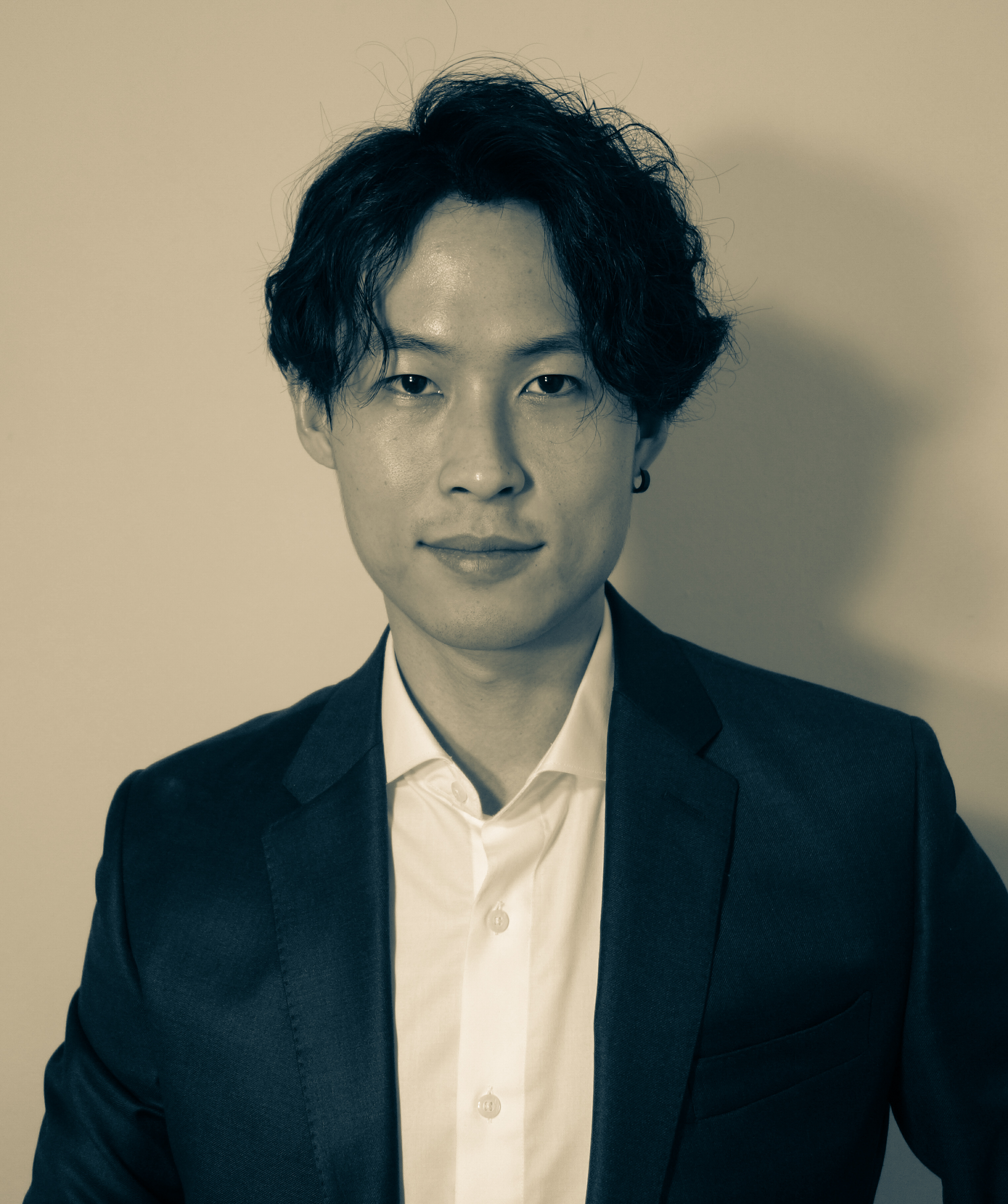
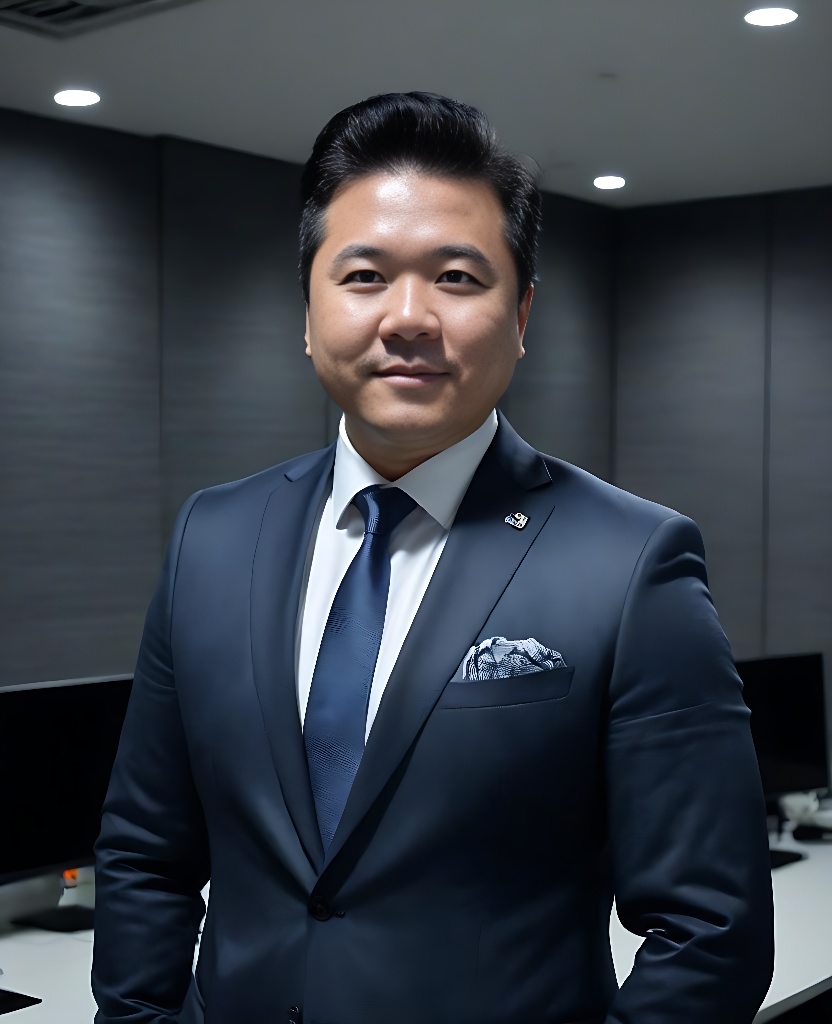
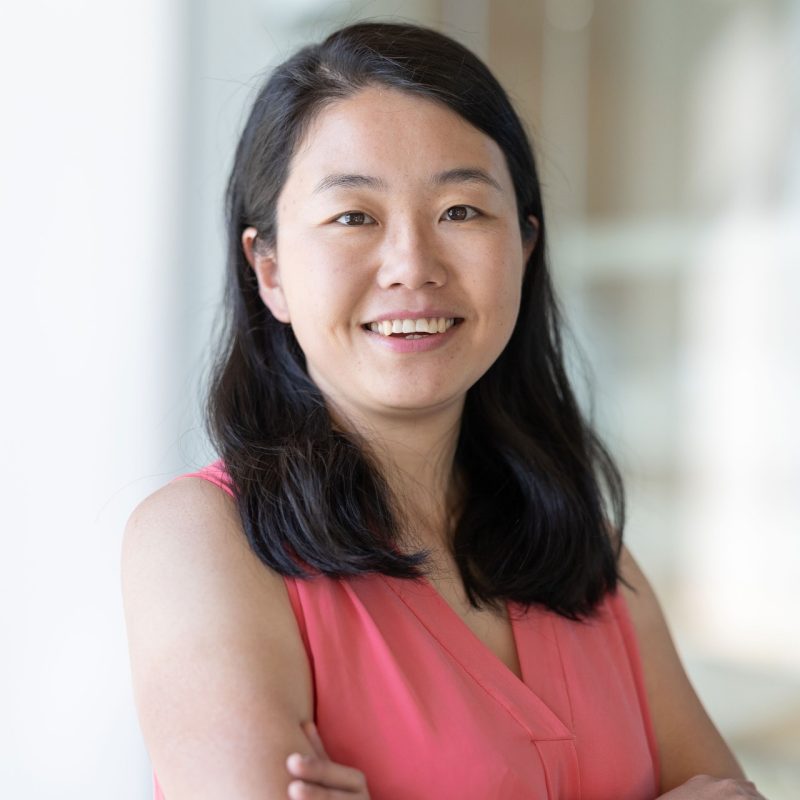
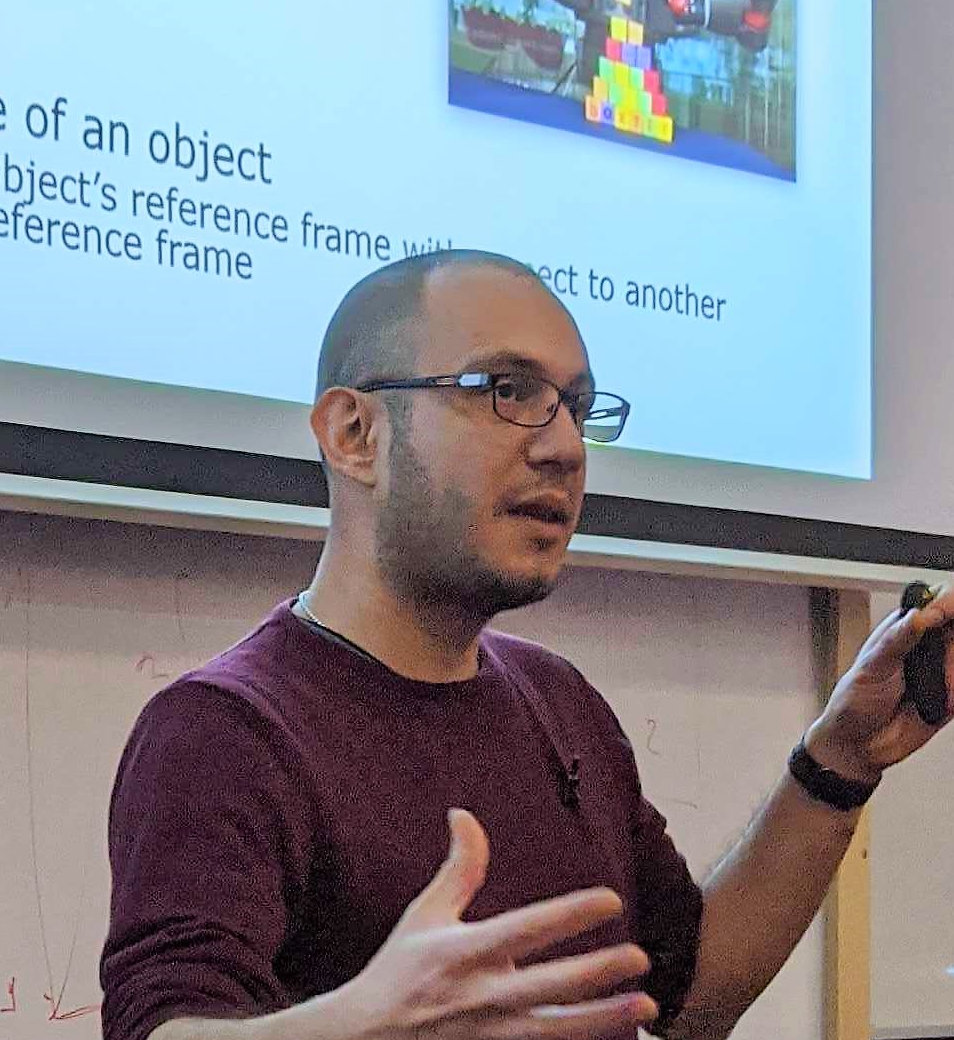
Flavio Giobergia is a Researcher at the Department of Control and Computer Science (DAUIN) within Politecnico di Torino . His work spans applied artificial intelligence , with a focus on deep learning and machine learning applications. Research Interests : Machine learning under limited label availability, LLM-assisted code refactoring, subgroup performance analysis in ASR models, exoplanet atmospheric reconstruction, and predictive maintenance systems. Teaching : Course owner for Data Science and Machine Learning Lab and Large Language Models at Politecnico di Torino. Projects : Scientific head for the MAD – STANDARD BANKING project (2025–2026) and ImEDA (2023–2024), focusing on anomaly detection and model efficiency. Publications : 15+ recent works on topics including machine unlearning benchmarks, synthetic data for hallucination detection, and drift detection limitations, presented at top conferences like KDD, Interspeech, and IEEE AICT. Collaborations : Active in the SmartData@PoliTO center and co-author with Elena Baralis, Alkis Koudounas, and others.
Hanbaek Lyu is an Assistant Professor in the Department of Mathematics at the University of Wisconsin-Madison, with an affiliation in the Department of Computer Science and membership in the Institute for Foundations of Data Science. His research spans discrete probability, matrix factorization, and machine learning, focusing on large discrete systems including interacting particle systems, networks, and structured random matrices. His educational background includes: Ph.D. in Mathematics, The Ohio State University (2018); Thesis: "Combinatorial and probabilistic aspects of coupled oscillators" (Advisor: David Sivakoff) B.S. in Mathematics, Seoul National University Lyu's research bridges theoretical probability and practical machine learning, with emphasis on optimization for dependent data and complex systems. His work develops foundational algorithms for matrix/tensor factorization while exploring synchronization phenomena in oscillator networks and phase transitions in particle systems. Recent publications highlight interpretable models for biological data and rigorous convergence guarantees for nonconvex optimization. Analysis of his 15 most recent publications reveals three dominant threads: (1) optimization theory for constrained nonconvex problems applied to dictionary learning, (2) interacting particle systems and random matrix theory with combinatorial aspects, and (3) interpretable latent models for network dynamics and genomics. His work consistently combines probabilistic methods with computational applications. Lyu leads two active NSF grants: DMS-2206296 (2022-2025): "Online Dictionary Learning for Dependent and Multimodal Data Samples: Convergence, Complexity, and Applications" DMS-2010035 (2020-2023): "Combinatorial and Probabilistic Approaches to Oscillator and Clock Synchronization" He currently mentors five doctoral students across Mathematics and Computer Science departments, organizes UW-Madison's probability seminar, and collaborates with over 30 researchers including Janko Gravner, Lionel Levine, and Wenpin Tang on interdisciplinary projects spanning genomics, network science, and statistical physics.
Professor Zhu Qi is a faculty member in the Department of Electrical and Computer Engineering at Northwestern University's McCormick School of Engineering, with courtesy appointment in Computer Science. He leads the IDEAS Lab (Design Automation of Intelligent Systems Lab) where his research focuses on design automation for intelligent cyber-physical systems and Internet-of-Things applications. His research interests include safe and robust machine learning for embodied AI systems, cyber-physical security, energy-efficient CPS, and system-on-chip design. Professor Zhu's work particularly addresses safety, robustness, security, adaptability, resiliency, and energy challenges in the design and operation of embodied AI systems. His applications span connected and autonomous vehicles, robotics, advanced manufacturing, wearable computing, smart buildings and infrastructures, and IoT. Professor Zhu's recent publications reveal a strong focus on safety verification of neural network controlled systems, robust reinforcement learning methods, and applications of large language models in autonomous systems. His work often combines formal verification techniques with machine learning approaches to provide safety guarantees for AI-enabled cyber-physical systems. DATE 2022 Best Paper Award AutoSec 2021 Best Short Paper Award ACM TODAES 2016 Best Paper Award IEEE TCCPS Early-Career Award (2017) Humboldt Research Fellowship for Experienced Researchers (2017) NAE US Frontiers of Engineering participant (2020) Professor Zhu has secured multiple research grants from NSF (including FM, DESC, and Fuse grants), DOE, ONR, and industry partners including GM and Toyota. His advising includes PhD students Shuyue Lan and Hengyi Liang, and postdoc Chao Huang who became a Lecturer at University of Liverpool. He leads the IDEAS Lab which focuses on cross-layer design, verification, and adaptation of learning-enabled cyber-physical systems.
Wei Liu is an Associate Professor in Machine Learning and Director of the Future Intelligence Research Lab at the University of Technology Sydney's School of Computer Science. He holds a PhD in Machine Learning from the University of Sydney and maintains active roles as a senior IEEE member and area chair for top AI conferences including KDD, AAAI, and ICDM. Education: PhD in Machine Learning, University of Sydney His research focuses on adversarial machine learning, generative AI, cybersecurity, and multimodal learning, with particular emphasis on AI security, robustness of algorithms, and model fairness. Liu's work addresses critical challenges in developing next-generation AI systems that can withstand cyber attacks while maintaining performance with multi-modal data and balanced outcomes despite data imbalances. Analysis of his recent publications reveals a strong trend toward securing large language models against novel attack vectors while advancing multimodal learning techniques. His work spans both theoretical contributions in adversarial frameworks and practical applications in cybersecurity, transportation, and industrial systems. Scientific Awards: 3 Best Paper Awards Most Influential Paper Award at PAKDD Nominee for NSW Premier's Prizes for Early Career Researcher (2017) Liu actively supervises numerous PhD students working on adversarial attacks, robust AI models, and agricultural applications. He has secured substantial funding including ARC Discovery Projects, government grants, and industry partnerships with organizations including Agriwebb, CSIRO Data61, and AVEVA. His Future Intelligence Research Lab specifically targets three emerging challenges: AI security against cyber attacks, robustness with multi-modal data, and model fairness with imbalanced datasets. The Future Intelligence Research Lab produces next-generation AI algorithms addressing AI security vulnerabilities, multi-modal robustness challenges, and fairness issues in real-world deployment scenarios, with multiple representative papers demonstrating practical applications in each domain.
Dr. Arne Bewersdorff is a Post Doctoral Researcher in Educational Sciences at the Technical University of Munich (TUM), School of Social Sciences and Technology. He coordinates the TUM-DigiLLab (Digital Teaching and Learning Lab), which promotes digital skills in secondary and vocational teacher training. His work focuses on fostering AI literacy and developing AI tools for STEM education through research and teaching activities. Dr. Bewersdorff's research interests center on AI literacy, educational technologies, science education, and teacher training. His work explores how AI can enhance science education through adaptive feedback systems, experimentation protocols, and digital learning environments. He investigates AI attitudes, self-efficacy, and the development of AI literacy among university students and pre-service teachers. His research spans both theoretical frameworks and practical implementations of AI in educational contexts. His recent publications reveal a strong trend toward AI applications in education, particularly focusing on AI literacy assessment, adaptive feedback systems, and the integration of large language models in science education. His work spans multiple methodologies including systematic reviews, test development, experimental studies comparing AI and human performance, and multinational assessments of AI literacy. The research consistently addresses practical applications of AI in educational settings while maintaining strong theoretical foundations in educational psychology and science pedagogy. Fellow of the TUM Center for Educational Technologies Recipient of ESERA Travel Award Member of winning HOLA Innovation Pitch team at Medien- und Filmgesellschaft Baden-Württemberg Dr. Bewersdorff coordinates multiple significant research projects including the TUM-DigiLLab infrastructure, EPIC-AI (an AI feedback tool for student experimentation protocols), Junior Fellowship Artificial Intelligence (developing AI literacy courses for pre-service science teachers), and the Knowledge Hub project providing Open Educational Resources on emerging technologies. He has received funding from the Joachim Herz Foundation and through TUM's Excellence Strategy initiative. His work bridges research and practice through close collaboration with educational institutions and practitioners. As coordinator of the TUM-DigiLLab, Dr. Bewersdorff leads a multidisciplinary team focused on creating innovative digital teaching and learning environments. The lab serves as both a research and development space for digital competencies and a practical training ground for future educators. His team collaborates across disciplines to develop and assess AI tools specifically designed for STEM education contexts.
Ruoxi Jia is an Assistant Professor in the Bradley Department of Electrical and Computer Engineering at Virginia Tech, affiliated with the Sanghani Center for Artificial Intelligence and Data Analytics. She holds a Ph.D. from UC Berkeley and a B.S. from Peking University. Her research focuses on machine learning, security, privacy, and cyber-physical systems, with recent emphasis on data-centric AI and trustworthy machine learning. Education: Ph.D., Electrical Engineering and Computer Sciences, UC Berkeley (2018) B.S., Peking University Research interests include adversarial machine learning, AI safety, data valuation, and privacy-preserving techniques. Her work addresses challenges in AI ethics, backdoor detection, and scalable model security. Recent publications explore topics like defense mechanisms against poisoning attacks, large model safety surveys, and red teaming strategies. She actively seeks students (PhD, Masters, interns) and emphasizes collaboration through her group. Her work bridges theoretical foundations and practical applications in AI and cybersecurity, with contributions to both technical and ethical dimensions of modern machine learning systems.
Stefan Lee is an Associate Professor at Oregon State University in the School of Electrical Engineering and Computer Science. His research focuses on agents that can perceive environments, communicate with humans, and coordinate actions to achieve shared goals. This work spans computer vision, natural language processing, and deep learning, with applications in robotics and embodied AI. Current Role: Associate Professor, Oregon State (2025–) Previous Roles: Assistant Professor (2019–2025), Research Scientist II (2017–2019), Postdoctoral Associate (2016) Research Interests include: Vision-and-Language Navigation (VLN) Multimodal Learning Embodied Artificial Intelligence Robotic Perception and Control Fairness in AI Systems Selected Scientific Awards : ICLR 2023 Best Paper Award EMNLP 2017 Best Short Paper Award CVPR 2019 Oral CVPR 2018 Oral CVPR 2014 Best Paper Award Advising : Mentors 7 PhD students including Zijiao Yang, Xiangxi Shi, and Abhinav Jain. His publications demonstrate consistent leadership in top-tier conferences like ICCV, CVPR, and NeurIPS.
Amine Mhedhbi is an Assistant Professor at Polytechnique Montréal in the Department of Computer Engineering and Software Engineering. He is affiliated with the Institute for Data Valorization (IVADO) and the Software Engineering for Machine Learning Applications (SEMLA) group. His research focuses on data management systems, particularly graph-structured databases, multimodal data engineering, and AI-driven query optimization. Ph.D. in Computer Science from University of Waterloo Former technical advisor to enterprise companies Prior applied research leadership at Distyl AI and internships at Microsoft Research His recent work explores integrating large language models (LLMs) into database systems, optimizing SQL generation, and advancing graph database architectures. Key projects include GraphflowDB and FlockMTL , addressing scalability and declarative semantic applications. Scientific awards include: NSERC Discovery Grant with Discovery Launch Supplement (2025) Cheriton School Distinguished Dissertation Award (2024) Microsoft Research Ph.D. Fellowship (2020) VLDB Best Paper Award (2018) He supervises graduate students in database systems and machine learning applications and serves on program committees for top-tier conferences like VLDB and SIGMOD.
Dr. Scot Kristian Hill is a Professor in the Department of Psychology within Rosalind Franklin University's College of Health Professions, specializing in clinical neuropsychology and psychosis research. His work integrates neuroimaging, genetic analysis, and cognitive testing to investigate neurocognitive deficits in schizophrenia and related disorders. Education PhD in School Psychology, Ball State University (specializing in Clinical Neuropsychology) Postdoctoral Fellowship, Thomas Jefferson University Hospital Postdoctoral Fellowship, Brain Behavior Laboratory, University of Pennsylvania School of Medicine Research Focus : Dr. Hill's laboratory investigates the neural mechanisms of working memory dysfunction in psychosis, with emphasis on frontostriatal communications and electrophysiological markers. His team develops digital neuropsychological assessment tools and examines intermediate phenotypes across psychotic disorders using multimodal approaches including EEG, fMRI, and genetic analyses. Current projects explore cognitive heterogeneity in first-episode psychosis and neurotransmitter regulation at genetic and systems levels. Publication Trends : Recent work shows increasing focus on digital assessment tools (e.g., web-based performance validity tests), cognitive heterogeneity within diagnostic categories, and gene-treatment interactions in psychosis. Collaborative studies through the B-SNIP consortium dominate his schizophrenia research, while methodological innovations characterize his neuropsychological assessment publications. Awards NIMH National Research Service Award Fellowship NIMH Mentored Patient-Oriented Research Career Development Award NIH Clinical Research Loan Repayment Program Award Mentorship & Funding : Dr. Hill has trained 16 PhD graduates and currently supervises 5 graduate students across clinical psychology and counseling programs. His grant portfolio includes NIMH-funded investigations of neurocognition in first-episode schizophrenia, shared genetic liability in psychotic disorders, and cognitive effects of antipsychotic medications, with recent emphasis on digital phenotyping and tele-neuropsychology. Research Infrastructure : He leads the RFU Psychosis Research Laboratory and serves as a core investigator in the multi-site Bipolar and Schizophrenia Network on Intermediate Phenotypes (B-SNIP), conducting large-scale studies of cognitive and neurobiological markers across the psychosis spectrum.
Professor Yuan Miao is a distinguished academic at Victoria University (VU), serving as Professor in the College of Arts, Business, Law, Education & IT and Head of the Information Technology Program. With a PhD from Tsinghua University's Automation Department, his academic journey spans prestigious institutions including the University of Melbourne and Nanyang Technological University in Singapore before settling at VU where he has been Professor since January 2010, following his Associate Professorship from August 2004 to December 2009. Education: BSc, Shandong University, China MEng, Tsinghua University, China PhD, Tsinghua University, Automation Department, China Professor Miao's research centers on Large Language Models (LLMs) and Generative AI, where he has identified critical barriers in practical applications including limited memory length in systems like ChatGPT and Gemini, contradictory explanations, lack of local knowledge integration, and significant errors in text-data hybrid reasoning (up to 38%). His innovative solutions involve cognitive map graphs and rational intelligence models to create customized AI systems. His work spans diverse application areas including human knowledge modeling, multimodal interaction, healthcare analytics (particularly dementia detection), cybersecurity, and robotics powered by rational intelligence. Analysis of Professor Miao's recent publications reveals a strong focus on integrating LLMs with specialized knowledge domains across healthcare, cybersecurity, and social media analysis. His research consistently addresses practical limitations of current AI systems while developing novel frameworks for more reliable and context-aware applications. The interdisciplinary nature of his work is evident in publications spanning medical informatics, cybersecurity analytics, and educational technology. Scientific Recognition: Two articles in fuzzy cognitive map modeling ranked among top 10 most cited works since 2000 (Google Scholar 2000-2016) Development of adversarial dataset based on SQuAD 2.0 that reduced BERT and ELECTRA accuracy from ~90% to ORCID identifier 0000-0002-6712-3465 with 138 peer-reviewed publications Professor Miao actively supervises PhD and Master's students across diverse research topics including access control systems, healthcare analytics, cybersecurity, and social behavior analysis. His research has secured substantial funding from both industry giants (Microsoft, Amazon, Oracle, Google) and government bodies (Australia Research Council, Data61, Singapore's NRF), with recent projects including Digital Transformation for Construction Industry ($1.258 million), Western Health SharePoint Development ($68,000), and Big Data Analysis for Domestic Violence Research (US$100,000). His current grant portfolio demonstrates strong industry-academia collaboration addressing real-world challenges. Professor Miao leads research teams focused on rational intelligence systems that overcome current LLM limitations, with particular emphasis on creating practical AI solutions for healthcare, cybersecurity, and smart city applications. His work with Maribyrnong City Council on the Smart City at Footscray Park project ($850,000) exemplifies his commitment to applying advanced AI research to community-level challenges.
Shui Yu is a Professor of the School of Computer Science in the Faculty of Engineering and Information Technology at the University of Technology Sydney (UTS), where he also serves as the Deputy Chair of the UTS Research Committee. His academic career spans over 20 years in Australia and 7 years in China, with additional teaching experience in Hong Kong and Indonesia. He has developed more than 10 units in cybersecurity, computer science, data analytics, and computer games, serving as the Course Director for Computer Science undergraduate programs. Professor Yu's research interests center on cybersecurity, privacy, networking aspects of Big Data, and applied mathematics for computer science. He pioneered the field of 'networking for big data' in 2013 and edited the seminal book 'Networking for Big Data' published in 2015. His work has practical applications in industry, including Amazon Cloud's auto-scale strategy against distributed denial-of-service attacks. Current research focuses include privacy and security concerns associated with big data, security issues in smart grids, anonymous transactions on Blockchain, and anonymous communication for web browsing privacy. Analysis of his recent publications reveals a strong research trajectory spanning cybersecurity, privacy-preserving technologies, networking for big data, and applied mathematics. His work shows increasing focus on quantum-resistant cryptography, federated learning security, and adversarial robustness in AI systems. The interdisciplinary nature of his research bridges theoretical foundations with practical applications in IoT, blockchain, and cloud environments. Fellow of IEEE (2023) Distinguished Lecturer of IEEE Communications Society (2018-2021) Distinguished Visitor of IEEE Computer Society (2022-2024) Professor Yu has secured numerous research grants from the Australian Research Council, including current projects on privacy and fairness in high intelligence models (DP240100955), improved security and privacy for online platforms (LP220200808), and secure blockchain for financial applications (LP220100453). He has served on editorial boards of multiple IEEE journals including IEEE Communications Surveys and Tutorials, IEEE Communications Magazine, and IEEE Internet of Things Journal. His service extends to organizing major conferences such as IEEE Globecom 2015 and IEEE INFOCOM 2016-2017.
Gerardo Aragon Camarasa is a Senior Lecturer at the School of Computing Science, University of Glasgow, where he leads research in the Computer Vision and Autonomous Systems group. His work focuses on solving real-world challenges in robotic perception, manipulation, and grasping using advanced AI techniques. Research Interests: Robotics and AI for advanced manufacturing systems Perception and manipulation of deformable objects Autonomous robotic systems for chemical and domestic applications Robot behavior modeling and self-awareness His publications demonstrate strong emphasis on robotic vision (garment perception, hand-eye calibration), AI integration (multimodal LLMs, reinforcement learning), and industrial applications (chemical robotics, Industry 5.0 ethics). Recent work shows growing focus on foundation models for robotics and simulation frameworks. Research Leadership: He leads multiple grants including an EPSRC programme grant for chemical robotics and a Royal Society project on robotic teleoperation. Actively supervises 7+ PhD students and has graduated 8+ doctoral researchers in robotics and computer vision. Infrastructure: Leads research using dual-arm robots and maintains active GitHub repositories and YouTube channels demonstrating robotic manipulation systems. Regular contributor to top robotics conferences (ICRA, IROS) and journals.
Benoît ALCARAZ is a Researcher affiliated with the Department of Computer Science at the University of Luxembourg's Faculty of Science, Technology and Medicine (FSTM). His work focuses on advancing artificial intelligence and machine learning, particularly in ethical AI frameworks, argumentation systems, and natural language processing. He is based at the Maison du Nombre research facility in Esch-sur-Alzette. Research Interests include developing algorithms for ethical decision-making in AI, optimizing machine learning models through evolutionary techniques, and creating user-centric NLP tools for real-time applications. His work bridges theoretical computer science with practical ethical considerations, as seen in his exploration of bias mitigation in visual learning and argumentation-based reinforcement learning agents. Notable contributions include frameworks like Ajar for ethical reinforcement learning and IRRMA for image-based meeting assistants. While no explicit awards or grants are listed, his publications indicate active involvement in interdisciplinary AI research with a focus on societal impact.
Min-Yen Kan is an Associate Professor and Vice Dean of Undergraduate Studies at the National University of Singapore (NUS), with a focus on the Department of Computer Science. He earned his Ph.D., M.Sc., and B.S. in Computer Science from Columbia University. Associate Professor, NUS Department of Computer Science Vice Dean of Undergraduate Studies, NUS School of Computing His research spans Natural Language Processing , Large Language Models , Digital Libraries , and Information Retrieval , with applications in Human-Computer Interaction , Web Systems , and Recommendation Technologies . He leads the Web, Information Retrieval, and NLP Group (WING.NUS), driving projects in scholarly document analysis, dialogue systems, and AI ethics. Recent publications highlight his work on LLM alignment , multimodal deception detection , and evaluation frameworks . Key trends include ethical NLP, knowledge aggregation in vision-language models, and combating misinformation through AI. Scientific Awards: Best Paper Award, CIKM 2019 Distinguished Service Awards, ACL Vannevar Bush Best Paper Award, JCDL 2012 As a PhD advisor , his students have secured roles at institutions like Google and USTC. He also serves on the ACL Ethics Committee and as associate editor for Information Retrieval and JAIR .
Albert Gatt is a Professor of Natural Language Processing at Utrecht University's Department of Information and Computing Sciences, where he also serves as Programme Director for AI & Data Science. He holds an Associate Professor position (on leave) at the University of Malta's Institute of Linguistics and Language Technology. His research focuses on Natural Language Generation (NLG), multimodal models, and under-resourced language support, particularly for Maltese. He leads projects like NL4XAI and MASRI, addressing challenges in explainable AI and speech recognition. Education: Advanced degrees in computational linguistics and AI (not explicitly detailed in text). Key Projects: Multilingual NLG, Vision-Language benchmarks, Maltese ASR, and NLP evaluation methodologies. Research interests span data-to-text generation, vision-language interfaces, and evaluation practices. His work bridges computational linguistics with cognitive science, emphasizing human-AI collaboration. Notable contributions include the TUNA corpus, SimpleNLG toolkit, and foundational studies on referring expression generation. Publications (2025-2024) explore robust fine-tuning, LLM evaluation, and visual-linguistic grounding. Collaborations span academia and industry, addressing ethical AI and language equity. Supervises a global team of researchers and PhD students across multiple institutions, fostering innovation in NLG, multimodal AI, and Maltese language tech.