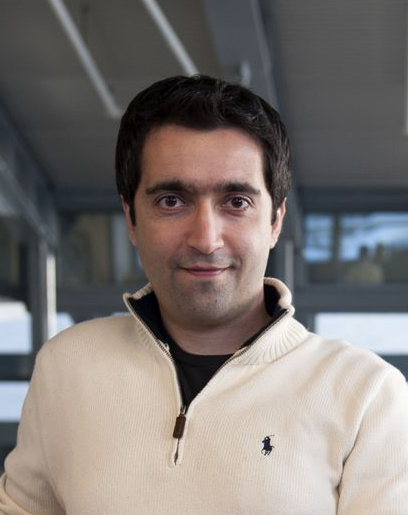
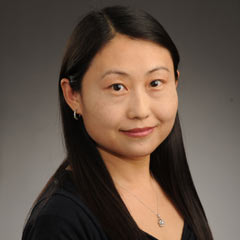
Xiaowu Sun holds dual affiliations at EPFL: as a Researcher in the Chair of Mathematical Data Science (SB/MATH/MDS1) and a Postdoctoral Researcher in the Signal Processing Laboratory 4 (STI/IEM/LTS4). Their work bridges machine learning, signal processing, and biomedical imaging with applications in cardiovascular analysis and medical AI. Research focuses on deep learning-driven approaches for medical image analysis, particularly in cardiac MRI segmentation, predictive modeling of cardiovascular events, and explainable AI systems for clinical decision support. Publications highlight innovations in graph neural networks for coronary angiography analysis, transformer-based feature fusion in 4D flow MRI, and contrastive learning for echocardiographic view integration.
Sertac Karaman is a Professor in the Department of Aeronautics and Astronautics at the Massachusetts Institute of Technology (MIT). He serves as the Director of the Laboratory for Information and Decision Systems (LIDS), an interdepartmental research center focused on information sciences and decision-making. Additionally, he is Faculty Co-Director of Mission Innovation Experimental (MIx) and Faculty Director of the Amazon MIT Science Hub. His affiliations underscore leadership in cross-disciplinary research initiatives bridging academia and industry. Karaman holds a B.S. in Mechanical Engineering and Computer Engineering from Istanbul Technical University (2007), an S.M. in Mechanical Engineering from MIT (2009), and a Ph.D. in Electrical Engineering and Computer Science from MIT (2012). His research spans mobile robotics, autonomous vehicles, and embedded systems, with emphasis on aerospace applications. Key areas include: Algorithmic Foundations : Probability theory, stochastic processes, optimization, and formal methods. Technological Applications : Self-driving cars, UAVs, consumer robotics, and extended reality. Interdisciplinary Integration : Combines machine learning, computer vision, and hardware design for energy-efficient autonomy. Karaman's recent publications (2020–2023) focus on high-speed autonomous navigation, energy-efficient computing, and robust control systems. Trends include trajectory optimization for agile vehicles, AI-driven perception, and sustainability in autonomous systems. Machine learning (especially reinforcement/imitation learning) and hardware-software co-design are recurring themes. No scientific awards are explicitly mentioned in the provided text. Karaman advises a large cohort of doctoral and master's students (45+ listed), spanning robotics, control theory, and computer vision. His research is supported by collaborations with entities like the Amazon MIT Science Hub. He leads two primary research groups: AREA (Autonomy and Embedded Systems Accelerated): Focuses on high-speed autonomous navigation. LEAN (Low-Energy Autonomy and Navigation): Specializes in energy-efficient hardware-algorithm co-design.
Yaser Ajmal Sheikh is an Associate Professor at the Robotics Institute of Carnegie Mellon University (currently on leave) and serves as Director of Facebook Reality Lab in Pittsburgh. His work focuses on "metric telepresence": remote interactions in AR/VR that are indistinguishable from reality. He has made significant contributions to machine perception and rendering of social behavior, spanning computer vision, computer graphics, and machine learning. Dr. Sheikh's research encompasses analyzing dynamism in scenes from moving cameras, with particular focus on dynamic motion reconstruction, human behavior analysis, estimation of nonrigid motion, and modeling moving cameras in spacetime. His work has led to breakthroughs in social robotics, 3D vision and recognition, and multisensor data fusion. He founded and directs the Facebook Reality Lab in Pittsburgh, continuing his work on human-centered robotics and social robots. His publication record demonstrates consistent innovation in computer vision and graphics, with emphasis on human motion capture, facial animation, and social interaction modeling. His most recent work focuses on neural approaches to facial animation, full-body avatars, and capturing the complex dynamics of human interaction. The research shows a clear trajectory from foundational work in motion capture to sophisticated neural approaches for realistic human representation in virtual environments. Popular Science's Best of What's New Award Honda Initiation Award (2010) Best paper awards at WACV (2012), SAP (2012), SCA (2010), ICCV THEMIS (2009) First place in the MSCOCO Keypoint Challenge (2016) Hillman Fellowship for Excellence in Computer Science Research (2004) Dr. Sheikh has advised numerous doctoral and master's students who have gone on to prestigious positions in academia and industry. His research has been generously supported by government agencies including NSF and DARPA, as well as industrial partners such as Intel, Disney, Nissan, Honda, Toyota, and Samsung. He has served on senior committees at major conferences including SIGGRAPH, CVPR, ICRA, and ICCP, and was an Associate Editor of CVIU. He leads the Panoptic Studio project, a massively multiview system for social motion capture that has produced the CMU Panoptic Studio Dataset. His work on OpenPose has become a standard tool in the field for real-time 2D hand, body, and face keypoint detection. His current research at Facebook Reality Lab continues to push the boundaries of what's possible in virtual and augmented reality through advanced computer vision techniques.
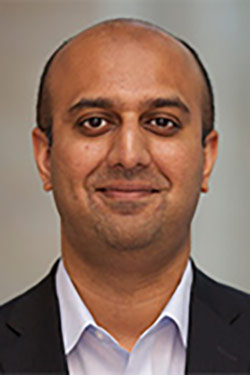
Amitabh Varshney is the Dean of the College of Computer, Mathematical, and Natural Sciences and Professor of Computer Science at the University of Maryland, College Park. He previously directed the UMD Institute for Advanced Computer Studies (2010–2018) and served as interim Vice President for Research (2016–2017 and 2021). His research focuses on virtual/augmented reality (VR/AR), scientific visualization, molecular graphics, and high-performance computing. Collaborations include NVIDIA, Honda, IBM, and the University of Maryland, Baltimore (UMB). Education: B.Tech. (IIT Delhi, 1989), M.S. and Ph.D. (UNC Chapel Hill, 1991 and 1994). Research highlights include molecular surface algorithms, GPU computing, and immersive technologies for healthcare and education. Awards include the NSF CAREER Award (1995), IEEE Visualization Technical Achievement Award (2004), and IEEE Fellow (2010). He leads the NVIDIA CUDA Center of Excellence and co-founded the Maryland Blended Reality Center. Recent work explores nanophotonics for AR/VR displays, VR medical training, and bias detection in AI systems. His interdisciplinary projects address challenges in personalized medicine, pain management, and implicit bias training through extended reality (XR). Key Projects: Augmentarium (immersive infrastructure), CHIB (healthcare bioinformatics), Immersive Media Design Program. Grants: NSF, NIH, industry partnerships. Awards: NSF CAREER, IEEE Technical Achievement Award, IEEE Fellow.
Shuvra Bhattacharyya is an Affiliate Professor at the University of Maryland, holding appointments in the Department of Computer Science (CS), the University of Maryland Institute for Advanced Computer Studies (UMIACS), and the Department of Electrical and Computer Engineering (ECE). His research focuses on AI and Robotics, IoT and Wearables Technology, and Computer Vision and Machine Perception, with a strong emphasis on embedded systems, real-time processing, and interdisciplinary applications. Key research interests include optimizing neural networks for resource-constrained environments, developing gait recognition systems using pose estimation, and exploring synthetic data applications in aerial surveillance and VR content creation. He has contributed to frameworks for adaptive digital predistortion systems, dynamic data-driven hyperspectral video processing, and collaborative UAV-based human detection benchmarks like Archangel. His work often bridges theoretical computer science with practical engineering challenges, such as scheduling algorithms for real-time systems, energy-efficient IoT deployments, and interpretable AI models for criminal justice applications. Bhattacharyya collaborates across disciplines to address challenges in edge computing, wearable technology, and sustainable industrial processes. Notable projects include the HoloCamera system for cinematic VR capture and the Flydeling framework for CNN acceleration on heterogeneous platforms. His research also addresses fairness in predictive models and dynamic memory optimization techniques for dataflow-based applications.
Professor Ba Tuong Vo is a faculty member in the Department of Electrical and Computer Engineering at Curtin University, Perth, Australia. He holds the academic rank of Professor within the School of Electrical Engineering, Computing, and Mathematical Sciences. His primary research interests lie in statistical signal processing, Bayesian methods, multi-target tracking, and random finite set theory, with applications to sensor fusion, data-driven decision making, and stochastic control systems. He has contributed significantly to developing advanced filtering techniques such as the Generalized Labeled Multi-Bernoulli (GLMB) filter and multi-sensor fusion algorithms for large-scale tracking problems. His work bridges theoretical advancements in random finite set theory and practical implementations for real-world applications like autonomous robotics, medical imaging, and environmental monitoring. Notably, he has pioneered methodologies for handling unknown clutter rates, sensor management, and occlusion challenges in multi-object systems. Professor Vo’s research also extends to multi-modal data integration (e.g., audio-visual tracking) and has been applied to diverse domains including space situational awareness and cell lineage tracking. His academic profile includes over 150 peer-reviewed publications, with a focus on IEEE Transactions journals and leading conferences in signal processing and robotics. Beyond technical contributions, he actively mentors students and collaborates internationally on projects funded by industry and government grants. A key focus is fostering innovation in scalable multi-target tracking solutions for emerging technologies like autonomous systems and smart infrastructure.
Dr. Changbeom Shim is a Research Fellow at Curtin University, affiliated with the School of Electrical Engineering, Computing and Mathematical Sciences under the Faculty of Science and Engineering. His role involves advancing research in multi-object tracking, signal processing, and data analysis. He holds an email address at Curtin University and maintains an active Google Scholar profile and personal website. Shim's research focuses on developing advanced algorithms for multi-object tracking using labeled random finite sets (LRFS), with applications in computer vision, bioinformatics, and geospatial systems. Key areas include trajectory estimation, sensor fusion, and scalable computational methods. His work bridges theoretical frameworks with practical tools like CellTrackVis for biological data visualization and SkyFlow for time-series analysis. His publications from 2017 to 2025 reflect a progression from foundational spatial queries in social networks to cutting-edge multi-sensor object tracking and autonomous systems. The 2024 paper on LRFS overviews highlights his leadership in this field. His research emphasizes efficiency, scalability, and cross-disciplinary applications, with contributions to both algorithmic theory and user-facing tools. Shim collaborates across disciplines, addressing challenges in sensor networks, autonomous robotics, and biological cell tracking. His work often integrates statistical methods with computational techniques, yielding innovations in filtering, visualization, and data exploration. Current trends in his publications emphasize multi-scan/multi-sensor systems and real-world applications like geotechnical property estimation and audio-visual source separation.
Jia Li is a Professor of Statistics and Computer Science at Pennsylvania State University. She holds a courtesy appointment in Computer Science and specializes in Machine Learning, Artificial Intelligence, and Image Analysis. Her work includes probabilistic graph models and applications in biomedicine, computational psychology, and meteorology. She served as Editor-in-Chief of Statistical Analysis and Data Mining (2018-2020). Prior roles include Program Director at the National Science Foundation (2011-2013), Visiting Scientist at Google Labs (2007-2008), and researcher at Xerox PARC and Stanford University. Education: PhD in Electrical Engineering (Stanford, 1999), M.Sc. in Electrical Engineering and Statistics (Stanford, 1995/1998), B.S. in Information and Control Engineering (Xi'an Jiao Tong University, 1993). Research focuses on high-dimensional clustering, Wasserstein metric learning, hidden Markov models, and computational art analysis. Notable contributions include automated brushstroke extraction in van Gogh paintings and computational aesthetics modeling. Awards include IEEE and ASA Fellowships. Teaching includes STAT 557 (Statistical Learning/Data Mining) and STAT 416 (Stochastic Modeling). Active in grants and collaborative projects, including weather pattern analysis and biomedical data integration. Leads efforts in explainable AI and bias reduction in visual analysis.
Kotsiantis Sotiris is an Associate Professor in the Department of Mathematics at the University of Patras, Greece, specializing in Computational Mathematics and Informatics. His academic roles include teaching undergraduate and postgraduate courses such as Data Science, Programming with Python, and Machine Learning. He holds a Ph.D., M.Sc., and B.Sc. in Mathematics from the University of Patras. His research focuses on Artificial Intelligence, Machine Learning, Data Mining, and Data Science. Notable contributions include advancements in sentiment analysis, outlier detection, graph attention networks, and predictive analytics for education and urban systems. He actively publishes in top-tier journals and conferences, emphasizing interpretable AI and ensemble learning techniques. Teaching responsibilities span computational statistics, numerical analysis, and data science methodologies. His work bridges theoretical machine learning with practical applications in smart cities, financial forecasting, and educational technology. He collaborates widely, evidenced by over 180 publications and co-authorships with experts in computer science and data analytics.
Dongli Zhang is a Professor in the Department of Information, Technology, and Operations at Fordham University's Gabelli School of Business. Research focuses on climate change impacts, quality management, and supply chain strategies, with empirical studies spanning environmental sustainability, organizational performance, and cross-cultural business practices. Publications utilize quantitative methods such as visual analytics, regression modeling, and contingency frameworks. Articles investigate topics like greenhouse gas effects on quality of life (2024), supply chain compliance (2024), ambidextrous strategy (2017), and quality management customization (2014). Trends show interdisciplinary integration of environmental science, operations, and strategic management.
Dr. Cindy L. Bethel is the Billie J. Ball Endowed Professor in Engineering and Director of the Social, Therapeutic, and Robotic Systems (STaRS) Lab in the Department of Computer Science and Engineering at Mississippi State University. Currently serving as NSF Program Director (CISE/IIS Human-Centered Computing), she was previously a Fulbright Senior Scholar in Australia. Research applications focus on: Robotic therapy support (PTSD, trauma victims) Information gathering from children Law enforcement/military support SWAT team integration She has secured $9.7M in research funding from NSF, DoD, and industry partners. Recent publications address socially assistive robotics, HRI privacy concerns, and therapeutic robot design. Her STaRS Lab develops technologies like Therabot™ for mental health support and interfaces for tactical robots. Education includes Ph.D. from University of South Florida (2009), NSF Postdoctoral Fellowship at Yale, and specialized training in child-robot interaction. She has received numerous honors including IEEE Senior Membership and selection as one of the 'World's 50 Most Renowned Women in Robotics'.
Vasileios Chasanis is a researcher at the Department of Computer Science & Engineering, University of Ioannina, specializing in machine learning applications for video analysis, summarization, and surveillance systems. His work bridges theoretical algorithms with practical implementations in multimedia processing. Educational background: Diploma in Electrical and Computer Engineering, Aristotle University of Thessaloniki (2004) PhD in Computer Science, University of Ioannina (2009) His research focuses on Machine Learning and Computer Vision with emphasis on video structure analysis and real-time processing . Core methodologies include support vector machines , spectral clustering , and multi-view feature extraction for tasks like shot boundary detection, key-frame extraction, and scene segmentation. Recent work extends to clinical data mining and tourism technology applications. Publication trends show consistent innovation in video summarization algorithms and efficient feature extraction , with increasing interdisciplinary applications in healthcare and tourism. His 2023 work demonstrates expansion into web-based augmented reality systems for tourism destinations. Scientific recognition: Best Scientific Paper Award at ICPR 2014 for key-frame extraction research Research funding includes EU-cofunded projects: PENED 2003 (machine learning for video analysis), ARTreat FP7 (clinical decision support), and ongoing VIDEOSUM (video storage/summarization platform). Collaborates extensively with the IP AN Group at University of Ioannina. He co-developed the VideoSum platform—a comprehensive system for video storage, processing, and summarization—integrating spectral clustering and temporal analysis techniques for industrial applications in media management.
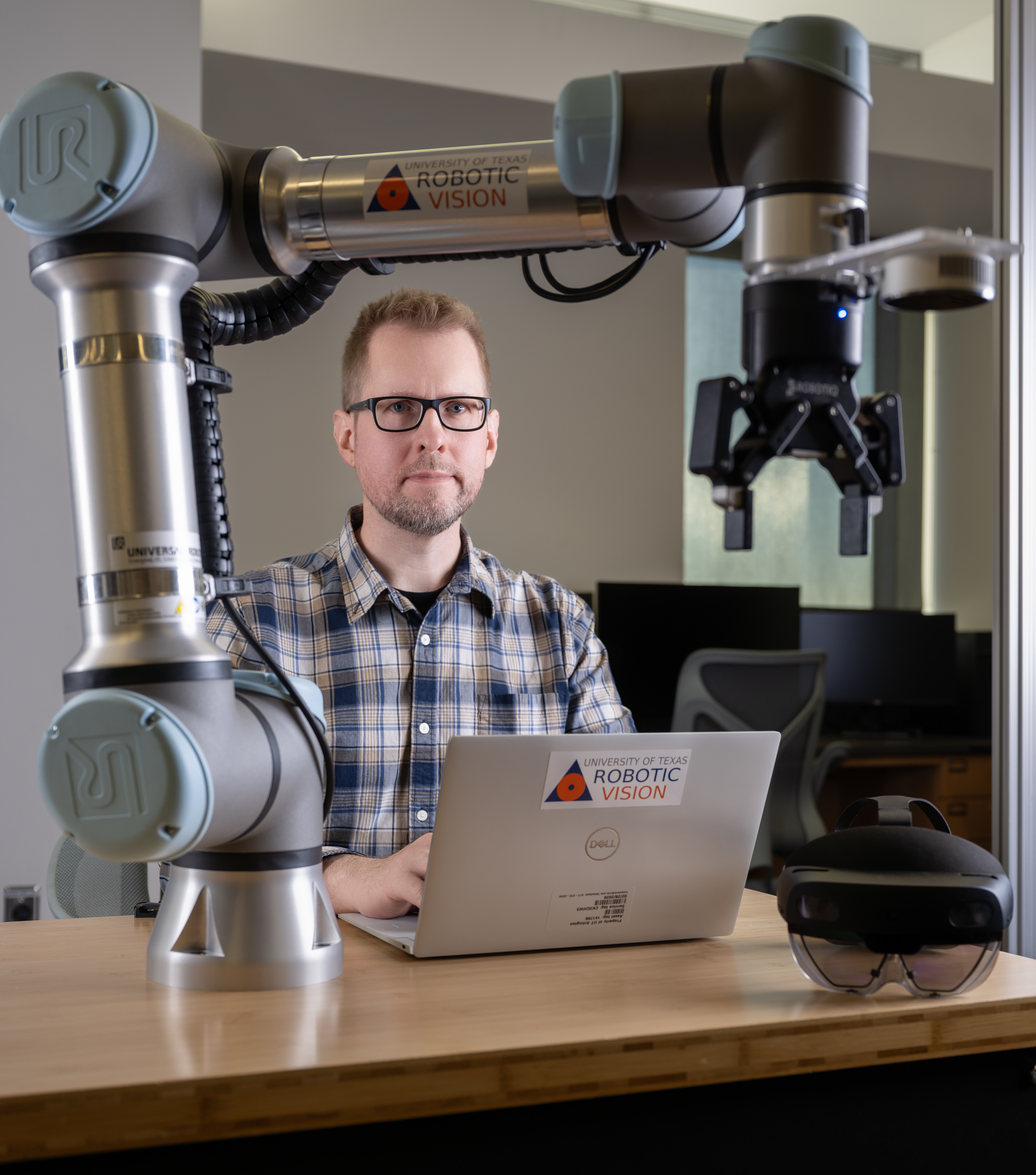
William J. Beksi is an Assistant Professor at The University of Texas at Arlington's Department of Computer Science and Engineering, and director of the Robotic Vision Laboratory. His research focuses on robotics, computer vision, and machine learning, with applications in autonomous systems, agricultural robotics, and event-based vision. PhD, MS in Computer Science (University of Minnesota) BS in Mathematics and Computer Science (Stevens Institute of Technology) Dr. Beksi develops algorithms for robot perception and autonomy, emphasizing topological data analysis, control barrier functions, and 3D reconstruction. His work has been sponsored by NSF, USDA, DoD, and industry partners. Recent publications (2023-2025) span event-based vision, agricultural robotics, 3D vision, and safety-critical systems. Key trends include polynomial path planning for deception, edge-informed contrast maximization, and semi-supervised active learning frameworks. ONR Summer Faculty Fellow (2022-2024) NSF CRII Award (2020) IEEE Senior Member UTA CSE Rising Star Research Award (2024) Dr. Beksi advises PhD students in robotics and computer vision, including recipients of UTA Dissertation Fellowships and DoD SMART scholarships. His lab collaborates with institutions like krtkl, AFRL, and NSWCDD on projects ranging from UAV collision avoidance to lunar robotics.
Dr. Sangwook Park is a Professor of Physics at the University of Texas at Arlington, where he has served since 2010, progressing from Assistant Professor to Associate Professor and finally to Professor in 2021. His research focuses on high-energy astrophysics, particularly X-ray observations of supernova remnants, neutron stars, and the interstellar medium. Dr. Park received his PhD in Physics with emphasis in Astrophysics from Purdue University in 1998, followed by postdoctoral work at NASA Goddard Space Flight Center and Pennsylvania State University. His undergraduate degree is in Computer Science from Illinois Institute of Technology (1992), with a minor in Physics. Dr. Park's research centers on observational astronomy using X-ray telescopes to study the aftermath of stellar explosions. His work primarily investigates supernova remnants including SN 1987A, Kepler's SNR, Tycho's SNR, and others in our galaxy and the Magellanic Clouds. Through high-resolution spectroscopy with Chandra and other X-ray observatories, he has made significant contributions to understanding ejecta dynamics, nucleosynthesis, and shock physics in these cosmic laboratories. His research has revealed detailed kinematic structures of supernova ejecta, metal distributions in remnants, and the interaction between supernova shocks and surrounding interstellar material. His work often bridges theoretical models with observational data to refine our understanding of stellar evolution and explosive phenomena. Analysis of Dr. Park's recent publications shows a consistent focus on supernova remnants, particularly SN 1987A, with increasing multi-wavelength approaches combining X-ray, infrared, and radio observations. His work has evolved from basic imaging to sophisticated kinematic and spectral analyses, increasingly incorporating data from newer observatories like JWST alongside traditional X-ray facilities. A notable trend is the detailed study of dust formation and destruction in supernova environments, connecting high-energy processes with the evolution of interstellar material. His research demonstrates a progression from single-observatory studies to complex multi-messenger investigations that provide comprehensive views of supernova remnants. Dr. Park has received numerous prestigious awards and grants throughout his career: Multiple NASA Chandra Guest Observer grants (2004-2024) PI NASA Chandra Multi-Cycle Guest Observer (2021-2023) PI NASA NuSTAR Guest Observer (2017) Faculty Development Leave awards (2017-2018, 2024-2025) Multiple NASA Suzaku and XMM-Newton observation grants Dr. Park has been an active mentor to numerous graduate students, serving as Dissertation Committee Chair for at least eight PhD students and as committee member for many others. His research has been consistently supported by substantial NASA and NSF funding, with recent grants totaling over $500,000 for projects studying supernova remnants like Kepler's SNR and SN 1987A. He has established himself as a leading expert in X-ray studies of supernova remnants, frequently collaborating with international teams and serving on review panels for major observatories. His service includes committee work within his department and university, as well as extensive peer review activities for journals and funding agencies.
Jasmine Lam is the Maritime Chair Professor at the Department of Technology, Management and Economics, Technical University of Denmark (DTU), specializing in maritime logistics, supply chain resilience, and sustainable energy systems. She holds editorial roles in Transportation Research Part D , Maritime Policy & Management , and Transportation Research Part E . Her research focuses on green shipping corridors, energy transition strategies, and AI-driven maritime systems. Recent work includes studies on hydrogen fuel in shipping, post-pandemic supply chain resilience, and port logistics innovation with the 6th-generation port model. Lam actively collaborates globally, addressing challenges in maritime safety, ammonia bunkering, and decarbonization. She supervises PhD projects and advocates for data-driven solutions in port energy systems and vessel traffic management. Research Interests: Maritime sustainability, risk analysis, AI in transportation, and energy policy. Activities: Keynote speaker at international conferences, guest lectures on decarbonization and supply chain strategies. Her publications emphasize interdisciplinary approaches, integrating machine learning, big data analytics, and environmental science to transform maritime industries. Current trends in her work highlight the strategic shift towards renewable energy integration in ports and adaptive systems for volatile shipping markets.