Alexander Farseev is a Professor at the Information Technologies and Programming Faculty of ITMO University, specializing in Multimedia Multi-View AI, Machine Learning, and Social Networks Analysis. He holds a PhD from the National University of Singapore (2017) and supervises research projects while teaching Master’s students. Education: PhD, National University of Singapore (2017) Research Interests: His work focuses on multimodal AI architectures, social network dynamics, and machine learning applications for complex data analysis. Professional Contributions: He has served as a Guest Reviewer for SIGIR’17 and WSDM’16, Program Chair for AINL-FRUCT’15, and Tutorial Speaker at the WSTNET Web Science Summer School (2017). Additionally, he has held editorial roles for journals including ACM TIST and IEEE TCSS. Awards: Notable recognitions include the NUS Full Research Scholarship (2013), I&E Practicum@SoC Award (2016), and the WST Net Web Science Person of The Year (2017).
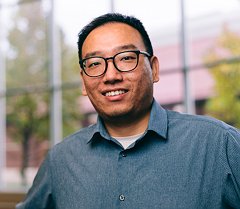
Dr. Yang Liu is an Assistant Professor in the Department of Computer Science at Hong Kong Baptist University's Faculty of Science. He also serves as the Associate Director of the Health Informatics Center. His academic career spans prestigious institutions including Yale University and Carnegie Mellon University, demonstrating his expertise in both theoretical and applied aspects of computer science. Dr. Liu received his B.Eng. and M.Eng. degrees in Automation from National University of Defense Technology in 2004 and 2007, respectively. He earned his Ph.D. in Computing from The Hong Kong Polytechnic University in 2011. His academic journey included a Visiting Scholar position at Carnegie Mellon University's Robotics Institute (Feb.-Aug. 2010) and a Postdoctoral Research Associate position in the Department of Statistics at Yale University (2011-2012). Dr. Liu's research spans the intersection of artificial intelligence, machine learning, and practical applications in health and complex systems. His work focuses on artificial intelligence , machine learning , pattern recognition , dimensionality reduction , and subspace learning , with particular emphasis on multi-way/multi-view/multi-label/multi-task learning approaches. His research extends to modeling complex dynamical systems with applications in computational epidemiology and infectious disease modeling , addressing critical public health challenges through data-driven approaches. Analysis of Dr. Liu's recent publications reveals a strong focus on applying machine learning techniques to epidemiological challenges, particularly in modeling infectious disease transmission patterns. His work bridges theoretical advances in graph neural networks, subspace learning, and multi-view analysis with practical applications in public health. A significant portion of his research addresses the challenges of high-dimensional and heterogeneous data analytics, with applications ranging from malaria transmission modeling in Cambodia to uncovering COVID-19 transmission patterns in Hong Kong. Dr. Liu is an IEEE Senior Member and ACM Member, reflecting recognition of his contributions to the field. His paper "What are the underlying transmission patterns of COVID-19 outbreak? – An age-specific social contact characterization" was recognized as one of the most cited articles in EClinicalMedicine, Lancet Discovery Science, during 2020-2021, highlighting the impact of his work on pandemic response research. Dr. Liu actively mentors research students and regularly has research student and RA positions available. His professional service includes serving on editorial boards for SPJ Health Data Science and as a journal guest editor for special issues on cross-media analysis. He has extensive experience as a journal reviewer for top publications including IEEE TNNLS/TNN, IEEE T-Cyber/TSMC-B, IEEE TAC, IEEE TKDE, IEEE TMM, IEEE TCSVT, ACM TIST, ACM TOMM, and others, and serves on program committees for major conferences including WWW, IJCAI, and AAAI. Dr. Liu is affiliated with the Centre for Health Informatics and the Artificial Intelligence and Machine Learning Laboratory (AIML) at Hong Kong Baptist University. These research centers provide the infrastructure and collaborative environment necessary for his work in health informatics and machine learning applications. His role as Associate Director of the Health Informatics Center positions him at the forefront of interdisciplinary research connecting computing with public health challenges.
Giorgos Bouritsas is a machine learning scientist serving as a postdoctoral fellow at the Archimedes AI unit and the University of Athens, while also holding an adjunct lecturer position at NCSR Demokritos. He received his PhD in computer science from Imperial College London and his MEng in electrical and computer engineering from the National Technical University of Athens. His academic journey includes research stints at Google DeepMind, École Polytechnique Fédérale de Lausanne, KU Leuven, NCSR Demokritos, and Universitat Politècnica de Catalunya. Dr. Bouritsas specializes in geometric and graph deep learning, with research focusing on neural network architectures for geometric data, weight space learning, and applications in biology and chemistry. His work bridges theoretical analysis with practical implementations, particularly in developing methodologies for complex networks, physical systems, 3D objects, and neural network weight spaces. He has made significant contributions to graph neural networks, including novel approaches to improving expressivity through subgraph isomorphism counting and developing spiral convolutional networks for 3D shape representation. His recent publications demonstrate a strong trajectory in geometric deep learning, with papers accepted at top conferences including NeurIPS (with an oral presentation in 2024), ICML, CVPR, and ICCV. His 2024 workshop proposal on Neural Network Weights as a New Data Modality was accepted for ICLR 2025. He regularly serves as a reviewer for major machine learning conferences, earning outstanding reviewer distinctions at NeurIPS, ICML, and LoG. Outstanding Reviewer at NeurIPS 2021, 2024 Outstanding Reviewer at ICML 2022, 2024 Outstanding Reviewer at LoG 2022, 2023 Dr. Bouritsas teaches Deep Learning in the MSc in AI program at NCSR Demokritos, demonstrating his commitment to academic service and education. His research has practical applications spanning cryo-EM image analysis, 3D facial recognition for medical diagnostics, and theoretical foundations of contrastive learning frameworks.
Laura Arman is a Research Associate at Cardiff University working within the Wales Institute of Social Sciences Research (WISERD), where she contributes to the longitudinal WISERD Education Multi-Cohort Study (WMCS) tracking Welsh youth development since 2012. Her role focuses on language education research, particularly Welsh language integration in schools, and national educational dataset development. She earned her PhD in Linguistics from the University of Manchester in 2015, specializing in Welsh syntax and semantics. Prior to Cardiff, she developed pedagogical resources at Bangor University including the edited volume Cyflwyniad i ieithyddiaeth and contributed to the National Corpus of Contemporary Welsh (CorCenCC). Her research centers on minoritized language preservation with Welsh as the primary focus, extending to Romani and Kurdish dialectology. Current investigations examine socio-linguistic factors in education, including student identity formation, teacher challenges in bilingual settings, and policy impacts on language maintenance. She employs mixed-methods approaches to analyze longitudinal data on school trust, political socialization, and pandemic recovery. Analysis of her 2022-2025 publications reveals consistent WMCS-driven research on Welsh educational ecosystems, emphasizing pandemic impacts, language policy efficacy, and youth perspectives. Her work demonstrates evolving focus from immediate pandemic disruptions toward long-term identity and policy questions, using survey data to inform Welsh Government educational strategies. No scientific awards or fellowships are documented. While no formal student supervision is indicated, her WMCS leadership involves mentoring junior researchers. Project funding derives from Welsh Government and Higher Education bodies supporting longitudinal data collection. As a core WMCS team member alongside Chris Taylor and Mark Connolly, she collaborates across Cardiff University departments and Welsh schools. Her work includes public dissemination through ESRC Festival events, policy briefings, and the WISERD data portal, with ongoing projects examining post-pandemic educational recovery and Welsh language sustainability.
Tianyi Zhang is a Tenure-Track Assistant Professor of Computer Science and Societal Impact Fellow at Purdue University's College of Science, where he leads the Human-Centered Software Systems Lab. His research focuses on building interactive intelligent systems that synergize human expertise with machine intelligence to improve programming productivity and software robustness. Dr. Zhang's research interests span Software Engineering, Human-Computer Interaction, and Artificial Intelligence. His work centers on developing systems that augment human intelligence with data-driven insights and augment machine intelligence with human guidance, primarily for programming domains including software developers, novice programmers, and computer end-users. His research on code mining and visualization helps programmers make more informed decisions through GitHub and Stack Overflow analysis, while his work on program synthesis assists novices with enriched feedback loops and interpretability. His recent publications (2024-2025) demonstrate a strong focus on leveraging large language models for code generation, program repair, and data wrangling, with particular emphasis on interactive systems that incorporate human feedback. This research direction shows consistent growth in understanding the intersection between human cognition and AI capabilities in programming contexts. Awards and Recognition: NSF Career Award for research on safe and reliable LLM-based code generation Amazon Research Award for human-in-the-loop deep learning optimization Best Paper Honorable Mention Award from SIGCHI for visualizing examples of deep neural networks Best Paper Honorable Mention Award from VAHC for interactive cohort analysis Dr. Zhang actively serves the research community as Program Committee member for major conferences including ICSE, ASE, FSE, CHI, and UIST. His service includes chairing workshops and student research competitions, demonstrating his commitment to mentoring the next generation of researchers. His lab develops systems that address real-world challenges in programming productivity and software safety, with applications spanning from autonomous driving systems testing to data science workflows.
Minhyuk Sung is an Associate Professor in the School of Computing at KAIST, where he leads the KAIST Visual AI Group. He is also affiliated with the Graduate School of AI and the Metaverse Program. Previously, he worked as a research scientist at Adobe Research. He received his Ph.D. from Stanford University under the supervision of Leonidas Guibas and completed his M.S. and B.S. degrees at KAIST. Dr. Sung's research focuses on generating, manipulating, and analyzing various visual data, including images, videos, and 3D data. His work primarily centers around diffusion models, flow models, and other generative AI techniques applied to visual content. He has made significant contributions to the fields of 3D vision, text-to-image generation, and multi-modal AI systems. His recent publications demonstrate a strong trend toward improving the quality, efficiency, and controllability of generative models, with particular emphasis on 3D-aware generation, synchronization techniques, and grounding visual content with linguistic descriptions. His work spans multiple top-tier conferences including NeurIPS, CVPR, ICCV, and SIGGRAPH. Asiapgraphics Researcher Award (2024) Dr. Sung actively mentors students and recruits new members for his research group. He serves as an area chair for conferences like 3DV 2026 and frequently gives talks at major institutions including NVIDIA, Google, Stanford, and various universities across Asia. His research has attracted significant attention in both academic and industrial circles. He teaches advanced courses including Diffusion and Flow Models (CS492(C)), Machine Learning for 3D Data (CS479), and Diffusion Models and Their Applications (CS492(D)), demonstrating his commitment to training the next generation of AI researchers.
Yonghwan Kim serves as an Associate Professor in the Department of Computer Science within the Graduate School of Engineering at Nagoya Institute of Technology. His academic foundation includes a Doctorate (2015) and Master's (2011) in Information Science from Osaka University, where he completed both graduate programs. Dr. Kim's research spans distributed algorithms with emphasis on autonomous mobile robot systems, fault tolerance, and self-stabilization. His work addresses critical challenges in multi-robot coordination under asynchronous scheduling, defected view models, and dynamic network topologies. Key research areas include: Distributed algorithm design for mobile entities Self-stabilizing graph construction techniques Optimization of robot gathering and dispersion Fault-tolerant systems in constrained environments His publication record reveals strong focus on theoretical foundations with practical applications, particularly in robotics and network systems. Recent work (2022-2024) demonstrates increasing complexity in handling defected views, multi-color luminous robots, and dynamic grid environments. His research shows consistent progression from foundational graph algorithms toward sophisticated mobile entity coordination systems. Professional recognition includes the Engineer of Information Processing qualification and multiple principal investigator roles for competitive research grants. His committee service spans prestigious conferences including SSS, DISC, and CANDAR where he served on program committees from 2018-2024. Dr. Kim actively mentors researchers, evidenced by his role as corresponding author for junior colleagues' publications. His grant portfolio demonstrates leadership in projects like 'Distributed Graph Algorithms for Unpredictable Dynamic Environments' (2020-2024) with ¥16,120,000 funding, and internal university grants focused on low-functionality mobile terminals and network optimization.
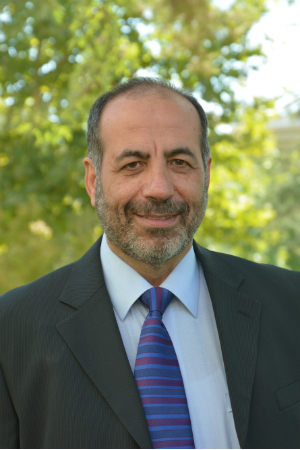
Riadh Munjy serves as a Professor in Geomatics Engineering at California State University, Fresno's Lyles College of Engineering, where he teaches core courses including CE 205 (Computing in Engineering Analysis), GME 123 (Stereo-Photogrammetry), and GME 125 (Analytical Photogrammetry). His academic foundation includes a Ph.D. in Civil Engineering (1982), M.S. in Applied Mathematics (1981), and M.S.C.E. (1979) from the University of Washington, complemented by a B.S. in Civil Engineering from the University of Baghdad (1976). Ph.D., Civil Engineering, University of Washington (1979-1982) M.S., Applied Mathematics, University of Washington (1980-1981) M.S.C.E., Civil Engineering, University of Washington (1978-1979) B.S., Civil Engineering, University of Baghdad (1972-1976) Professor Munjy's research centers on advancing photogrammetric methodologies with particular emphasis on Unmanned Aircraft Systems (UAS) mapping accuracy, sensor calibration, and novel processing techniques for LIDAR and IFSAR data. His work bridges theoretical mathematics with practical applications in transportation infrastructure, disaster response, and terrain modeling, consistently addressing industry pain points like rolling shutter effects in UAV imagery and LIDAR strip adjustment challenges. He has pioneered standards for GPS-controlled photogrammetry adopted by Caltrans and contributed foundational chapters to the ASPRS Manual of Photogrammetry. Analysis of his 15 most recent publications (2010-2020) reveals a strategic evolution from traditional photogrammetric techniques toward UAS-centric workflows, with increasing focus on automated processing, accuracy validation, and integration of multi-sensor data. His research consistently targets real-world implementation barriers in transportation mapping and corridor projects, demonstrating strong industry relevance through Caltrans collaborations and ASPRS leadership. American Society of Photogrammetry and Remote Sensing Fellow Award (2020) ASPRS Fairchild Award (2014) Caltrans Research Innovation Award (2004) Five School of Engineering Research Excellence Awards (1992, 1996, 1998, 2002, 2003) ASPRS Meritorious Service Awards (1992, 1997) Halliburton Research Award (1992) Professor Munjy's research program has been consistently supported through Caltrans-funded projects including GPS Photogrammetry (2005), UAS Research (2018), and corridor mapping standards development. His advisory impact extends through co-authoring the ASPRS Manual of Photogrammetry and mentoring numerous conference presentations, though formal student lists aren't documented. Current initiatives focus on sUAS data accuracy validation and rolling shutter effect mitigation, positioning his work at the forefront of evolving UAV mapping regulations.
Camilla Mazzucato is an External Lecturer and External Researcher in the Department of Cross-Cultural and Regional Studies at the University of Copenhagen's Faculty of Humanities. She holds a PhD in Anthropology from Stanford University, where she completed her dissertation titled "Unravelling the knot. A socio-material approach to the study of Neolithic megasites: the view from Çatalhöyük" in 2021. Her educational background includes: PhD in Anthropology, Stanford University (2014-2021) MSc in Archaeology with focus on "GIS and Spatial Analysis in Archaeology," University College London (2005-2006) Master's in Archaeology, University of Bologna (2000-2003) BA in Archaeology, University of Bologna (1994-2000) Dr. Mazzucato is an archaeologist and anthropologist specializing in the archaeology of prehistoric and protohistoric Southwest Asia. Her research focuses on archaeological network analysis, relational approaches to archaeology, kinship studies, and multispecies archaeology. She has extensive experience as a GIS Specialist for major archaeological projects including AERA and the Çatalhöyük Research Project. Her recent work has examined human-bird interactions in the Levant during the Late Pleistocene to Early Holocene and has explored socio-material networks at Çatalhöyük. She recently completed a Postdoctoral Researcher position for the DFF Founded Project "Birds as a key line of evidence for human vulnerability and resilience to environmental shifts in a pre-agricultural context." Her research demonstrates a strong integration of network science, GIS technology, and traditional archaeological approaches to understand Neolithic societies, particularly at Çatalhöyük. Recent publications show increasing focus on human-animal relationships, environmental shifts in pre-agricultural contexts, and the application of advanced spatial analysis techniques to archaeological data. Dr. Mazzucato has published 23 research outputs including 16 journal articles and 7 book chapters, with recent publications appearing in high-impact journals such as Journal of Archaeological Method and Theory, Archaeological and Anthropological Sciences, and Proceedings of the National Academy of Sciences. Her work has received attention across multiple platforms with mentions on X (formerly Twitter), Facebook, Bluesky, and coverage by news outlets, demonstrating the impact of her research in both academic and public spheres.
Carlotta Tagliaro is a PreDoc Researcher at the Faculty of Informatics, TU Wien, affiliated with the Security and Privacy research group (Institute E192-06). Her work focuses on uncovering security and privacy vulnerabilities in emerging technologies, particularly within IoT ecosystems and Smart TV platforms across Europe. Her core research spans Cybersecurity , Privacy , and Internet of Things domains, with specific expertise in coordinated vulnerability disclosure processes, IoT backend security, and HbbTV protocol analysis. Methodologically, she combines large-scale empirical studies with static analysis of mobile companion applications to expose real-world risks. Recent publications (2023-2024) demonstrate consistent contributions to top security venues like IEEE EuroS&P Workshops, RAID, CCS, and NDSS, revealing critical privacy leaks in European Smart TVs and systemic weaknesses in IoT deployments. Her work directly informs security practices through projects like IoTIO and W4MP. Tagliaro has supervised Master's research including Danis A.'s 2025 thesis on HbbTV exploitation. She operates within TU Wien's Security and Privacy lab, contributing to multi-year initiatives addressing evolving threats in connected device ecosystems.
Steven Morad is a Lecturer and PhD student in the Department of Computer Science and Technology at the University of Cambridge. His research focuses on reinforcement learning, long-term memory models, and robotics applications, with an emphasis on partially observable environments and multi-agent systems. He has taught Deep Reinforcement Learning (Lent 2024) and served as a Teaching Assistant for Mobile Robot Systems (2021–2022). His work includes developing frameworks for embodied navigation, memory-augmented algorithms, and cooperative multi-robot systems. Notable contributions include the POPGym benchmark for POMDPs and the NASA-recognized Improving Visual Feature Extraction in Glacial Environments (2019). Research themes span robotics in extreme environments (e.g., lunar caves, low-gravity terrains) and graph-based methods for partial observability. His publications address challenges in decentralized control, topological priors, and language-conditioned navigation. Education : MSc Thesis on The Spinning Projectile Extreme Environment Robot (2019). Awards : NASA New Technology (NTR NPO 51401) for glacial robotics work. Collaborations : NASA/JPL, IEEE, and aerospace industry partnerships.
Günter Neumann is a Professor of Computational Linguistics at Saarland University and a Research Fellow at the German Research Center for Artificial Intelligence (DFKI). His work spans computational linguistics, artificial intelligence, and biomedical informatics, with a focus on information extraction, question answering systems, and knowledge graph reasoning. Education: PhD in Computer Science (1994) and Computational Linguistics (2004), both from Saarland University. Neumann's research interests include multilingual natural language processing, low-resource language modeling, and neural architectures for information retrieval and biomedical relation extraction. He pioneered techniques in dense passage retrieval for Urdu, feature textualization for BERT interpretability, and low-rank temporal knowledge graph embeddings. Recent publications focus on cross-lingual transfer learning, code-mixed clinical text de-identification, and robust biomedical benchmarks. He has led EU/national projects in language technology and served on program committees for ACL, EMNLP, and LREC. His work with the EXCITEMENT Open Platform and DOMLIN system demonstrates expertise in textual entailment and fact verification, achieving top rankings in competitions like CLEF and TAC.
Mohit Prabhushankar is a Research Fellow at the Georgia Institute of Technology's Department of Electrical and Computer Engineering, part of the College of Engineering. His work focuses on machine learning, computer vision, and explainable AI with applications in medical imaging, seismic interpretation, and uncertainty quantification. He has contributed to developing algorithms for active learning, self-supervised learning, and robust model evaluation. Research interests include hierarchical multimodal systems, counterfactual explanations, and domain adaptation in geoscience applications. His recent work addresses challenges in interpretability metrics, active learning strategies, and biomedical data analysis through projects like the OLIVES dataset for ophthalmic biomarkers and CRACKS for subsurface fault analysis. Publications span topics from action anticipation in robotics to neural network dynamics, emphasizing practical applications of AI in geoscience and healthcare. His research bridges theoretical advancements with real-world deployment considerations through frameworks like gradient-based anomaly detection and deployable clinical active learning systems. No scientific awards or grants are explicitly listed in available materials. Advising activities and student collaborations remain undocumented in the provided content.
Raymond A. Yeh is an Assistant Professor in the Department of Computer Science at Purdue University since Fall 2022. Previously, he was a Research Assistant Professor at Toyota Technological Institute at Chicago (TTIC) and completed his PhD in Electrical Engineering at the University of Illinois at Urbana-Champaign (UIUC) in 2021. His research focuses on machine learning and computer vision, particularly in developing algorithms for effective and explainable models across audio, vision, language, and multi-agent systems. Education: Ph.D., Electrical Engineering, UIUC (2021) M.S., Electrical Engineering, UIUC (2016) B.S., Electrical Engineering, UIUC (2014) Research Interests: His work bridges machine learning and computer vision, emphasizing equivariance in neural networks, robustness, and scalable algorithms. Key areas include: Generative models (diffusion models, inpainting) Equivariant deep learning architectures Multi-modal reasoning (vision-language) 3D reconstruction and simulation Recent Contributions: Recent work includes model immunization techniques, scale-equivariant networks, and novel datasets like Tree-D Fusion. His publications span top venues (CVPR, NeurIPS, ECCV) with 4,551 total citations (h-index 18 as of 2025). Awards: Google PhD Fellowship (2018) Best Paper Runner-up at CVPR Workshop (2024) National Science Foundation (NSF) Grant (2024) Purdue Seed for Success Award (2024) Teaching: Courses include Introduction to AI, Computer Vision with Deep Learning, and Foundations of Deep Learning. Student evaluations consistently score above 4.5/5.0. Labs: Leads the Purdue Vision and Learning Lab, focusing on advancing AI through robust, interpretable models with practical real-world applications.
Carlos M. Lima Azevedo is an Associate Professor at the Technical University of Denmark (DTU), affiliated with the Transport Division, Intelligent Transport Systems Section within the Department of Technology, Management and Economics. He also serves as a Research Affiliate at MIT's ITSLab. His research focuses on mathematical modeling of human mobility, smart mobility services, and integrated transportation technologies. He has held roles including Research Scientist at MIT's ITSLab and Executive Director of MIT's Transportation Education Committee. Education includes a PhD from MIT (2014) and an MSc from LNEC (2008). Key projects include SimMobility (a simulation platform) and Tripod (sustainable travel incentives). Teaching includes courses on transportation systems and data analysis at MIT. His research interests span traffic simulation, safety analysis, and agent-based modeling. Recent work emphasizes equity in shared mobility, AI-driven traffic control, and urban sustainability. He collaborates on projects like Mobility of the Future and FMOD (Flexible Mobility On-Demand). His contributions include frameworks for automated mobility-on-demand systems and policy-sensitive models for transportation networks.