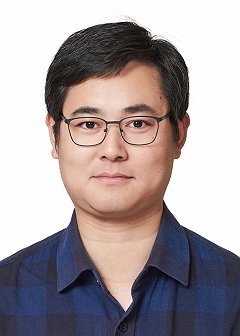
Anxiang Zeng is a researcher affiliated with the University of Kansas School of Business , Department of Management and Leadership. His work focuses on machine learning applications in e-commerce , particularly in search engines, recommender systems, and preference optimization.
Dr. Robert Haschke serves as a Professor and Responsible Investigator in the Cognitive Systems and Social Interaction Group at Bielefeld University's Faculty of Engineering. He is affiliated with the Center for Cognitive Interaction Technology (CITEC) and serves on the Examination Board for the Intelligent Interactive Systems Master's program. His office is located at CITEC 2-035, and he can be reached at rhaschke@techfak.uni-bielefeld.de or +49 521 106-12122. Professor Haschke's research spans multiple domains of robotics and artificial intelligence, with particular emphasis on tactile sensing systems, robotic manipulation, and human-robot interaction. His work explores advanced methods for enabling robots to perceive their environment through touch, with applications in assistive robotics and industrial automation. He investigates how machines can learn from human interactions and adapt their behavior through reinforcement learning and sensor fusion techniques. His research bridges theoretical advances with practical implementations, focusing on transferring knowledge from simulation to real-world robotic systems. Analysis of Professor Haschke's recent publications reveals a strong trajectory toward more sophisticated tactile perception systems and their integration with language and vision for natural human-robot collaboration. His work consistently addresses the simulation-to-reality gap, developing methods for transferring control policies from virtual environments to physical robots. The research shows increasing integration of multimodal sensing (tactile, visual, linguistic) to enable more capable and adaptable robotic manipulation in unstructured environments. As an educator, Professor Haschke teaches advanced courses including Robot Manipulators (39-Inf-RM), Advanced Artificial Intelligence (39-M-Inf-AI-adv_a), Advanced Artificial Intelligence (focus) (39-M-Inf-AI-adv-foc), and Basics of Artificial Intelligence (39-M-Inf-AI-bas). His teaching reflects his research expertise, providing students with both theoretical foundations and practical skills in robotics and AI. Professor Haschke is an integral member of Bielefeld University's Cognitive Systems and Social Interaction Group within CITEC. His work contributes significantly to the university's Socio-Technical World research area, particularly in developing capabilities that enable agents (humans, robots, and AI systems) to act, communicate, and learn in complex environments. His research group focuses on creating robotic systems that can interact naturally with humans through advanced perception and adaptive control mechanisms.
Long Wen is a Lecturer at the Technical University of Munich within the Department of Computer Science, affiliated with the Chair for Robotics, Artificial Intelligence and Real-time Systems led by Prof. Alois Knoll. He teaches the Masterseminar on Human-Robot Interaction (IN2107, IN4718) for the Winter semester 2024/25 and maintains an active research profile in robotics and AI. Office: 5607.03.054, Boltzmannstr. 3(5607)/III, 85748 Garching bei München Contact: long.wen@tum.de | +49 (89) 289 - 18112 His research concentrates on Robotics, Artificial Intelligence, and Real-time Systems with specific expertise in safety-critical control for mobile robots, autonomous driving architectures, and virtualization for software-defined vehicles. Wen investigates human-robot interaction paradigms, cloud/fog computing for robotics applications, and anomaly detection in industrial processes, emphasizing real-time performance and adaptive control in dynamic environments. Analysis of Wen's 10 publications (2023-2025) reveals a cohesive research trajectory focused on deploying AI-driven solutions in safety-critical robotics systems. Key trends include meta-learning for obstacle navigation, containerized microservice architectures for autonomous vehicles, and Gaussian process applications in uncertain control models. His work bridges theoretical control theory with practical implementations in ROS 2 frameworks and automotive virtualization. Scientific awards: No awards or fellowships were documented in the source material. Wen collaborates extensively with Prof. Alois Knoll's research group on grant-funded projects related to autonomous systems, though specific funding sources and student supervision details remain undisclosed in the provided text. He contributes to the Robotics, AI and Real-time Systems laboratory at TUM, where his team develops containerized architectures for autonomous driving software and evaluates virtualization technologies for software-defined vehicles, with recent work presented at ICRA, IROS, and IEEE conferences.
Puze Liu is a Senior Research Scientist & Deputy Head at the Systems AI for Robot Learning (SAIROL) group within the German Research Center for Artificial Intelligence (DFKI) . He earned his Ph.D. from the Intelligent Autonomous Systems group at Technische Universität Darmstadt (TU Darmstadt) , supervised by Prof. Jan Peters . Research Interests Robotics Robot Learning Safe Reinforcement Learning Control and Optimization Human-Robot Interaction Machine Learning Recent Publications focus on safe reinforcement learning, constraint manifold theory, and real-world robotic applications, with papers accepted at ICML 2025 , RSS 2025 , CoRL 2024 , and T-RO 2024 . His work addresses safety in high-dimensional robotic tasks and real-time motion planning under constraints. Scientific Awards IROS Student Travel Award (2022) Best Paper Award Finalist at CoRL 2021 Best Entertainment and Amusement Paper Award Finalist at IROS 2021 Selected as R:SS Pioneers 2025 Collaborations include work with researchers like Jan Peters , Davide Tateo , and Kuo Zhang , focusing on robotics safety, exploration algorithms, and practical implementations for manipulation, navigation, and interaction tasks.
Sahar Abdelnabi is a Principal Investigator at the ELLIS Institute Tübingen and an independent research group leader at the Max-Planck Institute for Intelligent Systems and Tübingen AI Center. She leads the COMPASS (COoperative Machine intelligence for People-Aligned Safe Systems) research group, focusing on developing safe, aligned, and steerable AI agents with emphasis on security, human aspects, and cooperative multi-agent systems. Her research spans the intersection of AI with security, safety, and sociopolitical aspects: Understanding, probing, and evaluating the failure modes of AI models, their biases, emergent risks, and misuse scenarios Designing mitigations, system defenses, white-box control methods, and reasoning enhancements to counter such risks Leveraging AI agents for scientific discovery and advancing society Dr. Abdelnabi's research has identified critical vulnerabilities in AI systems, including being the first to identify, coin, and taxonomize the indirect prompt injection vulnerability in LLM-integrated applications (2023), and proposing watermarking for generative AI (2020). Her work has received significant recognition including a Best Paper Award at ACL2025 and AISec'23 workshop. Her scientific contributions have been widely recognized: Best Paper Award at ACL2025 for "A Theory of Response Sampling in LLMs" Best Paper Award at AISec'23 workshop for "Not what you've signed up for: Compromising Real-World LLM-Integrated Applications with Indirect Prompt Injection" Oral Paper presentation at ICCV 2021 Spotlight Paper at NeurIPS Datasets and Benchmarks 2024 Dr. Abdelnabi actively mentors students and researchers, hiring across all levels including interns, research visitors, PhD students, and postdocs. She has served on program committees for major AI and security conferences and has presented her work at numerous international venues. Her research has influenced policy and industry practices, with findings adopted by organizations including the German Federal Office for Information Security, NIST, and OWASP. The COMPASS research group provides a dynamic environment for exploring cutting-edge questions in AI safety and security, with opportunities for collaboration across institutions and disciplines.
Nuttida Rungratsameetaweemana is an Assistant Professor in the Department of Biomedical Engineering at Columbia University's Fu Foundation School of Engineering and Applied Science. She also serves as a Provost Research Fellow at Columbia University, demonstrating her significant research contributions early in her academic career. NuttidaLab, her research group, focuses on integrating computational and experimental approaches to investigate the neural computations underlying complex cognitive functions in both health and disease. The lab's research spans several key areas including learning mechanisms, decision-making processes, and social behavior, with particular emphasis on understanding how these cognitive functions become disrupted in neurological and neuropsychiatric disorders. The lab has developed several important computational neuroscience tools including NeuralDecoder for representational similarity analysis, state_space_analysis for modeling neural dynamics, MARLAX for multi-agent reinforcement learning, and dynamax for state space modeling. These tools reflect the lab's commitment to developing robust analytical frameworks that can be widely adopted by the neuroscience community. NuttidaLab maintains an active GitHub presence with multiple repositories that demonstrate the lab's focus on open science and reproducible research. The lab's work combines cutting-edge computational approaches with experimental neuroscience to develop a deeper understanding of brain function. The lab actively seeks talented students and researchers interested in interdisciplinary work at the intersection of engineering, neuroscience, and computational science. Professor Rungratsameetaweemana's research represents an important bridge between theoretical computational models and experimental neuroscience, with significant potential for advancing our understanding of both healthy brain function and neurological disorders.
Ali Mesbah is a Professor in the Department of Electrical and Computer Engineering at the University of British Columbia (UBC), where he leads the SALT lab. His research focuses on software engineering with emphasis on AI-driven software analysis, software testing, and software evolution. Previously, he was a Visiting Research Scientist at Google during 2017-2018. Dr. Mesbah received his BSc/MSc (2003) and PhD (2009) degree cum laude in Computer Science from the Delft University of Technology (TUDelft). After completing a postdoctoral fellowship with the Software Engineering Research Group at TUDelft and a Visiting Researcher position at Fujitsu Laboratories of America, he joined UBC in 2011. His research interests span software engineering with particular focus on AI-driven software analysis, software testing, software evolution, program comprehension, fault localization and repair. His work has significant applications in web application testing, JavaScript analysis, and automated program repair. He has pioneered techniques for testing modern web applications, analyzing JavaScript code, and leveraging AI for software maintenance tasks. His recent publications demonstrate a clear evolution toward integrating large language models with traditional program analysis techniques, focusing on test generation, bug repair, and understanding multi-hunk patches. His work bridges theoretical software engineering concepts with practical applications, particularly in web technologies and AI-assisted development. Amazon Research Award (2023) Killam Accelerator Research Fellowship (KARF) (2020) Killam Faculty Research Prize (2019) NSERC Discovery Accelerator (DAS) award (2016) ACM Distinguished Paper Awards at ICSE (2009, 2014) IEEE Distinguished Paper Award at ICST (2018) Best Paper Award at ESEM (2015) Best Paper Award at ICWE (2013) Dr. Mesbah has advised numerous PhD and MASc students, many of whom have gone on to positions at leading technology companies including Google, Amazon, Apple, Microsoft, and SAP. His research has been supported by various grants including the Amazon Research Award and NSERC funding. He leads the SALT lab at UBC, which focuses on software analysis, testing, and learning, with current research directions including AI-driven software engineering, web application testing, and program repair. The lab maintains active collaborations with industry partners and academic institutions worldwide.
Jie Liu is a Researcher at the Institute of Software, Chinese Academy of Sciences and a Professor and Doctoral Supervisor at University of Chinese Academy of Sciences. He is also a Member of the Youth Innovation Promotion Association of the Chinese Academy of Sciences and an Executive Committee Member of the System Software Committee of the CCF Computer Society. His research is conducted within the Software Engineering Technology R&D Center. Dr. Liu received his Ph.D. from the University of Science and Technology of China in 2011 and his B.A. from the same institution in 2004. He has progressed through the ranks at the Institute of Software, CAS, starting as an Assistant Research Fellow (2011-2014), then Associate Research Fellow (2014-2024), and currently as a Researcher (since 2024). His research spans Big Data Intelligent Analysis Models and Systems at the intersection of AI, Software Engineering, and System Software. Specifically, his work covers three main areas: Big Data and Machine Learning Systems (statistics and AI algorithm model libraries, data quantitative analysis tools, LLM reasoning optimization, Earth Big Data); Intelligent Software Engineering (code model constraint decoding, data science agents, system log analysis agents); and Knowledge-Enhanced Intelligent Model Construction (knowledge extraction, knowledge graphs, domain AI model design). His research has resulted in innovative approaches to handling complex data analysis challenges across multiple domains. Dr. Liu's research has produced significant outcomes including EarthDataMiner, which supports SDG indicator calculations and won the 2024 Beijing Municipal Science and Technology Progress First Prize. His work on RISC-V software migration technology has been integrated into the Ruiqian tool (https://rvpt.top/), demonstrating practical applications of his research in emerging computing architectures. Beijing Science and Technology Progress Award, First Prize, 2024 2023 Surveying and Mapping Science and Technology Award, Special Prize, 2023 DASFAA Best Paper Runner-up, Second Prize, 2013 Dr. Liu has successfully guided numerous graduate students who have secured positions at major technology companies including Alibaba, ByteDance, Southern Power Grid, and Agricultural Bank of China. He has secured funding through multiple National Natural Science Foundation projects, National Key R&D Program projects, and over ten other research initiatives. His research collaborations span industry leaders like Huawei, JD.com, and TravelSky, as well as academic institutions within the Chinese Academy of Sciences. He teaches graduate courses such as 'Machine Learning Systems' and 'Cloud Computing and Big Data Technology' at University of Chinese Academy of Sciences, and has established a research group focused on developing innovative solutions at the intersection of AI and software engineering with real-world applications in earth sciences, healthcare, and intelligent systems.
Luciano Baresi is a Full Professor at the Polytechnic University of Milan (Politecnico di Milano), Italy, affiliated with the Department of Electronics, Information and Bioengineering. He earned his laurea (MSc) and PhD in Computer Science from the same institution and has held visiting positions at the University of Oregon (USA), Tongji University (China), and the University of Paderborn (Germany). His research spans software engineering, with current focuses on self-adaptive systems, edge computing, and AI/ML-based software. His work integrates formal methods with practical applications, emphasizing autonomous systems, cloud-edge continuum, and federated learning. Recent publications highlight AI-driven advancements in software testing, resource optimization, and educational tools. Key research themes include: AI/ML for autonomous driving testing and data augmentation Serverless computing at the edge Federated learning system architectures Containerization and cloud resource management Awarded for impactful contributions: RE 2020 Most Influential Paper ICSOC 2020 Best Paper SEAMS 2022 Best Paper He advises 14+ PhD students and leads projects like Ketonet (health app), WHO's Essential Items Estimator, and dynaSpark. As Editor-in-Chief of Proceedings of the ACM on Software Engineering and senior editor for multiple journals, he shapes academic discourse in adaptive systems and software engineering.
Alexander Mitsos is a Professor at Forschungszentrum Jülich in Germany, where he leads research at the intersection of process systems engineering, chemical engineering, and computational methods. His work spans optimization theory, machine learning applications, and energy systems, with a focus on developing novel methodologies for complex engineering problems across multiple domains. Dr. Mitsos's research interests center on the application of advanced optimization techniques to chemical engineering problems. His primary areas of focus include: Process systems engineering and optimization Machine learning applications in chemical engineering Energy systems and hydrogen technologies Bioprocess engineering and control systems Ammonia energy storage and carbon capture His recent publications reveal a strong trend toward integrating machine learning with traditional chemical engineering approaches. He has pioneered work on graph neural networks for molecular property prediction, reinforcement learning for control systems, and bilevel optimization for energy systems. His research demonstrates a consistent focus on developing computationally efficient methods that bridge theoretical advances with practical engineering applications, particularly in sustainability-focused domains like hydrogen technologies and carbon emission reduction. The analysis of his 15 most recent publications shows a balanced portfolio between theoretical method development (e.g., optimization algorithms) and practical applications (e.g., cement production, hydrogen compression). Dr. Mitsos has mentored numerous graduate students and postdoctoral researchers, as evidenced by his extensive publication record with junior authors. His research has been supported by various grants focused on energy transition, process optimization, and sustainable chemical engineering solutions, with significant collaborations across European institutions. The funding landscape for his work appears to emphasize sustainability transitions and industrial decarbonization, particularly in energy-intensive sectors. His work appears to be conducted within a research group focused on process systems engineering, with strong connections to both computational mathematics and practical chemical engineering applications. The group maintains laboratories for experimental validation of computational models, particularly in bioprocess engineering and hydrogen technologies, while maintaining strong theoretical foundations in optimization and control theory.