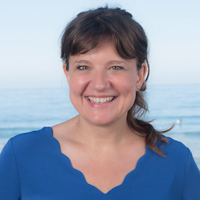
Alice Gabriel is an Associate Professor at the Scripps Institution of Oceanography, University of California, San Diego, affiliated with the Institute of Geophysics and Planetary Physics (IGPP). Her research focuses on seismology and earthquake physics using high-performance computing to simulate earthquake mechanisms across multiple space-time scales. Her educational background includes: Habilitation in Earthquake Physics, LMU Munich, Germany (2022) PhD in Seismology, Swiss Seismological Service, ETH Zurich, Switzerland (2013) Diplom (MSc) in Theoretical Physics, Technical University Dresden, Germany (2008) Certificate of Proficiency in Geophysics and Geology, University of Auckland, New Zealand (2006) Vordiplom (BSc) in Physics, Technical University Dresden, Germany (2004) Professor Gabriel bridges geophysics, computer science, and applied mathematics through physics-based simulations on supercomputers combined with data-driven techniques and theoretical analysis. Her work addresses multi-physics geophysical problems to integrate Earth observations with novel modeling approaches for understanding earthquake mechanisms. She conducts research within the Institute of Geophysics and Planetary Physics at Scripps, leveraging large-scale computational resources in a collaborative geophysical research environment.
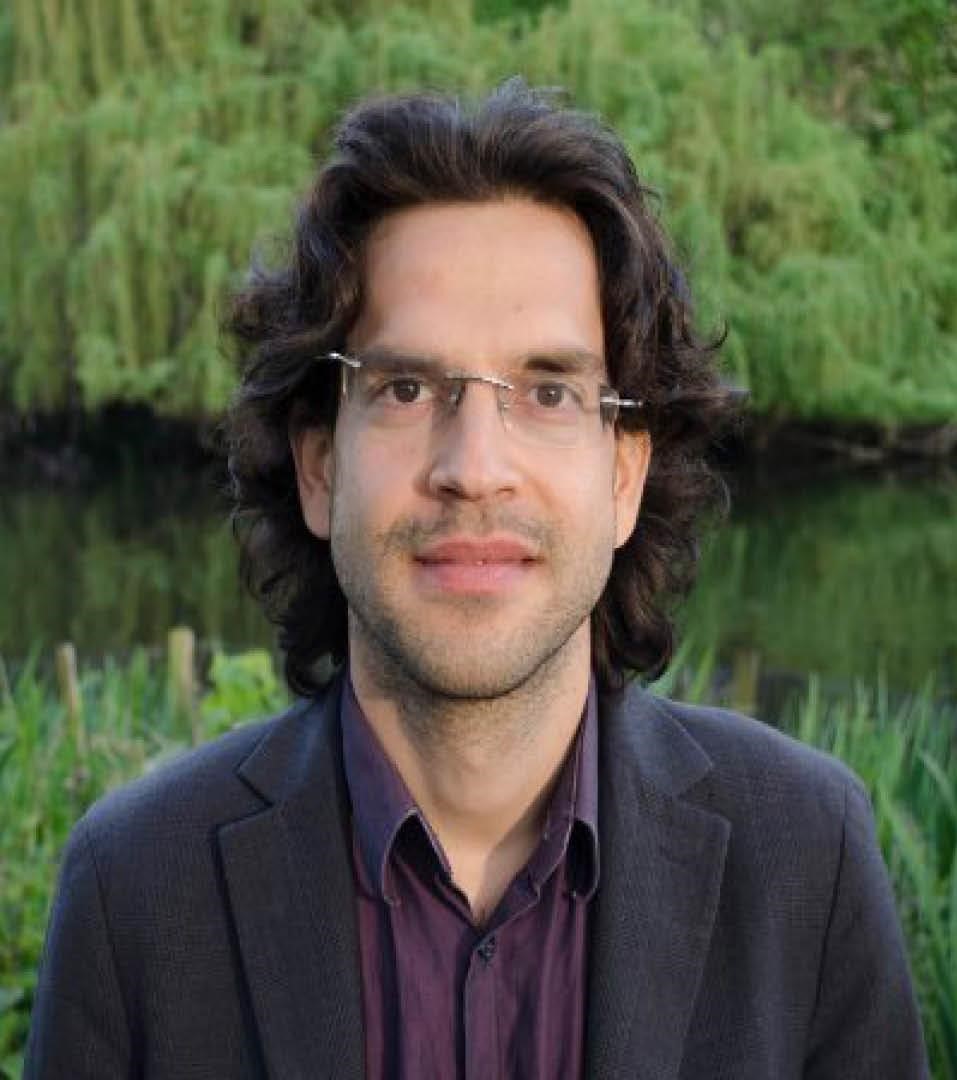
Augusto Gerolin is an Assistant Professor jointly appointed in the Departments of Mathematics and Statistics and Chemistry and Biomolecular Sciences at the University of Ottawa. He holds a Tier II Canada Research Chair in Artificial Intelligence at the Interface of Chemistry and Mathematics. His research focuses on Optimal Transport Theory, Mathematical Physics, Theoretical and Computational Chemistry, and Machine Learning. Gerolin’s work bridges quantum chemistry, mathematical analysis, and computational methods, with applications in Density Functional Theory and quantum information science. He obtained his PhD from the University of Pisa and was a Marie Skłodowska-Curie fellow at Vrije Universiteit Amsterdam. He is a member of the European Laboratory for Learning and Intelligent Systems (ELLIS) and leads a research group exploring AI-driven solutions in chemistry and mathematics. His current projects include developing optimal transport frameworks for quantum systems, advancing machine learning algorithms in scientific computing, and fostering collaborations across disciplines through initiatives like the OQMG Network. Gerolin’s research has led to advancements in multi-marginal optimal transport, entropy-regularized methods, and the strong-interaction limit of density functional theory. His group actively collaborates with institutions worldwide, including the Fields Institute, IPAM, and the University of Genoa. He has supervised numerous PhD, Master’s, and undergraduate students, many of whom have contributed to cutting-edge studies in computational chemistry, quantum algorithms, and mathematical analysis. Key awards include the Canada Research Chair designation, and his work has been supported by grants from NSERC, MITACS, and the University of Ottawa. Gerolin is also committed to diversity in science, endorsing principles such as the Diversity Axioms, and advocates for academic solidarity with researchers affected by global conflicts.
Herbert Gunell is a Senior Lecturer and Director of Studies at the Department of Physics, Umeå University. His research focuses on space physics, particularly Earth's magnetosphere, auroral processes, planetary magnetospheres, and cometary environments. He leads the 'Physics of the Solar System' research group and actively contributes to interdisciplinary studies involving Mars, Venus, and comets like 67P/Churyumov-Gerasimenko. His work bridges observational data from missions like MAVEN and Rosetta with computational simulations, addressing topics such as magnetosheath jets, bow shock dynamics, and plasma interactions. Key research themes include solar wind interactions with planetary atmospheres, energy deposition in ionospheres, and the structure of cometary plasma environments. Recent findings highlight the role of ULF waves in auroral energy transfer and the statistical behavior of Martian bow shock jets. Gunell collaborates globally on missions like the Comet Interceptor and leverages particle-in-cell modeling to explore phenomena such as diamagnetic cavity boundaries and ion velocity distributions in low-activity comets. His publications span journals like Journal of Geophysical Research , Astronomy & Astrophysics , and Space Science Reviews , emphasizing experimental and theoretical advancements in space plasma physics. He remains actively engaged in advancing our understanding of magnetospheric dynamics and their implications for planetary environments.
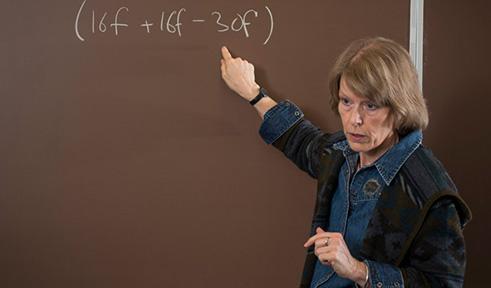
Charlotte Elster is a Professor in the Department of Physics and Astronomy at Ohio University, affiliated with the College of Arts and Sciences and the Institute of Nuclear and Particle Physics (INPP). She is a leading theoretical nuclear physicist with a Ph.D. from the University of Bonn (1986), whose research centers on few-nucleon systems, nuclear reactions, and computational methods in nuclear theory. University: Ohio University School: College of Arts and Sciences Department: Department of Physics and Astronomy Institute: Institute of Nuclear and Particle Physics (INPP) Academic Rank: Professor Email: elster@ohio.edu Her research interests include theoretical nuclear physics , with a focus on few-nucleon systems , relativistic effects in few-body systems , nuclear reactions at intermediate energies , and high-performance computing . She develops numerical tools to model complex few-body dynamics and applies ab initio methods to study nucleon-nucleus scattering and optical potentials. Her work bridges fundamental nuclear forces with observable reaction phenomena. The recent articles reflect a sustained focus on ab initio modeling of nucleon-nucleus interactions, particularly using chiral effective field theory and no-core shell model techniques. Her publications emphasize effective potentials , uncertainty quantification , nonlocal interactions , and few-body universality , especially in deuteron-alpha and light nucleus systems. The research trends show strong integration of computational physics with theoretical nuclear structure and reaction theory, preparing for advances in rare-isotope beam experiments. Scientific Awards: Fellow of the American Physical Society (2001), Few-Body Systems and Multi-Particle Dynamics Division Advising and Grants: While specific students are not listed, her collaborative publications suggest active mentorship of graduate researchers. She is deeply involved in national scientific leadership, serving on the Jefferson Laboratory Program Advisory Committee and chairing the APS DNP Bonner Prize Committee. Her research is likely supported by federal grants from agencies such as the Department of Energy and the National Science Foundation, given the scope and collaboration network of her work. Laboratories and Teams: She is a key member of the Institute of Nuclear and Particle Physics (INPP) at Ohio University and leads research within the Few-Body Topical Group of the American Physical Society. Her work involves extensive collaboration with national labs (e.g., Jefferson Lab, LLNL) and universities (e.g., Michigan State), contributing to large-scale theoretical initiatives and white papers in nuclear physics.
Eduard A. Jorswieck is a University Professor of Communication Systems at the Institute of Communications Engineering , Technical University of Braunschweig, since 2019. He has previously held a professorship at TU Dresden (2008–2019) and has been a lecturer at TU Berlin (2005–2008). Currently, he serves as the Geschäftsführender Leiter (Managing Director) of the Institute of Communications Engineering. Education: Dipl.-Ing. in Computer Engineering (2000), Doctorate (2004) from TU Berlin. Research Interests: His work bridges information theory and wireless communications, focusing on physical layer security , energy efficiency , reconfigurable intelligent surfaces (RIS) , NOMA , MIMO systems , and machine learning for network optimization . He explores stochastic orders, game theory, and fractional programming for resource allocation in 5G/6G networks. Publications & Trends: Recent articles emphasize RIS-aided URLLC , STAR-RIS , 6G security , and AI-driven resource management . His studies span multi-antenna systems , terahertz ISAC , and multi-agent reinforcement learning for UAV networks. Awards: IEEE Signal Processing Society Best Paper Award (2006) IEEE Fellow (2020) Fellow of Industry Academy (AIIA, 2024) Best Paper Award at IEEE ICC 2024 Students & Collaborations: He has mentored researchers like K.-L. Besser, P.-H. Lin, and M. Mross. His lab collaborates on projects involving quantum communication , industrial IoT , and multi-agent systems .
Dr. Alice Allen is a Project Leader at the Max Planck Institute of Polymer Research , specializing in machine learning methods for molecular simulations. She holds a PhD in Physics from the University of Cambridge and completed her undergraduate degree in Physics at Imperial College London. Allen previously worked as a research associate at the University of Cambridge and the University of Luxembourg, followed by a postdoctoral position at Los Alamos National Laboratory. Education: BSc in Physics (Imperial College London) PhD in Physics (University of Cambridge) Her research focuses on developing machine learning models for interatomic potentials , enabling accurate and efficient simulations of reactive processes, biological molecules, and material properties. She has published extensively on topics such as permutationally invariant polynomials, data-driven force fields, and meta-learning approaches for foundation models in interatomic potential development. Recent publications highlight her work on integrating experimental data into machine learning potentials, enhancing the transferability of empirical valence bonds, and creating meta-learning frameworks for foundational interatomic models. These studies span applications in molecular dynamics , thermodynamics , and multi-scale simulations . Research Themes: Machine Learning for Atomistic Simulations Reactive Process Modeling Transferable Force Fields Interpretable Models for Material Properties Collaborative Meta-Learning Frameworks Alice Allen leads the Gräter Groups at the institute, where her team advances predictive methodologies for chemical reactions and material science applications. No specific scientific awards or student advisees are mentioned in the provided text.
Marie-Luise Kapsch is a Research Scientist at the Max Planck Institute for Meteorology (MPI-M) in Hamburg, Germany, affiliated with the Department of Climate Variability and the Ocean Physics research group. Her work centers on paleoclimate modeling to investigate ice sheet-climate interactions during the last deglaciation and their implications for future climate projections, particularly regarding tipping points. Her academic training includes: PhD in Atmospheric Sciences from Stockholm University (2015), thesis: The atmospheric contribution to Arctic sea-ice variability Diploma (Master's equivalent) in Climate Research from Karlsruhe Institute of Technology (2011), thesis: Longterm variability of hail-related weather types in an ensemble of regional climate models Dr. Kapsch specializes in Paleoclimatology and Ice Sheet-Climate Interactions, analyzing drivers of abrupt climate changes like Heinrich events and Dansgaard-Oeschger cycles. She employs coupled climate-ice sheet models to study deglacial transitions, focusing on how meltwater release and ice sheet elevation loss influence ocean circulation and atmospheric patterns. Her research directly addresses uncertainties in future climate projections through paleoclimate constraints. Her publication record (2025-2018) reveals consistent expertise in deglacial climate modeling, with dominant themes in Heinrich event mechanisms, ice sheet reconstruction sensitivity, and meltwater impacts. The work is heavily integrated with the PalMod initiative and MPI-ESM model development, emphasizing multi-model assessments and transient simulations to decode climate system feedbacks during major transitions. Scientific awards: None documented in available sources. Her research is funded through the German paleomodeling initiative PalMod (BMBF), with contributions to the International Max Planck Research School for Earth System Modeling (IMPRS-ESM). She collaborates on large-scale projects including nextGEMS and WarmWorld, though no explicit student advisement is listed. Her work spans model development, data set creation, and participation in CMIP6 experiments. She operates within the Ocean Physics group of the Department of Climate Variability, contributing to MPI-M's climate modeling ecosystem. Her research leverages high-performance computing for Earth system simulations and connects with observational initiatives like EUREC4A and Barbados Cloud Observatory through model-data integration efforts.
Sabatino Cuomo is an Associate Professor of Geotechnics at the Department of Civil Engineering, University of Salerno, Italy. He has been actively involved in teaching and research since completing his PhD in Civil Environmental Engineering at the same university in 2006. His academic career includes numerous international collaborations and leadership roles in research projects focused on landslide mechanics and soil behavior. His educational background includes: PhD in Civil Environmental Engineering (2006), University of Salerno Master in Civil Engineering with honors and special mention (2002), University of Salerno Cuomo's research focuses on geotechnical aspects of natural hazards, particularly landslides and soil erosion. His work spans multiple scales from grain-level soil mechanics to regional landslide susceptibility analysis. He specializes in numerical modeling of flow-type landslides, unsaturated soil mechanics, and the development of constitutive models for predicting soil behavior under extreme conditions. His research integrates laboratory testing with advanced computational methods to address complex geotechnical challenges related to natural disasters. Analysis of his publication record reveals a consistent focus on landslide dynamics, with particular emphasis on numerical simulation techniques (FEM, SPH, MPM) for modeling post-failure behavior. His work shows increasing sophistication in handling unsaturated soil conditions and multi-scale approaches from grain to specimen level. The research demonstrates strong interdisciplinary connections between geomechanics, hydrology, and natural hazard assessment. His notable scientific achievements include: Editor Choice Best Paper 2013 in Canadian Geotechnical Journal European Representative of YMPG of ISSMGE (2012) 5th Sapio Prize by Italian Geotechnical Society for best M.Sc. Thesis (2004) Prize for excellence of undergraduate studies (2004) Cuomo has served as coordinator for multiple international research projects, including collaborations with institutions in France, Spain, Switzerland, Norway, and China. He has been actively involved in teaching both at his home institution and as a visiting professor at several international universities. His institutional service includes board membership in the Engineering Faculty and Department of Civil Engineering at University of Salerno since 2015, and significant involvement in PhD programs. He has also contributed to international standardization efforts through membership in technical committees of ISO and UNI. Most of his research activities have been developed within the International LARAM School (LAndslide Risk Assessment and Mitigation) for PhD students, which he has helped organize and lead since 2006, fostering international collaboration in landslide research.
Lukas Arnold is a Professor and Head of the Fire Dynamics Division at Forschungszentrum Jülich GmbH, affiliated with the Institute for Advanced Simulation (IAS) and its Civil Safety Research Group (IAS-7). He holds a chair in Computational Civil Engineering at the University of Wuppertal and leads major research initiatives in fire safety science using computational methods. Research Focus: Fire Dynamics Simulation Academic Rank: Professor Key Collaborations: University of Wuppertal, DFG, BMBF His research spans fire dynamics simulation, visibility modeling in smoke environments, and flame spread prediction. He develops advanced numerical methods like CFD-based models and inverse modeling techniques for pyrolysis kinetics, smoke propagation, and material decomposition analysis. His work integrates experimental data from real-scale fires with computational tools to improve evacuation safety and risk assessment. Recent publications highlight his expertise in smoke visibility, PMMA pyrolysis, and GPU-accelerated fire simulations. He supervises PhD students in projects involving TGA experiments, multi-scale modeling, and emergency management systems. Arnold's work has been supported by third-party grants from BMBF, DFG, and State NRW, focusing on AI-driven fire modeling, high-performance computing, and disaster resilience. He organizes bi-annual summer schools on fire modeling and contributes to open-access scientific resources.
Tiago Miguel Ferreira is a Senior Lecturer in Smart and Resilient Cities and Structures at the University of the West of England's College of Arts, Technology and Environment (CATE), School of Engineering. He also holds positions as an Invited Associate Professor at the University of Coimbra (Portugal), Visiting Professor at D'Annunzio University of Chieti-Pescara (Italy), and Associate Researcher at the Institute for Sustainability and Innovation in Structural Engineering (ISISE) at the University of Minho (Portugal). Ferreira earned his PhD in Civil Engineering from the University of Aveiro (2015), an Advanced Studies degree in Rehabilitation of Built Heritage from the University of Porto (2010), and an MSc in Civil Engineering from the University of Aveiro. As a Chartered Civil Engineer, his academic activity focuses on structural vulnerability of historical buildings and urban areas to natural and anthropogenic hazards, particularly earthquakes, fires, floods, and landslides, with recent emphasis on multi-hazard interactions. His publication record includes over 170 scientific and technical publications, with more than 70 articles in international peer-reviewed SCI journals. Ranked among the top 2% scientists globally for three consecutive years (2021-2023), Ferreira serves as Co-Editor-in-Chief of GeoHazards and Section Editor-in-Chief of Fire journals, demonstrating his leadership in the field. Ferreira has participated in eight R&D projects (four ongoing), currently leading both a CATE College Building Research project on VR environments for pedestrian evacuation after earthquakes and an MIT Portugal research project on multi-hazard risk assessment. His editorial work and extensive publication record show consistent focus on methodological advances in vulnerability assessment across multiple hazard types. Ranked among top 2% scientists globally (2021, 2022, 2023) Carlos Sousa Oliveira prize 2019 for best journal paper International Red Temática Conacyt prize for best research thesis Outstanding Contribution in Reviewing award for Engineering Structures Publons Peer Review Awards 2016 (Top 10% reviewer) Ferreira has supervised 25 Master's Dissertations (23 completed, 2 ongoing) and 10 PhD Theses (5 completed, 5 ongoing), demonstrating strong commitment to academic mentorship. His research projects span multiple European and international collaborations, with particular focus on developing practical methodologies for vulnerability assessment that can be implemented at urban scales. His work bridges theoretical advances with practical applications for improving urban resilience.
Professor Ken Ong is Professor of Paediatric Epidemiology at the University of Cambridge , jointly appointed in the Department of Paediatrics and the MRC Epidemiology Unit , School of Clinical Medicine . He co-leads the Unit’s Early Life Aetiology and Mechanisms of Diabetes and Related Metabolic Disorders programme with Dr John Perry and serves as an honorary consultant paediatric endocrinologist and clinical lead for childhood obesity at Cambridge University Hospitals NHS Trust . He also chairs the Scientific Advisory Committee on Nutrition’s Subgroup on Maternal and Child Nutrition . Education: PhD in Paediatrics, University of Cambridge and University of Oxford – investigating gene-environment interactions in fetal and early childhood growth using large population-based studies. Research Interests: Professor Ong’s overarching research addresses the early-life determinants of obesity, type 2 diabetes and related metabolic disorders . His programme integrates epidemiology, genetics, physiology and public health to identify developmental trajectories that confer long-term disease risk. Key themes include: The role of rapid postnatal growth and weight gain in programming later metabolic disease. Genetic and environmental influences on puberty timing and their consequences for obesity, diabetes and psychosocial outcomes. Mechanistic pathways linking early growth, reproductive maturation and lifelong health, with a view to informing behavioural interventions that delay puberty and prevent childhood obesity. Publication Trends: Across >150 publications, Professor Ong’s recent work (2024-2025) demonstrates a strong focus on large-scale genetic discovery (GWAS, exome and whole-genome sequencing) for traits such as adiposity, puberty timing, birth weight, proteomic aging and diabetes risk . Methodologically, his team employs Mendelian randomization to infer causality, integrates multi-omics (genomics, epigenomics, metabolomics) and leverages population cohorts (UK Biobank, ALSPAC, TOPCHILD Collaboration). Comparative studies now extend to canine models to validate obesity genes across species, while intervention coding work within TOPCHILD seeks to distil effective behavioural components for obesity prevention in early childhood. Scientific Awards & Recognition: While specific named prizes are not listed in the text, Professor Ong’s sustained leadership of a major MRC programme, chairmanship of national SACN subgroups and honorary NHS consultant role collectively denote significant peer recognition. Grants & Funding: Professor Ong’s programme is core-funded by the Medical Research Council (MRC) through the Early Life Aetiology and Mechanisms of Diabetes and Related Metabolic Disorders strategic award. Additional project grants arise from cross-disciplinary initiatives within Cambridge Reproduction and the Cambridge Metabolic Network. Laboratory & Team: He heads a multidisciplinary team located within the Institute of Metabolic Science on the Cambridge Biomedical Campus, integrating bioinformaticians, geneticists, epidemiologists and clinical researchers. Active collaborations span the MRC Epidemiology Unit, Department of Paediatrics, Cambridge University Hospitals NHS Trust and international consortia.
Dr. Yi Wang is a Reader in Climate Sciences within the Department of Geography at the School of Global Studies, University of Sussex. He also holds a Visiting Professor position at the Department of Earth System Science of Tsinghua University since 2019. With nearly 30 years of experience in climate and Earth system sciences, Dr. Wang has established himself as a leading researcher in monsoon dynamics, climate modeling, and hydrological systems. PhD from McGill University (Montreal, Canada) Postdoctoral fellow at Centre for Climatic Research, University of Wisconsin-Madison Research experience at Pacific Northwest National Laboratory (PNNL) Visiting scientist at National Center for Atmospheric Research (NCAR) Dr. Wang's research spans a wide range of climate science topics with particular expertise in Asian and African monsoon systems, land-atmosphere interactions, and climate modeling. His work combines paleoclimate reconstruction with modern observational data to understand long-term climate patterns and their societal impacts. He has published extensively in high-impact journals including Nature Scientific Reports, Climate Dynamics, and Journal of Climate, with particular focus on abrupt climate changes and their historical implications. His recent publications demonstrate consistent research productivity across multiple climate science domains. The articles reveal a strong focus on monsoon dynamics across different time scales (from seasonal to millennial), with particular attention to East Asian and Sahelian climate systems. There's a clear methodological pattern combining observational data, paleoclimate proxies, and climate modeling to address questions about climate variability, extremes, and human-environment interactions. Fellow of the Higher Education Academy (HEA) Postgraduate Certificate in Learning and Teaching in Higher Education Editorial Board member for Asia-Pacific Journal of Atmospheric Sciences Committee member of International CLIVAR/PAGES Working Group Dr. Wang actively supervises PhD students and has secured multiple research grants including the NERC, ESRC, and The Newton Fund funded 'Thai Coast' project. His research collaborations span multiple countries including USA, China, and Nigeria. He is affiliated with several research centers at Sussex including the Sussex Centre for Coastal Research, Sussex Centre for World Environmental History, and Sussex Asia Centre.
Dr Evina Katsou is a Visiting Professor in the Department of Mechanical and Aerospace Engineering within the College of Engineering, Design and Physical Sciences at Brunel University London. She serves as Course Director for the Water Engineering MSc program and leads the Water & Environmental Engineering research group with 20 researchers. Dr Katsou's educational background includes a PhD in 'Wastewater Treatment with the Use of Membranes' (2008-2011), an MSc in Water Resources Science & Technology (2006-2008), and an MEng in Chemical Engineering (2000-2005), all from the National Technical University of Athens (NTUA), Greece. Her research program focuses on three interconnected areas: (1) Sustainable resource recovery from wastewater and safe reuse; (2) Data analytics, knowledge discovery and process modelling; and (3) Circularity & sustainability measurement and assessment. Dr Katsou has developed innovative approaches for biological nutrient removal from wastewater, including partial nitrification/denitrification and complete autotrophic nitrogen removal processes. Her work integrates advanced data analytics methods such as multivariate statistics, clustering techniques, machine learning algorithms, and artificial neural networks to identify complex relationships between process variables, particularly for measuring GHG emissions in water treatment systems. Dr Katsou has authored 98 journal publications (h-index: 27) and 12 book chapters with over 100 presentations, and holds a patent on biopolymers recovery. Her recent publications demonstrate a strong focus on circular economy applications in water systems, nature-based solutions for urban environments, and resource recovery technologies. The research trends show increasing integration of data-driven decision support systems with environmental sustainability metrics, particularly in the water-energy-food nexus domain. Chartered Chemical Engineer (Greece) HEA Fellow (FHEA) of the Higher Education Academy Mentor in the APEX (Academic Practice & Professional Excellence Framework) scheme Member of management group of the Royal Academy of Engineering (RAE) Visiting Professors Scheme Co-leader of Circular Economy VLT in Water Europe Leader of SMART WATER Working Group in ICT4Water Cluster-EC Member of ISO standards drafting team on Circular Economy Dr Katsou has successfully supervised 16 PhD students to completion and currently supervises several ongoing doctoral projects. She has secured substantial research funding as Principal Investigator on 11 national and international projects including RESILEX Horizon Europe, SYMBIOREM Horizon Europe, BORECER Horizon Europe, HYDROUSA H2020, and WATER-MINING H2020. Her industrial consulting portfolio includes significant contracts with leading UK water industry partners such as Affinity Water, Arup, Severn Trent, and Anglian Water, with projects ranging from carbon footprint assessment to corrosion mitigation and process optimization. She leads the Transformation Tools group of the Cost Action on Circular Cities, co-leads the Circular Water VLT of Water Europe, and co-leads the SMART-WATER group of the ICT4Water Cluster-EC. Dr Katsou is also a member of the drafting team for new ISO standards on Circular Economy (Measuring and Assessing Circularity - ISO5902).
John S. McCloy is a Full Professor and Director at Washington State University's School of Mechanical and Materials Engineering , with affiliate appointments in Chemistry. His career spans academia and national laboratories, including leadership roles at the Institute for Materials Research and prior research at Pacific Northwest National Laboratory. Ph.D. in Materials Science & Engineering (University of Arizona, 2008) M.S. in Materials Science & Engineering (University of Arizona, 2007) M.A. in Cultural Anthropology (University of Arizona, 2004) B.S. in Materials Science & Engineering (MIT, 1996) McCloy's research integrates nuclear materials , wide bandgap semiconductors , and advanced characterization techniques . His work on β-Ga2O3 explores optical anisotropy, defect engineering, and radiation effects. He also investigates glass and ceramic waste forms for radioactive iodine and technetium, combining materials informatics with positron annihilation spectroscopy . Current projects include dual-phase ceramics and ultra-wide bandgap devices . Recent publications analyze molten salt thermodynamics , chromium-doped oxide semiconductors , and archaeological glass alteration as analogs for nuclear waste durability. His lab develops in-situ characterization methods using X-ray nano-CT and laser-induced luminescence . Scientific Recognition : 2024 Washington State Academy of Sciences 2019 Fulbright Scholar 2018 Fellow of the American Ceramic Society 2016 Outstanding Teaching Award
Leung Tsang is a Professor of Electrical Engineering and Computer Science at the University of Michigan, Ann Arbor, holding the Robert J. Hiller Professorship of Engineering. He received his SB, SM, EE, and Ph.D. from MIT. His academic career includes positions at Texas A&M University (1980-1983), University of Washington (1983-2014) as Professor and Department Chair (2006-2011), and a visiting Professorship at City University of Hong Kong (2001-2004). He has served as Editor-in-Chief of IEEE Transactions on Geoscience and Remote Sensing and President of the Electromagnetics Academy and IEEE Geoscience and Remote Sensing Society. His research focuses on microwave remote sensing , multiple scattering theory , electromagnetic wave propagation in random media , photonic crystals , and signal integrity . His work spans theoretical advancements (e.g., radiative transfer theory, UV multi-level methods) and practical applications (e.g., snow parameter retrieval, ocean foam modeling, via coupling analysis). Key trends include Development of computational techniques for large-scale scattering problems Integration of neural networks for inversion in remote sensing Investigation of backscattering enhancement and polarimetric signatures Notable awards include Fellow of IEEE and Optical Society of America William T Pecora Award (2012) Van De Hulst Light Scattering Award (2018) Membership in the National Academy of Engineering (2020) His group utilizes high-performance computing resources, including the Flux HPC cluster at the University of Michigan and XSEDE allocations, with specialized nodes for electromagnetic modeling. Current students include Ruoxing Gao (electromagnetic theory), Firoz Borah (snow remote sensing), Jongwoo Jeong (forest scattering), and Zhenming Huang (snow modeling).