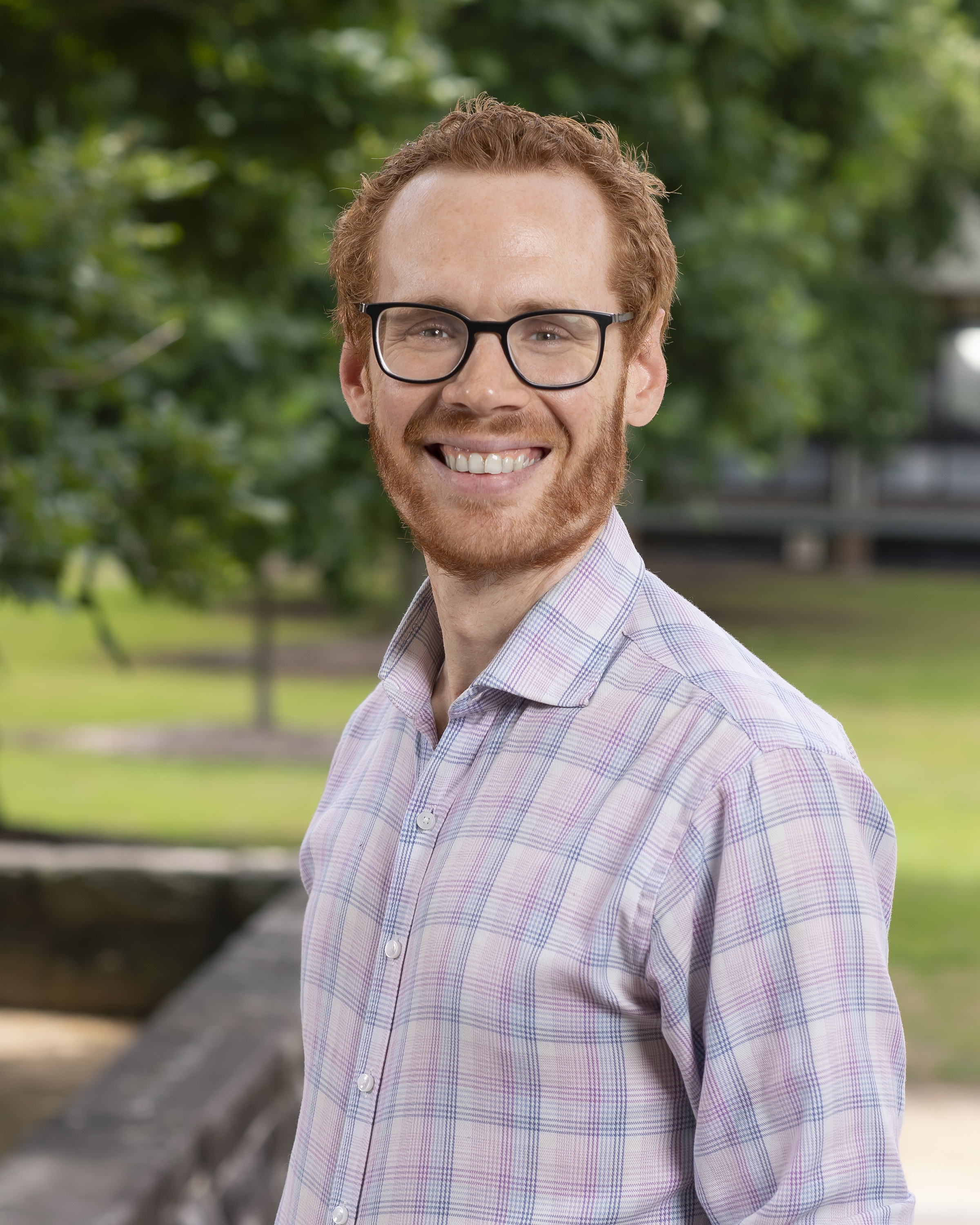
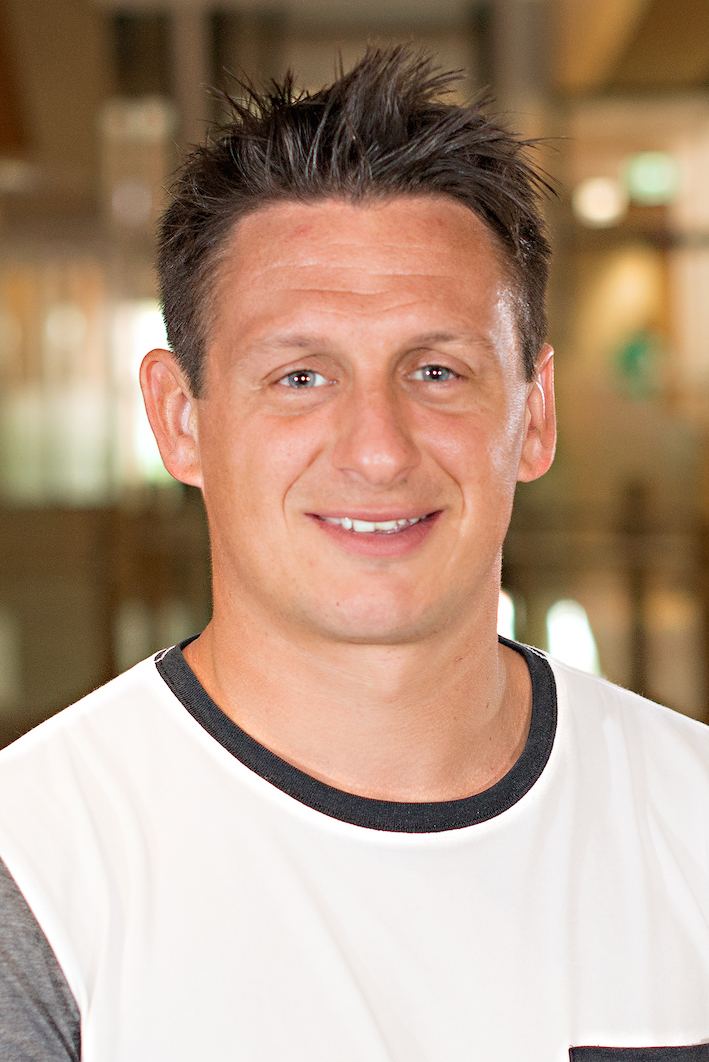
Fima Klebaner is Professor in the School of Mathematics at Monash University and Director of the Centre for Modelling of Stochastic Systems. His research spans stochastic processes, financial mathematics, and population biology, with emphasis on limit theorems, branching processes, and diffusion models. Current projects include ARC-funded work on stochastic population dynamics and financial derivatives pricing. Key research areas: 1) Population-dependent stochastic systems; 2) Large deviation principles; 3) Financial mathematics (Dupire formula, volatility); 4) Approximation methods for complex processes. Recent publications (2018-2025) show balanced focus on theoretical probability (45%) and applied modeling (55%), particularly in ecology and finance. Article analysis reveals advanced methodologies in: 1) Stochastic calculus applications (33% of recent works); 2) Limit theorems for interacting systems (27%); 3) Financial mathematics innovations (20%). Theoretical contributions frequently interface with biological and financial applications.
Dr Jonathan Baker is a Senior Lecturer in Strategy at the Adelaide Business School , part of the Faculty of Arts, Business, Law and Economics at the University of Adelaide. He previously served as Director of the Yunus Centre for Business, Sustainability & Social Impact (2022-2023) and has held academic positions at Auckland University of Technology, University of Auckland, and guest professorship at University of Bayreuth. His research focuses on Interdisciplinary intersections of markets, strategy, and social impact Market-shaping strategies Sustainability and circularity transitions UN Sustainable Development Goals (9, 11, 12) Systemic business model perspectives Dr Baker's work appears in top journals including Industrial Marketing Management , Journal of Business Research , and Marketing Theory . He serves on the Editorial Review Board of Industrial Marketing Management (ABDC A*). Scientific Awards Excellence Early Career Researcher Award (ANZAM-European Management Journal, 2023) Emerging Career Researcher Award (Adelaide Business School, 2023) As a principal supervisor, he welcomes PhD/MPhil candidates interested in market shaping, sustainability transitions, or social entrepreneurship. His methodology emphasizes qualitative research and ecosystem-level analysis.
Dr. Michael Stevens is a Senior Lecturer at University of New South Wales (UNSW) Canberra , where he focuses on advanced manufacturing and biomedical device control systems . His work bridges digital manufacturing for SMEs with smart artificial heart technologies , emphasizing industry collaboration and translational research. Specializes in physiological control systems for rotary blood pumps Develops unobtrusive fall detection systems for dementia patients Leads international projects on total artificial heart development Education : B.Eng (Medical - First Class Honours), Queensland University of Technology (2010) PhD in Physiological Control for Biventricular Assist Devices, University of Queensland (2014) Research Trends show consistent focus on: Machine learning for biomedical diagnostics (2018–2025) mmWave radar and thermal sensors in patient monitoring (2021–2024) Computational fluid dynamics in artificial heart modeling (2016–2024) Physiological control algorithms for rotary blood pumps (2011–2025) Scientific Awards : UNSW Scientia Education Award (2021) for contextual teaching Heart Foundation Runner-up for "Smart Artificial Hearts" pitch (2021) ARC PGC Supervisor Award (2017) for mentoring Grants & Supervision : Holds over $6 million in competitive funding including MRFF and ARC grants. Currently supervises 4 PhD students while maintaining industry partnerships with VitalCare and BiVACOR. Labs & Facilities : Works across UNSW Engineering labs and Graduate School of Biomedical Engineering platforms, including mock circulation loops and high-performance computing clusters for CFD simulations.
Prof. Jian Zhang is a Professor in the School of Electrical and Data Engineering at the University of Technology Sydney (UTS), specializing in computer vision, pattern recognition, and multimedia signal processing. He leads the Multimedia Data Analytics Lab at the Global Big Data Technologies Centre, focusing on agri-food sector applications such as livestock monitoring and AI-driven solutions for agricultural efficiency. Education : PhD, School of Information Technology and Electrical Engineering, University of New South Wales, 1999 MSc, The Flinders University of South Australia, 1994 BSc, East China Normal University, 1982 Research Interests : His work spans 2D/3D computer vision, large-scale image/video analytics, and cross-disciplinary projects in agriculture and remote sensing. He has pioneered AI systems for livestock counting, poultry welfare monitoring, and fish quality assessment, funded by organizations like Meat & Livestock Australia and Australian Eggs. Grants & Projects : Current projects include AI-based hen health monitoring ($5M+ funding since 2011) Collaborations with industry partners like Sydney Fish Market and Fremantle Port Students & Academic Leadership : Supervised 19 PhD graduates and 5 research fellows Recruiting new PhD candidates in computer vision and data analytics Labs & Teams : Director of the Multimedia Data Analytics Lab, collaborating with global experts through UTS's Distinguished Visiting Scholars program.
Dr. Gowri Sankar Ramachandran is a Senior Lecturer in the School of Information Systems at Queensland University of Technology (QUT), specializing in cybersecurity and distributed systems. She holds a PhD from KU Leuven (Belgium) and a postdoctoral position at the University of Southern California (USC). Her research focuses on open-source software security, runtime threat detection, blockchain applications, and IoT vulnerabilities. Notable contributions include the FUSE tool for detecting malicious packages and the discovery of hyperlink hijacking vulnerabilities affecting millions of domains. Research interests span software supply chain security, metadata-based risk analysis, and generative AI for cyber risk modeling. Awards include Best Paper Awards at ACM CBSE (2016), Mobiquitous (2017), and BigMM (2019). Collaborations include projects with CSIRO, the City of Los Angeles, and the University of São Paulo. She teaches courses on cybersecurity, database management, and network security, and actively supervises PhD students in cybersecurity and blockchain domains. Recent publications address blockchain-based data governance, quantum-resilient IoT protocols, and decentralized identity systems. Her work bridges academic research with real-world impact, addressing critical challenges in digital systems security and privacy.
Dr Elisabeth Huynh is a Senior Research Fellow at the Australian National University's Centre of Epidemiology for Policy and Practice. She specializes in health economics, focusing on understanding health-related preferences, choice behavior, and economic evaluations in public policy and medical interventions. Education: PhD in Economics (Econometrics) and B.Com from the University of Sydney. Affiliations: Research Affiliate at the University of Sydney (2021-2026). Research Interests: Her work spans health economics, applied econometrics, and public policy, with specific contributions to discrete choice experiments, best-worst scaling, health workforce dynamics, healthy aging, nutrition interventions, and quality-of-life valuation. She investigates decision-making patterns in health care, including patient preferences, end-of-life care, and health service provider behavior. Publications: Her recent articles focus on pediatric quality-of-life metrics, pandemic preparedness modeling, dietary supplement choices during pregnancy, and workforce dynamics in health care. These studies employ advanced econometric methods and systematic reviews to inform policy decisions. Supervision: Elisabeth supervises PhD candidates exploring topics like child health valuation, chronic disease management, and maternal nutrition programs.
Dr. Arman Khoshghalb is a Senior Lecturer in Geotechnical Engineering at the School of Civil and Environmental Engineering, UNSW Sydney, where he has been a faculty member since 2012. His academic credentials include a PhD in Geotechnical Engineering from UNSW (2012), an MSc from Sharif University of Technology (2005), and a BSc in Civil Engineering from the same institution (2003). His research focuses on numerical modeling of multi-phase porous media , with emphasis on unsaturated soils, large deformation analysis, and dynamic soil behavior. Key areas include meshfree computational methods, soil-structure interaction, bio-cementation, and thermo-hydro-mechanical processes in geotechnical systems. His work bridges theoretical advancements with practical applications in slope stability, foundation engineering, and sustainable ground improvement. Dr. Khoshghalb's publications predominantly explore geomechanical modeling, experimental soil mechanics, and computational techniques. Recent trends highlight innovations in bio-cemented soils, thermal properties of unsaturated soils, and adaptive numerical methods for complex geotechnical simulations. Awards & Honors: IACMAG Excellent Paper Award (2017) UNSW Research Excellence Award (2012) Advising & Grants: He has supervised 7+ PhD students on topics ranging from weak rock mechanics to computational geomechanics. Funded projects include: ARC Discovery Project (2019–2021): "Non-isothermal dynamic strain localisation in unsaturated porous media" ($298,257) ARC Linkage Infrastructure Grant (2015): "Earthquake shaking table for soil-structure interactions" ($320,000) ARC Linkage Project (2014–2017): "Constitutive modelling of weak rocks" ($314,280) He leads research within UNSW's geotechnical engineering group, collaborating on large-scale experimental testing and computational frameworks for infrastructure resilience.
Professor Clinton Fookes is a faculty member at the Queensland University of Technology (QUT) within the School of Electrical Engineering & Robotics . His research focuses on leveraging computer vision and artificial intelligence to develop automated systems that understand, anticipate, and interact with human behaviors, with applications in medical diagnostics, autonomous vehicles, defense, and industrial efficiency . Research areas include AI adaptability, multimodal biosignal analysis, and human-machine interaction Collaborates with CSIRO Data61, Defence Science and Technology Group, Orica, Airbus, and Sentient Vision Systems Develops systems for human action detection, infrastructure monitoring, and stress response prediction His work addresses critical challenges in AI deployment, such as environmental adaptability and reducing diagnostic errors in medical and autonomous systems. Recent publications highlight trends in self-supervised learning, zero-shot knowledge transfer, multimodal integration , and 3D reconstruction for healthcare , while exploring ethical AI use in sectors like mining and defense . Professor Fookes emphasizes interdisciplinary collaboration, bridging engineering, medicine, and social sciences to advance AI systems capable of real-world impact. His research agenda includes improving AI memory capabilities and explainability for safer, more reliable automation.
Professor Stuart Phinn is a distinguished academic at the University of Queensland, serving as Professor in the School of the Environment and Centre Director of the Remote Sensing Research Centre (Earth Observation Research Centre). He also maintains affiliations with the Centre for Marine Science. With a career spanning over two decades, Professor Phinn has established himself as a leading expert in earth observation and environmental monitoring, with over 559 publications including 295 journal articles. His educational background includes a Bachelor (Honours) of Science (Advanced) from The University of Queensland and a Doctor of Philosophy from San Diego State University. Professor Phinn's leadership extends to founding directorships of Australia's national earth observation coordination body (www.eoa.org.au) and collaborative research infrastructure (www.tern.org.au), as well as a world-leading research-to-operational program supporting government environmental monitoring (www.jrsrp.org.au). He also leads the Earth Observation for Government Network. Professor Phinn's research focuses on monitoring environmental change using earth observation and field data. His work primarily involves using images collected from satellites and aircraft, combined with field measurements, to map and monitor Earth's environments and how they change over time. This research is conducted in collaboration with environmental scientists, government agencies, NGOs, and private companies. A growing aspect of his work focuses on national coordination of earth observation activities and the collection, publishing, and sharing of ecosystem data. His work provides solutions to support sustainable development and resource use for governments, industries, and communities. His recent publications demonstrate a consistent focus on applying earth observation technologies to solve environmental challenges across multiple domains. The 15 most recent articles reveal strong themes in coral reef mapping and monitoring, land cover change detection, fire resilience analysis, and advanced remote sensing techniques including multi-sensor fusion and machine learning applications. His work spans terrestrial, coastal, and marine environments, with significant contributions to understanding environmental change in Australia and internationally, particularly in Indonesia. Professor Phinn has secured substantial research funding from diverse sources including government agencies (Queensland Government, Great Barrier Reef Marine Park Authority), industry partners (SmartSat CRC, Blue Economy CRC), and international organizations (Google Inc, Vulcan Inc). Current projects include evaluating impacts of threats to endangered reptiles, automating tree-scale vegetation structure monitoring, and continuing the Joint Remote Sensing Research Program. As an academic supervisor, Professor Phinn has mentored numerous PhD and Master's students, with current supervision spanning topics from forest disturbance analysis to kelp forest mapping and fire resilience of mine site rehabilitation. His extensive supervision history demonstrates his commitment to training the next generation of earth observation scientists. The Earth Observation Research Centre he directs fosters a collaborative research environment focused on transforming satellite and airborne images with field survey data into meaningful environmental information for decision-making.
Yuxia Hu is a Professor at the University of Western Australia, affiliated with the School of Engineering (Civil, Environmental and Mining Engineering) and the School of Social Sciences, Planning and Transport Research Centre. Her research focuses on geotechnical engineering, particularly in large deformation FE analysis, offshore foundation systems, and soil-structure interaction. She has contributed to advancements in suction caissons, plate anchors, and computational mechanics, with applications in offshore wind energy and infrastructure stability. Research Interests: Large deformation FE analysis of soils, soil-structure interaction, offshore foundation systems, soil mechanics, and pavement engineering. Awards: Telford Premium, British Geotechnical Association Prize, and Significant Junior/Senior Paper Award. Grants: Leads projects on offshore anchors, carbon capture in pavements, and road maintenance optimization. Her work addresses challenges in geotechnical design and sustainable infrastructure, with a focus on numerical modeling and experimental validation. Collaborations span academia and industry, emphasizing practical solutions for complex soil-structure systems.
Dr. Boyin Ding is an Associate Professor at the University of Adelaide , serving as Academic Director at Haide College and researcher in the Mechanical Engineering department within the Faculty of Sciences, Engineering and Technology. He leads the Wave Energy Research initiative established in 2014, while also contributing to Robotics and Biomechanics through his work with the Flinders Medical Device Research Institute. Research Areas: Ocean Wave Energy Harvesting Control Systems for Renewable Energy 6DOF Robotic Testing Spine Biomechanics Transnational Education Programs Key Collaborations: Australia-China Joint Research Centre for Offshore Wind & Wave Energy Acoustics, Vibration and Control Research Group Scientific Awards: Australian Endeavour Fellowship Malcolm Kinnaird Engineering Excellence Award (2012) His recent publications focus on hybrid offshore energy systems, nonlinear hydrodynamics in wave energy converters, and biomechanical testing technologies. He has developed control algorithms for floating offshore wind-wave systems and pioneered 6DOF robotic platforms for medical applications. As an eligible PhD supervisor, he actively collaborates with global industries and academic institutions.
Dr. Wibowo Hardjawana is a Senior Lecturer in Telecommunications Engineering at the School of Electrical & Computer Engineering , University of Sydney. He holds a PhD from the University of Sydney and serves as an ARC DECRA Research Fellow. His research focuses on wireless network softwarisation, enabling programmable radio interfaces to address traffic elasticity in 5G/6G systems. Education : PhD (University of Sydney) Grants : ARC DP210100744 (2021), ARC DECRA DE140101114 (2014) His work spans 5G/6G network architectures , machine learning for wireless systems , and open radio interfaces . Key contributions include graph representation learning for interference management, Bayesian neural network detectors for OTFS modulation, and NOMA decoding techniques . Recent publications analyze ultra-reliable low-latency communications , UAV-enabled networks , and stochastic geometry in wireless systems . He has collaborated with institutions in China, Indonesia, and UAE, and engaged with industry partners like Telstra and Ausgrid.
Associate Professor Brett Jason Hallam is a Scientia Fellow at the University of New South Wales (UNSW), affiliated with the School of Photovoltaic and Renewable Energy Engineering. His research focuses on advancing solar panel manufacturing, particularly improving efficiency and reducing costs through innovations like selective emitter formation, laser processing, and hydrogen passivation. Key areas include understanding hydrogen passivation mechanisms to address defects in silicon solar cells and developing next-generation technologies such as TOPCon and SHJ cells. Education: PhD in Photovoltaic Engineering (UNSW, 2014), BE (First Class Honours and University Medal) and BSc in Physics/Oceanography (UNSW, 2009). He has held research placements at Fraunhofer Institute (Germany), Oxford University (UK), and IMEC (Belgium). Research Interests: Advanced hydrogenation for solar cells, material challenges for terawatt-scale PV deployment, reducing silver consumption, and sustainable manufacturing. Current projects include ARENA-funded initiatives on high-efficiency solar cell technologies and next-generation selective emitters. Notable Awards: 2018 Scientia Fellow, 2017 NSW Premier Prize for Energy Innovation, and 2016 Ulrich Goesele Young Scientist Award. His work addresses global energy transition goals, aiming for net-zero emissions by 2050. Industry Experience: Consultant for Suntech Power and Technology Transfer Team at UNSW, collaborating with companies like LONGi and Jinko. He advises on silicon solar cell technologies and has 16 patents. Labs/Teams: Active in UNSW’s PV research groups, focusing on scalable solar solutions and material science innovations.
Jun Zhou is Professor and Deputy Head of School (Research) at Griffith University's School of Information and Communication Technology. His research specializes in hyperspectral imaging, computer vision, and pattern recognition with applications in agriculture, environmental monitoring, and remote sensing. Zhou leads significant projects including the ARC Research Hub for Driving Farming Productivity and Disease Prevention. His work develops innovative computer vision systems for agricultural automation, environmental conservation, and industrial quality control. He has received the ARC Discovery Early Career Researcher Award and secured extensive research funding from ARC, CSIRO, and industry partners. Zhou's publications demonstrate consistent contributions to hyperspectral image analysis, object tracking, and deep learning applications. As Deputy Director of the ARC Industrial Transformation Research Hub, he coordinates multi-institutional research teams developing AI-powered solutions for farming productivity and disease prevention.
Kevin Vinsen is a Senior Research Fellow at the University of Western Australia, working in the Data Intensive Astronomy (DIA) Program of the International Centre for Radio Astronomy Research (ICRAR) since 2009. He is also affiliated with the UWA Defence and Security Institute and holds an ORCID ID of 0000-0001-5332-3784. His work focuses on translating ICRAR software capabilities into practical industry applications across diverse domains. His research interests include: Peta-scale systems High-performance Computing Machine Learning applications in multiple fields Wave and weather forecasting Digital Assistive Technologies Agricultural applications of ML Large language models Vinsen heads the Translation and Impact work of the DIA team and leads the development of Machine Learning systems. His current projects include ML for wave forecasting on the NW shelf, wind and temperature forecasting, honey traceability and provenance, and digital assistive technology for people with disabilities. His work contributes to UN Sustainable Development Goals related to industry, oceans, agriculture, food, disability, and defense. His research output demonstrates a strong trend toward applying machine learning techniques to solve real-world problems across astronomy, environmental science, agriculture, and disability support. This interdisciplinary approach showcases the versatility of his computational expertise across scientific and social domains. Vinsen has an h-index of 11 with 621 citations across 33 research outputs. As the ICRAR/UWA Summer Studentship Co-ordinator, he mentors emerging researchers and contributes to building research capacity. His collaborative network spans multiple institutions and research areas, reflecting his ability to bridge academic research with practical applications.