Assoc Prof Ng Teng Yong is an Associate Professor at the School of Mechanical & Aerospace Engineering (NTU), specializing in numerical modeling and simulation. With a background as Research Manager at A*STAR Institute of High Performance Computing, his work spans materials science, nanotechnology, and aerospace engineering. Current focus on graphene-based desalination membranes Expertise in molecular dynamics simulations Investigates nanoscale fluid mechanics and structural dynamics Recent publications highlight advancements in energy-efficient electrodialysis, smart robotics, and nonlinear vibration analysis. His interdisciplinary approach integrates computational methods with experimental validation in additive manufacturing and soft material mechanics.
Professor Chunsheng Lu is a faculty member at Curtin University's School of Civil and Mechanical Engineering within the Faculty of Science and Engineering. He currently holds the position of Professor and serves as Editor-in-Chief of Mechanical Engineering Advances . His research focuses on fracture mechanics, multi-scale modeling, energy materials, nonlinear dynamics, and natural disaster risk analysis. Lu is actively involved in HDR (Masters/PhD) supervision, offering projects on advanced materials modeling and simulations. His research interests include mechanics of energy materials, multi-scale modeling, and fracture statistics. He has contributed to over 200 publications, with recent work emphasizing piezoelectric semiconductors, nanomaterials, and energy storage systems. Lu's teaching spans materials engineering, solid mechanics, and numerical methods.
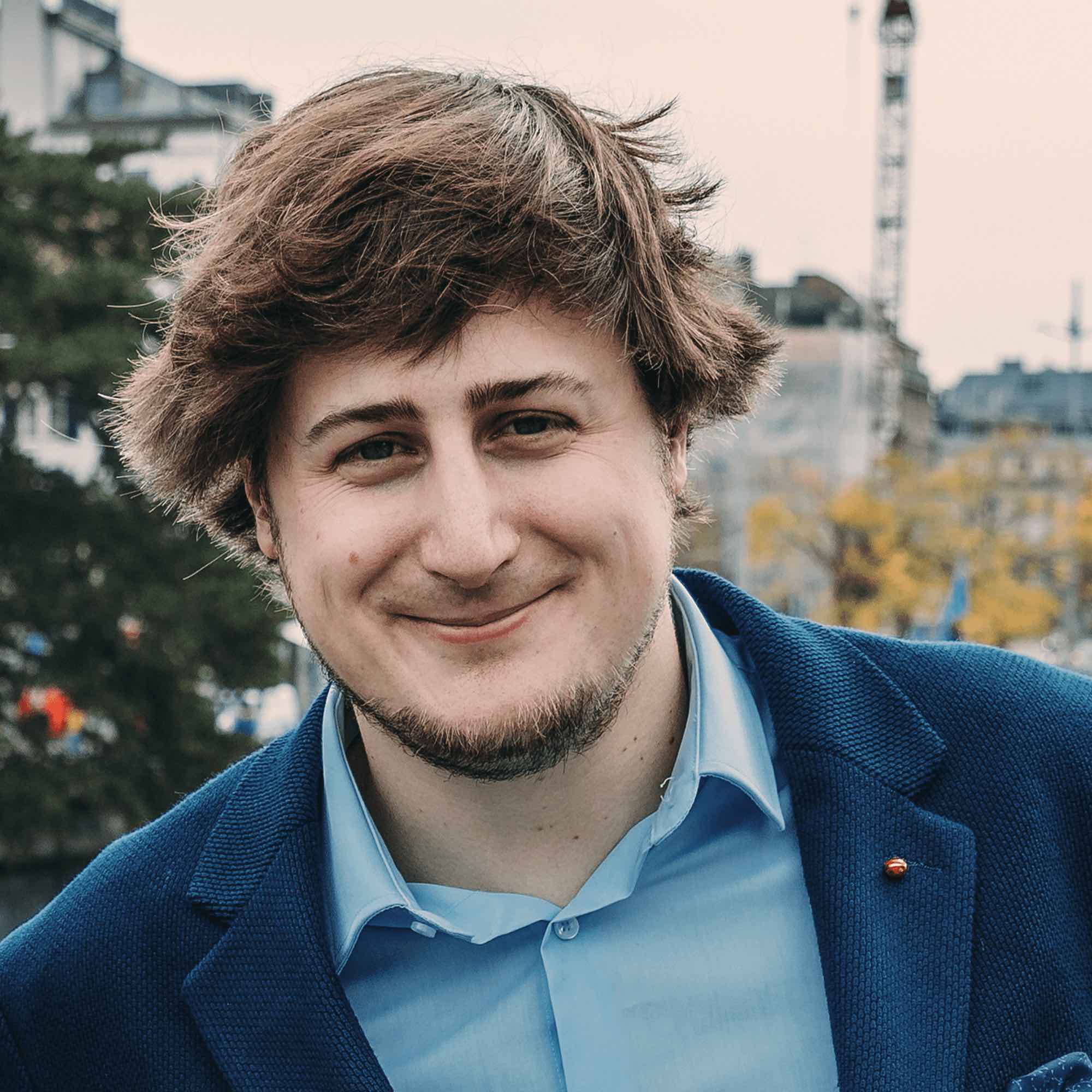
Gioele Zardini is the Rudge (1948) and Nancy Allen Assistant Professor at MIT's Department of Civil and Environmental Engineering (CEE), with affiliations to the Laboratory for Information and Decision Systems (LIDS) and the Institute for Data, Systems, and Society (IDSS). He holds a PhD from ETH Zurich and previously worked as a postdoctoral scholar at Stanford University. His research focuses on co-design of complex systems, autonomous systems, and game-theoretic modeling of transportation networks. Education: BSc and MSc in Mechanical Engineering and Robotics from ETH Zurich (2017–2019), PhD in 2023. He has held visiting roles at nuTonomy Singapore, Stanford, and MIT. Research interests include co-design methodologies, autonomous vehicle systems, compositionality in engineering, and strategic interactions in mobility networks. Recent work emphasizes scalable fleet coordination, safety-critical robotics, and user-centric transportation solutions. Notable awards include the 2024 ETH Doctoral Dissertation Award (Silver Medal), Best Paper at ITSC 2021, and federal grants for enhancing urban transit equity. He leads the Zardini Lab, fostering interdisciplinary collaboration in systems engineering and autonomy. Grants and advising: Received federal grants for transit accessibility projects. His work on Autonomy Talks has produced over 180 recorded lectures, promoting knowledge exchange in autonomous systems. Labs/Teams: Principal Investigator at LIDS, affiliate at IDSS, and founder of the Zardini Lab, focusing on systems co-design, mobility innovation, and game-theoretic frameworks.
Prof. Dr. Patrick Huber is a leading physicist and Institute Director at the Hamburg University of Technology (TUHH) , heading the Institute for Materials and X-Ray Physics (M-2) . He also leads the High-Resolution X-Ray Analytics of Materials group at DESY through a cooperative professorship. His research spans condensed matter physics , nanoporous materials , and X-ray analytics , with significant contributions to molecular water science and soft matter in confinement . Education: PhD in Physics (1999, Saarland University), Diploma in Physics (1995, Saarland University) Professional Career: Full Professor at TUHH (2020-present), Member of CRC 1615 (2023-present), Spokesperson for CMWS (2024-present), Cluster of Excellence BlueMat (2025) Research Interests focus on multi-scale material behavior under extreme confinement, particularly hierarchical porous silicon and silica systems . His work examines adsorption-induced deformation , elastocapillarity , fluid transport in nanopores, and metamaterial design principles using electrolytes , polymers , and liquid crystals . Fundamental studies include fluid interface thermodynamics and microscopic hydrodynamics . Scientific Awards include the Top Reviewer Award (2018) from Applied Physics Letters and the Dr.-Eduard-Martin Award (2000) for his dissertation. He contributes to 130+ publications with an h-index of 36 (2021). Advising and Grants involve supervising 18 doctoral and master's students , including Manuel Brinker , Marc Thelen , and Stella Gries . He participates in Collaborative Research Centre CRC 1615 , Cluster of Excellence EXC 3120 BlueMat , and the United Nations University Hub on Climate Engineering . Laboratory and Teams include the Institute for Materials and X-Ray Physics (M-2) at TUHH, the High-Resolution X-Ray Analytics group at DESY, and contributions to the Centre for Hybrid Nanostructures (CHyN) .
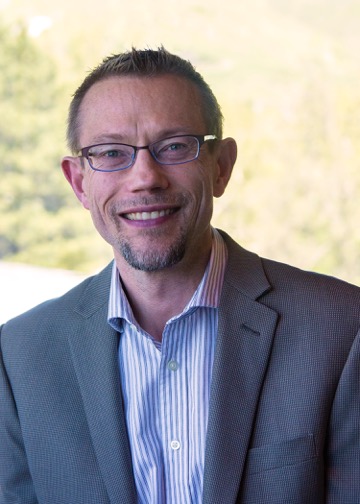
Mike Kirby is a Professor at the Kahlert School of Computing, University of Utah. He also holds adjunct professorships in the Department of Bioengineering and the Department of Mathematics. His current roles include leadership in scientific computing and informatics initiatives, including former directorships of the Utah Informatics Initiative (2019-2023) and the Multi-Scale Multidisciplinary Modeling of Electronic Materials (MSME) Collaborative Research Alliance (2016-2022). He has extensive experience in strategic research initiatives, including serving as Assistant Vice President for Research (2024-2025). Education: Dr. Kirby earned a PhD in Applied Mathematics (2002) and MS in Computer Science (2001) from Brown University, and a BS in Applied Mathematics and Computer Science from Florida State University (1997). Research Interests: Focus on large-scale scientific computing, physics-informed machine learning, computational science and engineering, high-order numerical methods, and visualization. His work bridges applied mathematics and computer science to address real-world engineering challenges. Publications: Over 150 peer-reviewed articles, including high-impact contributions in journals like Journal of Computational Physics and SIAM Journal on Scientific Computing . Recent work emphasizes machine learning for differential equations, topology optimization under uncertainty, and multi-fidelity modeling. Awards: Recognized for leadership in computational science and informatics, including contributions to University of Utah’s Clery Compliance Program. Advising & Grants: Supervised over 50 graduate students and postdocs. Secured funding from NSF, DOE, and industry partnerships, totaling millions in research grants. Active in interdisciplinary collaborations across engineering, materials science, and medicine. Labs/Teams: Scientific Computing and Imaging (SCI) Institute, Utah Informatics Initiative, and the Center for Multiscale Modeling of Electronic Materials (MSME).
Dr. Igor V. Pivkin is a Full Professor at the Institute of Computing within the Faculty of Informatics at the Università della Svizzera italiana (USI) in Lugano, Switzerland. His academic journey includes degrees from Novosibirsk State University (B.Sc./M.Sc. Mathematics), Brown University (M.Sc. Computer Science and Ph.D. Applied Mathematics), and postdoctoral research at MIT's Department of Materials Science and Engineering. His research focuses on multiscale/multiphysics modeling , numerical methods , and large-scale simulations of biological and physical systems. Key areas include biophysics, cellular/molecular biomechanics, stochastic modeling, and coarse-grained molecular simulations. He leverages high-performance computing (HPC) and particle-based methods to address complex biological phenomena. His work spans diverse applications, from understanding cellular mechanosensitivity and biofilm engineering to modeling cancer cell behavior and red blood cell dynamics in the spleen. His contributions bridge computational science, biotechnology, and biomedical research. He has published extensively in top-tier journals, with recent work advancing automated biofilm analysis, deep learning for microbial classification, and systems biology approaches to metal bioleaching. His lab collaborates on interdisciplinary projects, emphasizing computational innovation for real-world biological challenges.
Michael Lepech is a Professor of Civil and Environmental Engineering and Senior Fellow at the Woods Institute for the Environment at Stanford University. His research focuses on integrating sustainability into civil engineering through quantitative assessment and multi-scale modeling, particularly via the Sustainable Integrated Materials, Structures, Systems (SIMSS) framework. He also leads the Stanford Center at the Incheon Global Campus (SCIGC) in South Korea, exploring smart city technologies for urban sustainability. Education : PhD in Civil and Environmental Engineering (2006), MBA in Finance and Strategy (2008) from the University of Michigan. Research Areas : Sustainable infrastructure design, biopolymer composites, life cycle assessment, digital twinning, smart city technologies, and multi-physics deterioration modeling. Leadership : Director of SCIGC, advancing research on smart and sustainable urban environments in Songdo, South Korea. His recent publications focus on biopolymer-bound composites, traffic signal optimization, and life cycle sustainability analysis. He has received recognition as a Senior Fellow at Stanford’s Woods Institute for environmental research.
Toni Kotnik is an Associate Professor in the Department of Architecture at Aalto University, Finland. He holds dual expertise in mathematics and architecture, with a Ph.D. from the University of Zurich and a second degree in architecture. His roles include principal of d’HKL , a Zurich-based experimental architecture firm, and adjunct lecturer at institutions like Harvard University and the Bartlett School of Architecture. His research focuses on integrating science, engineering, and computation into architectural design, emphasizing structural innovation and sustainability. Education: Ph.D. in Mathematics (Dr. sc. Nat.), University of Zurich, 1999 Second degree in Architecture Research Interests: Computational design and generative systems Structural aesthetics and neuroaesthetics Sustainable urban and architectural solutions Parametric modeling and material systems Key Contributions: Advances in graphic statics and form-finding Design strategies for high-density urban environments Integration of AI and generative tools in architectural practice Recent Work Trends: Recent articles emphasize computational methods for industrial layout optimization, AI’s role in architecture, and embodied perception in structural design. His work bridges theoretical research with practical applications, such as the Singapore Hawker Centre redesign and experimental structures like hypar-combined shells. Awards: Aalto University Doctoral Thesis Awards (2022) Best Presentation Award (2019) Oscari-Vilamo Award (2023) Advising & Grants: Supervised 4 theses, including recipients of awards like the Metex Award shortlist. Active in international academic networks, serving on conference committees (e.g., International Association for Shell and Spatial Structures) and editorial roles (e.g., Automation in Construction journal). Labs & Teams: Leads the d’HKL studio, collaborating globally on projects like the AA/ETH Pavilion and the Hypercube for Gardens by the Bay. Research focuses on experimental design and material systems.
Pedram Mortazavi is an Assistant Professor at the University of Minnesota, based in the Civil Engineering Building, Minneapolis, with contact details including email pmortaza@umn.edu and office address 236 Civil Engineering Building, 500 Pillsbury Drive SE. His research centers on structural resilience through: Steel structures and large-scale experimental testing Cast steel energy dissipative systems and passive control devices (damping/isolation) Self-centering systems to mitigate residual deformations Advanced simulation methods including hybrid and multi-platform techniques Validation and codification of new structural systems for seismic applications Analysis of his 2023-2025 publications reveals concentrated work on eccentrically braced frames with replaceable cast steel links, hybrid simulation methodologies, and low-cost re-centering solutions. His research consistently targets enhanced seismic performance, ductility, and resilience via experimental validation and practical design innovations, with significant focus on friction mitigation in multi-axial testing and ultra-low cycle fatigue of structural components.
Lerrel Pinto is an Assistant Professor of Computer Science at New York University's Courant Institute, where he leads the General-purpose Robotics and AI Lab (GRAIL). His research focuses on enabling robots to generalize and adapt in unstructured environments through advancements in robot learning, decision making, and multimodal sensing. Before joining NYU, he completed a postdoc at UC Berkeley, a PhD in Robotics at Carnegie Mellon University, and an undergraduate degree in Mechanical Engineering at IIT Guwahati. Key research areas include large-scale robot learning, representation learning for sensory data, reinforcement learning for adaptability, and open-source robotics hardware. Notable achievements include the Sloan Fellowship (2025), NSF CAREER Award (2024), and Best Paper Awards at multiple robotics conferences. Pinto's lab has developed influential systems such as the AnySkin tactile sensing framework and the OPEN TEACH teleoperation system. Education highlights include a PhD from CMU (2019) under Abhinav Gupta, a postdoctoral stint with Alexei Efros and Pieter Abbeel at Berkeley, and undergraduate studies at IIT Guwahati. He has authored over 65 publications in top conferences like ICRA, NeurIPS, and CVPR. Pinto teaches courses on robotics, reinforcement learning, and AI at NYU. His service contributions include roles on program committees for ICML, NeurIPS, and IROS, as well as organizing workshops on topics like Dexterous Manipulation and Vision-Language Models for Robotics. His team actively collaborates through the GRAIL lab, with current projects exploring tactile sensing, zero-shot policy deployment, and multimodal robot learning systems. Ongoing research emphasizes bridging the gap between human and robotic dexterity through novel reward structures and adaptive control frameworks.
Giuliano Di Baldassarre is a Professor of Hydrology and Environmental Analysis at the Department of Earth Sciences, Uppsala University , Sweden. He serves as Head of Division for LUVAL (Air, Water and Landscape Sciences) and directs the Centre of Natural Hazards and Disaster Science (CNDS) (2016–2025). His work bridges water, environment, and society through interdisciplinary methods , focusing on disaster risk reduction, climate adaptation, and sustainable development. Education : Details not explicitly provided in the text. His research examines feedbacks between human activities and hydrological processes , including floods, droughts, and reservoir management . Key themes include social-ecological systems , inequalities in water crises , and policy implications of hydrological extremes . He has pioneered sociohydrology and human-water system modeling . Recent articles highlight global drought-flood interactions , urban water inequality , climate service maladaptation , and sociohydrological modeling . His work spans Nature Sustainability , Science Advances , and Hydrological Sciences Journal . Scientific Awards : International Hydrology Prize (Volker Medal) Plinius Medal (EGU) Witherspoon Lecture Award (AGU) European Research Council Consolidator Grant He led Panta Rhei - Everything Flows (2013–2022), IAHS’s global initiative on water-society interactions. Current efforts include transdisciplinary praxis and climate risk reduction frameworks .
Dr. Ralph Evins is an Associate Professor and Director of the Graduate Program in the Department of Civil Engineering at the University of Victoria. He holds affiliations with the Urban Energy Systems laboratory at Empa and ETH Zurich in Switzerland. His expertise spans building energy simulation, energy system optimization, and machine intelligence applications in sustainable design. Evins holds an MEng from Imperial College London and an EngD from the University of Bristol. His research focuses on computational problem-solving in energy systems, including surrogate modeling, optimization algorithms, and machine learning. He develops tools like the Holistic Urban Energy Simulation (HUES) platform and BESOS software framework to bridge building, district, and city-scale energy analysis. His work emphasizes holistic systems thinking, integrating energy hubs, thermal modeling, and digital twin technologies. Recent articles explore surrogate model refinement, inverse modeling for building characterization, and decarbonization strategies. He collaborates with industry to translate academic innovations into practical solutions. Evins advises students in energy systems and leads projects on net-zero building design, retrofit prioritization, and smart grid integration. His research addresses challenges in climate adaptation, energy efficiency, and sustainable urban development through interdisciplinary approaches.
Andreas Mortensen is a full Professor at École Polytechnique Fédérale de Lausanne (EPFL) in Switzerland, where he leads research at the Mechanical Metallurgy Laboratory (LMM) within the School of Engineering. His office is located in building MXD at EPFL's main campus in Lausanne. Institution: École Polytechnique Fédérale de Lausanne (EPFL) School: School of Engineering (STI) Department: Mechanical Metallurgy Laboratory (LMM) Position: Professor Professor Mortensen's research focuses on the mechanical properties of materials, particularly metal matrix composites, microcellular materials, and the fundamental aspects of metallurgy. His work spans from theoretical modeling to practical applications in materials processing and characterization. He has made significant contributions to understanding infiltration processes, fracture mechanics, and the behavior of materials at micro and nano scales. Analysis of Professor Mortensen's recent publications (2022-2025) reveals a continued focus on advanced materials characterization techniques, particularly nanoindentation and micro-scale mechanical testing. His research shows increasing attention to additive manufacturing processes, multi-scale material behavior, and the development of novel composite structures. The work spans fundamental investigations of dislocation dynamics and slip phenomena to applied research on brazing technologies and investment casting methods. Throughout his extensive career, Professor Mortensen has supervised numerous students and collaborated with researchers worldwide, contributing to the advancement of materials science and engineering. His laboratory has been instrumental in developing methodologies for characterizing material behavior across multiple length scales, from nano to macro.
Na Young Kim is an Associate Professor in the Department of Electrical and Computer Engineering at the University of Waterloo with affiliations at the Institute for Quantum Computing (IQC) and Waterloo Institute for Nanotechnology. She holds cross-appointments in the Departments of Physics and Astronomy and Chemistry. Her research focuses on developing large-scale quantum processors using novel materials and advanced technologies, including semiconductor quantum processors and multi-functional nanoscale devices. Dr. Kim leads the Quantum Innovation (QuIN) laboratory, pioneering projects in planar architecture design for quantum devices integrating electrical, optical, thermal, and mechanical functionalities. Prior to academia, she worked at Apple Inc. on small display technologies. She earned a BS in Physics from Seoul National University and a PhD in Applied Physics from Stanford University, where she specialized in mesoscopic transport in nanostructures. Her postdoctoral work expanded into quantum optics and nanophotonics through collaborations with international researchers. Current teaching includes courses on quantum mechanics, quantum computing algorithms, quantum information processing devices, and photonic systems. She actively supervises graduate students in quantum technology development and is accepting new applications. Research activities span quantum artificial intelligence, quantum security protocols, and nanotechnology applications. Her work bridges theoretical frameworks with experimental implementations in solid-state quantum systems.
Lande Liu is a Senior Lecturer in Chemical Engineering at the University of Huddersfield's School of Applied Sciences. Previously, he held a Lectureship at the University of Manchester (2010-2014), and earlier worked as an industrial consultant and research fellow at Leeds and Sheffield Universities. His academic journey began with a MEng in Chemical Engineering and a PhD in kinetic theory of aggregation from Sheffield (2004), preceded by a visiting PhD at Twente University (2002). Education: PhD in Chemical Engineering (University of Sheffield, 2004) Visiting PhD (Twente University, 2002) MEng in Chemical Engineering (Tsinghua University, 1999) BSc in Applied Mathematics (Tsinghua University, 1996) Liu's research focuses on multi-scale particle interactions (molecular to granular) using kinetic theory of aggregation, with applications spanning nanotechnology, pharmaceutical engineering, and sustainable chemical processes. His work aligns with UN Sustainable Development Goals for environmental protection and industrial innovation. Recent publications examine particle deposition in turbulent flows, enhanced heat exchanger designs, and nanofluid stabilization techniques. He teaches core chemical engineering topics including transport phenomena, unit operations, and process design. Active in collaborative research, Liu has partnered with institutions across Europe on projects involving spectroscopy, ultrasonics, and dynamic modeling. His technical expertise includes particle size analysis, tomography, and computational simulation of complex systems.