
Vittorio Solina is a Researcher at the Department of Mechanical, Energy and Management Engineering (DIMEG) of the University of Calabria, specializing in industrial systems simulation and digital twin technologies. His work spans Industry 4.0/5.0 applications, supply chain optimization, and human-robot collaboration. Affiliation: University of Calabria Academic Role: Researcher (Legge 240/10) Research Focus: Digital twins, simulation modeling, sustainable manufacturing His research emphasizes advanced simulation tools for decision support, including applications in Industry 4.0 , Smart Manufacturing , and Agri-Food Supply Chains . Recent work explores adaptive simulation optimization for Industry 5.0 and 5G-enabled robotics. Key publication trends include: (1) Digital twin integration for supply chain resilience (2024-2025), (2) Simulation automation methodologies (2025), and (3) Human-robot collaboration frameworks (2024).
جستجوی استاد راهنمای دانشگاهی
برای مسیر پژوهشیتان، استاد راهنما، استاد دانشگاه و پژوهشگر مناسب را پیدا کنید و با آنها ارتباط بگیرید.
نمایش ۱-۱۵ از ۲۷۶ استاد راهنما
اطلاعات پروفایلها از صفحات عمومی دانشگاهها گرفته شده و ممکن است بهروز نباشد.

Barbara Caputo is a Full Professor at Politecnico di Torino, leading the VANDAL Laboratory and directing the AI@PoliTo Interdepartmental Lab. She holds a double affiliation with the Italian Institute of Technology (IIT) and has held roles at Idiap-EPFL and Sapienza University. Her research focuses on AI, computer vision, domain adaptation, and federated learning. She contributes to national AI policy, including the Italian Strategy on AI and the National PhD on AI for Industry 4.0. She is an ERC Laureate and ELLIS Fellow, co-founding ELLIS society. Her work spans visual place recognition, action recognition, and cross-domain learning. Education: PhD in Computer Science from KTH Royal Institute of Technology (2005). Major roles include Rector’s Advisor on AI at PoliTo, Board Member of ELLIS, and coordinator of the AI & Industry 4.0 vertical in the National PhD program. Awards include ERC Laureate (2017), ELLIS Fellow (2019), and Inspiring Fifty Italy (2018). Her research emphasizes federated learning, domain adaptation, and AI ethics. Recent articles explore domain generalization, resource-efficient federated models, and AI-environment interactions. She collaborates with institutions like MUR, CNR, and the European Commission on AI policy and tech initiatives.
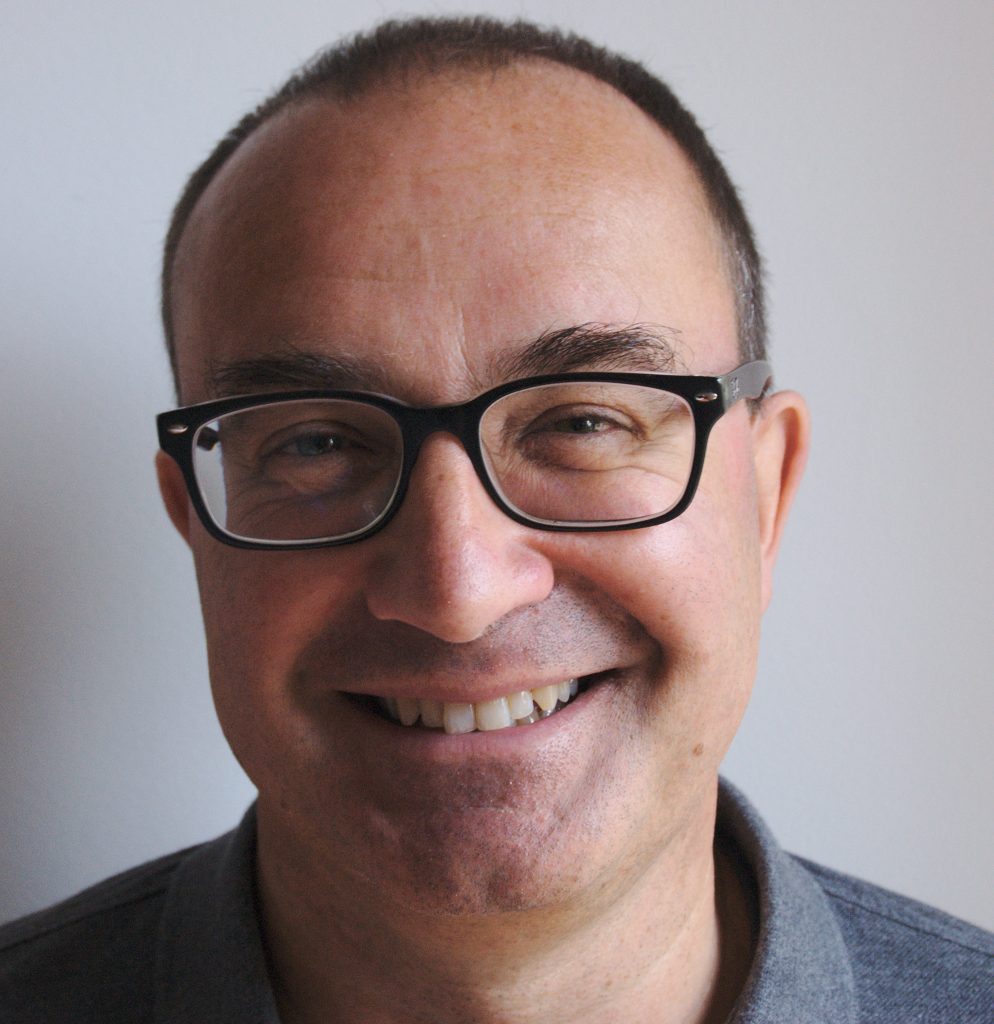
Michele Zorzi is a Professor of Telecommunications at the School of Engineering, University of Padova, Italy, where he has held a faculty position since 2003. He leads the SIGNET (Signal processing and Networking) Research Group, focusing on cutting-edge wireless networking challenges including mmWave communications and underwater networks. His extensive publication record exceeds 600 papers in top-tier journals and conferences, reflecting significant contributions to the field through both theoretical and experimental work. He received his Laurea Degree (1990) and Ph.D. (1994) in Electrical Engineering from the University of Padova. Prior academic appointments include Politecnico di Milano (1993-1996), University of California San Diego (1995-1998), and University of Ferrara (1998-2003), where he progressed from Associate Professor to full Professor. His educational trajectory demonstrates deep roots in Italian academia with international exposure. Professor Zorzi's research spans wireless communications and networking, with current emphases on mmWave networking for vehicular systems, underwater acoustic/optical communications, non-terrestrial networks, and AI-driven networking solutions. His group conducts experimental validations including at-sea trials for underwater systems and testbeds for vehicular networks. Key projects include PRATA for predictive QoS in autonomous driving and IoT-based environmental monitoring of the Venice Lagoon, demonstrating practical applications of theoretical work. Analysis of his 2022-2025 publications reveals strong trends in applying artificial intelligence to networking challenges across diverse environments. There is significant emphasis on vehicular networks (predictive QoS, teleoperated driving), underwater systems (acoustic/optical communications, AUV swarms), and satellite networks (Starlink integration, NTN security). Experimental validation in real-world scenarios like the Venice Lagoon monitoring project and underwater sea trials characterizes his applied research approach. His scientific accolades include: IEEE Fellow (2007) IEEE Communications Society Best Tutorial Paper Award (2008, 2019) Stephen O. Rice Best Paper Award (2018) Multiple best paper awards at IEEE conferences (2005-2020) As principal investigator for numerous European and US research projects plus 20+ industry-funded initiatives, Professor Zorzi has mentored over 35 PhD students and post-docs. Graduates now hold prominent positions at institutions including Stanford, UCSD, CTTC, and Huawei. His SIGNET group maintains active international collaborations and contributes to open-source networking tools via GitHub, demonstrating commitment to community engagement. The SIGNET Research Group, housed within the Department of Information Engineering, operates specialized experimental facilities for mmWave and underwater communications. Current initiatives include AI-based predictive QoS frameworks for vehicular networks, underwater optical communication systems using ultraviolet light, and large-scale IoT deployments for environmental monitoring. The group's GitHub presence indicates strong open-science practices, while recent sea trials confirm hands-on experimental capabilities beyond theoretical work.

Giorgio Grisetti is a Full Professor at Sapienza University of Rome within the Department of Systems and Computer Science, maintaining active research roles in the RoCoCo lab at Sapienza since November 2010 and the Autonomous Intelligent Systems Lab at Freiburg University where he previously served as a Post Doc under Wolfram Burgard starting in 2006. His educational background includes a M.Sc. in Computer Engineering from the University of Rome (2001) and a Ph.D. from Sapienza University of Rome's Intelligent Systems Lab (2006), supervised by Daniele Nardi. His doctoral thesis focused on SLAM using Rao-Blackwellized particle filters. Dr. Grisetti's research centers on mobile robotics with emphasis on robust solutions for autonomous navigation systems. His work spans theoretical and practical advancements in Simultaneous Localization and Mapping (SLAM), robot localization, path planning, and sensor fusion, particularly leveraging LiDAR and multi-sensor configurations. Recent publications demonstrate strong focus on optimization techniques, sensor calibration, and real-time performance for autonomous systems operating in complex environments. His publication trends reveal deep specialization in LiDAR-based SLAM (7 of 15 recent articles), bundle adjustment methods (4 articles), and sensor calibration/perception (3 articles), with consistent contributions to top robotics venues like IEEE Robotics and Automation Letters and ICRA. Key recognitions include: Nomination for the best IROS paper award (2010) Open Source achievement award from Willow Garage (2010) Best paper award at the International Conference and Exhibition on Unmanned Areal Vehicles (2010) Best Paper award at ICRA 2009 (2009) His research is conducted through the RoCoCo lab at Sapienza University of Rome and the Autonomous Intelligent Systems Lab at Freiburg University, focusing on developing foundational algorithms for mobile robot autonomy. Current projects emphasize robust perception systems, optimization frameworks for sensor fusion, and practical implementations for real-world navigation challenges.
- Mobile Robotics
- SLAM
- Robot Localization
- +۳ مورد دیگر
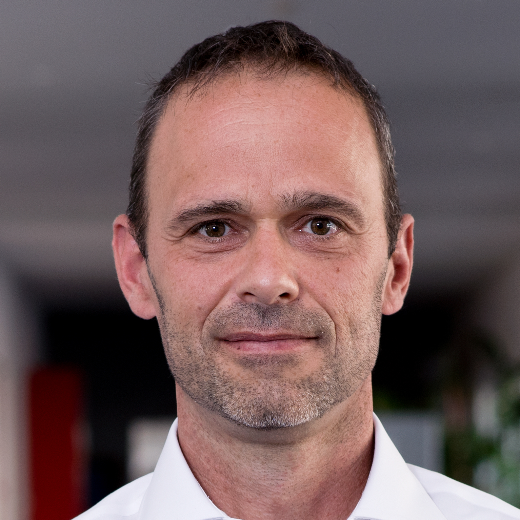
Oswald Lanz is a tenured full professor at the Faculty of Engineering of the Free University of Bozen-Bolzano , leading the Visual Computing Lab . He holds a Ph.D. in Computer Science and a Mathematics degree from the University of Trento. Prior to his current role, he was a researcher and head of research at FBK Trento. He is an endowed professor collaborating with Covision Lab , an AI hub in Bressanone, and coordinates the board of professors for the PhD in Computer Science program since 2025. His research focuses on Computer Vision, Deep Learning, and Video Analytics , with applications in sports technology, medical imaging, and industrial automation. Key achievements include the Amazon AWS Machine Learning Research Award (2020) , ACM Multimedia Best Paper (2015) , and Best Student Paper at ICIAP (2007) . He co-organized the ELLIS-VISMAC Winter School (2025) and chaired ICIAP 2019 . His work spans novel view synthesis, action recognition, and anomaly detection, supported by patents in video tracking and detection. He teaches courses like Deep Learning and Artificial Intelligence in undergraduate and graduate programs. Recent projects such as 5VREAL integrate 5G, edge computing, and AI for sports analysis. His collaborations bridge academia and industry, exemplified by his role in Covision Lab and multidisciplinary initiatives like DSS4LCO for food supply chains. Lanz’s publications emphasize spatiotemporal modeling, neural architecture search, and hybrid machine vision systems.
- Computer Vision
- Deep Learning
- Machine Learning
- +۶ مورد دیگر
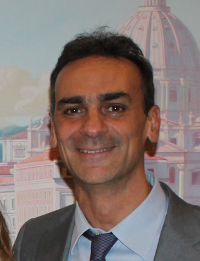
Luca Iocchi is a Full Professor at Sapienza University of Rome, where he teaches in the Master in Artificial Intelligence and Robotics program. He is affiliated with the Department of Computer, Control, and Management Engineering and the Faculty of Engineering of Information, Computer Science and Statistics. Iocchi serves as an Associate Editor for Artificial Intelligence Journal and has been the scientific coordinator of Spoke of PNRR project FAIR (Future AI Research). His educational background includes: Master in Engineering in Computer Science (Laurea in Ingegneria Informatica) cum Laude, Sapienza Università di Roma, 1995 PhD in Engineering in Computer Science (Dottorato in Ingegneria Informatica), Sapienza Università di Roma, 1999 Professor Iocchi's research focuses on cognitive robotics, task planning, multi-robot coordination, robot perception, robot learning, human-robot interaction, and social robotics. His work has significant applications in security, surveillance, and environmental monitoring. He has published over 200 referred papers with an h-index of 46 (Google Scholar). His research bridges theoretical AI with practical robotic systems operating in real-world environments, with a particular emphasis on developing intelligent systems that can interact effectively with humans. His recent publications show a strong trend toward multi-agent reinforcement learning, trust modeling in human-AI teams, UAV coordination, and planning systems. There's a clear focus on making robotic systems more reliable, efficient, and capable of operating in complex real-world scenarios like healthcare facilities and smart cities. His work increasingly integrates formal planning approaches with machine learning techniques. Professor Iocchi has received numerous scientific awards: 1999 Top Paper Award WebNet'99 2006 Best Paper Award RoboCup 2006 2008 Best Robotics Demo Award AAMAS 2008 2014 Best Paper Award For Engineering Contribution RoboCup 2014 2017 RoboCup@Home SSPL 2017 - 3rd place 2018 Canada-Italy Innovation Award 2019 Best Paper Award For Engineering Contribution RoboCup 2019 As an academic advisor, Iocchi has directed the PhD Program in Engineering in Computer Science from 2020 to 2023. He has been Principal Investigator for numerous research projects including SciRoc (European Robotics League), AI4EU (European AI project), BUBBLES, AIPlan4EU, ROSITA, Trust Your Agents, and FAIR. His research has been supported by EU H2020 programs, national grants, and industry collaborations, demonstrating strong connections between academia and practical applications. Professor Iocchi is actively involved with the Cognitive Cooperating Robots Lab (LabRoCoCo) and is a key member of the RoboCup Federation, having served as Vice-President from 2019 to 2024. He has played a significant role in benchmarking domestic service robots through RoboCup@Home and the European Robotics League Service Robots (ERL-SR), which he helped establish. His leadership in organizing international scientific robot competitions has been instrumental in advancing the field of service robotics.
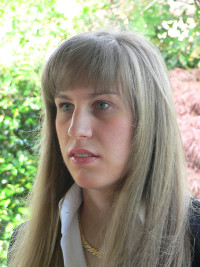
Giulia Giordano is a Full Professor in the Department of Industrial Engineering at the University of Trento, Italy, where she leads the Dynamical Networks and Systems Biology research group. She also holds a dual appointment as Visiting Professor and Delft Technology Fellow at the Delft Center for Systems and Control, Delft University of Technology, The Netherlands. Her career includes previous positions as Assistant Professor at Delft University of Technology (2017-2019), Postdoctoral Research Fellow at Lund University, Sweden (2016-2017), and Research Fellow at the University of Udine, Italy (2016). Giulia earned her Ph.D. in Industrial and Information Engineering: Automation (Excellent) from the University of Udine with a thesis titled "Structural Analysis and Control of Dynamical Networks." She completed her M.Sc. and B.Sc. in Electrical Engineering (both Summa cum laude) at the same institution. She also undertook research visits at Caltech (2012) as a SURF Fellow and at the University of Stuttgart (2015) as a DAAD Research Scholar. Her primary research focuses on the analysis and control of dynamical networks with applications in systems biology, mathematical ecology, and mathematical epidemiology. She develops mathematical frameworks that bridge control theory, network theory, and dynamical systems to address complex problems in biological systems. Her recent work spans epidemic modeling, opinion dynamics, biochemical networks, and neurological disorders, with a particular emphasis on structural analysis of networked systems. She employs both theoretical and computational approaches to understand system behavior under uncertainty. Giulia's publications reveal a strong interdisciplinary focus, spanning from theoretical control systems to practical applications in epidemiology and biology. Her recent work shows increasing emphasis on epidemic modeling (particularly related to mpox and SARS-CoV-2), network synchronization, and the application of control theory to biological phenomena like fibromyalgia pathogenesis and opinion formation. Many of her papers appear in top-tier control journals including Automatica and IEEE Transactions on Automatic Control. 2024: Outstanding Service as Associate Editor of IEEE Control Systems Letters 2021: SIAM Activity Group on Control and Systems Theory Prize 2020: Outstanding Reviewer, Annals of Internal Medicine 2017: NAHS Best Paper Prize and EECI PhD Award 2016: Outstanding TAC Reviewer, IEEE Transactions on Automatic Control Giulia actively mentors students and postdoctoral researchers, currently supervising five postdoctoral researchers and two Ph.D. students at the University of Trento. She has advised numerous M.Sc. and B.Sc. students on topics ranging from bio-inspired modeling to optimal control of epidemic systems. Her research is supported by competitive grants including the ERC Starting Grant INSPIRE (Integrated Structural and Probabilistic Approaches for Biological and Epidemiological Systems). She serves as Associate Editor for IEEE Control Systems Letters and Automatica, and is a Senior Member of IEEE and the Control Systems Society. Giulia leads the Dynamical Networks and Systems Biology research group at the University of Trento, which maintains strong international collaborations across Europe and North America. The group's work combines theoretical advances in control theory with practical applications to pressing problems in public health and biological systems, demonstrating the power of mathematical approaches to understanding complex phenomena in the life sciences.
- Automatic control
- Complex networks
- Control systems
- +۱۲ مورد دیگر
Daniele Loiacono is an Associate Professor at Politecnico di Milano's Department of Electronics, Information, and Bioengineering (DEIB), affiliated with the Artificial Intelligence and Robotics Lab (AIRLab). His research focuses on interdisciplinary applications of Artificial Intelligence, Machine Learning, and Deep Learning in medical imaging, radiation therapy, and procedural content generation for games. He leads projects in synthetic image generation for radiotherapy quality assurance, automated treatment planning, and bias analysis in medical AI systems. Key research areas include medical image synthesis using GANs, radiation therapy optimization, and algorithmic game design. His contributions span clinical applications such as total marrow irradiation (TMI) planning and lymph-node segmentation, alongside innovations in shader generation and interactive evolutionary tools for game development. Loiacono collaborates on multi-center studies to validate AI-driven workflows in healthcare and has pioneered methods combining lean Six Sigma with machine learning for treatment process improvement. His work bridges clinical medicine and computer science, addressing challenges in radiation oncology, anatomical imaging, and procedural content automation. The AIRLab serves as a hub for his research, integrating AI advancements into real-world medical and engineering solutions.

Michael Haller is a Full Professor at the Faculty of Engineering, Free University of Bozen-Bolzano, Italy, where he serves as founder and director of the Media Interaction Lab. Based at NOI Techpark, his work focuses on next-generation human-computer interfaces, leading a team of over 10 researchers and students in developing innovative interaction technologies for automotive and wearable applications. He earned his Dipl.-Ing. (1997), Dr. techn. (2001), and Habilitation (2007) degrees from Johannes Kepler University of Linz, Austria. Haller's research centers on Human-Computer Interaction with specialized expertise in Smart Textile Interfaces, Physical Prototyping, and Ubiquitous Computing. His lab pioneers user-centered design of next-generation interfaces through industry collaborations with BMW, KTM, SEFAR, and Tratter Engineering. Current work emphasizes sustainable materials for flexible sensors, touchless interaction, and reducing plastic components in automotive interfaces while maintaining ergonomic functionality. His 15 most recent publications (2023-2025) demonstrate a clear trajectory toward sustainable sensor technologies, particularly biodegradable substrates (wood, animal-based, stone, gelatin) for temperature and pressure sensing. These works bridge materials science with HCI, targeting automotive interfaces, health monitoring, and eco-fashion through textile-based solutions that prioritize environmental sustainability without sacrificing performance. His scientific accolades include: Erwin Schrödinger Fellowship Award Google Research Award Europrix Top Talent Award Best ACM SIGGRAPH Emerging Technologies Award Microsoft Imagine Cup 7 Best Paper and Honorable Mention Awards at ACM CHI and ACM UIST Haller directs major research projects including SmartCover (2024-2026) for developing smart laminated dashboards that replace plastic components with gesture-based textile interfaces, and iPlayground (2024-2026) establishing an industrial-scale smart textile lab. He mentors researchers in prototyping and empirical evaluation, with industry grants supporting the development of washable touchless fabrics and next-generation vehicle interfaces. His work bridges academic research and commercial product development through direct industry partnerships. The Media Interaction Lab operates from NOI Techpark with industrial knitting/sewing machines, confocal microscopes for surface analysis, and a collaborative Idea Space for rapid prototyping. Current infrastructure enables development of warp-knitted smart textiles for automotive consoles and sustainable fashion applications, focusing on reducing plastic waste while creating intuitive touchless interaction experiences through magnetoresistive and inductive sensing technologies.
Giuseppe Bruno Averta is a Fixed-term Researcher at the Department of Control and Computer Science (DAUIN), Polytechnic University of Turin, and a member of the Interdepartmental Center SmartData@PoliTO - Big Data and Data Science Laboratory. He is affiliated with the College of Computer, Film and Mechatronics Engineering and contributes to national and international research in artificial intelligence and robotics. Averta has held a Visiting Researcher position at the Massachusetts Institute of Technology (MIT) from January to June 2019. His research interests include Computer Vision, Deep Learning, Robotics, Neural Architecture Search, Egocentric Vision, Embodied Intelligence (Edge/Tiny ML), and Human-Robot Collaboration . His work is aligned with ERC sectors in Artificial Intelligence, Machine Learning, and Robotics, and contributes to UN SDGs such as Good Health and Well-being, Industry Innovation and Infrastructure, and Responsible Consumption and Production. The recent publication trends highlight his focus on vision-language models (e.g., CLIP), egocentric action recognition, efficient neural architectures (e.g., BiSeNet, MaskFormer), and robust deep learning. His research bridges theoretical advances with practical robotics applications, including grasping and manipulation. Scientific Awards and Recognitions: Georges Giralt PhD Award (euRobotics AISBL, 2021) Wiley Best Reviewer (Wiley, Italy, 2021) Best Paper Award, ICUMT 2015 (2017) Fellow, ELLIS Network of Excellence (2022–) Fellow, DAAD AInet (2022–) DAAD AInet Fellowship Advising and Grants : Averta supervises multiple PhD students in the Artificial Intelligence and Computer and Systems Engineering doctoral programs at Politecnico di Torino. He is involved in teaching at both the master’s and doctoral levels, including courses on Robot Learning and Machine Learning and Deep Learning. He is also a co-inventor on a national and international patent for a method and algorithm for the automatic design of neural networks through machine learning, indicating active research funding and innovation. Labs and Research Groups : He is a member of the SmartData@PoliTO center and contributes to research in the VANDAL PoliTO lab (as indicated by his student Davide Buoso). His work is deeply integrated with teams working on egocentric vision, embodied AI, and neural architecture search.
- Computer Vision
- Deep Learning
- Robotics
- +۹ مورد دیگر
Luigi Brunoمشاهده پروفایل
دانشیار
Luigi Bruno is an Associate Professor of Machine Design at the Department of Mechanical, Energy and Management Engineering (DIMEG), University of Calabria. He has held this position since 2014, following 12 years as an Assistant Professor at the same institution and Visiting Professorships at IIT Gandhinagar (2012), University of Alabama at Birmingham (2013-2017), and Free University of Bozen-Bolzano (2021). 1999 : Master's in Mechanical Engineering, University of Calabria (110/110 cum laude) 2003 : PhD in Mechanical Engineering, University of Pisa His research interests span: Experimental Mechanics : Pioneering speckle interferometry for micro-displacement measurement and residual stress analysis. Materials Science : Elastic characterization of anisotropic materials, biomedical applications of soft substrates, and 3D-printed composites. Biomedical Engineering : Mechanical behavior of biological tissues, ocular biomechanics, and dental implant material testing. Recent research trends focus on: Integrating artificial muscles into rehabilitation devices Advancing full-field optical measurement via microCT/DVC Optimizing 3D printed polymer adhesion for industrial components Exploring neuronal biomechanics on soft surfaces Scientific contributions include: CS2007A00010 patent for dual-focus speckle interferometers Deputy Editor of Optics and Lasers in Engineering (2019-present) Guest Editor for special issues on optical methods in experimental mechanics and nanobiotechnology Academic leadership extends to coordinating Mechanical Engineering committees (2021-present), serving on editorial boards, and organizing international conferences like AIAS National Conference (2018). He has secured multiple MIUR research grants and industry collaborations with Alfagomma, 3DNA, and Ferrovie della Calabria. His laboratory, Mechanics of Materials and Structures , supports both research and teaching activities with advanced optical measurement systems and computational tools for mechanical design.
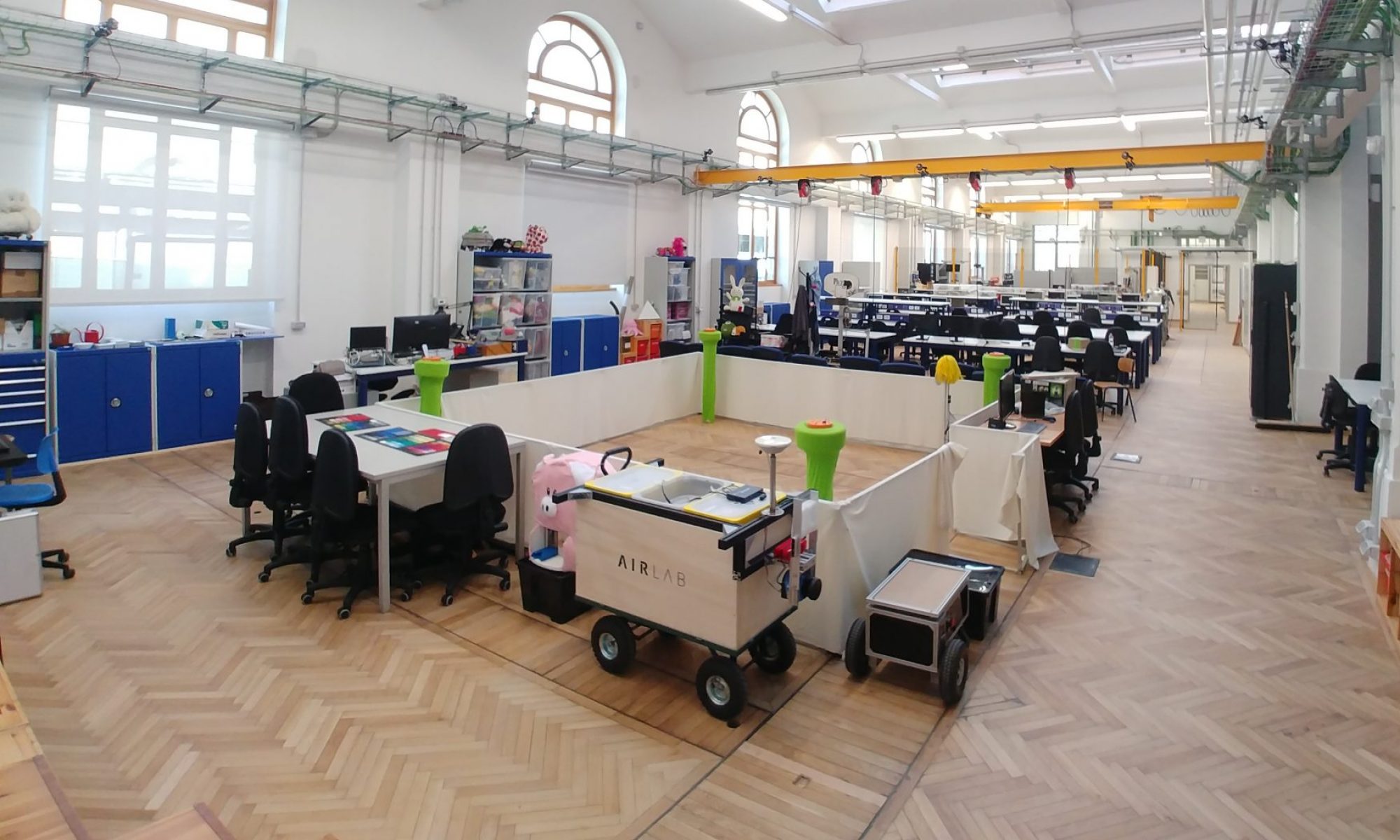
Andrea Bonarini is a Professor at the Department of Electronics, Information, and Bioengineering (DEIB) within the School of Industrial and Information Engineering at Politecnico di Milano. His research focuses on Artificial Intelligence , Robotics , and Human-Robot Interaction , particularly in assistive technologies for children with disabilities and autism therapy. Key Research Areas: Reinforcement Learning, Social Robotics, Affective Computing, Accessibility in Robot Design Notable Projects: Development of frameworks like Mushroomrl and datasets like POLIMI-ITW-S for robotics research His recent publications highlight advancements in playful robotics for neurodevelopmental disorders, emotion projection in non-bio-inspired robots, and safety experiments for small social robots interacting with children. He also contributes to ethical, social, and psychological challenges in robotics applications.
- Artificial Intelligence
- Robotics
- Machine Learning
- +۴ مورد دیگر
Donato Romanoمشاهده پروفایل
دانشیار
Donato Romano serves as Associate Professor at The BioRobotics Institute of Scuola Superiore Sant'Anna, Italy, where he coordinates the Bio-Robotic Ecosystems Lab and co-founded the spin-off company HUBILIFE srl. His interdisciplinary work bridges robotics, biology, and AI to develop biohybrid systems for biodiversity preservation, sustainable environmental management, and life support in extreme scenarios including space exploration. With over 90 publications and an H-index of 27 (Scopus, March 2025), he has established significant academic leadership through editorial roles across 12+ international journals. Romano's educational foundation includes advanced degrees with honors: an M.Sc. in Agriculture Science and Technologies (2014) and a PhD in BioRobotics (2018), both from Scuola Superiore Sant'Anna. His academic journey includes visiting scholar positions at Khalifa University and substantial industry-academia collaboration through HUBILIFE srl, which commercializes bioinspired devices for human daily life improvement. His research program focuses on bioinspired and biomimetic robotics with particular emphasis on animal-robot interaction, biohybrid systems, and natural intelligence. Key projects address critical global challenges: SENSORBEES develops biohybrid environmental surveillance for ecological monitoring; REGOLIFE investigates lunar soil-terrestrial organism interactions for space agriculture; and OCEAN ROBOCTO explores marine ecosystem solutions. This work demonstrates a strategic progression from fundamental behavioral studies toward applied ecological and extraterrestrial systems. Analysis of his recent publications reveals strong trends in AI-driven behavioral analysis, with deep learning increasingly applied to entomological studies and pest management. The research spans agricultural applications (precision monitoring traps, larval detection systems), ecological conservation (biodiversity surveillance), and extreme-environment adaptation (lunar regolith studies). A distinctive feature is the consistent integration of biohybrid approaches where living organisms and robotic systems create synergistic capabilities exceeding either component alone. Romano's scientific recognition includes election as Junior Fellow of the Italian Academy of Engineering and Technology (2025), the Lucani fuori dal Comune award (2024), and multiple best-thesis prizes. His editorial leadership spans high-impact journals including IEEE Transactions on Medical Robotics and Bionics and Pest Management Science, where he serves as Associate Editor. As principal investigator, Romano coordinates major international projects totaling over €15M in funding: HORIZON-EIC's SENSORBEES (2024-2029), ASI's REGOLIFE (2024-2027), National Geographic's OCEAN ROBOCTO (2024-2026), and PRIN's COSMIC (2023-2025). His teaching portfolio includes PhD courses in Biosystems for Biorobotics and M.Sc. instruction in Bionics Engineering at Scuola Superiore Sant'Anna and University of Pisa. The Bio-Robotic Ecosystems Lab under Romano's direction pioneers biohybrid technologies where living organisms and robotic systems create integrated solutions. Current initiatives include SENSORBEES' environmental monitoring swarms, REGOLIFE's moonworm colonization systems, and HUBILIFE's commercial vector-control devices. The lab maintains active collaborations with space agencies, agricultural institutes, and conservation organizations, positioning biohybrid systems as next-generation tools for planetary-scale challenges.
Elisa Capello is a Full Professor of Flight Mechanics at Politecnico di Torino, Department of Mechanical and Aerospace Engineering (DIMEAS). She serves as Contact person for internationalization of innovation and technology transfer, Member of the Interdepartmental Center PIC4SeR (PoliTO Interdepartmental Center for Service Robotics), and Deputy Coordinator of the Doctoral College in Aerospace Engineering. With over 100 publications, her work spans aerospace engineering, control systems, and robotics. Her research focuses on flexible spacecraft, flight control systems, robotic systems, and unmanned aerial vehicles. She designs guidance, control and navigation systems for aircraft and spacecraft, develops control systems for wind turbines and wind farms, studies flight mechanics of fixed and rotary wing aircraft, tests unmanned aerial systems, and plans mission control for autonomous systems. Her work bridges theoretical control systems with practical aerospace applications, with strong emphasis on experimental validation. Her recent publications demonstrate a strong focus on advanced control techniques for aerospace applications, particularly in UAV control, spacecraft formation flying, and robotic systems. There's a clear trend toward integrating machine learning with traditional control methods, as seen in transformer-based MPC and multimodal learning approaches. Her work spans theoretical development, simulation, and experimental validation across multiple platforms. Member of the Editorial Board of IEEE Control Systems Society (2019-) Member of the Scientific Committee - IEEE Technical Committee Aerospace Control (2016-) International FAI Judge for Helicopter Championship (2009-2015) Professor Capello supervises numerous PhD students working on topics including autonomous aerial vehicles, path planning, risk analysis, spacecraft dynamics, and control. She leads multiple research projects including CREATEFORUAS (2019-2022), Assessment of drag free control systems for L3 gravity wave observatory (2018-2019), and Guidance, Navigation and Control algorithms for in-Orbit servicing (2020-2021). Her international collaborations include institutions in the USA, Japan, and Germany. She is actively involved with the Flight Dynamics, Control and Simulation research group at DIMEAS and the DRAFT (DRones Autonomous Flight Team) at PoliTo, where she mentors students in developing autonomous flight capabilities for various applications.
Andrea Garulli is a Professor in Control Systems at the Department of Information Engineering and Mathematics (DIISM), University of Siena. He served as Dean of the Faculty of Engineering (2011-2012) and Director of DIISM (2015-2021). His research focuses on control systems, including system identification, state estimation, robust control, multi-agent systems, and aerospace applications. He co-authored the book *Homogeneous Polynomial Forms for Robustness Analysis of Uncertain Systems* and developed the LFR_RAI toolbox for robustness analysis of uncertain models. Garulli has led projects like ACANTO (social robot navigation) and DALi (autonomous navigation for elderly care). His teaching includes courses on system dynamics, state estimation, and filtering. He is an Associate Editor for *Automatica* and has contributed to initiatives like the Automatic Control Telelab for remote experiments with mobile robots.
- Control Systems
- Aerospace Engineering
- Robotics
- +۵ مورد دیگر