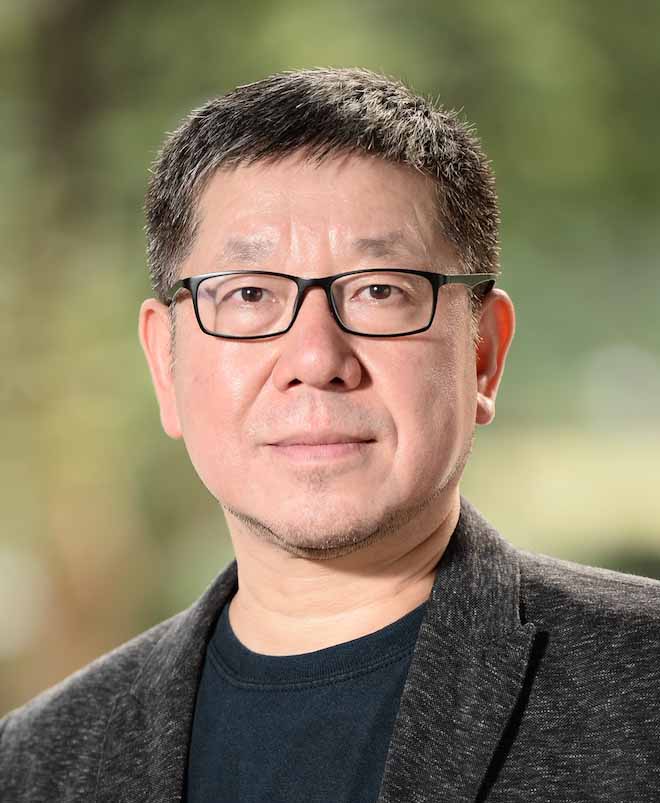
Zhang Jun is a Full Professor of Physics and Mathematics and Co-director of the Applied Math Lab at the Courant Institute, New York University (NYU), USA. He also serves as Co-director of the NYU-ECNU Joint Physics Research Institute in Shanghai, China, and holds an Affiliated Professorship at NYU Shanghai. His research focuses on experimental fluid physics, particularly fluid-structure interactions in biological and geophysical contexts, including bio-locomotion, flapping wings, and continental dynamics. Zhang has authored over 290 invited talks and peer-reviewed papers in journals like Nature and Physical Review Letters. He received the 2017 APS Fellow award for pioneering work in fluid-structure interactions. Beyond academia, he is a freelance illustrator with plans to publish a book of sketches. Education: PhD in Physics (1994), Niels Bohr Institute, University of Copenhagen PhD Candidate (1990-1991), Hebrew University of Jerusalem BSc in Physics (1985), Wuhan University Research Interests: Zhang’s work bridges physics, biology, and geophysics, exploring phenomena like flapping wing aerodynamics, animal locomotion, and Earth’s core-mantle interactions. His experiments often use novel fluid dynamics setups to model natural systems. Awards: APS Fellow (2017) Milton Van Dyke Award (2014) Antarctica Service Medal (2015) Labs & Teams: Co-directs the Courant Institute’s Applied Math Lab, specializing in fluid dynamics experiments. Collaborates with institutions globally, including NYU Shanghai and Aix-Marseille University.
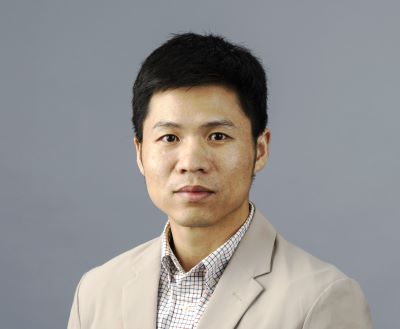
Dr. Chen Zhu is an Associate Research Professor in the Electrical and Computer Engineering department at Missouri University of Science and Technology. He holds a B.E. in Optoelectronics Information Engineering from Huazhong University of Science and Technology (2015) and a Ph.D. in Electrical Engineering from Missouri S&T (2021). His research focuses on fiber optic and microwave sensors for harsh environments, particularly in sensing applications such as displacement, humidity, and strain measurement. Dr. Zhu has been recognized with prestigious awards including the IEEE Instrumentation and Measurement Society Graduate Fellowship (2018–2019) and the IEEE St. Louis Section Outstanding Graduate Student Award (2020). His work integrates microwave photonics, machine learning, and advanced interferometric techniques to develop high-sensitivity sensors. Key research areas include Vernier-effect-based optical fiber sensors, microwave resonators, and distributed sensing systems. Recent advancements include respiratory rate monitoring via all-fiber strain sensors and quasi-distributed acoustic sensing using optical path difference demodulation. Publications span topics like fiber Bragg gratings, Fabry-Perot interferometers, and sensor demodulation algorithms. His research emphasizes practical applications in biomedical monitoring, structural health, and industrial environments. Collaborations involve interdisciplinary approaches combining material science, signal processing, and sensor miniaturization.
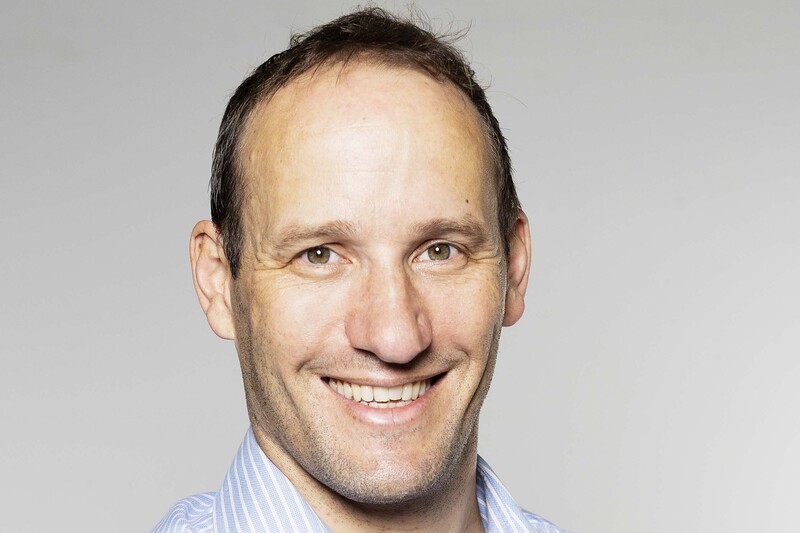
Reza Rashidi is an Associate Professor of Practice in the Department of Mechanical and Aerospace Engineering at the University at Buffalo's School of Engineering and Applied Sciences. His research focuses on energy harvesting, microfabrication, medical devices, and sensor technologies. He holds a PhD in Mechanical Engineering from the University of British Columbia (2010), an MSc in Materials Engineering from the University of Tehran (1995), and a BSc in Materials Engineering from Sharif University of Technology (1993). Rashidi's research interests span design processes, MEMS, finite element analysis, and materials selection. Notable achievements include winning the 2022 Allegany County Startup Collegiate Competition (Grand Prize) and the 2011 BC Innovation Council Award. His work emphasizes practical applications, such as triboelectric energy harvesters, magnetic fluid-based sensors, and 3D-printed biomedical devices. He actively collaborates with industry through sponsored projects and has pioneered hands-on educational approaches to microfabrication. His lab develops sensors for biomedical monitoring, energy-efficient systems, and smart materials. Rashidi’s publications bridge theoretical and applied engineering, addressing challenges in energy conversion, wearable technology, and sustainable manufacturing.
Ben Thornber is a Professor of Thermofluids in the School of Mechanical and Aerospace Engineering at Queen’s University Belfast. He previously served as Associate Dean Research for the Faculty of Engineering at the University of Sydney, leading research strategy and equity initiatives. His research focuses on fundamental challenges in flow, turbulence, and combustion, with applications to rotorcraft, scramjets, wind turbines, and automotive aerodynamics. He has developed advanced numerical models and methods, attracting significant research funding from councils and industry. Thornber is a Fellow of the Royal Aeronautical Society and actively promotes outreach, including collaborations with the Science Museum and ABC News. His group’s work spans high-speed propulsion, turbulent mixing, and aerodynamic optimization, with notable contributions to Richtmyer-Meshkov instability studies and detached-eddy simulations. Thornber holds a PhD from the University of Sydney and has supervised numerous students, including alumni like Dr. Michael Groom (CSIRO Fellow) and Dr. Zeeshan Rana (Cranfield University Senior Lecturer). His research portfolio includes over 60 peer-reviewed articles, with recent emphasis on spherical implosions, actuator surface modeling, and wind farm aerodynamics. He advocates for diversity in STEM, particularly encouraging underrepresented groups to pursue PhDs in fluid dynamics and CFD. Education: PhD in Aerospace Engineering (University of Sydney) Affiliations: Royal Aeronautical Society Fellow, European Space Research Technology Centre (ESTEC) Key Projects: LUMEN Demonstrator Heat Transfer, Ship-Helicopter Dynamic Interface Modeling, DLR Collaborations His scientific outreach includes media appearances and educational initiatives, emphasizing public engagement in engineering and fluid dynamics. Current research trends highlight compressible mixing, turbulence modeling, and high-performance CFD solver development for industrial and aerospace applications. Grants & Awards: Athena Swan Bronze Award contributor, Multi-million-pound research funding from industry and councils
Daniel Lathrop is a Professor of Physics and Geology at the University of Maryland (UMD), and a Fellow of the American Physical Society. He joined UMD in 1997 following postdoctoral roles at Yale and faculty positions at Emory University. His research spans nonlinear dynamics, quantum science, and geophysical fluid dynamics. Lathrop directs the Nonlinear Dynamics Laboratory, focusing on experiments simulating Earth’s core (e.g., the 3-meter liquid sodium spherical Couette experiment) and superfluid helium phenomena. Education: B.A. in Physics (UC Berkeley, 1987), Ph.D. in Physics (University of Texas at Austin, 1991). Research emphasizes turbulent flows in rotating systems, magnetic field generation (dynamo effects), and quantum fluid behavior. His lab integrates machine learning for prediction of magnetic field evolution and turbulence dynamics. Collaborations include developing UAV-based geophysical sensors for landmine detection and advancing stochastic computing hardware using magnetic tunnel junctions. Awards include the NSF Presidential Early Career Award (1997), APS Stanley Corrsin Award (2012), and UMD Distinguished Scholar-Teacher designation. He served as Director of the Institute for Research in Electronics and Applied Physics (2006–2012). Advising: Supervised numerous graduate students in experimental physics and geophysics. Active in interdisciplinary projects combining fluid dynamics, quantum science, and machine learning. Labs/Teams: Nonlinear Dynamics Laboratory, Quantum Materials Center, and Institute for Research in Electronics & Applied Physics (IREAP). Research themes include planetary magnetic field modeling, turbulence in extreme conditions, and novel computing hardware inspired by physical systems.
Dr. Olivia Collet is a Research Fellow at Curtin University's School of Earth and Planetary Sciences (EPS), Faculty of Science and Engineering. She contributes to the Office of the Provost, demonstrating leadership in academic governance. Her research focuses on geophysical signal processing, distributed acoustic sensing (DAS), and rock physics, with particular emphasis on seismic monitoring, CO2 sequestration, and deep learning applications in geoscience. Collet's work bridges computational methods with environmental geology, addressing challenges in subsurface imaging and carbon storage monitoring. Her education and prior roles are not explicitly detailed in the profile, but her extensive publication record spans over a decade, reflecting deep expertise in seismic anisotropy, fluid-rock interactions, and machine learning-driven geophysical analysis. Notable projects include CO2 plume detection via DAS Rayleigh waves and noise reduction techniques for raw DAS data. Collet collaborates internationally, as evidenced by multi-author publications from institutions like the University of Western Australia and global research consortia. Publications (2011–2025) highlight her contributions to: 1) Stress and fluid effects on rock anisotropy, 2) Machine learning for seismic data interpretation, 3) Environmental monitoring via fiber-optic sensing, and 4) Theory-guided reservoir characterization. Her work often intersects with industry needs in petroleum engineering and environmental policy.
Andrea Aquino is a postdoctoral researcher and academic in the Department of Geosciences at the University of Tübingen, Germany, affiliated with the Faculty of Science and the Terrestrial Sedimentology Workgroup. She holds a dual expertise in geology and forest science, bridging sedimentology, mineralogy, and ecological systems. Her academic work spans teaching, research, and cultural heritage conservation, with a growing focus on the interplay between geology and vegetation. University: University of Tübingen School: Faculty of Science Department: Department of Geosciences Research Group: Terrestrial Sedimentology Email: andrea.aquino@uni-tuebingen.de Dr. Aquino earned her PhD in geology focusing on stone decay in historical buildings, and later completed a Master's in Forest Science from the University of Padova with top honors (110/110). Her educational path reflects a deep commitment to interdisciplinary science, combining earth sciences with ecological and conservation applications. PhD in Geology – Focus: decay of natural and artificial stones in cultural heritage Master of Science in Forest Science – University of Padova (110/110) Background in mineralogy, petrology, and sedimentology Her research interests are highly interdisciplinary, centered on Vegetation Geology —a novel framework she is developing that places geology at the core of ecological interpretation. She investigates how geological substrates influence forest vegetation, soil moisture, and ecosystem resilience. She also continues active research in sedimentology, focusing on loess, soil micromorphology, and the mineralogical analysis of building stones. Her methodological toolkit includes XRD, XRF, SEM, micromorphology, and remote sensing (e.g., satellite-derived vegetation and water indices). The 15 most recent publications reflect a strong trend in cultural heritage conservation , ore and building stone mineralogy , and sedimentary processes . A significant portion of her work applies analytical techniques to historical materials, assessing durability, decay mechanisms, and conservation strategies. There is also a clear thread in interdisciplinary methodologies , including 3D modelling, image analysis, and mobile applications for on-site heritage assessment. While her earlier work focused on geochemical and petrographic analysis, her recent trajectory shows an expansion into ecological integration and digital tools. Andrea Aquino has not received any publicly listed scientific awards in the provided text. She is actively involved in academic mentoring and teaching, though no formal students are listed. She teaches courses in sedimentology, stratigraphy, rock identification, and the geology of building stones, and leads field excursions to Mainz and the Black Forest. She is also engaged in research grants and collaborative projects related to cultural heritage and environmental geology, though specific grant names are not mentioned. Her work often involves multi-institutional collaborations, particularly with Italian research groups. She is a key member of the Terrestrial Sedimentology Workgroup at the University of Tübingen’s Geo- and Environmental Research Centre (GUZ). This team focuses on sediment dynamics, loess studies, and applied geology. Her lab work integrates mineralogical and geochemical analyses with conservation science, and she collaborates on digital heritage projects involving 3D modelling and image analysis. Her evolving research integrates field teams for vegetation-geology studies and remote sensing applications in forest ecosystems.
Matthew D. Duez is an Associate Professor in the Department of Physics and Astronomy at Washington State University, part of the College of Arts and Sciences. He leads the WSU Numerical Relativity (NR) group and is a key member of the Simulating eXtreme Spacetimes (SXS) collaboration, a multi-institutional effort focused on simulating compact binary mergers. His research is central to advancing our understanding of gravitational wave sources, multimessenger astronomy, and the behavior of matter under extreme gravity. His primary research interests lie in numerical relativity , particularly the dynamics of black hole-neutron star binaries and binary neutron stars . His work explores the full lifecycle of these mergers, including inspiral, merger, gravitational wave emission, dynamical ejecta, accretion disk formation, and neutrino transport. He is especially interested in systems with high black hole spin and low mass ratios, where the neutron star is tidally disrupted before final plunge. His simulations incorporate realistic equations of state, magnetic fields, and neutrino physics to model electromagnetic counterparts like kilonovae and short gamma-ray bursts. He also investigates turbulence, subgrid modeling, and angular momentum transport in accretion flows, addressing fundamental challenges in high-Reynolds-number astrophysical fluids. The recent publications highlight a strong focus on momentum transport models , accretion disk evolution , and comparative studies of numerical methods in general relativistic hydrodynamics. His work bridges theoretical general relativity and observational multimessenger astrophysics, providing critical waveform templates and predictions for detectors like LIGO and Virgo. Matthew Duez has been supported by funding from the National Science Foundation (NSF) and NASA, reflecting the dual importance of his work for gravitational physics and multimessenger astronomy. He mentors graduate students and encourages those interested in numerical relativity to explore research opportunities in his group. He is also affiliated with another relativity group at WSU led by Prof. Sukanta Bose, which is more directly connected to LIGO-Virgo observations. His research group utilizes advanced computational tools, including the Spectral Einstein Code (SpEC), to simulate extreme spacetimes. The group's work contributes to understanding the generation of r-process elements, the nature of hypermassive neutron stars, and the conditions for black hole formation after merger. The emphasis on secular evolution, driven by neutrino cooling and magnetorotational instability (MRI), underscores the long-term dynamics of post-merger remnants.
Dr.-Ing. Alexander Schwarz is a Senior Academic Councillor at the Institute of Mechanics, Faculty of Engineering, University of Duisburg-Essen, Germany. He is actively involved in research and teaching in computational mechanics, with a focus on finite element methods, particularly least-squares formulations for solid and fluid mechanics. He has served as Course Director of the International Master's Program in Computational Mechanics since 2011. PhD in Engineering, University of Duisburg-Essen (2009) Diploma in Civil Engineering, University of Essen and University of Adelaide (2004) Research Assistant, Institute of Mechanics (2005–2009) Academic Councillor (2010), Senior Academic Councillor (since 2013) His research interests center on the development and analysis of mixed finite element methods, especially least-squares approaches, applied to problems in solid mechanics (hyperelasticity, elasto-plasticity, finite deformations), fluid dynamics (incompressible Navier-Stokes), fluid-structure interaction, and porous media. His work emphasizes numerical stability, accuracy, and efficient implementation. The recent publications highlight a strong trend in advancing least-squares finite element formulations for both fluid and solid mechanics. His work spans theoretical development, numerical implementation, and comparative studies, with applications in incompressible flow, hyperelasticity, plasticity, and multi-physics problems like FSI and phase change. The use of stress-velocity or stress-displacement formulations is a recurring theme, aiming to improve conservation properties and solution accuracy. No scientific awards are listed in the provided information. Dr. Schwarz has supervised numerous master’s and bachelor’s theses in computational mechanics, particularly on finite element formulations for Navier-Stokes equations, plasticity, and hyperelasticity. His collaborations with prominent researchers like Jörg Schröder, Carina Nisters, and Solveigh Averweg indicate strong integration into an active research group. While no specific grants are mentioned, his sustained publication output and leadership in the master’s program suggest ongoing research funding and academic responsibility. He is a core member of the Institute of Mechanics at the University of Duisburg-Essen, contributing to both research and academic leadership. His team focuses on advanced computational methods in mechanics, with a strong emphasis on finite element technology and its application to complex material and fluid behavior.
Neal Pettigrew serves as a Professor of Oceanography at the University of Maine's School of Marine Sciences, where he leads the Physical Oceanography Group (PhOG). His research program focuses on coastal circulation dynamics and biophysical coupling processes, utilizing field studies combined with fluid dynamics theory across diverse marine environments from estuaries to marginal seas. Since 1997, he has directed the development of real-time ocean observing systems including the Gulf of Maine Observatory (NERACOOS) and Caribbean Integrated Ocean Observing System (CARICOOS). Dr. Pettigrew earned his Ph.D. through the prestigious WHOI/MIT Joint Program in Oceanography, establishing his foundation in advanced oceanographic research methodologies. His academic journey has centered on understanding coastal ocean processes through rigorous observational approaches. His research interests encompass the dynamics of coastal circulation features, biophysical interactions in marine ecosystems, and development of autonomous oceanographic instrumentation. Current projects involve deploying Slocum gliders and wind-powered surface vehicles to enhance observational capabilities in the Gulf of Maine and Caribbean regions. The integration of field measurements with statistical analysis and theoretical fluid dynamics characterizes his methodological approach across estuarine, shelf, and marginal sea environments. Analysis of his recent publications (2005-2009) reveals consistent focus on Gulf of Maine circulation patterns, larval transport mechanisms for ecologically and economically significant species like lobster, and technical innovations in ocean observing infrastructure. His work demonstrates strong interdisciplinary connections between physical oceanography, marine biology, and engineering disciplines, particularly in developing robust real-time monitoring systems. No specific scientific awards were documented in the source material, though his sustained contributions to operational oceanography through multi-institutional observing systems represent significant professional achievement in advancing coastal monitoring capabilities. Dr. Pettigrew actively mentors graduate students and manages a research team comprising eight professional staff members with expertise in electrical engineering, mechanical engineering, software development, and oceanographic research. His group's work is supported by grants enabling operation of multiple observing platforms including moored buoys, autonomous gliders, and emerging wind-powered surface vehicles, with current expansion to six gliders and two AUVs. The Physical Oceanography Group maintains specialized facilities for designing and testing oceanographic instrumentation, with current R&D efforts focused on expanding autonomous vehicle fleets, improving real-time data transmission capabilities, and enhancing the resilience of coastal monitoring systems for applications in environmental management and climate research.
Professor Karl Jenkins is a Professor of Computational Engineering at Cranfield University , where he leads the Centre for Computational Engineering Sciences . His expertise spans Computational Fluid Dynamics (CFD) , Turbulent Combustion , High Performance Computing (HPC) , and Multiphase Flow Modeling . Jenkins has published over 100 papers and received the Gaydon Prize for his contributions to combustion research. His research focuses on reacting flows , turbulence modeling , and compressible multiphase flows , with recent work addressing green hydrogen production , aircraft component segmentation , and virtual reality applications in aviation safety. He has developed high-order numerical methods for shock wave analysis and interface-capturing in unstructured mesh environments . A former Sir Arthur Marshall Research Fellow at Cambridge University, Jenkins combines academic rigor with industrial collaboration , having worked with companies like Rolls-Royce plc , Airbus SE , and Siemens AG . He mentors research students including Yiren Tong and actively contributes to LES/DNS computational frameworks for aerospace and environmental applications .
Dr. Stuart Barnes is a Lecturer in Computational Intelligence and Data Analytics at Cranfield University , where he also serves as Course Director for the MSc Computational & Software Techniques in Engineering program. His academic background combines Physics (BSc, MSc from University of Kent) and Computer Vision (PhD, MSc from Cranfield University). Research focuses on Vision-Based Computing with applications in - Human-Computer Interaction (HCI) and Gesture Recognition - Surveillance and Security systems - Autonomous Vehicle Operations Recent publications highlight his work in semantic segmentation (2025), autonomous refueling systems (2023-2024), and historical contributions to laser shearography (2004-2006). His technical expertise spans algorithm development, machine learning models, and industrial software deployment across aerospace and automotive sectors. Key Collaborations : • Jaguar Land Rover Ltd • Airbus SE • Saab UK Ltd (BlueBear) • Thales SA
Robyr Jean-Luc is an Associate Professor at the Fribourg School of Engineering and Architecture (HES-SO), University of Applied Sciences Western Switzerland. His primary research focuses on non-destructive testing using ultrasonic guided waves in materials like monocrystalline silicon wafers, and energy systems optimization through genetic algorithms. He has collaborated extensively on projects such as defect detection in photovoltaic materials and multi-criteria energy management for smart buildings. Key research interests include Lamb wave propagation in anisotropic materials, beam skewing effects, and the application of genetic algorithms for optimizing energy self-consumption, cost reduction, and ecological impact minimization in buildings. His work integrates real-time data, weather forecasts, and user habits into physical models for predictive energy strategies. Major publications include studies on silicon wafer defect detection via high-frequency guided waves (2021), vertical motion modeling of gas balloons (2020), and genetic algorithm-driven energy optimization for buildings (2018). His research bridges mechanical/acoustic engineering with sustainable energy systems.
Dorota Jarecka is a Research Scientist at the McGovern Institute for Brain Research at the Massachusetts Institute of Technology (MIT). Her work focuses on developing open-source software tools and frameworks to enhance reproducibility and scalability in neuroimaging research. She is a core contributor to initiatives like BIDS Apps, NiMARE, and Pydra, which aim to standardize and streamline neuroimaging data analysis workflows. Her research interests span neuroinformatics, reproducible research practices, computational neuroscience, and the development of scalable data management solutions. She actively contributes to consortia such as the NMIND consortium and the BRAIN Initiative Cell Census Network, promoting collaborative approaches to neuroimaging challenges. Jarecka’s publications highlight her expertise in large-scale neuroimaging analysis, meta-analysis techniques, and the integration of open science tools like DataLad and Datalad. She emphasizes the importance of human-in-the-loop systems and agentic frameworks (e.g., STRUCTSENSE) to improve structured information extraction in scientific workflows. Her work has advanced reproducibility through ontologies and provenance tracking (e.g., NIDM Experiment) and has addressed technical challenges such as software variability across operating systems. She is also involved in educational efforts, including Software Carpentry workshops on version control with Git. Jarecka’s contributions bridge computational methods with neuroscience, fostering collaboration between researchers, developers, and institutions to tackle complex neuroimaging and atmospheric science problems.
Kelly Stephani is an Associate Professor in the Department of Mechanical Science and Engineering at the University of Illinois Urbana-Champaign (UIUC), and the Associate Director of the Center for Hypersonics and Entry Systems Studies (CHESS). She holds additional roles such as Kritzer Faculty Fellow and Faculty Affiliate in Aerospace Engineering. Her research focuses on hypersonics, high-temperature aerothermodynamics, and surface chemistry interactions with plasma. Stephani has contributed to advancements in kinetic methods for non-equilibrium flows and the development of oxidation models for carbon-based materials. Education: Ph.D. Aerospace Engineering, University of Texas at Austin (2012) M.S. Aerospace Engineering, University of Texas at Austin (2006) B.S. Aerospace Engineering and Mechanics, University of Minnesota (2005) Research Interests: Gas-surface interactions in porous materials Plasma-surface dynamics Thermal protection systems for aerospace vehicles Computational modeling of hypersonic flows Her work bridges experimental and computational approaches, with notable contributions to understanding oxidation mechanisms in carbon-fiber composites and the design of light-weight thermal protection systems. Awards and Honors: PECASE Award (2019) AFOSR YIP Award (2017) NASA Early Career Faculty Award (2015) Recipient of multiple fellowships including AFOSR Summer Faculty Fellow (2015) Teaching and Service: Teaches courses in gas dynamics and fluid mechanics (e.g., AE 312, ME 510). Serves as Co-director of the University Consortium for Applied Hypersonics and leads service roles in professional societies like AIAA. Key Projects: Leads research on hypersonic aerothermodynamics, including modeling surface reactions in carbon-based materials and advancing DSMC techniques for plasma interactions.