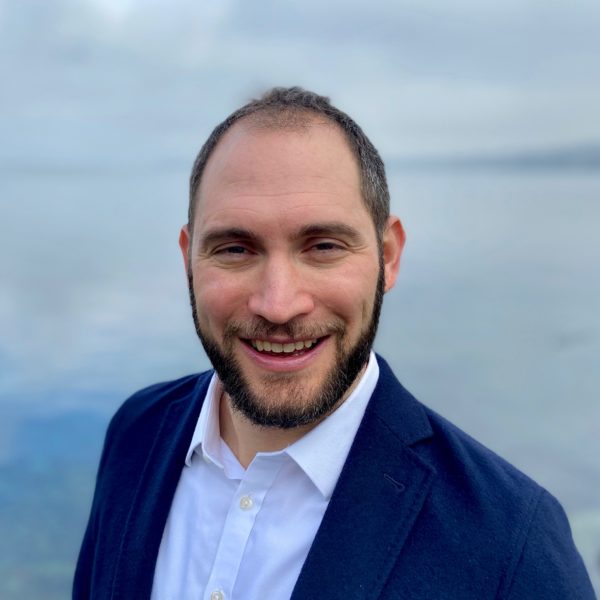
Dario De Marinis is an Assistant Professor at the Department of Mechanics, Mathematics & Management, Politecnico di Bari, Italy. His research focuses on fluid dynamics with applications in biomedical engineering, aerospace, and computational physics. Research Interests Fluid-structure interaction modeling Microfluidics and particle transport Biomedical applications (blood flow, valve mechanics) Aerospace engineering (hypersonic flows, turbulence) Numerical methods (Lattice Boltzmann, immersed boundary) Publications Trend Dario's recent work (2015–2025) spans computational fluid dynamics, with emphasis on multiphase flows, viscoelastic material behavior, and biomedical microfluidic devices. He has contributed to aerospace applications and turbulent thermal flows.
Jonathan Blazek is an Assistant Professor of Physics at Northeastern University's College of Science, specializing in observational and theoretical cosmology. His research focuses on large-scale astronomical surveys to understand cosmic structure and dark energy, particularly through galaxy clustering and weak gravitational lensing. He is a key member of the Dark Energy Survey and Vera C. Rubin Observatory collaborations, leading efforts to combine multi-wavelength datasets for cosmological insights. Blazek earned his Ph.D. from UC Berkeley and completed postdoctoral fellowships at EPFL (Switzerland) and Ohio State University. Education: Ph.D. in Physics, University of California, Berkeley Postdoctoral Fellowships: EPFL (Switzerland), Ohio State University Research Interests: His work centers on cosmological modeling using galaxy surveys, particularly refining analytic and numerical methods to connect observations with theoretical frameworks. Key areas include: Weak gravitational lensing and galaxy clustering Combined-probe cosmology (integrating datasets across wavelengths) Dark matter and dark energy dynamics Large-scale structure formation Publications & Grants: Blazek has authored over 50 peer-reviewed articles, including foundational work on intrinsic alignment modeling and cosmic shear analysis. He leads the NSF CAREER grant project exploring dark sector physics with galaxy surveys. His recent publications address baryonic feedback effects, CMB lensing cross-correlations, and next-generation survey methodologies. Labs & Collaborations: He contributes to the Northeastern Cosmology Group and the Dark Energy Science Collaboration, advancing projects like the Legacy Survey of Space and Time (LSST) at Vera Rubin Observatory.
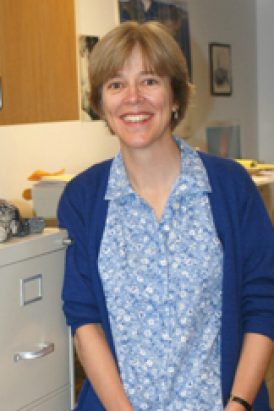
Rachel Bean is Jacob Gould Schurman Professor of Astronomy at Cornell University and Senior Associate Dean for Math and Science. Her cosmology research focuses on dark energy properties, gravitational physics, and the early universe using cosmic microwave background and galaxy survey data. As co-recipient of the Gruber and Breakthrough prizes, she contributed to precision cosmology through the WMAP mission. Research develops methods to extract cosmological information from large astrophysical datasets, including cross-correlation techniques between CMB experiments (Atacama Cosmology Telescope, Simons Observatory) and galaxy surveys (DESI, Rubin LSST). Current projects investigate modified gravity constraints using cluster abundances and novel statistical approaches to kSZ velocity reconstruction. Publication themes include precision cosmology, gravity tests, and multi-messenger astrophysics. Recent work advances machine learning applications for cosmological inference, while earlier research established foundations in semiconductor device physics. Articles consistently demonstrate innovative approaches to cosmological parameter estimation and physical theory testing. Awards: Gruber Prize (2012), Breakthrough Prize (2018), Presidential Early Career Award, and Cottrell Scholar Award. Leadership includes former chair of LSST Dark Energy Science Collaboration and service on the Astronomy and Astrophysics Advisory Committee.
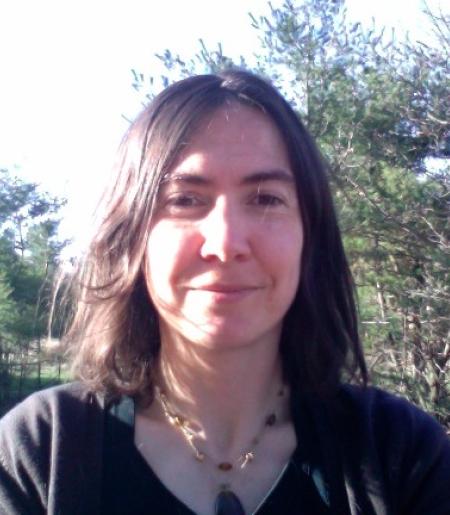
Rebecca Lange is the Alexander N Halliday Collegiate Professor of Earth and Environmental Sciences at the University of Michigan, affiliated with the College of Literature, Science, and the Arts. She holds roles in the International Institute and Center for Latin American and Caribbean Studies. Her research focuses on magmatic processes, including olivine-melt thermometry, Martian magmas, carbonate melt behavior, and volcanic system dynamics. Lange earned a PhD in Geology from UC Berkeley (1989). Her work bridges experimental geochemistry and field-based studies, addressing questions about magma ascent rates, crust-mantle interactions, and volatile transport. Notable contributions include refining olivine-melt thermometers/hygrometers and elucidating mechanisms of high-silica rhyolite formation. She investigates planetary-scale processes, such as deep Earth carbon cycles and early ocean oxygenation, using multi-analytical approaches (e.g., Mössbauer spectroscopy, XANES). Research Themes : Magmatic volatile budgets, crystallization kinetics, crustal melt generation, planetary geochemistry. Key Techniques : Experimental petrology, high-pressure melting experiments, microanalytical methods, numerical modeling. Lange's recent studies highlight rapid phenocryst growth during magma ascent, degassing-induced oxidation in magmas, and the role of basalt emplacement in forming silicic melts. Her interdisciplinary approach spans terrestrial and extraterrestrial systems, with active projects on Martian magmas and alkaline lake geochemistry. Professional service includes roles in academic administration and steering committees. Her lab contributes to the International Institute's interdisciplinary initiatives, fostering collaborations between geosciences and global studies.
Daniel M. Liberzon is the Richard T. Cheng Professor in the Department of Electrical and Computer Engineering and a Professor at the Coordinated Science Laboratory at the University of Illinois Urbana-Champaign . He is also an affiliate professor in the Department of Mathematics . His career spans theoretical and applied research in control systems, with a focus on hybrid control, nonlinear systems, and communication constraints. Education : Ph.D. in Mathematics (Brandeis University, 1998), advised by Roger W. Brockett (Harvard). Undergraduate studies in Mathematics at Moscow State University (1989-1993). Research Interests include: Switched and Hybrid Systems with stability criteria and control design. Nonlinear Control Theory covering Lyapunov functions, ISS, and synchronization. Control with Limited Information focusing on quantized control and entropy-based methods. Uncertain/Stochastic Systems with applications in power grid synchronization and networked control. Article Trends show a focus on stability analysis, entropy metrics, and hybrid control algorithms across nonlinear and switched systems. Key themes include robust observer design, synchronization under disturbances, and quantized feedback. Scientific Awards : ACM SIGBED HSCC Best Paper (2019) IFAC Fellow (2016) IEEE Fellow (2013) AACC Donald P. Eckman Award (2007) NSF CAREER Award (2002) Advising and Grants : Collaborates with students and researchers like Sayan Mitra, Hyungbo Shim, and others. Leads NSF projects on Nonlinear Systems with Fast/Slow Dynamics and AFOSR MURI on Hybrid Dynamics . Labs and Teams : Directs the Decision and Control group at the Coordinated Science Lab, contributing to interdisciplinary projects in control theory and power systems.
David Burgess is a Professor of Mathematics and Astronomy at Queen Mary University of London, affiliated with the School of Physical and Chemical Sciences and the Centre for Fundamental Physics. His research focuses on space and astrophysical plasma physics, particularly shocks in collisionless plasmas, turbulence, particle acceleration, and large-scale simulations. He collaborates internationally with ESA and NASA mission groups. Key Research Areas: Solar wind turbulence, bow shock dynamics, interplanetary shocks, and plasma simulations. Grants: £868k from STFC for heliospheric research (2023–2027), £626k for planetary studies (2020–2024). Collaborations: Involves groups in Europe and the USA, leveraging data from space missions like Solar Orbiter and MMS. His work uses particle-in-cell simulations and hybrid models to study plasma behavior, with recent emphasis on magnetic reconnection, electron heating, and shock-turbulence interactions.
Professor Gert Brodin is a faculty member at the Department of Physics, Umeå universitet, serving as Deputy Head of Department and Assistant Head of Department. His research focuses on plasma theory, particularly in regimes where quantum mechanics and quantum electrodynamics (QED) intersect with plasma dynamics. Key areas include quantum plasmas in high-density environments, relativistic plasmas under ultrastrong electromagnetic fields, and nonlinear wave phenomena. He leads the Plasma Theory research group, exploring topics such as pair production in vacuum/plasma, QED effects in high-intensity laser interactions, and relativistic kinetic theory for spin-1/2 particles. His work employs advanced methods like von Neumann equations for density matrices, Wigner transformations, and the Dirac-Heisenberg-Wigner formalism. Recent publications address semiclassical theories in strong-field plasmas, relativistic Landau quantization, and radiation reaction effects. Brodin has collaborated extensively with researchers such as Haidar Al-Naseri and Jens Zamanian, advancing theoretical frameworks for quantum plasma dynamics. His research group’s projects include studying plasma behavior at the Schwinger limit, electron-acoustic wave damping via multi-plasmon resonances, and ultrafast electron hole dynamics. Brodin holds a Docent qualification and has contributed to influential journals like Physical Review E , Physics of Plasmas , and Reviews of Modern Plasma Physics .
Professor Emma Bunce serves as the Head of School for Physics and Astronomy at the University of Leicester and holds the title of Professor of Planetary Plasma Physics. Her research focuses on planetary magnetospheres, with significant contributions to NASA's Juno mission (Jupiter), the Cassini mission (Saturn), and ESA/JAXA's BepiColombo mission (Mercury). She leads the Mercury Imaging X-ray Spectrometer (MIXS) instrument on BepiColombo and co-leads the SIXS instrument. Her work explores plasma dynamics, magnetosphere-ionosphere coupling, and planetary exploration technologies. Research Interests: Planetary plasma physics, magnetospheric dynamics of gas giants and Mercury, mission instrumentation (e.g., X-ray spectrometers), and space weather effects in planetary environments. Key projects include Juno's polar magnetosphere studies, Cassini's Saturnian magnetosphere analysis, and BepiColombo's Mercury surface composition investigations. Labs/Teams: Principal Investigator of MIXS and Co-Investigator of SIXS (BepiColombo), Juno Magnetosphere Working Group member, and former Cassini magnetometer team Co-Investigator. Active in collaborative mission planning with NASA and ESA. Future Work: Leading BepiColombo's Mercury arrival (2025), advancing X-ray spectrometry techniques, and advocating for ice giant exploration missions (e.g., Uranus orbiter concepts).
Andrea Argüelles is an Associate Professor in the Department of Engineering Science and Mechanics at Pennsylvania State University (Penn State), part of the College of Engineering. She holds affiliate researcher roles in the IEE Research Themes focusing on Health and the Environment, and Integrated Energy Systems. Her work bridges materials science and mechanical engineering, emphasizing non-destructive evaluation (NDE) techniques like ultrasonics for characterizing additive-manufactured materials and polycrystalline structures. In 2024, she received the NSF CAREER Award for her research contributions. Her research interests include ultrasonic testing of composites and metals, additive manufacturing process-structure-property relationships, and computational modeling of wave propagation in complex materials. Notable projects involve improving inspectability of 3D-printed parts, cryogenic ultrasonic testing of ice matrix composites, and analyzing defects in silicon wafers. She collaborates widely, with recent work published in journals like Communications Materials , Journal of Applied Physics , and Finite Elements in Analysis and Design . Key Themes: Polycrystalline materials, binder jetting, acoustic holography, defect detection. Awards: NSF CAREER Award (2024). Dr. Argüelles is actively involved in engineering education, contributing to initiatives like the ASEM seminar series for doctoral career development. Her research group addresses challenges in materials characterization, with applications in aerospace, energy systems, and semiconductor manufacturing.
David Wands is a Professor of Cosmology at the University of Portsmouth, affiliated with the Faculty of Technology and the Institute of Cosmology and Gravitation (ICG). His research focuses on theoretical cosmology, particularly the physics of the early universe, primordial perturbations, gravitational waves, and dark energy. He has held leadership roles, including Director of the ICG from 2010 to 2020. Wands earned his DPhil in astrophysics from the University of Sussex in 1993 and has been a Royal Society University Research Fellow. He is a Fellow of the Royal Astronomical Society and the Institute of Physics. His work bridges fundamental physics with observational cosmology, including contributions to the study of inflation, large-scale structure formation, and gravitational-wave signatures. Wands has published over 150 papers and organized major conferences like the 30th Texas Symposium on Relativistic Astrophysics. He teaches advanced cosmology modules and contributes to editorial roles in prestigious journals, such as the Philosophical Transactions of the Royal Society A. Education: Bachelor's in Natural Sciences (Physics) and Mathematics at the University of Cambridge DPhil in Astrophysics at the University of Sussex (1993) Key Roles: Board Member, Gravitational Physics Division, European Physical Society Member, Particle Data Group collaboration Research Highlights: Primordial black hole formation and gravitational-wave detection Stochastic inflation models and quantum diffusion Non-linear cosmological perturbations and relativistic effects His research outputs span interdisciplinary topics such as modified gravity predictions using N-body simulations, CMB constraints on inflationary parameters, and applications of artificial neural networks in cosmology. Awards include the Daiwa-Adrian Prize for UK-Japan collaboration (2010).
Mark Stremler is a Professor in the Department of Mechanical Engineering at Virginia Tech's College of Engineering, serving as the Engineering Mechanics Graduate Chair. His research focuses on fluid mechanics, with emphases on vortex dynamics, fluid-structure interaction, and biological fluid mechanics. He holds the Otto Moensted Visiting Professorship and has been recognized with awards including the Liviu Librescu Faculty Prize and Army Research Office Young Investigator award. His academic leadership roles include directing the Multi-Scale Transport in Environmental and Physiological Systems (MultiSTEPS) IGERT Program (2010-2017), serving as Graduate Chair of Engineering Mechanics (2019-present), and directing undergraduate studies in Engineering Science and Mechanics. He earned his Ph.D. from the University of Illinois at Urbana-Champaign and dual B.S. degrees in Mechanical Engineering and Mathematics from Rose-Hulman Institute of Technology. Research interests include reduced-order modeling of fluid flows, coherent vortical structures, and applications in biological systems such as mosquito drinking mechanics and coronary hemodynamics. His work bridges theoretical, computational, and experimental approaches to fluid dynamics challenges.
Amitabh Mishra is an Adjunct Professor at the University of Delaware. His research focuses on three core areas: computer-communication networks (wireless architectures, cross-layer design, mobile cloud computing), network performance analysis (stochastic models, numerical optimizations), and network security (vulnerability assessments, authentication protocols). He has contributed to interdisciplinary fields including IoT security, smart healthcare frameworks, and socio-technical systems analysis. His work spans technical domains like wireless sensor networks, tactical network management, and quantum dot material studies, alongside applied research in tourism economics, healthcare data analytics, and educational technology. Notable contributions include frameworks for energy-efficient physiological monitoring, secure IoT configurations, and machine learning-driven security protocols. Recent research highlights include: Developing secure mobile cloud computing paradigms Modeling Multipath TCP capacity bounds using stochastic theory Investigating AI applications for deepfake ethics and tourism marketing His publications span technical journals in computer networks, medical IoT systems, and interdisciplinary studies in cultural tourism and climate change resilience.
Twan Basten is a Full Professor in the Electronic Systems group at Eindhoven University of Technology (TU/e). He leads research on embedded and cyber-physical systems, focusing on model-driven design, computational models, and system dependability. He holds an MSc (1993) and PhD (1998) in Computing Science from TU/e, advancing from Assistant to Full Professor by 2009, and became the Electronic Systems group chair in 2013. His research spans international projects (FP5-7, H2020, ECSEL) and Dutch initiatives (STW, NWO, RVO), with over 200 publications and seven best paper awards. He has co-supervised 21 PhD students and actively participates in program committees and conferences. His work contributes to UN Sustainable Development Goals through innovations in smart systems. Education: MSc in Computing Science, TU/e (1993) PhD in Computing Science, TU/e (1998) Research Interests: Explores design methodologies for embedded systems, including scenario-based design, real-time scheduling, and performance analysis. Specializes in model-driven engineering and computational models to ensure system dependability. Active in projects like TRANSACT (real-time systems) and SAM-FMS (flexible manufacturing). Key Contributions: Co-author of 1 book and over 200 scientific publications Recipient of seven best paper awards Co-supervised 21 PhD degrees Senior member of IEEE and lifetime member of ACM Labs & Teams: Leads the Model-Based Design Lab and contributes to EAISI High Tech Systems initiatives. Collaborates on tools like TRACE4CPS for execution trace analysis and CReTS for vehicle platooning simulation.
Siamak Ravanbakhsh is an Associate Professor at McGill University's School of Computer Science and a Canada CIFAR AI Chair at Mila. His research focuses on machine learning, particularly representation learning with an emphasis on geometry, symmetry, and probabilistic inference. He has held academic positions at the University of British Columbia and was a postdoctoral fellow at Carnegie Mellon University. Education: B.Sc. in Computer Science, Sharif University of Technology M.Sc. and Ph.D. in Computer Science, University of Alberta (supervised by Russ Greiner) Postdoctoral Fellowship at Carnegie Mellon University (with Barnabás Póczos and Jeff Schneider) His research interests span geometric deep learning, equivariant networks, reinforcement learning, and AI for scientific applications. Notable contributions include work on symmetry-aware models, diffusion processes, and equivariant representation learning. Publications highlight advancements in causal abstraction, diffusion-based anomaly detection, and equivariant architectures for crystals and hierarchical structures. His work often bridges theory and application, emphasizing symmetry principles. Advising & Grants: Supervised over 20 graduate students and postdocs, including recent PhD graduates Daniel Levy and Mehran Shakerinava Active in mentoring M.Sc. and internship students He contributes to academic leadership roles at Mila and McGill, fostering interdisciplinary collaborations in AI research.
Prof. Barbara Wohlmuth is a full professor in Numerical Mathematics at the Technical University of Munich (TUM), affiliated with the TUM School of Computation, Information and Technology. She leads the International Graduate School of Science and Engineering at TUM and has held professorships at Stuttgart, Darmstadt, and Berlin universities. Her research focuses on numerical simulation of partial differential equations, multiscale solvers, and coupled multi-field problems with applications in engineering. Education: Studied mathematics at TUM and Université Joseph Fourier in Grenoble, received her doctorate from TUM in 1995, and completed habilitation in Augsburg. Visiting professorships in USA, France, and Hong Kong. Research interests include discretization techniques, predictive modeling, and interdisciplinary collaboration with engineering disciplines. Notable achievements: 2012 Gottfried Wilhelm Leibniz Prize (Germany’s highest academic honor in sciences), 2005 Sacchi-Landriani Prize. Publications emphasize advanced numerical methods in fluid dynamics, geophysics, and biomedical engineering. Active in editorial roles for international journals and scientific committees across Europe and USA. Elected member of Bavarian and European Academies of Sciences. Key contributions include: Development of robust numerical algorithms for exascale simulations Pioneering work in coupled multi-physics modeling Innovative methods for computational contact mechanics Leadership in graduate education initiatives