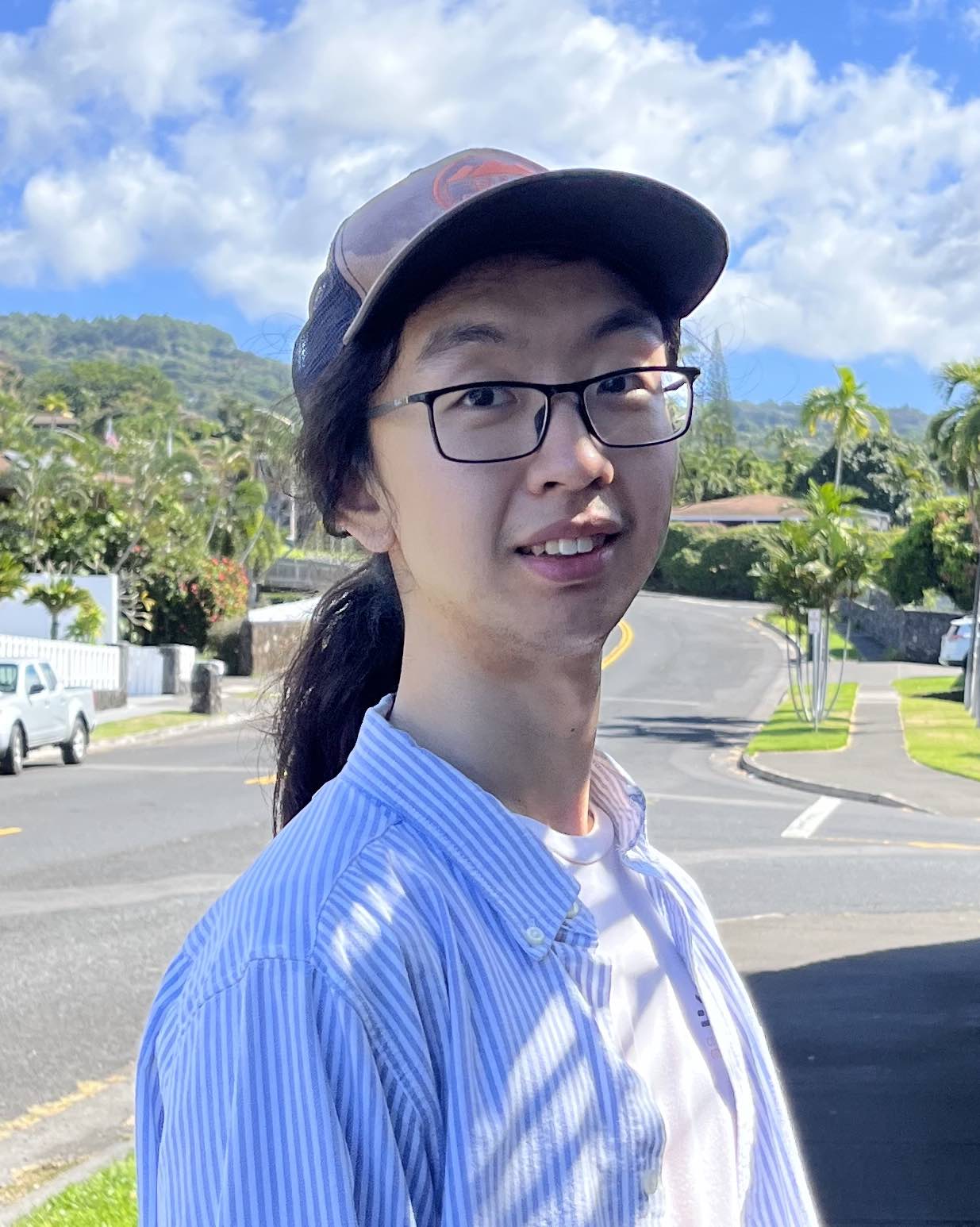
Zongyi Li is a Research Fellow at Massachusetts Institute of Technology , hosted by Kaiming He. They are currently pursuing a Ph.D. in Computing and Mathematical Sciences at Caltech (2019-2025), mentored by Anima Anandkumar and Andrew Stuart. Ph.D. candidate: Computing and Mathematical Sciences, Caltech (2019-2025) B.Sc. in Computer Science and Mathematics with a Jazz minor from Washington University in St. Louis (2015-2019) They focus on Neural Operators for learning solution operators in Partial Differential Equations (PDEs) , particularly in fluid mechanics and earth science . Their work models physical simulations with chaotic behaviors and complex geometries, showing applications in weather forecasting , carbon storage , and aerodynamics simulation . Publications emphasize resolution-invariant models , chaotic systems , and zero-shot super-resolution capabilities. Their research combines Fourier analysis , graph networks , and physics-informed loss functions to achieve state-of-the-art performance in PDE solving with up to 1000x speedup over traditional solvers. Fellowships: Kortschak Scholarship PIMCO Fellowship Amazon AI4Science Fellowship Nvidia Fellowship MIT Novo Nordisk AI Fellowship Code & Open-Source: Co-developer of the NeuralOperator library Implementations for Fourier Neural Operators , Graph Neural Operators , and Tensorized Neural Operators Media Recognition: Quanta Magazine MIT Tech Review NVIDIA Features Towards Data Science
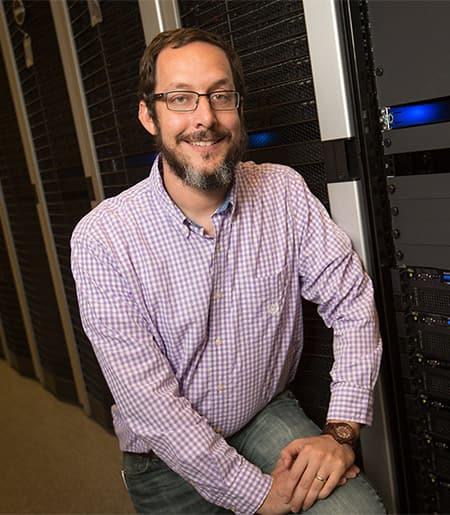
David Bindel is an Associate Professor in the Department of Mathematics at Cornell University, affiliated with the College of Arts and Sciences, College of Engineering, and Cornell Ann S. Bowers College of Computing and Information Science. He earned his Ph.D. in Mathematics from the University of California, Berkeley in 2006. His research focuses on applied numerical linear algebra, eigenvalue problems, and their applications in plasma physics, network analysis, and nonlinear systems. He develops methods for analyzing complex systems, including magnetic confinement in stellarators, stability of MHD systems, and community detection in networks. His work bridges theoretical foundations with practical computational tools, such as formal verification of linear algebra algorithms and scalable Gaussian process models. Bindel’s research explores the interplay between structure and computation, leveraging eigenvalue analysis to address challenges in computer vision, opinion dynamics, and engineering design. He has contributed to advancements in numerical methods for large-scale systems, including iterative solvers, spectral approximation techniques, and stochastic optimization. His interdisciplinary approach spans applied mathematics, computer science, and physics, with applications in fusion energy, machine learning, and network science. Recent work highlights include high-order expansions for magnetic confinement, adaptive filtering for dynamical systems, and Bayesian optimization strategies. His publications emphasize rigorous analysis alongside computational scalability, addressing both theoretical and practical aspects of modern scientific computing. Despite no explicitly listed awards, his contributions reflect significant impact in his fields.
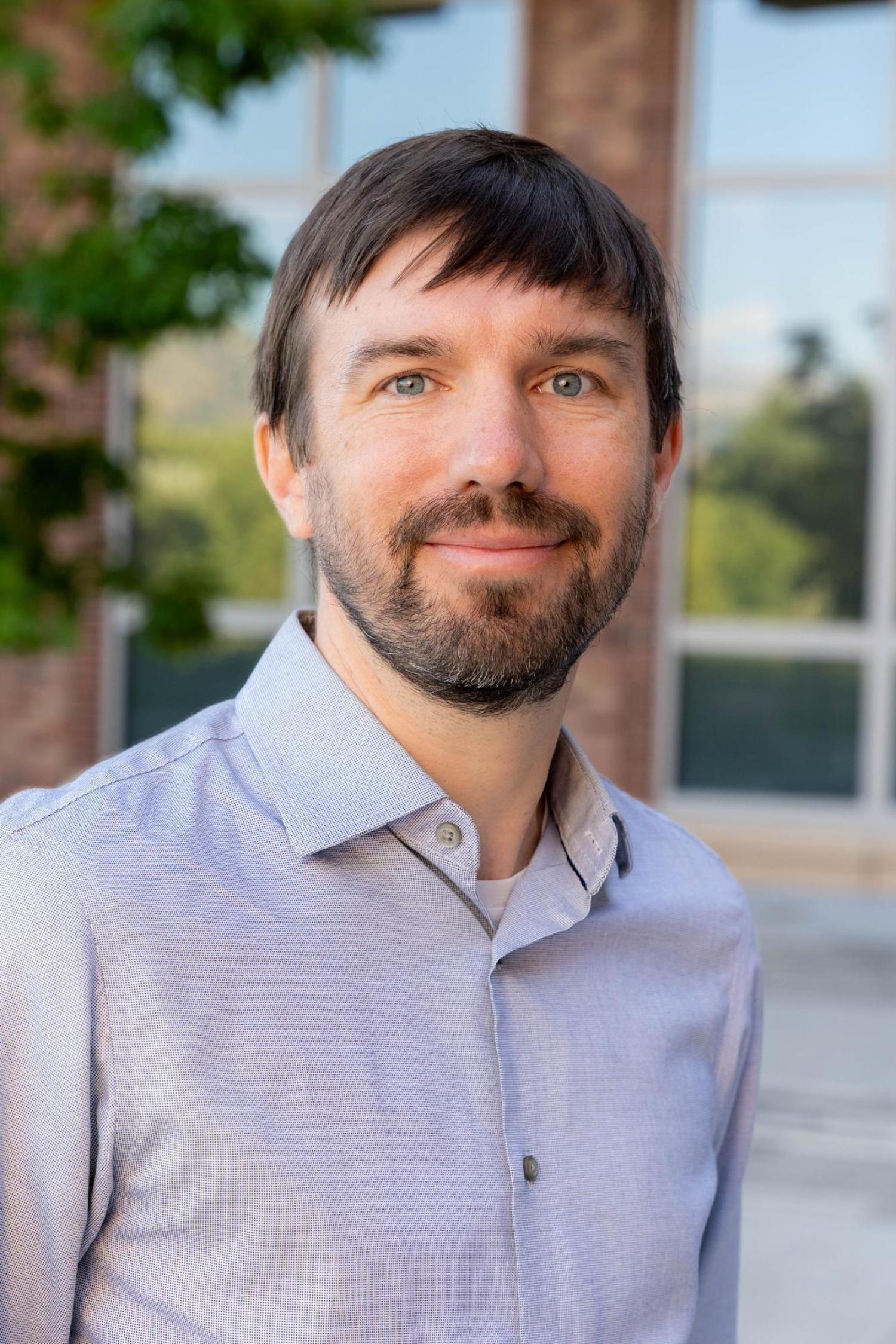
John Evans is an Associate Professor and Jack Rominger Faculty Fellow in the Department of Aerospace Engineering Sciences at the University of Colorado Boulder, affiliated with the Applied Mathematics program. He serves as Associate Chair for Undergraduate Curriculum and is part of the Aerospace Mechanics Research Center (AMREC). His research focuses on computational mechanics, particularly fluid dynamics, fluid-structure interaction, and turbulence modeling using high-order and structure-preserving methods. Evans holds a PhD (2011) and MS (2008) in Computational and Applied Mathematics from the University of Texas at Austin, and dual BS/MS degrees in Mathematics and Applied Mathematics from Rensselaer Polytechnic Institute (2006). Before joining CU Boulder, he was a postdoctoral fellow at the Institute for Computational Engineering and Sciences (ICES). His research interests include isogeometric analysis, immersed methods, and data-driven turbulence modeling. Notable contributions include development of divergence-conforming discretizations for incompressible flows, stabilized collocation methods, and invariant subgrid stress models. He leads the AMREC lab and collaborates on plasma-fueled propulsion systems and geometrically sensitive simulations. Key Awards: 2021: Rocky Mountain AIAA Educator of the Year 2021: Gallagher Young Investigator Medal 2019-2021: Clarivate Highly Cited Researcher Professional Activities: Editor of Engineering Computations, Senior AIAA Member, Simons Visiting Professor (2019) Evans' work bridges advanced numerical methods with real-world engineering challenges. His lab develops open-source tools like XIGA for multi-material problems and focuses on immersive simulation environments. Current projects explore turbulence closure models, plasma propulsion, and topology optimization with B-spline-based approaches.
Dr. Nanpeng Yu is a Full Professor at the University of California, Riverside , serving as Vice Chair and Graduate Advisor in the Department of Electrical and Computer Engineering . He maintains cooperative faculty affiliations with the Department of Computer Science and Department of Statistics , and directs the Energy, Economics, and Environment Research Center at UCR. Education : B.S. in Electrical Engineering from Tsinghua University (2006), M.S. in Electrical Engineering and Economics, and Ph.D. from Iowa State University (2010) Prior Industry Experience : Senior Power System Planner and Project Manager at Southern California Edison (2011-2014) Dr. Yu’s research bridges smart grid technologies , data-driven optimization , and machine learning for energy systems. Key areas include voltage control , renewable energy integration , transportation electrification , and grid resilience . His recent work focuses on physics-informed graph learning for unit commitment problems and adversarial purification in power system classifiers. The AI-Energy Nexus Laboratory under Dr. Yu has produced impactful publications in Applied Energy , IEEE Transactions on Power Systems , and Transportation Research series, covering topics like heavy-duty EV charging infrastructure and dynamic distribution network reconfiguration . Lab members have won the American-Made Digitizing Utilities Grand Prize ($300,000) from the U.S. DOE. Leadership Roles : Chair, IEEE Power and Energy Society Distribution System Operation and Planning Subcommittee Chair, IEEE Power and Energy Society Working Group on Data-Driven Modeling for Power Distribution Networks Associate Editor, IEEE Transactions on Smart Grid and IEEE Power Engineering Letters Scientific Awards : Regents Faculty Fellowship Regents Faculty Development Award Multiple IEEE Best Paper Awards
Joydeep Biswas is an Associate Professor in the Computer Science Department at the University of Texas at Austin, where he serves as the Director of the Autonomous Mobile Robotics Laboratory (AMRL). He is also affiliated with Texas Robotics, the UT Machine Learning Laboratory, and UT Good Systems. Previously, he was an Assistant Professor in the College of Information and Computer Sciences at the University of Massachusetts Amherst. Dr. Biswas earned his PhD in Robotics from Carnegie Mellon University in 2014 and his B.Tech in Engineering Physics from the Indian Institute of Technology Bombay in 2008. His educational background has provided him with a strong foundation in both theoretical and applied aspects of robotics and artificial intelligence. Dr. Biswas's research focuses on enabling long-term autonomy for mobile robots operating in human environments. His work spans robot perception, motion planning, control systems, and AI, with the ultimate goal of creating self-sufficient autonomous mobile robots that can perform tasks accurately and robustly in real-world settings. He is particularly interested in perception, planning, and failure recovery for autonomous mobile robots, which supports his vision of having autonomous service mobile robots deployed at campus-to-city scale, both indoors and outdoors, performing assistive tasks over deployments spanning years. His IJCAI 2019 Early Career Spotlight talk summarizes much of his research to date and ongoing interests. His recent research has shown a strong trend toward social navigation, human-robot interaction, and the application of machine learning techniques to robotics problems. There's a clear progression from fundamental robotics research toward more complex, real-world applications that require robots to understand and navigate human social spaces effectively. His work increasingly integrates large language models and other advanced AI techniques with traditional robotics approaches, as evidenced by his recent publications on topics like preference-conditioned navigation, social navigation benchmarks, and instruction-following navigation systems. Dr. Biswas has received numerous prestigious awards including the NSF CAREER Award (2021), J.P. Morgan Faculty Research Award (2019), Amazon Research Award (2019), and a grant from Northrop Grumman Mission Systems (2018). These awards recognize his innovative contributions to the field of robotics and autonomous systems. As a dedicated educator and mentor, Dr. Biswas actively supervises PhD and master's students, with his PhD student Sadegh Rabiee winning the student poster award at the Northrop Grumman University Symposium 2019. He has secured significant grant funding from the National Science Foundation for projects including 'Introspective Perception and Planning for Long-Term Autonomy' and 'Interactive Synthesis and Repair For Robot Programs,' demonstrating his ability to secure competitive research funding and his commitment to advancing the field. Dr. Biswas leads the Autonomous Mobile Robotics Laboratory (AMRL), which serves as a hub for interdisciplinary research in mobile robotics. The lab has developed notable resources such as the UT Campus Object Dataset (CODA) for 3D perception research and SOCIALGYM, a framework for benchmarking social robot navigation. His team regularly deploys robots on the UT Austin campus and in urban environments to test and refine their approaches in realistic settings, bridging the gap between simulation and real-world application.
Associate Professor Ng Bing Feng leads research in Additive Manufacturing, Aerospace Engineering, and Thermofluids at Nanyang Technological University's School of Mechanical & Aerospace Engineering. As Cluster Director for Smart & Sustainable Building Technologies at NTU's Energy Research Institute, he oversees projects spanning energy-efficient cooling technologies, advanced filtration systems, and bio-inspired materials. His interdisciplinary work integrates advanced manufacturing with environmental engineering, focusing on sustainable solutions for air quality management and thermal regulation. Current research explores radiative cooling technologies, acoustic agglomeration for emissions control, and crashworthy structures via biomimetic design. Professor Ng's publications demonstrate consistent innovation in multi-scale manufacturing and fluid dynamics, with growing emphasis on sustainable urban technologies. Methodologies combine experimental fluid dynamics with computational modeling and AI-driven design. Leadership Roles: Cluster Director, Energy Research Institute @ NTU Principal Investigator for multiple industry collaborations in sustainable materials Research Output: 42+ publications in high-impact journals Multiple patents in filtration technologies and cooling systems
Daniel M. Kane is a Professor at the University of California, San Diego (UCSD), holding a joint appointment in the Department of Mathematics and the Department of Computer Science and Engineering (CSE). His research spans mathematics and theoretical computer science, with a focus on number theory, combinatorics, complexity theory, and computational statistics. He earned a Ph.D. in Mathematics from Harvard University (2011) and dual BS degrees in Mathematics with Computer Science and Physics from MIT (2007). Prior to UCSD, he was a postdoctoral researcher at Stanford University (2011–2014) on an NSF fellowship. His research interests include robust statistics, machine learning, polynomial threshold functions, and algorithmic methods for high-dimensional data. Notable achievements include co-authoring the book Algorithmic High-Dimensional Robust Statistics (Cambridge University Press, 2023) and receiving the Best Paper Award at the Conference on Computational Complexity (2013), as well as gold medals at the International Mathematical Olympiad (2002 and 2003). Current teaching includes courses such as Math 96 (Putnam Seminar), Math 154 (Graph Theory), CSE 101 (Algorithms), and CSE 203A (Randomized Algorithms). He has consulted for companies like CASPER Labs and AIble, and his work extends to cryptographic protocols, including quantum money schemes based on quaternion algebras. Key contributions include breakthroughs in robust mean estimation, list-decodable learning, and the development of efficient algorithms for statistical problems. His research often bridges foundational theory with practical applications in machine learning and data analysis.
Dr. Jean-Christophe Nave is an Associate Professor in the Department of Mathematics and Statistics at McGill University, specializing in applied mathematics, numerical analysis, and computational methods. His research focuses on numerical methods for partial differential equations, fluid mechanics, interface problems, and computer graphics. He holds a PhD from UCSB (2004) and has held academic positions at MIT and McGill since 2005. Currently, he serves on committees such as the Steering Committee of the Institut des Sciences Mathematiques and the CRM Applied Mathematics Lab. His educational background includes a PhD under Professors Xu-Dong Liu and Sanjoy Banerjee. Key research areas include level set methods, fluid-structure interaction, and invariant numerical methods. Notable works include the Correction Function Method for interface problems and the Characteristic Mapping Method for advection problems. Nave’s publications span topics like Poisson equations with discontinuous coefficients, fluid dynamics simulations, and high-order numerical schemes. He has advised numerous graduate and undergraduate students, contributing to their research in applied mathematics and computational science. His work bridges theoretical rigor and practical applications in engineering and physics. He teaches advanced courses such as Numerical Analysis I/II and Computational Methods in Applied Mathematics. His research group collaborates on projects involving fluid dynamics, elasticity, and geometric algorithms, with a focus on developing robust numerical tools for complex systems.
Arman Cohan is an Assistant Professor of Computer Science at Yale University, affiliated with the School of Engineering & Applied Science. His research focuses on the intersection of Machine Learning and Natural Language Processing (NLP), particularly in language modeling, representation learning, retrieval systems, and applications in specialized domains such as scientific text processing. He earned his Ph.D. in Computer Science from Georgetown University and has received notable awards, including the Dr. Harold N. Glassman Distinguished Doctoral Dissertation Award (2019) and the EMNLP 2017 Best Long Paper Award. His work emphasizes ethical AI, robustness of LLMs, and interdisciplinary applications in healthcare, science, and education. Cohan's research group, the Yale NLP Lab, develops advanced techniques for multi-document summarization, adversarial fact-checking, and LLM-driven tools for scientific discovery. Recent projects include frameworks like SciBERT, Longformer, and ChemAgent, which enhance domain-specific reasoning and safety in AI systems. His publications address challenges in table reasoning, uncertainty expression, and multimodal reasoning, with applications in medical decision-making and educational problem-solving. He collaborates on initiatives like the Roberts Innovation Fund to advance AI in healthcare and environmental technology.
Dr. Md Manjurul Ahsan serves as a Research Assistant Professor in the Department of Industrial & Systems Engineering at the University of Oklahoma, where he develops AI-driven solutions for healthcare diagnostics and advanced manufacturing optimization. His work bridges theoretical AI advancements with practical industrial and medical applications. Education: Ph.D. in Industrial and Systems Engineering, University of Oklahoma M.S. in Industrial Engineering, Lamar University B.S. in Industrial and Production Engineering, Shahjalal University of Science and Technology Research Focus: Dr. Ahsan specializes in Artificial Intelligence with technical depth in Machine Learning , Deep Learning , and Computer Vision to solve critical challenges in healthcare diagnostics and additive manufacturing . His research emphasizes Explainable AI to enhance model trustworthiness and deployment efficiency across Cyber-Physical-Social Systems, with significant contributions to Aerospace and Defense applications. Publication Trends: Recent work (2023-2025) reveals a strategic expansion from core manufacturing applications into medical AI (diffusion models for diagnostics), cultural preservation (NLP for Dravidian languages), and geopolitical AI analysis. His publications consistently address data imbalance challenges while advancing digital twin integration in quality control systems. Scientific Recognition: GCOE Dissertation Excellence Award (2023) International Student Scholarship (2022) Outstanding Academic Achievement in Engineering (2022) IEEE IEMCON Best Paper Award (2020) Netti Vincent Boggs Engineering Excellence Award (2020) Research Leadership: As director of the Sooner Additive Manufacturing Laboratory , Dr. Ahsan leads cross-disciplinary teams developing real-time monitoring systems using FARO arms and CMM metrology. His postdoctoral work at Northwestern University (2023-2024) advanced AI deployment frameworks, resulting in 60+ peer-reviewed publications with multiple papers ranking in engineering's top 1% for citations.
Dr. Yunjie Yang is an Associate Professor at the University of Edinburgh's School of Engineering, with affiliations at the Edinburgh Futures Institute (EFI), the Edinburgh Generative AI Laboratory (GAIL), and the Edinburgh Centre for Robotics. He previously held the Chancellor's Fellow in Data Driven Innovation (2018-2023) and Bayes Innovation Fellow (2023-2024) positions. His research focuses on AI-powered sensing and imaging, machine learning, and soft sensors & electronics for robotics. Yang received his PhD in Engineering Electronics from the University of Edinburgh, MSc in Control Science & Engineering from Tsinghua University, and BEng in Measurement & Control Engineering from Anhui University. After his PhD, he worked as a Postdoctoral Research Associate in Chemical Species Tomography before securing his lectureship. His research interests center on developing intelligent sensing systems that replicate human perception capabilities for robotics and intelligent systems. He pioneers flexible sensing and imaging technologies across various scales through innovative multi-modal sensors, soft electronics, and their modeling using machine learning approaches. His work aims to enable autonomous physical artificial intelligence by bridging the gap between robotic systems and human-like perception. Analysis of his recent publications reveals a strong focus on soft robotics perception, particularly through electrical impedance tomography (EIT) and transformer-based architectures. His research spans medical imaging applications, digital twin modeling for industrial processes, and machine learning approaches for sensor data interpretation. The trend shows increasing integration of physics-informed deep learning with traditional tomographic techniques to achieve higher accuracy and efficiency. European Research Council (ERC) Starting Grant (2024) IEEE J. Barry Oakes Advancement Award (2024) IEEE I&M Society Graduate Fellowship Award (2015) Multiple Best Paper Awards Senior Member of IEEE Fellow of the International Society for Industrial Process Tomography Fellow of the Higher Education Academy ESI highly cited papers Dr. Yang serves as Associate Editor for IEEE Transactions on Instrumentation and Measurement and holds editorial positions with Scientific Reports and IEEE Sensors Journal. His research has been licensed to overseas research institutes and industry partners and received wide media coverage including BBC, EFE, USA Today, and STV. He has secured significant grant funding including the prestigious ERC Starting Grant. He leads the Edinburgh SMART Lab (Sensing/imaging + Machine Learning + Robotics), which aims to replicate human perception capabilities for robotics and advance flexible sensing technologies through innovative multi-modal sensors and machine learning approaches. The lab focuses on enabling autonomous physical artificial intelligence with applications spanning medical diagnostics, industrial monitoring, and advanced robotics systems.
Maarten de Hoop is the Simons Chair and Professor of Computational and Applied Mathematics at Rice University, part of the George R. Brown School of Engineering. He holds visiting roles at MIT and the Chinese Academy of Sciences. His research spans seismic wave analysis, inverse problems, deep learning, and planetary seismology. He earned his Ph.D. in Technical Sciences from Delft University of Technology (1992), and earlier degrees from Utrecht University. Notable awards include the 1996 J. Clarence Karcher Award and 2001 Fellowship from the Institute of Physics. His work integrates computational mathematics with geophysics, focusing on extracting signal information from large datasets, developing novel inverse scattering methods, and applying deep learning to geoscience challenges. Recent studies include transformer models for in-context learning, semialgebraic neural networks, and seismic waveform foundation models like SeisLM. He leads the Geo-Mathematical Imaging Group, fostering interdisciplinary projects in planetary missions and data-driven discovery.
Prof. Dr. Barbara Kraus is the Chair of Quantum Algorithms and Applications at the Technical University of Munich (TUM), affiliated with the TUM School of Natural Sciences. She previously held academic positions at the University of Innsbruck, where she founded her research group in 2010. Education : Physics and Mathematics at the University of Innsbruck; Post-doctoral work at MPI for Quantum Optics and University of Geneva. Her research focuses on foundational problems in quantum information theory, particularly entanglement in multipartite systems, quantum simulation, and verification of quantum processors. She develops theoretical tools for quantum many-body systems and explores applications in quantum computing, emphasizing error characterization and experimental validation. Recent publications highlight advancements in Hamiltonian learning, symmetry-resolved entanglement detection, and multipartite state transformations. Her work bridges theoretical quantum physics with practical implementations, including Rydberg platforms and quantum metrology. Key Awards : START Prize (2010), Ignaz L. Lieben Award (2013), Boltzmann Prize (2011), Südtiroler Sparkasse Research Prize (2019). She supervises doctoral students and postdocs in quantum information theory, with a focus on stabilizer states, quantum networks, and entanglement measures. Her courses at TUM include Quantum Information , Quantum Algorithms , and workshops on entanglement manipulation.
Florian Schäfer is an Assistant Professor at the School of Computational Science and Engineering at Georgia Tech. His research spans numerical computation, statistical inference, and competitive games, with applications in materials science, turbulence modeling, computer graphics, and computational geometry. He will join the Courant Institute at NYU in September 2025. PhD in Applied and Computational Mathematics, Caltech Bachelor’s and Master’s in Mathematics, University of Bonn His work focuses on information geometric mechanics to design structure-preserving numerical methods for continuum mechanics. This includes: State-of-the-art solvers for elliptic PDEs via Gaussian elimination and conditional independence Efficient multi-agent optimization algorithms Information geometric regularization for compressible fluid dynamics Enabling the first compressible fluid simulation exceeding 100 trillion grid cells His recent research trends integrate: Machine learning for materials science (e.g., active learning, Bayesian approaches) Stochastic modeling of microstructures and phase-field problems Neural operators for super-resolution fluid dynamics Generative models for polycrystalline material datasets Optimal transport and diffusion models for conditional density transformations High-performance computing at extreme scales Florian collaborates with researchers including Houman Owhadi, Jessie Liu, Spencer Bryngelson, Tamer Zaki, and Ali Mani. He actively presents at conferences like SIAM and UCLA seminars, and is recruiting PhD students for work at the Courant Institute starting 2025.
Prof. Igors Gorbovickis is an Associate Professor of Mathematics at the Department of Mathematics, School of Computer Science and Engineering, Constructor University (formerly Jacobs University Bremen). His research focuses on complex dynamical systems, including topics such as renormalization theory, bifurcation analysis, Julia sets, and applications to mathematical physics. He also contributes to discrete geometry, particularly exploring conjectures like the Kneser-Poulsen problem. His work bridges pure mathematics with interdisciplinary applications, emphasizing rigorous analysis of nonlinear systems and geometric configurations. Key areas of investigation include critical point accumulations, Hausdorff dimension estimates, and equidistribution phenomena in parameter spaces. Recent publications highlight advancements in understanding chaotic systems, circle maps, and the interplay between algebraic structures and dynamical behavior. Prof. Gorbovickis collaborates internationally, with co-authored papers appearing in journals like Advances in Mathematics , Ergodic Theory and Dynamical Systems , and Nonlinearity . His office is located at Research I, Room 128 on the Constructor University campus in Bremen, Germany.